

That awkward, narrow strip of land on the side of your house often becomes a forgotten zone. It’s where the trash cans go, where weeds take over, or where that pile of forgotten projects lives. But what if that space could be more than just an afterthought? What if it could be genuinely beautiful, or even useful?
You can absolutely transform this neglected area, whether you want to create a more private sanctuary, boost your home’s overall curb appeal, or simply make a boring walkway more interesting. Some ideas are quick weekend wins, while others require a bit more planning. Either way, they are all better than letting that space go to waste.
Ready to unlock some serious potential? Let’s get started.

1. Flower Bed Chain

A flower bed chain can bring a serious boost of beauty and curb appeal to the side of your home. This design idea involves planting a series of connected flower beds that create a beautiful, flowing look.
Begin by selecting plants and colors that work well together. A mix of annuals and perennials ensures you have something blooming throughout the different seasons.
For a dynamic, layered look, plant smaller flowers toward the front and place taller varieties in the back.
You can also use edging or borders to give each bed a crisp, defined shape. This helps contain the flowers and contributes to a very tidy appearance.

Stones, wood, or even certain plants like hostas can serve as a lovely natural barrier.
If you’re working with a fence or wall, a cascading design is a fantastic option. You can hang flower boxes or mount vertical planters to add height and make the most of the space.
2. Gravel Pathway

A simple gravel pathway running alongside your house can elevate your yard’s entire aesthetic. It’s a straightforward and wallet-friendly project, typically using materials like crushed stone or pea gravel.
You have total freedom to design the path’s shape, whether you prefer a straight line or a gentle curve. This adaptability means it can easily conform to your yard’s specific layout and match your personal style.
Gravel paths are more than just pretty. They are also incredibly practical, helping to improve drainage and cut down on mud after a rainstorm.
You can line the pathway with bricks or plants to keep the gravel contained. This adds an extra layer of color and charm to your outdoor area.
3. Raised Planter Beds

Raised planter beds present a wonderful option for the side of a house. They introduce a sense of structure while offering a dedicated spot for flowers, vegetables, or herbs.
You can construct these beds using untreated wood or get creative by repurposing materials you already have. They are space-efficient and can be designed to fit neatly into narrow areas.
Filling the beds with compost-rich soil will give your plants a significant growth advantage. Additionally, raised beds offer superior drainage and make gardening much easier on your back.
You might explore different designs, such as two-tier beds that allow for planting at multiple heights. This adds visual dimension and can be quite striking.
4. Perennial Garden

A perennial garden is a fantastic way to bring vibrant color and life to the side of your house. Since perennials bloom every year, they are a smart investment for long-lasting beauty.
For autumn interest, you could plant flowers such as chrysanthemums and sedums. These plants deliver brilliant colors as the seasons turn.
Feel free to combine different plants to create interesting textures and a varied color palette. Heuchera and Japanese maples are excellent choices for their beautiful foliage.
Planting in layers is a great technique for building depth. Position taller plants toward the back, with shorter ones arranged in the front.
5. Bamboo Screening

Bamboo is an excellent selection for enhancing privacy in your side yard. It grows very quickly, forming a dense, green screen. It’s also a stylish plant that complements any garden design.
You can pick between running and clumping varieties of bamboo. Clumping types are simpler to control, as they don’t spread aggressively like their running counterparts.
Bamboo can grow to around 15 feet in just a couple of years, providing substantial coverage quickly.
To help it flourish, plant your bamboo in a sunny location with soil that drains well. Consistent watering is crucial, particularly as the plants are getting established.
Be sure to space the bamboo plants correctly based on their type. Proper spacing ensures they grow strong without competing for nutrients.
6. Vertical Gardens

Vertical gardens are a brilliant method for maximizing the utility of your side yard. They enable you to grow plants up instead of out, which conserves valuable ground area.
You can utilize fences, walls, or trellises to provide support for your garden. Materials like wire mesh or wooden pallets are effective for holding your plants in place.
Think about planting a mix of flowers, herbs, and even vegetables. This approach results in a garden that is both beautiful and functional.
Position your vertical garden in a spot that receives adequate sunlight and is easily accessible. Regular watering and care are key to keeping your plants vibrant and healthy.
7. Water Feature

Introducing a water feature to the side of your house can cultivate a truly peaceful atmosphere. The sound and sight of water, whether from a compact pond or a small fountain, has a naturally calming influence.
You can select a design that is perfectly suited to your available space. In a smaller area, a wall fountain is an excellent space-saver. If you have a bit more room, a small koi pond can become an attractive focal point.
Placing plants around your water feature will amplify its natural appearance. They can also offer shade for fish if you opt for a pond.
A water feature is also a wonderful way to attract butterflies and birds, who will appreciate the water source in your yard.
8. Stone Steps

Stone steps can bring both charm and practicality to the side of your house. They provide an easy way to traverse sloped terrain or navigate through garden beds.
You can select from different kinds of stones to achieve various aesthetics. Flagstones tend to create a more rustic ambiance, whereas smoother stones offer a tidier, more polished look.
When you’re designing your stone steps, pay close attention to the spacing. Ensuring they are placed evenly will help create a secure and comfortable path.
Arranging plants around the steps can beautifully enhance the area. Think about using low-maintenance ground covers or flowers to add a splash of color.
9. Topiary Borders

Topiary borders can significantly elevate the space next to your house. These carefully shaped plants introduce a touch of style and contribute to a neat, orderly appearance. You have many shapes to choose from, including cones, spirals, and balls.
Using topiaries as borders helps to define the area while providing a sharp contrast to other plants. Their evergreen quality means they look great all year long, bringing a sense of structure to your garden.
Plant topiaries near pathways to make your garden feel more welcoming. They are a great fit for formal designs but can also be incorporated into more relaxed spaces.
Remember that regular trimming is necessary to maintain their distinct shapes. Consistent care ensures they always look their best and add to your home’s overall charm.
10. Outdoor Sculptures

Incorporating outdoor sculptures into your side yard can inject a dose of personality and style. Look for pieces that resonate with your personal taste, whether you prefer something classic, modern, or playful.
You have a wide range of materials to choose from, including wood, metal, or stone. These sculptures can act as striking focal points or simply add a layer of interest to your garden.
A mix of different shapes and sizes creates compelling visual appeal. Don’t be afraid to position them among your plants or near an entrance to add extra charm.
Think about how the sculptures will appear at various times of the day. Many pieces gleam beautifully in the sunlight or adopt a soft glow as dusk sets in.
11. Hanging Baskets

Hanging baskets are an excellent tool for injecting color and texture into the side of your home. You can fill them with a wide assortment of plants, from vibrant flowers to trailing vines. These baskets animate spaces that might otherwise seem plain.
For a particularly dramatic display, consider using plants like sweet potato vine, petunias, or calibrachoa. Combining different colors helps to create a display that catches the eye. The addition of interesting foliage can make your hanging baskets stand out even more.
Ensure your hanging baskets are positioned to get enough sun, as most flowering plants do best in bright light. Water them consistently to keep them healthy and thriving.
You can easily update your hanging baskets as the seasons change. Swapping out plants is a simple way to keep your home looking fresh all year.
12. Ornamental Grasses

Ornamental grasses can bring a unique beauty and texture to the side of your house. These versatile plants are available in a range of colors and sizes, making them perfect for adding interest to any area. You can opt for soft, mounding grasses or more structured, upright types.
Taller grasses can also be a clever way to add privacy without building a fence. Little bluestem, for example, can form a lovely natural screen.
Combining different kinds of grasses can improve your garden’s look by creating layers and depth. They pair beautifully with shrubs and flowers, giving your landscape a fuller appearance.
When you’re designing your garden, think about the changing seasons. Some grasses have features that evolve throughout the year, providing visual appeal in every season.
13. Mini Herb Garden

A mini herb garden near your side door or on a small patio can be a delightful project. Herbs such as chives, parsley, and basil are simple to grow and incredibly handy for your cooking.
You can use small containers or pots to conserve space. For a pleasing visual, arrange them according to their size and color. Just make sure they receive plenty of sun and are watered regularly.
A small garden not only introduces greenery but also helps you save money on fresh herbs. You can simply snip what you need right when you need it.
14. Rock Garden
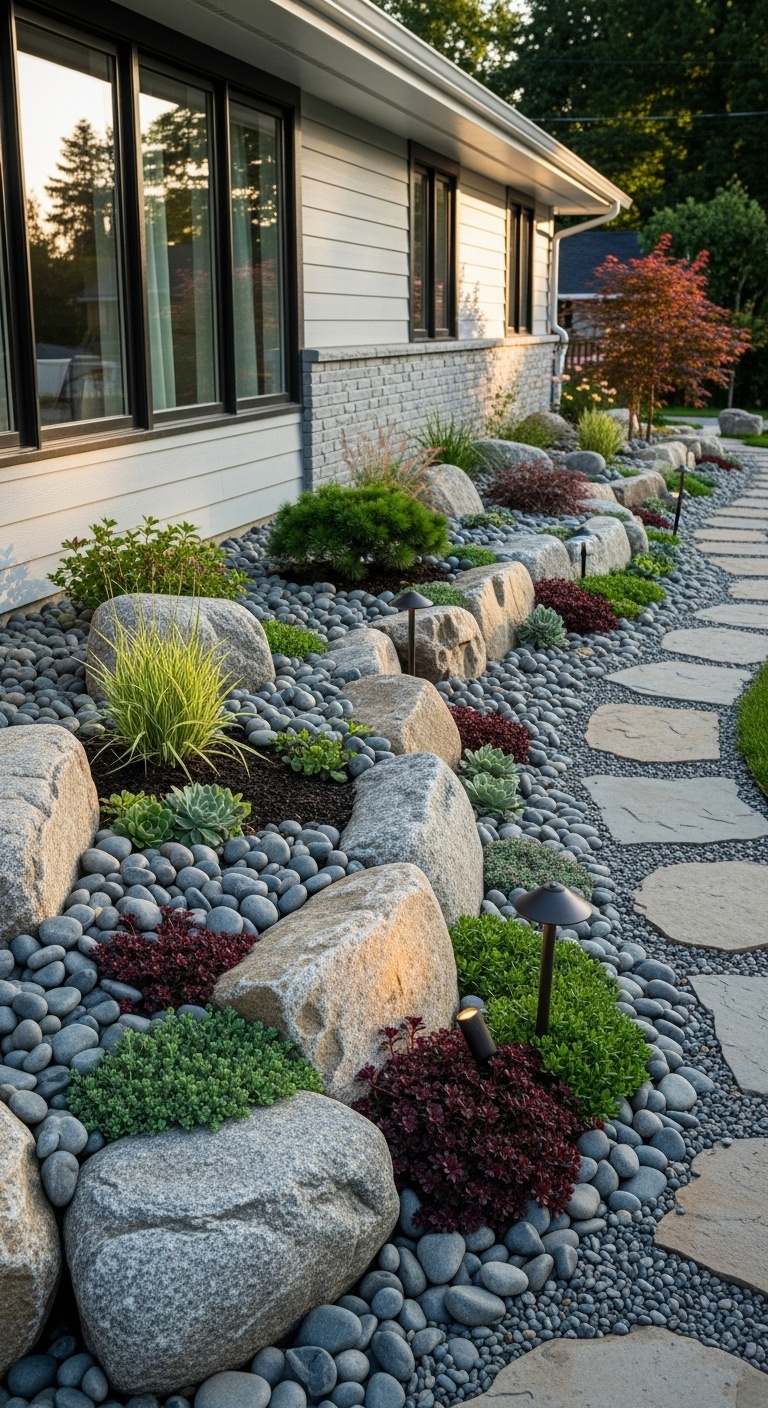
A rock garden on the side of your house can add significant charm and style. Begin with a collection of rocks in various shapes and sizes to create a sense of depth and visual interest.
Opt for drought-resistant plants such as ornamental grasses and succulents. They are well-suited for rocky environments and require less water. Groundcovers can be used to soften the hard lines of the rocks.
For additional color, consider incorporating hardy bulbs and vibrant flowers, like daffodils or wild tulips. The combination of rocks and plants will make your garden truly stand out.
You can also arrange the rocks to simulate the look of natural hillsides. This technique can greatly enhance the overall feel of your garden.
15. Creeping Groundcover

Creeping groundcovers are a fantastic choice for improving the side of your house. They spread with ease, helping to cover any bare patches. They are also adept at handling challenging conditions like poor soil and shade.
Plants like sedum, creeping phlox, and creeping thyme are excellent options. They introduce color and texture while being very low maintenance. That means less watering and weeding for you.
Creeping groundcovers are also effective at preventing soil erosion, which is ideal for sloped areas next to your home. In time, they form a dense, green carpet that remains attractive throughout the year.
16. Privacy Fence with Vines

A privacy fence provides your yard with both security and a sense of seclusion. You can enhance its visual appeal by training climbing vines along it. These plants transform the fence into a lush, green wall, softening its appearance.
Select vines that are well-suited to your local climate. Wisteria, ivy, and clematis are some popular choices. Always confirm that they can tolerate the specific sunlight and environmental conditions of your yard.
To support the vines, you will need to install a grid or trellis on the fence. This structure guides their climbing and ensures even spreading. Regular pruning will keep them looking tidy and encourage strong growth.
Vines do more than just increase privacy; they also attract birds and butterflies, bringing more life and color into your space.
17. Simple Seating Area

Setting up a simple seating area on the side of your house is a wonderful way to better enjoy your outdoor space. A small table accompanied by a couple of chairs is all you need. This creates a cozy retreat for morning coffee or an afternoon of reading.
To save space when the area is not in use, think about using foldable furniture. Lightweight chairs and collapsible tables are ideal for smaller spots. You can easily store them away to free up room whenever necessary.
A few soft cushions can make your seating area feel much more inviting. You might also want to add some small plants or other decorative touches to increase its charm.
18. Flagstone Walkway

A flagstone walkway can bring a lovely charm to the side of your house. It harmonizes well with gardens and offers a natural aesthetic. You can opt for irregular stones to achieve a rustic ambiance or use cut stones for a more polished appearance.
To build your walkway, start by clearing the path of grass and topsoil. Next, lay down a layer of washed sand to aid in drainage. Then, position your stones, leaving at least an inch of space between each one.
Adding plants along the edges of the walkway can make the path feel more welcoming. This creates a beautiful view and can also attract birds and butterflies.
19. Outdoor Lighting

Outdoor lighting can dramatically change the look of your side yard after dark. It also boosts safety by illuminating steps and pathways.
You might use stake lights to line your walkways. They are simple to install and cast a pleasant glow at night. For extra visibility, you can place bullet lights near stairs.
Another great idea is to mount lights directly onto your fences. This creates a downward beam that is perfect for lighting up the yard. Just be sure to space them evenly for the best results.
Draping tiny white lights over shrubs creates a warm and inviting atmosphere. It’s a beautiful look, especially when combined with flowers like tea roses at night.
20. Decorative Mulch

Decorative mulch introduces both color and texture to the side of your house. It is effective at controlling weeds and gives your garden a polished look. You have several materials to choose from, including rubber, stones, or wood chips.
Using a combination of different mulch types can create more interest in your landscape. For example, pairing dark mulch with lighter-colored stones can make your plants pop.
You can also coordinate the color of your mulch with your home’s exterior paint. This produces a cohesive design and boosts your home’s curb appeal.
21. Reclaimed Wood Edging

Reclaimed wood edging can lend a unique charm to your landscape. It’s an eco-conscious choice that gives your garden a rustic feel.
You could use old fence boards or pallets for a one-of-a-kind touch.
Simply cut the wood into your preferred lengths. Then, arrange the pieces in a trench dug around your pathways or flower beds.
This will help keep mulch and soil neatly contained.
Since you can often find reclaimed wood for little to no money, this is a budget-friendly and sustainable option that also reduces waste.
Check the wood to ensure it is free of rot. You may want to apply a sealant to it to improve its durability against the elements.
22. Modern Succulents

Modern succulents are perfect for achieving a clean and stylish effect in your side yard. They are available in a wide variety of colors and shapes, which makes them easy to integrate into any design scheme.
You can combine different types of succulents to form interesting patterns.
Use gravel or stones around them to enhance their look and improve soil drainage.
For a more structured arrangement, consider using containers. This also makes it simple to move the plants around if you decide to change the layout.
Place taller succulents toward the back to create contrast, and position smaller ones in the front to build depth. This results in a layered effect that is visually engaging.
Remember to select succulents that are suited to your local climate. They generally need less water than other plants, making them a beautiful and low-maintenance choice.
23. Trellis Plants

Trellises can bring both support and charm to the side of your house. They provide a structure for climbing plants to grow vertically, which saves space and creates a beautiful display.
You can use a trellis for a wide range of plants, including beans and roses. This helps your garden appear vibrant and full of life.
Think about positioning a trellis against a wall or fence. It’s an excellent way to fill empty spots while also adding a degree of privacy.
For an extra touch of elegance, select trellis designs that harmonize with your home’s architectural style. Whether simple wood, metal, or intricate lattice, a trellis can complement any setting.
Trellises also help keep plants elevated off the ground, which can promote healthier growth.
Choosing the Right Plants
Picking the right plants is essential for a beautiful side garden. The types of plants you choose will shape the look of your space and determine how much maintenance it requires.
Perennials vs. Annuals
Perennials are plants that return every year. They can serve as a dependable source of texture and color in your garden.
Excellent choices for side gardens include sedum, daylilies, and hostas. These plants do well in different light situations and typically require less work once they are established.
Annuals, in contrast, complete their life cycle in one growing season. While they provide intense bursts of color, they must be replanted annually.
For seasonal highlights, you might use zinnias, marigolds, or petunias. Just be aware that they demand more regular care and attention.
Many gardeners combine both types to ensure there is visual interest throughout the year. This approach lets you enjoy the steadfastness of perennials along with the brilliant flashes of annuals.
Low-Maintenance Options
If your goal is a great-looking garden without a huge time commitment, opt for low-maintenance plants. These varieties are generally more resilient and can withstand a range of weather conditions.
Some popular low-effort choices include:
Lavender: This fragrant plant attracts pollinators and needs very little water once it’s established.
Sedum: Characterized by its thick leaves, sedum is drought-tolerant and adds interesting texture.
Ornamental grasses: These plants provide movement and typically need minimal care.
By choosing these types of plants, you can cut down on the time you spend watering, weeding, and pruning. This frees you up to simply enjoy your outdoor space.
Native Plants
Incorporating native plants is a wise move for supporting your local ecosystem. These plants are already adapted to your area’s soil and climate, so they usually need less water and general care.
Some examples include:
Coneflowers: These hardy plants are a magnet for butterflies.
Black-eyed Susans: This bright and cheerful flower does well in sunny locations.
Yarrow: Known for its medicinal uses, this plant also thrives with very little fuss.
By selecting native plants, you create a beautiful landscape that also benefits local wildlife. These plants can form the foundation of your side garden, helping it flourish with minimal effort from you.
Enhancing Curb Appeal
Improving curb appeal can turn the side of your house into an inviting and attractive area. By focusing on key design elements like pathways, decorative stones, and art, you can make a significant impact on how your home looks from the outside.
Using Decorative Stones
Decorative stones are a great way to introduce color and texture to your landscape. Select stones that coordinate with your home’s exterior. Flagstone, river rocks, or gravel are all excellent choices.
You can use them to create borders around pathways or garden beds to define the different spaces. A mix of stone sizes adds visual interest.
Arranging stones into patterns can also elevate the look of your landscaping.
Think about adding a stone pathway. It connects different zones and naturally draws the eye.
This provides a natural feel while guiding people through the space. Bright, colorful stones can create a lovely contrast against the greenery.
Creating Pathways
A pathway along the side of your house is both visually appealing and highly functional. You can use materials like mulch, pavers, or stepping stones to establish a clear route.
Ensure the pathway is wide enough to walk on comfortably.
Laying out pavers or stones in a staggered pattern can add a touch of flair.
You might also want to install lighting along the path’s edges. This not only looks great but also helps guide visitors safely at night.
Planting alongside the pathway helps create a warm and welcoming atmosphere.
Choose low-maintenance shrubs or flowers that do well in your climate. This makes the path feel more inviting and integrated with the natural surroundings.
Incorporating Art Pieces
Adding art pieces can infuse your landscape with personality. You might consider decorative pots, birdbaths, or sculptures.
Pick items that align with your personal style and the overall vibe of your home.
Place these art pieces in strategic locations. Position them where they will be noticed but won’t block any walkways.
You can even create a small seating nook with benches and art, turning it into a perfect spot for relaxation.
Think about seasonal decorations, too. Items that you change with the seasons can keep your landscape feeling fresh and dynamic. This adds a sense of excitement and can reflect holidays or the changing of nature.
Sustainable Landscaping
Sustainable landscaping is all about creating and managing outdoor spaces in an environmentally conscious way. You can apply certain methods to your side yard to conserve water and handle waste more effectively.
Water Conservation Techniques
To reduce water usage, think about installing a drip irrigation system. These systems bring water directly to the roots of your plants, which minimizes evaporation and waste.
Xeriscaping is another effective approach, which focuses on using plants that are resistant to drought.
This practice not only saves water but also lessens the need for frequent upkeep.
You can also install rain barrels to capture rainwater from your roof. This collected water can then be used for your garden during drier periods.
Finally, apply mulch to your garden beds. Mulch helps the soil retain moisture, suppresses weeds, and adds valuable nutrients as it decomposes.
Composting Benefits
Composting is a fantastic method for recycling organic materials. It allows you to transform yard trimmings and kitchen scraps into a nutrient-packed fertilizer for your garden.
You can start with a compost bin in your side yard. Fill it with materials such as leaves, grass clippings, and vegetable peels. To avoid attracting pests, steer clear of adding dairy and meat.
As the compost breaks down, you are left with rich soil that significantly improves plant health. It enhances the soil’s structure and its ability to hold moisture, which means you’ll need to water less often.
Using compost also helps reduce your carbon footprint by diverting waste from landfills. This is a simple yet impactful way to help the environment while ensuring your landscape thrives.