That collection of used items stashed in the basement can quickly become a real problem. Beyond just hogging space, they can create a damp environment perfect for unwanted pests. Instead of letting them languish, why not transform them into something truly useful, like a one-of-a-kind garden path? If you’re looking for a spark of inspiration, explore this collection of 25 recycled garden path ideas that you can make your own. These projects deliver a functional walkway with a unique design that is also incredibly affordable, since you are using recycled materials. Ready to get started in your garden? Find the perfect fit for your style below.
What Is A Recycled Garden Path?
Just as the name suggests, a recycled garden path is a garden feature crafted from repurposed materials. It typically connects one part of your yard to another, giving you a clear place to walk. You can create a fantastic DIY garden path from all sorts of recycled items, including wooden pallets, old planks, rubber, gravel, and stepping stones. Rocks are an especially popular choice because they are easy to work with and can be combined with other materials. Plus, they are often abundantly available, especially around construction sites.
How Do You Make A Creative Garden Path?
Using recycled materials gives you everything you need to build a truly creative and unique garden path. Because these materials aren’t sold in stores, your walkway will have a look that is completely different from anyone else’s. Now it is up to you to play with the materials you have. For some tips on creating a showstopping garden path, check out these ideas.
Get inventive with zig-zag patterns. Even if the material seems ordinary, you can combine different colors to create a striking contrast along your path. Try out vertical and horizontal designs. Instead of a monotonous pattern, merging horizontal and vertical layouts is a brilliant way to decorate the walkway. Recycled pavers, bricks, and wood are the best materials for this kind of design. Use recycled ceramics. These materials often have eccentric colors that can turn your garden path into a stunning focal point. To get the most out of them, draw out a pattern before you start building.
How Do You Make A Straight Path More Interesting?
Instead of building a simple straight path with standard paving, you can elevate the design with recycled materials. They add a touch of distinctive pattern that naturally draws the eye. Consider using plastic bottles, which you can paint in a variety of bright colors. You can then plant them between the pavers along the path. For an easier approach, you can simply arrange them to create a border. Besides whole bottles, you can also build a straight walkway from plastic bottle caps. Arrange them on the path to form flowers or other geometric shapes that decorate the area.
Easy Recycled Garden Path Ideas
For a beginner, creating a recycled garden path can feel like a complicated project. If that sounds like you, don’t worry. Here are some of the easiest recycled garden path ideas that you can easily bring to life in your own yard.
1. Puzzle Brick Garden Path
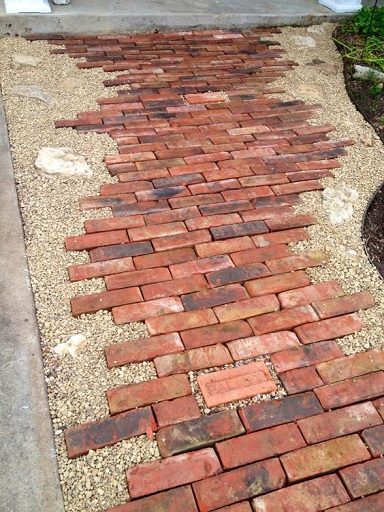
You can quickly put together a simple garden path using red bricks. Their bright, natural color will blend seamlessly with the plants in your garden. Instead of laying them in a straight line, try creating a puzzle-like design. Just make sure the final surface is stable enough for walking. Then, spread some white or brownish gravel around the area to make the bricks pop. Growing a lawn next to the path will make the whole scene even more beautiful.
2. Terracotta Fractions Garden Path
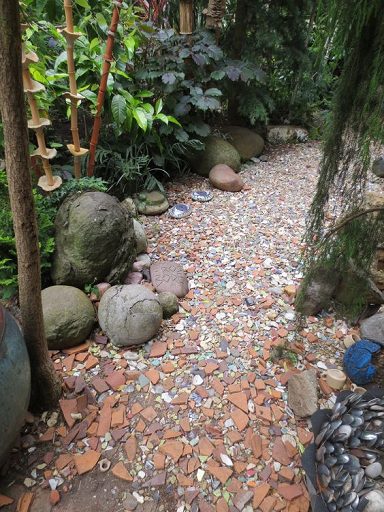
If you have a broken terracotta pot, don’t just toss it in the trash. Those pieces can become interesting recycled materials for a unique garden path. First, crush the pot into smaller pieces. Then, spread the fragments over the surface of your garden soil. Make sure to smooth them out so there are no sharp, protruding edges that could be harmful. After that, add a few large rocks as decorative accents. It’s so easy!
3. Recycled Stepping Stones Path
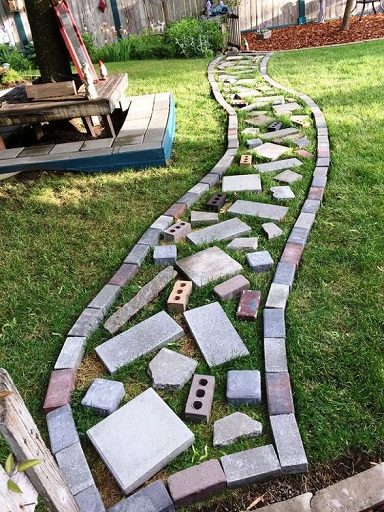
Building a garden path doesn’t always require digging up the soil. You can simply arrange recycled materials like stepping stones to create a walkway. Start by setting up pavers to form a border. Giving the frame a squiggly shape will make the design more captivating. Next, fill the path area with stones. Be sure to use stones with a broad surface for the footing areas and smaller ones for decoration. You can even add mini concrete pieces for extra patterns.
4. Easy Recycled Slabs Garden Path
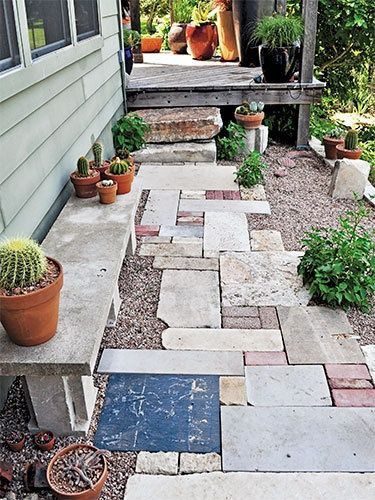
Don’t throw away those old slabs if you still have them in your basement. You can use them to create a stunning, one-of-a-kind garden path. If you have slabs in several colors, arrange them randomly to produce an eye-catching combination. Position the slabs both horizontally and vertically for a more varied look. Afterwards, spread gravel around the path to adorn the surrounding area. You can also place some potted cacti and a bench on the side as decoration.
5. Beer Bottle Garden Path
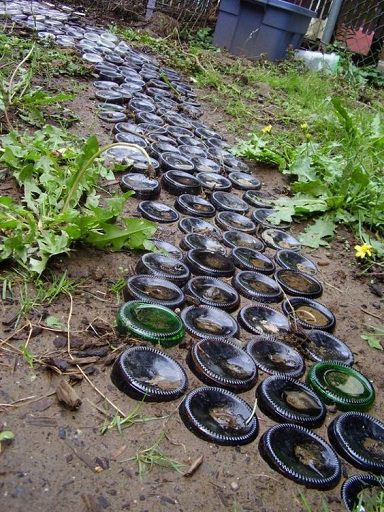
Glass beer bottles are a pollutant that is very difficult to decompose. It is much better to use them for a garden path instead of sending them to the garbage. You can start by digging into the soil to a depth that matches the size of the bottle. Make sure only the bottom surface of each bottle is level with the ground. Arrange the bottles with some space between them to provide room to stand. For a more attractive look, you can paint the bottles with colorful paints. Alternatively, you can arrange the glass bottles into a geometric pattern to make them look more beautiful.
6. Pavers Garden Pathway
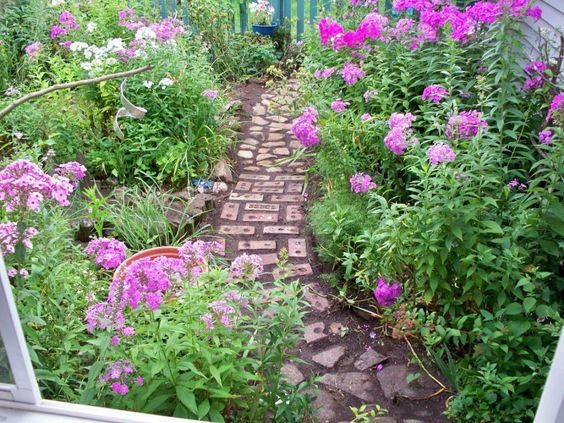
A path running through the middle of a flower garden is an awesome idea. It gives you better access for taking care of your flowers. It’s especially nice when the path is made from natural materials like bricks. The process is simple. You just need to dig a trench about 100 mm to 150 mm deep to place the bricks. Then, add the soil back into the hole, leaving the brick surfaces exposed. To prevent water from pooling, you can spread gravel or grow a lawn nearby.
7. Limestones Garden Pathway
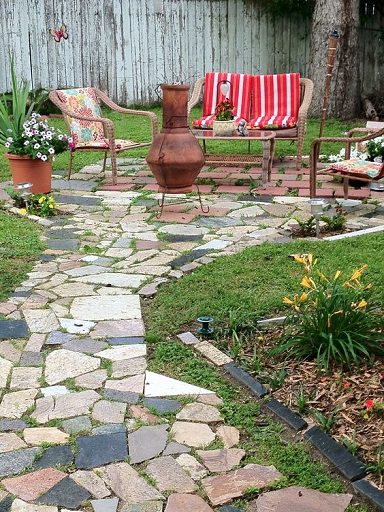
A garden path made of paving is a common sight. But have you ever considered using pieces of limestone as the main ingredient? Their broad surfaces provide a wide area for footing. You could even set up an outdoor lounge area for hanging out with your family. Beyond that, the natural color variations in the limestone can add a beautiful aesthetic appeal to the path. To make it even more stunning, grow a lawn around it or plant low-growing plants to create a border.
8. Abstract Short Garden Path
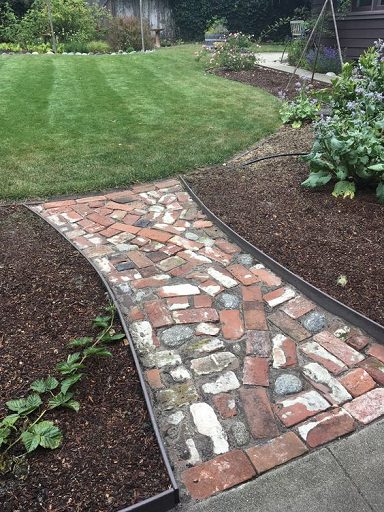
Short garden paths are easier to decorate because their narrow space doesn’t require a lot of effort to make them beautiful. Instead of searching for expensive materials, you can use recycled products like bricks and stones. Start by creating an outer layer shaped like a flower vase. Then, dig out the soil inside this area. Place bricks horizontally at each end, and arrange the rest randomly. Glue the sidelines with cement. For a more colorful path, you can paint the bricks with white or gray paint.
9. Stone Walking Path
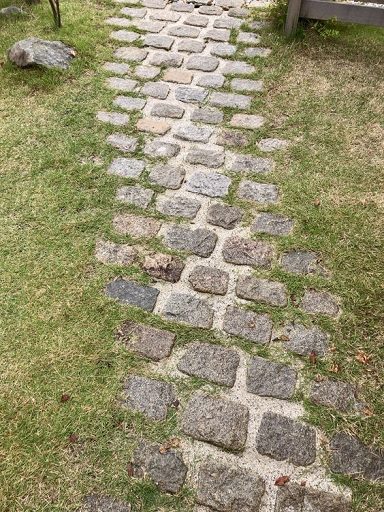
For those who love old-fashioned exteriors, this stone walking path will be a definite favorite. Its minimalist design gives it a unique look, using only stones as the main material for the walkway. They are arranged in rows of about four to five stones, creating a pattern that resembles steps. What makes this design particularly interesting is how the surrounding grass seems to merge with the path. Additionally, this setup is comfortable to walk on because the flat, rough texture of the stone provides a non-slip surface.
10. Brick Stone Garden Path Arrangement
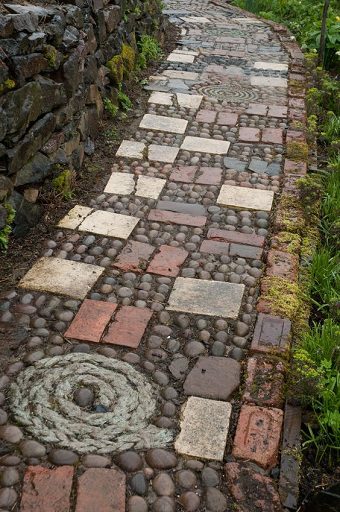
You might be familiar with a garden path made from recycled bricks. But what happens when you combine those bricks with stones in the same space? The result is a true gem. This combination offers a variety of textures that make the walkway look stunning. Beyond its beautiful appearance, these materials also ensure safety for anyone walking on them. You can merge two bricks in a row, with a distance of about 10 centimeters between each pairing. Then, add stones along the sides of the arrangement. For an extra element, you can place ceramics around the stones.
DIY Recycled Garden Path Ideas
You can get creative and make a DIY upcycled garden path with used materials. These projects are easy, cheap, and will definitely elevate your garden’s landscape. Interested in giving it a try? Choose your favorite from our compilation below.
11. DIY Old Wooden Planks Walkway
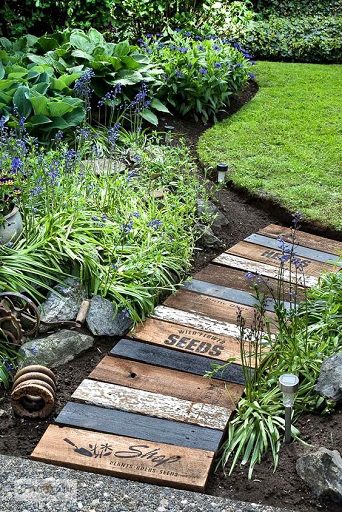
If you have a pile of old, unused nameplates, you can use them to create a mini garden walkway. It is very easy to put together right away. Arrange the planks along the area you want to create a path. Make sure the planks fit well with each other. If there are any gaps between the pieces of wood, you can fill them with gravel for decoration. Then, grow some plants as a border to add greenery to the area.
12. Alternating Garden Path
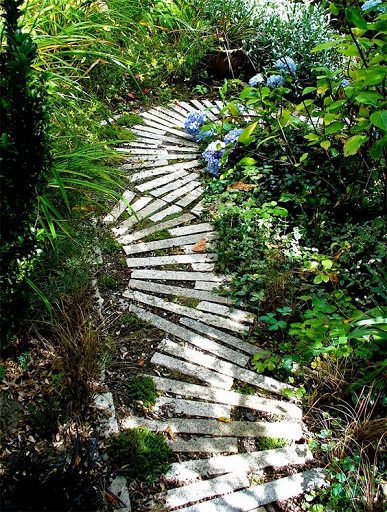
Some people enjoy designs that are out of the box, and that includes walkways. If you are one of them, this alternative garden path is worth a try. It uses recycled wood materials, shaped into approximately 45-degree circles and arranged in an alternating pattern. To make them less plain, you can paint the wood a natural color, like brown. It’s best to avoid white, as it can easily look dirty.
13. Simple DIY Garden Pathway
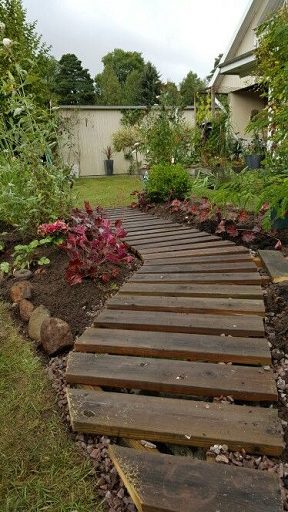
Here is another simple DIY design that deserves a spot on your priority list. The natural brown color of the wood blends harmoniously with the garden. Meanwhile, the leafy plants around it seem to decorate the area, making it look more striking. You can add gravel at the bottom of the path for both support and decoration. To prevent slipping, it would be a good idea to coat the wood with a protective finish.
14. Tree Stumps Mini Path
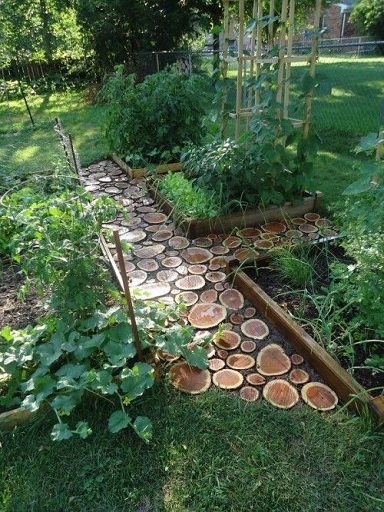
Do you have tree stumps left over from cutting wood for your winter fireplace? You can use them to decorate your garden path. Choose stumps of different sizes to cover the entire walkway area. Since the rings of the wood create a unique pattern, make sure they are facing up. Then, you can fill the gaps with either soil or gravel. We recommend using stones or gravel to prevent slipping and to add another texture to the space.
15. Garden Pallets Walkway
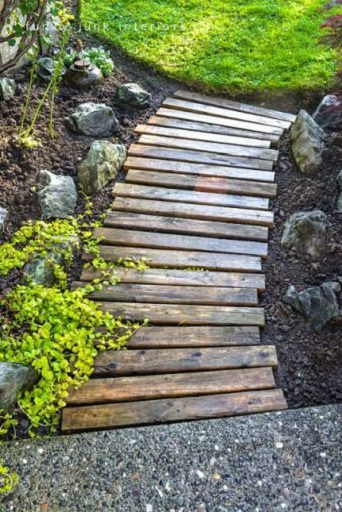
While most people might throw away wooden pallets, you can use them to create an unusual garden path. It is easy to make, since you only need to arrange them in a row to connect two areas. You can enhance the sides with granite stones so they don’t look empty. Growing ground covers or a lawn is also a brilliant idea to add some greenery. Additionally, we recommend covering the soil with gravel to prevent erosion during heavy rain.
16. Zig Zag Garden Path
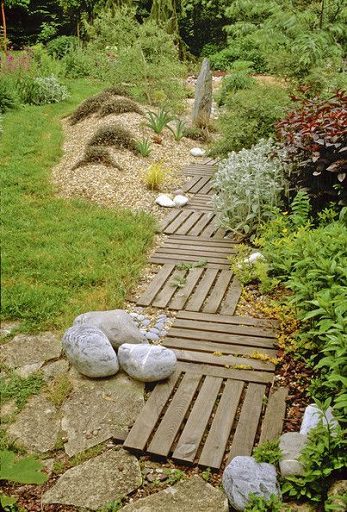
Transform your garden by designing a path made from wooden pallets. The neat design of these recycled materials makes them easy to arrange. You can set them up by combining vertical and horizontal positions in a zig-zag pattern. Then, add stones to the sides and spread gravel for decoration. You can also grow plants along the walkway to spice up the space.
17. Red Recycled Brick Garden Path
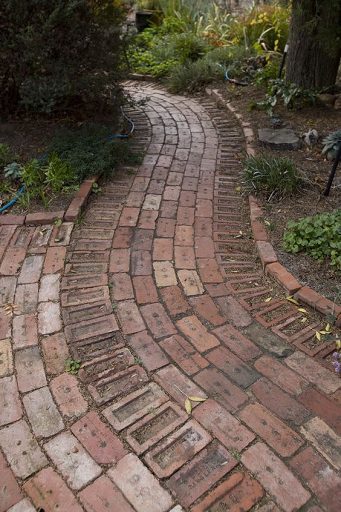
Recycled bricks never fail to create a simple yet versatile garden path. They are easy to organize and provide a wide surface to walk on. You can combine bricks with holes and standard bricks to create a stunning design. Instead of a straight line, try making the path curvy for a more artistic look. To make it stand out even more, you can grow a lawn in the holes of the bricks or simply paint them with different shades.
18. Minimalist DIY Garden Walkway
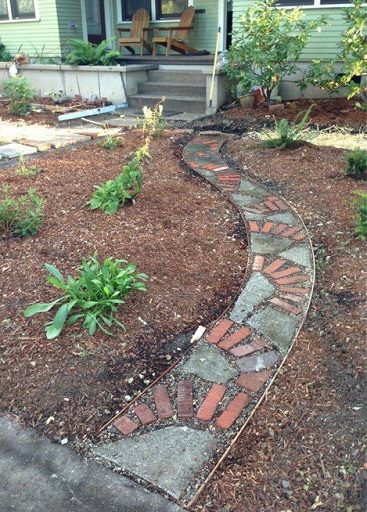
Not everyone enjoys a heavily patterned garden path. Some prefer a minimalist design that prioritizes function without sacrificing aesthetic value, like this garden walkway. Its small size may not be ideal for two people walking side by side, but it adds an amazing decorative appeal to the garden. The recycled red bricks, arranged in quarter circles that connect, give the path a unique look. Even more remarkably, you can create it with just cement. However, it would be better to include gravel and a lawn to prevent the area from looking too arid.
Unusual Recycled Garden Path Ideas
Channel your creativity into building an unusual recycled garden path. With used materials, you can freely explore your imagination to design the path of your dreams. The variety of colors you can use will make your garden look more alive. Find the most unique idea for you below.
19. Plastic Bottle Garden Walkway
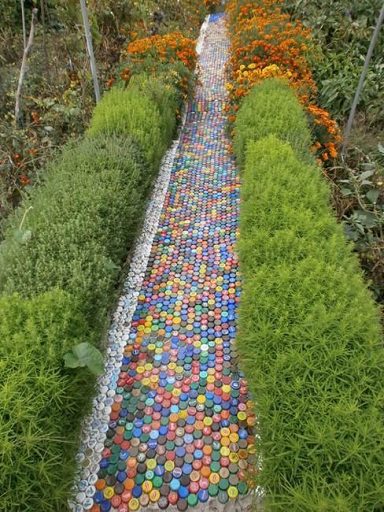
Who would have thought that recycled bottle caps could become an exquisite garden path? Their colorful shades effortlessly decorate the walkway without any need for additional paint. You can try collecting white recycled plastic caps to arrange as a border. Then, randomly set other colors to create a wide surface that you can easily walk on. To elevate the view, it’s better to avoid grouping caps of the same color. Instead, mix them up to create a distinctive contrast.
20. Hardscape Garden Path
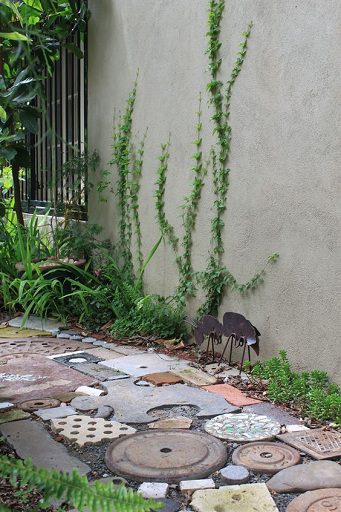
If you enjoy experimenting with hardscape garden paths, try using water drain covers. They might seem useless, but they can add a vintage character to your walkway. Combine large and small covers, placing them next to each other. In between, you can spread gravel to make the setting neater. You can also incorporate ceramic shards, stepping stones, and other rocks into the landscape. To prevent it from looking too arid, grow some green plants on the side of the path.
21. Artistic Mosaic Garden Path
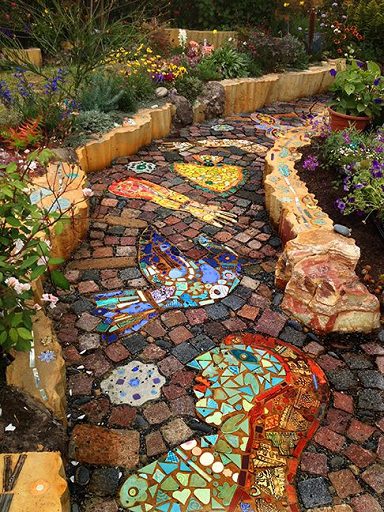
This artistic mosaic garden path might not be for everyone, as it requires extra energy and creativity to complete. However, we can’t deny that it may be the most unique garden walkway you could create if you truly treasure art. Colored stone fragments are arranged into various mind-blowing shapes. The ordinary red and gray stones provide a neutral background, making the characters above them stand out. You can make it even more dramatic by allowing moss to grow on top. Are you up for the challenge?
22. Upcycled Ceramic Walkway
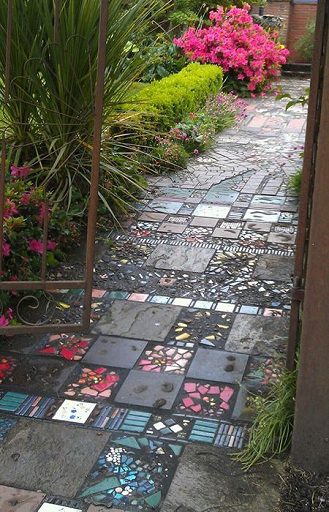
Channel your innovative ideas by decorating your upcycled garden path with recycled ceramics. The various motifs on the ceramics make the walkway look captivating. Since you already have beautiful patterns to work with, you can be more playful with neutral colors like gray, white, or brown. Choose a color that makes the design stand out. Additionally, try to place some ceramics with different themes to make them a focal point in your garden.
23. Granite Scraps Path
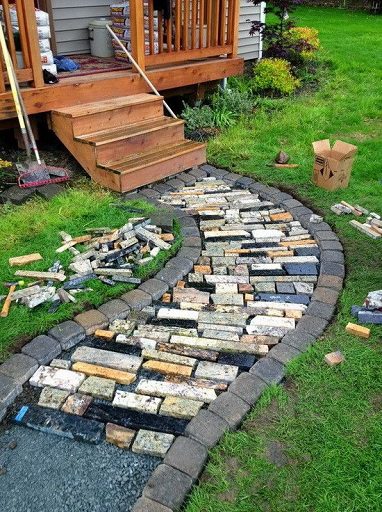
Besides ceramics, granite stoneware also has its own charm because of its colors. Even though it’s not as prominent as ceramic, you can arrange the earth-toned colors to create a wonderful contrast. First, create a layout with pavers or stones that leads to your front door. Then, arrange the granite within the frame in a horizontal position. To make it stand out more, align the dark tones with the bright ones in the same row.
24. Unique Recycled Garden Roadway
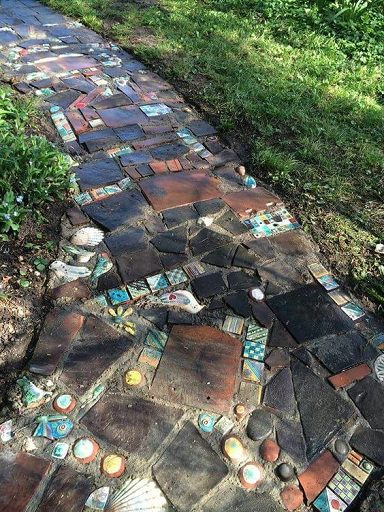
Stepping stones and bricks can provide you with a wide garden path. You only need to dig the soil and then merge two pieces of each material. Place these groups randomly, but with about 5 to 10 cm of space between them. In the spaces between, add stones that you have previously colored to make the arrangement more attractive. You can also place shells you have collected to bring a coastal vibe to the path. This is definitely one of the most unique stone garden paths you can create.
25. Modern Tile Garden Path Design
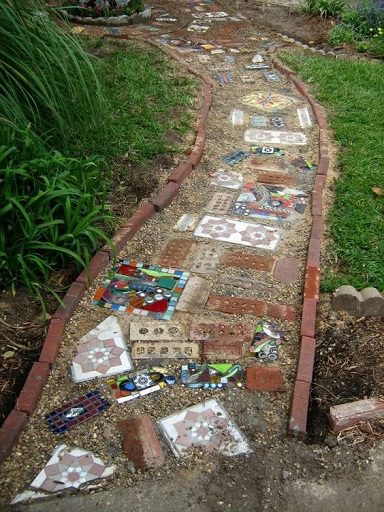
Surprisingly, you can create a modern tile garden path using ceramic tiles, bricks, and gravel. The motifs on the ceramics effortlessly decorate the path. Meanwhile, the gravel provides a flat background that makes the setting stand out. Additionally, the bricks offer a versatile border that separates the path from the lawn. You could also replace the bricks with recycled steel or recycled tires, which are also very sturdy.
Final Thought
A recycled garden path can be made from a wide variety of materials, from rubber and bricks to ceramics, steel, and plastics. Creativity is what truly distinguishes the final result. A great tip is to combine several materials in one space. Choose a sturdy material for the base or border, and use others with interesting patterns for decoration. With designs like these, you will have a stunning garden path that becomes a standout feature in your outdoor space.
Frequently Asked Questions (FAQ)
How deep should you dig for a pathway?
The depth of excavation for a garden pathway depends on the materials you plan to use. Generally, it should be around 100 mm. However, it needs to be slightly deeper for slabs and pavers, which require at least 150 mm of depth to properly set the materials. If your garden has particularly moist soil, you should dig as deep as 200 mm.
How wide should a garden walking path be?
While you may often see cute, narrow reclaimed garden paths, there are better options for a walking path. A garden walking path should generally be at least four feet wide. This allows two people to walk side by side without stepping off into your garden. This size is ideal for a busy garden that is frequently used. For home gardens, you can adjust the width to fit the area you have available.
How do you make a simple walkway?
Designing a garden walkway is simple. You can adopt one of the recycled garden path ideas that use items you have around your home. One of the easiest methods is to use unused pavers or bricks. Prepare a plot of land that leads to your garden or is in the middle of the area. Then, dig the soil to about 150 mm to make space for the materials. After that, arrange the bricks or pavers according to your preference. A zig-zag or a combination of vertical and horizontal patterns is a great option. Fill the gaps with soil and spread gravel around the path to prevent slipping. You can also create a recycled rubber garden path by using rubber for decoration.
Do you need a subbase for a recycled garden path?
Although it is possible to build a recycled garden path without a subbase, it is not recommended. A path without a subbase will not have the same durability as one with a subbase. Without it, your walkway will be vulnerable to changes in the weather, which can cause it to become damaged easily. Create a subbase of approximately 100 mm, with 50 mm of sand, and the remaining depth for the material you chose for your garden path.