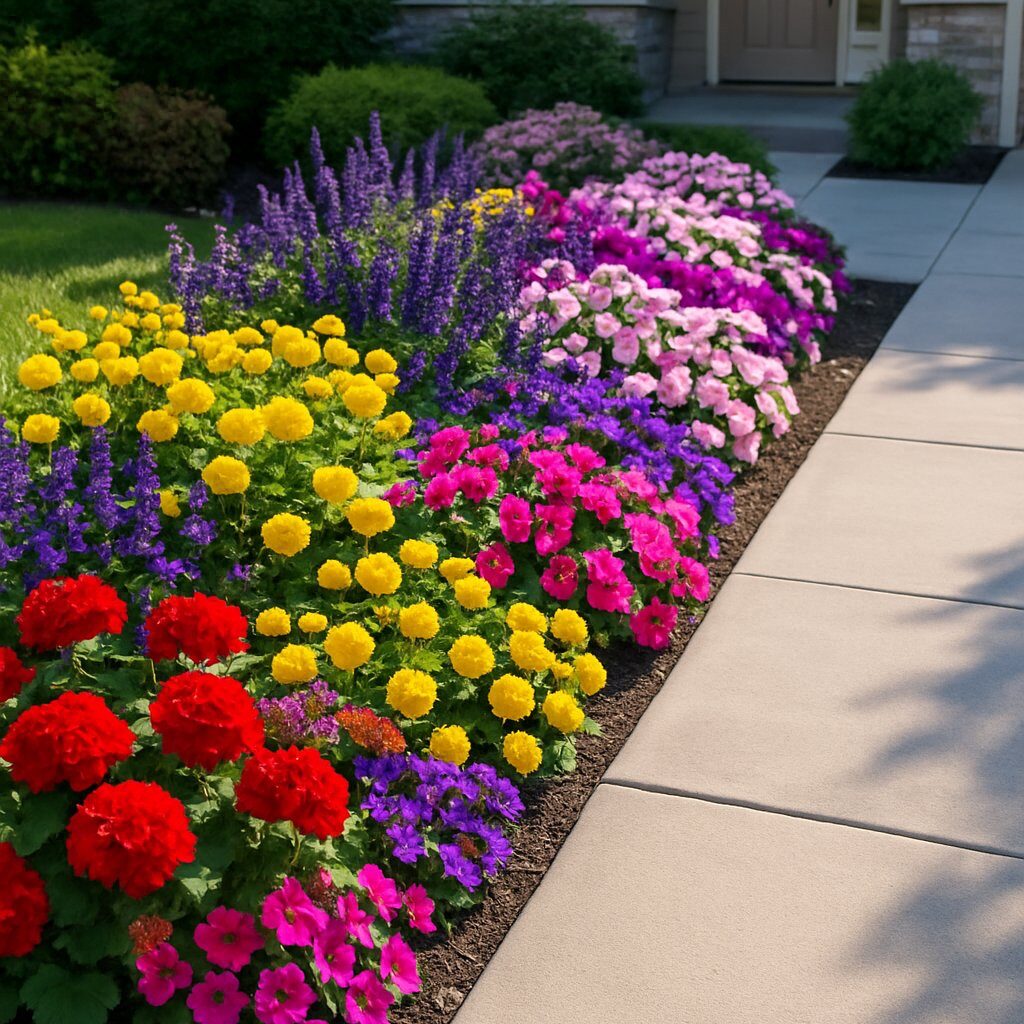
Your front yard is the first impression your home makes, a welcoming handshake to visitors and a sight you come home to every day. Even simple updates can dramatically elevate your home’s curb appeal, transforming your yard into a space that truly feels like an extension of your home.
You’ll discover straightforward front yard landscaping ideas here, perfect for a quick and impactful refresh, regardless of your personal style or the size of your space.
Understanding Your Front Yard’s Potential
Before you jump into new projects, it’s wise to understand your front yard’s unique characteristics. This involves assessing the space, taking stock of what’s already there, and factoring in your local climate.
Assessing your space and existing features
First, take a walk around your front yard. It sounds obvious, but many of us hurry past this space without ever truly observing it. Take note of which areas receive full sun versus shade, and identify any spots where water tends to collect after it rains. You might find you already have some wonderful plants that simply need a little care to thrive.
Also, consider your natural pathways, like the route to your car or front door. You don’t want to plant something beautiful only to have it trampled every day.
Considering your climate and maintenance capabilities
This is where many plans go wrong. People see a gorgeous yard on social media and try to copy it, without considering if the plants will actually survive in their region. For instance, if you live somewhere hot and dry, a lush green garden might require an enormous water bill. Be realistic with yourself about maintenance, too.
If you have trouble remembering to water indoor plants, it’s best to skip high-maintenance flowers and opt for more resilient, low-fuss options.
With those points in mind, let’s get to the ideas.
1. Add a colorful flower bed near the walkway
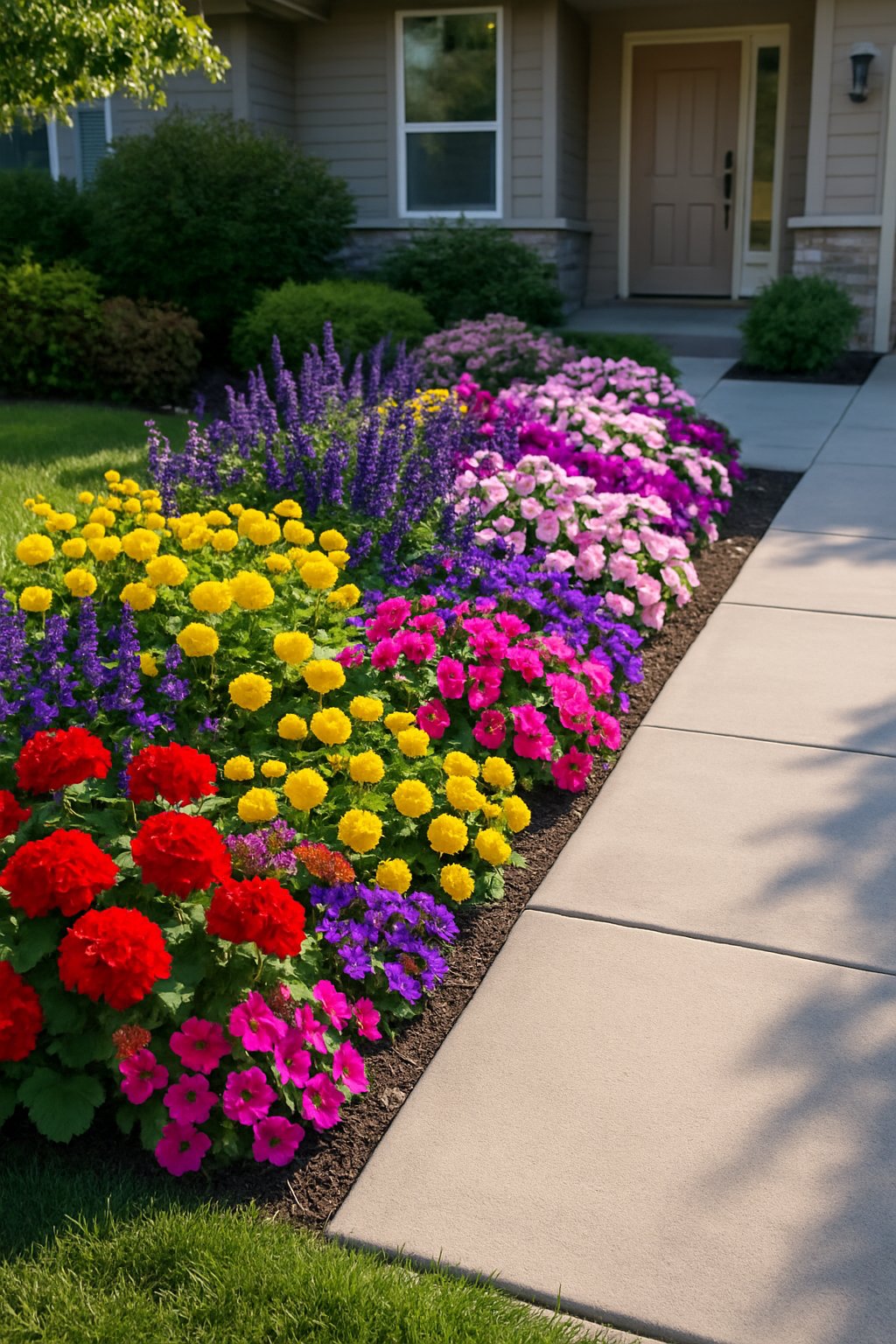
Consider placing a flower bed right alongside your walkway. This simple addition instantly brightens the path to your front door.
Mix and match flower colors and heights to create a display that feels lively without being overcrowded.
By choosing flowers with different blooming seasons, your bed will maintain its beauty throughout the year. A combination of perennials and annuals ensures lasting color with minimal effort.
You can also include low shrubs or small evergreens to provide structure. This helps the bed remain a standout feature, even in the winter.
Vibrant flowers next to the walkway draw the eye and make your home feel much more inviting.
A helpful tip is to select plants that are well-suited to your climate. Place taller plants toward the back and shorter ones near the path for the most visually appealing arrangement.
2. Plant blue grape hyacinths for spring color
Blue grape hyacinths deliver a vibrant splash of color to your yard in the spring. Their dense clusters of blue flowers resemble tiny grapes, creating a look that is both quirky and beautiful.
They are easy to grow in either full sun or partial shade. Simply plant the bulbs in the fall, and you’ll be rewarded with bright blooms come springtime.
Space the bulbs approximately 4 to 6 inches apart. This will result in a full, lush patch that looks intentional and well-designed.
These flowers prefer well-draining soil, so it’s best to avoid soggy areas. Proper drainage helps them bloom vigorously year after year.
Grape hyacinths are not tall, typically reaching only 6 to 8 inches. This makes them ideal for edging flower beds or planting in front of larger plants.
Pair them with tulips or daffodils for a striking effect. The deep blue contrasts wonderfully with yellows and pinks.
These flowers require very little maintenance. After they finish blooming, allow the leaves to die back naturally, which helps the bulbs store energy for the following year.
You can plant them along walkways or as borders to create a ribbon of blue that truly captures attention.
For a more impactful display, plant the bulbs in groups. Remember to water them after planting, but ensure they don’t become waterlogged.
3. Use yellow daffodils to brighten the lawn
Yellow daffodils bring instant cheer to your yard at the start of every spring. Their sunny hue makes everything feel fresh and new.
They are quite adaptable and can be planted in sunny spots or areas with partial shade.
Daffodils are self-sufficient and reliably return each year. For a bold splash of color that really catches the eye, try planting the bulbs in dense clusters or neat rows.
They typically grow to about 14 inches, making them a perfect choice for borders or for lining walkways.
If you’re looking to create an even more colorful display, mix them with tulips or pansies.
Daffodils are also great for covering up bare spots in your lawn before the grass has fully greened up.
Plant the bulbs in the fall to ensure a spectacular show in the spring. They thrive in soil that drains well, so steer clear of any waterlogged locations.
For the best visual effect, plant bulbs in groups of five or more. Position them away from areas with heavy foot traffic to protect the delicate blooms.
4. Incorporate evergreens for year-round greenery
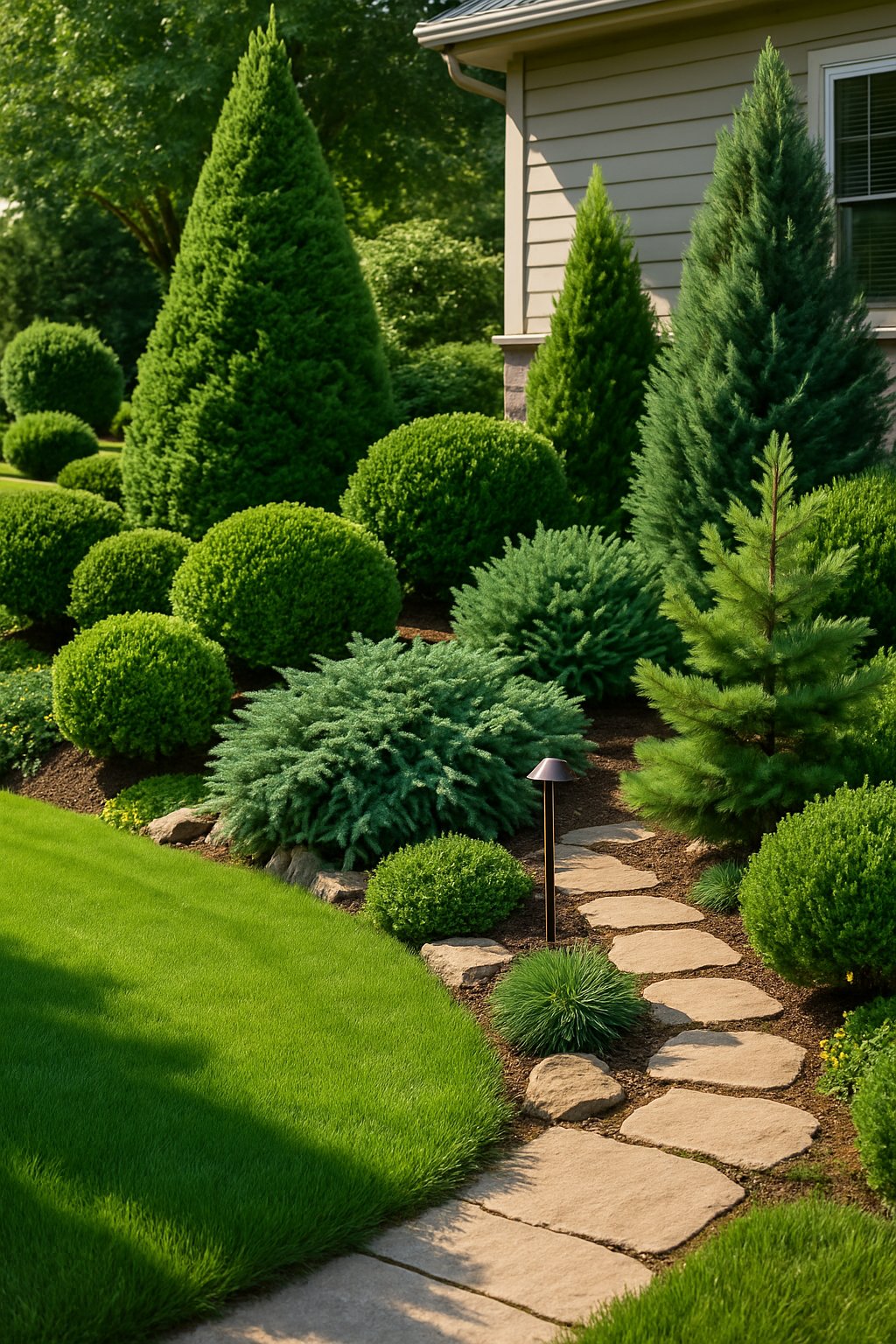
Evergreens ensure your yard remains lively, even in the middle of winter. They provide essential structure and color when other plants have faded.
Consider shrubs like boxwoods, holly, or juniper. Once established, they require very little maintenance.
For a more textured and dynamic appearance, mix different sizes and shapes. Evergreens can serve as natural privacy screens or be used to neatly edge your yard.
Placing stones or mulch around their base can help accentuate their green foliage.
Plant them in a location where they will receive an adequate amount of sun, which is typically full or partial exposure.
It’s a good idea to choose evergreen varieties that are known to handle your local weather conditions. A light pruning each year will help keep them looking tidy.
5. Create a rock garden for low maintenance
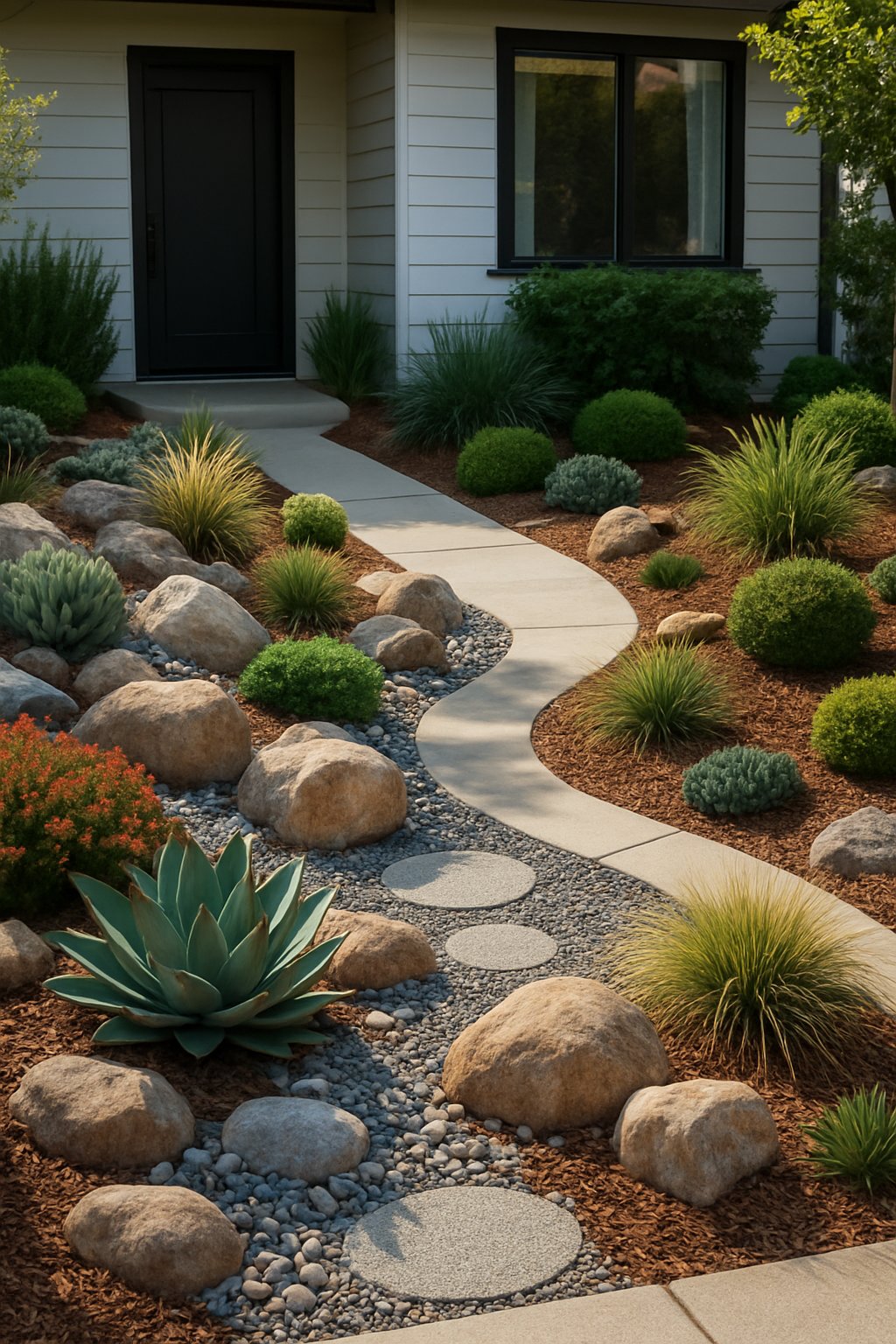
Rock gardens are an excellent choice if you desire a stylish yard with less upkeep. Use a variety of rock sizes and colors to create visual interest.
Since rocks do not require watering or trimming, you’ll save a significant amount of time.
Incorporate drought-tolerant plants, such as succulents or small shrubs, around the rocks. This adds greenery while keeping the maintenance level low.
Laying down flat stones to create paths can make the entire space feel more inviting and accessible.
Arrange the rocks in a way that guides visitors through the yard. This technique gives the landscape a natural yet orderly feel.
This aesthetic is versatile and complements many home styles, particularly if you prefer a simple but sharp design.
Using rocks sourced from your local area can help the garden blend in more naturally with its surroundings. Grouping plants with similar care requirements together will also make maintenance much simpler.
6. Add a small water feature like a fountain
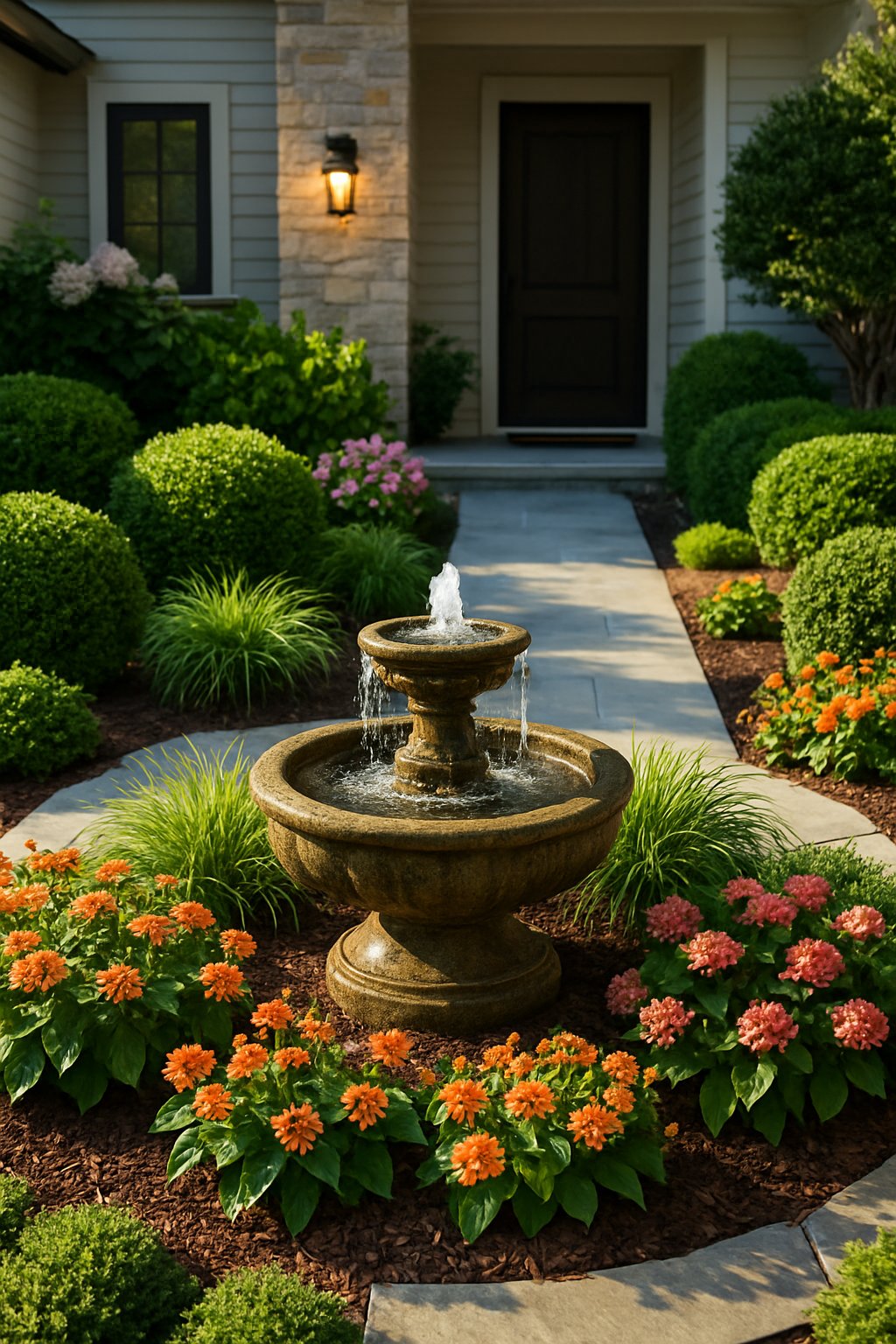
A small water fountain can introduce a sense of peace and style to your front yard, even if you’re working with limited space. Select a design made of stone or wood that complements your home’s aesthetic.
The sound of moving water adds a soothing ambiance that is universally appreciated. Place your fountain near plants or rocks to achieve a more natural and integrated look.
If your yard is compact, consider a small fountain with a recirculating pump. This feature conserves water and simplifies operation.
You can also add floating plants like water lettuce for an extra touch of green. It’s a minor detail that can make a significant impact.
Position your fountain where it can be seen from both inside and outside your home. Arranging natural stones around the base helps it blend seamlessly into the landscape.
7. Use mulch to keep weeds down and soil moist
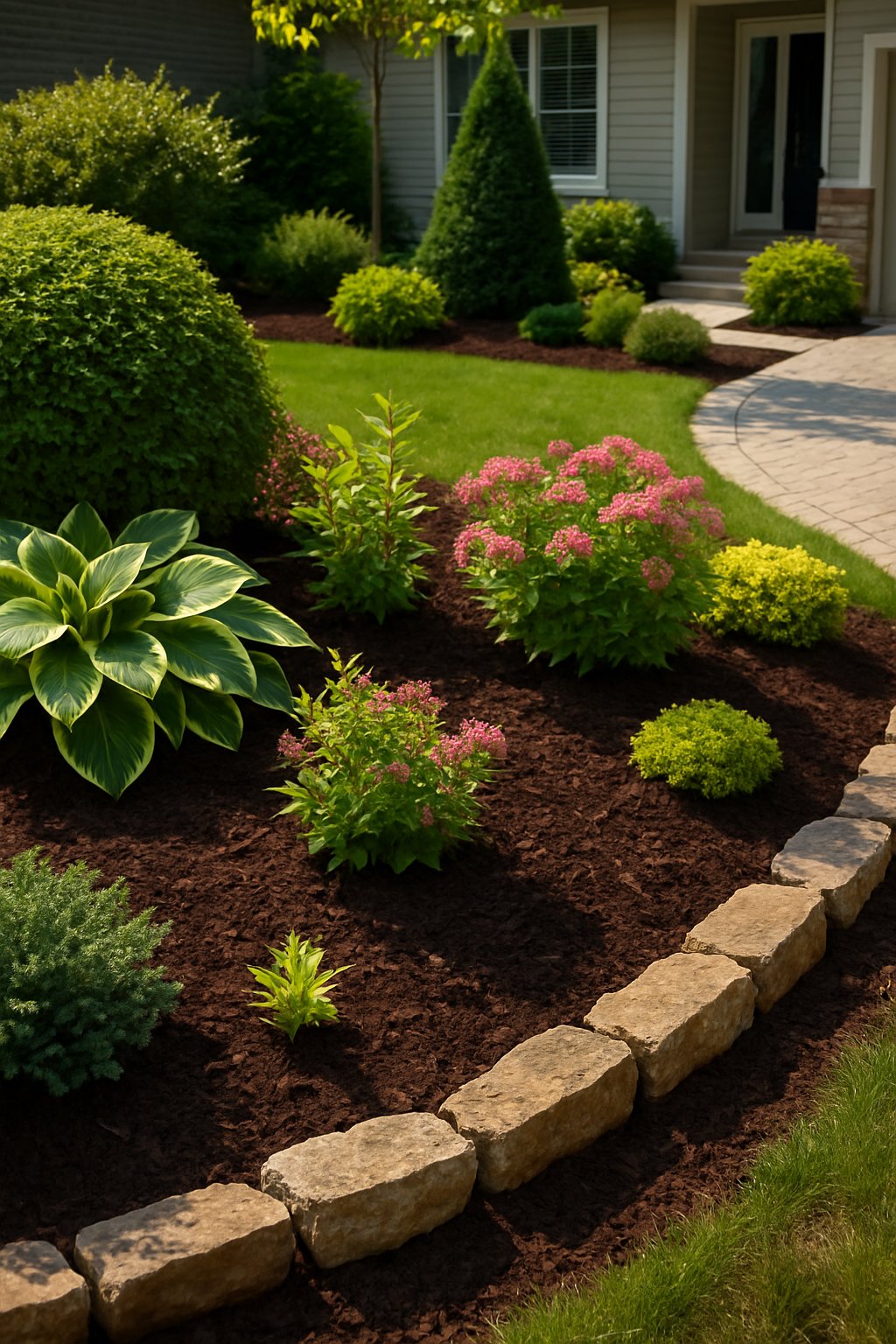
Mulch significantly simplifies weed control. A solid layer of mulch effectively blocks sunlight, preventing most weeds from sprouting.
It also helps the soil retain moisture, which means you’ll need to water your plants less frequently. That’s a definite advantage.
A depth of about 2 to 3 inches of mulch is generally sufficient. Too little won’t be effective, while too much can risk smothering your plants.
Opt for organic mulches such as wood chips or bark. As these materials decompose, they enrich your soil with valuable nutrients.
Choose a mulch that is suitable for your climate and complements the appearance of your plants. Mulch is an excellent way to keep your garden looking tidy with minimal effort.
Apply mulch after watering to effectively lock in the moisture. Avoid piling it directly against plant stems, as this can be harmful to them.
8. Install solar garden lights along the path
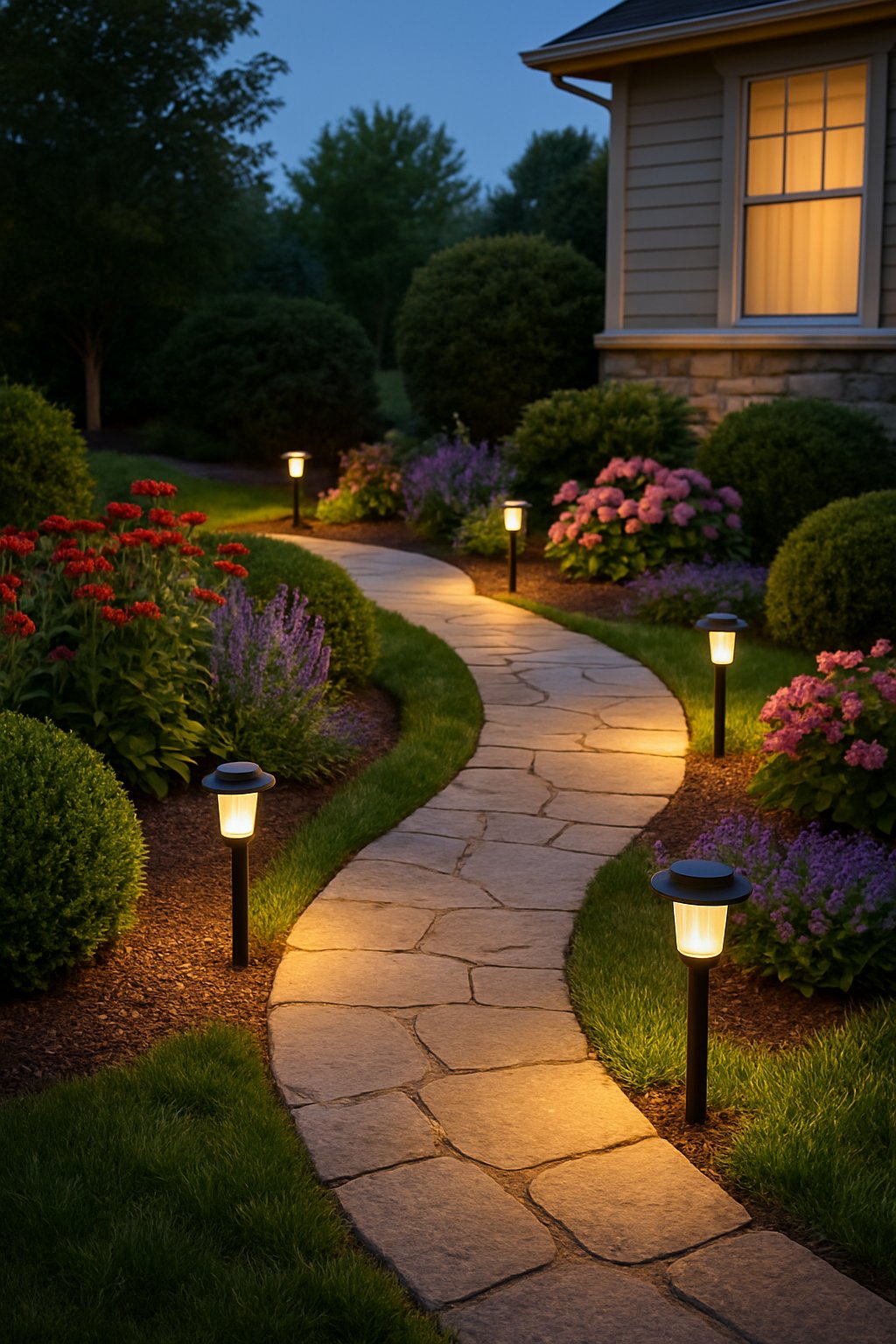
Placing solar garden lights along your pathway makes it safer and much more welcoming after dark. These lights absorb sunlight throughout the day, so there’s no need to deal with any complicated wiring.
You can choose from various styles, including small stakes or taller lights. Find a design that fits the overall aesthetic of your yard.
Space the lights evenly to guide people safely and cast a warm, cozy glow.
Use these lights to highlight garden beds or hedges. This technique adds depth and ensures your yard looks fantastic even at night.
Solar lights are a low-maintenance option, and you can easily move them around if you decide to change your landscape design. Plus, they are an energy-saving solution.
For the brightest illumination, place the solar lights where they can receive direct sunlight. Wiping the panels clean periodically will help them maintain their performance.
9. Line the driveway with fragrant shrubs
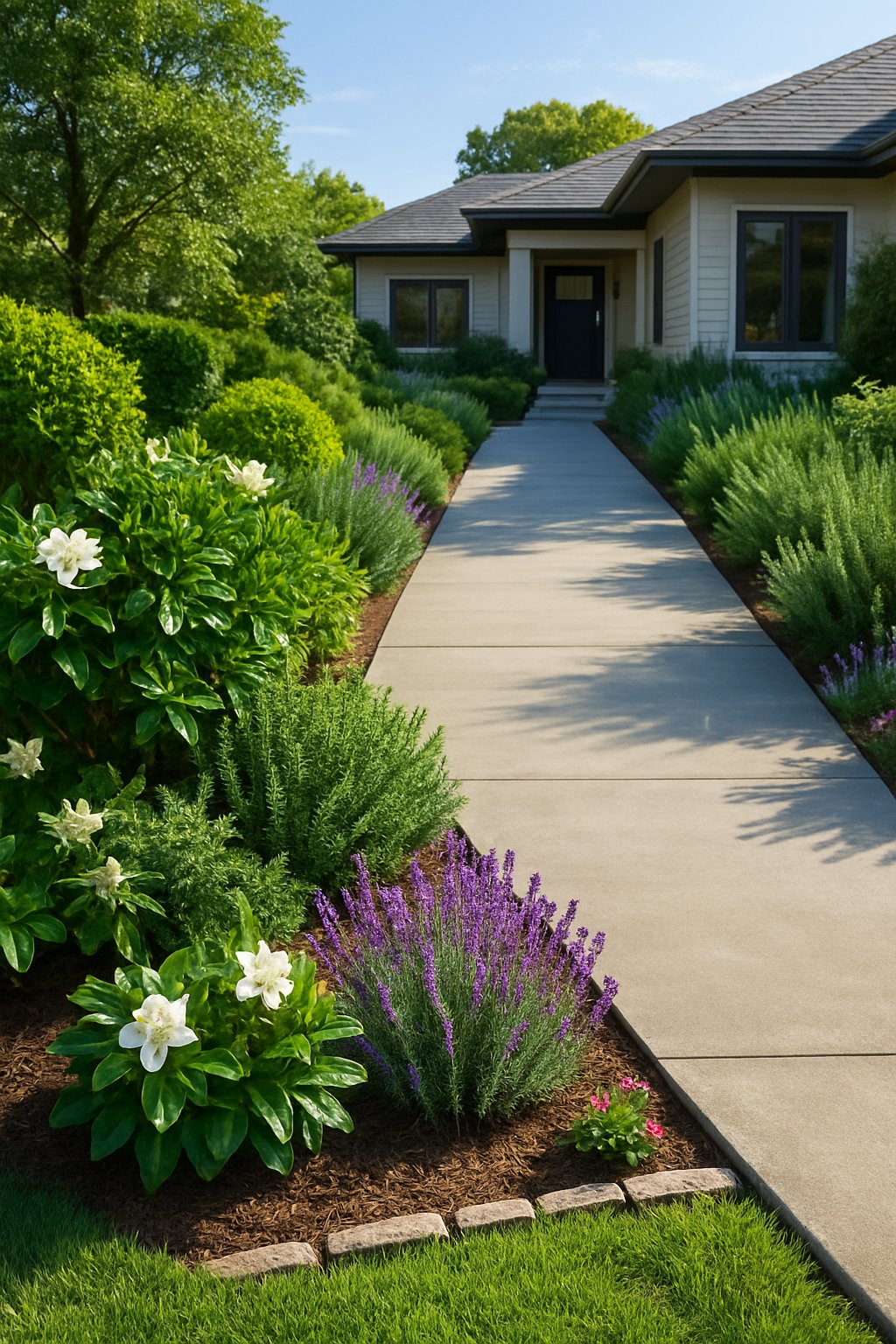
Planting fragrant shrubs along your driveway not only looks great but also smells wonderful. Consider options like lavender, garden phlox, or lilac to create a welcoming scent as you arrive and depart.
These shrubs effectively soften the hard edges of a driveway and bring a sense of life to the space.
Select varieties that are known to thrive in your climate to minimize the need for constant care. Plant them closely together to form a natural-looking border that remains colorful throughout the year.
Fragrant shrubs are also excellent for attracting pollinators such as bees and butterflies. This will add extra color and movement to your yard.
Water them regularly, especially during dry periods, to help keep their scents strong and vibrant.
Evergreens are another good option if you desire year-round coverage. You can mix them with seasonal flowers to achieve a fresh look every few months.
Choose shrubs with strong, pleasant fragrances. Ensure they have enough space for air to circulate, which helps in keeping them healthy.
10. Plant foundation shrubs around the porch
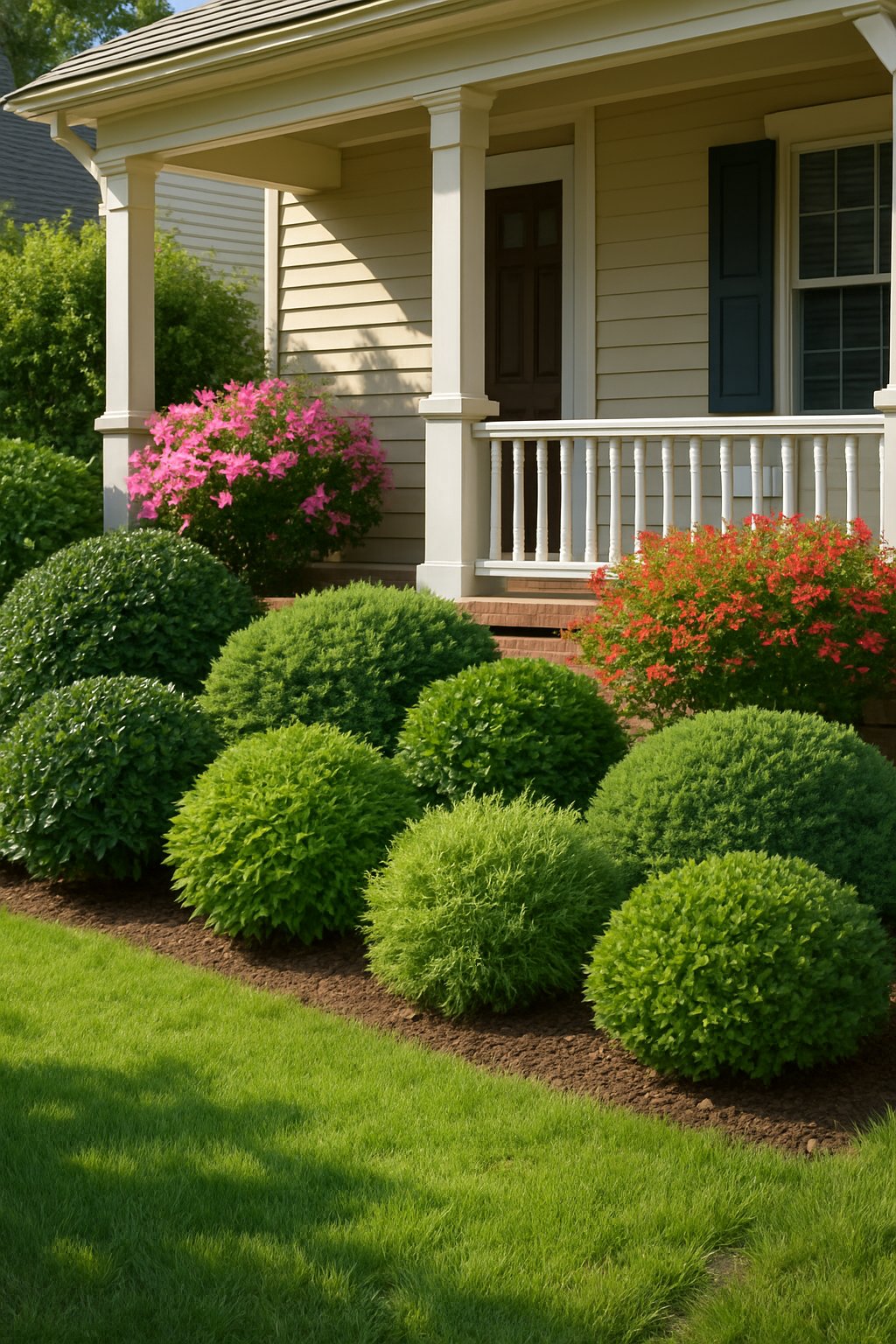
By planting foundation shrubs around your porch, you provide your home with structure and a natural, attractive border. Choose low-growing evergreens such as yew or boxwood to maintain a tidy appearance all year.
These shrubs establish a calm, green backdrop that really makes your porch stand out. If you desire a bit more color, you can mix in shrubs that feature colorful leaves or flowers.
Burning bush or euonymus are excellent choices if you are looking for something bright and easy to maintain. Just be sure to space them appropriately so they do not obstruct your walkway or steps.
Trim your shrubs regularly to keep your porch feeling open and inviting. It’s also important to monitor their height; shrubs kept under 4 feet will not block windows or obscure your views.
Provide them with proper watering and mulch to ensure they remain healthy throughout every season. The upkeep is quite manageable once you establish a routine.
Select shrubs with different textures or colors to add depth and interest around your porch. Always opt for plants suited to your climate to keep maintenance low and achieve beautiful results.
11. Use ornamental grasses for texture
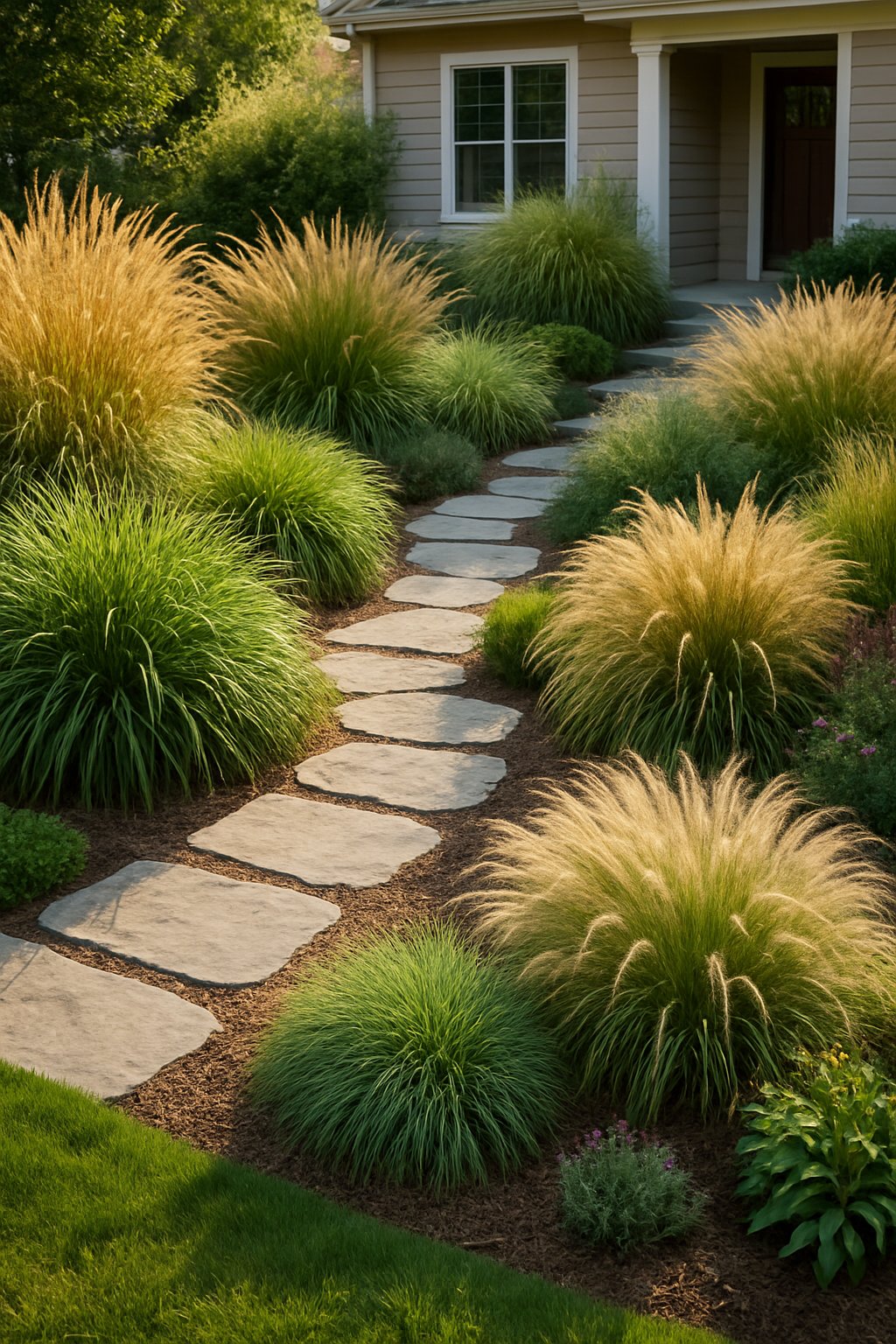
Ornamental grasses introduce a sense of movement and rich texture to your front yard. They are available in a wide variety of heights, colors, and shapes, which helps make your garden feel more dynamic and alive.
You can plant tall grasses to create a bit of drama, or you might prefer to stick with shorter varieties to simply fill in gaps. Fountain grass, for instance, features soft, feathery plumes that gracefully sway with every breeze.
Many types of ornamental grasses require very little care and can brighten up your yard throughout the year. Some even transform into beautiful colors in the fall, which is always a pleasant surprise.
When you mix grasses with flowers and shrubs, you achieve a lovely contrast. This balance helps your yard look more natural and less rigidly planned.
Choose a combination of grass sizes to create interesting layers of texture. Planting them in groups will provide the most significant visual impact.
12. Build a raised garden bed with seasonal flowers
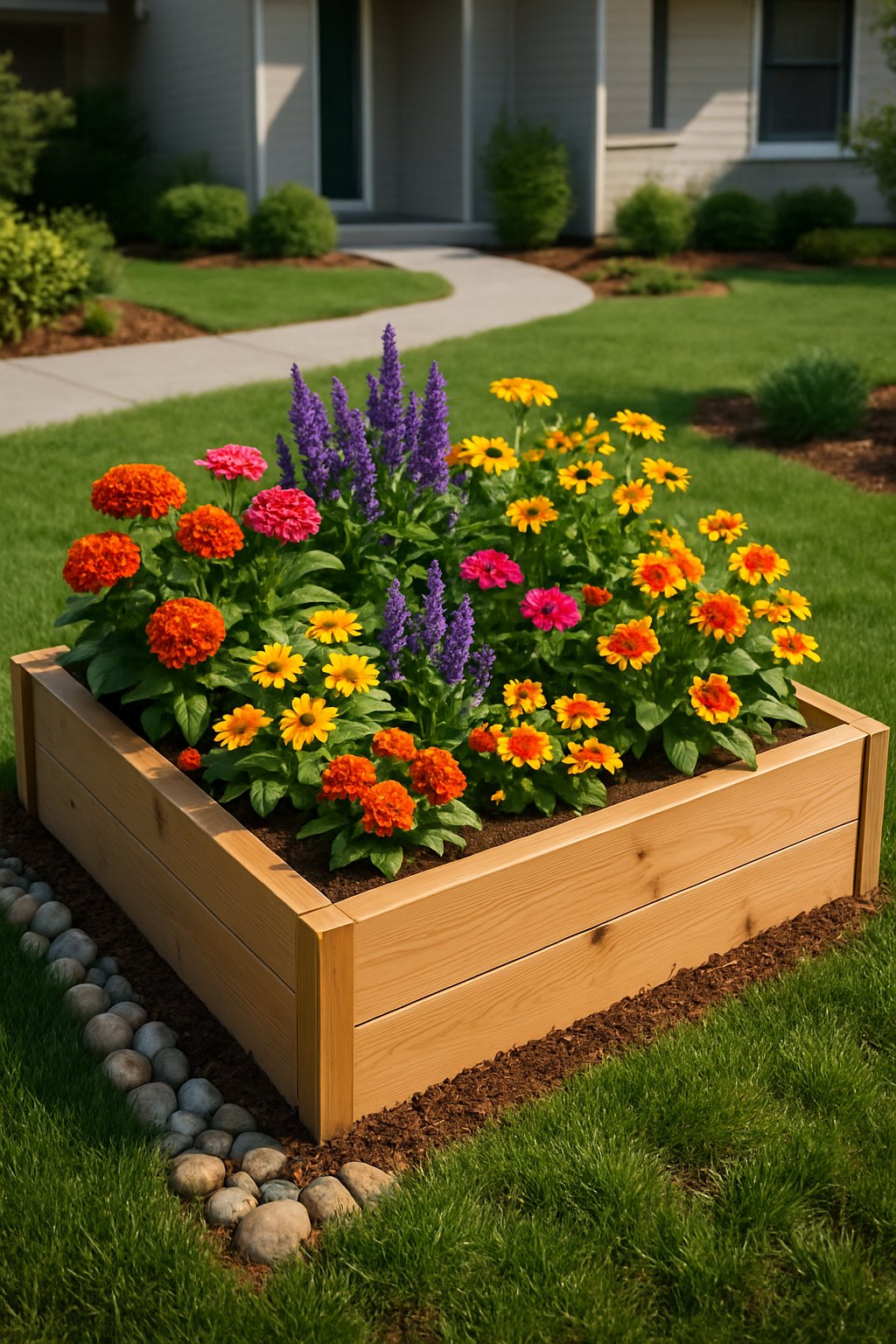
Constructing a raised garden bed is a simple way to introduce vibrant color to your front yard. You can swap out the flowers each season to maintain a fresh and updated look.
Select a sunny location and choose a size that is appropriate for your space. Fill the bed with high-quality soil to give your flowers the best possible start.
In the spring, plant bulbs like tulips or daffodils for an initial burst of color. As summer arrives, replace them with heat-loving marigolds or zinnias.
For the fall, mums will keep your bed looking lively as the weather begins to cool. Raised beds also help keep the soil warmer and provide better drainage, allowing your flowers to thrive.
Opt for flowers of different heights to create a visually appealing layered effect. Rotating your plant choices every two to three months will ensure a continuous display of color.
13. Add a birdbath as a focal point
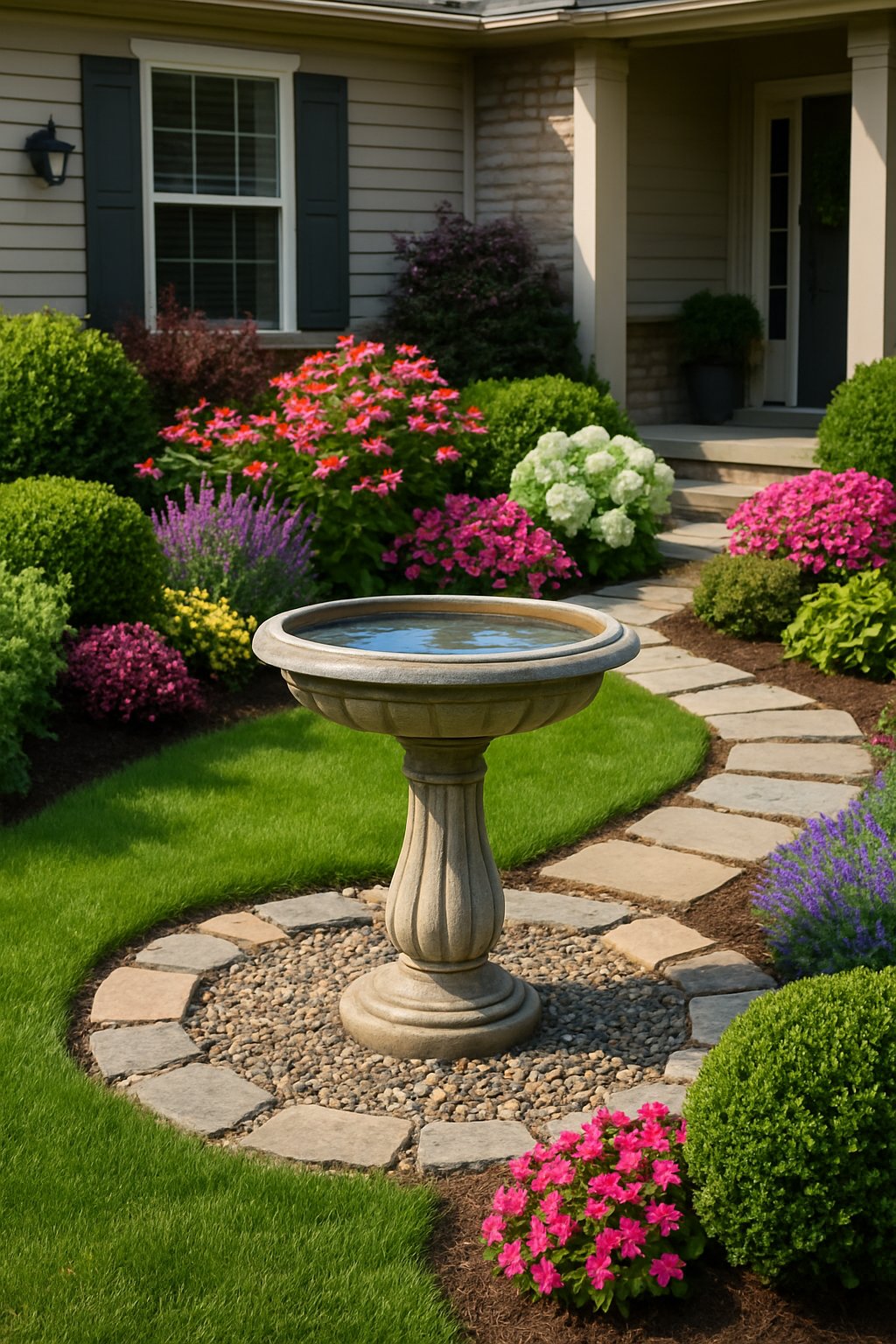
A birdbath can instantly add beauty and vitality to your front yard. It serves as a natural attraction for birds, making your garden feel more alive and connected to the surrounding nature.
Choose a style that complements your personal aesthetic, whether that is classic stone or vibrant pottery. Place the birdbath where you can easily see it from a window or your porch; you will certainly want to watch the birds.
Surround it with plants or flowers to create a natural setting that birds will find inviting. Adding a small fountain can help keep the water cleaner and attract even more avian visitors.
Look for materials that align with your garden’s overall style. Pottery with bright patterns is well-suited for a southwestern-themed yard, while copper or glass can add a splash of color without being overwhelming.
A well-chosen birdbath can easily become the centerpiece of your landscape. It is a small addition that can make a significant difference.
Place your birdbath near shrubs to provide birds with a sense of shelter. Cleaning it regularly is important for keeping the birds healthy and encouraging them to visit often.
14. Create a cottage-style garden with mixed flowers
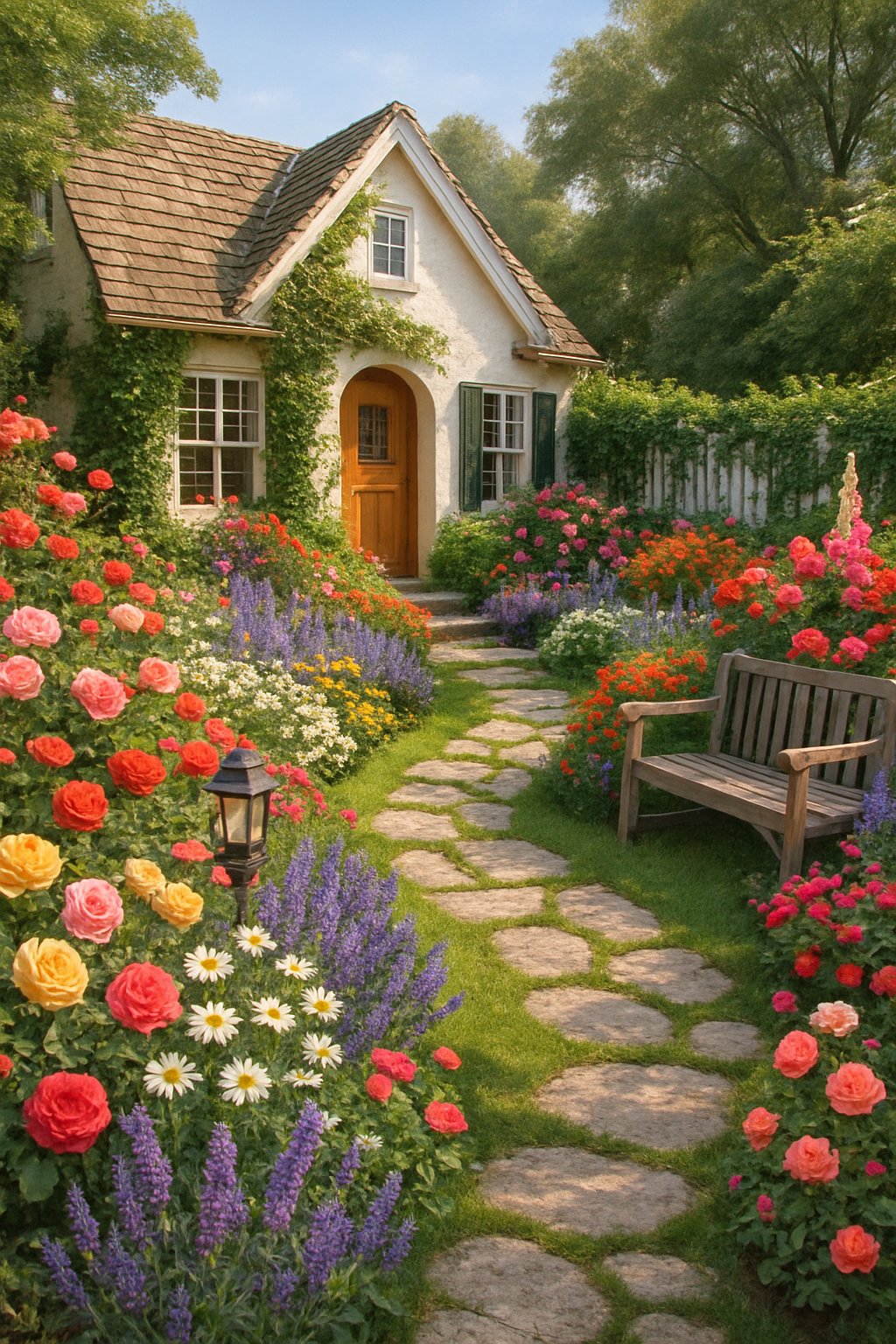
If you’re aiming for a relaxed and colorful front yard, a cottage-style garden is an excellent choice. Combine flowers such as daisies, foxgloves, and lavender to achieve that characteristic wild and natural appearance.
Avoid rigid patterns and allow your plants to grow freely, which will create a casual and welcoming atmosphere. You can also mix in some herbs or small vegetables for added variety and fragrance.
Using old pots or simple containers can add charm and character, while curving paths gently guide visitors through your flower beds. This design makes the space feel cozy and somewhat magical.
If you want to enhance the classic cottage feel, consider adding a picket fence or a few small statues. These minor details can give your yard a storybook quality without requiring much effort.
Select plants that bloom at different times to ensure your garden has color throughout the year. Grouping flowers in clusters will result in a fuller look with less required maintenance.
15. Include succulents for drought resistance
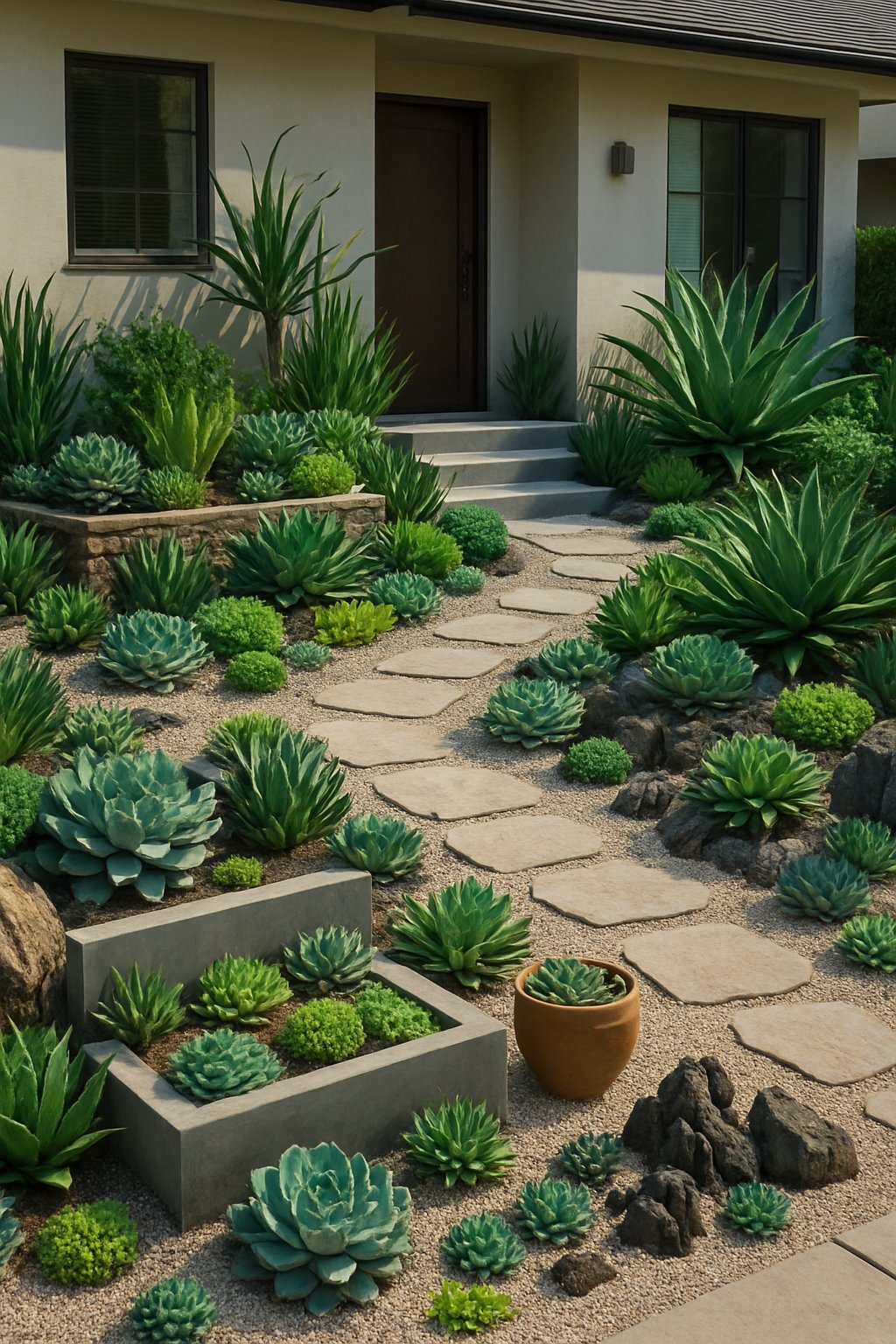
Succulents are a fantastic addition to front yards because they require very little water. Planting them in groups allows you to create interesting shapes and textures.
They are available in a wide range of colors and sizes, giving you plenty of options to make your yard stand out. For a stylish, low-maintenance look, try combining succulents with rocks or gravel.
These plants typically need to be watered only about once every one or two weeks, which helps you save both time and water. You can line your pathways or fences with low-growing succulents to create simple green borders.
Succulents are exceptionally tolerant of heat, making them an ideal choice for dry climates. Adding a few large rocks can help balance the various colors and shapes, creating a visually pleasing composition.
Use gravel or sand around your succulents to enhance drainage and help prevent rot. Arranging plants of varied heights will create a more dynamic and interesting display.
16. Use stepping stones for a whimsical path
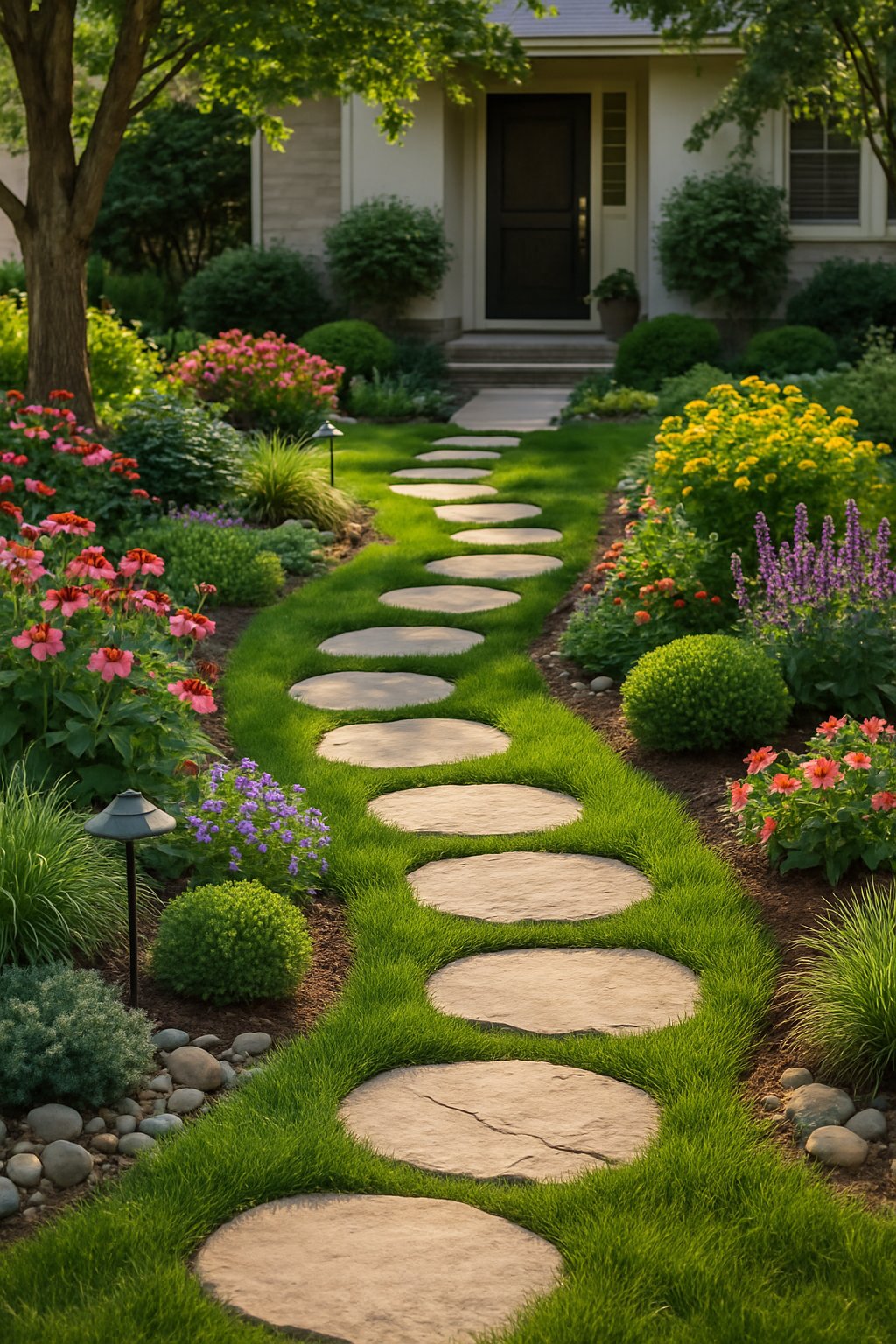
Stepping stones can add a touch of charm and playfulness to your front yard. Choose stones in various shapes, colors, or patterns to design a whimsical walkway.
Feel free to mix materials; concrete, natural stone, or even painted rocks can all be effective. Space the stones out enough to allow grass or ground cover to grow between them, which creates a softer, more natural look.
Planting a few small flowers or ground covers along the edges of the path can make it feel even more magical. If you’re feeling adventurous, you could try glow-in-the-dark stones for a unique nighttime effect.
This approach provides both beauty and an extra measure of safety. Using stones shaped like leaves or footprints, or even creating mosaics, can tell a story within your garden if you wish to be more creative.
Place the stepping stones on a firm base to ensure they remain stable. Using mulch or ground cover between the stones can help reduce weeds and add extra color.
17. Add a small bench for seating
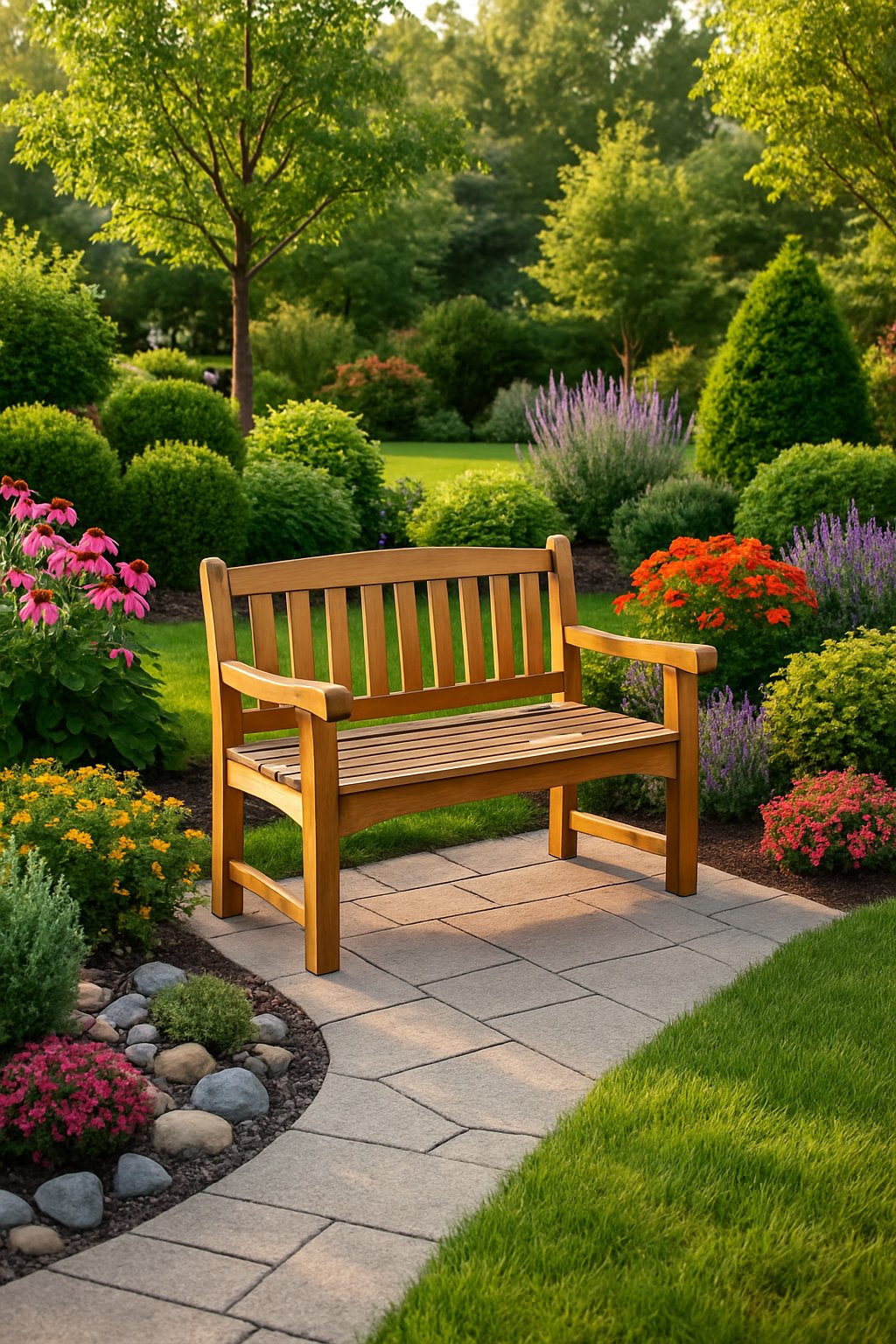
Placing a small bench in your front yard can enhance both the appearance and the functionality of your space. It offers a cozy spot to sit and enjoy the outdoors, whether you’re by yourself or with a friend.
Consider positioning it under a tree, near some flowers, or by the porch to take advantage of the best view. Select a bench that is appropriate for your yard’s size and complements its style.
Wooden benches tend to have a natural feel, while those made of metal or stone can look more modern. If your space is limited, a narrow or foldable bench is a practical option.
A bench makes your yard seem more welcoming and lived-in, even if it is not used every day. It serves as a signal that your home is a friendly and inviting place.
You can customize your bench with cushions or a splash of paint to match your garden’s color scheme. Adding a planter beside or above it helps to integrate the seating with your plants.
Place your bench in a spot that receives some shade during hot parts of the day. Using weather-resistant cushions will keep it comfortable and ensure its durability.
18. Plant lavender for fragrance and color
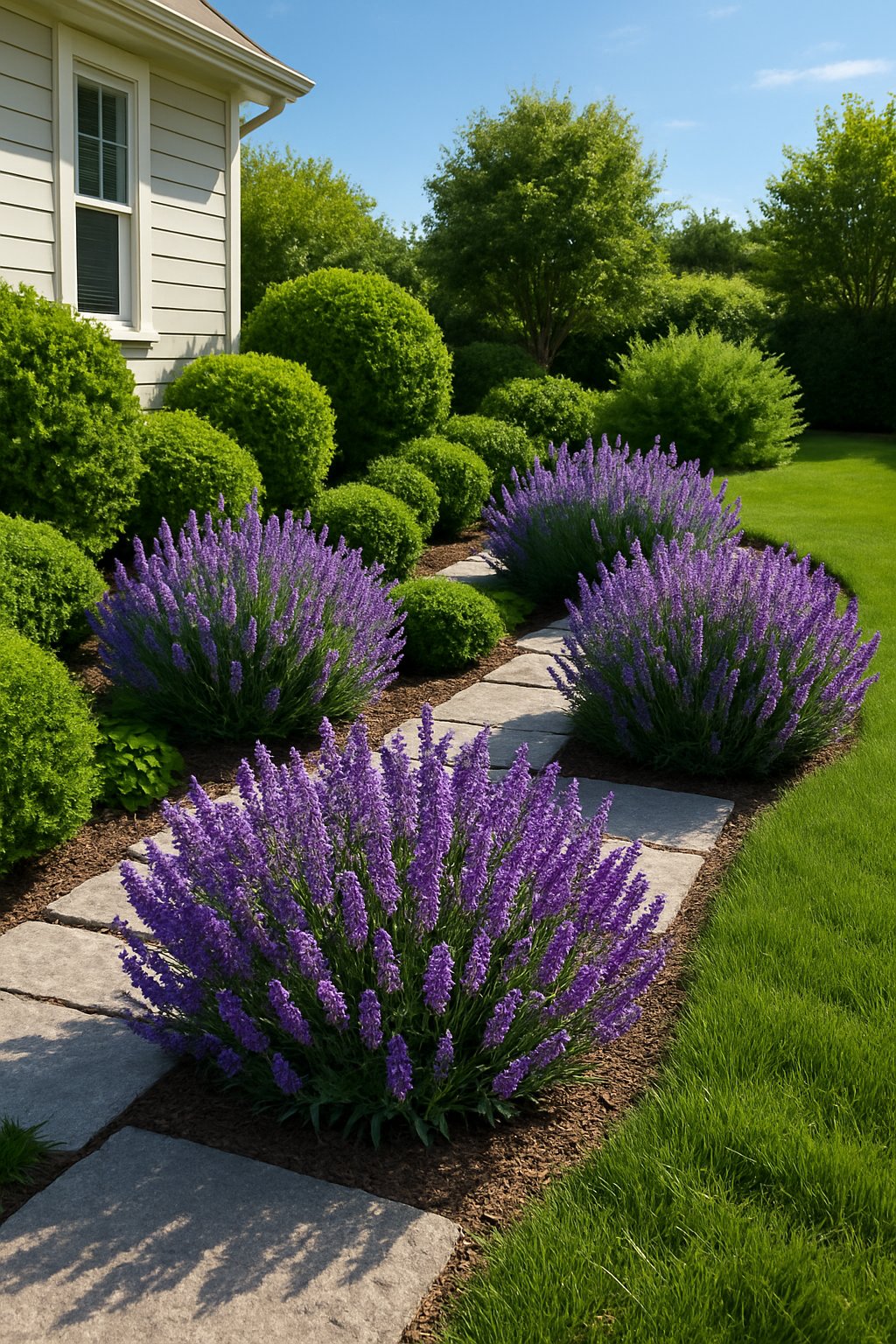
If you’re looking to add both a lovely scent and a soft purple hue to your front yard, consider planting lavender. It grows best in sunny locations with well-drained soil and is generally quite easy to care for.
You can line your pathways or fill flower beds with lavender to introduce both color and texture. Even when the plant is not in bloom, its silver-gray leaves provide a nice visual element.
Lavender pairs well with other herbs like rosemary and thyme, which can give your yard a Mediterranean feel. It is also an excellent choice for planting around seating areas, allowing you to enjoy its fragrance up close.
Try planting it in groups or as a low hedge to help frame your space. With a bit of pruning, lavender remains tidy and is resistant to pests, so you won’t have to worry about extensive upkeep.
Choose a sunny spot with good drainage to ensure your lavender stays healthy. Pruning after the flowering season will help keep the plants compact and full.
19. Incorporate native plants for easy care
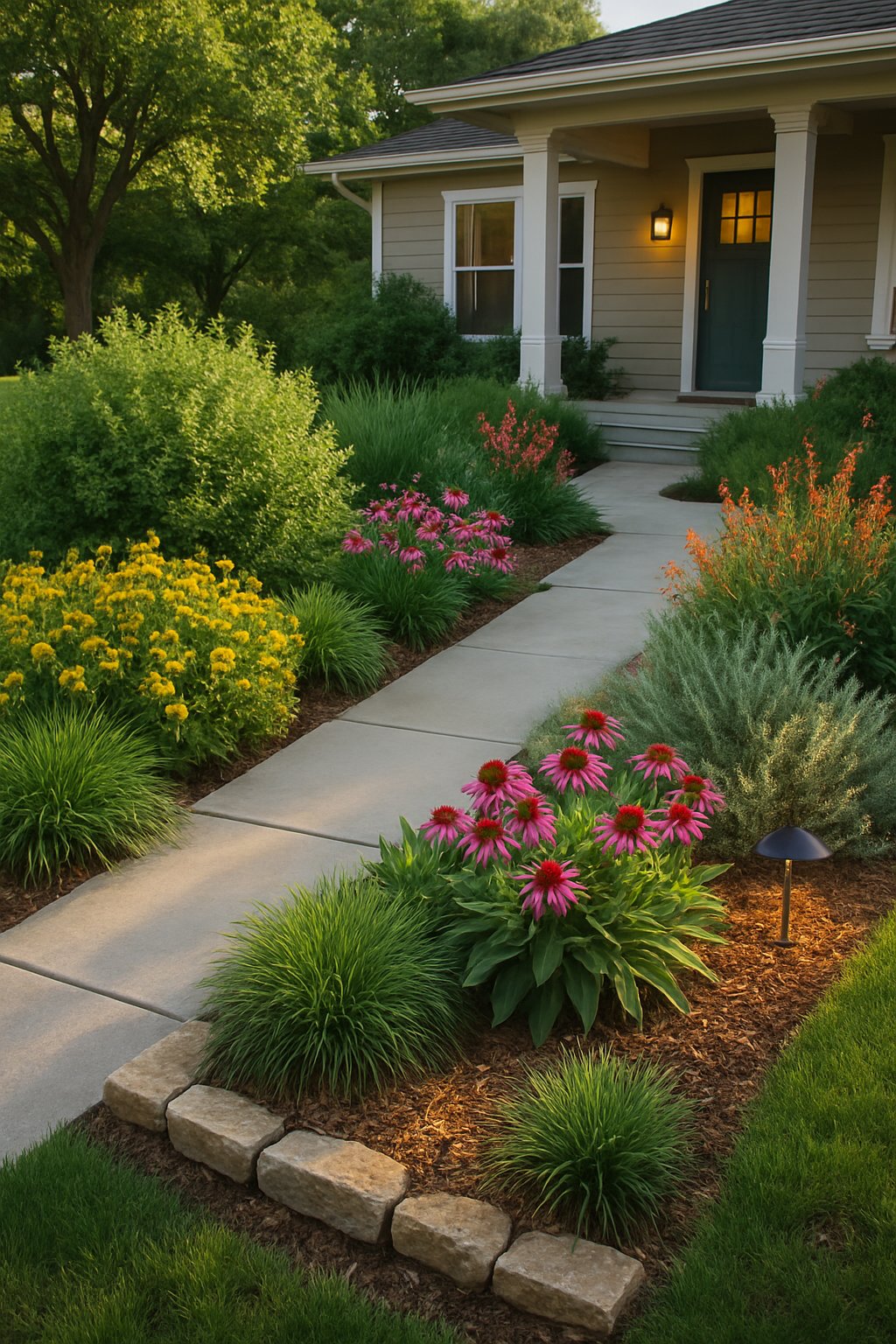
If you
Native plants are also beneficial for attracting local wildlife, such as bees and butterflies, which contributes to a healthier, more natural garden ecosystem. They add a unique beauty that harmonizes with the surrounding environment of your home.
By choosing native plants, you can significantly reduce your workload, with less mowing and watering required. This allows you more time to simply enjoy your outdoor space with less stress.
Select a variety of native plants that bloom at different times of the year to keep your yard colorful all year round. Grouping plants with similar water needs together will also make watering much more efficient.
20. Use boxwood hedges for a classic look
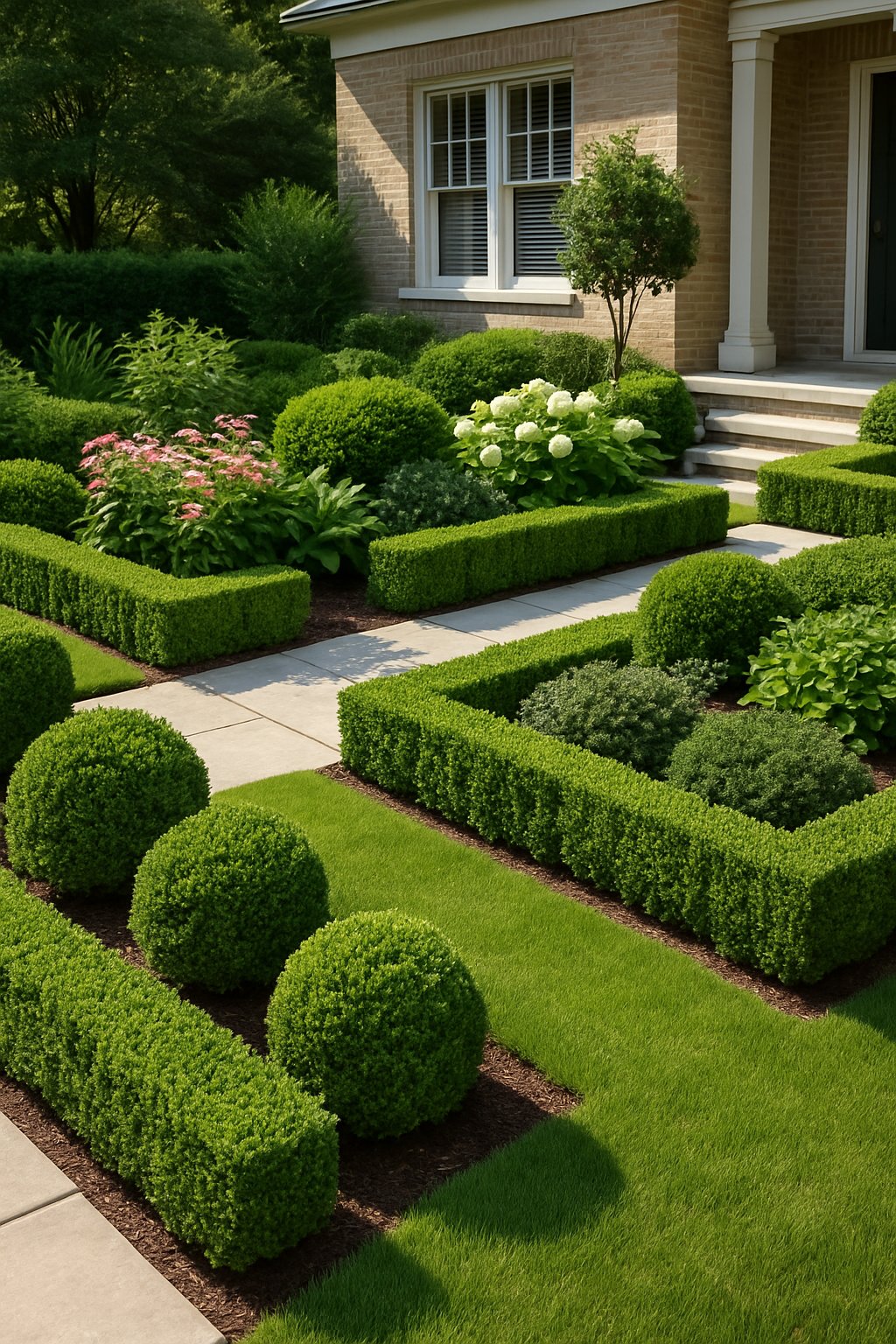
Boxwood hedges can give your front yard that clean, timeless style that is widely admired. They are particularly effective when used as borders along walkways or to frame flower beds.
You can trim them into neat, geometric shapes if you wish to add a sense of structure and order to your yard. There is a certain satisfaction in keeping them looking sharp and well-maintained.
These shrubs remain green throughout the year, ensuring your landscape always looks fresh, regardless of the season. Boxwoods do not require a great deal of care, just regular watering and an occasional trim to maintain their shape.
You can also use them to frame entrances or even to create small garden walls. Their dense foliage can block unwanted views and add a degree of privacy without completely obscuring the light.
Trim your boxwoods in the early spring to encourage full and healthy growth. Using sharp shears will result in clean cuts that heal more quickly.
21. Add colorful annuals each season
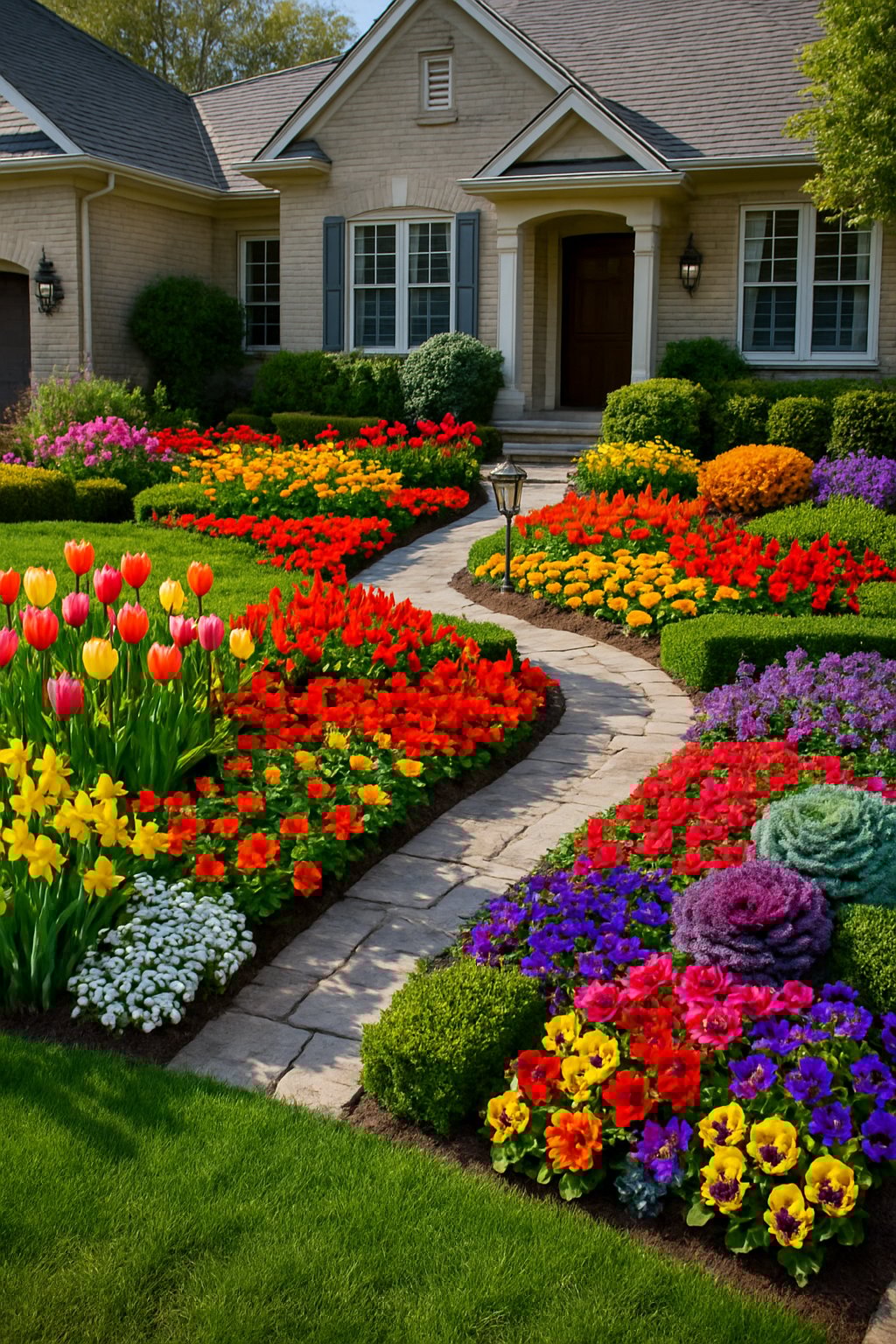
Incorporating annual flowers into your front yard is a quick and effective way to keep it looking fresh and vibrant. Annuals bloom quickly and are great for filling empty spots with a sudden burst of color.
You can change up the flower colors to match the seasons. For spring and fall, plant cool-season annuals like pansies or snapdragons.
When summer arrives, switch to zinnias or marigolds, as they are very tolerant of the heat. Annuals also work well alongside perennials, filling in the gaps between blooming cycles and extending your garden’s colorful display.
For the best results, choose flowers that are suited to your specific light and soil conditions. Plant your annuals where they will receive adequate sun and have good drainage.
Water them regularly, but be careful not to overdo it. Deadheading the spent blooms will encourage the plants to continue producing new flowers.
Mix different shapes and colors of annuals to create a lively and dynamic look. Rotating your selections each year will keep your garden interesting and also promote its health.
22. Plant a small ornamental tree like a dogwood
A dogwood tree is an excellent choice for a front yard. It remains relatively small but still produces the beautiful spring flowers that everyone admires.
It also offers red fruits in the late summer and vibrant, colorful leaves in the fall. Dogwoods are quite adaptable, growing well in either full sun or partial shade.
They prefer soil that drains well but also stays consistently moist. Consider planting one as a focal point near your walkway or porch.
For a tidy and complete look, surround your dogwood with low-growing plants such as ferns or tulips. This combination adds layers of color and texture throughout the year.
Dogwoods are generally resistant to most diseases, so you won’t need to worry about extensive extra care. Choose a variety that is a good fit for your space; the flowering dogwood, for example, adds charm without overcrowding your yard or its root system.
Be sure to water your dogwood regularly, especially during dry periods. Applying mulch around the base will help keep the roots cool and moist.
23. Use ground covers to reduce the grass area
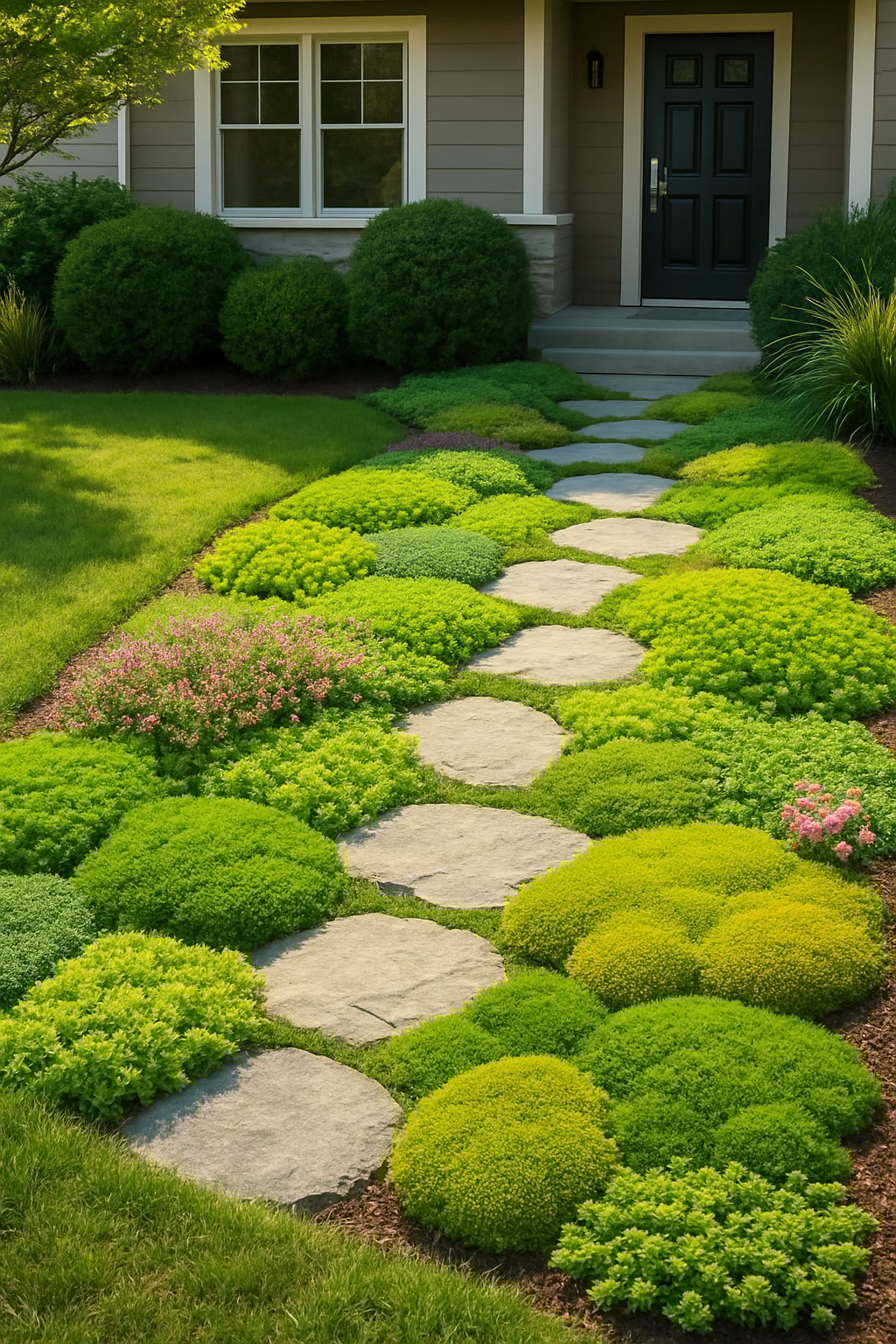
Ground covers offer a clever solution for reducing the amount of grass in your front yard. They grow low to the ground and spread quickly, filling in empty areas with minimal effort on your part.
You can choose from a wide variety of types, including creeping thyme, clover, or Snow-in-Summer. These plants typically require less water than traditional grass, and you will not have to mow them.
Ground covers also help to suppress weeds, which keeps your yard looking neater for longer periods. They add both texture and color to your landscape without requiring much additional work.
For the best outcomes, select varieties that are well-suited to your yard’s sun exposure and water availability. Mixing different ground covers with shrubs or flowers can make your landscape much more interesting.
It can be a good idea to start with a small patch of ground cover to observe how it spreads before you commit to a larger area. Always verify the plant’s sun and water requirements to keep it healthy and low maintenance.
24. Install a wrought iron garden gate
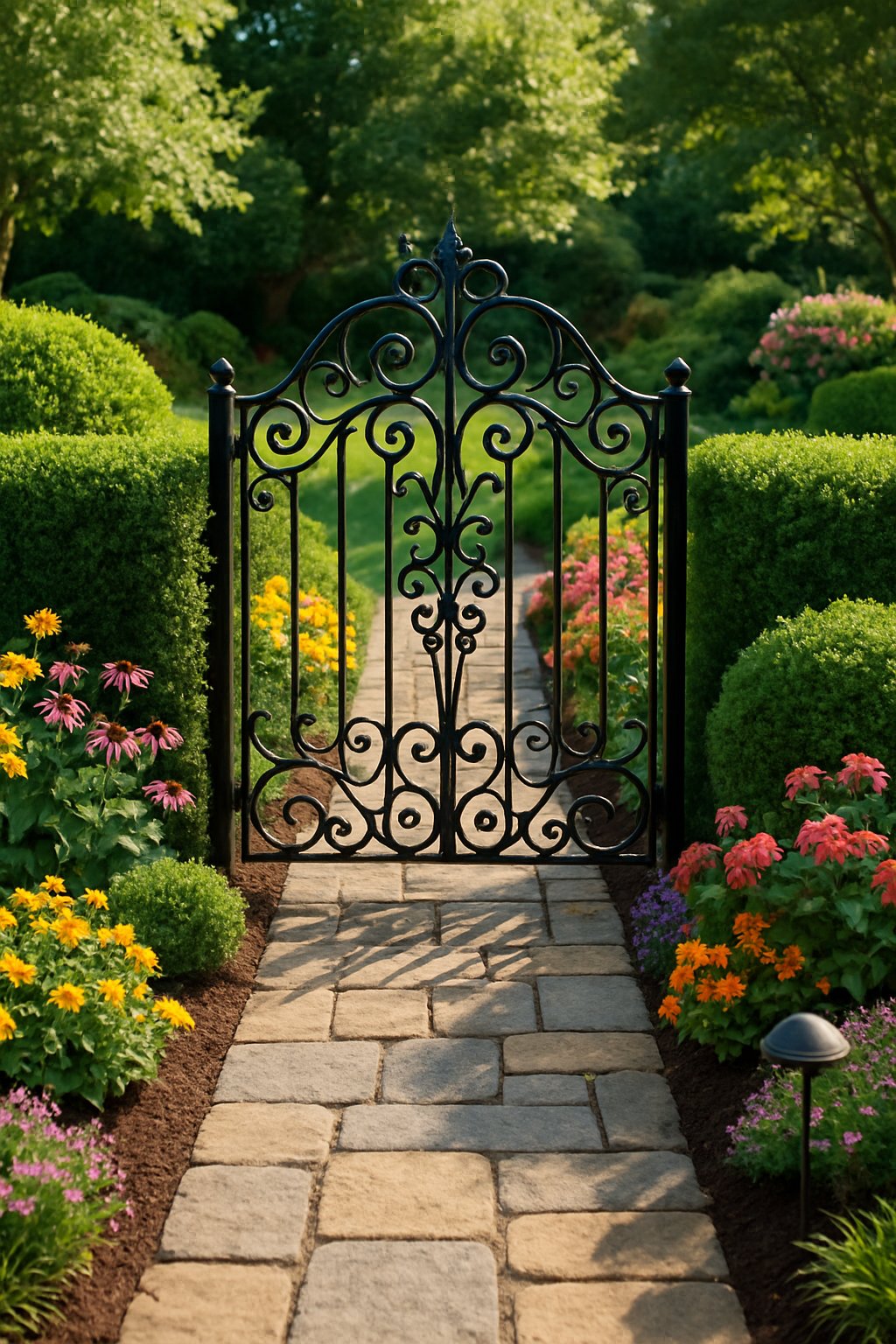
A wrought iron garden gate can bring a sense of charm and style directly to your front yard. It establishes a clear entrance that welcomes visitors and effectively defines your outdoor space.
These gates are available in a wide array of designs, so you can easily find one that matches your home’s particular vibe. Wrought iron gates provide a sense of security without obstructing your view.
They are strong and durable, yet still lightweight and relatively easy to install. They also do not require much maintenance, which is always a significant benefit.
Adding a wrought iron gate can even potentially increase your property’s value. It imparts a timeless and elegant feel to your yard that is sure to last.
Choose a gate design that complements your existing fence to create a balanced and cohesive look. Regularly cleaning and painting your gate will help keep it looking new and prevent the formation of rust.
25. Add climbing vines on trellises
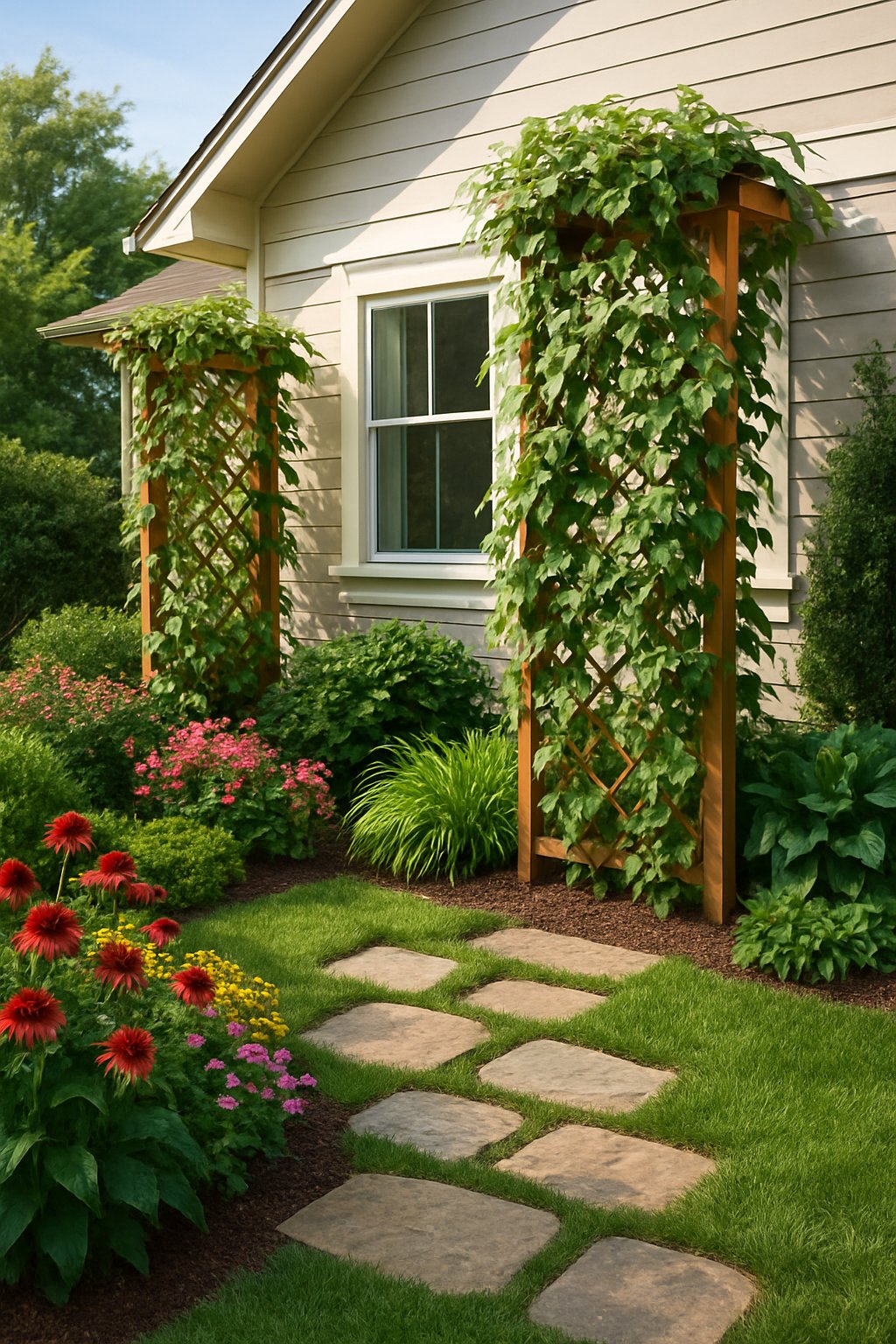
By incorporating climbing vines on trellises, you can instantly add height and a touch of drama to your front yard.
Trellises provide support for your plants to grow upward, which is an excellent way to save space and create a natural screen or a striking focal point.
Opt for sturdy materials, such as wood or metal, to ensure your trellis can withstand various weather conditions.
Vines like clematis, wisteria, or climbing roses will bring beautiful color and the sweet fragrance that everyone enjoys.
Consider placing trellises near your porch, along a winding path, or directly against your fence.
This technique helps to define different areas of your yard and can make the entire space feel a bit more welcoming.
If you choose to grow edible vines, such as peas or beans, the vertical supports will make harvesting them much easier.
Check on your vines regularly and gently tie any new shoots to the trellis.
This will help prevent breakage and guide the plant’s growth without much fuss.
Select a trellis design that matches your yard’s style for a cohesive and polished look. It is best to start with young plants and train them early to ensure they cover the structure evenly.