Your front walkway is more than just a path to your door; it’s the first impression your home makes. Leveling up your walkway landscaping boosts curb appeal and creates a warm, welcoming entrance for you and your guests. Whether you’re dreaming of vibrant flower borders, structured shrubs, or the soft glow of nighttime lighting, these ideas are designed to inspire. Get ready to transform your front yard into a space you’ll be proud to call your own.
1. Curved flagstone pathway with soft mulch borders
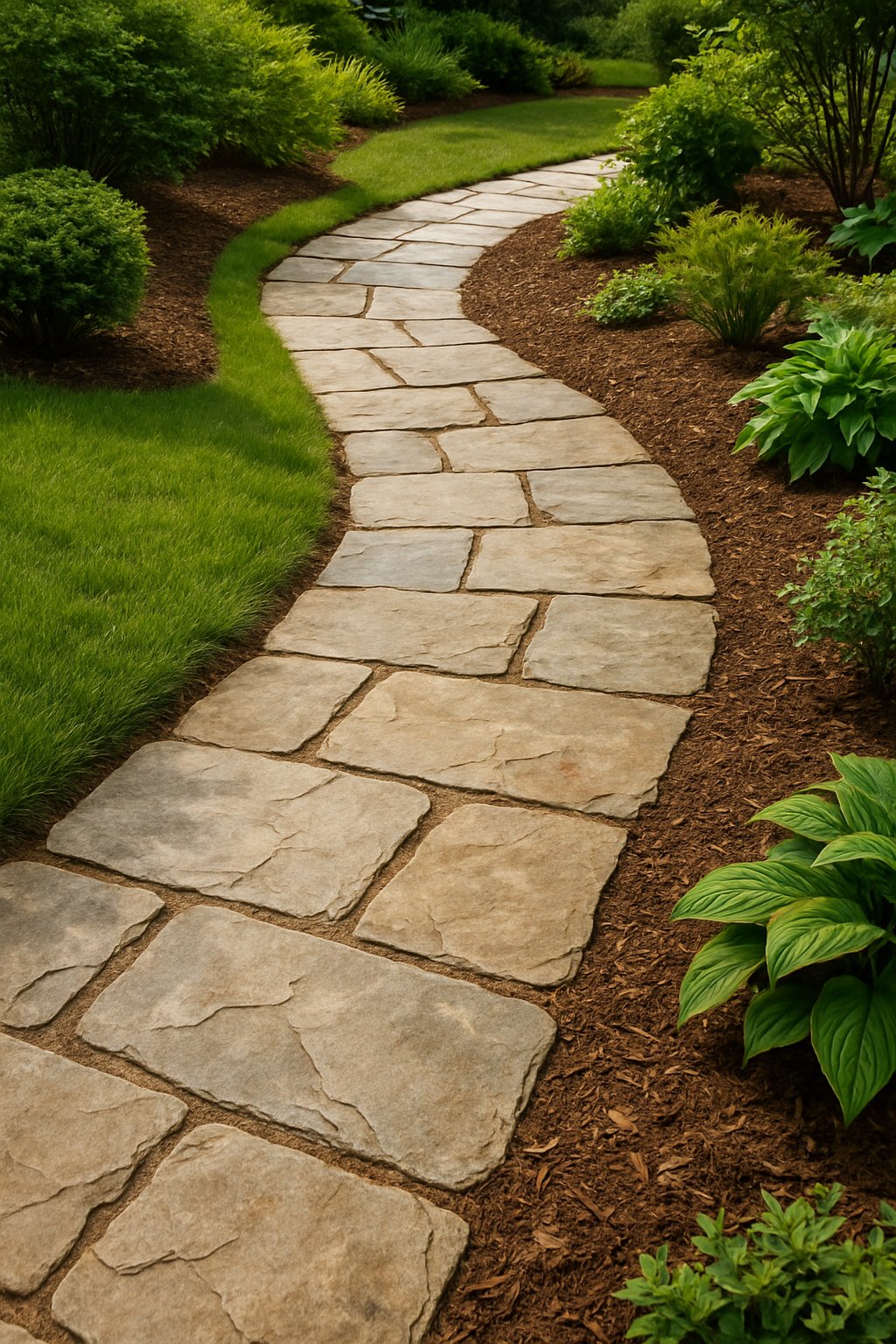
A curved flagstone pathway can bring a relaxed, natural energy to your front yard. The gentle bends make the walk feel more inviting and dynamic than a simple straight line. When you line the edges with mulch, you soften the transition from the hard stone to your surrounding plants. Mulch also has the practical benefit of suppressing weeds and enriching the soil over time. This design pairs beautifully with garden beds, guiding visitors through your landscape in a smooth, friendly way. For a more organic appearance, choose flagstones in various shapes and colors, making sure each one is set firmly to avoid a wobbly path. Remember to refresh the mulch border annually to keep it looking sharp. For a seamless flow, select a mulch color that complements your flagstones and keep it a few inches from the stones to prevent it from shifting onto the path.
2. Concrete paver walkway with colorful flower edges

A concrete paver walkway provides a clean, sturdy path right to your front door. You can instantly boost its personality and make it more welcoming by lining both sides with colorful flowers. To keep the walkway vibrant throughout the year, choose flowers that bloom in different seasons. Small shrubs or low growing flowers are excellent choices because they won’t obstruct the path. Bold hues like red, yellow, or purple create a striking contrast against the neutral concrete, adding texture and interest without overwhelming the space. You can also add mulch or small stones between the flowers to reduce weeds and improve drainage, keeping the walkway tidy and protecting your plants. It’s wise to pick flowers that match your home’s style and the amount of sunlight the area receives for a balanced and low maintenance design.
3. Brick walkway in a herringbone pattern

Laying bricks in a herringbone pattern creates a walkway with a timeless, classic appeal. The zigzag design is visually engaging, adding a sense of movement that leads the eye directly to your front door. This versatile style suits nearly any home, from traditional to modern. Beyond its good looks, the pattern is also incredibly strong, as the interlocking bricks resist shifting. Warm toned or red bricks contribute to a cozy, inviting atmosphere. You can finish the edges with straight or curved lines to match your landscape. For a softer border, consider adding low plants along the sides. Proper base preparation with compacted sand or gravel is key to ensuring the bricks remain stable. Using polymeric sand between the bricks will help reduce weeds and keep the pattern tight, while slight gaps ensure proper drainage to avoid puddles.
4. Low boxwood hedge lining walkway edges

A low boxwood hedge offers a simple and elegant way to add structure to your front walkway. These shrubs create a crisp, green border that neatly defines the path. Planting them along the edge results in a polished, organized appearance. Boxwoods remain green year round, so your walkway will never look bare. Their dense foliage provides a full, tidy look with minimal maintenance, just a couple of trimmings a year to keep the hedge looking sharp. Boxwoods are versatile and can be left to grow naturally or shaped for a more formal feel. Either way, they significantly enhance curb appeal, making your entryway feel more deliberate and inviting. For walkways in tighter spaces, choose smaller boxwood varieties and trim them regularly to encourage thicker growth and maintain a clean line.
5. Solar LED lights along the path for nighttime charm

Placing solar LED lights along your walkway brightens the path without increasing your electricity costs. These lights absorb sunlight during the day and turn on automatically as night falls. They are available in a wide array of styles, from sleek modern designs to more vintage looks, so you can easily find ones that match your home’s aesthetic. Solar lights also enhance safety by illuminating dark areas. The installation is refreshingly simple, with no wires or complex steps involved; most lights just push directly into the ground. Look for models with wide angle beams for broader coverage or consider motion sensor lights for added security. For an even softer, eco friendly glow, you could also add glow in the dark markers. To keep your path evenly lit, place the lights a few feet apart and remember to clean the solar panels periodically so they stay bright.
6. River rock filler between irregular stone pavers

Using river rock as a filler between irregular stone pavers gives your walkway a look that is both natural and refined. The small, smooth stones nestle perfectly into the gaps, creating a pleasing contrast with the rougher texture of the pavers. This technique also improves drainage and helps prevent weeds from sprouting. Before you begin, lay down landscape fabric to block weeds and stop the rocks from sinking into the soil. For easier maintenance, avoid filling the river rocks to the very top of the pavers. Choosing river rocks that match or complement the color of your pavers creates a cohesive, balanced design. You can even plant low ground cover in some areas to introduce extra green texture. A broom can be used to lightly sweep the rocks into the gaps for a tight, stable fit that prevents shifting over time.
7. Pebble mosaic designs embedded in concrete

Embedding pebble mosaic designs into concrete gives your walkway a fantastic blend of texture and artistry. This technique involves pressing small pebbles into wet concrete, resulting in a natural, slip resistant surface that combines the durability of concrete with the organic beauty of stone. Pebbles are available in many colors, including black, white, and brown, making it easy to complement your home’s style. You can create simple geometric shapes or more intricate patterns like flowers or animals. Since the pebbles are packed tightly, the mortar is barely visible, giving the walkway a polished look. It’s also a low maintenance option, as the pebbles are securely fixed and won’t shift. This approach is tough, standing up well to both weather and foot traffic. Be sure to choose smooth pebbles for comfort and seal the mosaic to protect it from stains.
8. Rustic wood plank walkway with wildflowers

A rustic wood plank walkway fills your front yard with warmth and charm. Using reclaimed or natural wood planks enhances an authentic, outdoorsy atmosphere. To introduce color and a touch of untamed energy, plant wildflowers along the sides. Choosing native flowers suited to your climate will make them easier to maintain. Sand and seal the planks to ensure the walkway is smooth, safe, and durable enough to withstand the seasons. You can create more visual interest by mixing wood tones or plank widths. The combination of natural wood and soft wildflowers makes the path feel wonderfully relaxed and inviting. Wildflowers also attract bees and butterflies, bringing life and movement to your yard. For an even more rustic woodland feel, try adding moss or low plants between the planks to soften the edges and blend the walkway into your garden. Use a durable wood like cedar or redwood to resist rot and choose drought tolerant wildflowers to keep maintenance low.
9. Smooth poured concrete with stamped designs
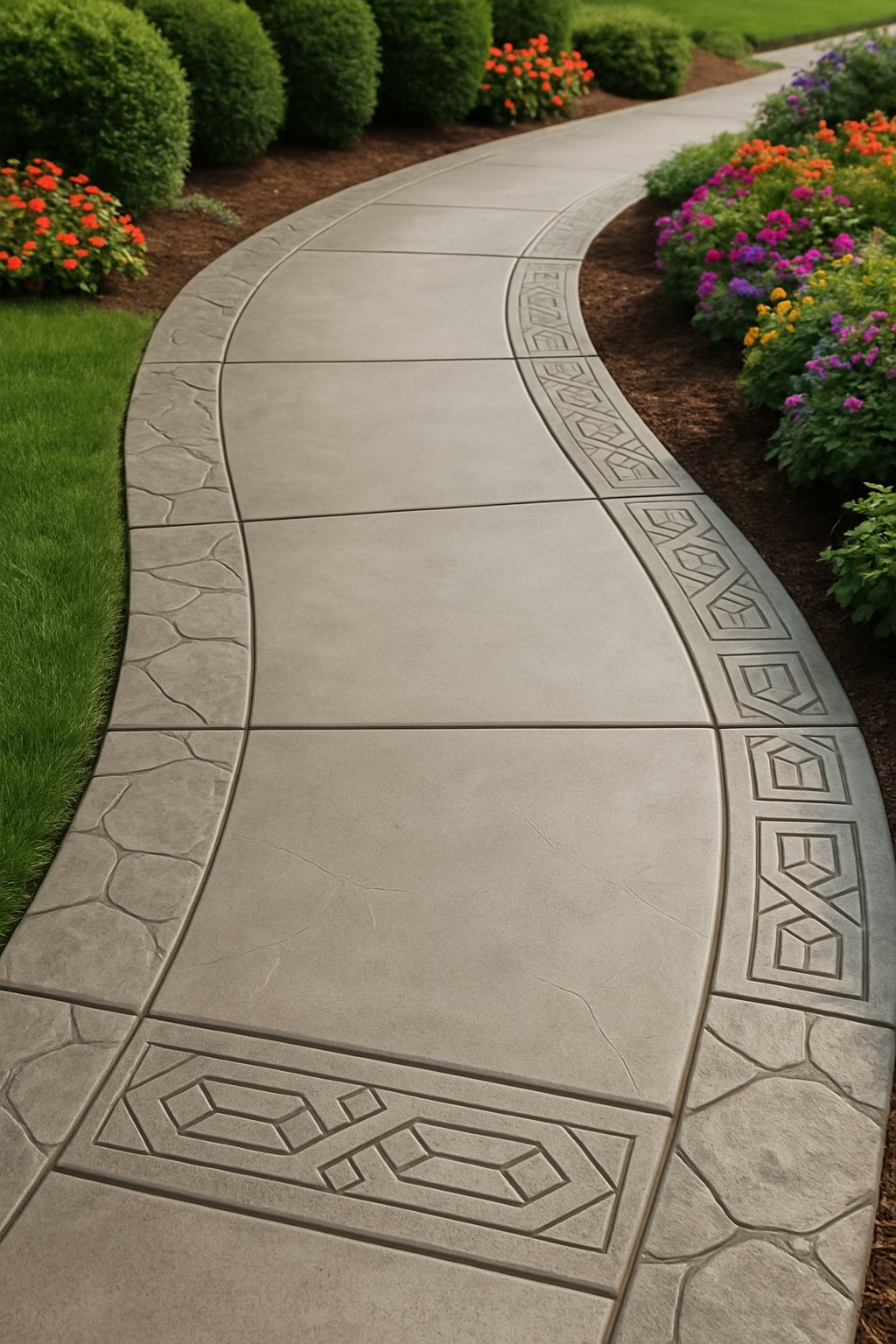
A smooth, poured concrete walkway with stamped designs offers a clean and finished appearance. You can press patterns that mimic stone, brick, or even wood into the concrete while it’s still wet. This method adds personality and style while maintaining a smooth surface. Stamped concrete is often more affordable than authentic stone or brick but can achieve a similar aesthetic. It’s also easier to clean and maintain. There are numerous design and color options available to match your home’s style perfectly. Planting flowers or greenery along the edges can soften the hard surface, making the area feel more welcoming. A curved stamped concrete walkway can also introduce playful shapes into your yard. To protect the surface and preserve its color, seal your stamped concrete every few years and choose colors that complement your home’s exterior.
10. Curved tile walkway with adjacent ornamental grasses

A curved tile walkway introduces a gentle, natural flow to your front yard, feeling more relaxed and welcoming than a straight path. The curve subtly guides visitors toward your front door. When selecting tiles, choose neutral or warm tones that complement your house. To add texture and movement, line the walkway with ornamental grasses. These grasses sway in the breeze, creating a calm, serene atmosphere. Varying the grass heights can add depth, but keep them trimmed to prevent them from overhanging the path. Low maintenance and drought resistant grasses are a smart choice for easy care. This combination of structured tile and natural grasses works well for both modern and rustic homes. Using polymeric sand between the tiles can help prevent weeds and keep the walkway stable.
11. Border walkway with seasonal blooming flowers

Lining your walkway with seasonal blooming flowers makes the entire space burst with color and life throughout the year. To keep things vibrant for months on end, pick a variety of flowers that bloom in spring, summer, and fall. Tulips and daffodils are perfect for spring, while marigolds and zinnias bring summer borders to life. By mixing bulbs, annuals, and perennials, you ensure something is always in bloom and your walkway never looks empty. It’s always a good idea to choose flowers that thrive in your local climate and soil. Give plants enough room to grow while still creating a full, lush edge. You can also add fragrant, low maintenance flowers like lavender or creeping thyme for a welcoming scent. Regular watering and deadheading will keep everything healthy. A layer of mulch around your borders will also help retain moisture and reduce weeds.
12. Simple gravel path with stepping stones

A gravel path featuring stepping stones is easy to install and offers a charming, natural look. The gravel provides a rustic base, while the stones offer stable footing, keeping your shoes cleaner and preventing the path from shifting. To start, lay down landscape fabric to block weeds, followed by a layer of crushed stone for drainage. Spread the gravel evenly on top and then place the stepping stones where you would naturally step. Feel free to choose stones in various shapes and sizes that match your style. Using metal or wood edging will help keep the gravel contained. Make sure the stepping stones are level with the gravel to prevent tripping, and use a type of gravel that compacts well to keep your path firm.
13. Clay brick walkway with ivy accents

A clay brick walkway gives your front yard a warm, classic feel that blends well with most home styles. To soften the hard lines of the brick, consider adding ivy along the edges. Ivy grows close to the ground, fills in gaps, and can even trail over the sides for a lush, inviting appearance. The contrast between the red or tan bricks and the vibrant green ivy is particularly striking. Just be sure to trim the ivy occasionally to prevent it from overgrowing the path. Clay bricks are known for their durability and ability to withstand the elements. When planting, space the ivy a few inches apart to allow it to spread naturally over time. It’s best to choose a slow growing ivy variety to avoid constant upkeep and water it regularly in the first year to help it get established.
14. Polished concrete slabs with grass joints

For a clean, modern aesthetic, consider a walkway made of polished concrete slabs with grass growing in the gaps. These grass joints break up the solid surface, adding a touch of nature to the design. Ensure you leave enough space between the slabs for the grass to flourish, but not so much that it becomes awkward to walk on. This style is most successful with drought resistant grass, which requires less maintenance. Polished concrete reflects sunlight, making your walkway feel brighter, and it’s also stain resistant and easy to clean. You will need to water and trim the grass joints to keep them looking sharp. This design is also eco friendly, as it allows rainwater to soak into the ground, reducing runoff. Choose a grass type that suits your climate and use edging to prevent it from spreading onto the concrete slabs.
15. Natural stone pathway with low groundcovers

A natural stone pathway creates a timeless, almost magical look for your front walkway. Flat stones like flagstone or slate provide an easy walking surface. To soften the appearance, tuck low groundcovers such as creeping thyme, Irish moss, or creeping Jenny between the stones. These plants fill in the gaps, add a splash of color, and help keep weeds at bay. Many groundcovers can withstand foot traffic, ensuring your path remains both practical and beautiful. They are typically low maintenance and can grow in sun or shade, depending on the variety. Space the stones to give your groundcovers room to spread for a natural, flowing look. Placing landscaping fabric underneath will help deter weeds. For best results, select drought tolerant groundcovers to save water and update your pathway edges annually to keep it looking fresh.
16. Mulch border combined with curvy walkway lines

A mulch border tracing a curvy walkway adds a soft, natural edge that defines the path while providing a pleasant contrast in texture and color. The curves make the walkway feel more inviting and help it blend with the natural lines of your landscape. Mulch is low maintenance and effective at suppressing weeds. It also enriches the soil as it decomposes. Consider using warm colored mulch, like brown or red, to accentuate the walkway’s shape. You can enhance the charm further by planting low shrubs or flowers along the mulch border. This combination works well with various materials, including pavers, bricks, or flagstones, giving your front yard a relaxed, organic feel. Use a landscape edger to maintain a neat line along the curves and refresh the mulch each year to keep the color bright.
17. Straight concrete walkway with lantern posts

A straight concrete walkway provides a clean and simple look for your front entrance. By adding lantern posts on either side, you can create a path that feels warm and welcoming. The lanterns illuminate the walkway at night, enhancing safety and ambiance. Choose post styles that complement your home, whether it’s classic black metal or something more contemporary. Spacing them evenly will create a balanced and harmonious look. This design is suitable for both small and large yards. Concrete is extremely durable and requires very little upkeep. For an extra touch of charm, you can plant flowers or shrubs near the base of the posts. Opt for energy efficient LED lanterns and ensure the posts are made of sturdy, weather resistant materials to last through the seasons.
18. Walkway edged with low-growing lavender plants

Lining your walkway with low growing lavender adds both beautiful color and a delightful fresh scent. Lavender thrives in full sun and well drained soil, so it’s perfect for a sunny spot. Its striking purple flowers stand out against the surrounding greenery. Since lavender stays relatively short, it’s an ideal choice for edging. Once established, it requires minimal care, just an occasional pruning to keep it tidy and encourage blooming. Planting lavender on both sides of the path creates a balanced, polished look. The soft fragrance will greet everyone who approaches your door. As a bonus, lavender is known to naturally deter some insects. Be sure to choose a lavender variety that is well suited to your climate and prune regularly after flowering to maintain its shape and promote new growth.
19. Flagstone path with mixed-height succulents

Combining a flagstone path with succulents of varying heights creates a walkway full of texture and visual interest. The stones provide a sturdy, natural walking surface, while the succulents contribute vibrant color and depth. Place taller succulents like agave or aloe along the edges for a dramatic effect, and fill in the spaces with smaller varieties like echeveria to cover the gaps between stones. Succulents are incredibly low maintenance, requiring very little water. Their shapes and colors change with the seasons, keeping the landscape looking fresh and dynamic. Mixing different heights helps to naturally guide people along the path. This style is a great fit for both modern and rustic homes. Choose succulents that are appropriate for your climate to ensure they thrive.
20. Classic brick pathway leading to front porch steps
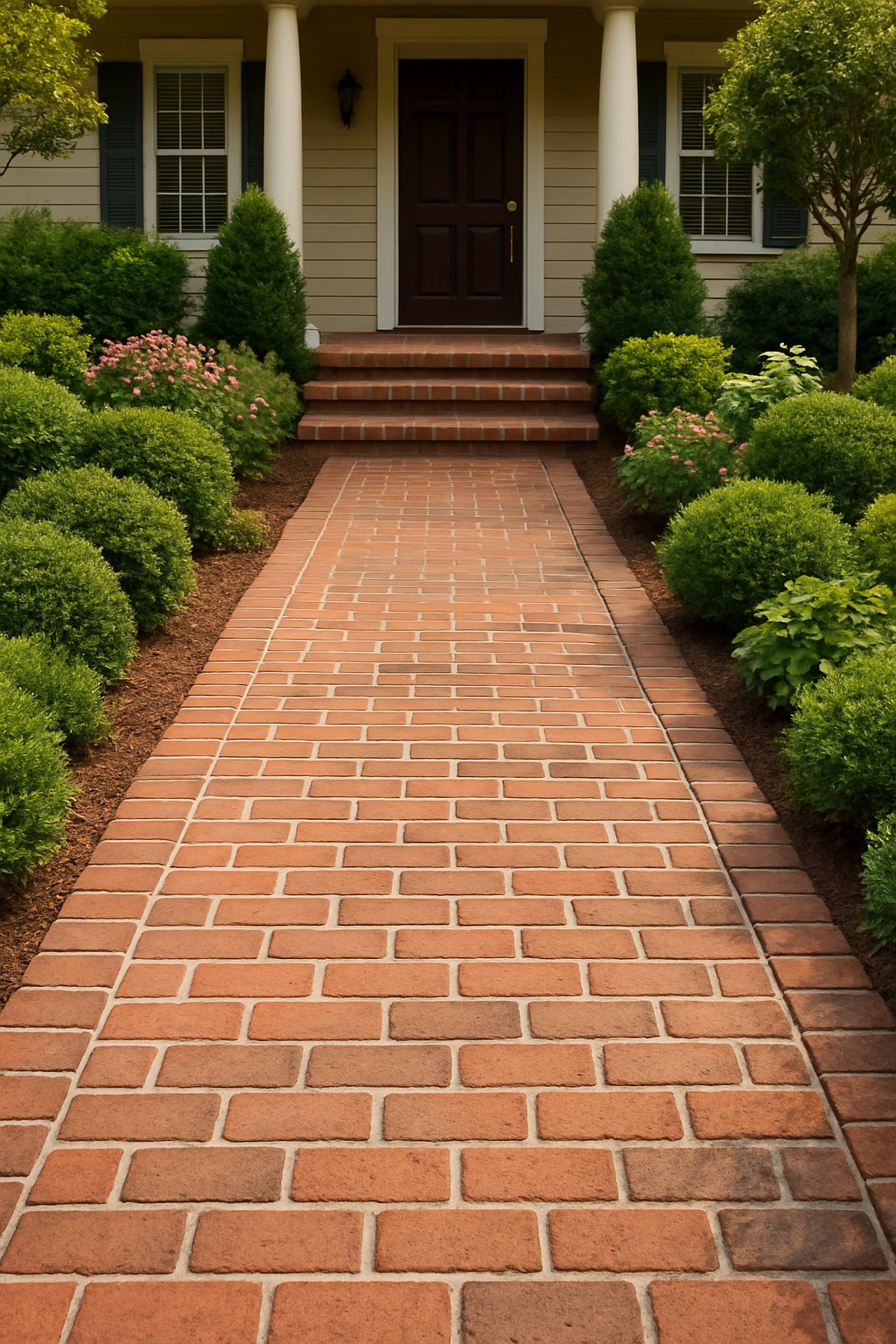
A classic brick pathway instantly makes your entrance feel warm and inviting. You can lay the bricks in simple rows or opt for a pattern like herringbone for added flair. This timeless style works well with many types of homes, from traditional to cottage. Bricks are highly durable and hold up well in various weather conditions, making them a long lasting choice. To soften the look and add color, line the path with low plants or flowers. A brick walkway clearly guides visitors to your porch steps, creating a defined route. Select brick colors that match or complement your house and ensure they are set on a solid, level base to keep your path stable for years to come. Using sand between the bricks will improve water drainage, and sealing them every few years can protect against stains and moss.
21. Pebble and flagstone combo with drought-tolerant plants
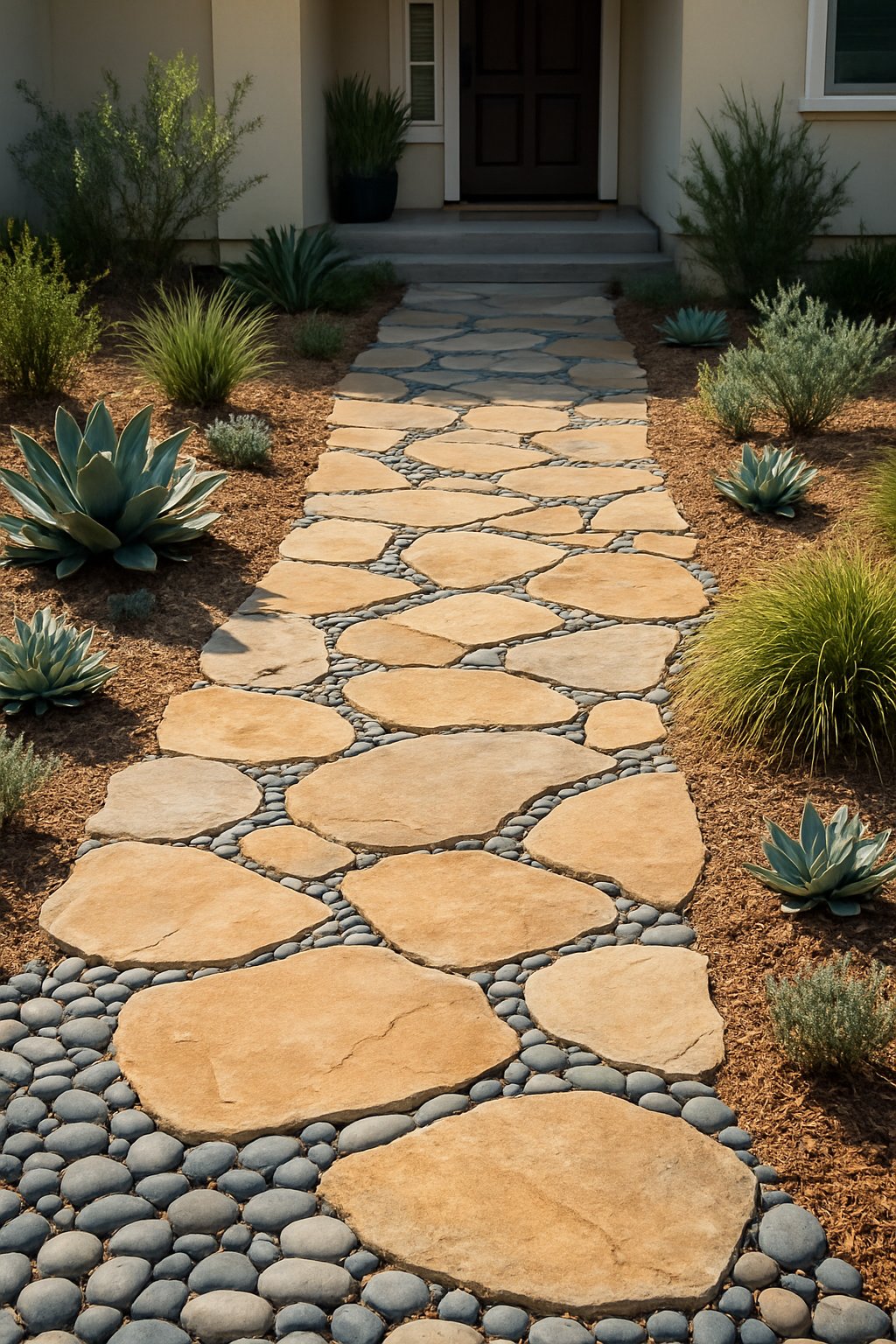
Mixing flagstones with small pebbles creates a visually appealing walkway with great texture. The pebbles not only look good but also help with water drainage around the larger stones. Along the edges, consider planting drought tolerant options like succulents, agave, or tough ornamental grasses. These plants require minimal water and complement the stone aesthetic perfectly. Using pebbles around the base of the plants can help the soil retain moisture and keep weeds at bay, maintaining a tidy appearance. You can add extra height and interest by building small raised beds or stone tiers. This also allows you to separate different plant types for more variety. Make sure the walkway is wide enough for comfortable passage and avoid planting too close to the stones to keep the path clear. Choosing plants with different shapes and heights will add depth to the design.
22. Clean modern walkway with large rectangular pavers

Large rectangular pavers give your front walkway a sleek, modern appearance. Their clean lines help to open up the path and create a sense of organization. For a stable and well drained foundation, lay the pavers on a bed of crushed gravel or sand. Spacing the pavers evenly results in a simple, tidy look. Filling the gaps with small stones or gravel is an effective way to control weeds. For a classic style, choose neutral colors like gray or beige, or mix different tones for a bit of contrast. This design pairs well with low plants or grass along the sides. The large size of the pavers makes for an easy and comfortable walking surface, keeping the area neat without appearing busy. To ensure the pavers stay in place, use landscape adhesive underneath each one and fill the gaps with fine gravel for added texture and weed control.
23. Walkway surrounded by boxwood and colorful annuals

Lining your walkway with boxwood shrubs provides a clean, classic border. Their evergreen leaves remain green throughout the year, nicely framing the path. You can add vibrant pops of color by planting annual flowers between or in front of the boxwoods. These seasonal blooms brighten the space and can be changed out each year. The contrast between low annuals and the taller, dense boxwoods adds texture and keeps the design interesting without crowding the walkway. Boxwoods require some watering and pruning to maintain their shape, while annuals typically need regular watering and deadheading to continue blooming. This design is particularly well suited for front yards where you want a formal, tidy path that still feels inviting. For a fuller look, plant the boxwoods in groups and choose annuals with different bloom times to ensure you have color all season long.
24. Rustic gravel path with wildflower mix sides

A gravel path is a simple way to create a natural looking walkway that suits almost any yard. Gravel is a low maintenance material that allows for excellent water drainage. To add color and a touch of wild charm, plant a mix of wildflowers along both sides. Wildflowers create a relaxed, countryside feel and are a favorite of bees and butterflies, which is a great bonus for your garden. Using a variety of flower types will result in different heights and colors, keeping the borders visually interesting from every angle. Choosing native wildflowers will help them thrive with minimal care. Ensure the path is wide enough for a comfortable walk and use wood or rock edging to keep the gravel contained. For blooms all season, mix fast and slow growing wildflowers and pull any weeds regularly to maintain a tidy look.
25. Curved walkway highlighted by solar garden stakes

A curved walkway adds a gentle, flowing feel to your front yard, often feeling more inviting than a straight path. It can encourage visitors to slow down and enjoy the journey to your door. To illuminate the walkway at night, add solar garden stakes along the edges. These stakes are easy to install since they don’t require any wiring; they simply soak up sunlight during the day and cast a soft glow after dark. This added light provides both safety and a touch of style with minimal effort. There are many options available, from lantern style stakes to simple glowing orbs. Pairing them with flowering plants or a mulch border can really accentuate the curve of the path, as the lights naturally highlight its shape and texture. This cozy design is a great fit for casual or rustic homes, making guests feel welcome while also being practical. Place the solar stakes at regular intervals for even lighting and choose durable materials that can withstand the weather.