Coffee grounds are a secret weapon for your crops, houseplants, and garden flowers. Think of them as a cheap, green, and ready to use nutrient concentrate that also smells amazing. But do you know the best ways to apply them, or which plants benefit the most?
You can boost nearly any plant by mixing coffee grounds into compost or adding them directly to the soil. It’s crucial to understand the difference between fresh and used grounds. Plants that respond best fall into four main groups:
Acid loving garden plants like azaleas and camellias thrive with this addition. Vegetables, especially tomatoes and potatoes, get a significant boost. Fruit shrubs such as blueberries and cranberries will reward you handsomely. Even houseplants like rhododendrons and African violets love them.
Keep reading to discover exactly which plants adore coffee grounds and the key things to remember when using them as a fertilizer.
Why Coffee Grounds Are Good For Plants
You already know coffee grounds are like garden gold. They’re basically a supercharged energy boost for your plants. You’ve probably seen them sprinkled in pots and gardens, or maybe you have a friend whose houseplants seem to explode with growth from coffee grounds alone. But what makes them so powerful? Let’s break it down.
Coffee Grounds Are Rich in Nutrients
The minerals packed inside coffee grounds are vital for plant growth. In fact, they are incredibly rich in essential nutrients:
- Nitrogen
- Magnesium
- Calcium
- Iron
- Potassium
- Phosphorus
- Chromium
This includes the big three, NPK (nitrogen, phosphorus, and potassium), which are the primary nutrients plants need. Speaking of nitrogen, an impressive 2% of the total volume of coffee grounds is made of this fundamental nutrient. That’s a huge amount!
You also get secondary nutrients that plants require in smaller amounts but are still essential for their health, like magnesium and calcium. On top of that, you even get rare minerals like chromium.
Many Nutrients in Coffee Grounds Are Ready for Plants to Absorb
When you give coffee grounds to your plants, they can begin absorbing and using those nutrients almost immediately. Typically, when you add organic matter to the soil, you have to wait for it to decompose before plants can access the benefits. But many of the minerals in coffee grounds are instantly available as plant food. This makes coffee grounds an excellent choice for improving your soil with fast acting results.
Coffee Grounds Can Provide Nutrients for Plants
Here’s something you probably didn’t expect. Coffee grounds are a tool for combating soil pollution. They possess a unique ability to absorb heavy metals, which act as pollutants in the soil. This includes lead, mercury, and cadmium, as well as excess amounts of other metals like zinc.
Coffee Grounds Improve Soil Texture
You can also use coffee grounds to transform lumpy soil, making it loose, permeable, and much easier to work with. They are particularly effective for breaking up heavy clay and chalk based soils. Their effect is similar to sand, as they separate hard, impermeable soil particles, which improves aeration and water penetration.
Coffee Grounds Attract Worms
Worms are fantastic soil fertilizers, and they absolutely go wild for coffee grounds. A healthy soil is one that can build its own fertility, and you want to foster that environment. Otherwise, you’ll be stuck in a negative cycle. Your soil needs a thriving ecosystem of microorganisms, fungi, worms, and other creatures that break down organic matter and make nutrients available to your plants. Worms are a gardener’s best friend!
Coffee Grounds Keep Slugs and Snails Away!
Coffee grounds also work for pest control. Snails and slugs despise the texture of coffee grounds. Many gardeners sprinkle grounds around crops that these pests find irresistible. Tender leaves on plants like lettuce, young cabbage, and kale are prime targets for snails and slugs. There’s no need for chemical pollutants when a few cups of coffee can keep these annoying munchers at bay.
These are all the benefits of adding coffee grounds to your soil. But did you know they are also fantastic for your compost pile?
Coffee Grounds Are An Excellent Nitrogen Source For Composting

Coffee grounds are an exceptional ingredient for compost. On top of being loaded with nitrogen and other nutrients, they have a special property: they encourage the growth of microorganisms that accelerate the decomposition of organic matter.
Just sprinkle a thin layer over your compost heap or scatter them around. Avoid dumping them in a single clump. They work best when distributed evenly and thinly.
Coffee Grounds Are Green (!!!) Compost
You might be thinking, “No, coffee grounds are dark brown, not green.” But in the world of compost, color refers to nutrient content. “Brown” materials are carbon rich, while “green” materials are nitrogen rich.
This is often literally true. Fresh green leaves are rich in nitrogen, and brown organic matter is high in carbon. Coffee grounds are a notable exception. Although they are brown in color, they are packed with nitrogen, so they count as a green compost ingredient.
This leads us directly to the next important topic: how to use coffee grounds correctly.
How To Use Coffee Grounds Properly

Using coffee grounds the right way is key to getting optimal results for your plants. Because they are so powerful and nutrient rich, they require careful application.
First, remember that coffee grounds are a “green” compost material. This means you need to balance them by adding “brown” compost, or carbon rich organic matter, to provide your plants with a complete diet. Try mixing chopped dry leaves with your coffee grounds before adding them to the soil. Any carbon rich material works, but dry leaves blend exceptionally well.
Always use a small amount of coffee grounds. The idea of growing plants directly in a pot of coffee grounds is not a good one. Why? The very thing that makes them so beneficial, too much nitrogen, can become a problem. Let’s explore that.
Nitrogen is the nutrient plants crave the most. However, if there is an excessive amount of nitrogen in the soil, plants won’t develop strong roots. They have no incentive to, since all the nutrients they need are readily available. This becomes a major issue. Once the nitrogen is depleted, the plants are left with an underdeveloped root system and will begin to suffer, or even die.
You can add coffee grounds to the surface of your soil. This is a great way to improve its nutritional content and texture. The grounds will slowly mix in, and the nutrients will leach into the soil. It’s better not to mix the grounds directly into the soil; let rain and watering do the work. Even with this method, only scatter a thin layer. Give your plants a gentle boost. A heavy application can negatively affect their growth.
Coffee Grounds and Soil pH
What is the pH of coffee grounds, and will they alter your soil’s acidity? The answer depends on whether they are fresh or used.
- Unused, raw coffee grounds have a pH under 5. This is very acidic and will lower your soil’s pH.
- Used coffee grounds have an almost neutral pH, between 6.5 and 6.8. The acidity has been leached into your coffee, so they will not make your soil more acidic. In fact, when added to very acidic or alkaline soil, they will help bring the pH closer to neutral.
This means you can use spent coffee grounds on almost any plant. However, fresh, unused grounds should only be applied to acid loving plants, or acidophiles. Examples include azaleas, rhododendrons, camellias, heather, nasturtiums, hydrangeas, fothergillas, holly, gardenias, and caladiums.
Most vegetables prefer slightly alkaline soil, but acid loving veggies like radishes, parsley, potatoes, peppers, and rhubarb can benefit from a boost of fresh coffee grounds. Similarly, while many fruit trees favor neutral soil, raspberries, blueberries, gooseberries, cranberries, and currants will appreciate some acidity.
Of course, most people wouldn’t dream of using fresh, unbrewed coffee grounds in their garden. It’s simply too expensive. You can make your soil more acidic with cheaper alternatives like tea or lemon peels. The choice, however, is yours.
Now you understand why coffee grounds are beneficial, and you know how to use them. We’ve even touched on some plants that particularly enjoy them. Shall we take a closer look at a few of these plants in more detail?
20 Plants That Love Coffee Grounds

Our selection of 20 plants that will truly reward you for a coffee ground feeding includes some familiar names and a few surprises. Here they are, divided into four categories.
Garden Plants That Love Coffee Grounds
Coffee grounds can work wonders for your garden plants, and some respond more enthusiastically than others. Acid loving plants will even enjoy fresh coffee grounds, and many of these are staples in gardens and parks!
1: Azalea and Rhododendron (Rhododendron spp.)
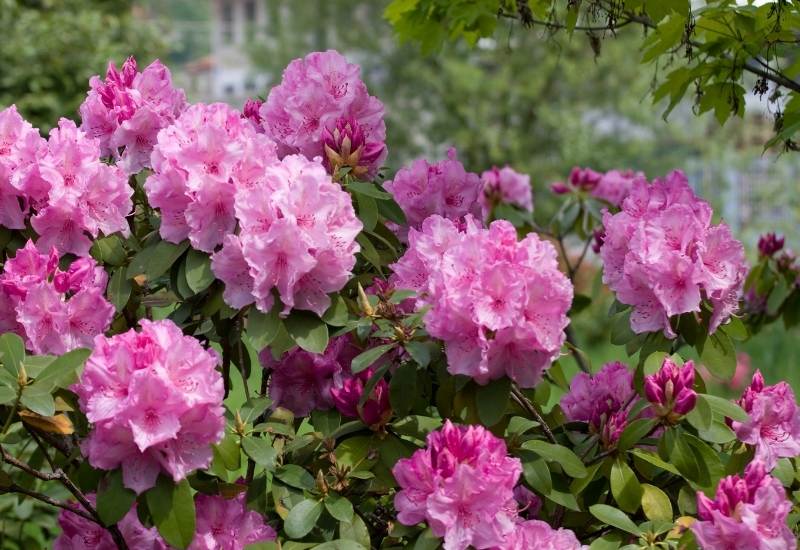
Although azaleas and rhododendrons now belong to the same genus, azaleas are notoriously more difficult to grow in gardens. They are stunning but generally more delicate than rhododendrons.
One of the keys to keeping azaleas happy is providing them with soil that is not only rich in nutrients but also extremely loose and well aerated. They also demand a very low soil pH, between 4.5 and 5.5. If these conditions aren’t met, they can become weak and sickly. Their delicate roots cannot penetrate heavy soils like clay or chalk.
Coffee grounds make azaleas and rhododendrons incredibly happy, and they will thank you with a spectacular display of brightly colored blooms!
- Light requirements: Full sun or partial shade.
- Size: Varies by species. Azaleas typically reach 5 feet in height and spread (150 cm), while rhododendrons can grow to be enormous, up to 15 feet tall and wide (4.5 meters).
- Hardiness: Usually USDA zones 5 to 9, depending on the variety.
- Soil requirements: Well drained loam or sandy loam. They can also manage in loose, well drained clay.
- Fresh coffee grounds: Yes, absolutely.
2: Camellia (Camellia spp.)
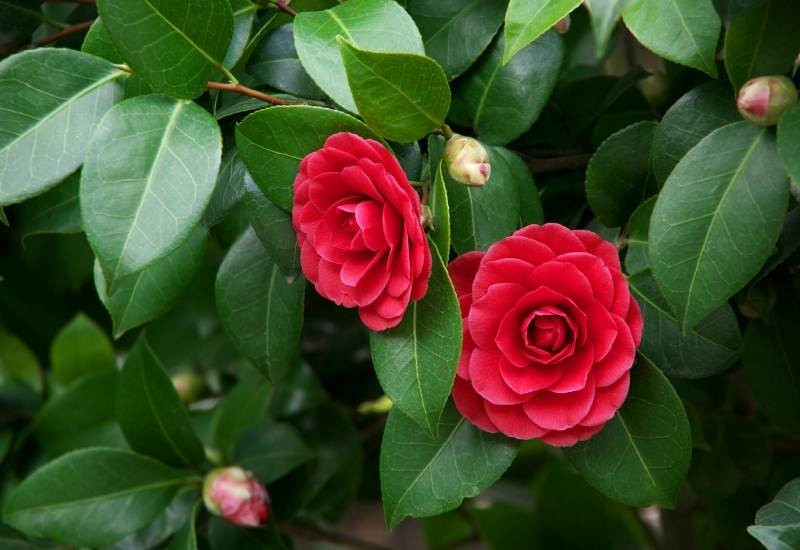
Camellia is another plant that loves coffee grounds. It can bring a stunning elegance to any garden, but it is also quite delicate. As an acidophile, it requires the right conditions, or you’ll see yellowing leaves and a classic tell tale sign: buds that form but then dry up before they can open.
This is a common problem, and if it’s happening to your camellia shrub, coffee grounds, even fresh ones, can provide essential nutrients and correct the soil’s acidity. Sprinkle the grounds around the base of the camellia, ensuring a thin but complete coverage over the root area.
- Light requirements: Partial shade or full shade.
- Size: Up to 10 feet tall (3 meters) and 6 feet wide (1.8 meters).
- Hardiness: USDA zones 7 to 9.
- Soil requirements: Loam or sandy loam. It can also grow in acidic, well drained clay.
- Fresh coffee grounds: Yes.
3: Hydrangea (Hydrangea spp.)

Hydrangeas, known for their large, long lasting blooms and fresh appearance in gardens and parks, also love coffee grounds. Unlike azaleas and camellias, they are not particularly delicate and can adapt to various growing conditions, though they prefer acidic to neutral soil.
If you want your hydrangea to perform at its best, with vibrant green foliage and bright, full flower clusters, a good sprinkling of coffee grounds at the base of the plant can make a huge difference!
- Light requirements: Full sun, dappled shade, light shade, or partial shade.
- Size: Up to 10 feet tall and wide (3 meters), depending on the species.
- Hardiness: Varies by variety but generally within USDA zones 3 to 9.
- Soil requirements: Well drained loam, sand, or clay based soil.
- Fresh coffee grounds: Yes.
4: Lily of the Valley (Convallaria majalis)
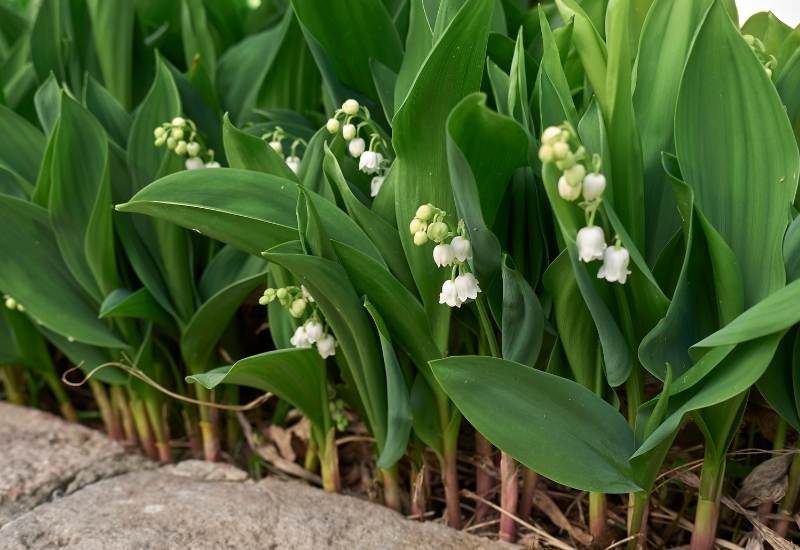
Lily of the valley is a smaller garden plant, unlike the larger hydrangeas and rhododendrons, but it shares their appreciation for coffee grounds. This flowering perennial, found in underbrush, produces beautiful, usually white, bell shaped flowers. There is also a pastel lilac variety, Convallaria majalis rosea.
It is often associated with dappled shade under tall trees and is a very traditional flower, also known for its medicinal uses. It can grow in acidic, alkaline, or neutral soil, but it thrives in very loose, brittle soil. Coffee grounds provide both the texture and the rich nutrients it enjoys.
- Light requirements: Dappled shade, partial shade, or full shade.
- Size: Maximum of 1 foot tall and wide (30 cm).
- Hardiness: USDA zones 2 to 7.
- Soil requirements: Loam or clay based soil, but must be loose and well drained.
- Fresh coffee grounds: No, only used coffee grounds are suitable.
5: Cyclamen (Cyclamen spp.)
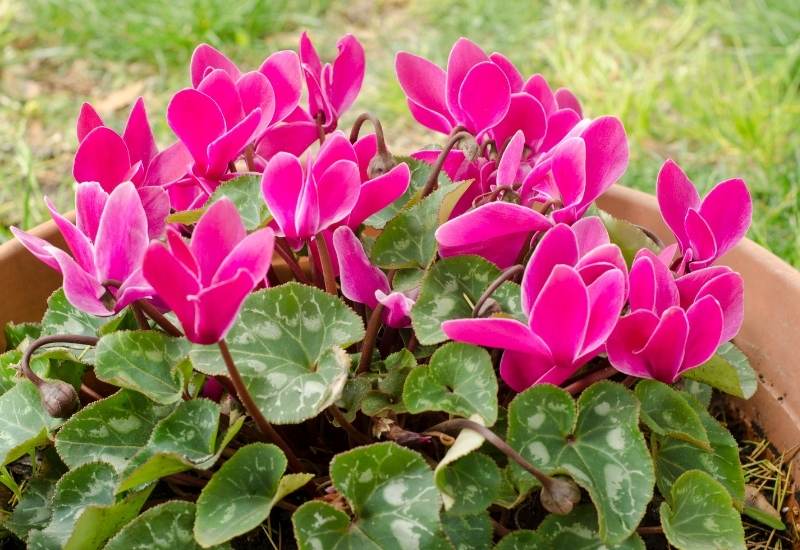
Cyclamen is a special flower that appreciates coffee grounds! Like lily of the valley, it is typically found in wooded areas. However, cyclamen can thrive where almost no other flower can, such as under conifers where fallen needles make the ground very acidic.
For this reason, cyclamens even enjoy an occasional feeding of fresh coffee grounds. While some cyclamens, like Cyclamen coum, are garden plants, others are more commonly grown as houseplants. Don’t worry, they all love coffee!
- Light requirements: Light shade, dappled shade, or partial shade.
- Size: Maximum of 1 foot tall and wide in large varieties (30 cm).
- Hardiness: Varies by species. The most common, Cyclamen coum, is hardy in USDA zones 4 to 8.
- Soil requirements: Prefers loam and sandy loam but can grow in well drained clay and even chalk.
- Fresh coffee grounds: Yes, sporadically.
6: Daffodils (Narcissus spp.)
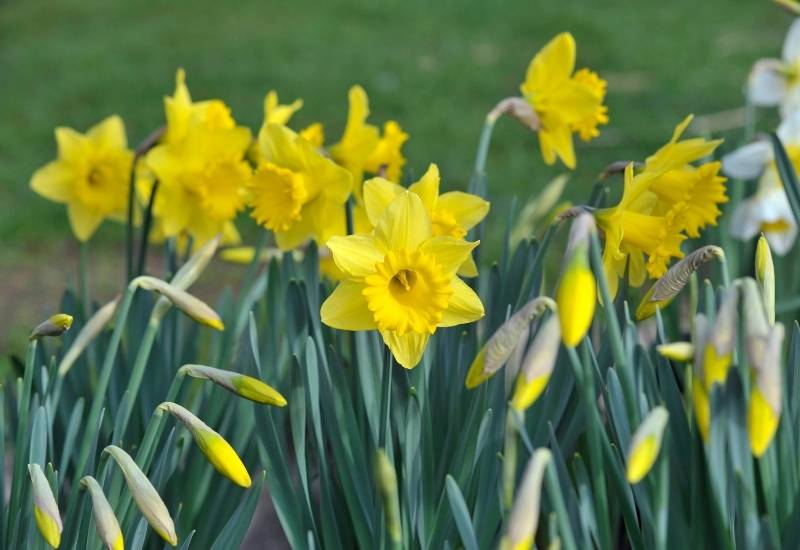
Even daffodils, the sweetly scented flowers of spring, love coffee grounds. To be honest, daffodils are very undemanding. In most gardens, all you need to do is plant a few bulbs and watch them multiply into a sea of fragrant flowers each spring.
You might even forget about them, only to be pleasantly surprised when they return year after year. But if you want to give them a little treat, sprinkle some coffee grounds over the soil at the end of winter, just as they are beginning to wake up.
- Light requirements: Full sun or partial shade.
- Size: Usually about 1 to 2 feet tall maximum (30 to 60 cm).
- Hardiness: Typically USDA zones 3 to 8, but this can vary by variety.
- Soil requirements: Adaptable to most soil types as long as they are well drained, including loam, sand, clay, or chalk based soils.
- Fresh coffee grounds: No, only used coffee grounds.
Vegetables That Like Coffee Grounds
You can also use coffee grounds in your vegetable garden. Most vegetables will appreciate the extra nutrition from used coffee grounds, although very few can tolerate fresh grounds. This is because most vegetables prefer a soil pH that is fairly alkaline, or at least neutral to alkaline.
On the other hand, many vegetable plants have a short life cycle and will enjoy a boost of energy for their final push just before harvest. Here are some that really appreciate a bit of coffee.
1: Tomato (Solanum lycopersicum)
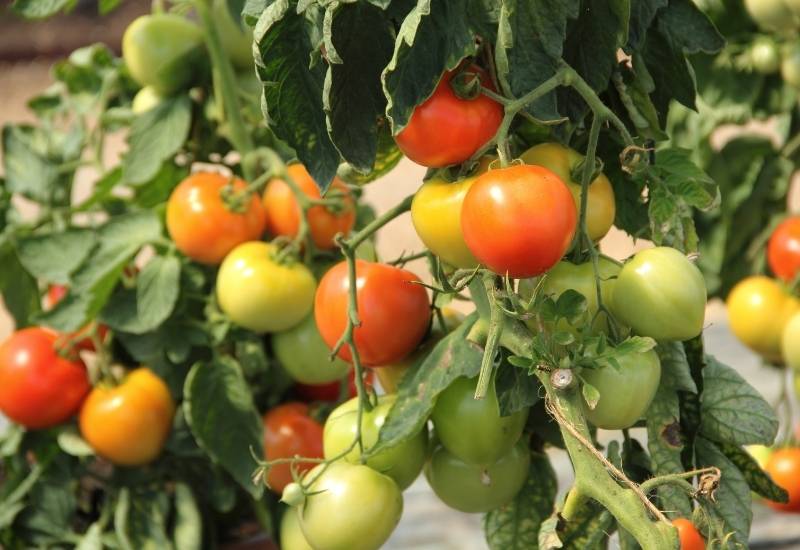
Tomatoes require a lot of energy to grow, making coffee grounds a very welcome addition. Every gardener knows that tomato plants are heavy feeders and drinkers. In return, a single vine can produce a bountiful harvest!
To give them the help they need, it’s a good idea to scatter some used coffee grounds around each tomato plant when they begin to blossom, when the first fruits appear, and then once or twice more as they continue to fruit. This will support them late into the season.
- Light requirements: Full sun, and lots of it!
- Spacing: 18 to 24 inches apart, depending on the variety (45 to 60 cm).
- Harvest time: Early season tomatoes start around 50 days from planting, while others take 60 to 80 days.
- Soil requirements: Any loose, well drained soil will work, but sandy loam is ideal.
- Fresh coffee grounds: No, only used.
2: Potato (Solanum tuberosum)
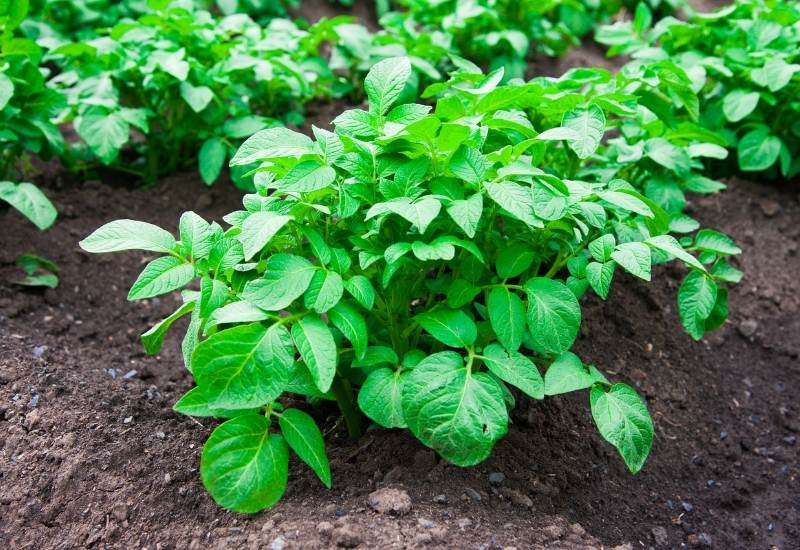
Potatoes are closely related to tomatoes, belonging to the same genus, and they also love lots of energy and coffee grounds. The tubers growing underground need a tremendous amount of nutrients to swell, acting as energy banks for the plant. What’s more, potatoes require very loose soil to allow the tubers to expand without any obstructions.
Add coffee grounds to the soil before planting your potatoes. Then, repeat the application every four weeks all the way up to harvest. You’ll be rewarded with bigger, more nutritious potatoes when you finally dig them up!
- Light requirements: Full sun.
- Spacing: Usually 12 inches apart (30 cm).
- Harvest time: Typically 60 to 200 days, depending on the variety.
- Soil requirements: Well drained soil rich in organic matter, like loam or sandy loam.
- Fresh coffee grounds: No, only used.
3: Radishes (Raphanus sativus)
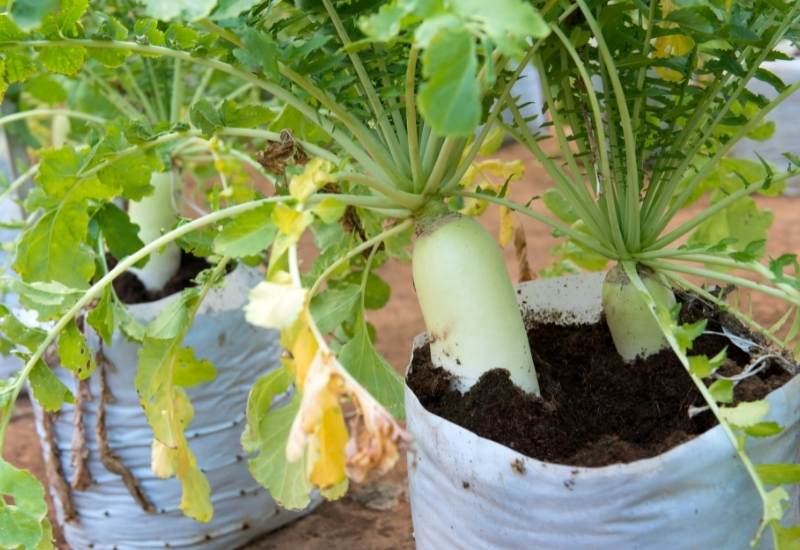
Radishes grow in a flash! They are often ready to harvest in about three weeks from seeding, so any help they can get during this short time is beneficial. In just 20 days or so, they need to grow their leaves while simultaneously packing their juicy roots with as much energy as possible.
Give them a head start by adding some used coffee grounds to the soil right after sowing. The readily available nutrients in the coffee grounds will be greatly appreciated, and you’ll see a noticeable difference in your crop!
- Light requirements: Full sun, but they tolerate partial shade.
- Spacing: 2 to 4 inches (5 to 10 cm).
- Harvest time: 22 to 70 days.
- Soil requirements: A wide range of soil types, as long as they are very well drained and aerated. Loose sandy loam is perfect.
- Fresh coffee grounds: No, they prefer a neutral pH of 6.5 to 7.0.
4: Broccoli (Brassica oleacea var. italica)
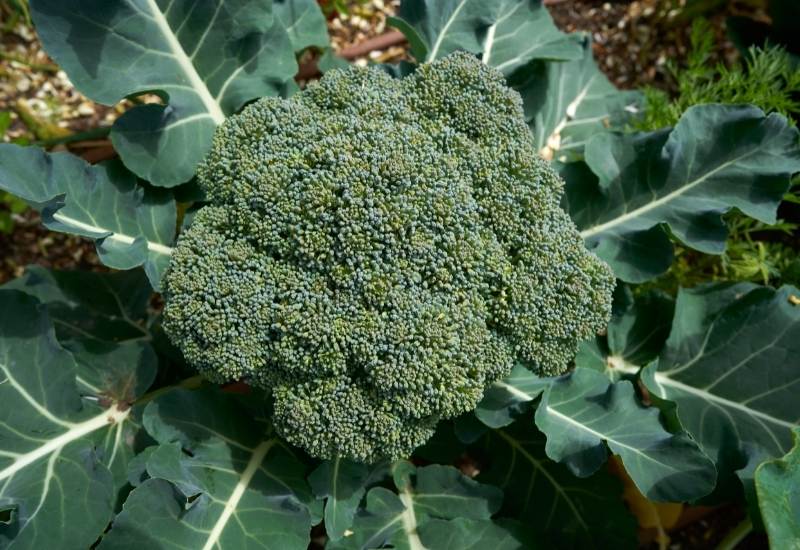
Broccoli is incredibly nutritious and packed with vitamins, and it also benefits from the energy boost provided by coffee grounds. If you want to help your plants pack all those nutrients into their delicious florets, stalks, and leaves, coffee grounds can do just that!
For the best results, keep adding some used coffee grounds to the soil from the time you plant them until about three weeks before harvest. A monthly “treat” for your broccoli plants will be a decision you won’t regret!
- Light requirements: Full sun.
- Spacing: 18 inches apart (45 cm).
- Harvest time: 100 to 150 days, or 55 to 80 days from transplant.
- Soil requirements: Any well drained soil with plenty of nutrients and organic matter, with a neutral pH.
- Fresh coffee grounds: No, it can tolerate a pH down to 6.0 at most, but it prefers something closer to 7.0.
5: Peppers (Caspicum annuum)
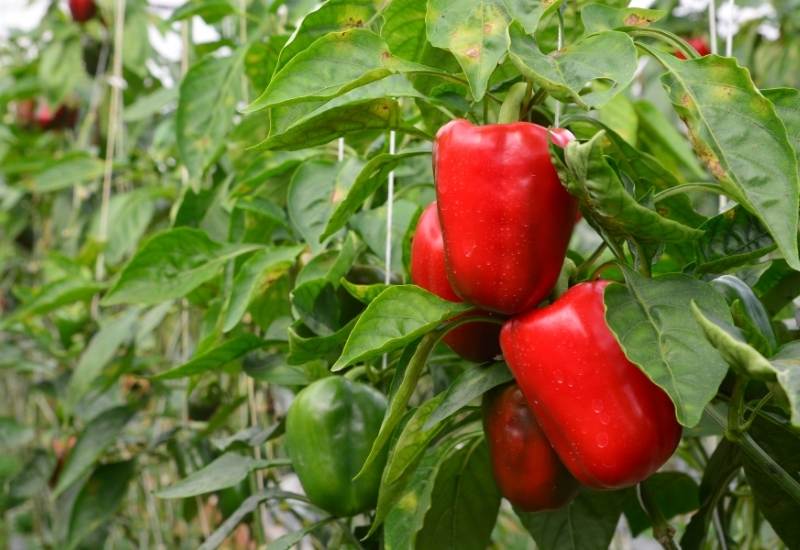
A small bell pepper plant will produce massive fruits relative to its size, so give it some coffee grounds to support this effort! These sun loving vegetables perform miracles, growing from tiny two leaf seedlings into sturdy adult plants with amazing fruits all in one season.
Of course, peppers are also heavy feeders. Provide them with regular sprinklings of used coffee grounds, starting right after you plant them. Repeat this monthly throughout their long fruiting season!
- Light requirements: Full sun. Give them the brightest spot in your garden!
- Spacing: 18 to 24 inches apart (45 to 60 cm).
- Harvest time: 60 to 90 days.
- Soil requirements: They prefer loam or sandy loam, but most types of well drained, organically rich soils will suffice.
- Fresh coffee grounds: No, they like a soil pH between 6.0 and 6.8.
6: Rhubarb (Rheum rhabarbarum)
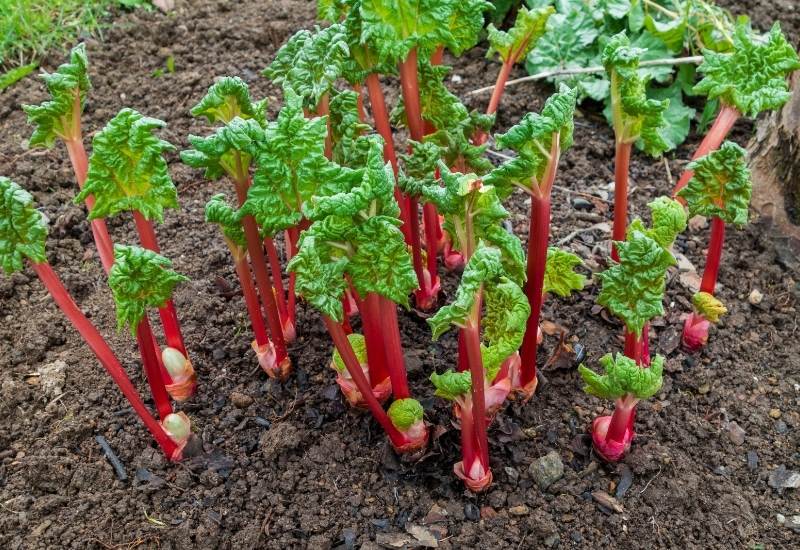
Rhubarb is a super vegetable that also enjoys a “cup of coffee” in powdered form. It is extremely rich in vitamins, but unlike other plants, it concentrates them in its famous red stalks. While common in sweets, did you know it’s also excellent for your mouth and gums? A tincture made from it is used to treat mouth ulcers.
Rhubarb is a strong and vigorous plant, so it’s no wonder it appreciates an energy boost now and then. Start sprinkling a bit of used coffee grounds when you plant it, and repeat every three to four weeks until harvest. Always reward it with some used coffee grounds after you pick the stalks, and it will continue to grow new ones.
- Light requirements: Full sun.
- Spacing: 3 to 4 feet apart (90 to 120 cm).
- Harvest time: When the leaves grow to be 7 to 15 inches long (18 to 38 cm). You can harvest from a single plant for about 3 years.
- Soil requirements: Well drained, organically rich soil that remains moist.
- Fresh coffee grounds: Only used coffee grounds; it does not like acidic soil (prefers 6.0 to 6.8).
Fruit Plants That Like Coffee Grounds
You’ll get the best results with coffee grounds when you use them on acid loving small shrubs. Plants like blueberries and raspberries respond very well, more so than larger trees like apples or plums. These shrubs produce vitamin rich berries and require a lot of energy for their often long and generous harvests. Here are some of the best candidates.
1: Blueberry (Vaccinium spp. or Cyanococcus spp.)

You know that blueberries are packed with vitamins, so help them out by using coffee grounds to fill their juicy berries! They are also acid loving plants, which means they will appreciate fresh, unused coffee grounds too.
Blueberry plants will produce for many years. Give them some coffee grounds in the spring as they start their vegetative growth, again as soon as they set fruit, and once more while the berries are ripening. That coffee will contribute to the juiciness and freshness of the dark berries!
- Light requirements: Full sun, but it will appreciate partial shade late in the day.
- Spacing: 2 to 3 feet apart (60 to 90 cm).
- Harvest season: April to September in the Northern Hemisphere; October to March in the Southern Hemisphere.
- Soil requirements: Well drained, loose, and very rich acidic soil. Loam or sandy loam are best, with a pH between 4.0 and 5.0.
- Fresh coffee grounds: Yes, absolutely!
2: Cranberries (Vaccinium oxycoccus)
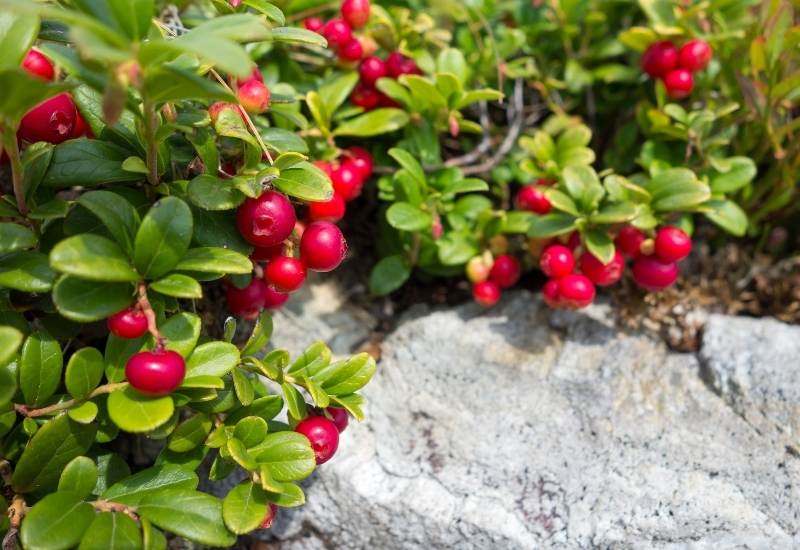
Cranberries are another very vitamin rich berry, and they also like coffee grounds, whether fresh or used. With their festive red color, cranberries are a true delicacy. They are rarer and harder to find than blueberries, but they are closely related and thrive in similar conditions.
Be sure to give your cranberries some coffee grounds when spring arrives. Then, continue to sprinkle the soil at regular intervals before and during the harvest season!
- Light requirements: Full sun.
- Spacing: 2 feet apart (60 cm).
- Harvest season: Autumn, from mid September to mid November.
- Soil requirements: Loam or sandy loam are best; well drained and organically rich soil with a very acidic pH, between 4.0 and 4.4.
- Fresh coffee grounds: Absolutely!
3: Raspberry (Rubus idaeus)

Raspberries are lovely and nutritious, and you can use coffee grounds to help them grow and ripen. Their characteristic acidic flavor alone should tell you they love coffee. This generous shrub can definitely use a little help now and then, and the readily available nutrients in coffee grounds are perfect!
Give used coffee grounds to your raspberries in the spring and then throughout the fruiting season until they go dormant. You can also use unused coffee grounds, but don’t overdo it. They are ideal if your soil is alkaline. Raspberries prefer soil on the acidic side, but not as acidic as blueberries or cranberries.
- Light requirements: Full sun.
- Spacing: 18 to 24 inches apart (45 to 60 cm).
- Harvest time: From August to October.
- Soil requirements: They like soil that is rich in organic matter, well drained, and has good moisture retention. The ideal pH is between 5.5 and 6.5.
- Fresh coffee grounds: Only sparingly, and only if the soil is neutral to alkaline; avoid if the soil is already acidic.
Houseplants That Like Coffee Grounds

When it comes to the plants we grow indoors, some will also enjoy a sprinkling of coffee grounds. In fact, quite a few do, and we have selected the most appreciative ones. Be cautious, though! A pot or container is a very limited ecosystem, so use very small quantities if you truly love your houseplants.
1: African Violet (Saintpaulia ionanthia)
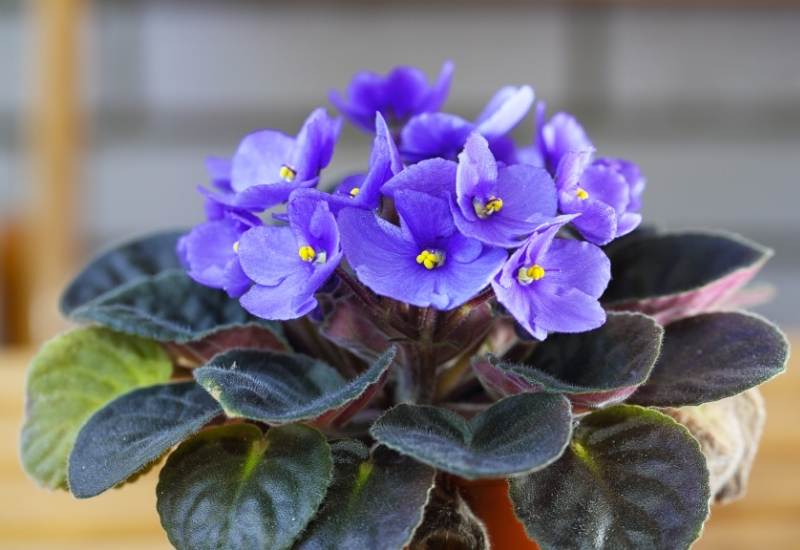
African violets are so sweet, with their fleshy leaves and vibrant flowers! And it’s not easy for them to stay in such good shape while living in a small pot. It’s even tougher because these plants seem timeless, so we often forget they need care. But they require plenty of energy and nutrients.
Give your African violets a very small sprinkle of used coffee grounds, especially if they seem to be lacking energy and vitality. They will truly appreciate it and will perk up as quickly as possible.
- Light requirements: Bright but absolutely indirect light; avoid hot spots or areas that heat up from the light.
- Size: 8 to 16 inches tall and wide (20 to 40 cm).
- Potting soil: 50% peat moss or a substitute, 25% perlite, and 25% vermiculite.
- Fresh coffee grounds: No, only used ones.
2: Christmas Cactus (Schlumbergera spp.)
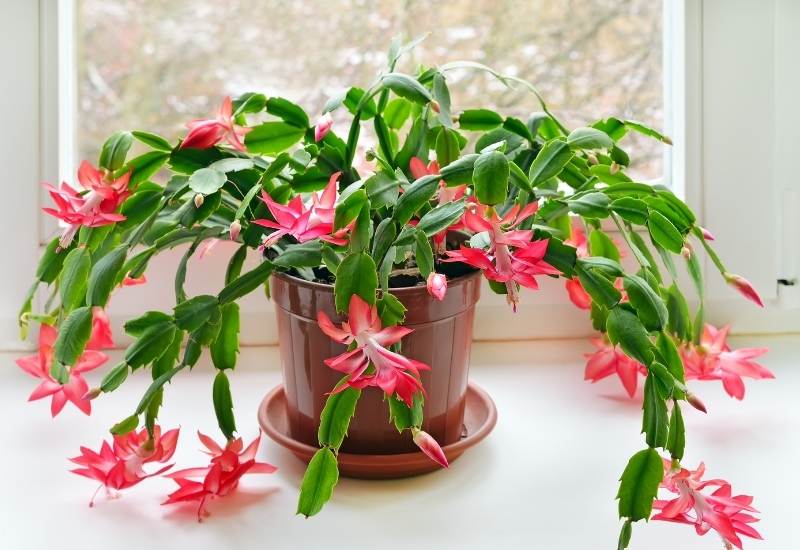
How many flowers does a Christmas cactus produce? Loads of them. Do you think it can do all that without a little help from you? No! So make sure it gets all the nutrients it needs to return year after year with those brightly colored blooms.
A small sprinkle of used coffee grounds before the Christmas cactus blossoms will go a long way in helping it perform at its best. You can also give it an extra boost with a gentle sprinkling when it emerges from dormancy and produces new leaves, or segments as they are properly called.
- Light requirements: Indirect but bright light. Direct light will burn its leaves.
- Size: Maximum of 1 foot tall (30 cm) and 2 feet wide (60 cm).
- Potting soil: Three parts generic potting mix and two parts perlite.
- Fresh coffee grounds: No, only used grounds.
3: Jade Plant (Crassula ovata)
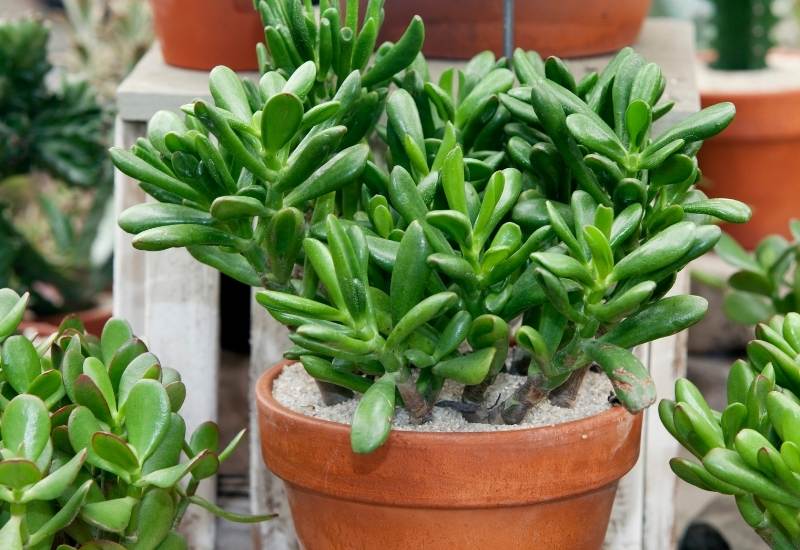
The jade plant is like a natural jewel, with its green or yellow leaves that resemble stones. It has a very “Japanese” look, and you might picture it beside a tea ceremony. But no, it prefers coffee instead! Coffee grounds will help your jade plant, especially if you want it to bloom regularly.
To do so, just add a modest amount of coffee grounds to the potting mix every six months or once a year. That will be enough to ensure regular and vigorous blooms.
- Light requirements: Bright indirect light.
- Size: Indoors, it will rarely grow more than 3 feet tall (90 cm), sometimes up to 6 feet (180 cm). In the wild, it’s a 30 foot tall giant (9 meters)!
- Potting soil: Use well drained cactus potting soil.
- Fresh coffee grounds: No, only used ones.
4: Peace Lily (Spatiphyllum spp.)
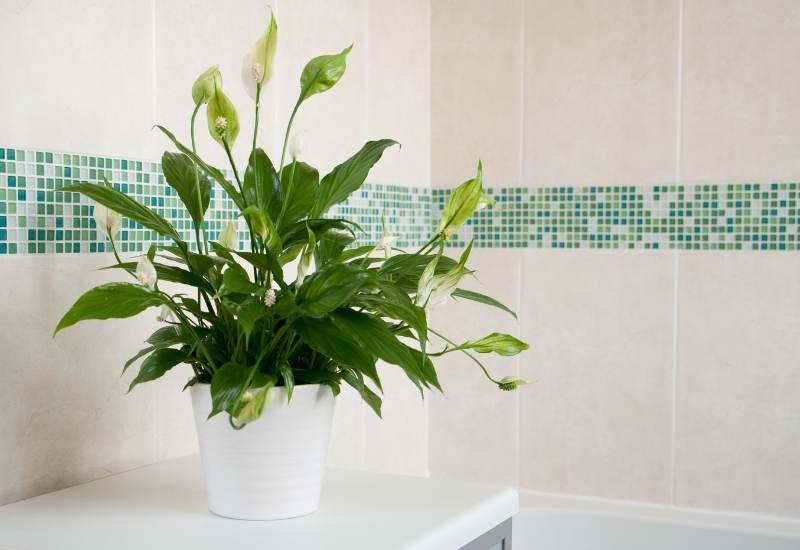
An all time favorite houseplant, the peace lily can get an extra shine on its glossy leaves and a boost for its white blooms with a bit of coffee grounds. This vigorous and fresh looking plant will appreciate the love and extra nutrients you provide with your used coffee.
The high nitrogen content in coffee grounds is excellent for its leaves and overall growth. So, give some used coffee grounds to your peace lily when it comes out of dormancy and as soon as you see it starting to bloom.
- Light requirements: Medium to moderate indirect light. Some shade is welcome.
- Size: About 2 feet tall (60 cm) and 1 foot wide (30 cm).
- Potting soil: Ideally 50% coco coir, 25% perlite, 15% orchid bark, and 5% charcoal.
- Fresh coffee grounds: No, only used.
5: Philodendron (Philodendron spp.)
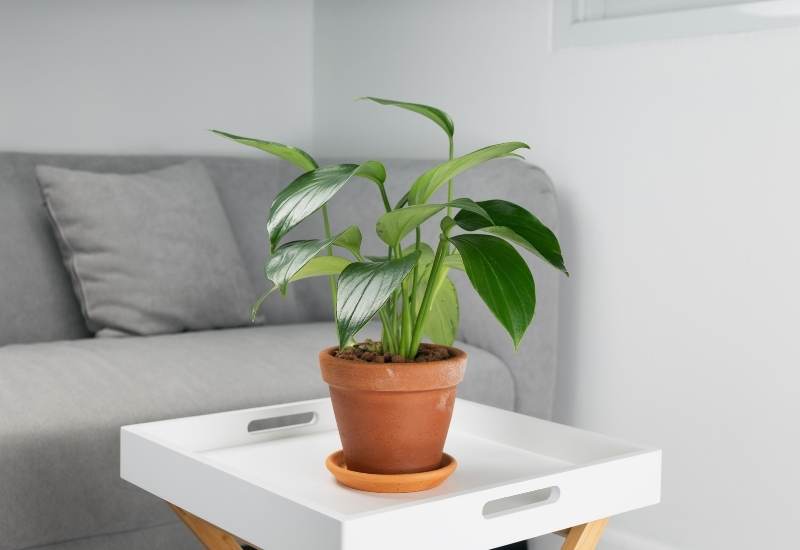
Perhaps the most popular houseplants on the planet, philodendrons come in many shapes, sizes, and colors. But they all share impressive, large, beautifully shaped, and glossy leaves. It’s no wonder they are heavy feeders. As we’ve mentioned, the high nitrogen content of coffee grounds is excellent for leaf growth.
Be consistent with your philodendrons; give them a modest but regular dose of used coffee grounds. Ideally, once a month throughout the year, except when they are dormant. You will see an improvement in your philodendron’s foliage.
- Light requirements: Medium to bright indirect light.
- Size: Varies by variety, from a few inches to an astounding 1,114 feet long (339.55 meters)!
- Potting soil: A mix of half generic potting soil and half coco coir or peat moss.
- Fresh coffee grounds: No, only used.
Coffee Time For Your Plants!
Garden plants, houseplants, vegetables, and fruiting shrubs can all benefit from the proper use of coffee grounds. Now you know the best practices and which plants love them the most. So don’t let those valuable grounds go to waste ever again.