A backyard Zen garden turns any available outdoor area into a deliberately quiet landscape of stone, raked gravel or sand, restrained planting, and thoughtful balance. The work starts with design and location, then moves through raking, rock placement, and traditional, modern, backyard, and eclectic interpretations while keeping naturalness, simplicity, and stillness in view.


Where do I start? Design.
Beginning your Zen garden project involves careful design. Several foundational principles guide this process, with truly stringent requirements. A Zen garden aims to embody naturalness (Shizen), simplicity (Kanso), and austerity (Koko).
Visually, Zen gardening prioritizes precision and equilibrium. The concept of “less is more” is paramount. If you typically enjoy a lush English garden or a vibrant wildflower meadow, this minimalist style may not be to your taste.

Stones represent mountain formations, while carefully raked gravel or sand creates the illusion of water ripples. While actual water installations are possible, Zen gardens commonly feature dry landscapes.
Floral elements are consistently absent; instead, you might find grasses and specific plants, such as bamboo, or selected trees like Ornamental Cherry and Japanese Maple. Shorter trees pruned to have distinct canopy tops are suitable, with bonsai trees being an excellent choice.

The Seven Guiding Principles of a Zen Garden
The creation of a Zen garden is guided by these seven core principles:
Shinzen is naturalness.
Kanso is simplicity.
Koko is austerity.
Fukinsei is asymmetry.
Yugen is mystery.
Datsuzoku is magical.
Seijaku is stillness.

Location
The chosen site for a Zen garden must be tranquil, fostering the seven guiding principles previously discussed. Should your garden be near coniferous trees, anticipate gathering fallen leaves throughout autumn. The example below shows how a roof effectively collects debris.

While a large, dedicated area for your garden is advantageous, it is not strictly necessary.

Overhanging structures can capture dropping flowers or foliage. The stones in the design resemble islands dotting an expansive ocean.
You have the freedom to style your sand ocean with as many waves as desired. A crucial element in any design remains simplicity.

Observe the harmonious movement within the Zen garden. Its design achieves remarkable balance and natural elegance.

Tending the Zen Garden
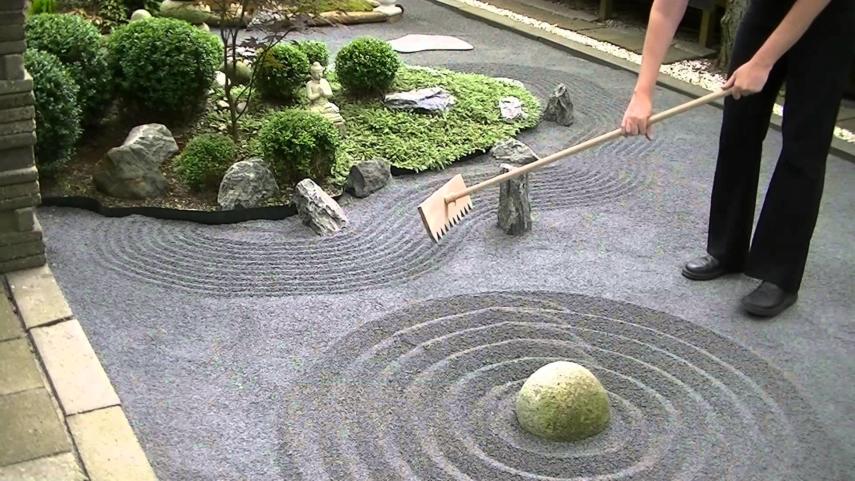
The act of raking your Zen garden serves as a meditative practice. Beyond this, these gardens require minimal upkeep, a testament to their inherent simplicity.

To depict water using sand or finely crushed stone, acquiring a full size Zen garden rake will be essential.
Rocking Your Zen Garden
In addition to the natural stones symbolizing mountains, you might construct a meditation tower from rocks. Alternatively, incorporate vibrant colored stones for your pathways. Remember to adhere to the fundamental principles without overcomplicating the design.

Stones offer an excellent focal point for contemplation within your Zen garden.

Achieve a captivating aesthetic in your tranquil space by coordinating the hues of your sand and rocks.

Introducing colored rocks into your Zen garden can create a striking visual impact.
Modern Designs

The depiction of a Zen garden by Kengo Kuma Architects showcases an exceptionally contemporary style.

A detailed view reveals exquisite simplicity through the combination of cement, water, and bamboo.

Contemporary Zen river stones are arranged to symbolize a flowing river.

Arranging stones into patterns offers a modern interpretation for a Japanese Zen garden.

Even paving stones can be utilized. Exercise your creativity while remaining mindful of the seven guiding principles.
Traditional Japanese Designs

A traditional Japanese gate serves as an inviting entrance for guests.

Transform any available space into your personal Zen sanctuary, even a courtyard garden.

Observe the tranquility of the Mount Koya Zen Garden.
Backyard Zen

Red bamboo provides a distinctive element for an outdoor area.

This residence features a Japanese inspired roof alongside Foo dog sculptures.

Here is a mid century modern Zen garden.

Even a small amount of backyard Zen can bring significant peace.

A dry Zen garden incorporates a bridge spanning gravel, symbolizing a river.
Eclectic Zen Gardens

This facial sculpture offers an intriguing centerpiece for the Zen garden.

A Zen inspired bathtub is nestled within the garden setting.

An array of diverse Buddha stools and benches creates a forest like arrangement.

A curving pathway designed for meditation embodies true Zen.

For a straightforward approach to quickly creating a Zen garden, consider incorporating a meditating dog sculpture.