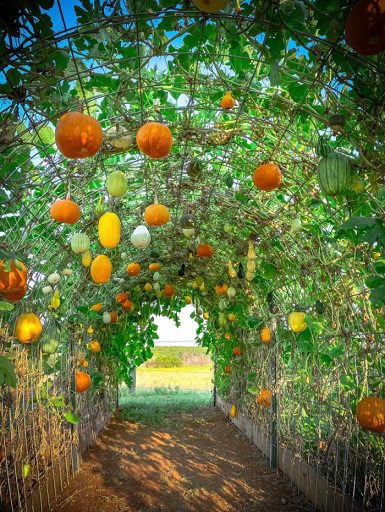
Vertical pumpkin trellises bring sprawling vines off the ground and make better use of limited garden space, with designs ranging from leafy tunnels and arbors to simple grids, fences, and repurposed ladders. Wood, poles, wire, and metal can form sturdy supports, while the trellis height and shape should match the pumpkin variety, with smaller fruits suited to taller or tunnel-style frames and heavier pumpkins needing shorter, stronger support.
Tunnel Pumpkin Trellises Ideas
If you’re looking for a trellis that doubles as a garden decoration, tunnel frameworks are an excellent choice. The lush foliage and vibrant colors of the pumpkins create a natural source of shade for your garden. Keep in mind, however, that these designs are best suited for smaller pumpkin varieties. Let’s dive in and see what’s possible!
1. Shade Hanging Pumpkin Trellis
For a truly dramatic effect, this pumpkin trellis is a must-try. Before the plants start producing fruit, the dense foliage covering the structure creates a wonderfully shaded garden space.
Once the pumpkins appear, they hang like vibrant lanterns, lighting up the garden with their striking colors during the day. The varying stages of maturity among the pumpkins also add a beautiful, multi-colored touch to the overall look.
2. Welcome Pumpkin Trellis
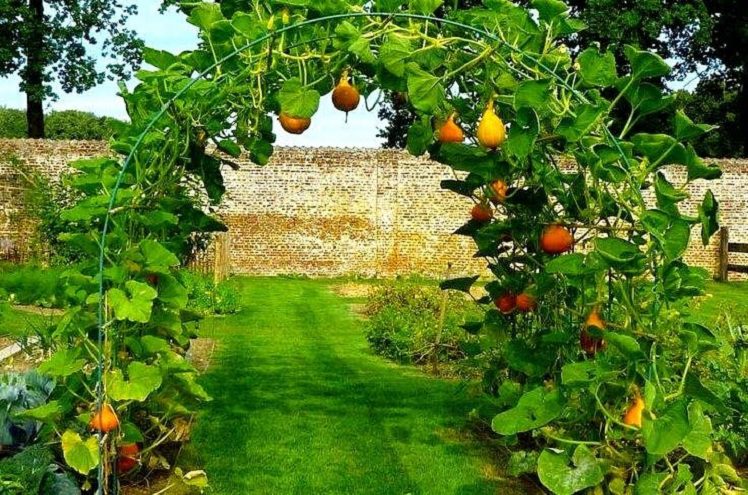
This pumpkin trellis elegantly frames the entrance to your garden, functioning almost like a welcome gate. The design is straightforward yet creates a lush, green atmosphere, naturally decorated by the hanging pumpkins.
To create an even more captivating scene, you can place this trellis on your lawn to introduce a different texture to the garden landscape. It’s also wise to keep the frame from being too tall, so if a ripe pumpkin falls, it won’t sustain significant damage.
3. Twin-Size Pumpkin Trellis
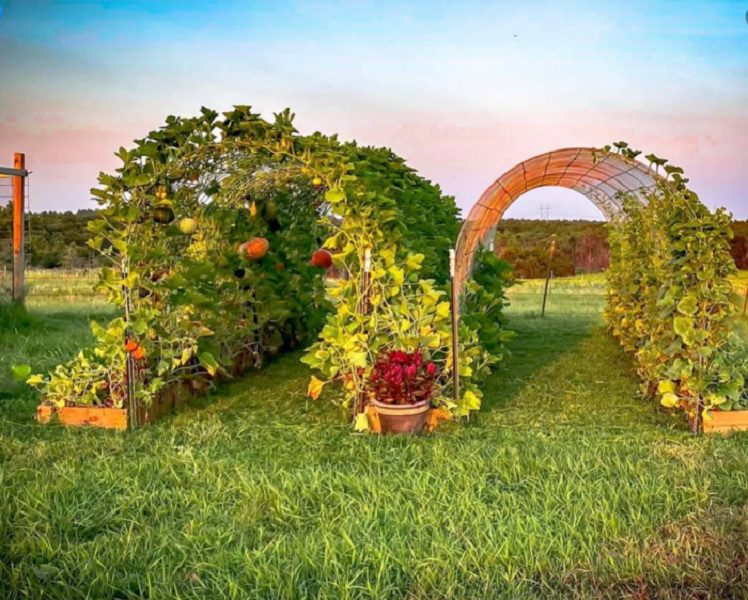
For those with a larger garden or backyard, these twin pumpkin trellises are the perfect pick. They are relatively compact, making them ideal for supporting dwarf pumpkin varieties. You can even plant several types of pumpkins with different schedules, so they don’t all ripen at once.
This staggered planting results in pumpkins of various colors, adding a stunning visual appeal to the tunnels. Beyond growing pumpkins, these structures can also serve as a fun mini playground for children to enjoy a game of hide and seek.
4. Rustic Pumpkin Gardening
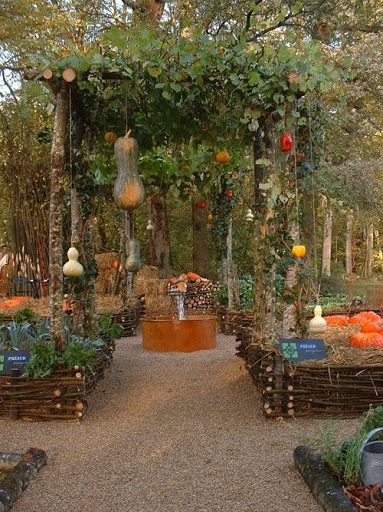
A rustic theme always brings an aesthetic charm to any design, and this pumpkin garden is no exception. The wooden trellis adds significant aesthetic value, with hanging pumpkins and lamps effortlessly enhancing the scenery.
The frame also functions as an impressive gate to welcome friends visiting your garden. For an attention-grabbing display, try growing the Jack-be-Little pumpkin, which looks like a miniature decoration but is actually edible.
5. Mix Tunnel Trellises
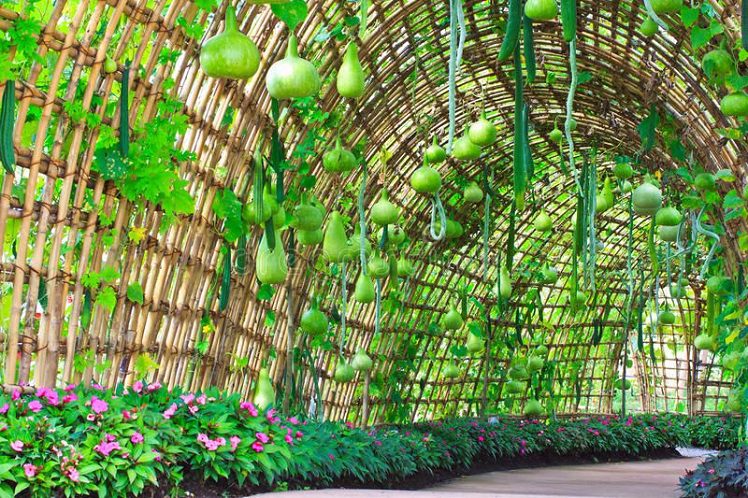
While many people use poles, iron, and wire for a sturdy pumpkin trellis, why not experiment with wood? It’s more flexible and easier to shape. Consider creating a grid pattern like this mixed tunnel trellis and growing pumpkins alongside zucchini.
When the plants bear fruit, you’ll be rewarded with a beautiful scene of diverse shapes. Additionally, you can plant low-growing flowering plants along the base of the tunnel to enhance its beauty even further.
6. Dense Pumpkin Vertical Garden
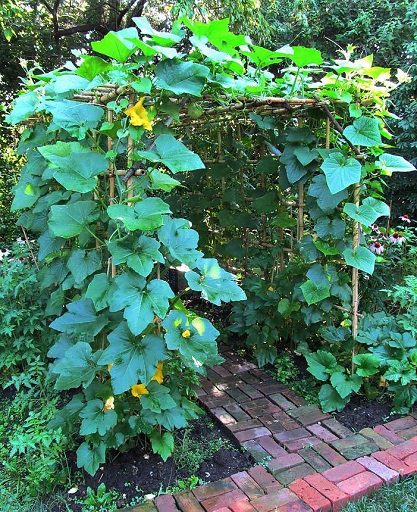
Unlike many other tunnel trellises, this one features a rectangular shape with a flat roof on top, giving the pumpkin vines plenty of space to crawl. The thick, dense foliage also provides excellent shade for this tunnel-style garden gate.
For added detail, you can arrange bricks to form a garden path beneath the lattice. The empty space at the tunnel’s edges can also be used to grow other vegetables, like tomatoes, which can help repel insects that might bother your winter squash.
7. Pumpkin Garden Trellis and Path
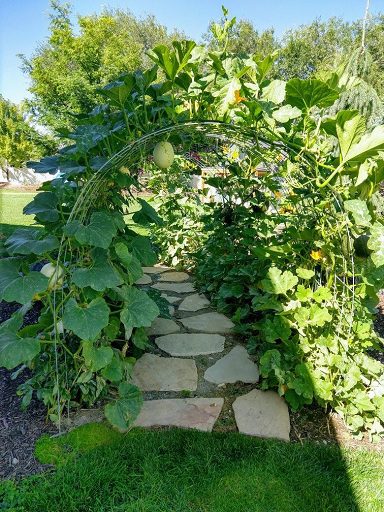
You can easily create a stylish garden gate with this type of pumpkin trellis. The combination of wire and iron ensures its stability and strength, so you won’t have to worry about it being affected by strong winds.
Underneath the structure, arrange stone steps to create a charming garden path. As the pumpkin leaves grow and fill in the top of the trellis, they will provide pleasant shade along the walkway. It’s a simple yet exciting design.
8. Pumpkin And Squash Trellis
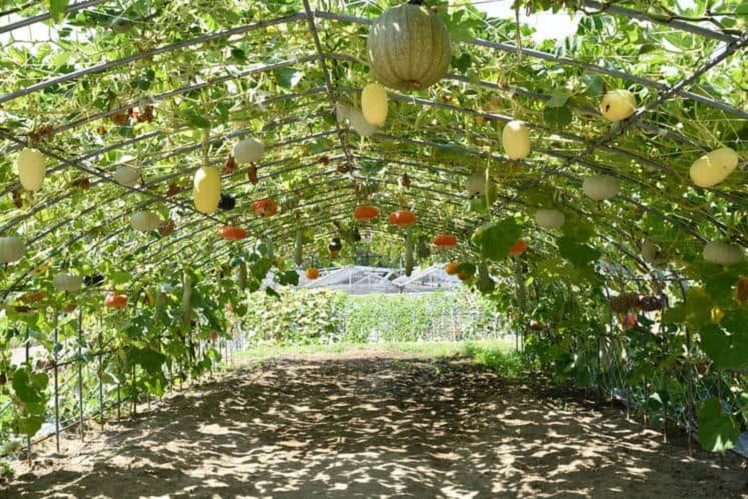
At first glance, this pumpkin trellis might seem similar to others, but a closer look reveals its unique qualities. The lattice is wider and longer, which allows the vines to climb more freely and spread out due to the generous space.
The frame is also shorter, making it suitable for planting larger varieties of pumpkins. Instead of only growing pumpkins, this setup combines different types of cucurbits, such as watermelon and melon, to create a display of diverse shapes and colors.
9. Front Garden Trellis
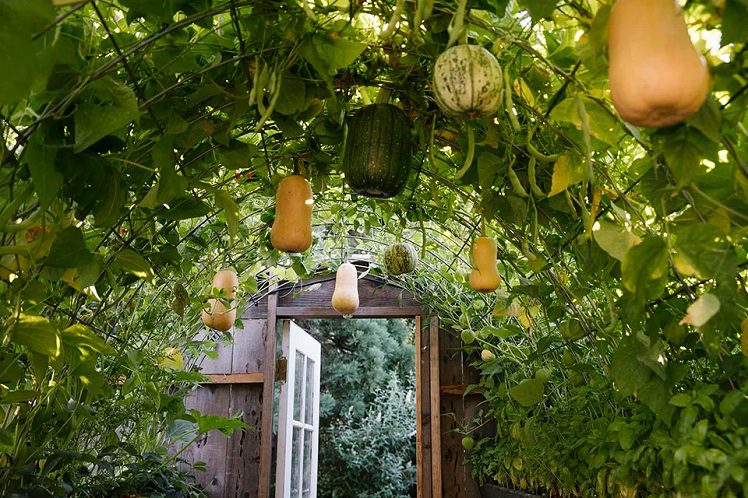
This pumpkin garden trellis is a wonderful way to welcome you at the gate. The design adds an aesthetic touch to your garden, creating a tunnel-like structure with butternut squash and pumpkins growing along the frame. This arrangement makes the fruits look like beautiful garden ornaments.
Long beans are also growing among these fruits, adding different textures and shapes to the trellis. You can build this frame near the entrance to your garden to create a shady and breathtaking pumpkin tunnel welcome.
10. Winter Squash Trellis
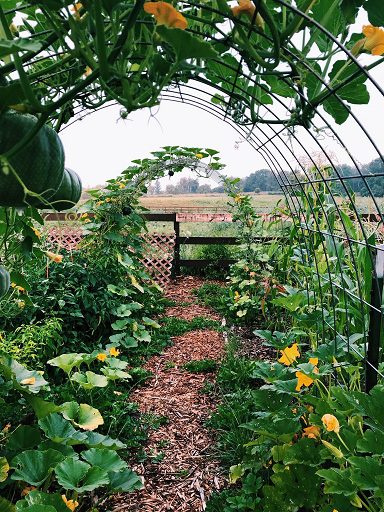
A pumpkin tunnel trellis is visually appealing and can also serve as a decorative doorway for the garden.
Although this design is not as long as some others, it is still very efficient. It is well-spaced and allows the pumpkin vines to crawl on the ground as well. This growth habit creates a natural decoration of pumpkins between the two trellises, so there’s no need to plant other vegetables in that space.
11. DIY Pumpkin Arbor
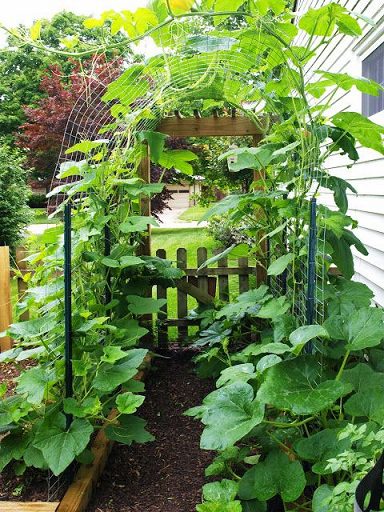
Make the most of the land next to your house by building a small pumpkin garden with a DIY trellis. This approach allows you to grow your own pumpkins without needing a lot of space.
All you need are some sturdy poles and wires to build the frame. Choose a mini pumpkin variety so the structure can easily support the fruit. Next to the trellis, you can create a small garden walkway to enhance your garden’s design. Even a small garden can look fantastic.
Backyard Vertical Pumpkin Trellis
In addition to tunnel trellises, we’ve also gathered some framework ideas that are perfect for your larger pumpkin varieties. These designs are relatively simple and won’t consume much space in a small garden. You can easily build them yourself, which helps save a lot of money. Ready to give it a try?
12. Simple Pumpkin Trellis
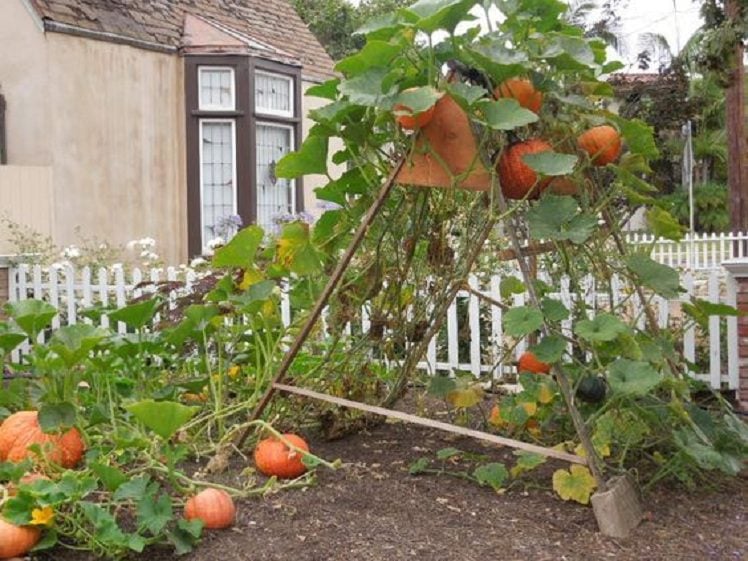
Moving on from tunnel designs, here we have a simple trellis that is excellent for growing regular pumpkin varieties. But don’t let its simplicity fool you; this arbor is quite captivating. The triangular design, much like a house roof, features four wooden supports and a top for the vining plants to climb.
At the top, additional support is in place to ensure that any pumpkins growing there won’t fall. The trellis also allows some pumpkins to grow freely on the garden floor below.
13. Vertical Pumpkin Arbor
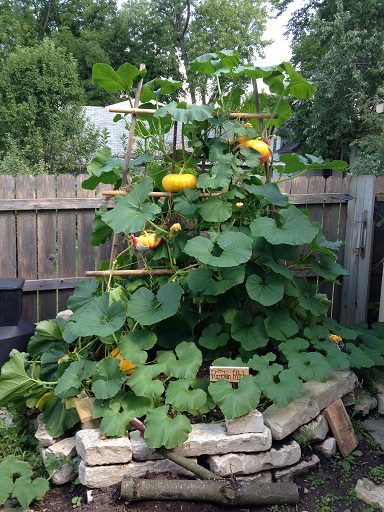
At first, this standing pumpkin arbor might look like it’s built over a well, due to the circular stone arrangement at its base. However, the stones actually serve as a barrier for the trellis, keeping the vines contained within the area. This also helps protect the plants from external threats, such as rodents. The fence in the background can provide additional stability if the trellis is attached with a sturdy tie.
14. Neat Pumpkin Patch
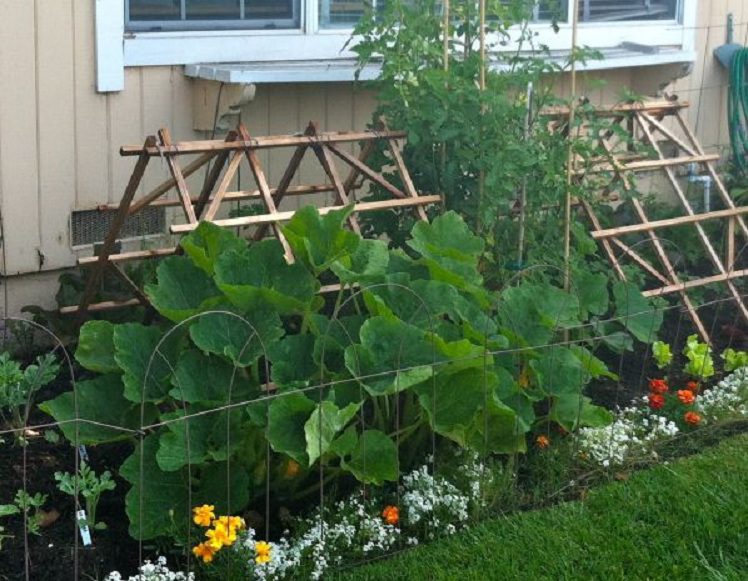
Who says a pumpkin trellis can’t be part of your flower garden? In fact, it can add a unique decorative element with its distinctive roof-like structure. Grow large varieties of pumpkins and let their broad, thick leaves and eye-catching fruits envelop the trellis.
You can also plant low-growing flowers next to the frame and install a mini garden fence to protect the arrangement. A lawn can also provide an impressive backdrop for a pumpkin trellis.
15. Multifunctional Pumpkin Trellis
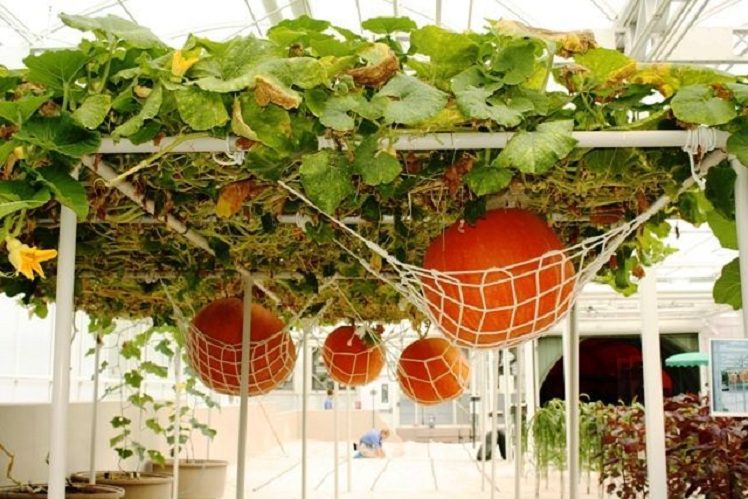
It’s a fantastic idea to install a net for each pumpkin growing on a trellis. This netting will catch the ripe pumpkin when it’s ready to be harvested, preventing it from falling to the ground and reducing food loss.
This design is particularly useful for farmers. In addition to netting, you can prevent physical damage by building a shorter trellis. Planting a lawn at the bottom can also help minimize the impact if a pumpkin does fall.
16. Wooden Pumpkin Planting Frame
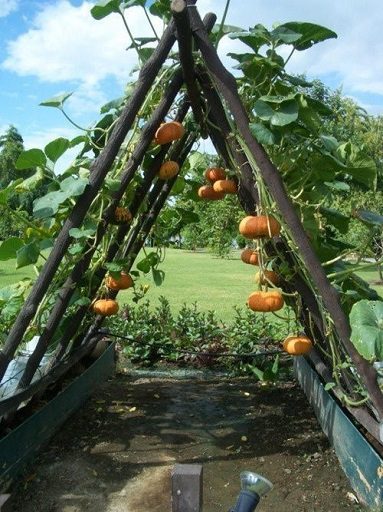
If you’re short on land for planting pumpkins, this vertical arrangement is the perfect solution for you. You can build it at the edge of your garden using wood materials.
Besides being strong, the brown color of the wood blends naturally with the pumpkins and their vines, almost creating the look of a supportive tree. While this setup is not suitable for giant pumpkins, it’s perfect for dwarf varieties.
17. Small Pumpkin Trellis
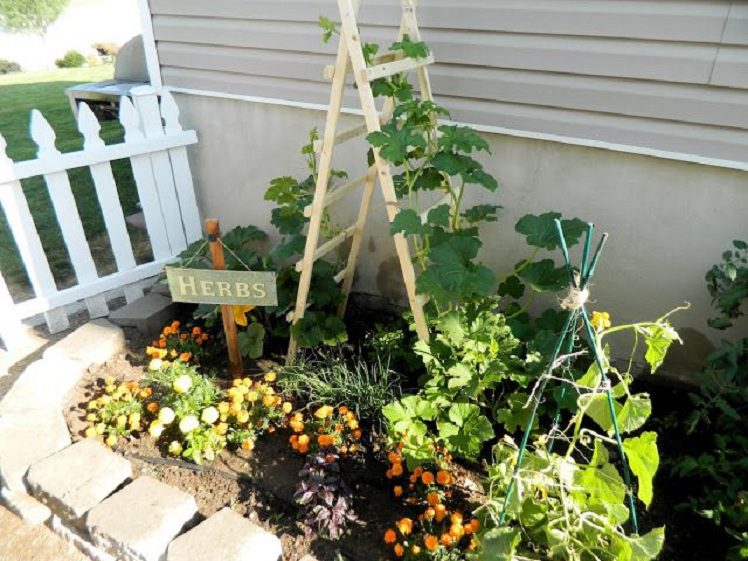
If you’re just getting started with gardening, it’s a good idea to begin with something small, like this pumpkin trellis. Instead of building it as a standalone feature, you can combine it with other herbs, such as oregano, chives, tansy, and hyssop.
These herbaceous plants not only add another dimension to the garden but can also help repel pests that often bother pumpkin plants. In addition to the herbs, some flowering plants and a stone retaining wall will protect and liven up your garden area.
18. Creative Pumpkin Garden Trellis
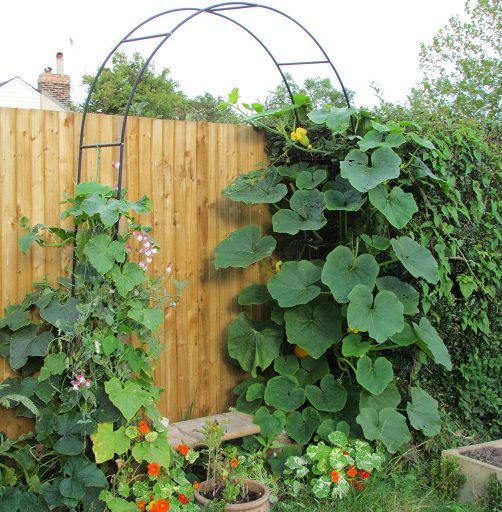
Elevate your garden’s design by pairing a fence with this pumpkin trellis. The arching frame creates the feel of a garden gate, while the wooden fence background adds artistic flair. The broad leaves of the pumpkin vines densely cover both sides of the supports.
At the same time, vining flowering plants adorn the deep green foliage with bright orange blooms. You can place a chair underneath the trellis to turn the area into an aesthetic and natural photo spot.
19. Free Standing Trellis
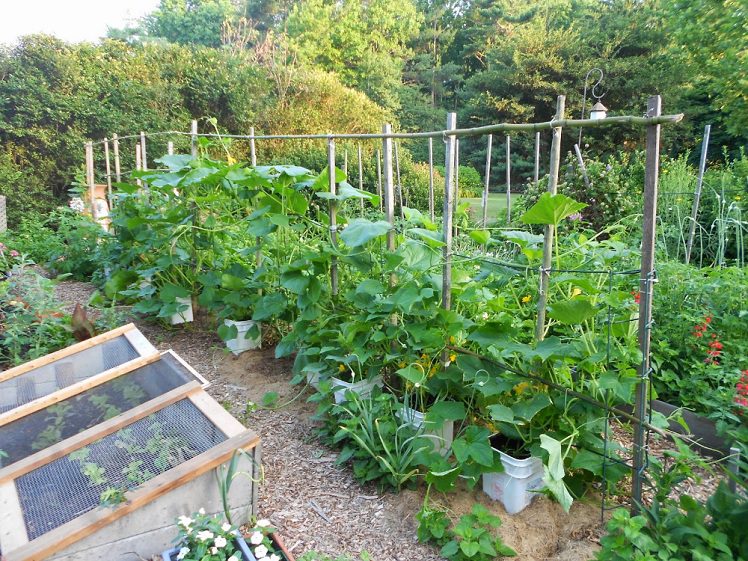
Not everyone has the time to create elaborate pumpkin trellises. For those who prioritize function over aesthetic value, this free-standing trellis is a great option.
You don’t need to build arching frameworks or complex roof shapes. Just arrange pieces of wood to form a grid, securing them with strong ropes. Then, push the frame into the ground. Place potted pumpkin plants at the base of the trellis and let them climb.
20. Minimalist Pumpkin Trellis
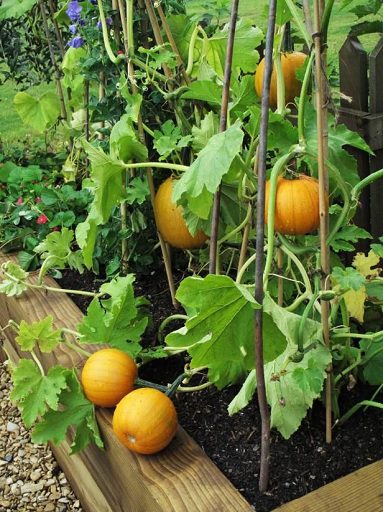
Here is another minimalist trellis design you can count on for growing your pumpkins. The wooden materials are pushed into the ground and then tied together with ropes to form a grid. This setup uses raised beds with wooden barriers on each side to prevent the vines from crawling onto the ground.
These wooden planks act as more than just a barrier; they also add a subtle artistic touch to the design, preventing it from looking too plain. Given its size, you will likely be able to grow smaller varieties of pumpkins with this trellis.
21. Spaghetti Squash Fence Trellis
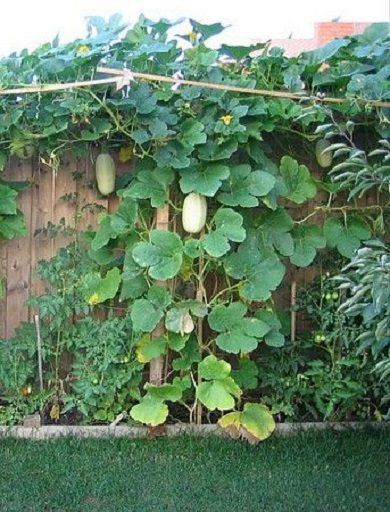
Do you already have a garden fence? You can use it to support a spaghetti squash trellis. With the stability of a wooden wall, the trellis structure can be more robust because it can lean against the fence for extra support.
You’ll need to create a grid outline for the top to keep the vines from becoming too crowded. Also, make sure the rope knots used to attach the supporting wood are very strong, so the structure doesn’t collapse when the plant starts to bear fruit.
22. Backyard Wooden Stairs Trellis
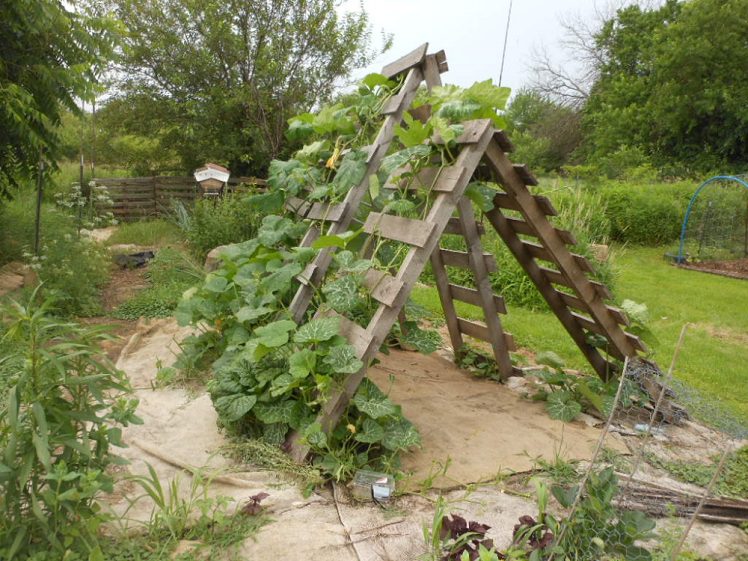
If you have an old wooden ladder stored away that’s no longer in use, you can repurpose it to create a pumpkin trellis. This approach is much easier since you won’t need to build a frame from scratch. If the ladder is long, you can cut it in half and join the cut ends with nails. Then, attach the bottom to wooden or metal pegs to keep it from moving and ensure its stability.
23. Mini Shade Pumpkin Garden
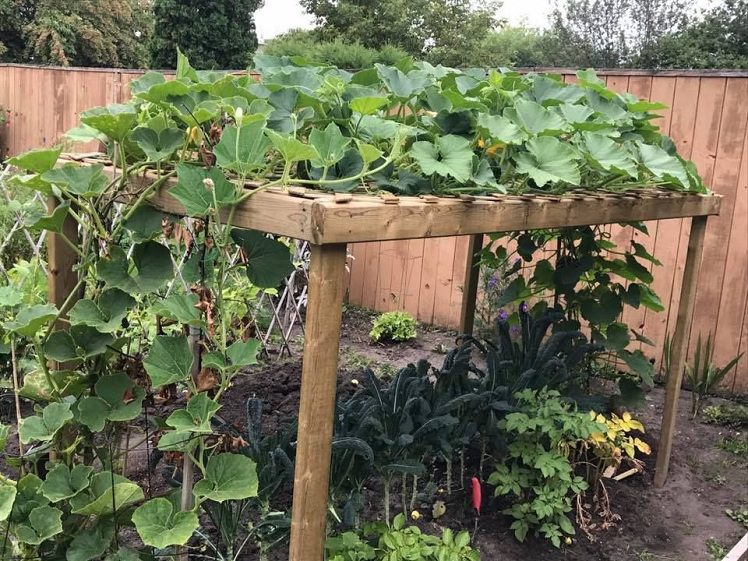
Growing plants that love shade can be challenging, especially when it comes to getting the right amount of light, since it takes a long time for trees to grow. You can solve this problem by planting pumpkins on a trellis.
First, design the framework to resemble a table, but with a grid-like surface. Make sure the height of the lattice is appropriate for the types of plants you plan to grow beneath it. Then, let the pumpkins grow, covering the top to create natural shade.
24. Pumpkin Backyard Farming
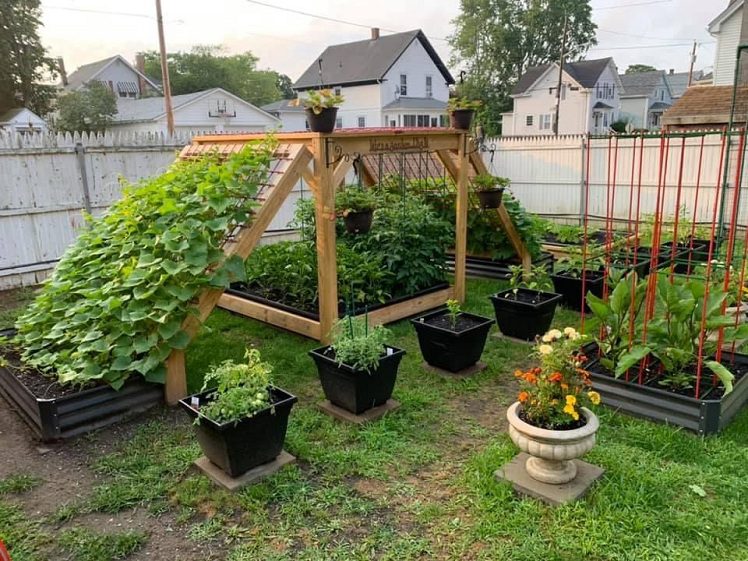
Gardening with a pumpkin trellis can be a fun and productive way to utilize a large backyard. With this setup, you can combine two different trellis designs: the tunnel and the roof-shaped. The right and left sides of the trellis are perfect for growing pumpkins, as their thick foliage can block sunlight that might harm shade-loving vegetables inside the tunnel. Meanwhile, the top of the trellis is a great spot for placing potted herbs. This design is complex but definitely worth the effort.
25. Metal Pumpkin Framework
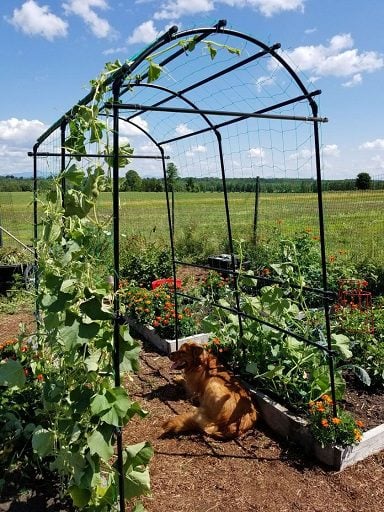
In addition to wood, metal and wires are an ideal combination for creating a top-notch pumpkin trellis due to their excellent weather resistance. They are also very sturdy, which is a crucial aspect when building a pumpkin arbor, since the fruit can be quite heavy.
This metal pumpkin trellis is a great example. It has a gate-like design with wire running throughout for the vines to creep along. Once the plants are fully grown, you’ll have a comfortable, shady garden spot for your dog to enjoy.
FAQs (Frequently Asked Questions)
What can I use for a pumpkin trellis?
Pumpkin vines can either grow along the ground, or you can provide them with a trellis to support their vertical growth. Instead of purchasing an arbor, you can create your own. Common materials for building a pumpkin trellis include wood, poles, and iron, often combined with wire for the framework.
Depending on the type of trellis you build, your pumpkin plants can grow on both sides of the lattice. If you construct the frame near a garden fence, the pumpkins may also creep onto the nearby structure.
How tall should a trellis be for a pumpkin?
Growing pumpkins vertically requires a support structure to ensure their healthy growth. Typically, a pumpkin trellis should be about 10 feet or 3 meters tall. However, the ideal height depends heavily on the specific pumpkin varieties you are growing.
Smaller pumpkins, such as Hooligan and Baby Boo, can grow well on a taller framework. On the other hand, cultivars with pumpkins weighing over 5 pounds will require a shorter trellis with more robust support.
Why can’t a pumpkin plant climb up support?
Due to the size and weight of the fruit, pumpkin plants are generally unable to climb up a support or trellis on their own. They are naturally creeper plants, so climbing is not their typical growth habit. However, some smaller cultivars may be able to climb a trellis because their fruit is lighter than that of typical pumpkin varieties. It is important to match the height of the trellis to the type of pumpkin you are growing.
How do you make a homemade trellis?
Instead of buying one, you can craft a homemade trellis using simple materials and tools. Here’s how you can do it. First, prepare your materials, such as wood like cedar, sturdy poles, or iron with wire. Next, measure the dimensions. It’s important to know what kind of pumpkin trellis you want to build so you can cut the materials to the correct size. Sketch out your design to use as a guide. Usually, the first step is to design the grid; you can use chalk to mark the frame. Then, start assembling the materials using screws, making sure to follow your design carefully. Finally, your trellis is ready for your plants. Be sure to consider the cultivar when planning your trellis design if you plan to grow pumpkins.
How do you anchor a trellis in the ground?
One of the main challenges in building a trellis is ensuring its stability, especially if it will be used to grow heavy fruits like pumpkins vertically.
To anchor a trellis, you can use wood or metal stakes to support the frame. Drive the stakes into the ground with a rubber mallet, leaving about six inches of the stake above the surface. Then, securely tie the trellis to the stakes with a strong string, making sure it doesn’t wobble.