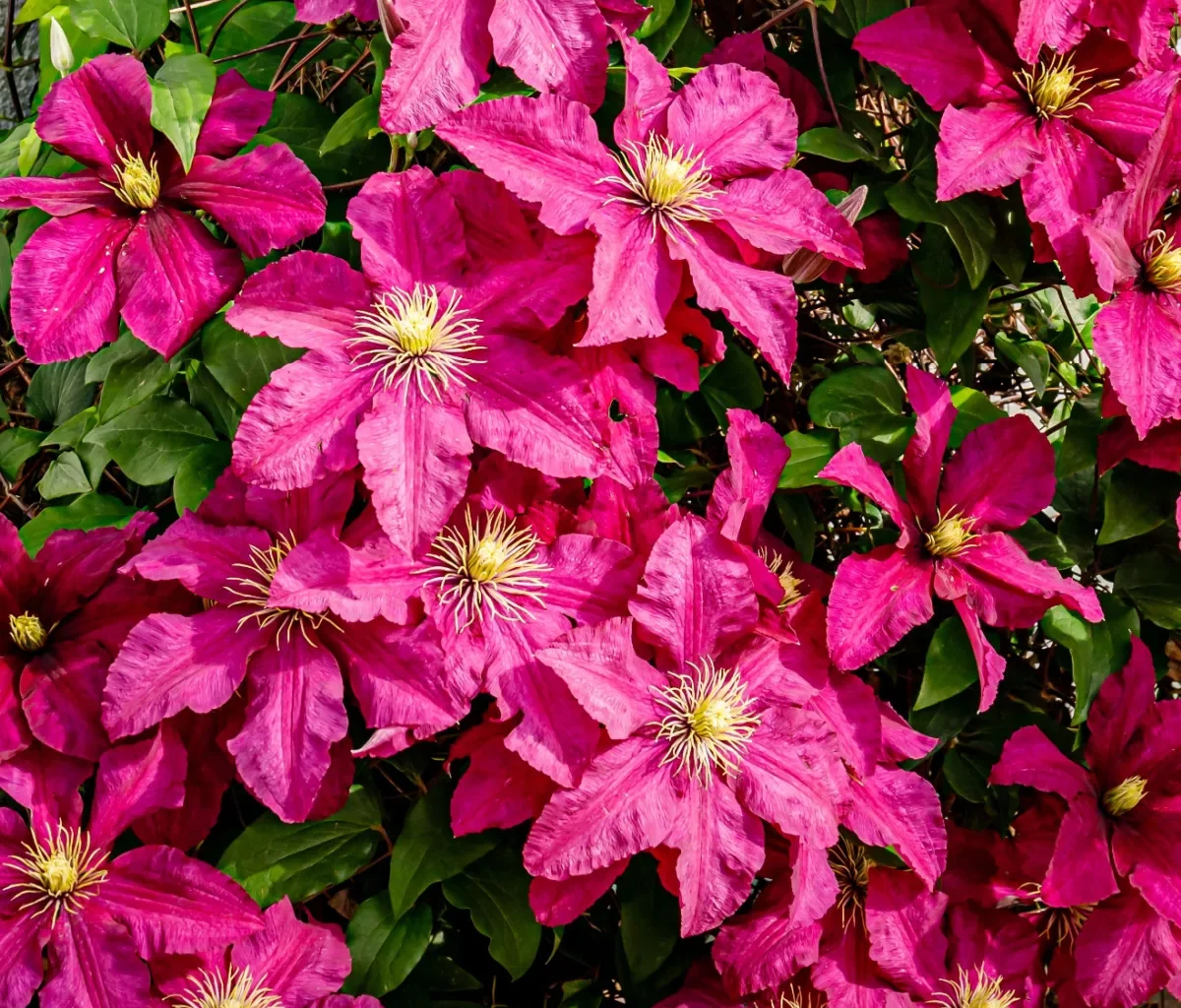
Unlocking the secret to a clematis that explodes with bigger, more brilliant flowers is all about fertilizing in early spring. Knowing precisely when to feed your plant and what to use is the game changer that will make this year’s blooms absolutely spectacular.
Is there anything quite as stunning as a clematis in its full glory? Whether it’s gracefully climbing a trellis, twining around a fence, or adorning an arbor, this plant can completely transform a landscape. The star-shaped flowers are not just impressive; they can be massive, with some varieties boasting blooms as wide as six inches across.
To get the absolute most from your clematis, giving it a powerful start in the spring is essential. This means providing the fuel it needs to develop a huge number of buds for the season ahead. The type of food you provide is incredibly important, especially for promoting a show-stopping floral display.
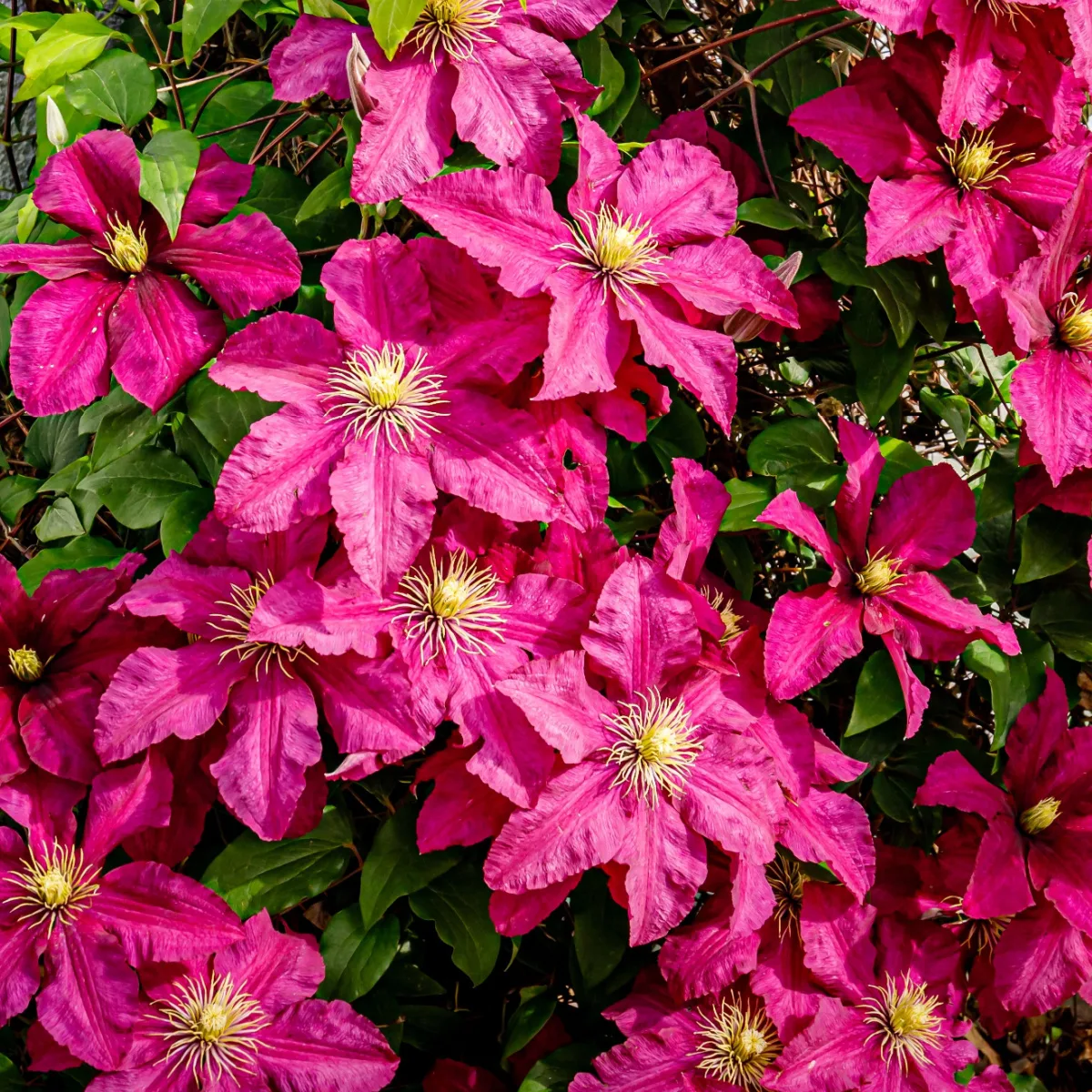
When & How To Fertilize Clematis In Early Spring
Does Your Clematis Struggle To Bloom?
When a clematis has trouble blooming with vigor or fails to produce flowers at all, the problem usually stems from one of three things. First, the plant might just be too young and hasn’t had enough time to mature, a common issue for clematis that have been in the ground for only a year.
Another cause for a lack of blooms is improper pruning. Many clematis types flower on old wood, so if you cut them back at the wrong time of year, you are also removing the potential for future flowers.
The third and most frequent reason a clematis won’t bloom is due to the nutrient composition of the soil. Sometimes the soil simply doesn’t have the nutrients the plant needs. In other cases, the soil might have too much of a certain nutrient, which can stop the blooming process entirely.
Fortunately, you can easily create the perfect nutrient balance in the soil. All it takes is using the right fertilizer and applying it at the perfect moment.
How To Fertilize Clematis In Early Spring With The Right Nutrients
While clematis uses a wide array of micronutrients, the three that are most critical for its health and flowering potential are Nitrogen (N), Phosphorous (P), and Potassium (K).
These three nutrients are the cornerstones of almost every fertilizer available. When you buy fertilizer, you will almost always see the N-P-K ratio listed prominently on the packaging.
So, what do these nutrients do for your clematis? Nitrogen is responsible for lush green foliage and overall plant growth. Phosphorous helps develop a strong root system and form fruit. Potassium is absolutely essential for forming flowers and helping the plant resist disease.
All three are vital, but for clematis, the right balance is what truly drives an amazing floral show. To achieve bigger and better blooms, a clematis needs a fertilizer with higher levels of phosphorous and potassium and a lower level of nitrogen.
The plant does require some nitrogen for healthy growth and leaves. If it receives too much, however, the plant will pour all its energy into growing bigger foliage, completely neglecting its flowers.
This is precisely why you should avoid feeding your clematis an all-purpose fertilizer with a 10-10-10 or 15-15-15 ratio. With equal parts, the nitrogen is simply too overpowering. At these levels, the clematis will focus on leaf growth, which leads to far fewer blooms.
Selecting The Right Fertilizer
What is the ideal N-P-K ratio for fertilizing your clematis? And what is the best way to apply it?
For the most impressive blooms, seek out a fertilizer that contains double the amount of phosphorous and potassium compared to nitrogen. This provides enough nitrogen to encourage a full canopy of green leaves but not so much that it compromises flowering.
At the same time, the higher concentrations of phosphorous and potassium will fuel bigger bud development and a more prolific floral display. Many bulb fertilizers fit this profile and often contain bone meal, another ingredient that boosts bloom production. This makes them a perfect choice for feeding clematis.
Bulb fertilizers are also excellent because they are granular, which makes the early spring application incredibly simple.
When & How To Apply
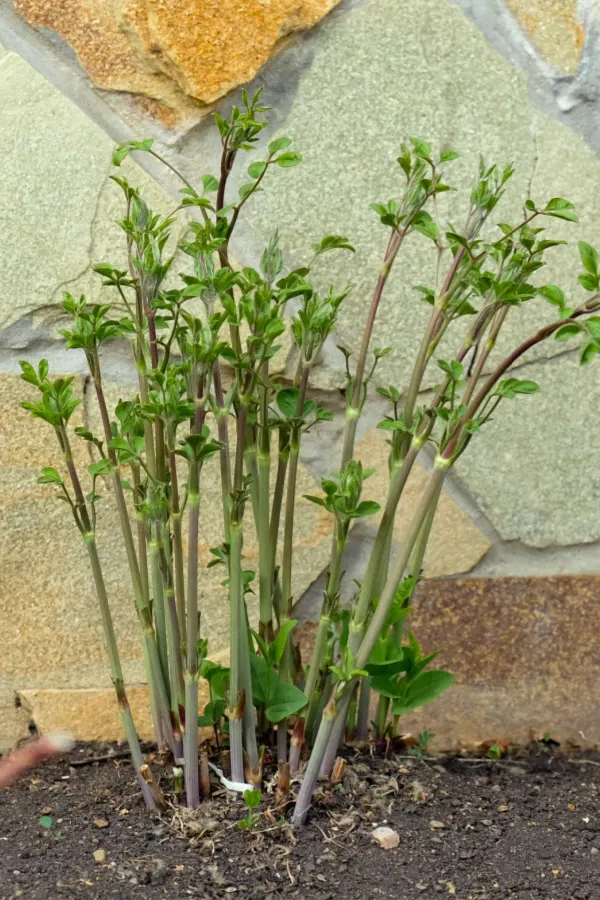
To encourage robust flowering, you should apply the first dose of fertilizer just before or right as your clematis starts to awaken from its winter dormancy.
The timing of this initial feeding is critical. It must be done before the plant is fully leafed out. If you apply it after a full canopy has developed, the plant will use the extra nutrients to grow larger instead of producing flowers.
To apply the fertilizer, sprinkle about 1/2 to 3/4 of a cup around the base of the plant. If there is mulch, pull it away so the granules can make direct contact with the soil. Water the area gently to help activate the fertilizer, then push the mulch back into place.
After the initial dose, you should continue to fertilize your clematis every four weeks until the middle of summer. You can use the same fertilizer and amount for each subsequent application.
When To Stop Fertilizing Clematis
It is important to stop fertilizing once late summer arrives. Giving a clematis extra nutrients late in the growing season can put the plant at risk for winter damage, because it may spur new growth that leaves the root system vulnerable and weak.
In the fall, all that remains is to prepare your clematis for winter with a protective layer of mulch. After that, your plant will be perfectly poised for the following spring. Here’s to feeding your clematis for a season of magnificent blooms!