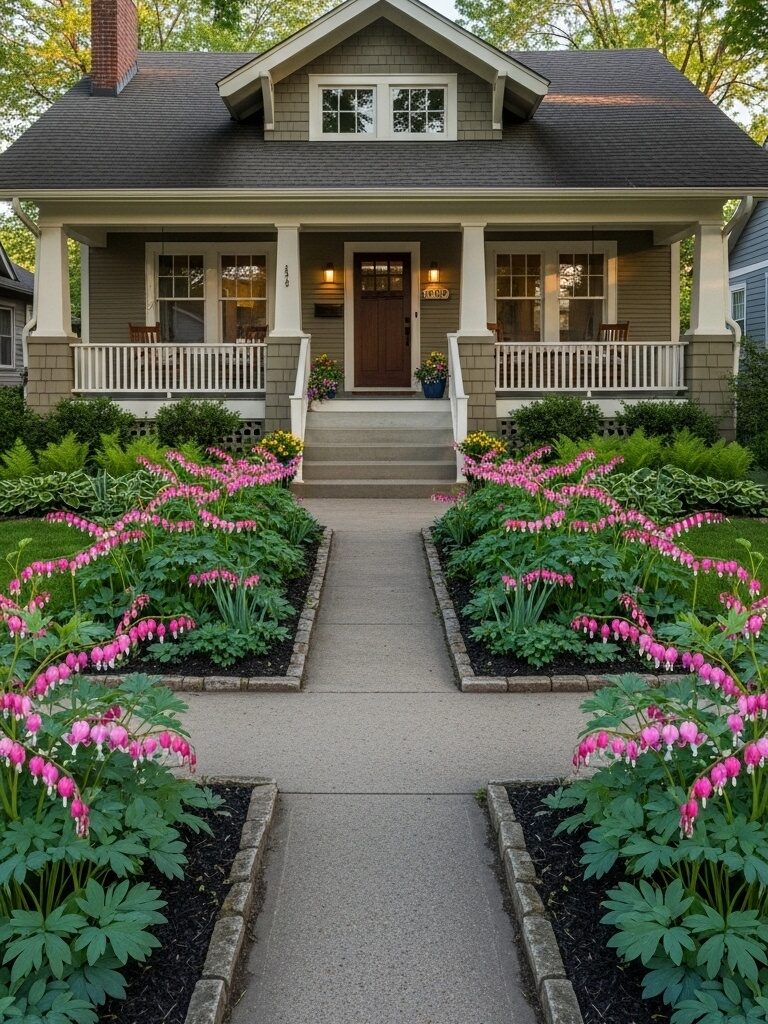
Have you ever been driving down a street and found yourself slowing down, captivated by a single house? It’s rarely the grand architecture that grabs your attention. More often, it’s a perfectly planned flower bed out front, bursting with life and color, that truly makes the home unforgettable.
Creating that head-turning curb appeal doesn’t require a professional landscaper or a massive budget. Whether you have a small patch of soil by the front door or a wide-open lawn, the right flowers can completely change the look and feel of your home.
1. Bleeding Hearts
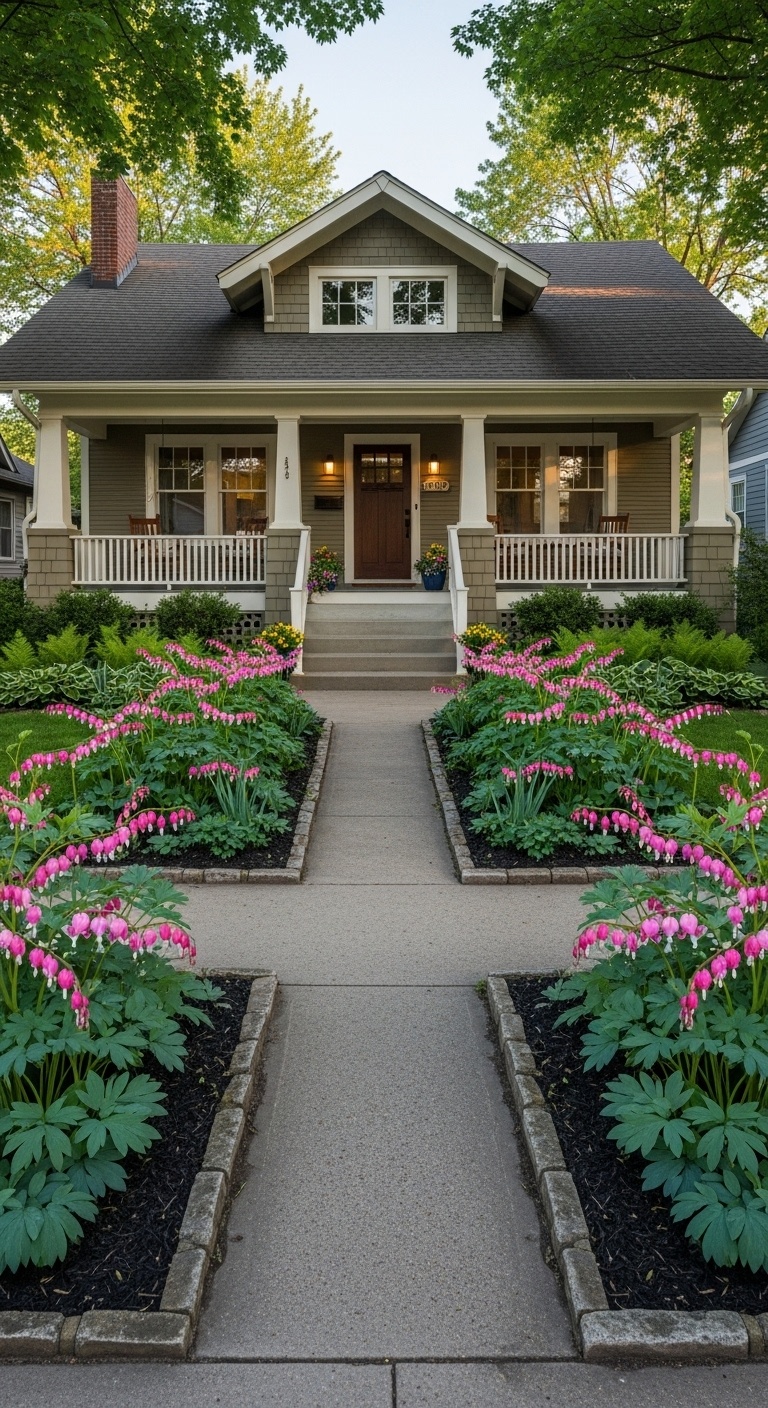
For a touch of elegance and whimsy in early spring, Bleeding Hearts (Dicentra spectabilis) are an exceptional pick for your front yard. These captivating plants are famous for their unmistakable heart-shaped blossoms, which hang delicately from gracefully arching stems in shades of pink, red, or white.
They are perfect for spots where sun-loving plants won’t grow, as they flourish in partial to full shade. Bleeding Hearts prefer soil that is consistently moist and well-drained. These flowers establish a delicate and romantic mood, pairing wonderfully with other perennials that love the shade. To get a breathtaking show, make sure the soil stays evenly damp while they are in bloom.
“For a truly captivating and unique early spring show in shaded areas, consider the charming blooms of Bleeding Hearts.”
2. Daylilies
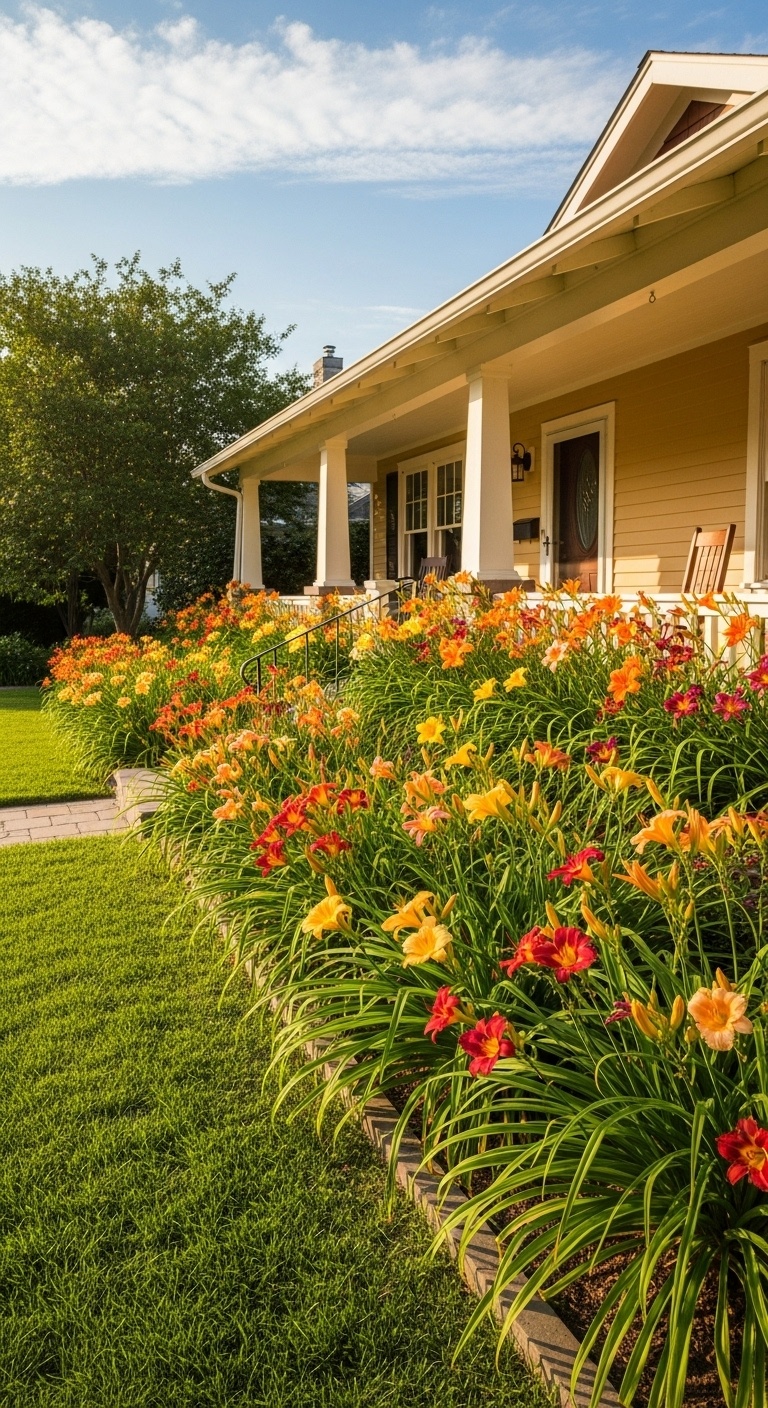
Daylilies are an amazing option for flower beds positioned at the front of your house. They offer a huge spectrum of colors and bloom continuously from spring into late summer, ensuring your yard stays vibrant for months.
These plants are remarkably tough and can adapt to various soil conditions. They also demand very little attention, which is a huge plus for busy homeowners. Your main job is to ensure they receive plenty of sunlight.
When you plant daylilies, give them about 18 to 24 inches of space. This room allows them to expand without becoming overcrowded. Water them consistently, particularly during hot, dry periods.
Daylilies also work beautifully as borders or within mixed flower beds. They complement other plants seamlessly and enhance any garden design.
3. Peonies
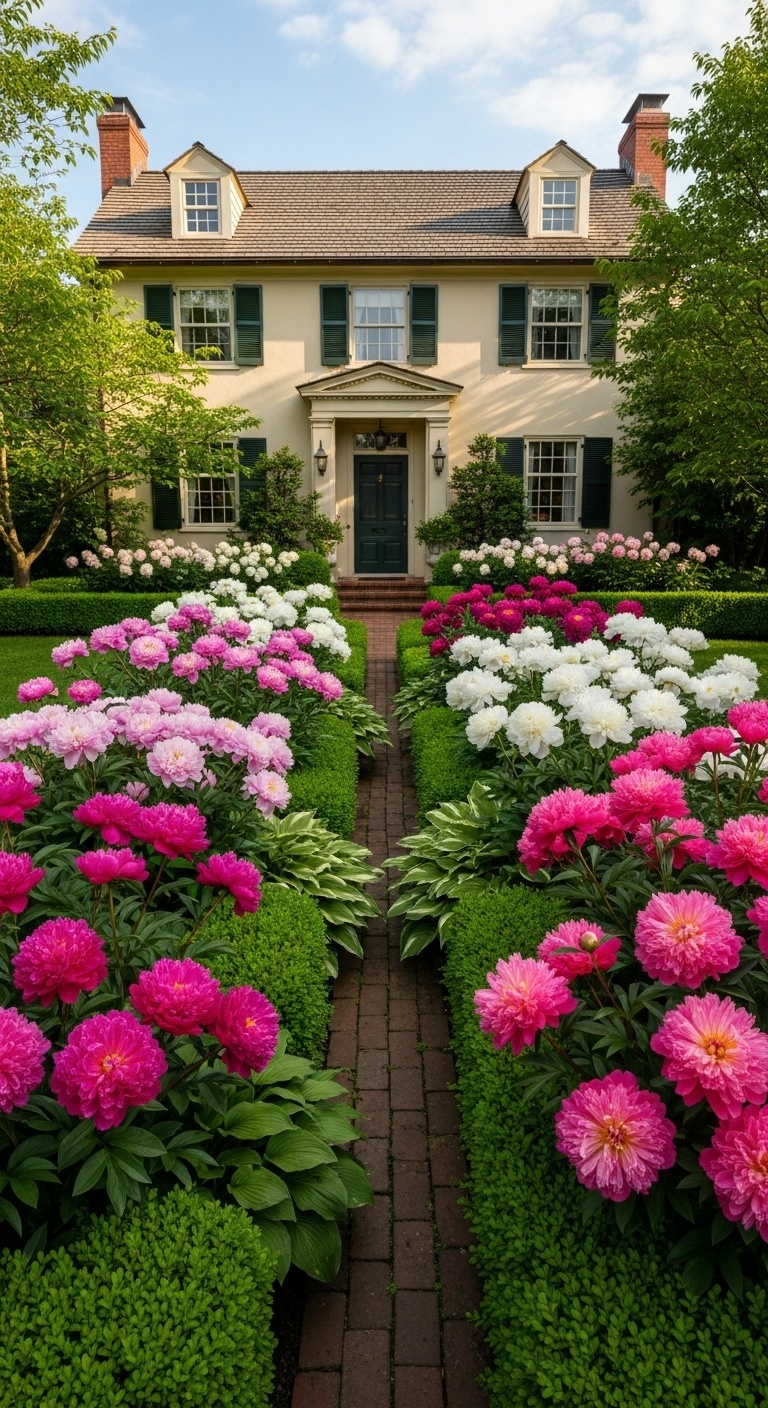
Peonies are a spectacular selection for your front yard landscape. Their stunning blooms bring a explosion of color and elegance to your property. With shades ranging from soft pinks and crisp whites to deep reds, you can easily find a peony that suits your garden’s palette.
For optimal growth, plant your peonies in a location that receives ample sun. They do best in soil that drains well, so proper ground preparation is key. While these flowers look high-maintenance, they are surprisingly easy to care for once they’re established.
You can create a dynamic display by mixing peonies with other flowers. They look lovely alongside both annuals and perennials, which helps create a garden that stays interesting all season long.
4. Hydrangeas
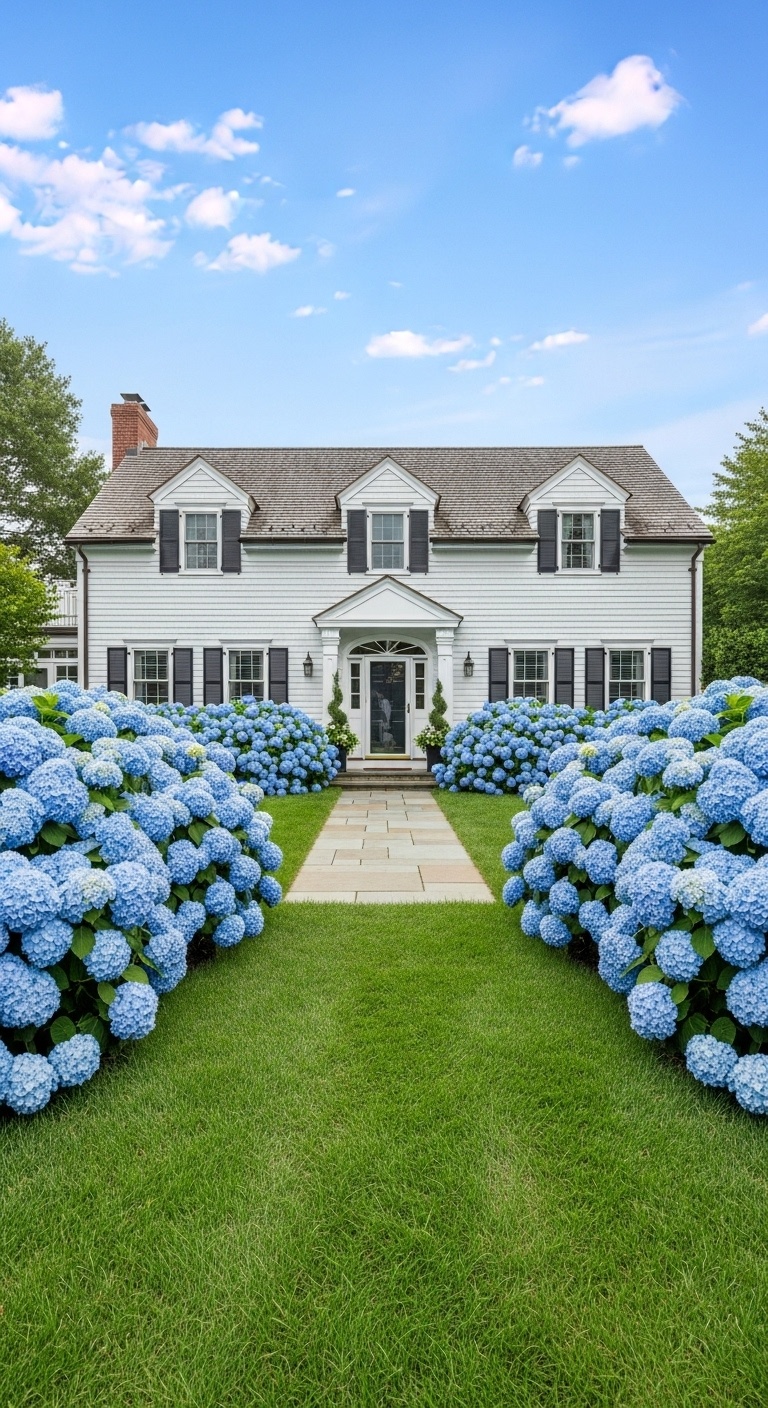
Hydrangeas can bring a wonderfully lush and beautiful element to your front flower arrangements. They are available in several varieties, allowing you to select hues that perfectly complement your home. Plant them in a location where they can soak up the morning sun while getting some relief from the afternoon heat.
These shrubs are fast growers and are great for filling in empty areas in your garden. Some varieties can even grow as tall as 15 feet.
To get the best results, give them about 3 to 4 feet of space between each plant. It’s crucial to water them thoroughly, especially during their first couple of years. A good, deep watering once or twice a week will help their root systems develop and thrive.
5. Lavender
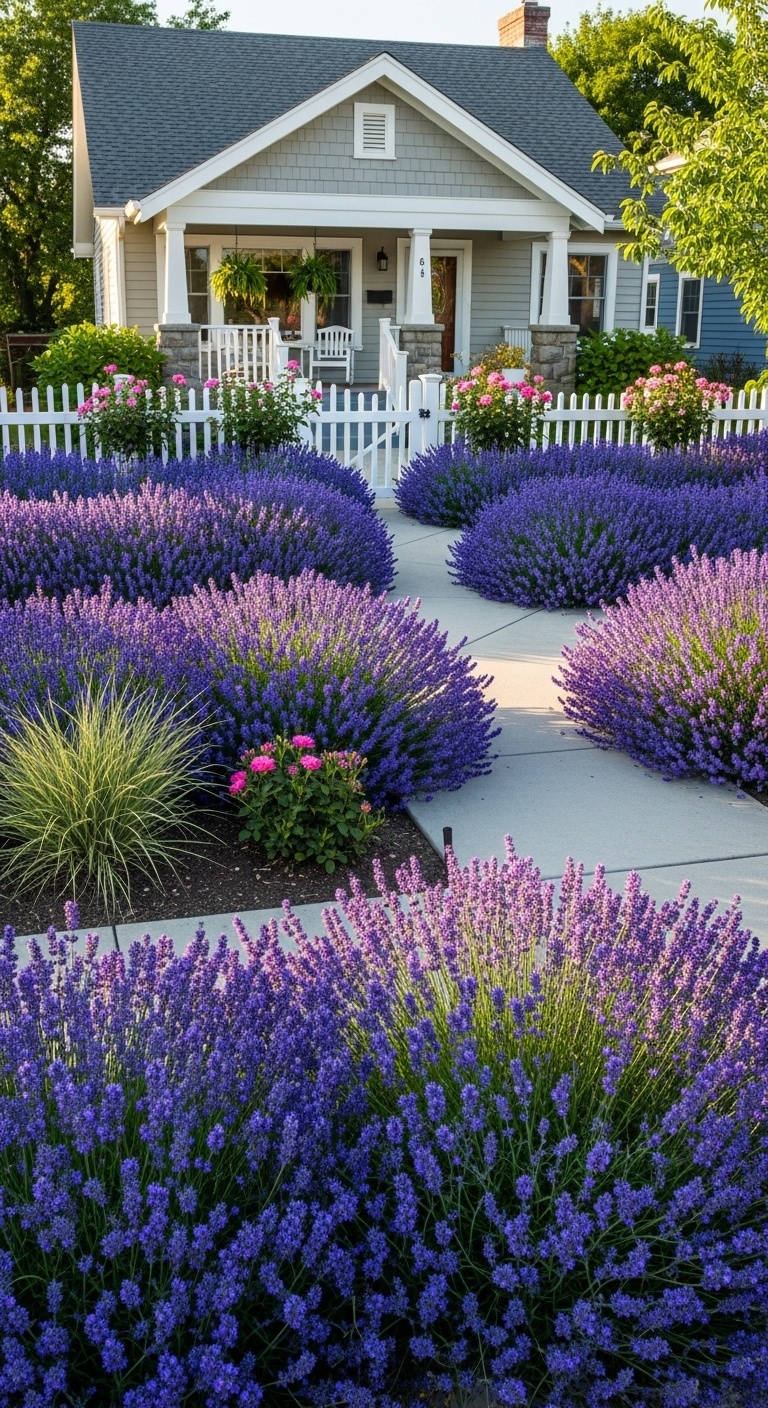
Lavender introduces a beautiful pop of color and a calming aroma to your front yard. This plant is simple to cultivate and is a magnet for bees and butterflies, which contributes to a healthier garden ecosystem.
You have the flexibility to plant lavender in dedicated beds or to integrate it with other flowers. It creates a stunning border and pairs wonderfully with a variety of perennials.
Think about planting lavender beneath trees to utilize otherwise empty ground. This strategy builds a layered appearance that gives your garden more visual depth.
Be sure you choose a sunny location for your lavender. It flourishes with abundant sunlight and needs well-drained soil to grow its best. Water it well, but never let the roots become waterlogged.
“For the best blooms, cut back your lavender plants in early spring. This keeps them healthy and looking their best.”
6. Roses
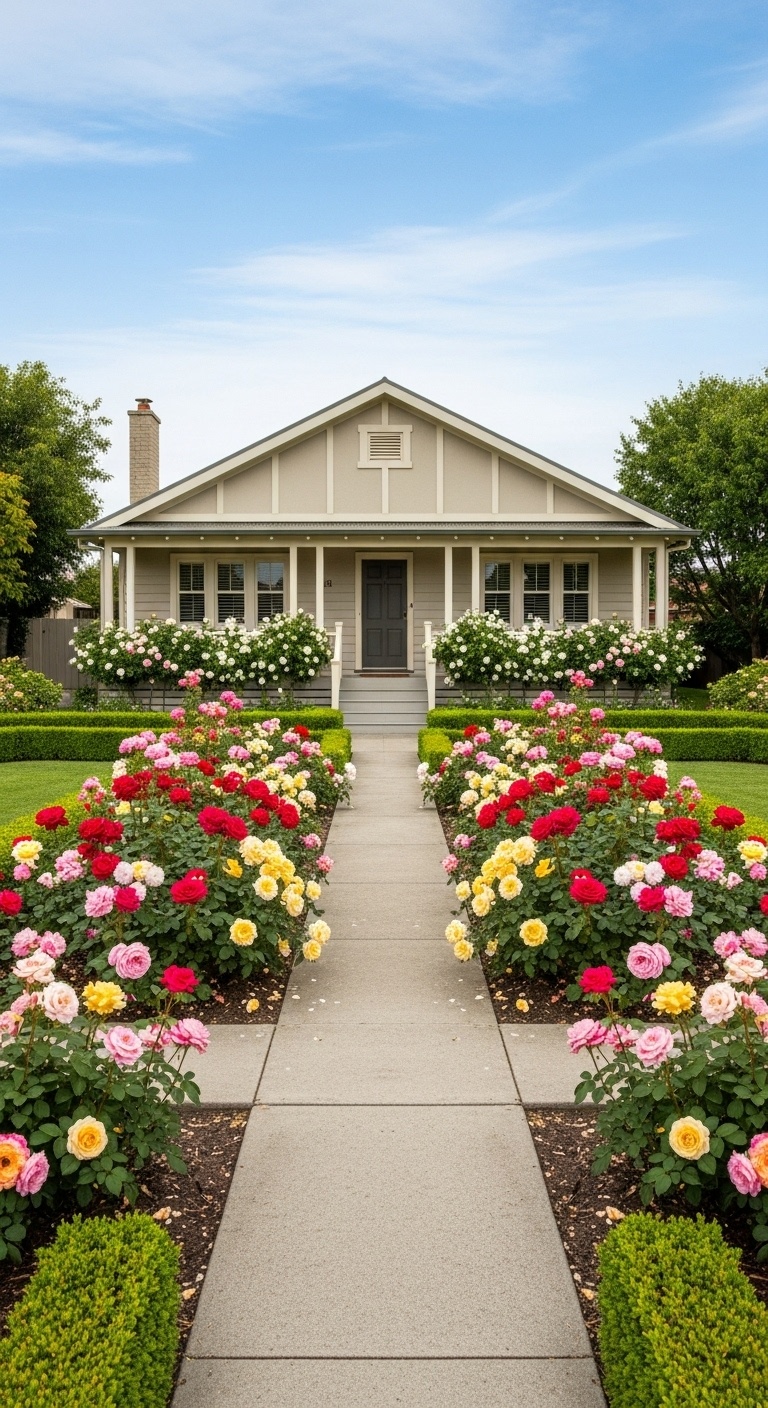
Roses bring a timeless and classic elegance to your front yard flower beds. With a vast array of colors and varieties available, it’s simple to find a rose that perfectly matches your personal style.
When you’re ready to plant, select a spot that gets plenty of sun. Roses need at least six hours of direct sunlight every day to truly flourish. Excellent drainage is also vital for maintaining healthy roots.
Consistent watering is beneficial, especially when the weather turns hot. Try to provide a deep watering session about once a week. This practice helps promote the growth of a strong root system.
Pruning your roses at the start of spring will keep them in good health. By cutting away dead or weak stems, you improve air circulation. Applying fertilizer in the spring also encourages more vibrant and abundant blooms.
You can amplify the beauty of your roses by planting them with other flowers. Combine them with colorful annuals or aromatic herbs to create a truly enchanting garden display.
7. Tulips
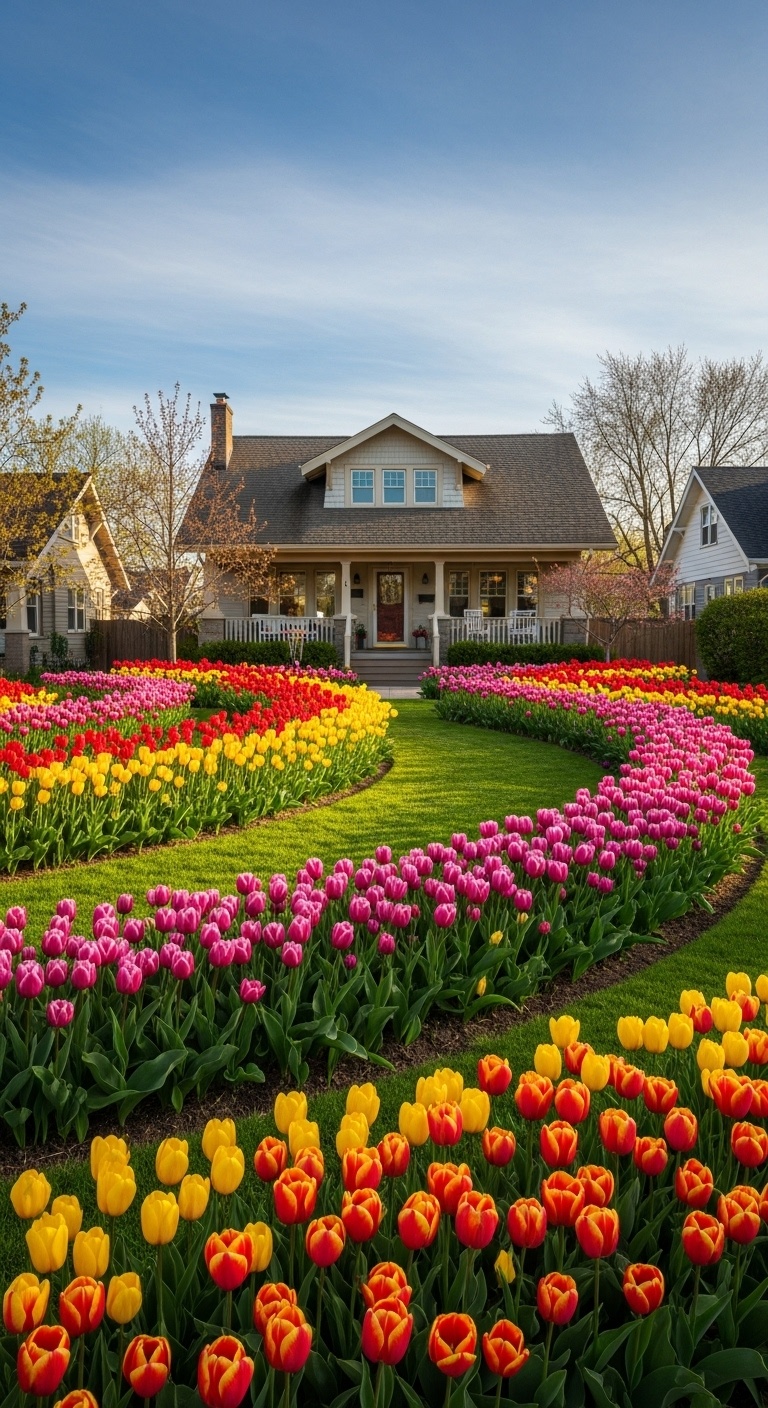
Tulips are an exceptional option for front yard gardens. They are available in a huge range of colors, which makes it simple to design a cheerful and welcoming entrance for your home.
For a powerful visual statement, plant your tulips in dense clusters. You can either blend different colors for a playful look or choose a single color for a more classic and uniform design. They pop up in the spring, bringing a welcome burst of color after the long winter.
Tulips do best in soil that drains well and in a spot that gets plenty of sun. Water them consistently, especially when there’s no rain. As perennials, they will return for several years, adding beauty to your garden each spring.
Remember to remove the flowers once they have faded. This simple task encourages the plant to put energy into new growth, keeping your tulips looking their best throughout their blooming period.
8. Daffodils
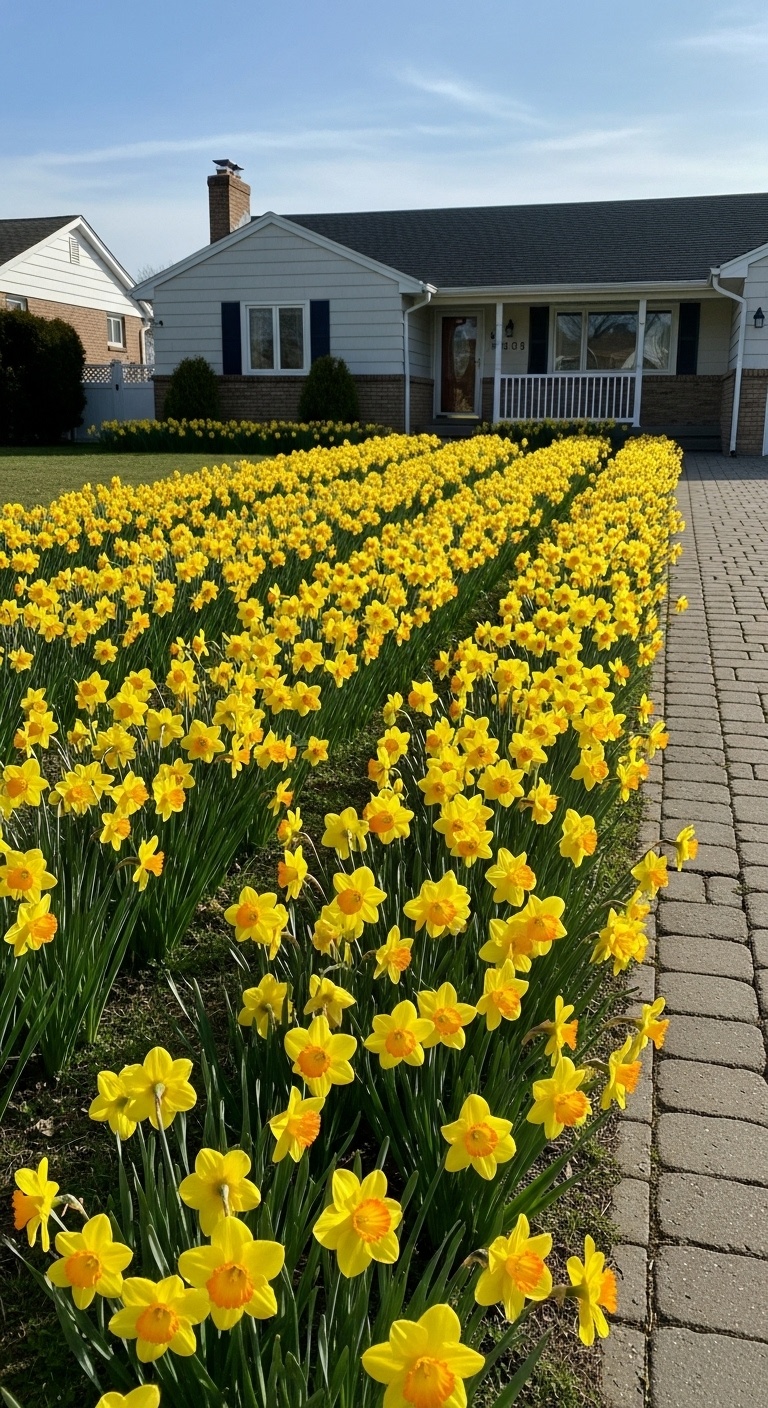
Daffodils are a wonderful selection for your front yard. Their sunny yellow blossoms can instantly boost your mood in the early days of spring. They are one of the very first flowers to appear, offering a cheerful splash of color after a gray winter.
These flowers are adaptable, growing well in either full sun or partial shade. They require well-drained soil and are incredibly easy to maintain. Better yet, once you plant them, they tend to come back reliably year after year.
Daffodils also have the added benefit of being resistant to deer and rabbits, making them a practical choice for your garden. Plant them in generous groups to create a stunning visual impact.
“Plant your daffodils in clusters for a bolder look. They thrive in various climates, so don’t worry about where you live!”
9. Lilies
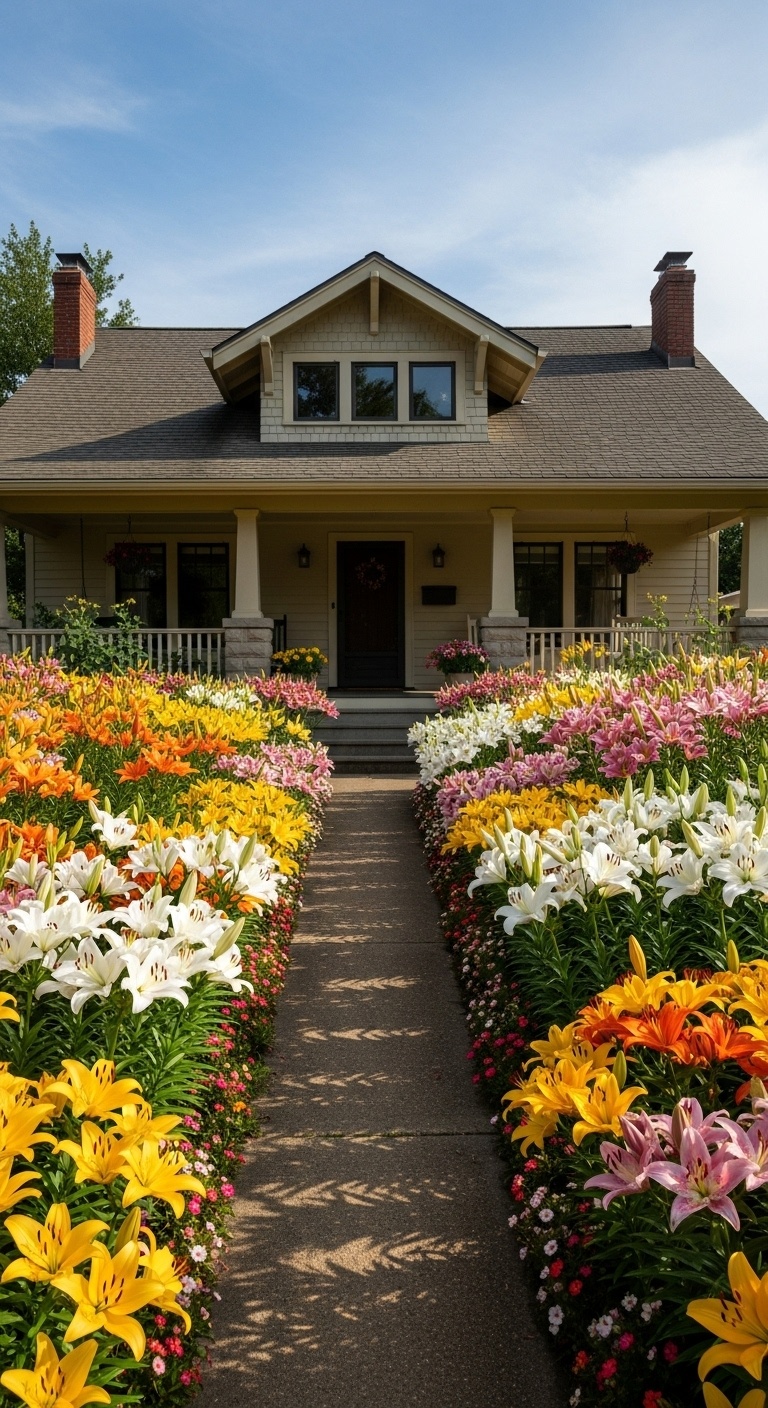
Lilies are a superb flower for your front garden bed. They are available in a wide array of colors and sizes, bringing a touch of elegance to any landscape.
These blooms thrive in sunny conditions and can adapt well to different soil compositions. Just be sure to provide them with regular water, especially during dry periods.
For a truly dynamic look, you can plant lilies among other flowers. They look particularly stunning when paired with daisies and tulips.
With their tall, graceful stems and gorgeous flowers, lilies can easily become the main attraction of your garden. They are simple to grow and can also attract beautiful butterflies and bees.
10. Marigolds
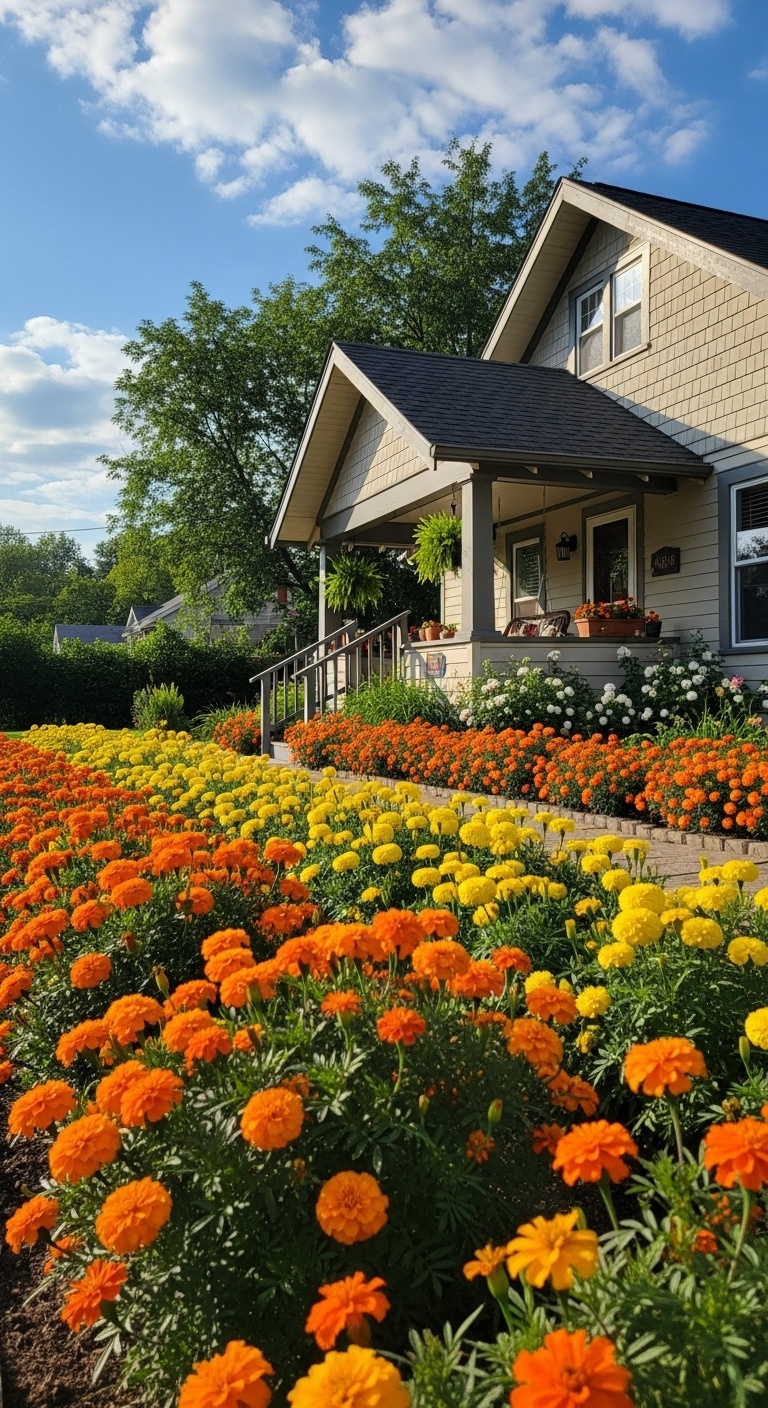
Marigolds are an excellent addition to your flower bed. Their brilliant colors, including sunny yellow, fiery orange, and deep red, can make your front yard truly stand out.
These flowers are known for being easy to grow and can prosper in a wide range of conditions. They are a favorite of butterflies and can also serve as a natural pest deterrent for other plants in your garden.
Arranging marigolds in neat rows can produce a very cheerful effect. For more visual interest, you can mix them with other flowers to create a rich tapestry of color and texture.
“Plant your marigolds in full sun for best growth. Regular watering will keep them blooming all season long.”
11. Begonias
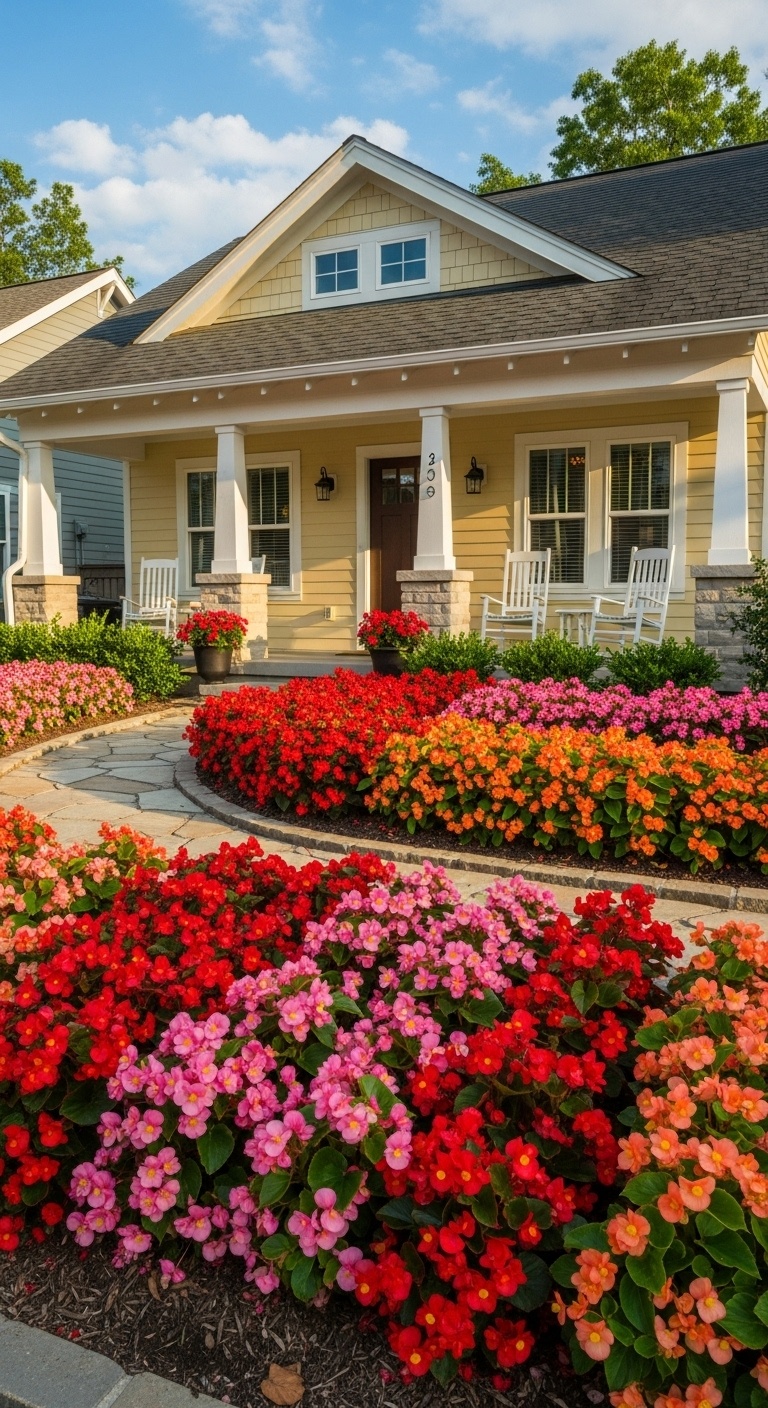
Begonias are a superb choice for your home’s front flower beds. Their vivid flowers and distinctive foliage contribute both color and texture. Because they do well in shady conditions, they are ideal for areas that do not receive direct sunlight.
When you plant begonias, it is important that the soil drains well. They do best in conditions that are slightly damp, so water them on a regular basis but be careful not to give them too much. Applying an organic mulch can help the soil retain moisture and suppress weeds.
These versatile plants also look great in containers or hanging baskets, adding a splash of beauty wherever they are placed. You can select from different types, like tuberous and fibrous begonias, to find the perfect fit for your style.
“Plant begonias in a spot with filtered light. They’ll reward you with vibrant blooms all season long!”
12. Petunias
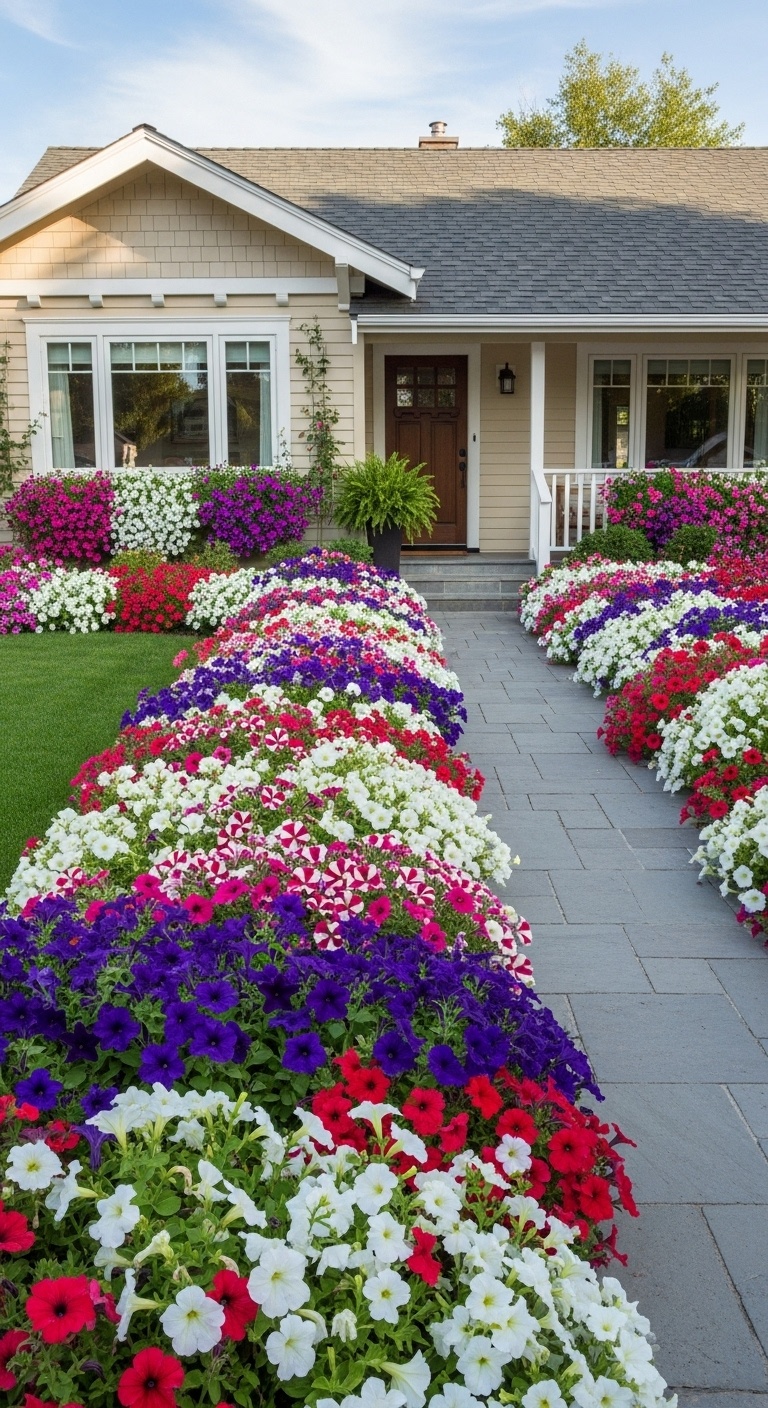
Petunias are a wonderful selection for your front yard’s flower beds. They are available in a wide variety of colors, so you can easily coordinate them with your home’s exterior. These flowers provide a continuous display of bright color all summer long.
For a lively garden, you can combine petunias with other flowers. They look great with marigolds or can be the star of their own bed. Plant them in groups to achieve a lusher, fuller appearance.
For a contemporary feel, think about using tall planters filled with cascading petunias. This approach is particularly effective near your entryway. Hanging baskets offer another delightful way to feature these beautiful flowers.
Petunias are quite simple to look after and bring a lot of charm to any yard. Just remember to water them consistently, particularly during hot spells.
13. Zinnias
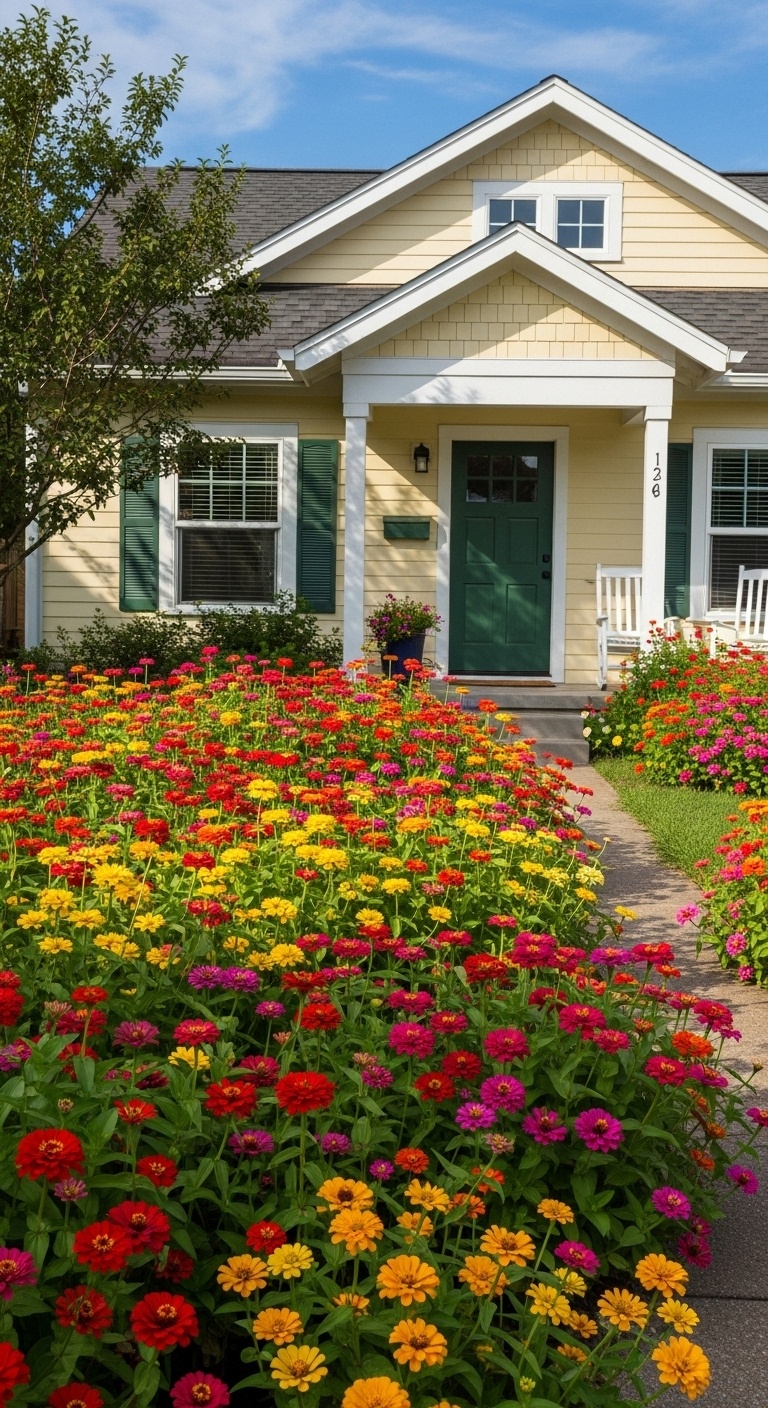
Zinnias are a fantastic pick for your front flower garden. They come in an array of brilliant colors that can significantly liven up your yard. These flowers bloom throughout the summer and are very simple to maintain.
You can start zinnias from seeds or opt for young plants from a nursery. They flourish in full sun, so choose a location that receives abundant daylight. Zinnias also draw butterflies and bees, which will bring more life to your garden.
These flowers are also well-suited for pots. If you have the room, consider planting them in window boxes or placing them on your porch. This allows you to appreciate their vibrant colors from a closer vantage point.
To ensure your zinnias stay healthy, water them regularly without over-saturating the soil. Pinching off the old, dead flowers will stimulate the growth of new blooms.
14. Geraniums
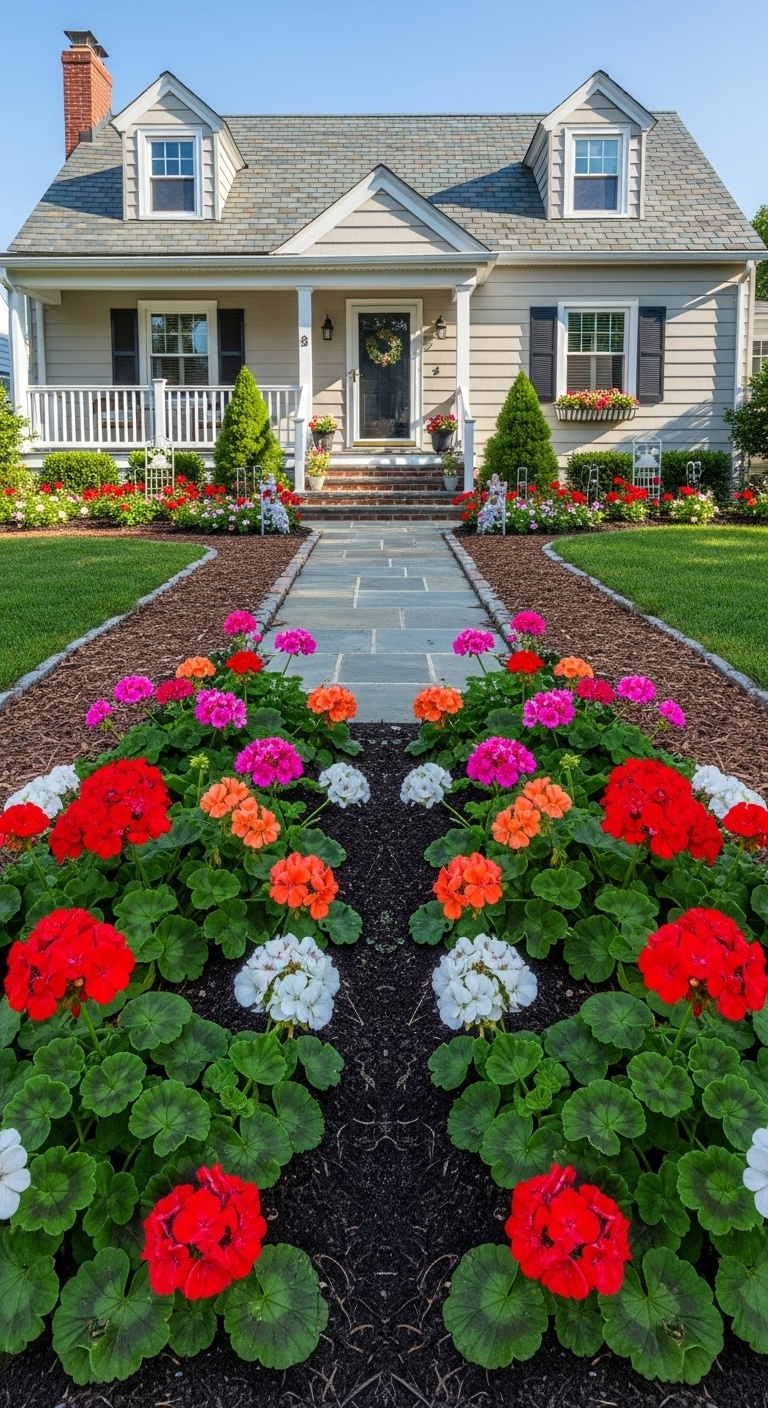
Geraniums are an outstanding option for your flower beds. They are available in numerous varieties and provide blooms all through the spring and summer months. These flowers can instantly liven up any area with their brilliant hues.
You can plant geraniums next to other low-profile plants or evergreen shrubs. They serve as excellent borders and add a polished finish to your garden’s overall design.
These resilient plants typically do not require extensive care. They are capable of flourishing under a variety of conditions and generally do not need deadheading to continue producing flowers.
“For a lush look, mix different colors and types of geraniums. They’ll complement each other and bring your garden to life.”
15. Phlox
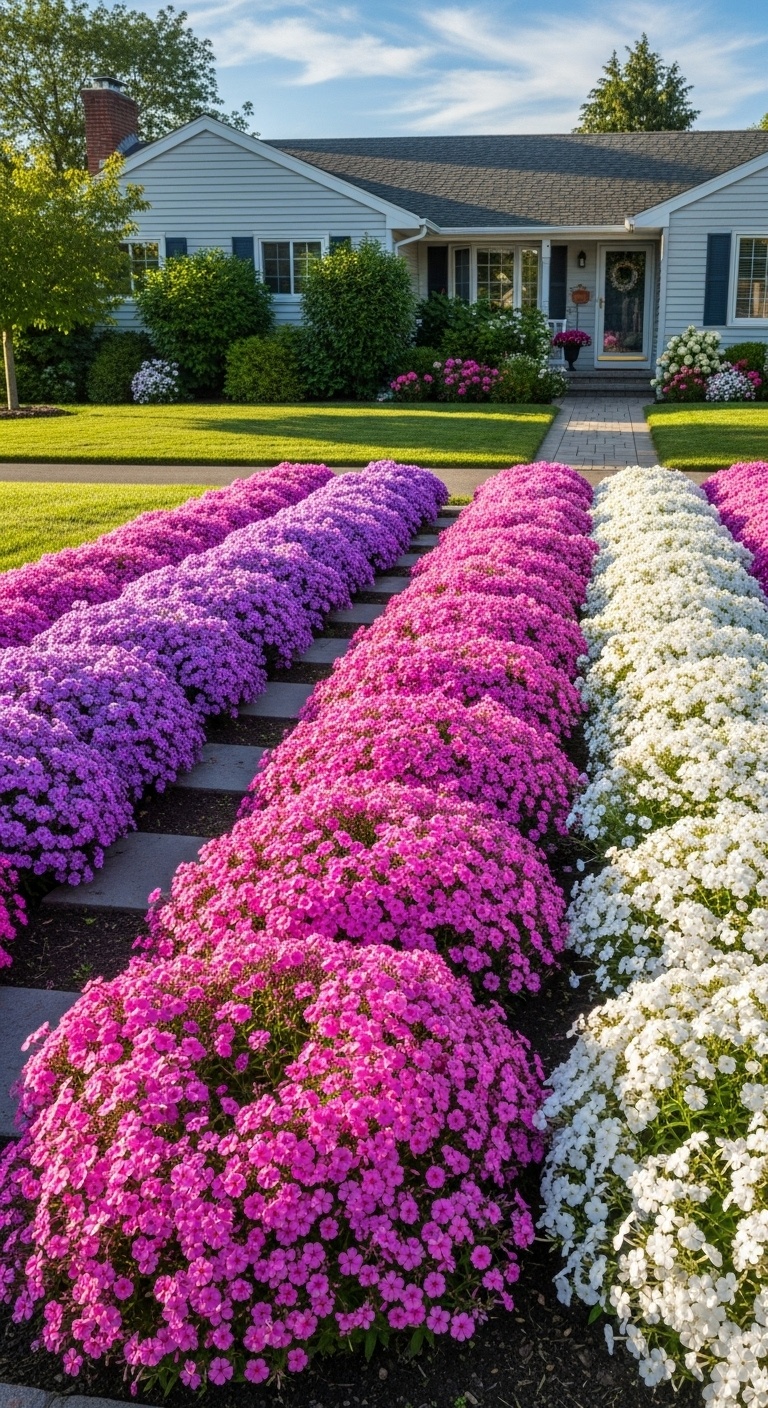
Phlox adds a splash of vibrant color to any flower bed in front of a house. These beautiful flowers appear in a range of shades, from pink and purple to clean white. They are perfect for brightening your yard throughout the summer.
These plants do best in full sun and prefer soil that is moist but drains well. They are also a favorite of butterflies, which brings an extra element of life and movement to your garden.
You have the option of choosing taller varieties to create a backdrop or shorter types to line the front of your bed. Phlox is especially beautiful when planted in large groups, which creates a truly impressive visual.
To maintain healthy phlox, make sure they receive adequate water, particularly during dry periods. Regularly removing the spent blooms can help extend their flowering season.
16. Coreopsis
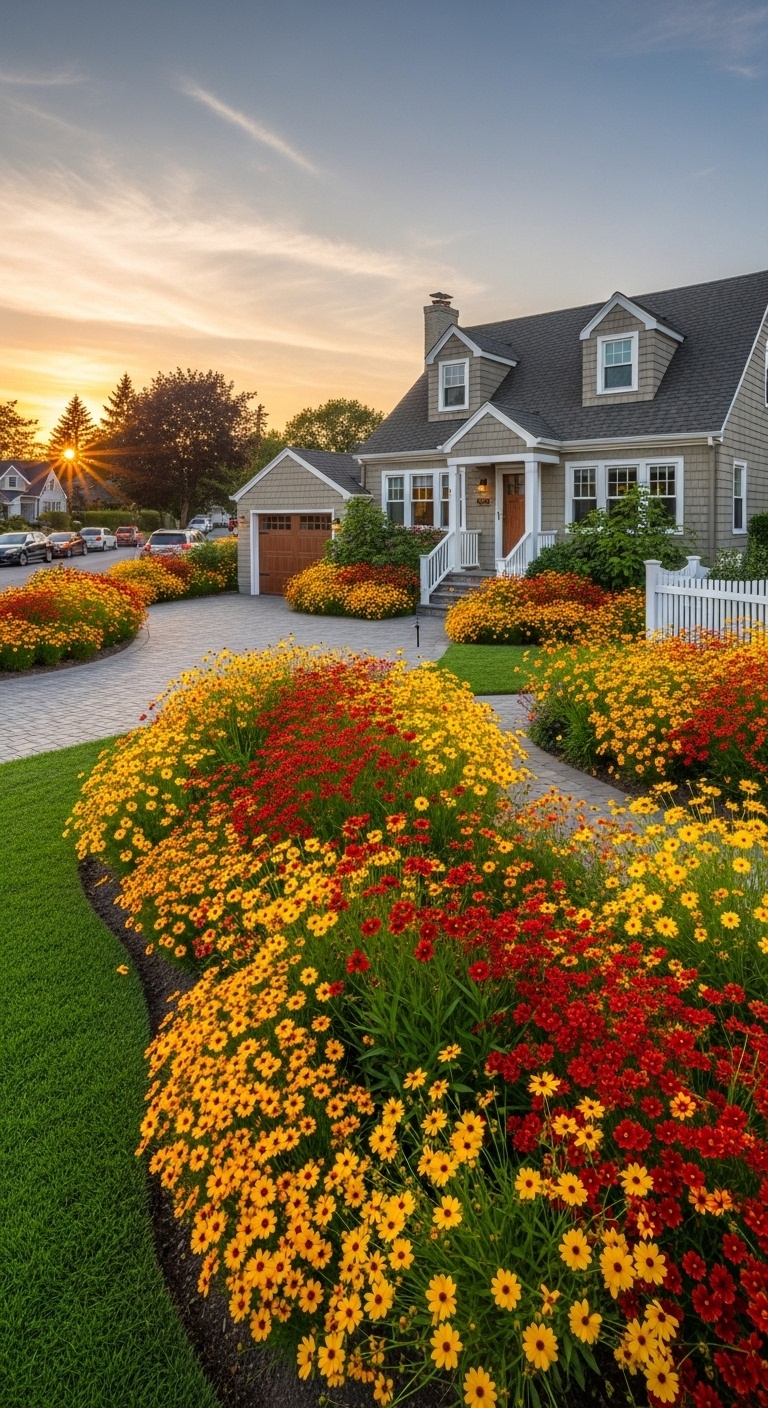
Coreopsis, which is also called tickseed, is a cheerful flower that can instantly uplift the look of your front yard. Its bright yellow blossoms provide a continuous burst of happy color from the end of spring through early fall.
These flowers are very easy to maintain and do best in full sun. They need well-drained soil and are quite tolerant of drought, which makes them an excellent choice for a low-maintenance garden.
Coreopsis is also a magnet for butterflies, which introduces even more vitality to your outdoor living area. You can plant them in dense clusters for a dramatic effect or mix them with other flowers for a more varied and colorful arrangement.
17. Salvia
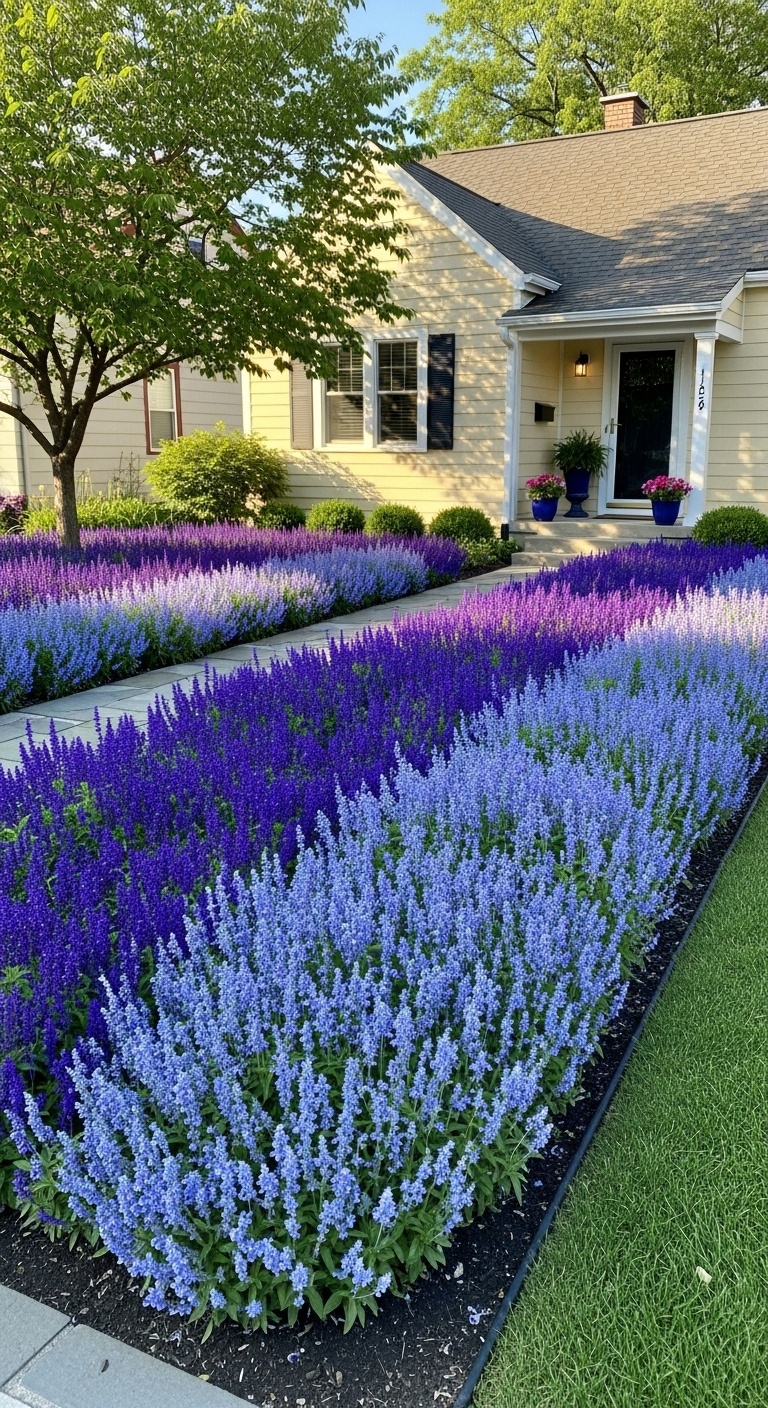
Salvia, often referred to as Sage, is a stellar choice for flower beds in front of the house. It delivers a splash of color and serves as a major attraction for pollinators like bees and hummingbirds.
These adaptable perennials and annuals feature striking flower spikes, which often come in vivid shades of blue, purple, pink, red, or white. They create a stunning visual that lasts throughout the entire growing season.
Most salvia varieties are easy to care for and flourish in full sun, though some can handle partial shade. They do best in well-drained soil and become remarkably drought-resistant once they are established. This makes them a great pick for busy gardeners or those living in drier regions.
Plant them in groups to create the biggest impact and enjoy their non-stop blooms from late spring right up until the first frost. Their fragrant leaves also add another delightful sensory element to your garden.
“For a vibrant, long-lasting display that actively supports local wildlife, Salvia is an outstanding addition to any sunny front flower bed.”
18. Astilbe
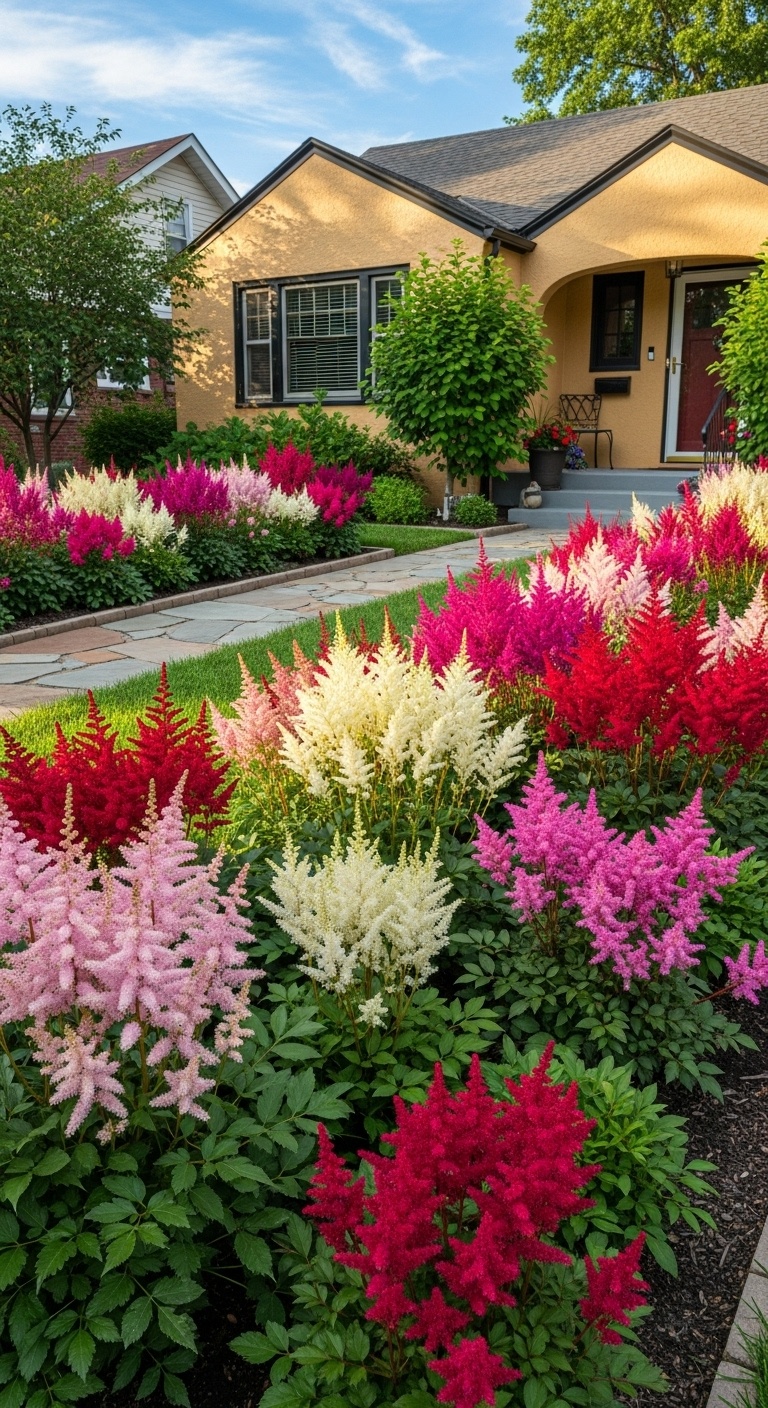
Astilbe is an excellent plant for your front flower garden. These plants are shade-lovers and contribute a soft, feathery texture to any landscape. They flower in beautiful colors such as pink, white, and purple, providing a welcome pop of color.
Astilbe does best in moist soil, making it a perfect fit for areas that tend to stay a little damp. While they prefer well-drained locations, they can thrive with consistent watering, which makes them relatively easy to manage.
Depending on the specific variety, these plants can grow to be between 1 and 4 feet tall. They also have the benefit of attracting butterflies, which adds more life and movement to your garden.
“Choose a spot with morning sun and afternoon shade for the best blooms. Regular watering will help keep your Astilbe thriving.”
19. Echinacea
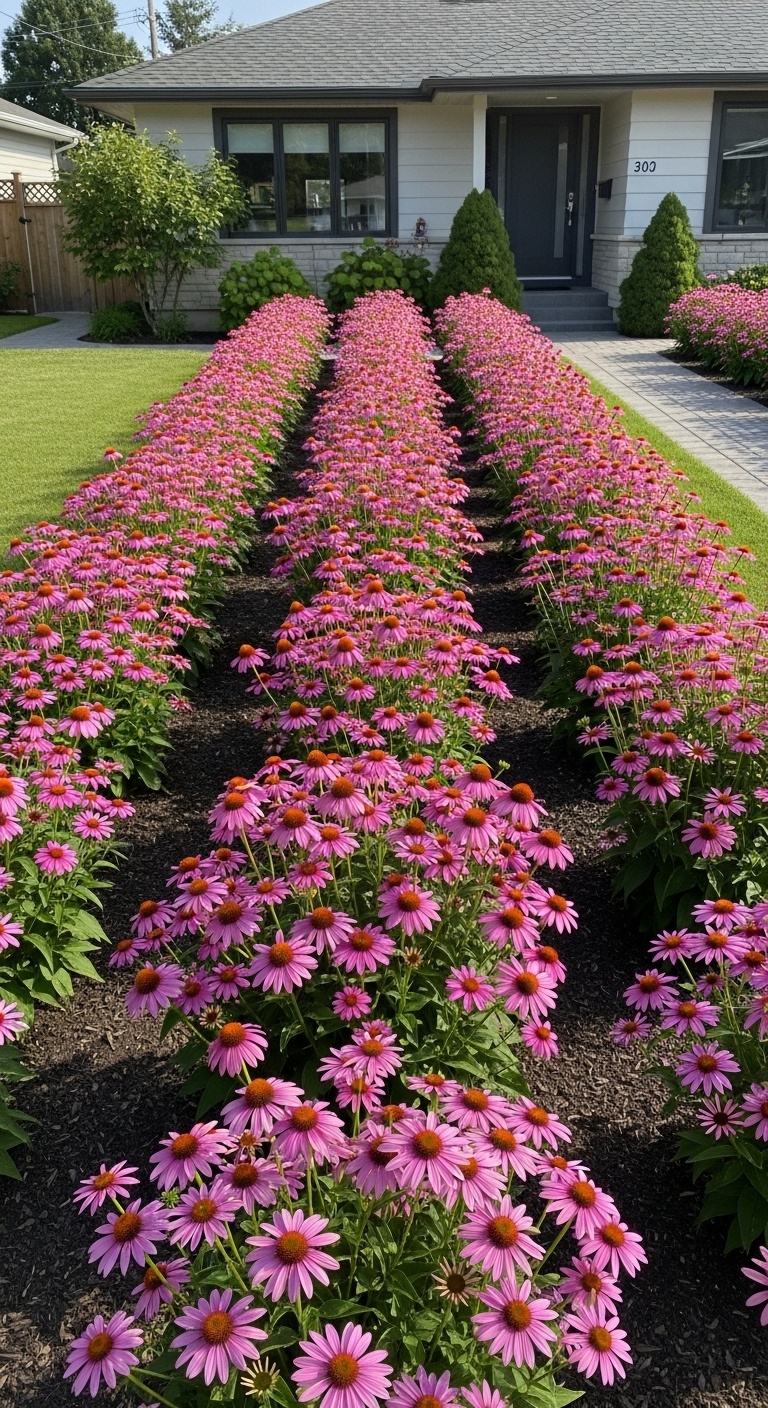
Echinacea, more commonly known as coneflower, is a fantastic plant for your flower beds. These durable perennials feature lovely shades of pink and purple. They can reach a height of 3 feet and are a favorite of both bees and butterflies.
You can create a beautiful garden by pairing Echinacea with companion plants like lavender and yarrow. These plants work together to attract more pollinators. They also help to deter pests and can even assist in keeping weeds under control.
It’s important to plant Echinacea in soil that drains well and to steer clear of spots that tend to become overly wet. They thrive in full sun but are also able to handle some light shade.
To promote healthy growth, space your Echinacea plants about 1 to 3 feet from each other. Water them sufficiently and apply a layer of mulch to help the soil stay moist.
“Echinacea thrives on neglect, making it perfect for busy gardeners. Just plant them and enjoy the natural beauty they bring!”
20. Snapdragons
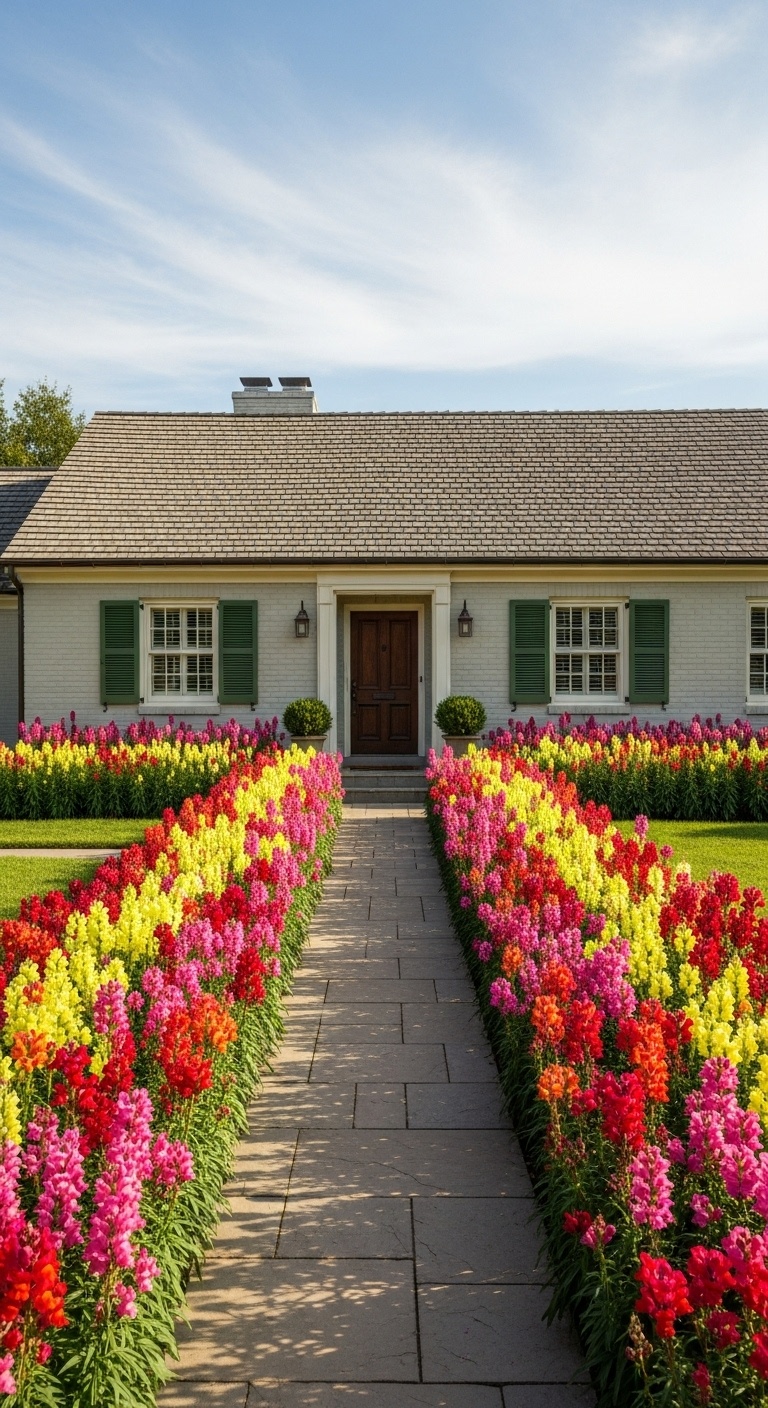
Snapdragons are a wonderful addition to your flower gardens. They are available in a wide spectrum of colors and grow in tall, elegant spikes, which adds both height and beauty to your landscape. Depending on the variety you select, these flowers can grow anywhere from 6 to 36 inches tall.
You can plant snapdragons with companion plants such as petunias and alyssum. Not only do they look beautiful side by side, but they also contribute to a healthier garden by helping to suppress weeds.
Snapdragons do best in moderate climates and have their peak blooming periods in the spring and fall. To support their growth, be sure to feed them with a balanced fertilizer. If you are planting in containers, using high-quality potting soil is essential.
21. Impatiens
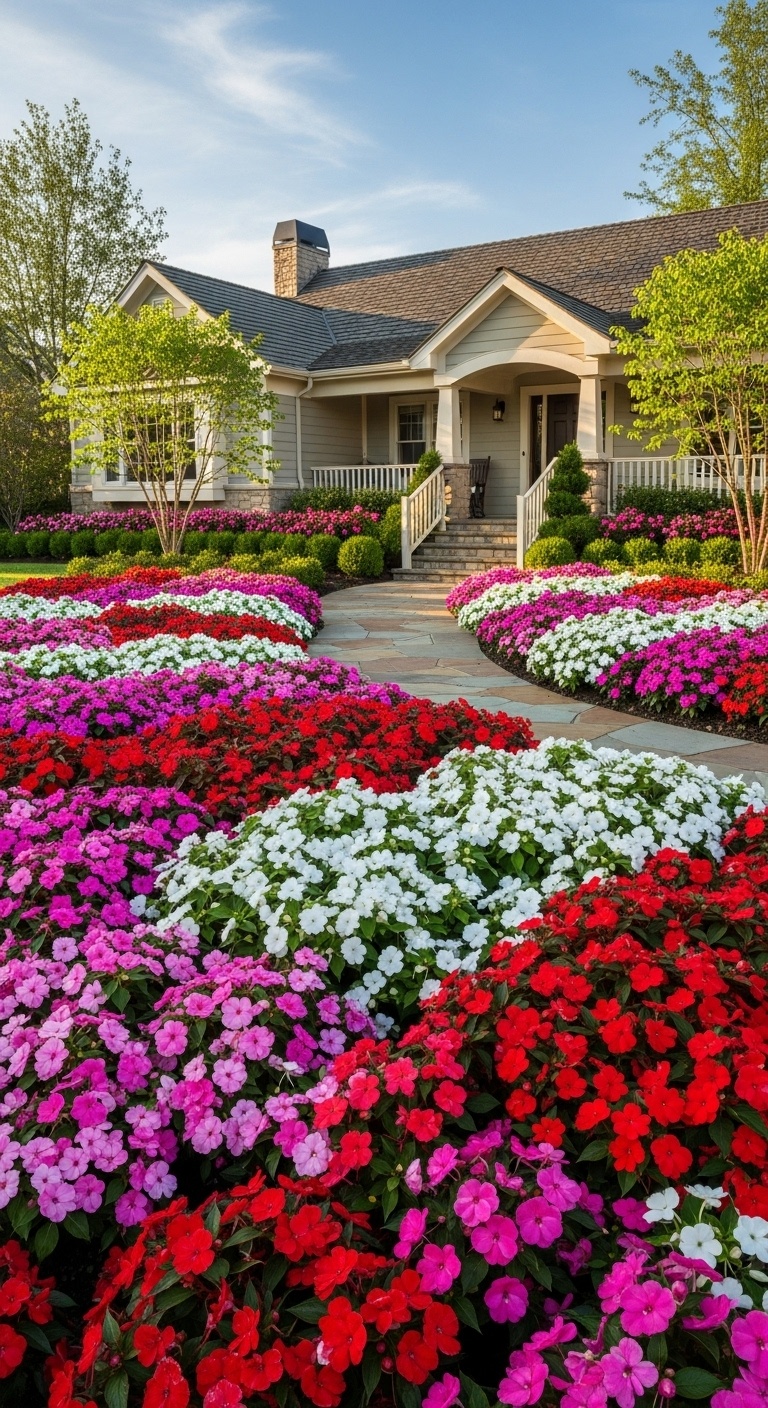
Impatiens are an excellent option for your front flower bed. They provide a burst of vibrant color and are known to do well in shady locations. You can choose from a variety of colors including red, pink, purple, and white.
When it’s time to plant, be sure to wait until all danger of frost has passed. Prepare a hole that is the same size as the pot, and gently tease the roots apart before setting the plant in place.
It’s a good idea to space the plants about 6 to 12 inches from each other. This spacing gives them enough room to spread out and fill the area without becoming overcrowded.
Maintain moist soil, but be careful not to make it soggy. A consistent watering schedule will ensure your impatiens stay looking fresh and beautiful.
“Choose a mix of colors to create a cheerful display. They’ll brighten up your entrance and bring joy every time you come home.”
Choosing The Right Flowers
Picking the ideal flowers for your front yard can dramatically enhance your home’s curb appeal. Consider which plants are best suited for your climate and the amount of maintenance they will require.
Perennials vs. Annuals
When selecting flowers, understanding the distinction between perennials and annuals is key. Perennials are plants that return each year. They can be a smart investment, saving you both money and effort since you won’t need to replant them annually. Good examples are daylilies and cone flowers.
In contrast, annuals complete their life cycle in a single growing season. They produce brilliant blooms but require replanting every year. Popular choices include petunias and marigolds. A combination of both types can lead to a stunning flower bed. Perennials form a reliable foundation, while annuals can introduce new and exciting colors each year.
Considering Sunlight and Soil
Before you start planting, it’s important to assess how much sun your flower bed will receive. Certain flowers require full sun to thrive, whereas others do better in partial shade.
For instance, zinnias are sun-worshippers, while ferns are much happier in shaded environments.
The type of soil you have is also a crucial factor. You can test your soil to determine if it is predominantly sandy, clay, or loamy. Different plants are suited to different soil types.
As an example, geraniums do best in soil that drains well, while astilbes prefer soil that retains more moisture.
Designing Your Flower Beds
Designing beautiful flower beds involves thoughtful planning. By concentrating on color combinations, themes, and different plant heights, you can create a gorgeous and welcoming front yard.
Color Schemes and Themes
Selecting the right colors is crucial for the success of your flower bed. You might want to explore some of these popular color strategies:
Monochromatic: This approach uses various shades of a single color to create a sophisticated and unified look. Complementary: This involves pairing colors that are opposite each other on the color wheel, such as blue and orange, to produce a dynamic and vibrant effect. Analogous: This strategy uses colors that are adjacent to each other, like yellow, orange, and red, resulting in a smooth and harmonious design.
Establishing a theme can also elevate the design of your flower bed. You could aim for a tropical retreat featuring bright, bold hues, or a classic English garden filled with soft pastels and rich greenery.
Choose a variety of plants that align with your selected theme. This method will help your front yard truly make a statement.
Layering and Height Variations
Layering your plants is essential for building visual depth. Begin with the tallest plants in the back and gradually move to shorter ones at the front. Here is a straightforward way to organize your planting:
Back: Place tall plants here, such as sunflowers or delphiniums. Middle: Fill this area with medium-height flowers like daylilies or echinacea. Front: Complete the look with low-growing options, for example, pansies or petunias.
Varying the heights of your plants not only adds visual interest but also guides the viewer’s eye across the entire bed.
Including ground covers in the spaces between taller plants can fill any gaps and give the bed a lush, full appearance. Using this layering method ensures every flower gets its chance to be seen, which results in a well-balanced and beautiful display.