Rain barrels can be practical without looking purely utilitarian. Wooden finishes, bright paint, stenciled artwork, enclosures, and thoughtful placement let them settle into the garden, while screens, spigots, downspout adapters, overflow hoses, and raised stands make collecting and using rainwater easier.
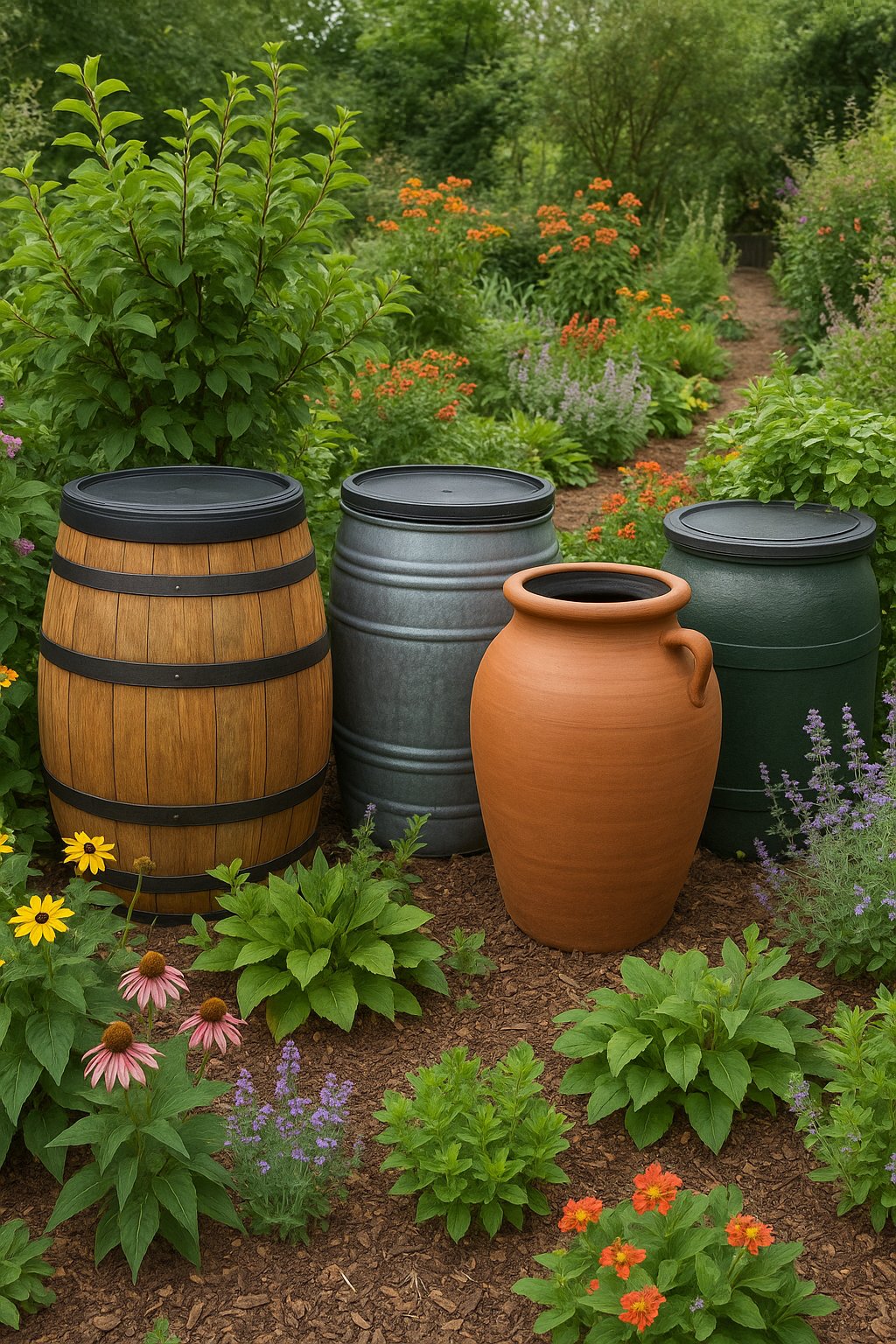
1. Use a wooden rain barrel for a natural garden look

For a water collection system that blends seamlessly into your garden, a wooden rain barrel is the perfect choice. Wood provides a warm, rustic aesthetic that harmonizes beautifully with plants and outdoor furniture. A wooden barrel feels less like a utility item and more like a piece of intentional garden decor. If an organic, natural atmosphere is what you’re after, this is the ideal solution. For longevity, select cedar or redwood barrels, as they naturally resist rot. Remember to keep the wood sealed to shield it from weather damage.
2. Paint rain barrels with vibrant colors to brighten the space
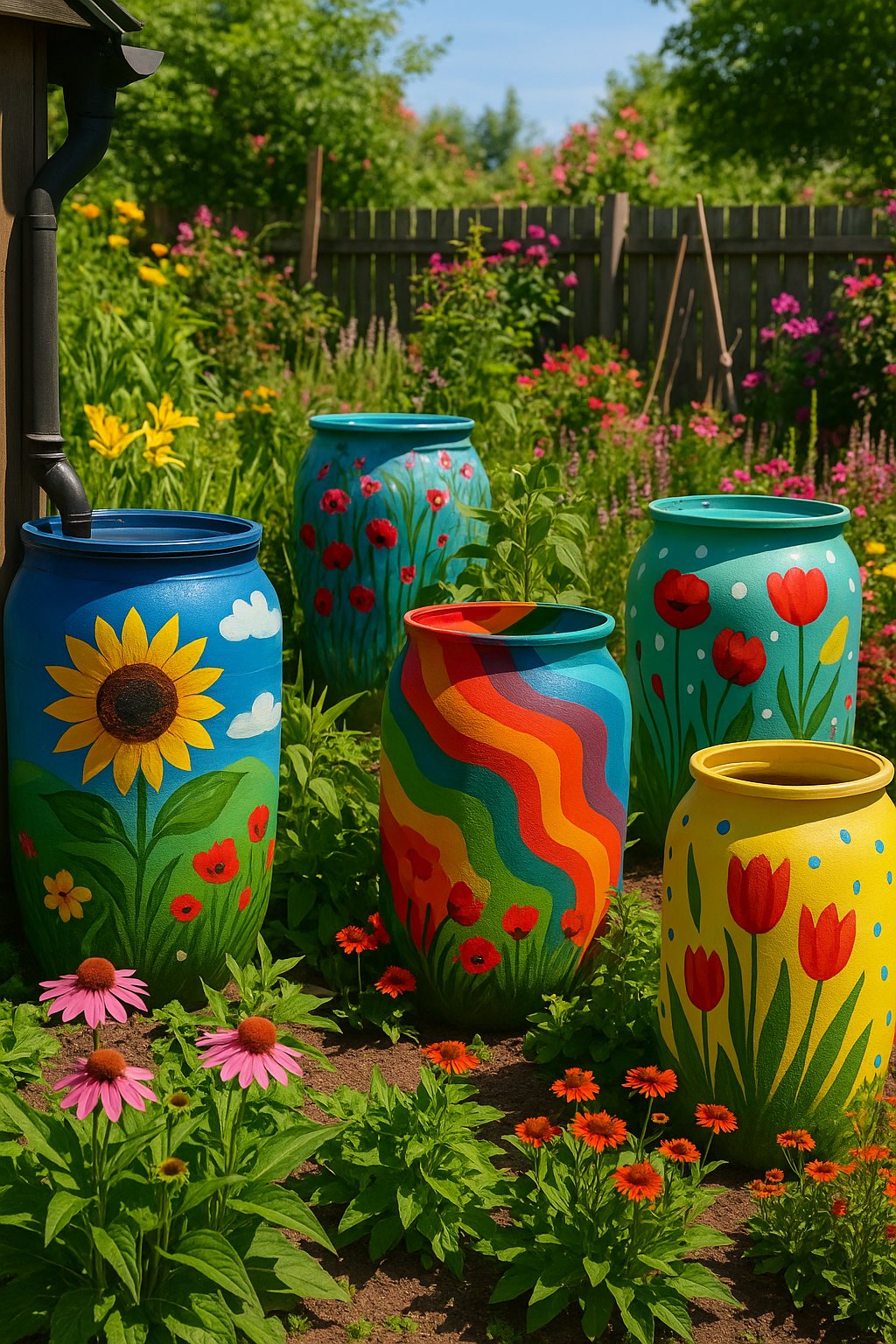
Unleash some personality on your garden by painting your rain barrels with eye-catching colors. Choose shades that make the space pop or select hues that complement your existing outdoor style. A coat of weather-resistant paint will ensure the colors remain vibrant and will also protect the barrel from sun damage. For a professional finish, apply a primer before painting to help the color adhere properly. Just make sure your barrel is completely clean and dry before you begin.
3. Install multiple rain barrels linked together for extra water storage

Why stop at one? Connect two or more rain barrels to create a super-sized water storage system for your garden. By drilling holes and using basic plumbing fittings, you can link them so water flows evenly between the containers, effectively creating one large tank. This method allows you to collect significantly more water during storms without needing a single, massive barrel. A garden hose splitter is a great tool for filling multiple barrels at once. Always check for leaks after you connect them to ensure your setup is efficient.
4. Add a spigot to make watering plants easy

A spigot is a total game changer for your rain barrel. Installing one makes filling watering cans incredibly fast and convenient. You can say goodbye to hauling heavy barrels or maneuvering clumsy hoses. Position the spigot low on the barrel to achieve the best water pressure. To ensure everything stays leak-free, use a combination of rubber and metal washers for a secure fit.
5. Place a screen on top to keep out debris and insects

Keep your collected rainwater fresh and clean by covering your rain barrel with a screen. This simple barrier effectively blocks leaves, dirt, and unwanted bugs from contaminating the water your plants will use. A fine mesh screen that fits snugly over the opening is all it takes. A cone shape can be especially effective at keeping pests out while letting water in. For maximum durability and easy cleaning, choose an aluminum screen and secure it with a tight band to keep it firmly in place during storms.
6. Use a downspout adapter for quick rainwater collection

For a tidy and efficient way to collect rainwater, attach a downspout adapter to your system. This device connects your rain barrel directly to your gutter. Simply cut the downspout and fit the adapter to channel water straight into the barrel. You can adjust the height to help manage overflow during particularly heavy storms. Make sure the adapter has a tight fit to prevent any leaks and check the connection periodically to keep water flowing freely.
7. Set up a small water garden on top of your rain barrel

You can create a charming mini water garden by adding a shallow basin to the top of your rain barrel. Fill it with water and introduce aquatic plants like water lilies or small ferns. This beautiful setup can also attract local wildlife. Just be sure to change the water frequently to prevent mosquitoes from breeding. For best results, choose plants that are known to thrive in wet conditions and add a screen to keep out debris.
8. Position barrels in shaded areas to keep water cool

Place your rain barrels in shady locations to help keep the water cool. Cooler water discourages algae growth, which means a cleaner barrel and fresher water. Shade also provides protection from sun damage, extending the life of the barrel. Look for spots under trees or alongside your house for ideal placement. Avoiding areas with direct all-day sunlight will give you the best results.
9. Use rain barrels to irrigate a vegetable garden

Rain barrels are an excellent resource for watering your vegetable garden. By elevating the barrel on a stable platform, you can use gravity to create enough pressure to push water through a hose or easily fill watering cans. Using a fine mesh screen over the top will keep debris out and protect your plants. This is a simple and effective method for keeping your vegetables happy and hydrated.
10. Decorate barrels with stencils or artwork
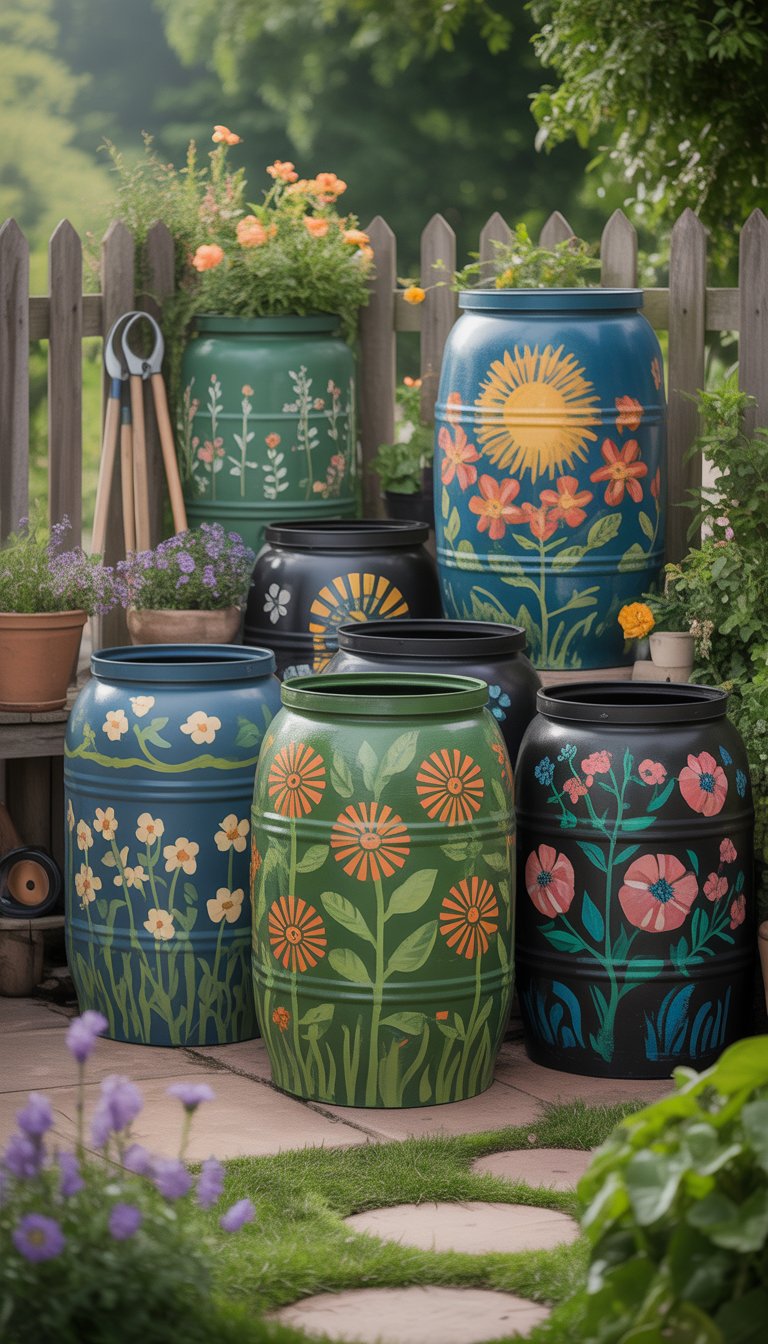
Add some artistic flair to your rain barrel using stencils to create interesting shapes and patterns. This is a simple way to decorate, even if you don’t feel like a confident artist. Alternatively, you can paint your own designs with acrylics. Bright colors and whimsical images can transform your barrel into a striking garden focal point. Your artwork can help the rain barrel either blend in or stand out, depending on your style. Use outdoor acrylic paint for durability and seal your masterpiece with a clear waterproof spray to protect it.
11. Stack rain barrels vertically to save space

If you need to maximize your garden’s footprint, consider stacking your rain barrels. This vertical arrangement allows you to collect more water without sacrificing valuable ground space. It is crucial to ensure the barrels are completely secure on a strong support or solid frame for safety. A hand pump or a gravity-fed system can help you move water between the stacked barrels for easy access.
12. Add overflow hose connections to prevent flooding

An overflow hose is essential for managing excess water and preventing spills near your home’s foundation. Attach a hose to your rain barrel to direct any overflow away from your house and into a flower bed or drain. Ensure the hose is long enough to reach a safe drainage area and that the connection is tight to avoid leaks. A flexible hose is a great option, as it allows you to easily adjust the direction of the water flow. Check it regularly to clear any blockages.
13. Use a rain barrel stand for better water pressure

Give your water flow a boost by placing your rain barrel on a stand. Elevating the barrel uses gravity to increase the water pressure, which makes filling watering cans or using a hose much easier. A sturdy stand also keeps the barrel stable. You can build a simple one from wood or even repurpose old pallets. Just make sure your stand is level and strong enough to support the weight of a full barrel for a safe and reliable setup.
14. Create a rain barrel fountain as a garden feature

Transform your rain barrel into an enchanting garden fountain. All you need is a small pump placed inside to recirculate the water. You can hide the pump with stones or plants for a more natural look. The sound of flowing water adds a wonderfully soothing ambiance to your garden, and you still get all the benefits of rainwater collection. Consider using a solar-powered pump to keep your fountain eco-friendly and lower any running costs. Be sure to clean the pump regularly to prevent clogs.
15. Connect barrels underground for a discreet setup

For a clean and streamlined garden appearance, connect your rain barrels with pipes buried underground. This approach hides the connections and eliminates the sight of hoses snaking across your yard. Buried pipes allow water to move smoothly between barrels. Choose durable pipes that can withstand outdoor conditions, like PVC, and use proper seals to prevent leaks. Always test for leaks before you cover the pipes with dirt.
16. Install a sediment filter at the inlet for cleaner water

Place a sediment filter at your rain barrel’s inlet to keep dirt and other debris from entering. You can easily create a filter using simple materials like window screen mesh or a piece of a nylon stocking. This small addition helps prevent clogs and ensures your collected water is cleaner for your garden. Choose a filter that is easy to remove for quick cleaning. Check and clean it periodically to keep it functioning effectively.
17. Repurpose old barrels for eco-friendly rain collectors

Breathe new life into old barrels by converting them into rain collectors. After cleaning the barrel thoroughly, install a spigot near the bottom for convenient watering access. Position the barrel under a downspout to catch rainwater from your roof. Using materials you already have is a fantastic way to reduce waste and save money. Be sure to seal any extra holes to prevent leaks. Placing your barrel on bricks can also improve water flow and make it easier to fill your watering can.
18. Build a wooden enclosure around barrels for style

A wooden enclosure is a stylish way to conceal your rain barrels and help them blend into your garden’s landscape. This project can quickly tidy up the appearance of your yard. Choose wood that complements your garden’s existing style, and leave enough room for easy access to the spigot and lid. The enclosure also provides an extra layer of protection from the weather. Go with weather-resistant wood or apply a treatment to make it last longer. Building the enclosure with removable panels will make cleaning the barrel much easier.
19. Use rainwater to fill bird baths or ponds

Your local wildlife will thank you for filling bird baths and ponds with fresh rainwater from your barrel. Birds and other creatures prefer natural, chemical-free water over chlorinated tap water. Regularly refilling your bird baths with clean water will attract more feathered friends to your garden. It’s a simple act that supports local wildlife. Just keep your rain barrel covered to prevent mosquitoes from breeding.
20. Harvest water for greenhouse irrigation

Rainwater is an ideal choice for your greenhouse plants because it’s soft and free of chemicals. Collect it in barrels and use it for all your greenhouse watering needs. You can set up a simple gravity-fed irrigation system to move water from the barrels directly into the greenhouse, which saves time and effort. Positioning your rain barrels at a higher elevation than your greenhouse will make irrigation even easier. Always keep the barrels covered to prevent mosquitoes.
21. Paint barrels with palm tree designs for a tropical vibe

Bring a touch of the tropics to your garden by painting palm trees on your rain barrels. Use classic greens and browns for the trees against a light background to make the design stand out. This theme is perfect for a beachy or island-inspired garden. You can use stencils for a clean look or freehand the design. The bright, fun artwork will turn your barrel into a standout feature. Use weatherproof paint to keep your design vibrant and seal your work with a clear coat for extra protection.
22. Attach garden hoses directly to barrel spigots

Watering plants far from your barrel becomes much simpler when you hook a garden hose directly to the spigot. This setup eliminates the need to carry heavy watering cans across your yard. Make sure your hose fits the spigot, or use an adapter if needed. For a secure and leak-free connection, use a bulkhead fitting. This will make attaching and detaching your hose a quick and easy task.
23. Use a basin on top to slow water flow and reduce splash

Placing a basin on top of your rain barrel is a clever way to slow down the incoming water. This simple addition reduces splashing, which keeps the surrounding area tidier and helps prevent soil erosion. It also allows the barrel to fill more evenly. A wide, shallow basin works best, and you can even repurpose an old plastic or metal container. Make sure your basin has holes or a mesh screen to catch debris while still allowing water to pass through, keeping your rain barrel cleaner.
24. Elevate barrels on cinder blocks for easy access

Hoisting your rain barrel onto cinder blocks is a practical way to make filling watering cans a breeze. The added height uses gravity to improve water flow. Cinder blocks are a sturdy and stackable option, allowing you to choose the perfect height for your needs. Just ensure the ground beneath is level and stable to prevent any wobbling. This simple setup also makes it much easier to connect hoses and spigots.
25. Place rain barrels near flower beds for convenience
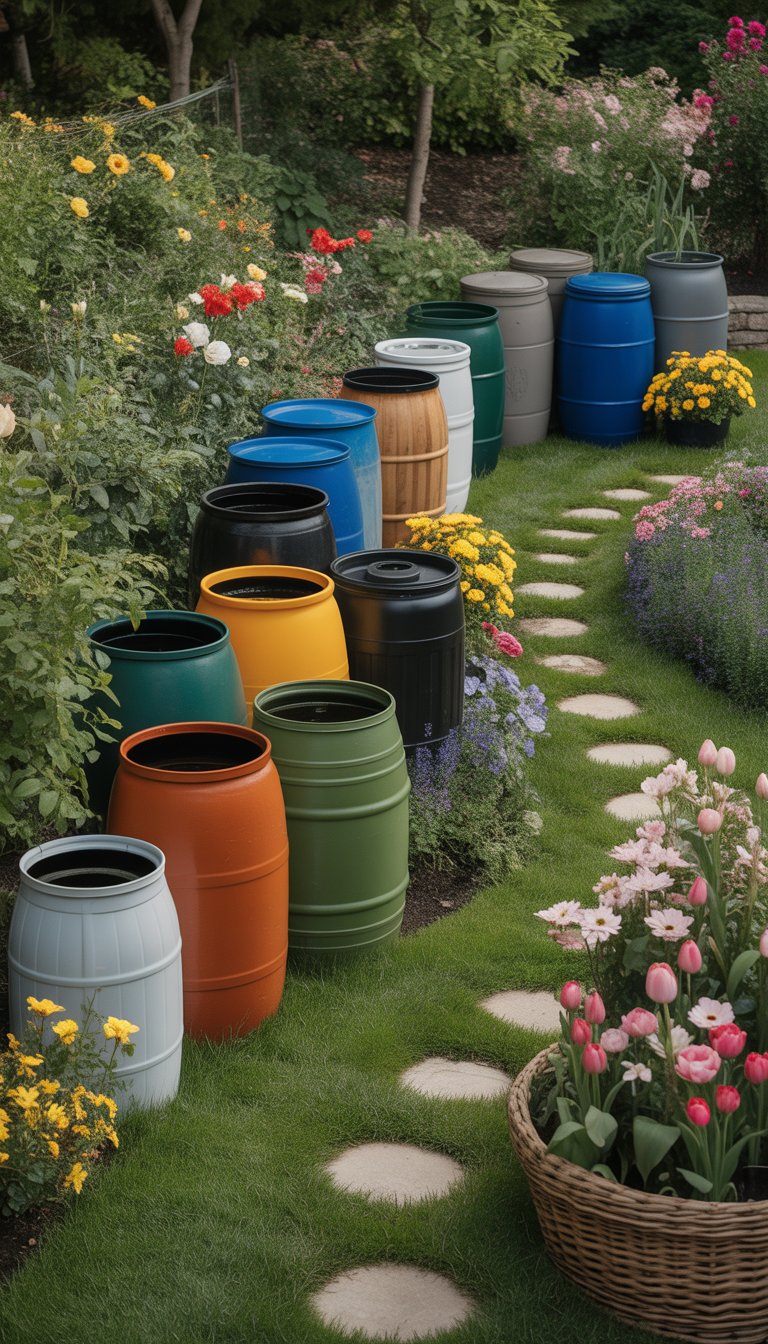
Positioning your rain barrels next to your flower beds is a smart move that makes watering much less of a chore. You will no longer need to haul heavy watering cans all over the yard. You can use the fresh rainwater directly from the barrel, which your plants will love. Setting the barrel on a raised platform or stand will improve the water flow and make filling your can even easier.