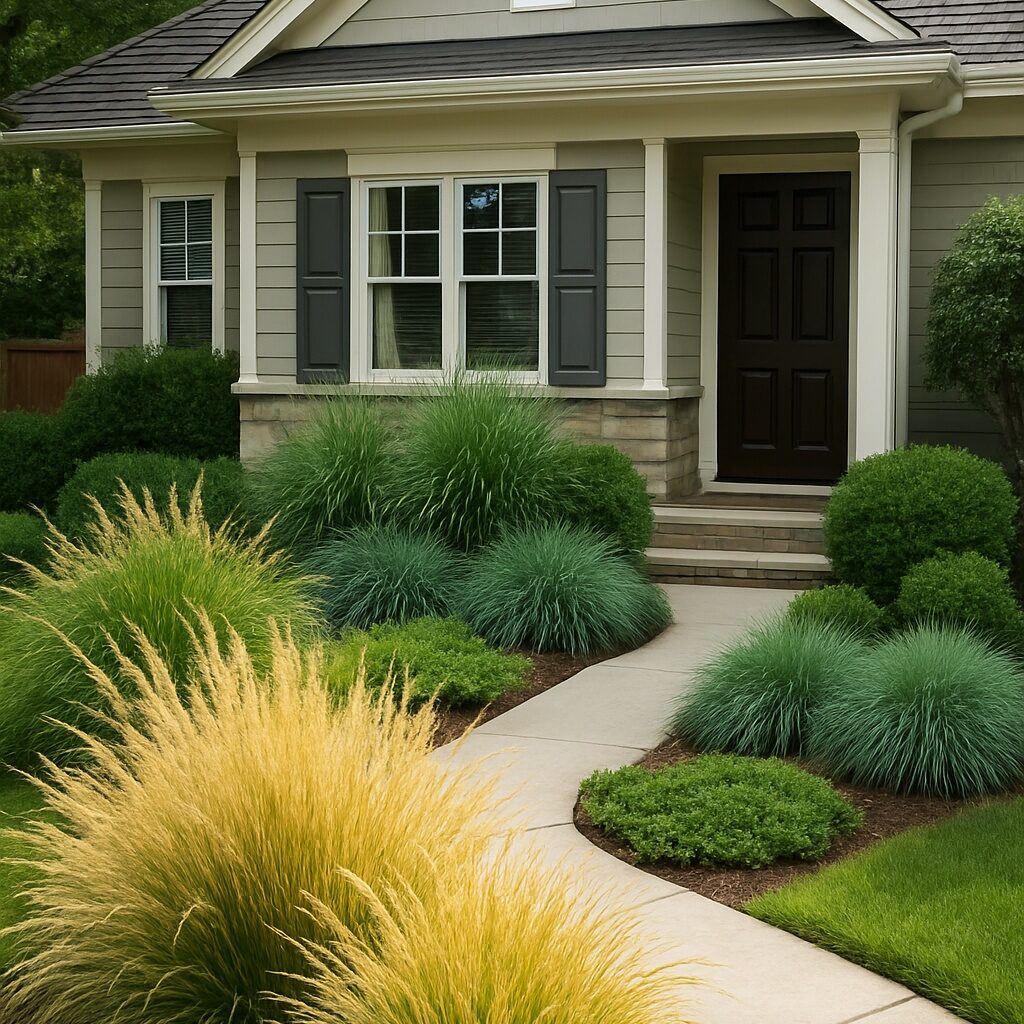
Want to make your house the star of the street? These 41 front-of-house landscaping ideas offer simple, effective ways to transform your yard and create an unforgettable first impression. You’ll find quick wins and clear guidance for a standout look, from clean edging and walkway lighting to low-maintenance shrubs and porch planters. Let’s dig in and get started!
1. Ornamental Grasses — Curved-Walkway Magic
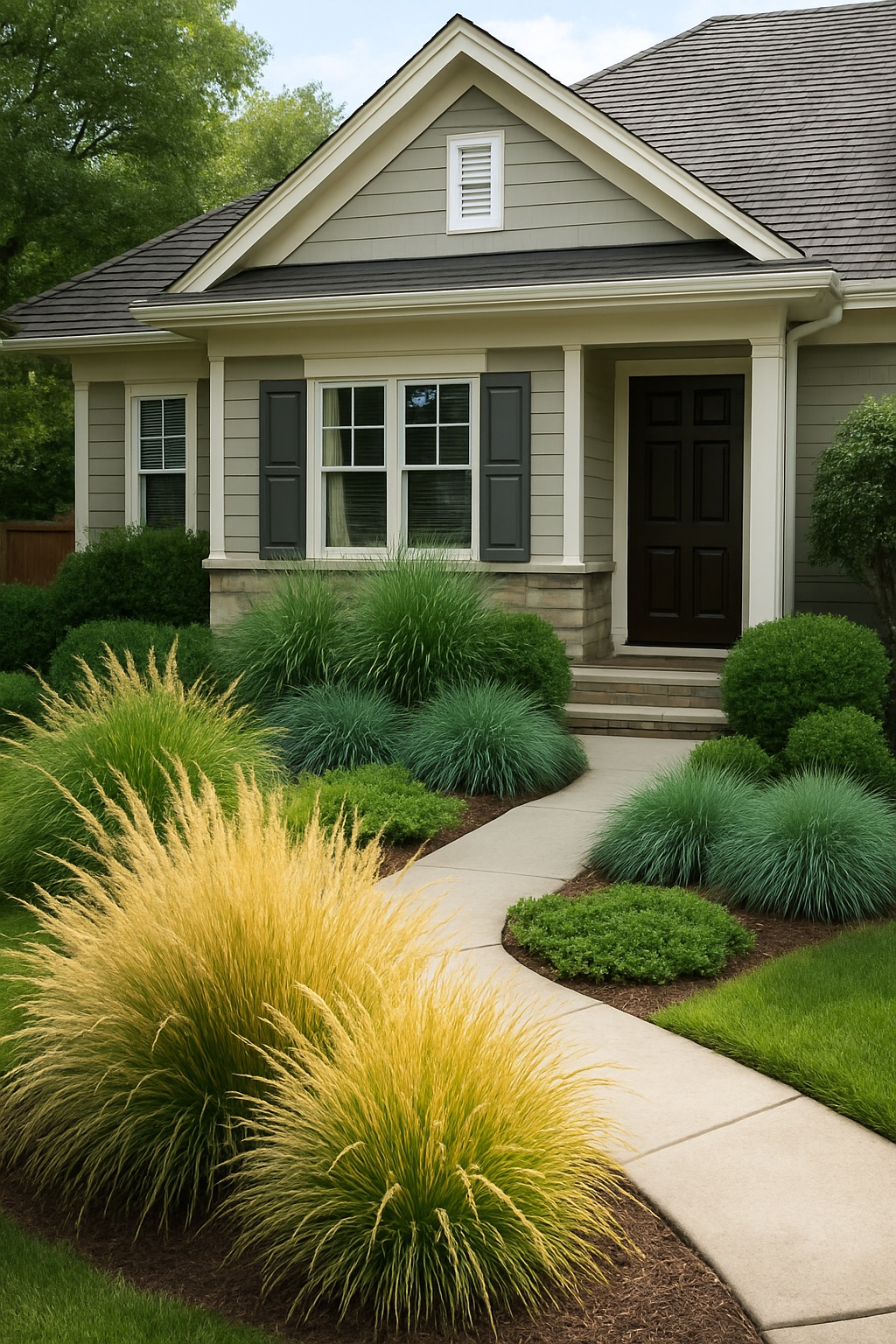
For instant, low-effort curb appeal, try planting ornamental grasses along your front walkway. They introduce soft movement and a lush texture, delivering the designer aesthetic seen in the photo. Golden plumes in the foreground, cool blue-green mounds at the center, and a tidy mulched border create a polished look.
Homeowners appreciate these grasses for their easy-going nature. They are drought-tolerant and require little maintenance after they’re established. You get year-round visual interest, with feathery plumes in summer and fall and a sculptural shape in winter. They are perfect for softening the hard edges of curved walkways and steps, creating a welcoming view from the street. These grasses also pair wonderfully with evergreen mounds and flowering perennials.
To replicate this look, layer the heights of your grasses. Place tall feather reed or switchgrass on the outer curve, use mid-height fountain grass on the inside, and add low blue fescue or blue oat grass as mounded accents. Planting in clusters of three to five gives a full, intentional appearance. Finish with a fresh mulch edge to make the grasses stand out and suppress weeds. The gentle swaying in the breeze is a key part of their charm.
Caring for them is simple. Water consistently during the first season, then cut back the clumps to about six to eight inches in late winter or early spring. If they become too crowded, you can divide them every few years.
If you’re ready to enhance your front walk, choose two or three varieties and repeat them along the curve for a sophisticated, magazine-quality entrance.
2. Stone Pathways
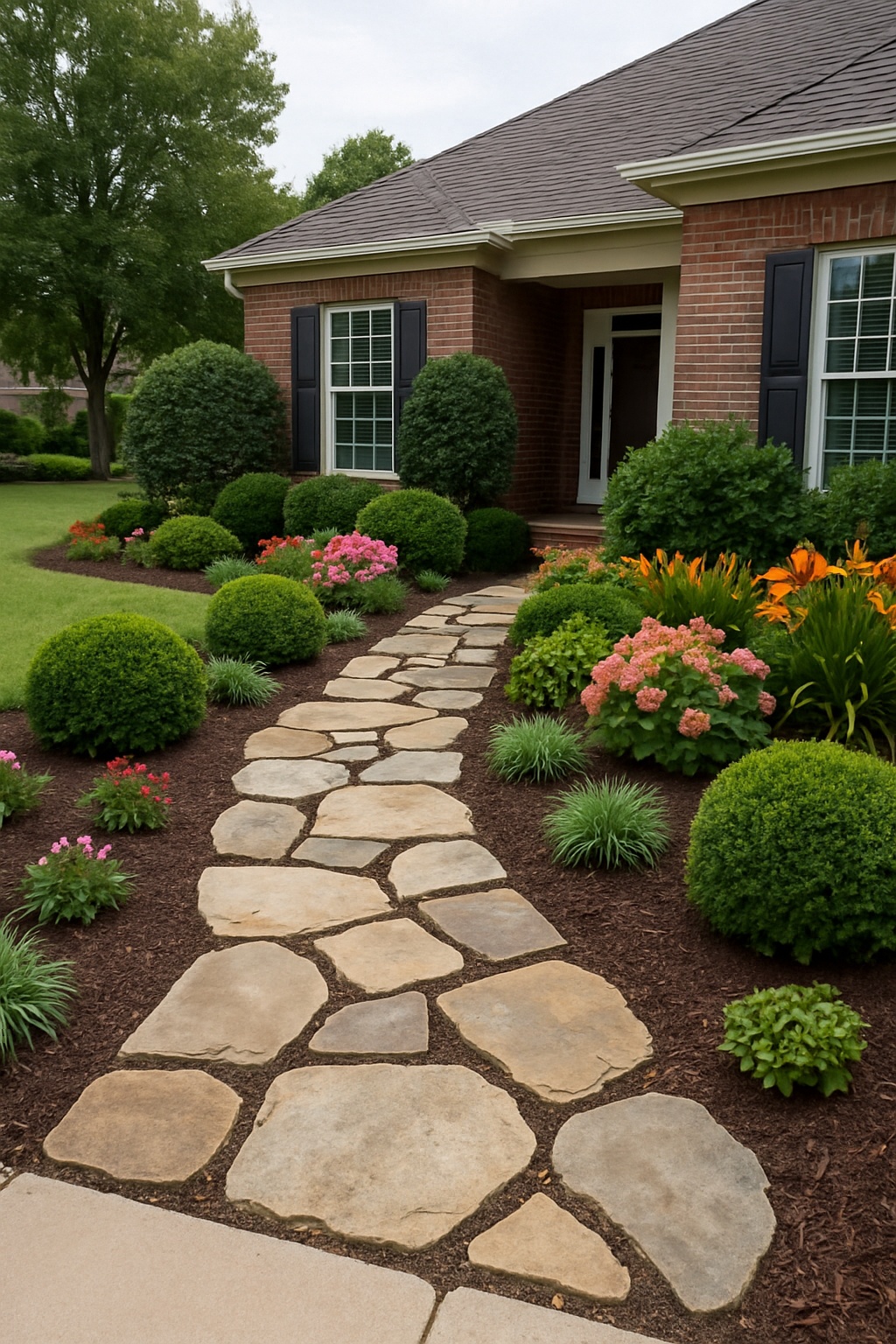
Stone pathways provide a timeless quality to any front yard. They not only guide visitors but also add an element of charm to the landscape. Popular natural stone choices include flagstone, bluestone, and cobblestone.
You can achieve various looks using stone paths, from geometric patterns to more free-form layouts. The wide range of shapes and colors available allows for plenty of creative expression.
Planting along the pathway’s edges helps create a unified appearance. Flowers, small shrubs, or ground cover plants can soften the hard lines of the stone.
3. Flower Beds
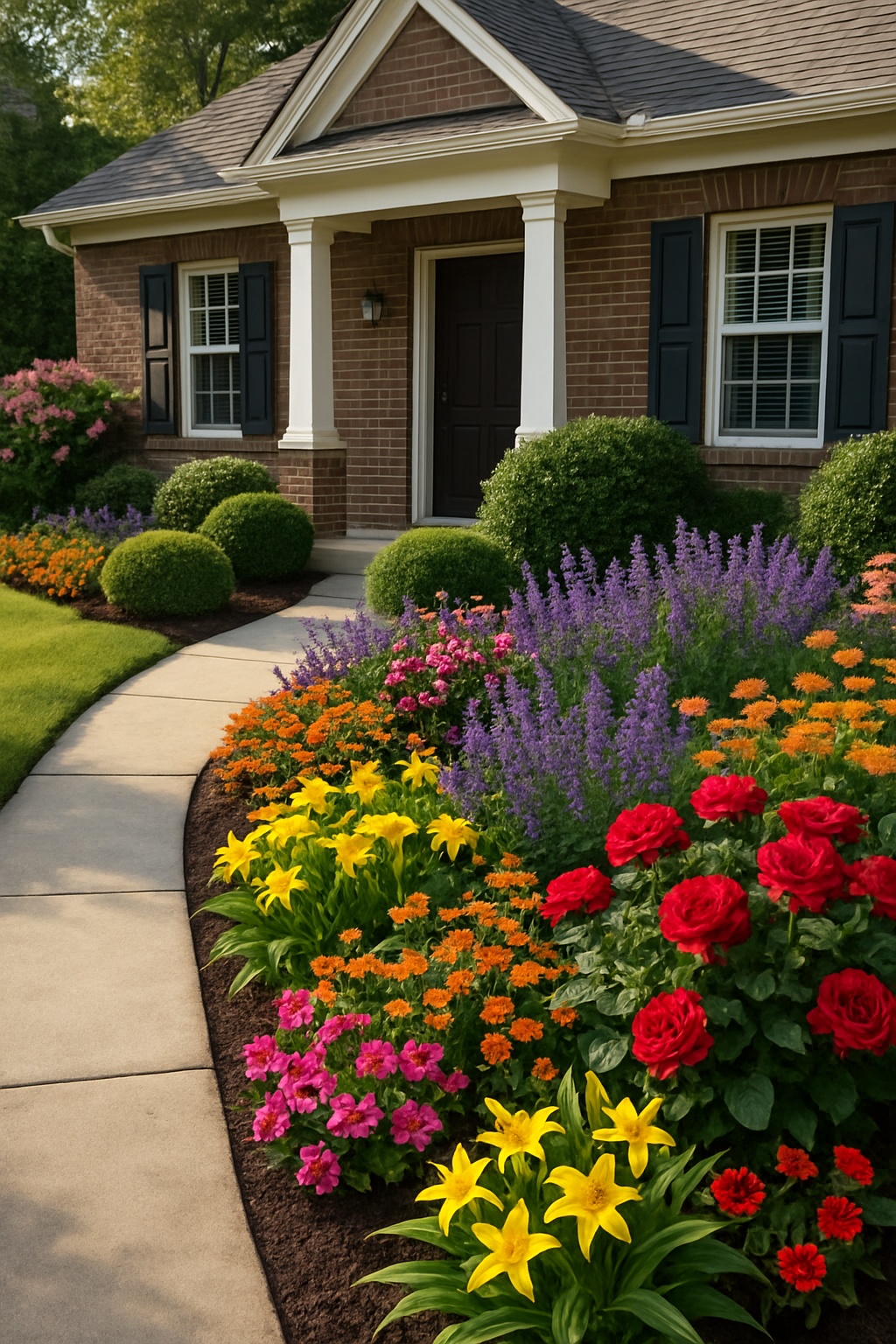
Flower beds can significantly brighten the front of your house. Use a mix of colors for a vibrant look. Consider incorporating different plant types, such as annuals, perennials, and even a few small shrubs.
For a layered effect, arrange flowers with varying heights. Position taller plants toward the back and shorter ones in the front. Edging the beds with materials like bricks or stones keeps them looking neat and adds visual appeal.
Adding some greenery with plants like ferns and hostas can contribute to a lush, full space.
4. Garden Sculptures — Tortoise Planter Spotlight
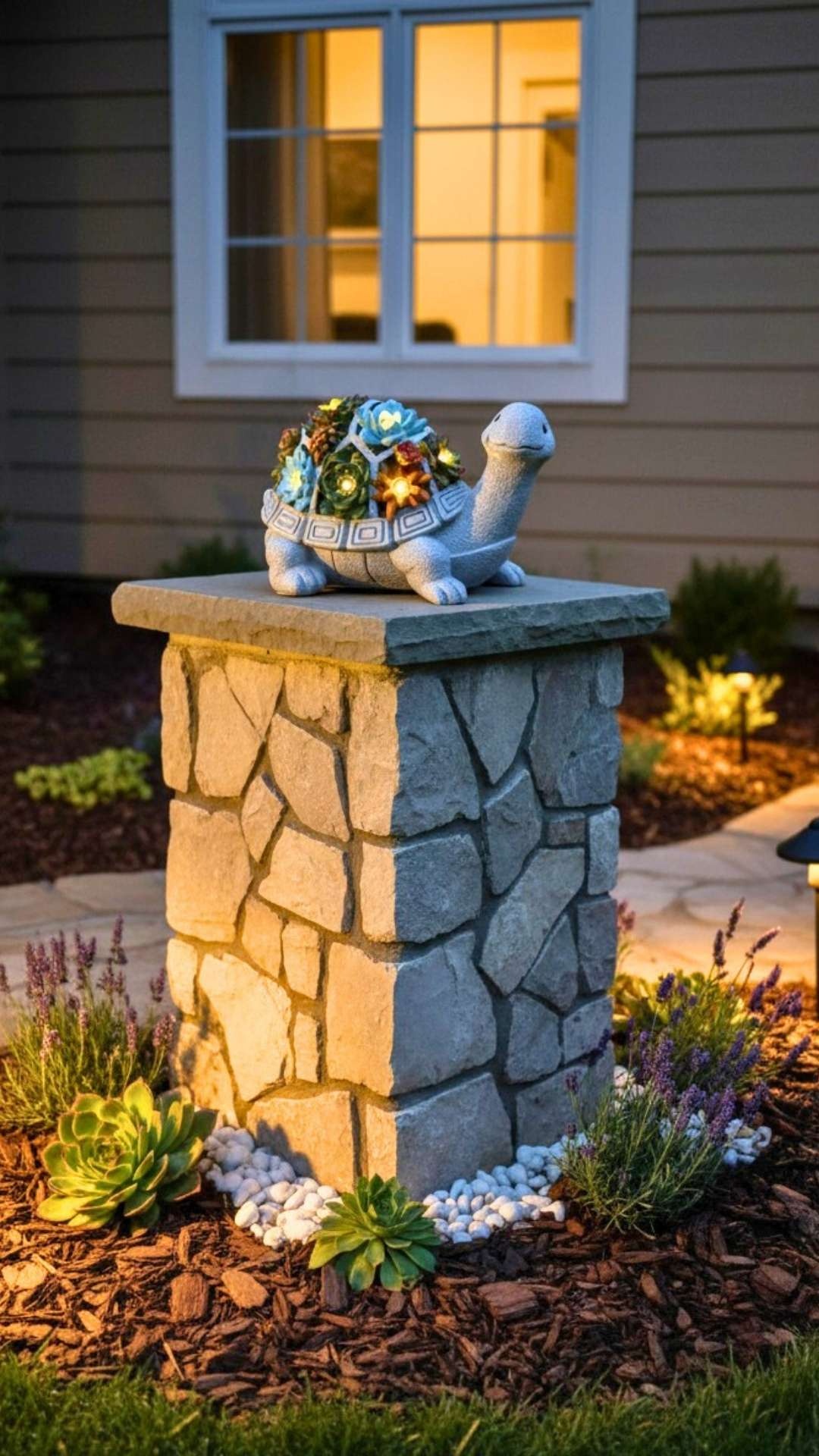
If you want your front yard to offer a friendlier welcome, consider adding a sculpture. This tortoise planter is a small detail with significant charm. It’s cute during the day and gives off a soft glow at night, instantly boosting curb appeal without requiring a complete overhaul.
This piece gets noticed because it acts as an immediate focal point; a smiling tortoise on a stone pedestal is often the first thing guests will compliment. It offers day-to-night magic with built-in LEDs, which are often solar-powered, making the succulents in its shell sparkle after dusk without any wiring. It is also a low-maintenance decoration. Just pop in some hardy succulents or faux stems, and it will look lovely all season. The durable, weather-resistant construction holds up against sun, sprinklers, and curious children.
To copy the look in the photo, place the tortoise on a stone pedestal between 24 and 30 inches high to give it more presence. Edge the base with a neat ring of white pebbles over mulch for added texture. For plant pairings, try lavender for its fragrance and rosette succulents for their structure. A small path light nearby will help the shell shimmer after dark.
A pro tip is to mix textures, such as a stone base, a smooth sculpture, and soft plants, for a designer look that takes only minutes to achieve. This style works well for modern, cottage, and family-friendly landscapes.
Ready to add some personality to your entry?
5. Water Features
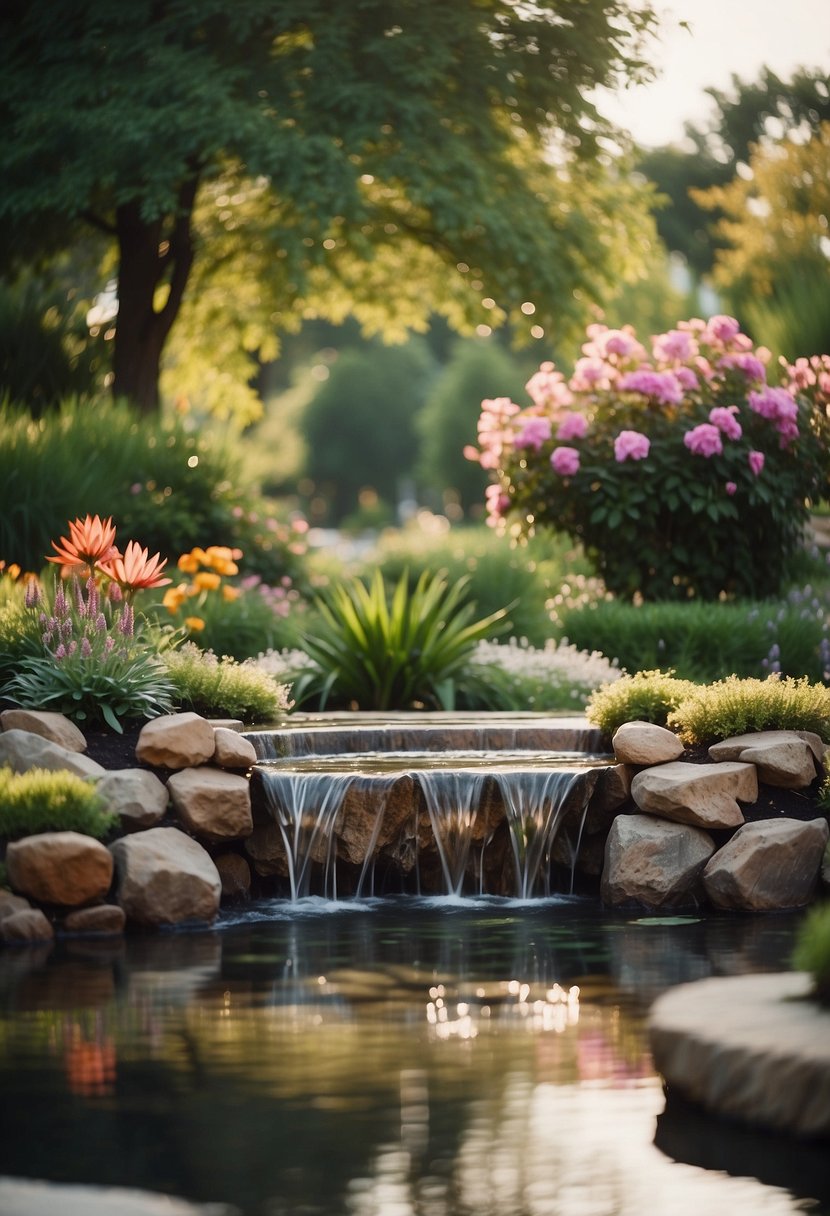
Adding water features to your front yard can create a soothing atmosphere. You might opt for a small fountain near your entrance or a larger pond if you have the space.
Even simple elements like a birdbath or a rain chain can bring charm and visual interest to your garden.
Water features can also attract birds and other wildlife, making your garden feel more alive.
6. Climbing Vines
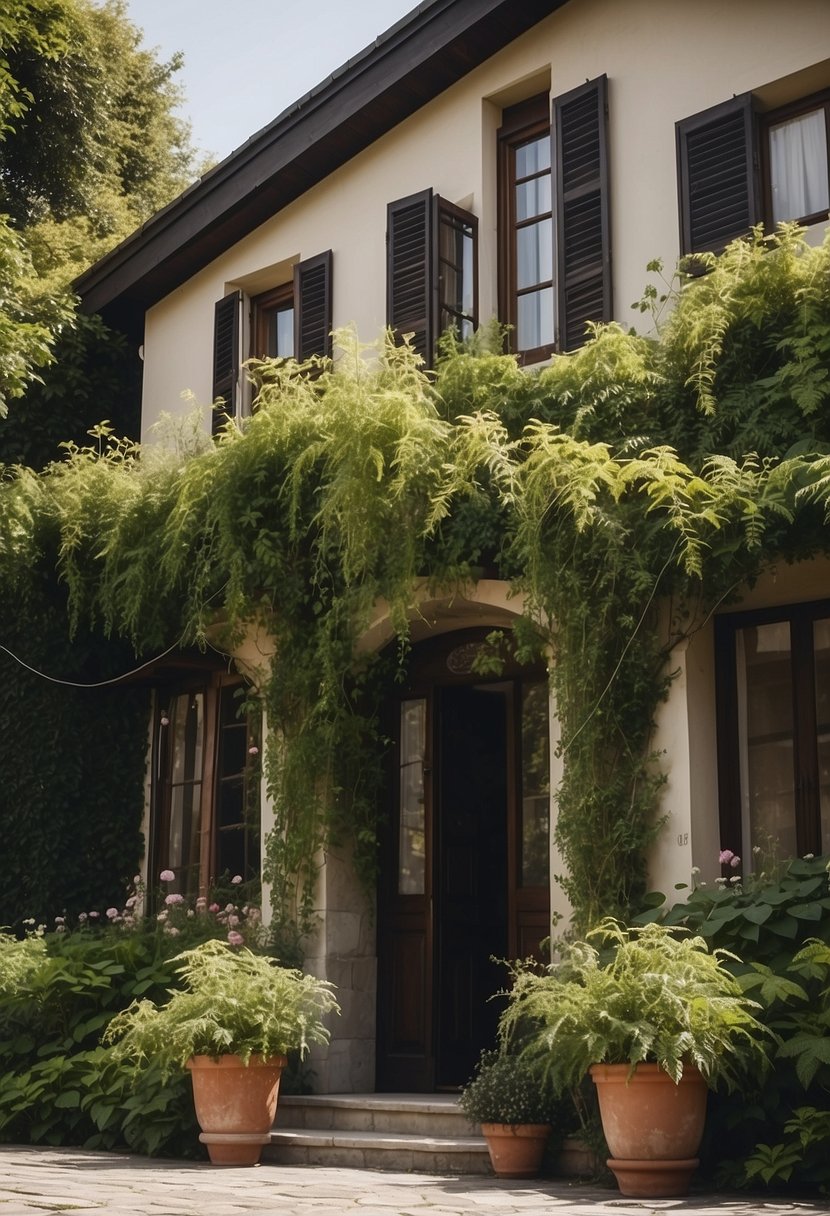
Climbing vines can lend a charming touch to the front of your house. Clematis is an excellent choice, known for its beautiful flowers and lush green foliage. It easily wraps around a trellis or fence, creating a stunning visual.
For bright, bold colors, bougainvillea is another great option. Its fuchsia, crimson, or gold blossoms can make your house stand out.
You can guide vines to grow in a specific direction using simple metal wire and eye hooks.
7. Hedge Walls
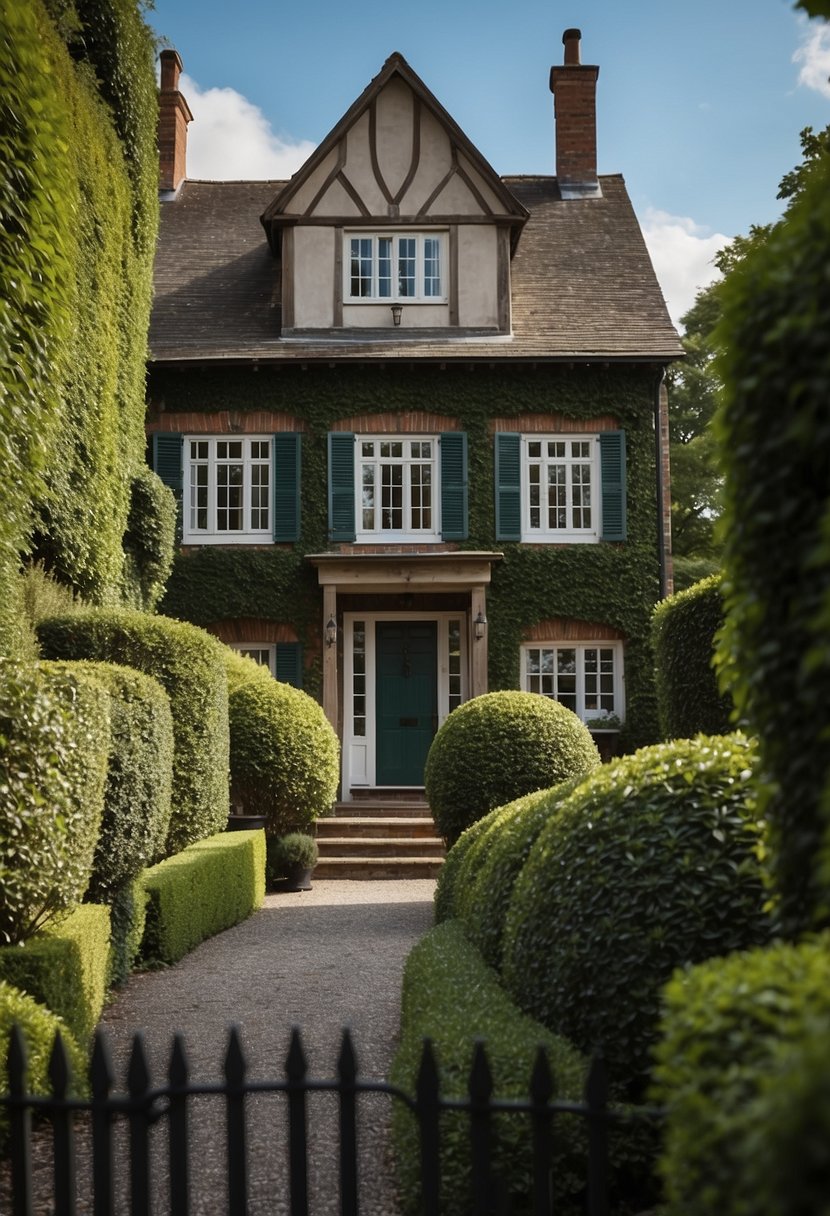
Hedge walls are ideal if you’re looking for more privacy and a green element in your front yard. English yew and cherry laurel are popular options because they grow dense and tall.
These evergreen shrubs can form a natural barrier, making your space feel private and cozy. They also contribute a beautiful, lush appearance to your landscape.
8. Tree Lined Driveways
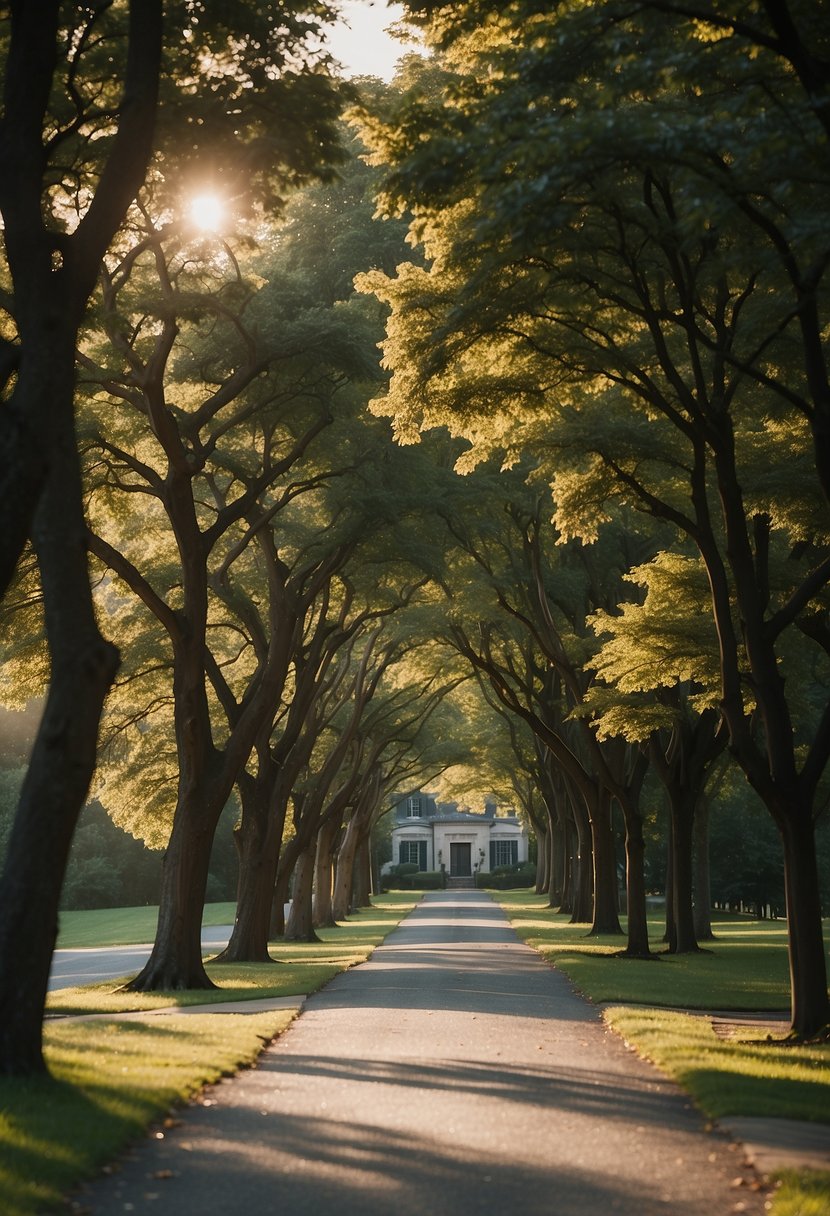
Tree-lined driveways bring a touch of elegance to any home. They foster a welcoming atmosphere with natural beauty. Honey Locust, Dogwoods, and Lavender are popular choices for their aesthetic qualities.
Honey Locust trees provide gorgeous yellow-green canopies. Dogwoods, celebrated for their vibrant leaves, look fantastic along driveways. Lavender adds a splash of color and is drought-tolerant, making it easy to maintain.
9. Colorful Perennials
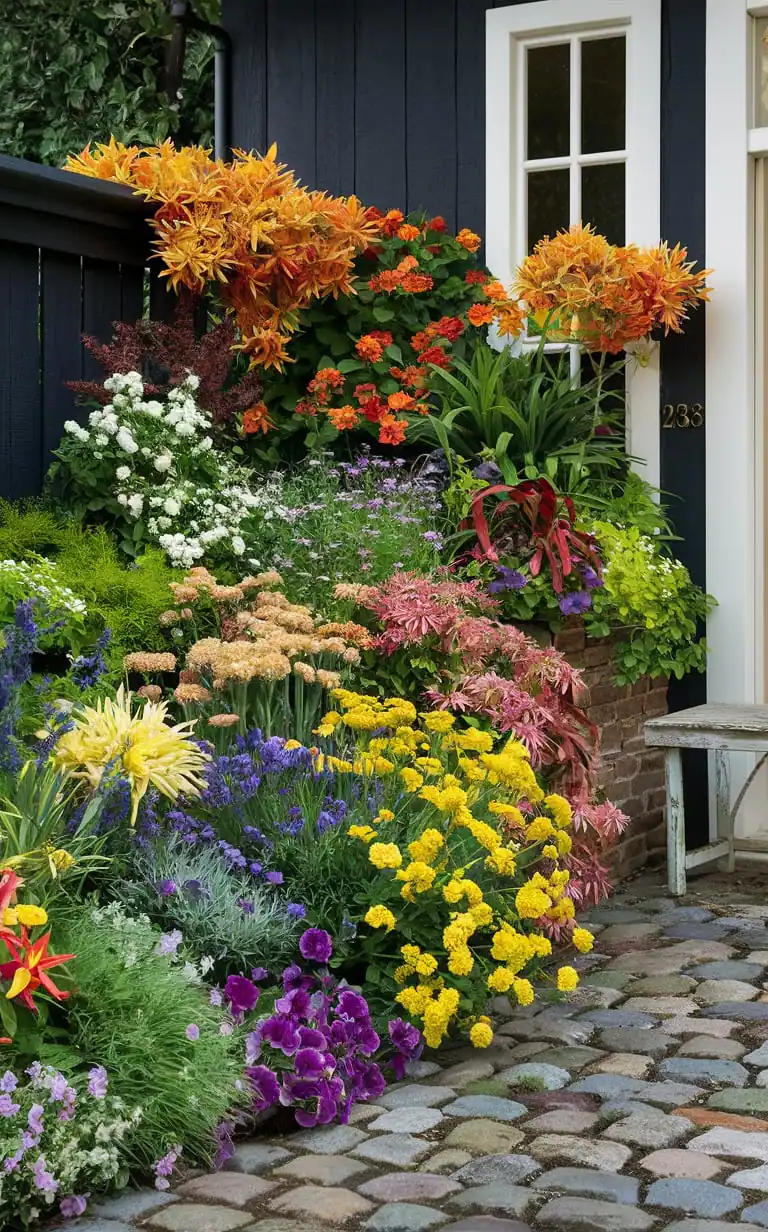
Introducing colorful perennials to your front yard is a simple way to create a vibrant and inviting space. Perennials return year after year, offering lasting beauty with minimal upkeep.
Think about planting tulips, daisies, or black-eyed Susans for a pop of color. These flowers grow well in various climates and will add charm to your landscape.
Combining different perennials can lead to a stunning visual. Try mixing plants with different heights and shades to maintain interest in your garden throughout the seasons.
10. Seasonal Planters
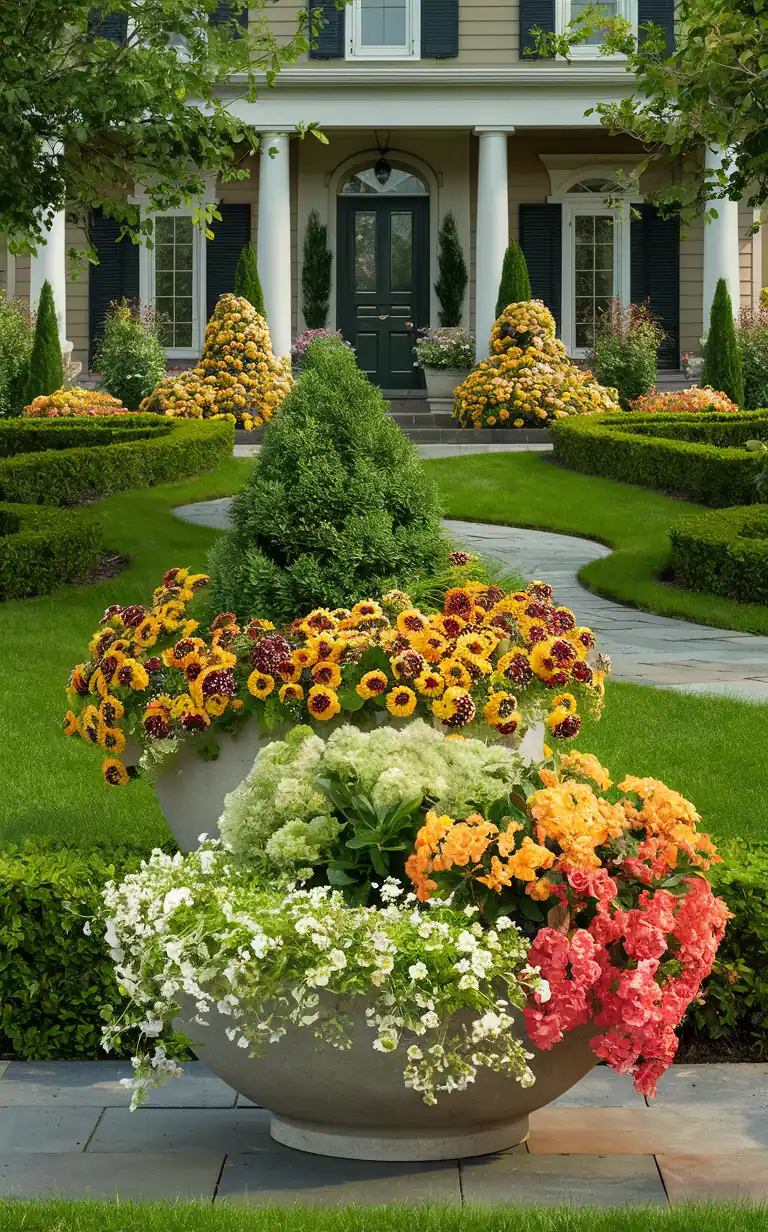
Seasonal planters are an excellent method for keeping your front yard looking fresh throughout the year. In the spring, you can fill your pots with tulips, daffodils, and pansies.
For summer, select vibrant flowers such as marigolds, petunias, and geraniums. Autumn can feature mums, asters, and ornamental cabbages.
Winter doesn’t need to be drab. Use evergreen branches, holly, and pinecones to create a festive look.
11. Bamboo Fencing
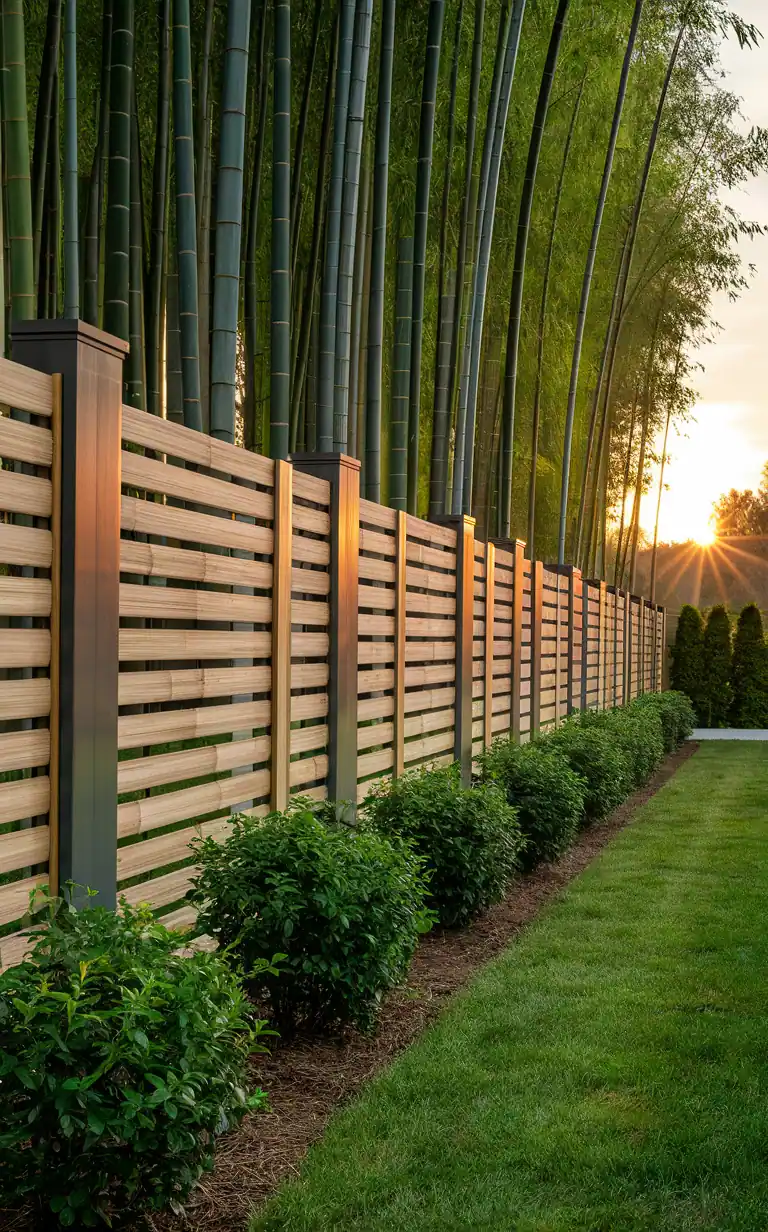
Bamboo fencing is an excellent way to give your front yard a natural and stylish appearance. It’s an eco-friendly material that can be incorporated into many different designs.
You can pair bamboo with other materials like metal or wood for a sturdy, modern aesthetic. Bamboo can also be used in various styles, from vertical slats to lattice patterns.
12. Outdoor Lighting

Proper lighting is a vital component of your front yard design. It can make your house appear welcoming and enhance safety at night.
Path lights along walkways or around garden beds can guide the way and help prevent trips. If you don’t have nearby outlets, solar or battery-powered options are available.
Wall sconces near your entrance cast a warm, inviting glow. Using downlighting around water features creates a natural appearance.
13. Rock Gardens
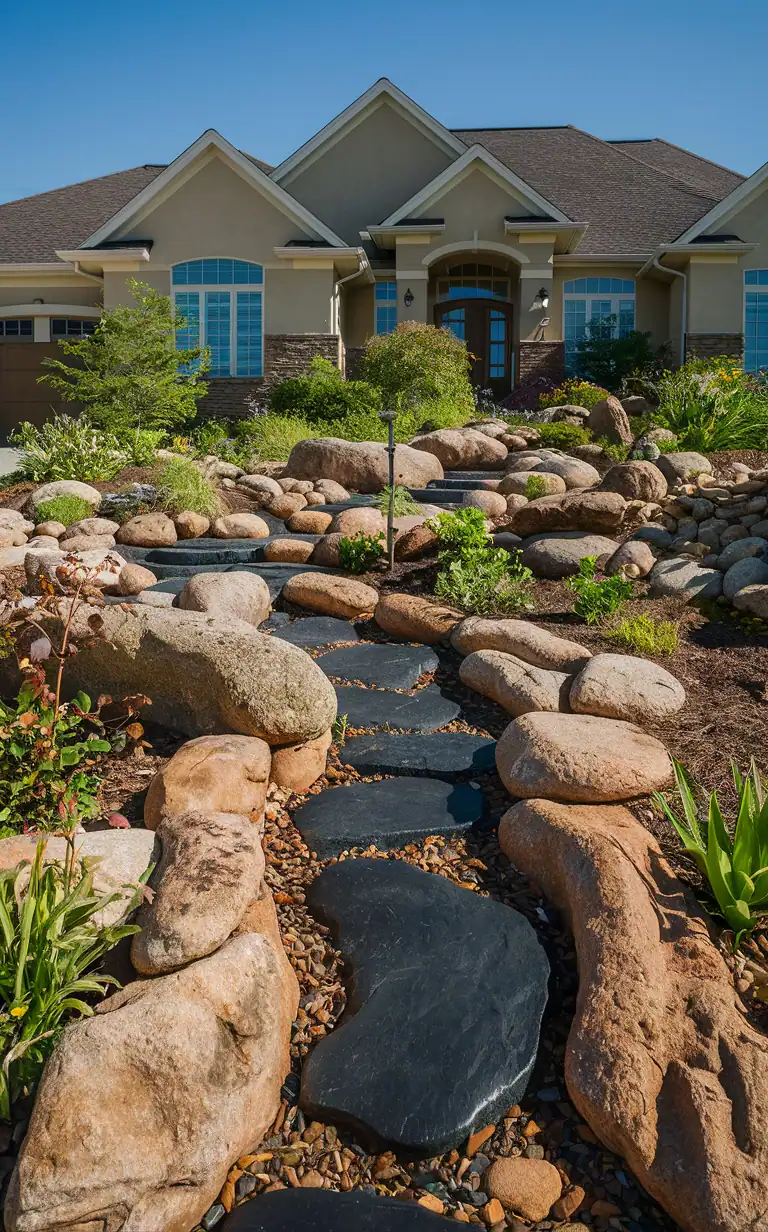
Rock gardens can turn your front yard into a striking landscape. Use a combination of large stones and gravel to create texture and depth.
Position colorful succulents among the rocks for vibrant contrasts. Add hardy grasses or small flowering plants to soften the overall appearance.
Small boulders can act as focal points, breaking up the space and adding visual interest.
14. Front Yard Patios
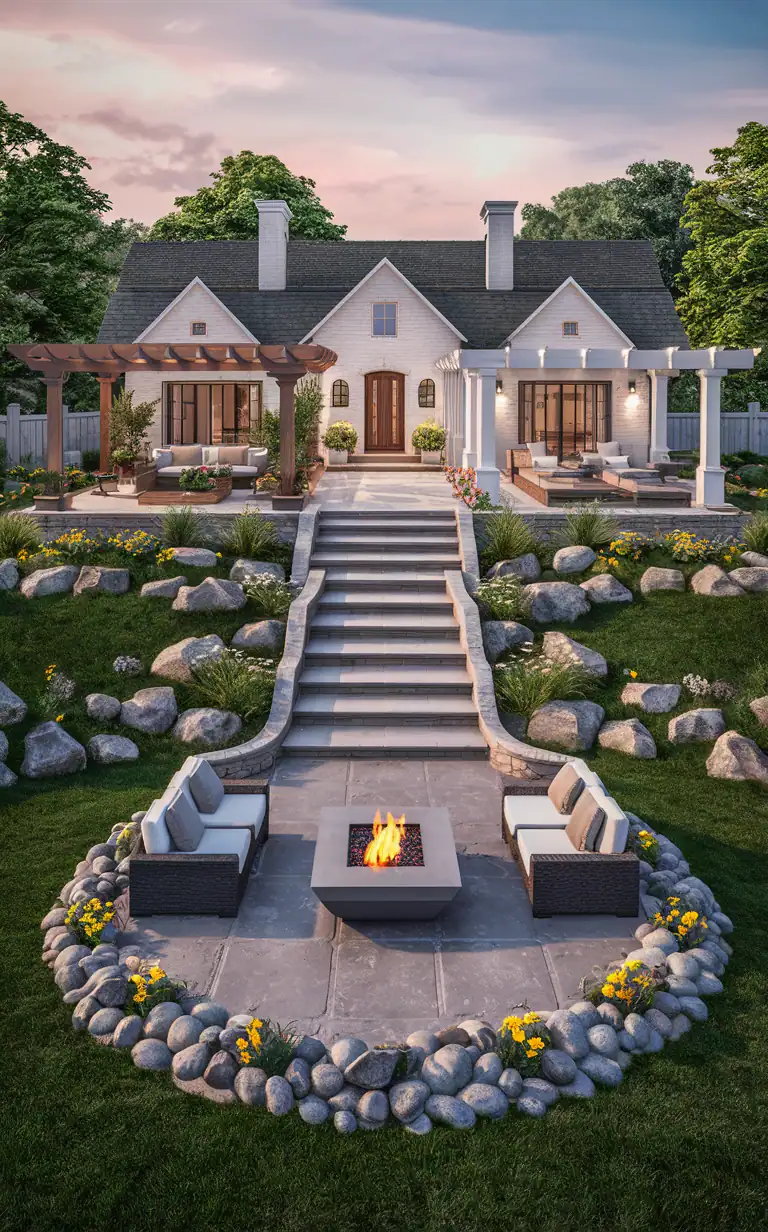
A patio in your front yard can establish a welcoming area for guests and a cozy spot for you to unwind. Think about using materials like pea gravel, concrete pavers, or bricks for a stylish base.
Improve the space with comfortable seating, a bistro set, or even a small fire pit to make it more inviting. Surround the patio with plants, flowers, and a few decorative stones for a charming look.
15. Edible Gardens
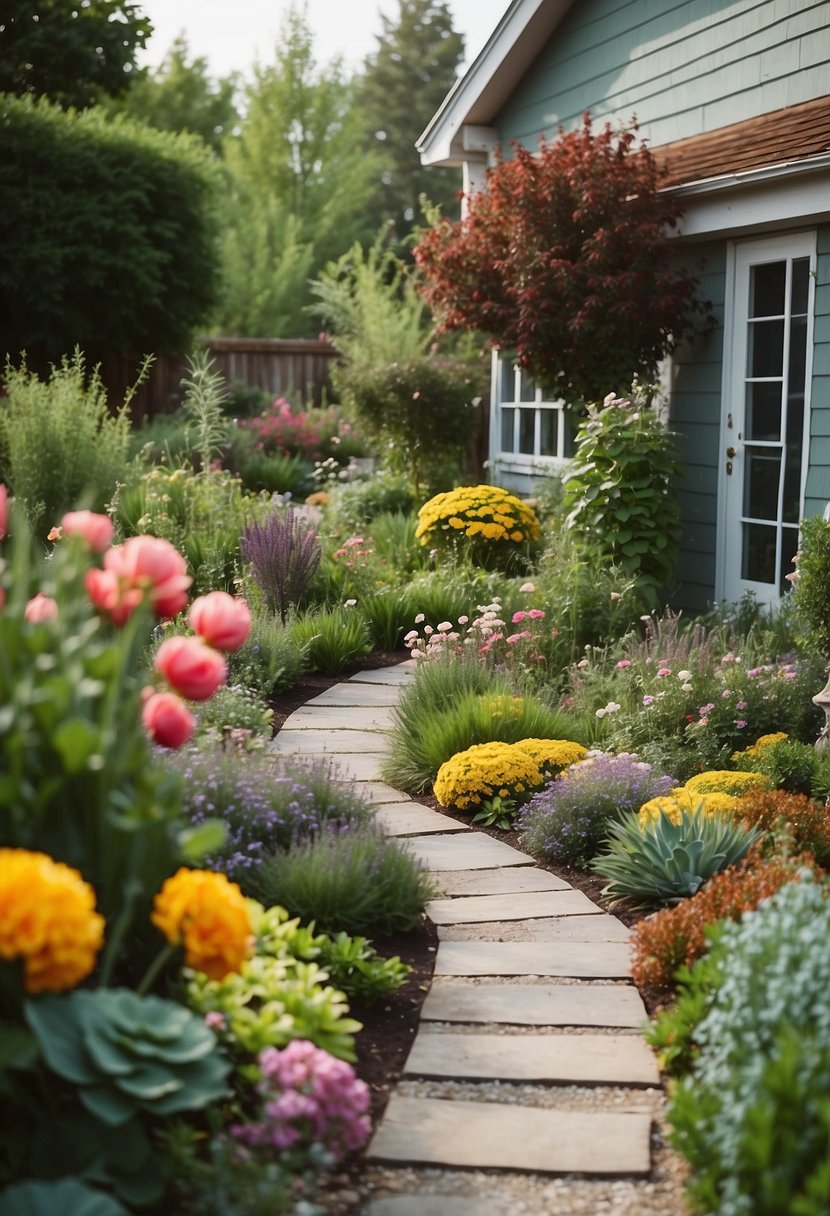
Edible gardens not only supply fresh vegetables and herbs but also enhance the beauty of your front yard. Combine edible plants with flowers like lavender or bee balm to attract pollinators.
Begin by adding compost to your soil to help your plants flourish. Planting in clusters can create visual appeal. Raised beds are a great way to organize and maintain your garden with ease.
16. Mossy Accents
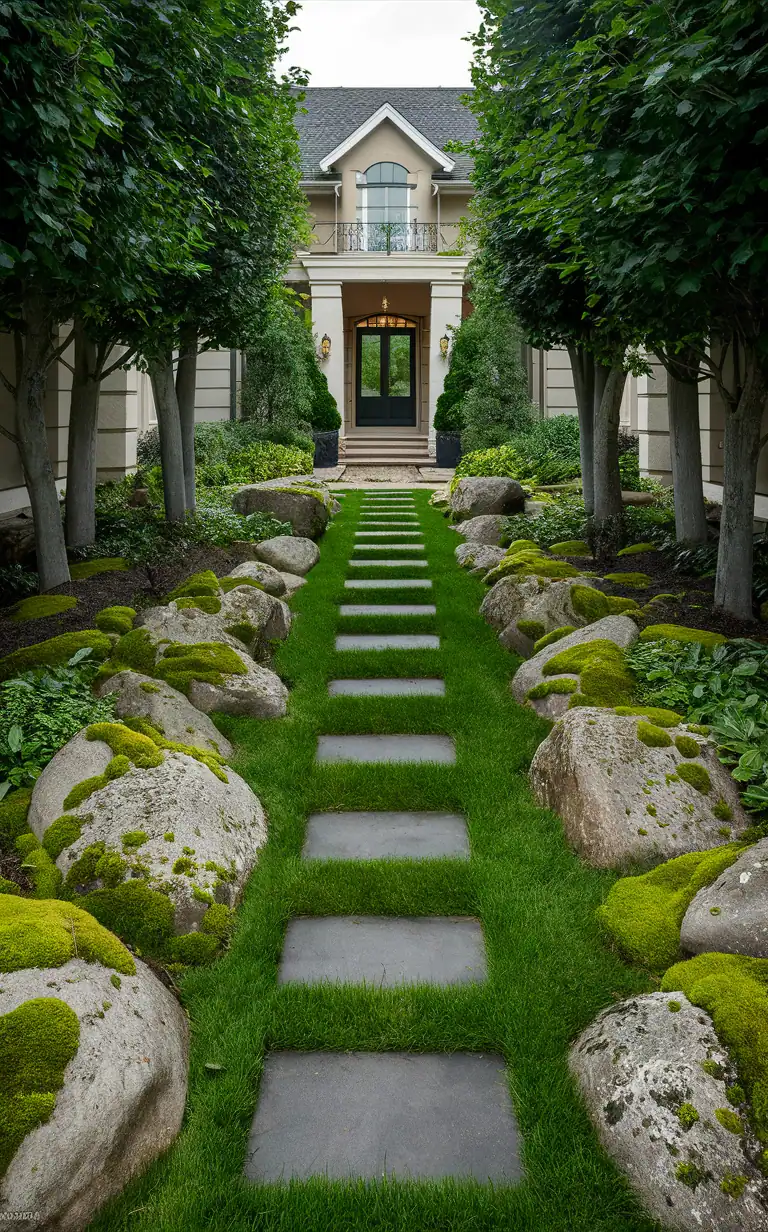
Incorporating moss into your front yard provides a unique and natural aesthetic. It is low-maintenance and does well in shady areas, which makes it ideal for spots under trees and along stone paths.
Mossy rocks can line walkways, adding a soft, green element. They pair especially well with wood or stone features.
You can also use moss as a ground cover. It is a fantastic way to fill in empty spaces without a lot of fuss.
17. Topiary Trees
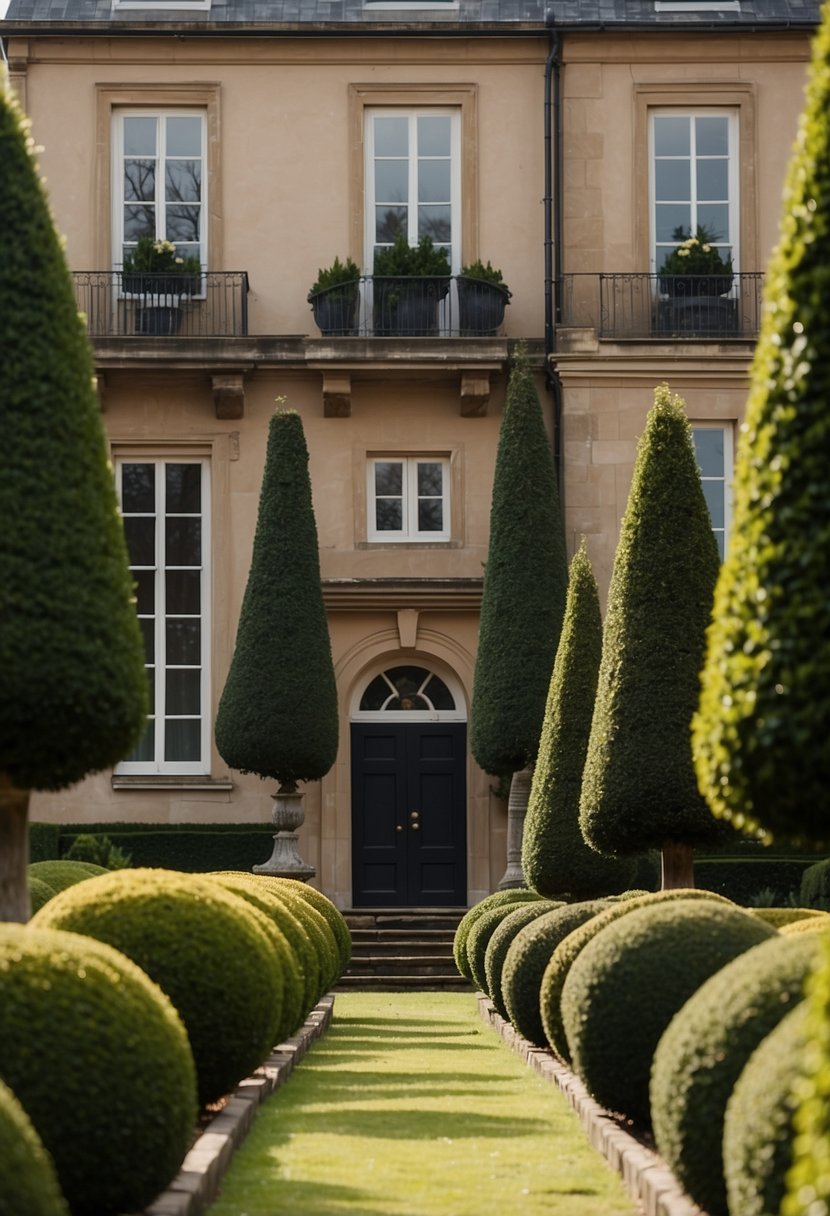
Topiary trees can introduce a sense of elegance and creativity to your front yard. These sculpted plants are available in various shapes, including cones, spheres, and spirals.
Position them along pathways or near your entrance to create a welcoming look. They appear striking when combined with other plants or decorative features like rocks and lamps.
With the right care, topiary trees can be low-maintenance, requiring only regular trimming to maintain their shape.
18. Wildflower Meadows
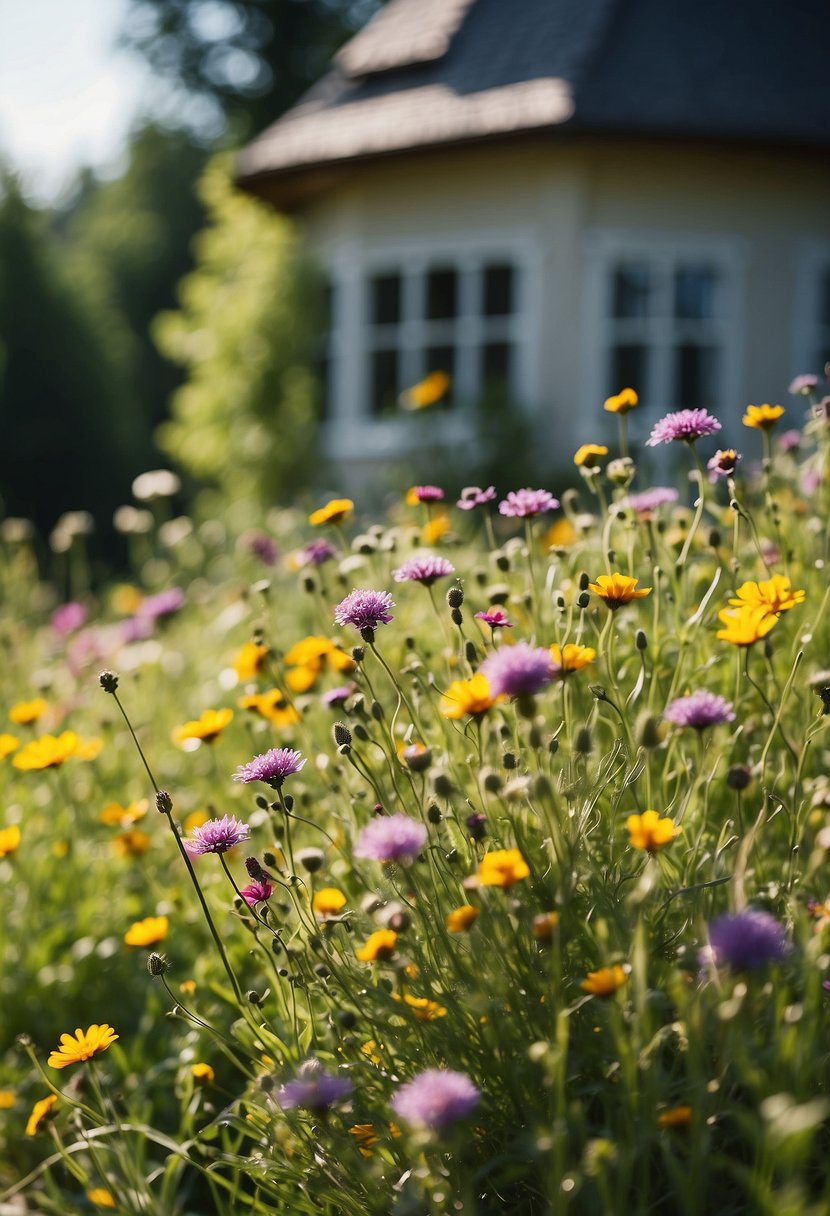
Wildflower meadows can make your front yard appear full of life. They attract pollinators like bees and butterflies, which adds activity to your garden.
Start by planning your meadow. Assess the sunlight and soil conditions. Select wildflowers that are suited to these factors.
Plants such as purple wild marjoram and red campion can provide height and color. Balance them with green ground covers for a complete look.
19. Decorative Bridges
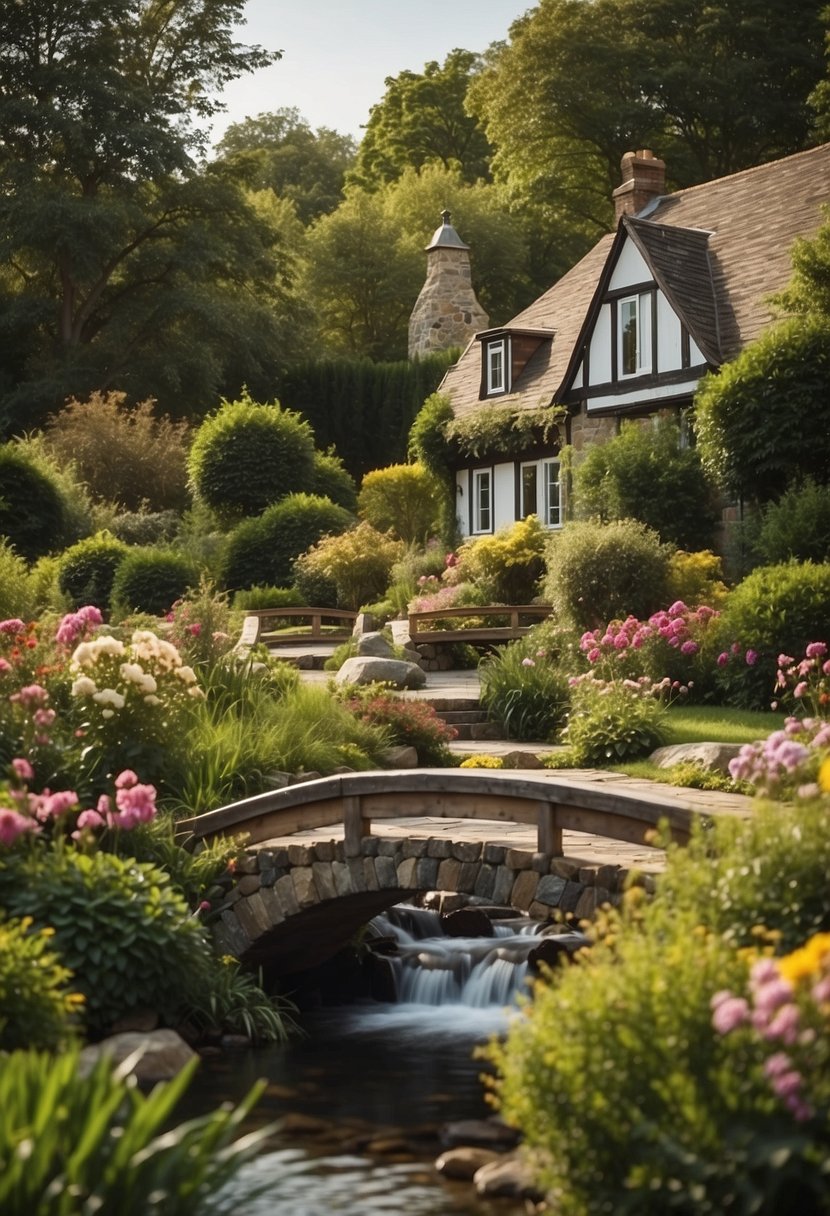
A decorative bridge in your front yard can become a charming focal point. It could be a classic wooden arch bridge spanning a small pond or a more contemporary design with clean lines.
Select materials that coordinate with your garden’s overall style, such as stone, wood, or wrought iron.
20. Natural Stone Edging
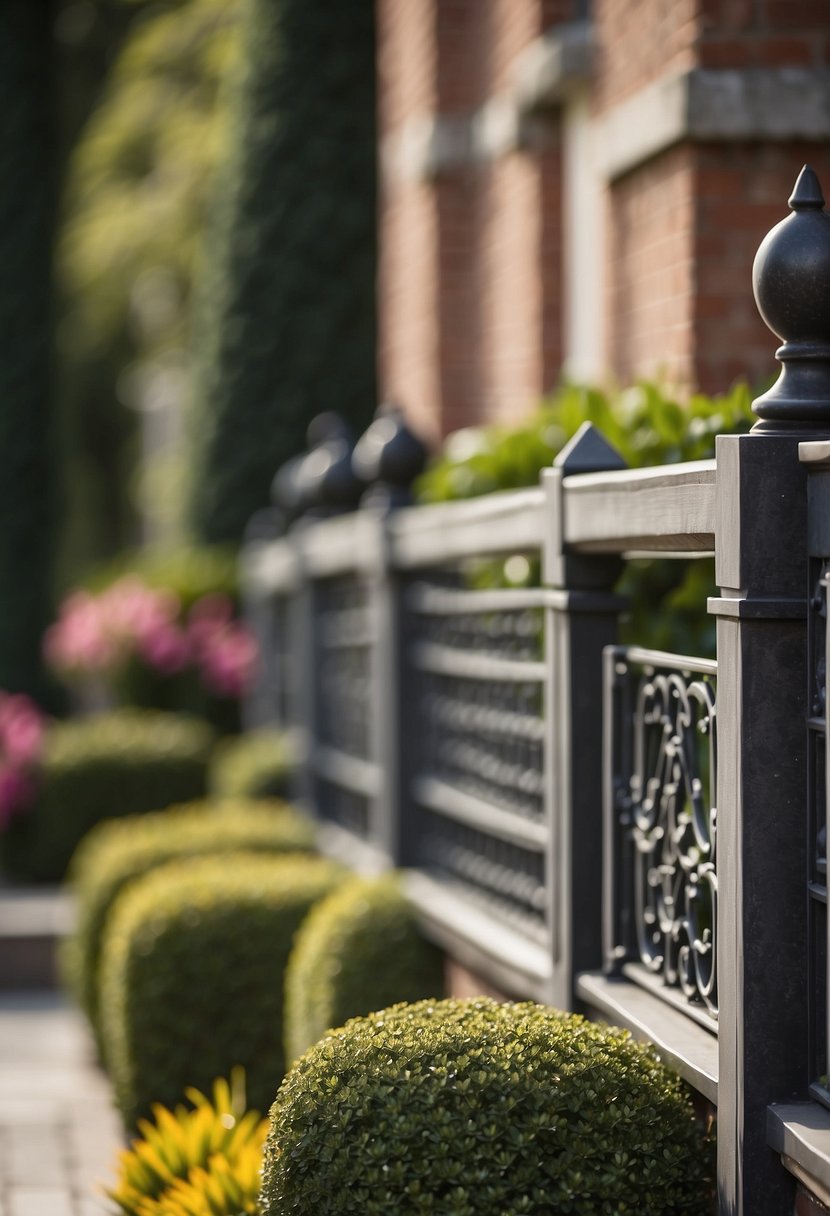
Using natural stones for your landscape edging brings a rustic, organic quality to your yard. These stones are available in various shapes, colors, and sizes, which makes every arrangement distinct.
Natural stone edging is excellent for defining garden beds, pathways, and other sections of your yard. It is low-maintenance and integrates seamlessly with plants and other natural features in your garden.
21. Window Flower Boxes
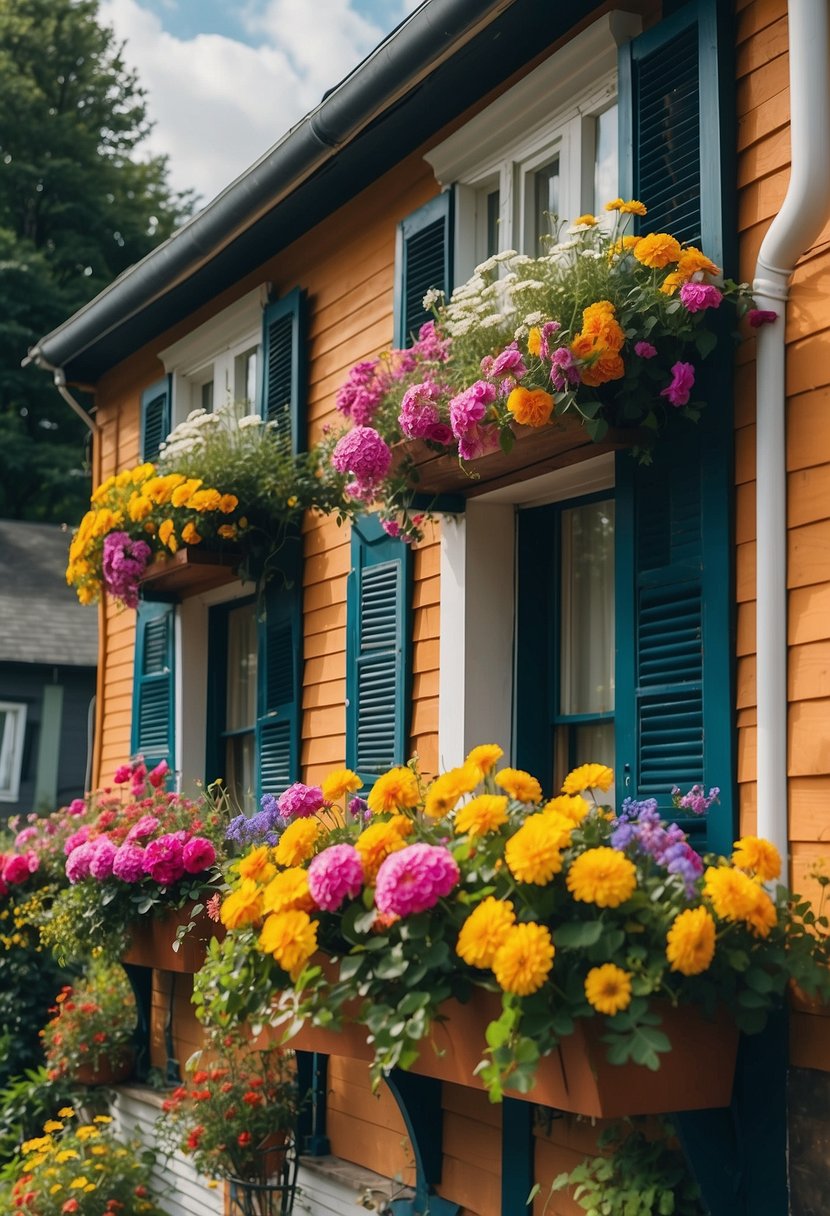
Window flower boxes can add charm and vitality to the exterior of your home. They are ideal for growing a wide range of plants, from colorful flowers to lush greenery.
For a well-balanced appearance, combine plants with different heights and textures. For instance, you could plant large Geraniums in the center and add smaller, trailing plants like Verbena along the edges.
Ensure your window boxes receive adequate sunlight. Flowers such as Angelonia flourish in full sun, creating a bright spot on your window ledge.
22. Bird Baths
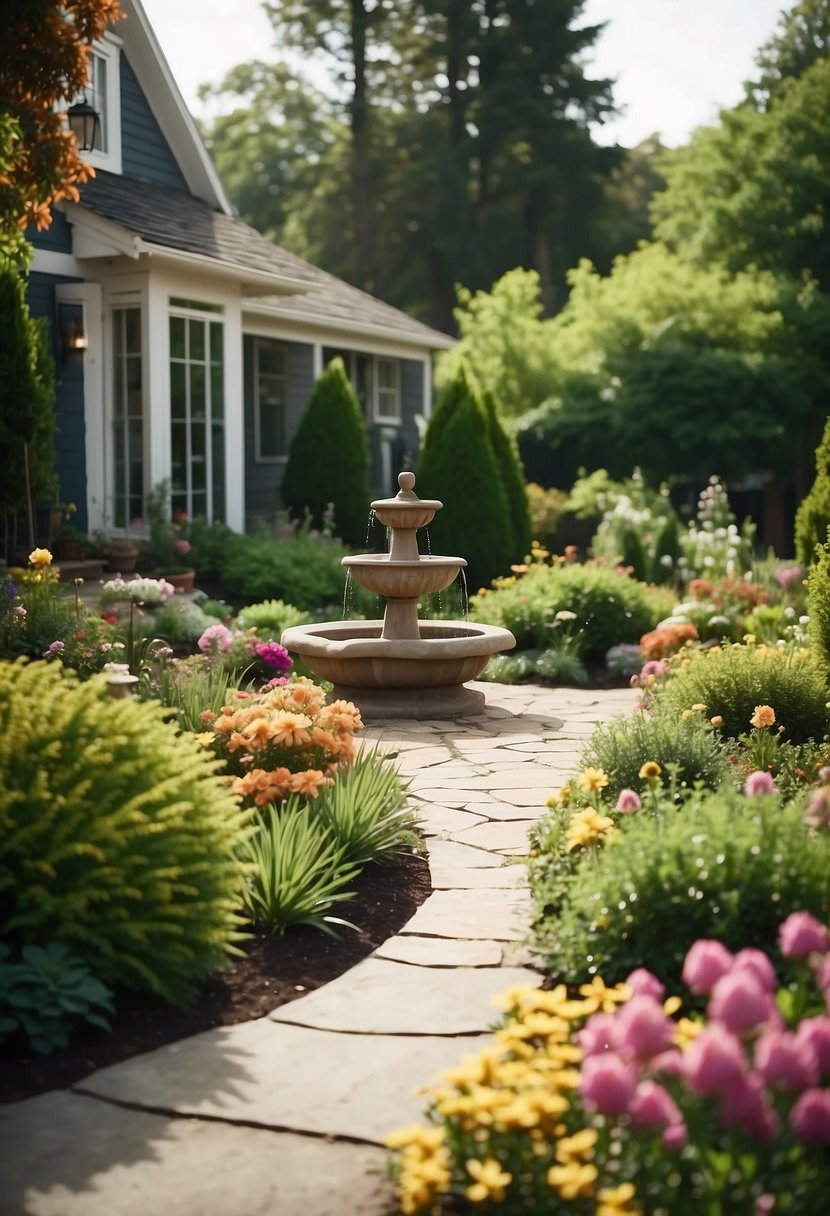
Bird baths not only add beauty but also attract wildlife to your front yard. They are available in many designs, from simple bowls to elaborate sculptures. Pick one that complements your garden’s style.
You can add a ground-level bird bath to give easy access to birds and other small animals. It can be an enjoyable way to observe nature up close.
Think about adding stones or marbles to the bird bath. This makes it easier for bees and butterflies to land and drink.
23. Tree Swings
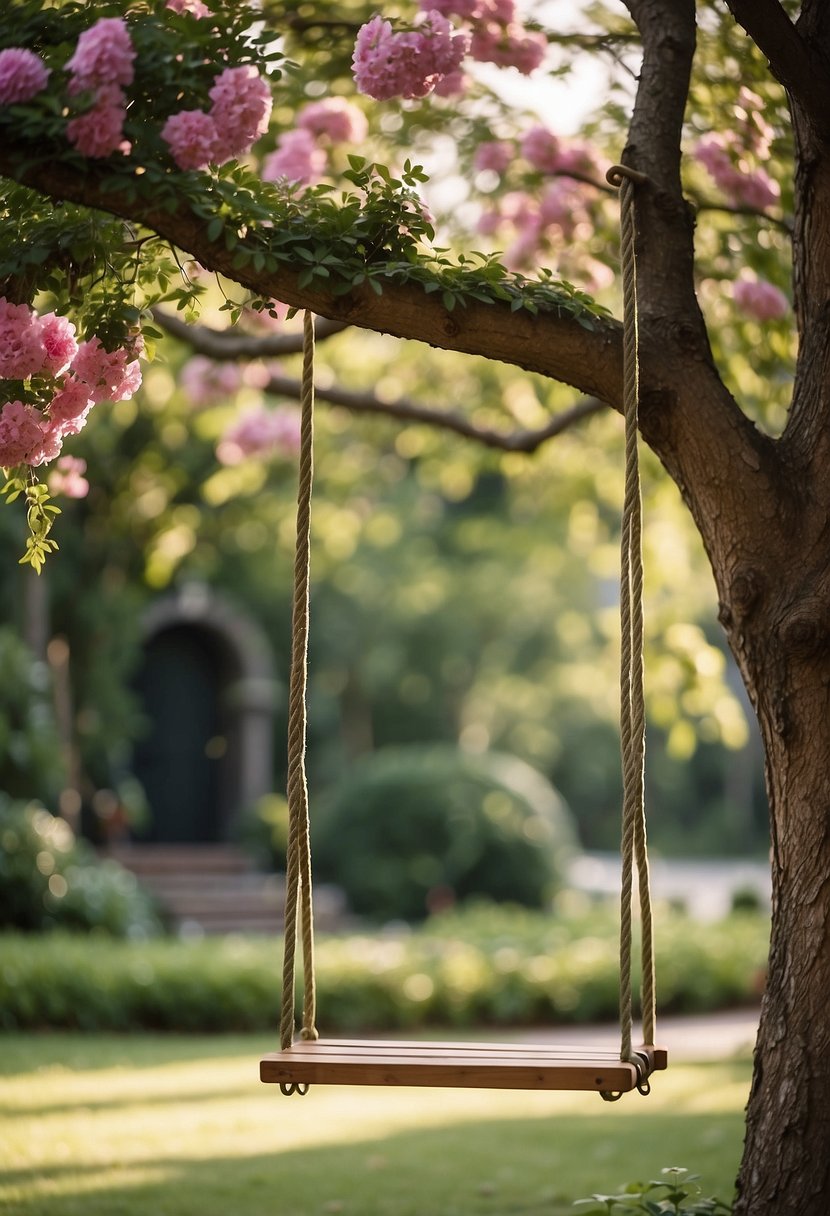
A tree swing in your front yard can introduce a touch of classic charm. Wooden rope swings are a wonderful choice for both children and adults. They are easy to install, requiring only strong ropes, a sturdy branch, and a wooden seat.
For a cozy and relaxing spot, you might consider making a bed swing. Use recycled wooden pallets, rope, and cushions. This type of swing may be more involved to construct but provides a comfortable place to enjoy your garden.
24. Lavender Borders
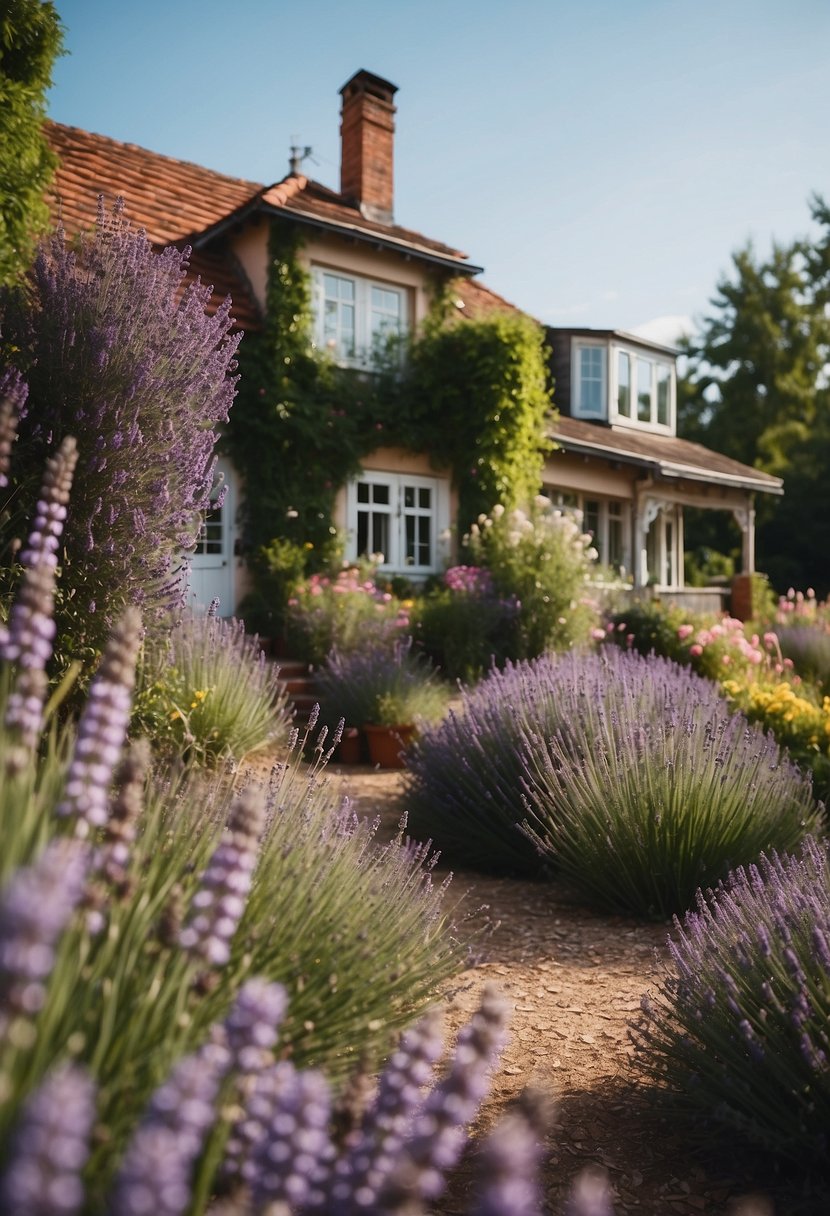
Lavender borders are a lovely way to bring color and fragrance to your front yard. These plants help create a neat and tidy look along walkways or driveways.
Lavender is a low-maintenance, drought-tolerant plant that blooms in beautiful shades of purple. It also attracts bees and butterflies, adding more life to your garden.
To create a lasting impression, plant your lavender in straight rows. This technique establishes a clean and orderly appearance that is both inviting and elegant.
25. Drought-Tolerant Plants
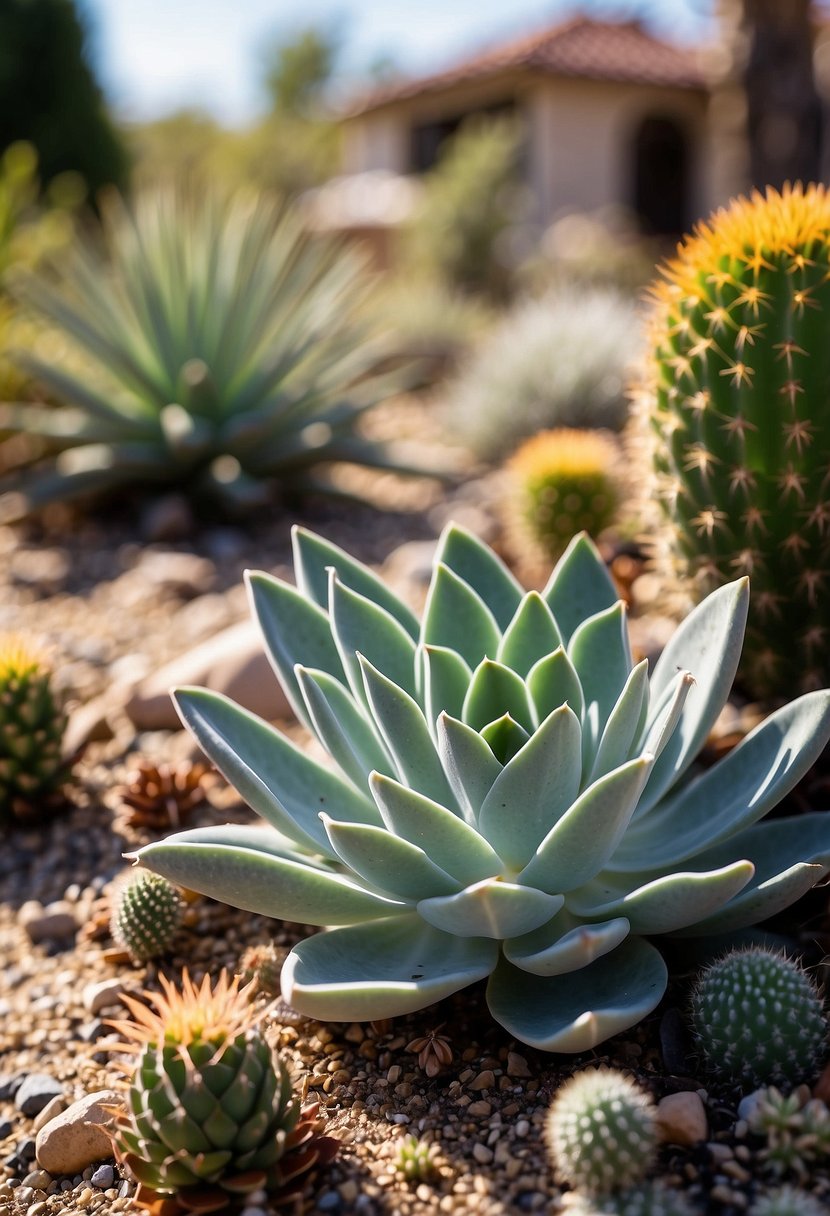
Think about using plants like lavender, which performs well in dry conditions. It offers beautiful purple flowers and a pleasant scent.
Succulents are another excellent choice. They hold water in their leaves, which makes them ideal for hot, dry climates.
Incorporating silver or gray foliage from plants like lamb’s ear or Russian sage can add both color and texture to your garden.
26. Garden Benches
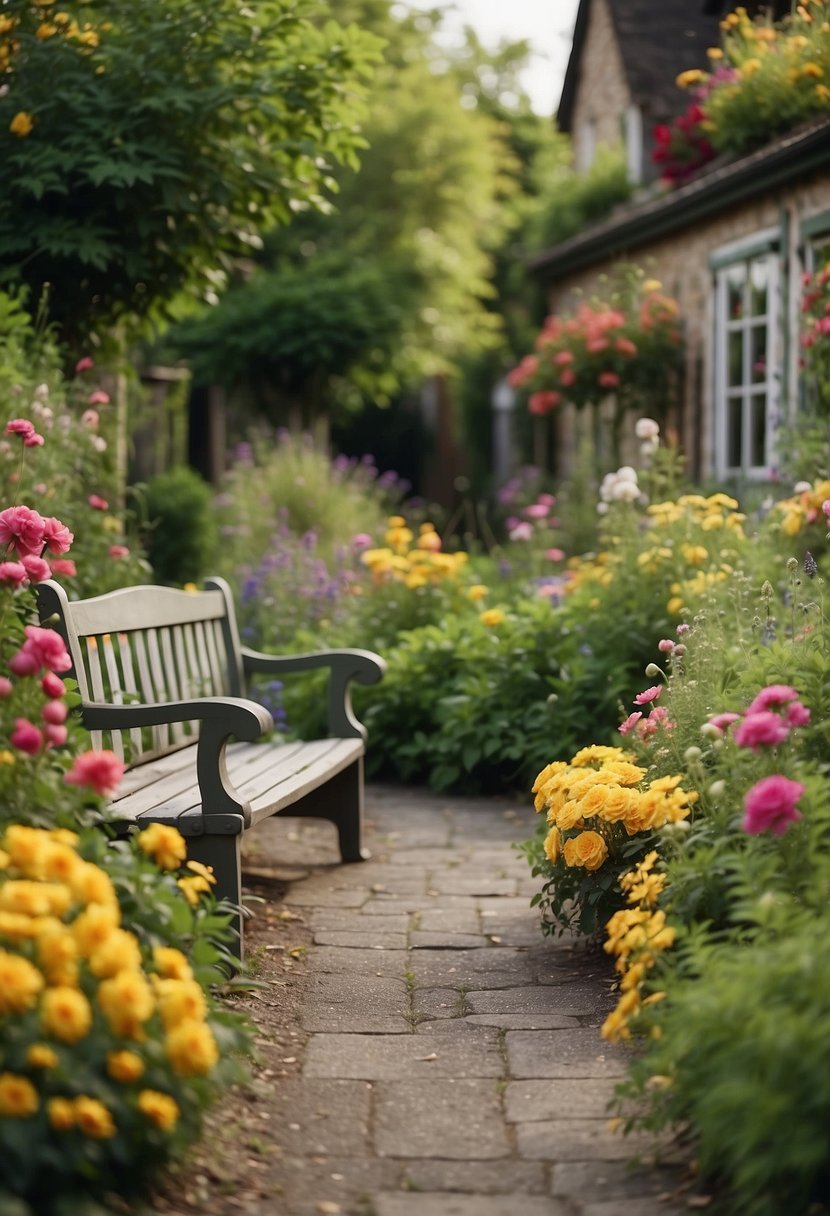
Garden benches add both charm and utility to your front yard. You can select from wooden benches, metal benches, or a mix of materials. Adding cushions can make them more comfortable and welcoming.
Think about placing your garden bench in a cozy corner or near your flower beds. This creates a relaxing spot where you can enjoy the beauty of your garden.
27. Raised Garden Beds
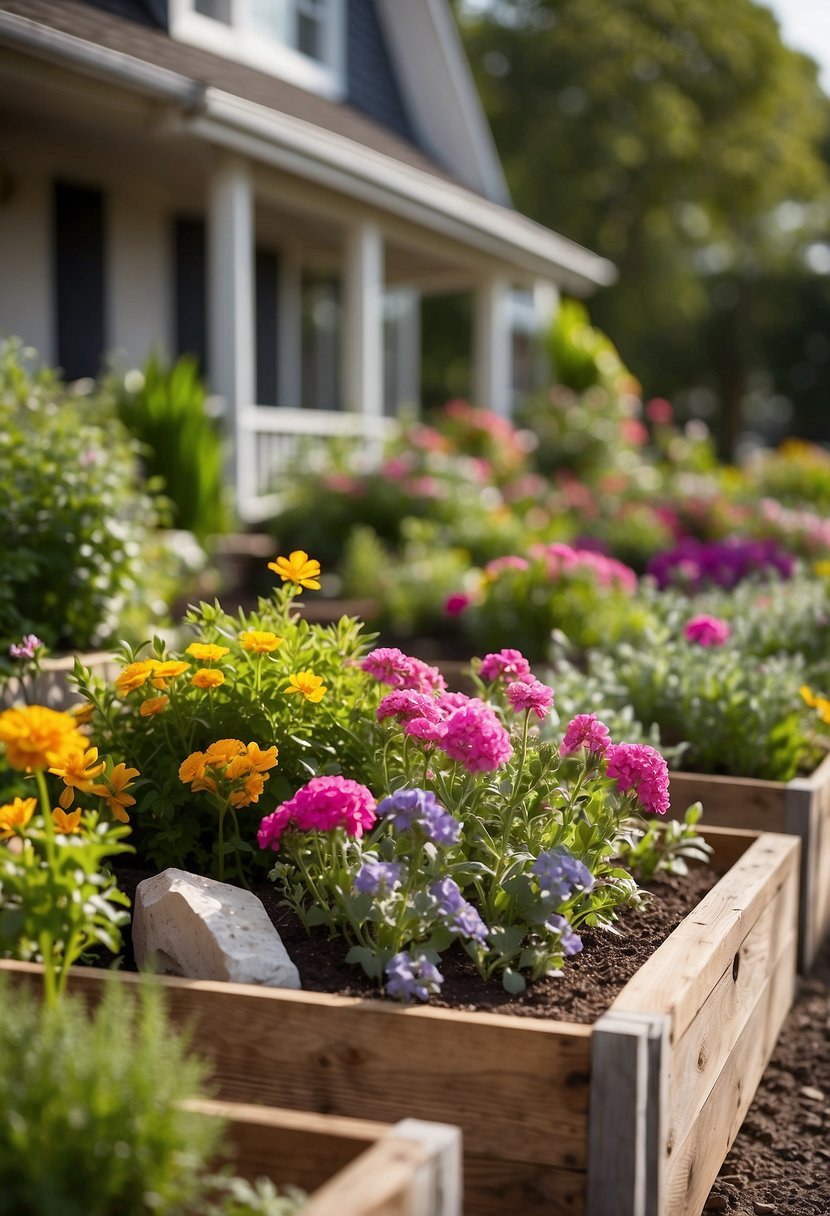
Raised garden beds can make your yard look neat and well-organized. They also help keep the soil contained and improve drainage.
You can build the beds using various materials, such as wood, stone, or bricks. Each option contributes a different style and feel to your yard.
Raised beds simplify the process of controlling soil quality and can help reduce pests.
28. Vertical Gardens
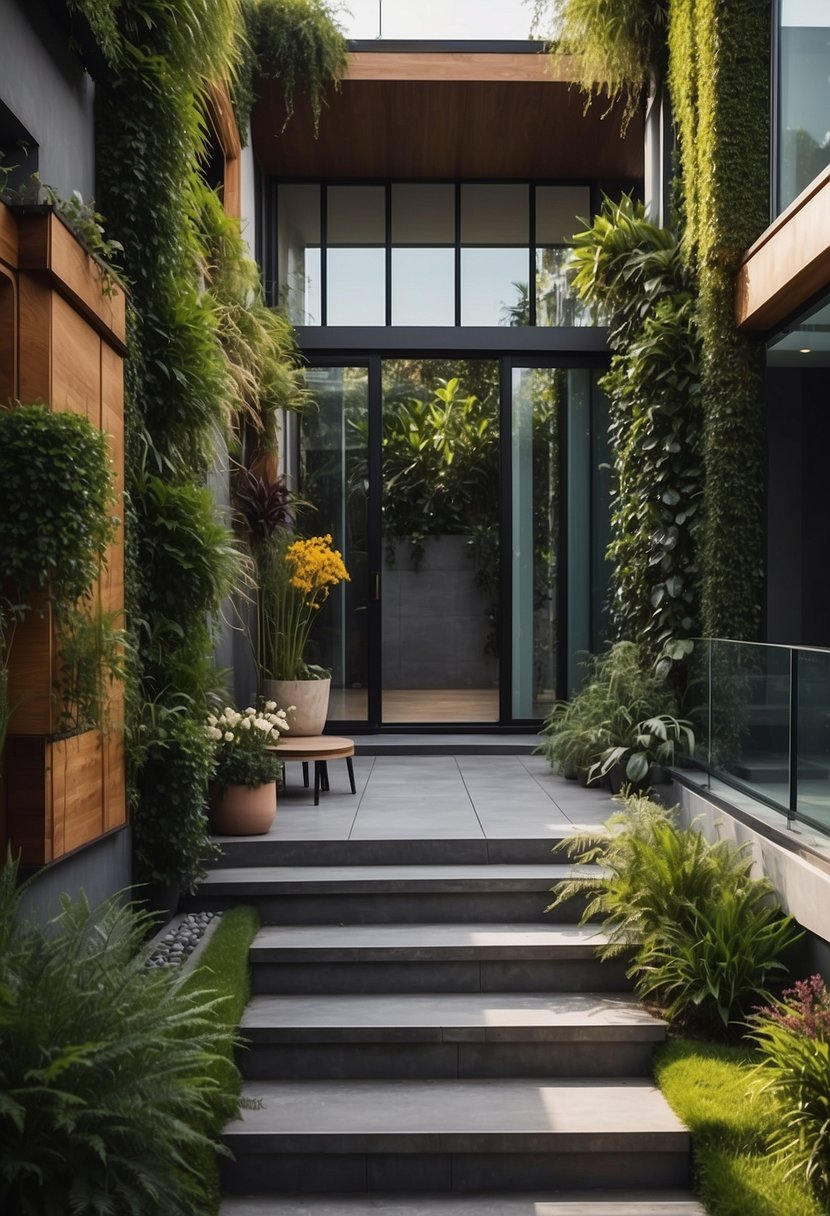
Vertical gardens help save space and allow you to grow a greater number of plants. You can utilize walls, fences, or construct special frames. Imagine bringing a touch of green to your home’s front entrance.
Materials like wooden pallets and wire mesh panels are excellent for creating vertical gardens. They provide a tidy appearance and offer plenty of spots for various plants.
You can use them to grow flowers, herbs, or even vegetables like strawberries.
29. Fruit Bearing Trees
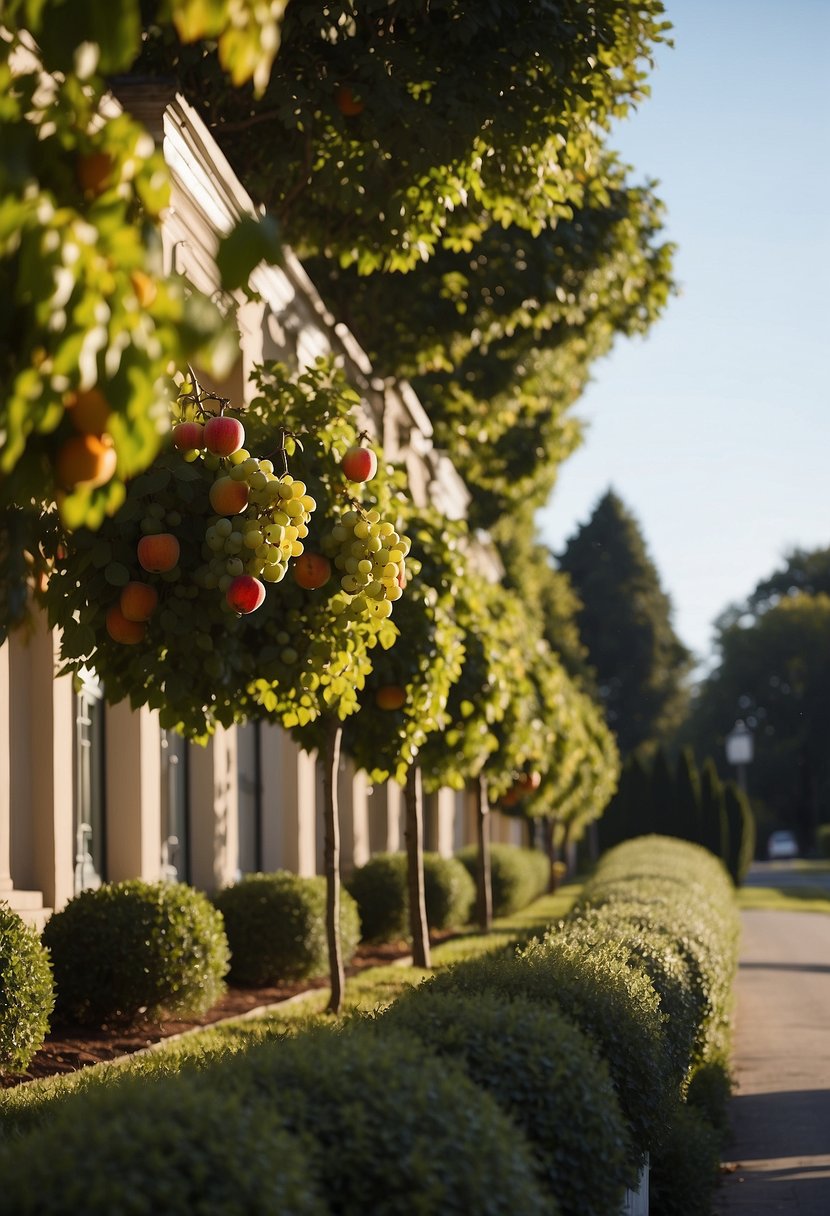
Fruit-bearing trees are a wonderful addition to any front yard. They not only yield delicious fruits but also add a charming element to your landscape.
Think about adding a fruity espalier tree to conserve space while still enjoying the rewards. You can find these ornamental trees in various designs from specialty nurseries.
30. Garden Trellises
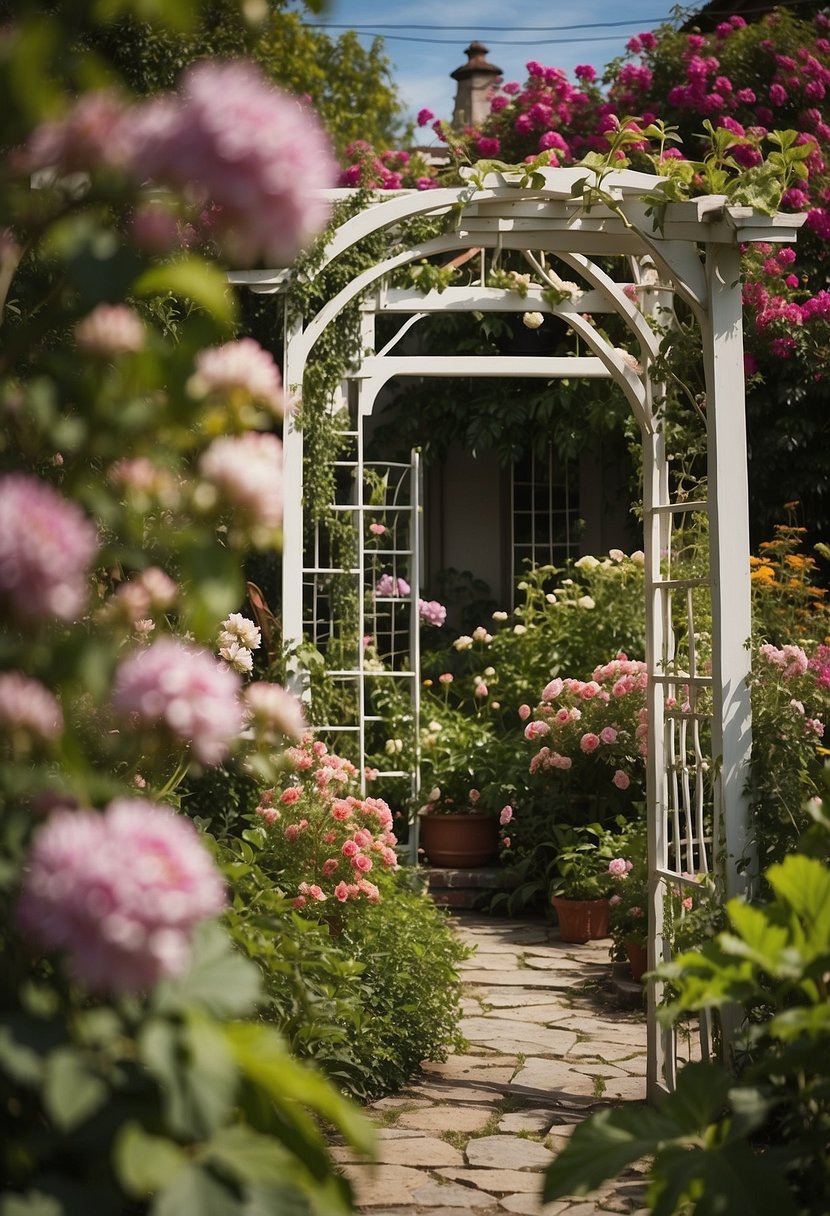
Garden trellises offer a great way to add charm to your front yard. They are ideal for supporting climbing plants such as roses and flowering vines.
A trellis can be constructed from materials like wood, metal, or bamboo. You can choose one that complements your home’s architectural style.
You can position a trellis near your porch or windows, or even use one to create an archway.
31. Butterfly Gardens
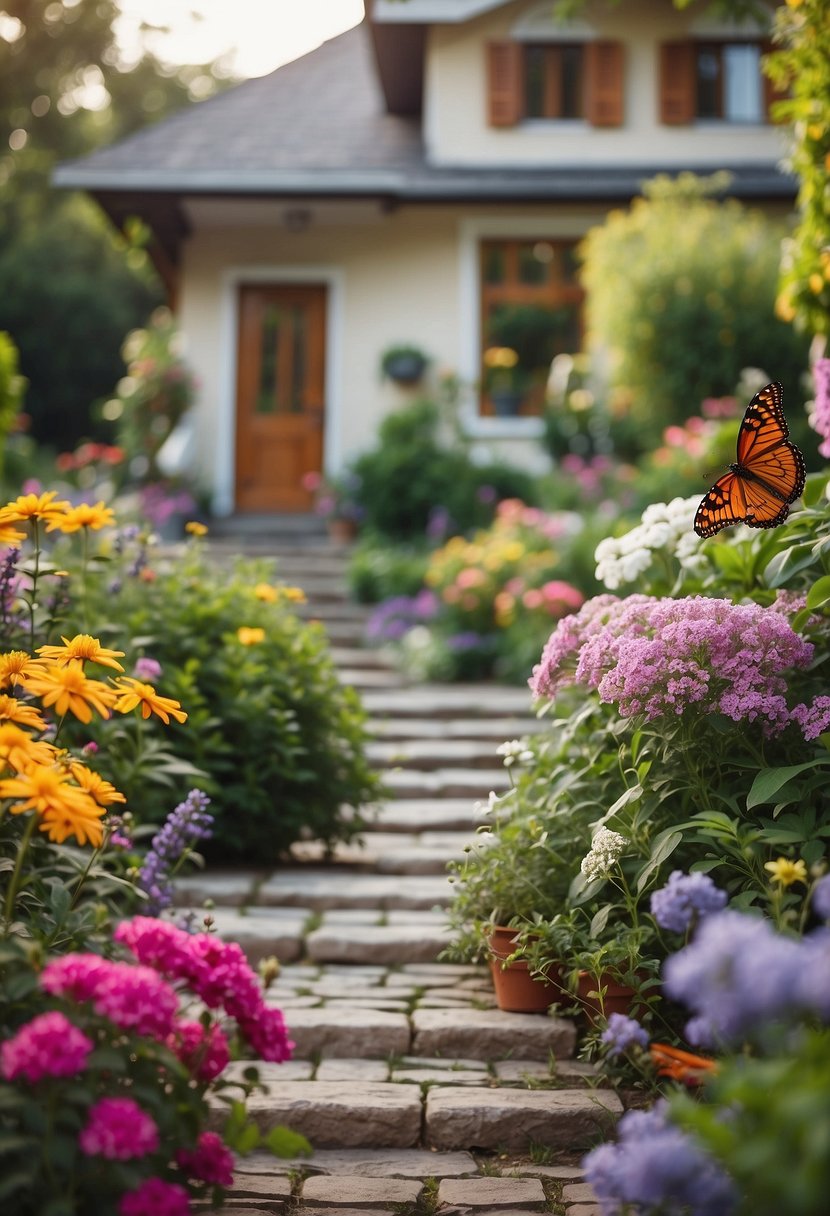
A butterfly garden can bring vibrant life into your front yard. Select a sunny location that receives at least six hours of direct light each day. Plants like asters, purple coneflowers, and milkweed are known to attract butterflies.
Be sure to include both nectar flowers for adult butterflies and leafy plants like parsley to feed caterpillars. Adding rocks or pavement can help to warm the area.
32. Fragrant Hedges
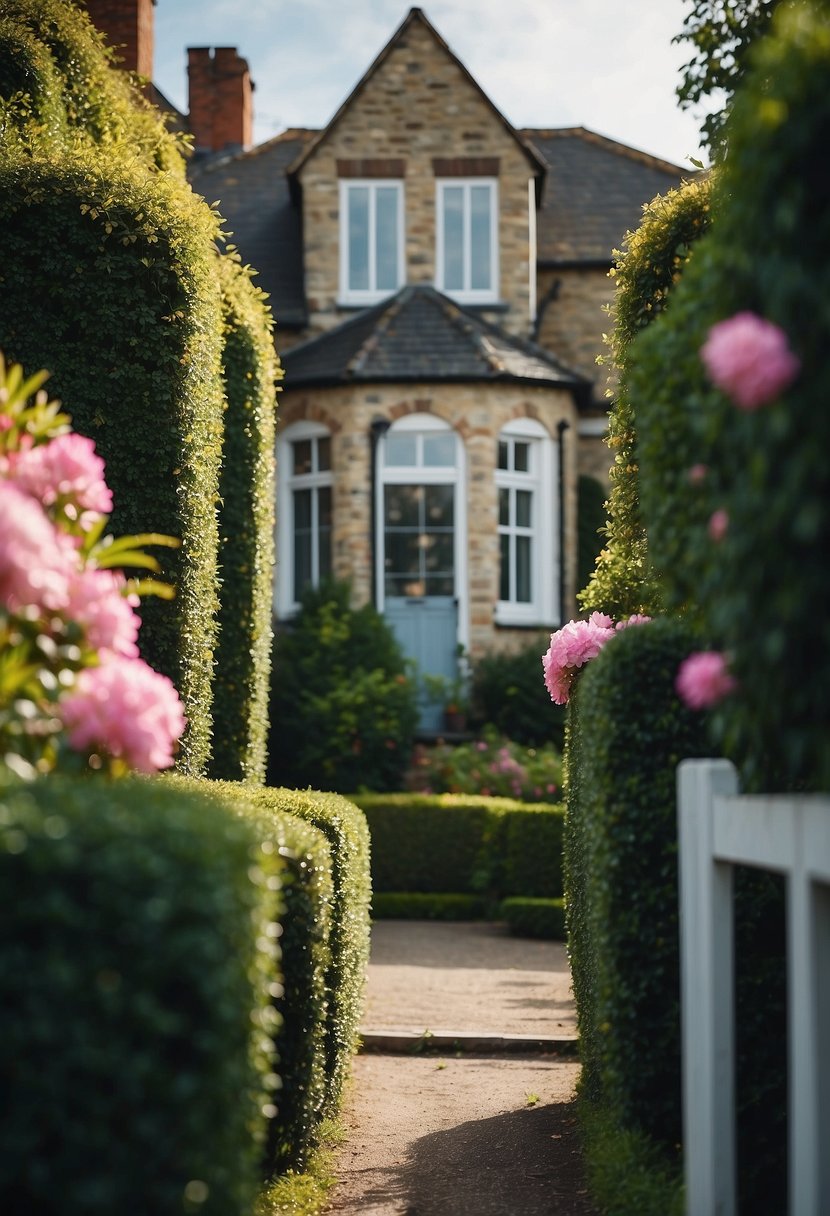
Planting fragrant hedges can add both beauty and wonderful scents to your front yard. Think about shrubs such as lavender, wintersweet, or gardenia. These plants not only look great but also smell amazing.
Lavender is simple to grow and has a pleasant, calming scent. Gardenias feature glossy leaves and sweet-smelling white blossoms.
33. Paver Walkways
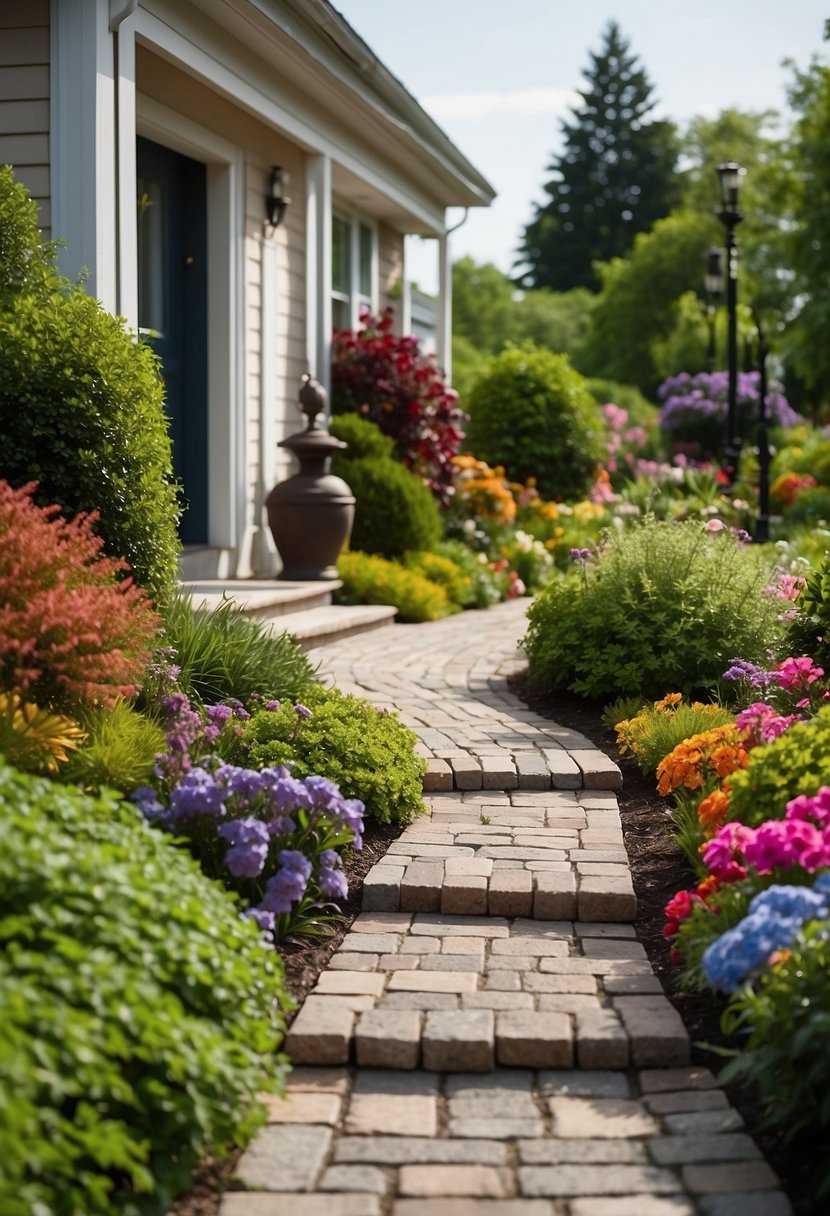
Paver walkways have the ability to transform the appearance of your front yard. They are highly durable and available in a wide range of styles, shapes, and colors.
You can select designs that align with your home’s aesthetic, whether it’s modern or traditional. Pavers make any entrance feel more inviting.
34. Porch Swing with Cushions
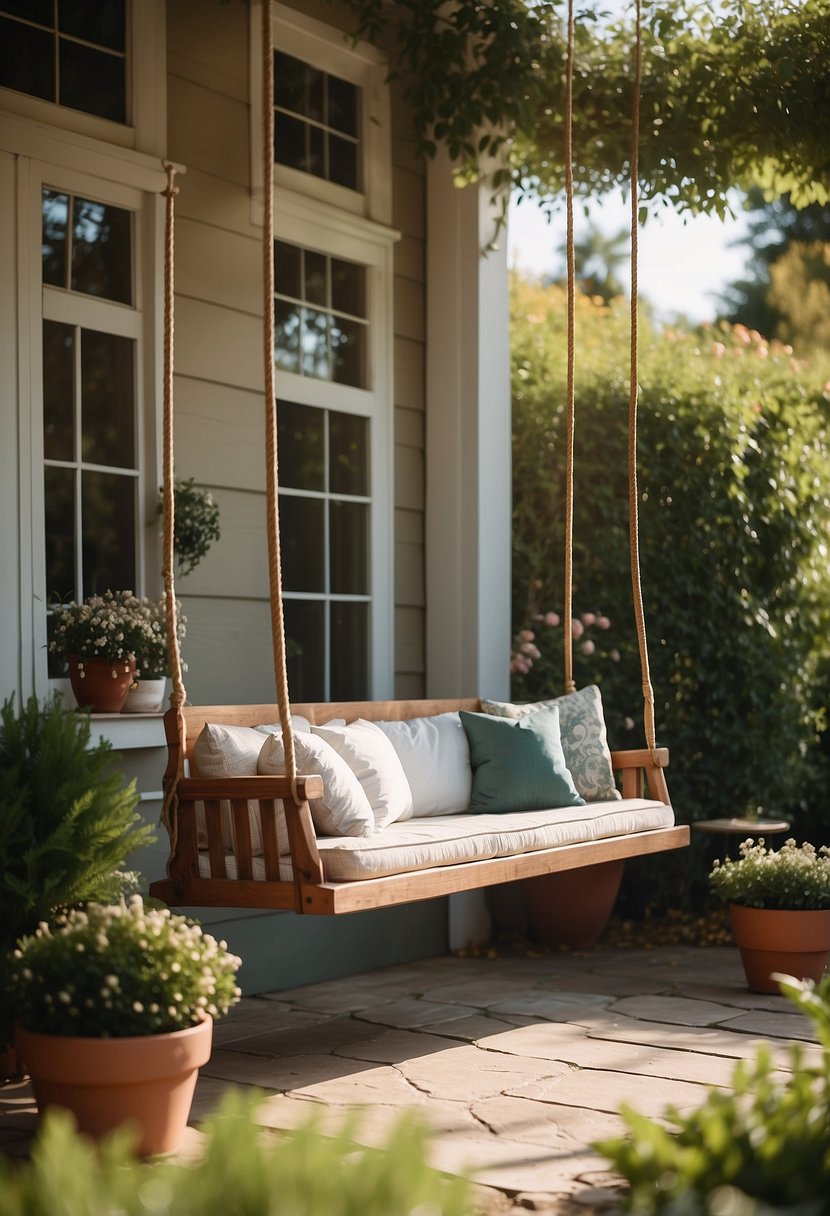
A porch swing with cushions can turn your front porch into a welcoming social spot. Select a swing style that harmonizes with your home’s design, such as a farmhouse wood swing or a sleek wicker hanging one.
Add colorful or patterned cushions to make it even cozier. This not only enhances comfort but also injects a splash of personality into your entryway.
35. Mulch Beds
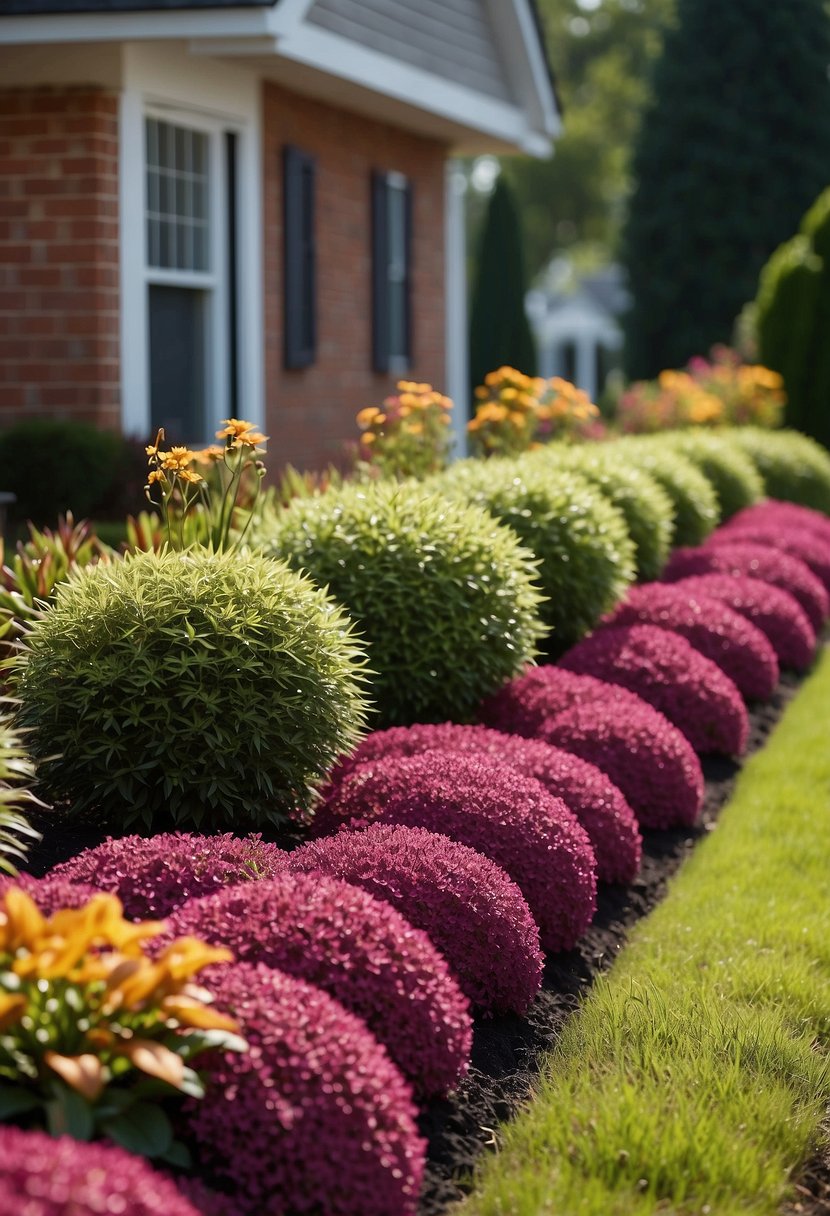
Mulch beds are a simple way to introduce color and texture to your front yard. They assist in retaining soil moisture and suppressing weeds. Mulch can be organic, like wood chips or bark, or inorganic, such as rubber or stone.
Pick a mulch color that complements your home’s exterior. Dark brown or black mulch is a popular choice for creating contrast.
A major benefit of mulch is its low maintenance. You just need to refresh it once or twice a year. It’s an ideal choice if you want a neat and tidy garden without too much work.
36. Bistro Tables
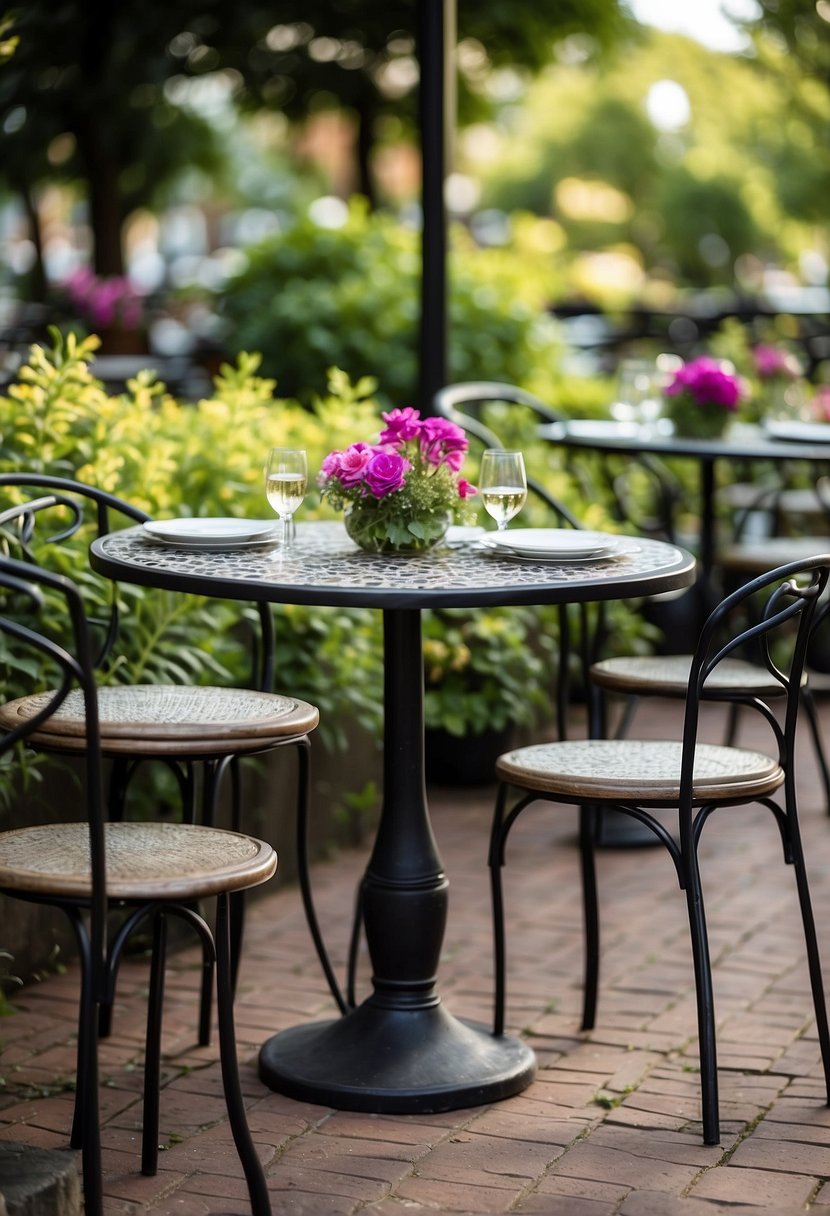
Placing a bistro table in your front yard can create a cozy niche for morning coffee or evening conversations. These small tables are a good fit for most spaces, including tighter areas.
You have a choice of various materials, including metal, wood, or resin. Each option offers a different feel, so you can pick one that aligns with your home’s style.
37. Ivy Covered Walls
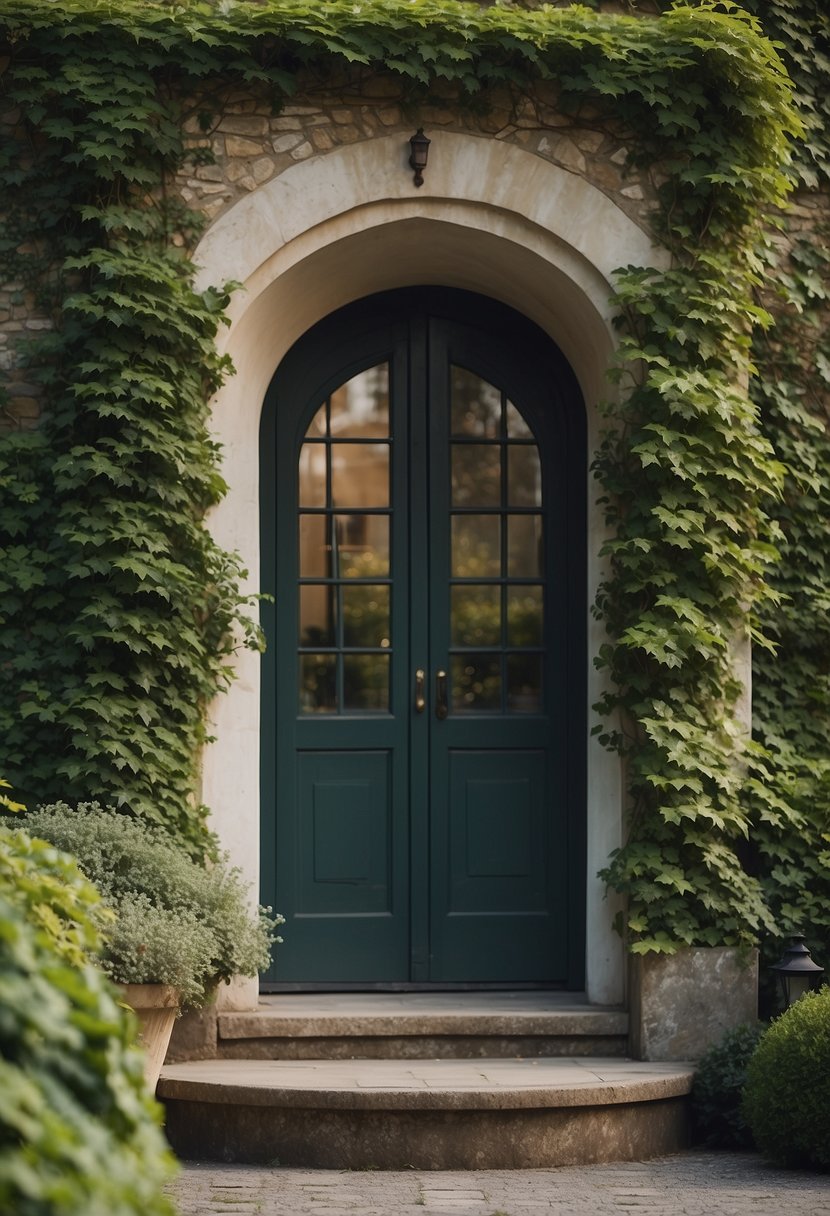
Ivy-covered walls bring a charming and classic element to your home’s exterior. The green vines provide a natural, timeless look that harmonizes well with a variety of landscapes.
Planting ivy is straightforward. Select a variety that is suitable for your climate and ensure it receives enough sunlight.
38. Mixed Flower Borders
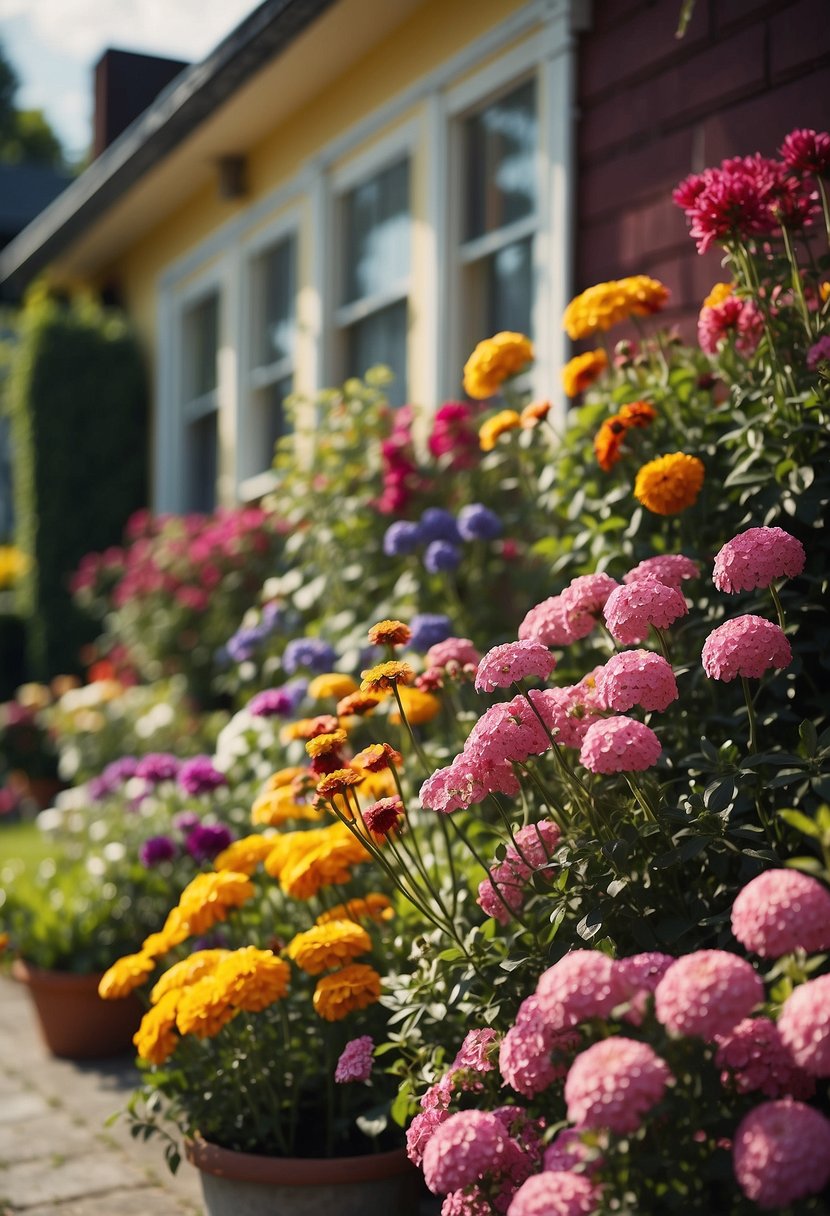
Mixed flower borders can introduce a vibrant and colorful element to your front yard.
Use a combination of perennials, annuals, and bulbs to help keep your garden looking lively throughout the year.
Try blending different heights and colors to create an eye-catching display.
39. Native Plants
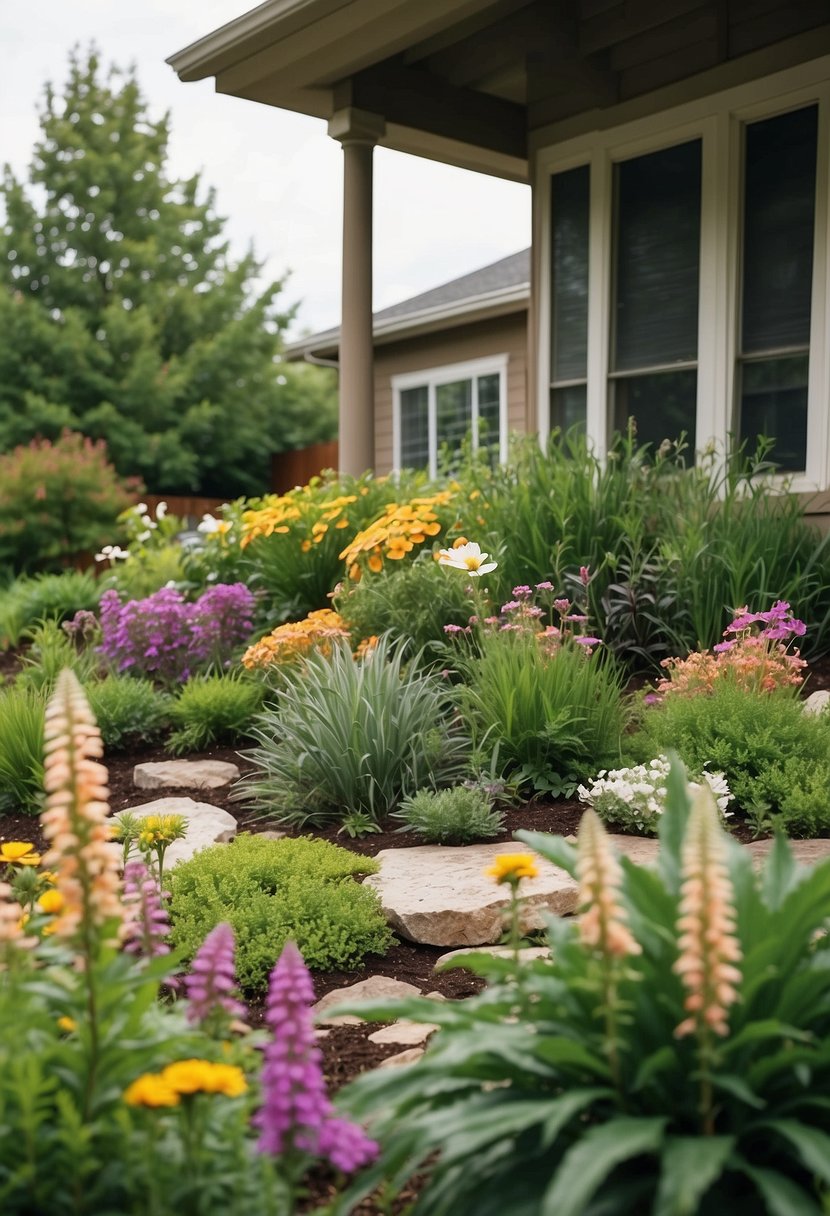
Using native plants in your front yard can lead to a beautiful and sustainable landscape. Native plants are naturally adapted to your local climate and soil, which makes them easier to care for.
By planting natives, you will support local wildlife, including birds and beneficial insects. These plants contribute to a balanced ecosystem in your yard.
40. Succulent Arrangements
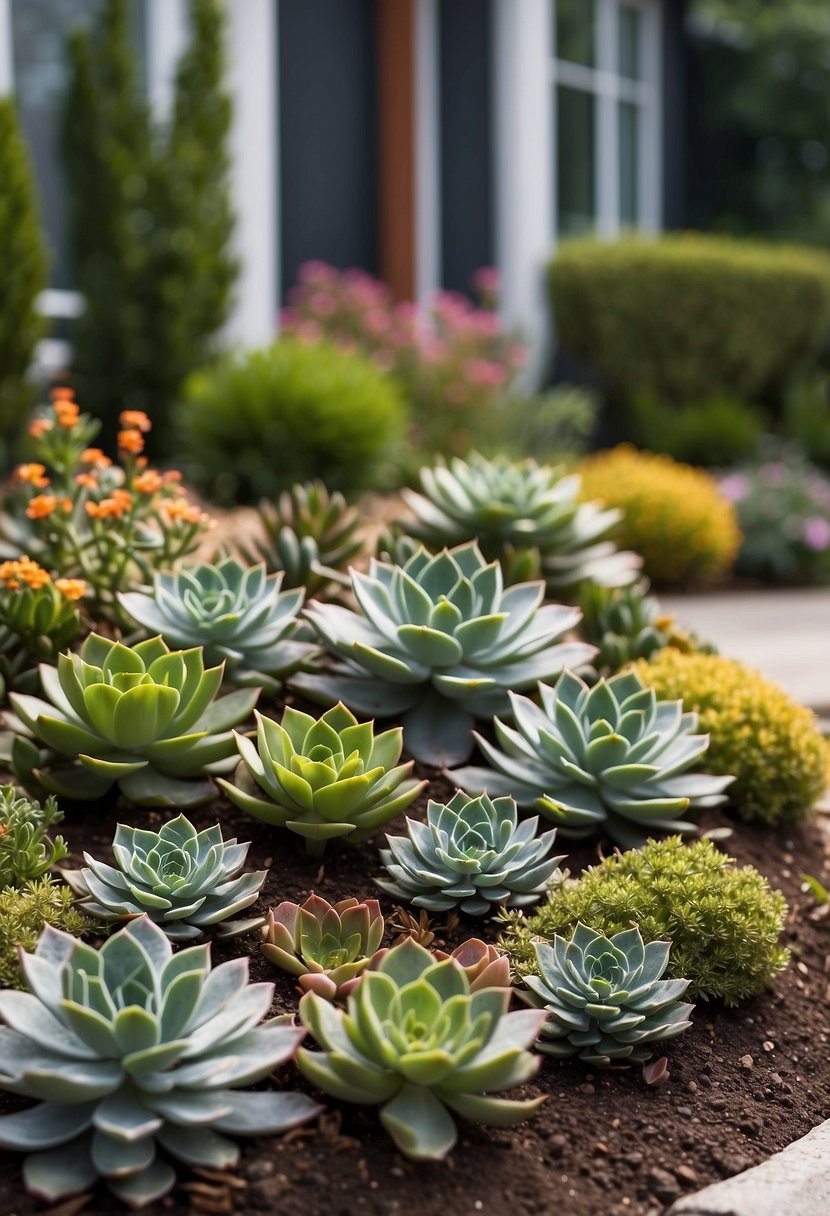
Succulents are an excellent choice for front yard landscaping because they require minimal water and are available in a wide variety of colors and shapes.
You can arrange them among rocks to create a naturalistic look. Combining tall plants like agave with smaller ones such as sedum can add depth to your garden design.
Group different species together to play with various colors and textures.
41. Mulberry Trees
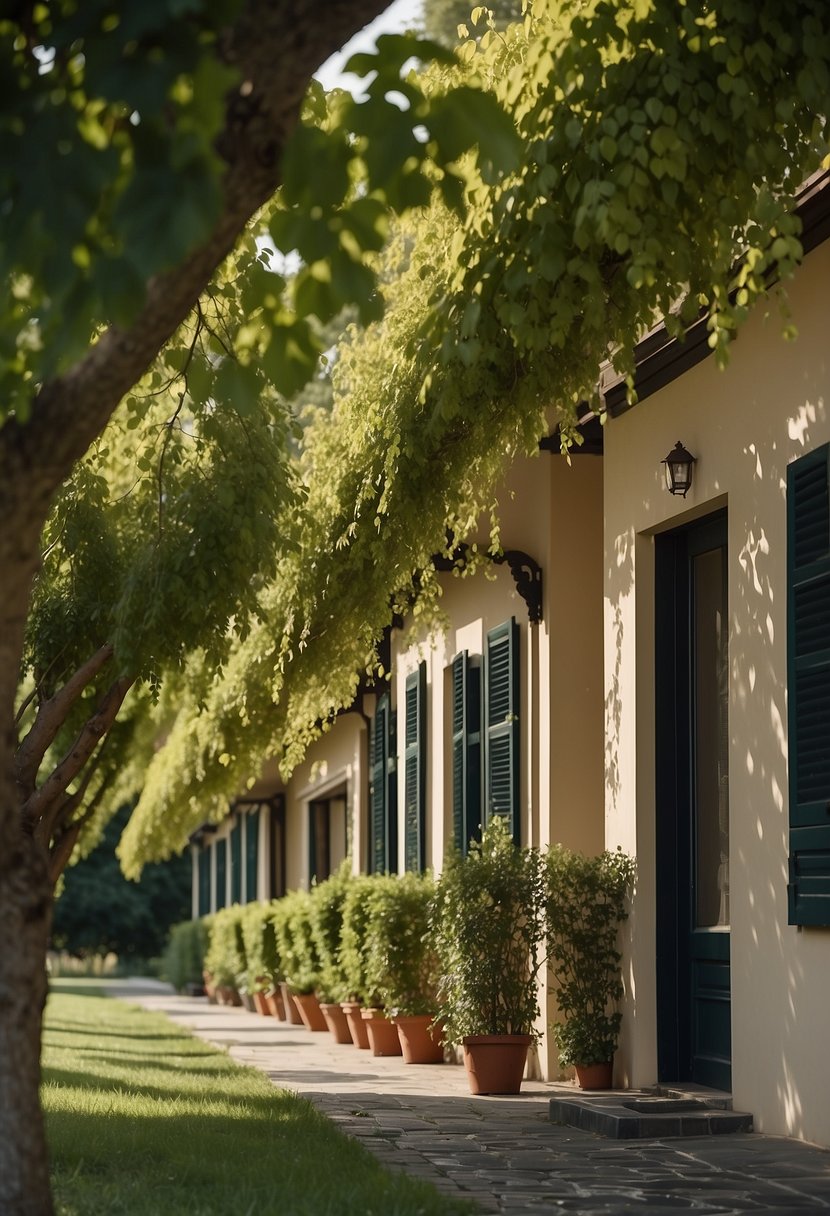
Mulberry trees can be a wonderful selection for your front yard. They do best with at least six to eight hours of sunlight and well-draining, loamy soil.
These trees can offer a unique appearance with their broad leaves and spreading branches. It’s important to check local guidelines before planting, as white mulberries are banned in some areas.
Design Principles for Front of House Landscaping
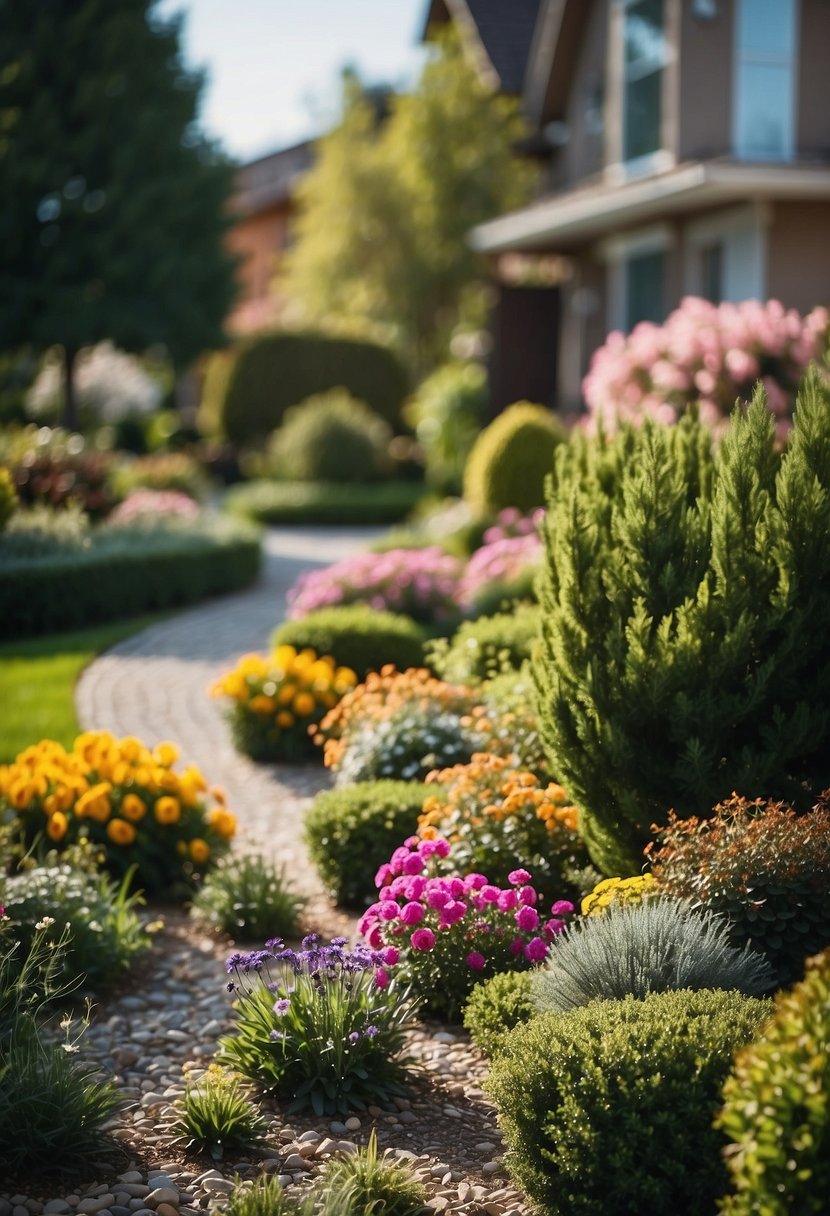
Achieving the right look for your front yard means selecting plants that fit your climate and balancing hardscape elements like walkways with softscape features such as lawns and flower beds.
Choosing the Right Plants
First, consider your climate. Choose plants that do well in your area’s weather conditions. Native plants are usually a good choice because they are already adapted to the local environment and typically require less water and upkeep.
Next, think about the color and height of your plants. A mix of tall and short plants can create a sense of depth. Use colorful flowers to add visual appeal. It’s also a good idea to group plants with similar water and sunlight needs together.
Finally, plan for every season. Select a variety of plants that will provide your yard with color all year round. Evergreens, for instance, help keep your yard looking good even in the winter.
Balancing Hardscape and Softscape
A great front yard is a blend of hard surfaces and soft greenery. Hardscape elements are things like paths, walls, and patios. Softscape elements include plants, grass, and soil.
Begin with your paths and walkways. Ensure they are wide enough for comfortable walking and think about using materials such as stone or brick. They provide structure to your yard and direct visitors to your front door.
Then, introduce softscape elements. Use grass and flower beds to soften the appearance of your hardscape features. A curved flower bed next to the driveway, for example, can make it feel more inviting.
Don’t overlook the importance of focal points. Hardscape features like a water fountain or a large tree can draw attention and create a strong visual impact. Arrange plants around these features to enhance their appearance.
A balanced mix of hardscape and softscape elements results in a front yard that is both functional and beautiful.
Maintaining Your Front Yard Landscape
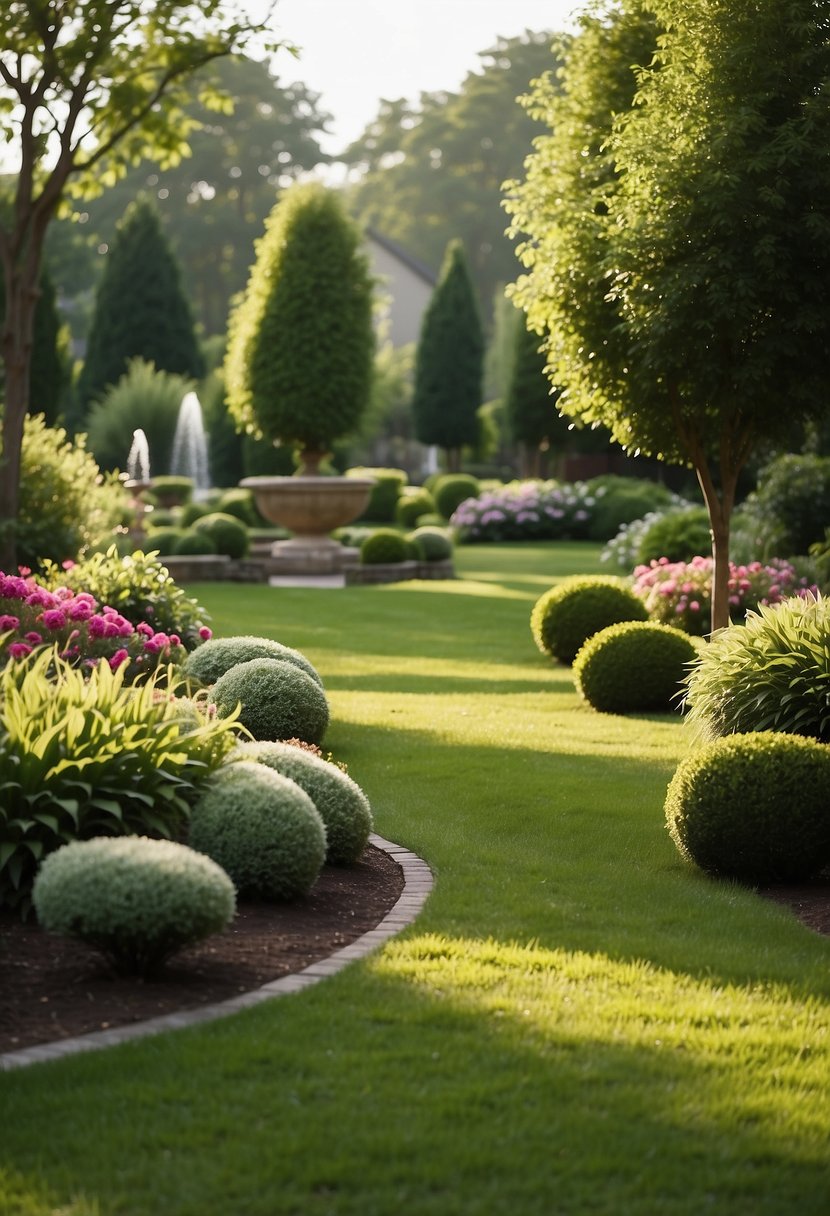
Keeping your front yard landscape in top shape requires consistent seasonal care and the right watering methods to ensure your plants flourish and your yard stays beautiful all year.
Seasonal Care Tips
Each season has its own set of tasks to keep your front yard looking its best. In the spring, concentrate on cleaning up any winter debris, pruning dead branches, and planting new perennials.
During the summer, be vigilant about pests and diseases that could harm your plants. Regularly mow the lawn, trim bushes, and deadhead flowers to promote new growth.
Autumn is the time for raking leaves, aerating the soil, and adding mulch to garden beds to protect plants during the winter. In winter, you’ll need to wrap delicate plants and make sure your irrigation system is winterized to prevent damage.
By addressing specific tasks each season, you can maintain a vibrant and healthy front yard.
Watering and Irrigation Systems
Correct watering is essential for plant health. An irrigation system can save both time and water. Drip irrigation is highly effective for flower beds, as it delivers water directly to the plant roots. Sprinkler systems are great for lawns, but make sure they are adjusted properly to prevent overwatering.
Watering early in the morning helps reduce evaporation and allows plants to absorb moisture before the day gets hot. During warmer months, you might need to water more often.
Check the soil moisture regularly. A simple soil moisture meter can help you determine when it’s time to water. Mulching also helps the soil retain moisture and can decrease how often you need to water.
A well-maintained irrigation system will keep your landscape lush and help reduce water waste.