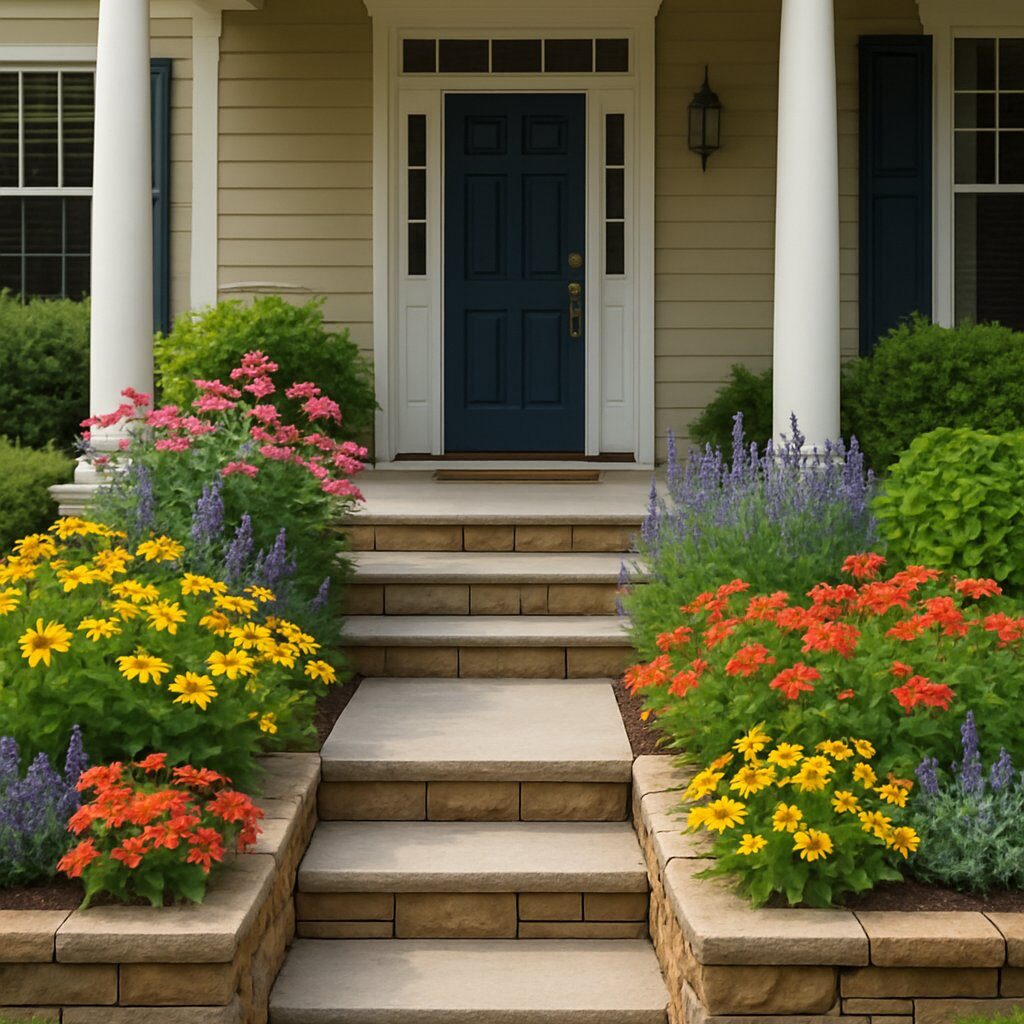
Your front yard is the first thing people see, and it speaks volumes about your home. If you want to make an unforgettable first impression, a little landscaping goes a long way. These 28 front-of-house ideas are packed with stylish and simple ways to refresh your space without draining your wallet. Whether you’re a fan of lush plants, modern rock gardens, or just clean, crisp lines, you’ll discover something here to match your personal style.
1. Raised flower beds along the front porch
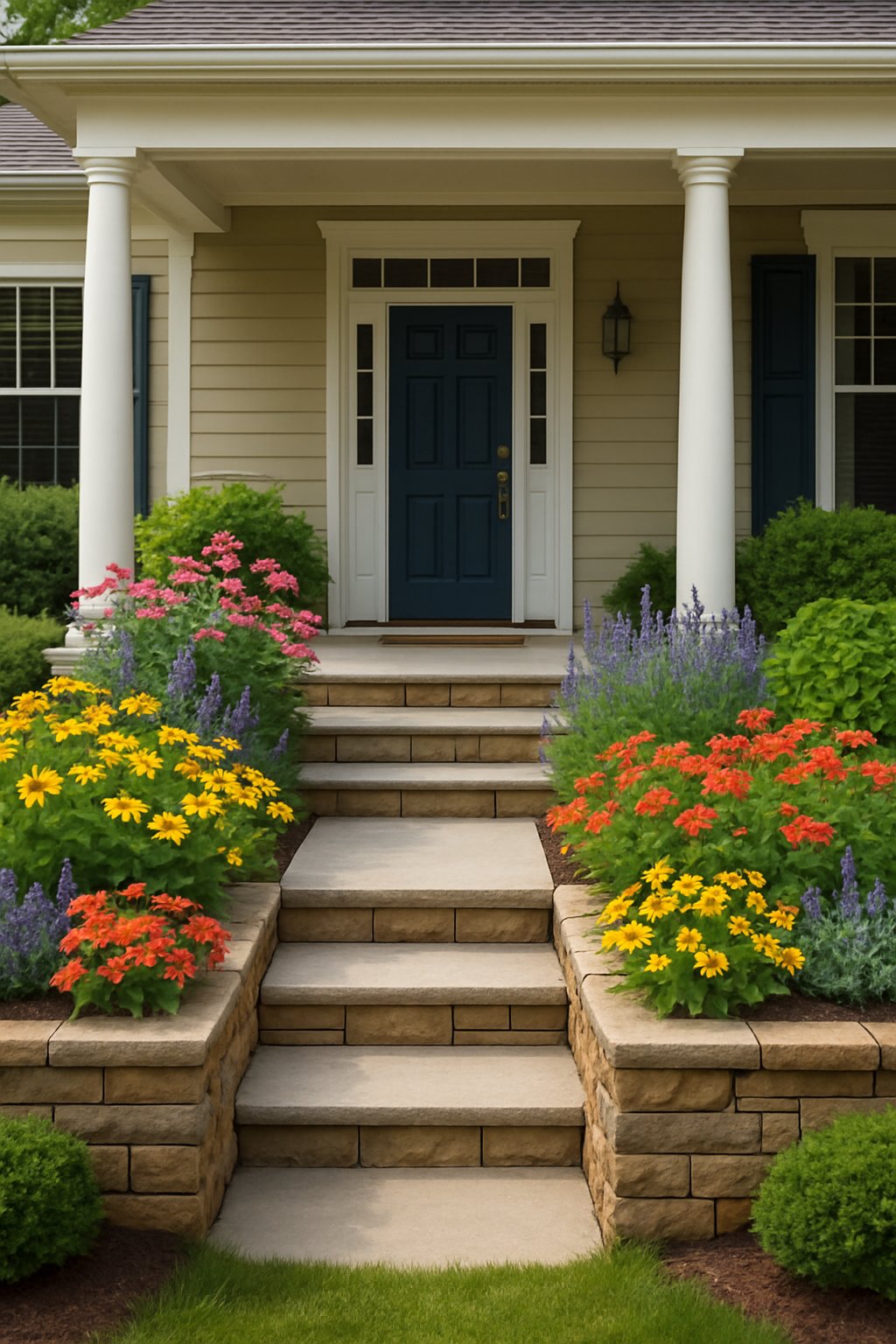
Consider adding raised flower beds along your front porch to introduce height and structure into your landscape. They create a clean separation between your walkway and planting areas, keeping your plants perfectly organized. This setup also makes tedious tasks like watering and weeding much less of a hassle. You can construct them from wood, stone, or brick, choosing a material that complements your home. For an extra touch, you could even add a bench for more seating. Select a variety of flowers with different heights and colors to create some visual pop.
Raised beds are a fantastic solution if your yard has poor soil, as you can fill them with a rich, well-draining mix. This allows you to grow perennials and annuals that demand good drainage to thrive.
An expert tip is to apply mulch over your raised beds. This helps retain moisture and keeps weeds from taking over. It is also crucial to ensure your beds have proper drainage holes, which prevents water from collecting and damaging plant roots.
2. Colorful perennial flower borders
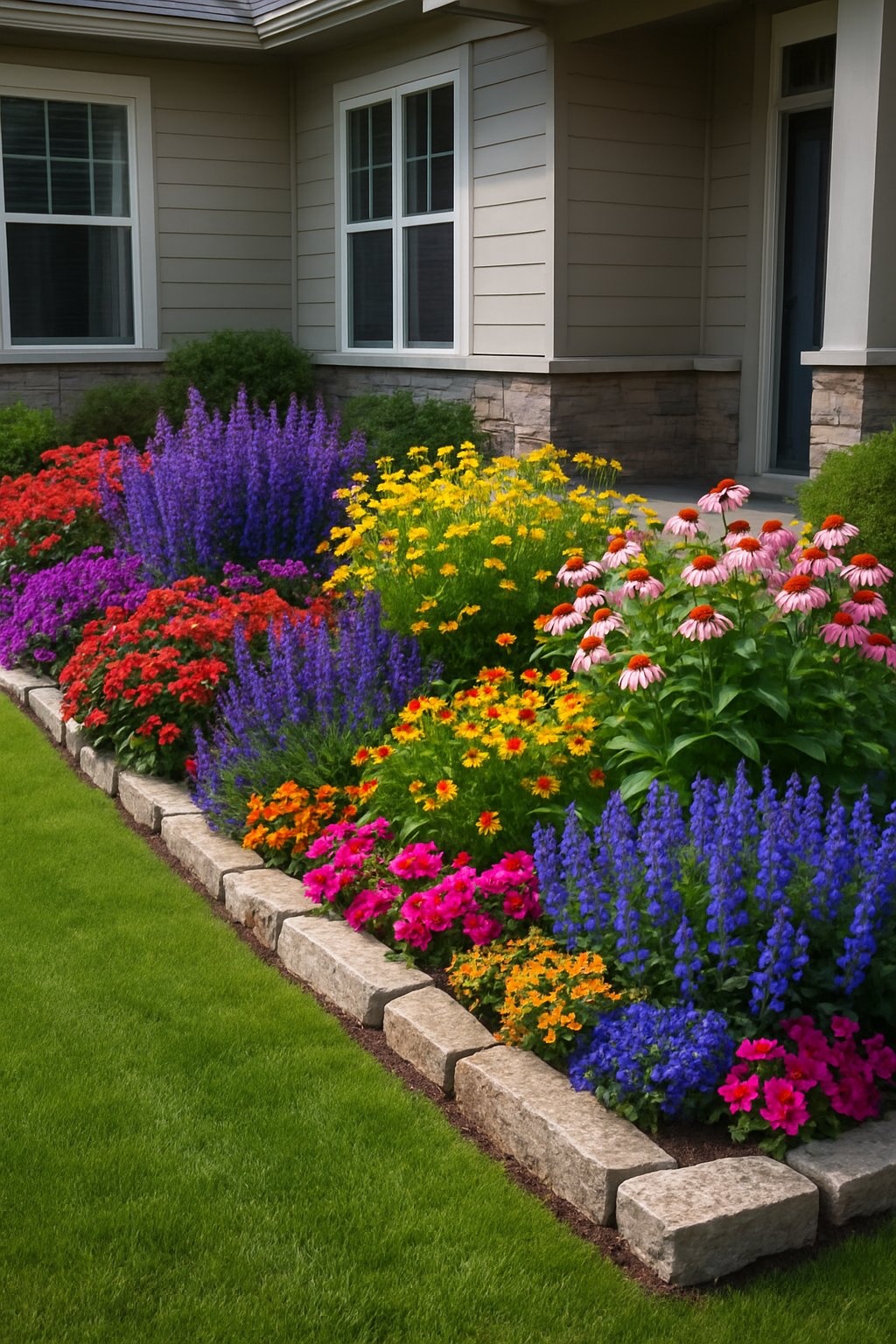
Lively perennial flower borders can completely awaken the front of your house. They provide a splash of brilliant color that evolves through the seasons. Choose flowers that have different bloom times to ensure there is always something vibrant happening. Since perennials return annually, you plant them once and get to enjoy them for years to come.
Hardy selections like catmint or coneflowers are great choices because they attract pollinators and can tolerate dry conditions. These flowers are especially fond of sunny locations. For a border that appears full and has a slightly untamed feel, mix up plant heights and leaf shapes. You can also incorporate groundcovers or small shrubs to achieve a layered look.
Use an edging material like stone or brick to maintain a neat border and prevent grass from encroaching on your flowers.
For best results, pick perennials that are well-suited to your local climate and soil. This ensures easy maintenance. Grouping plants with similar watering requirements will also keep your garden healthy and simplify your care routine.
3. Mixed evergreen and flowering shrubs
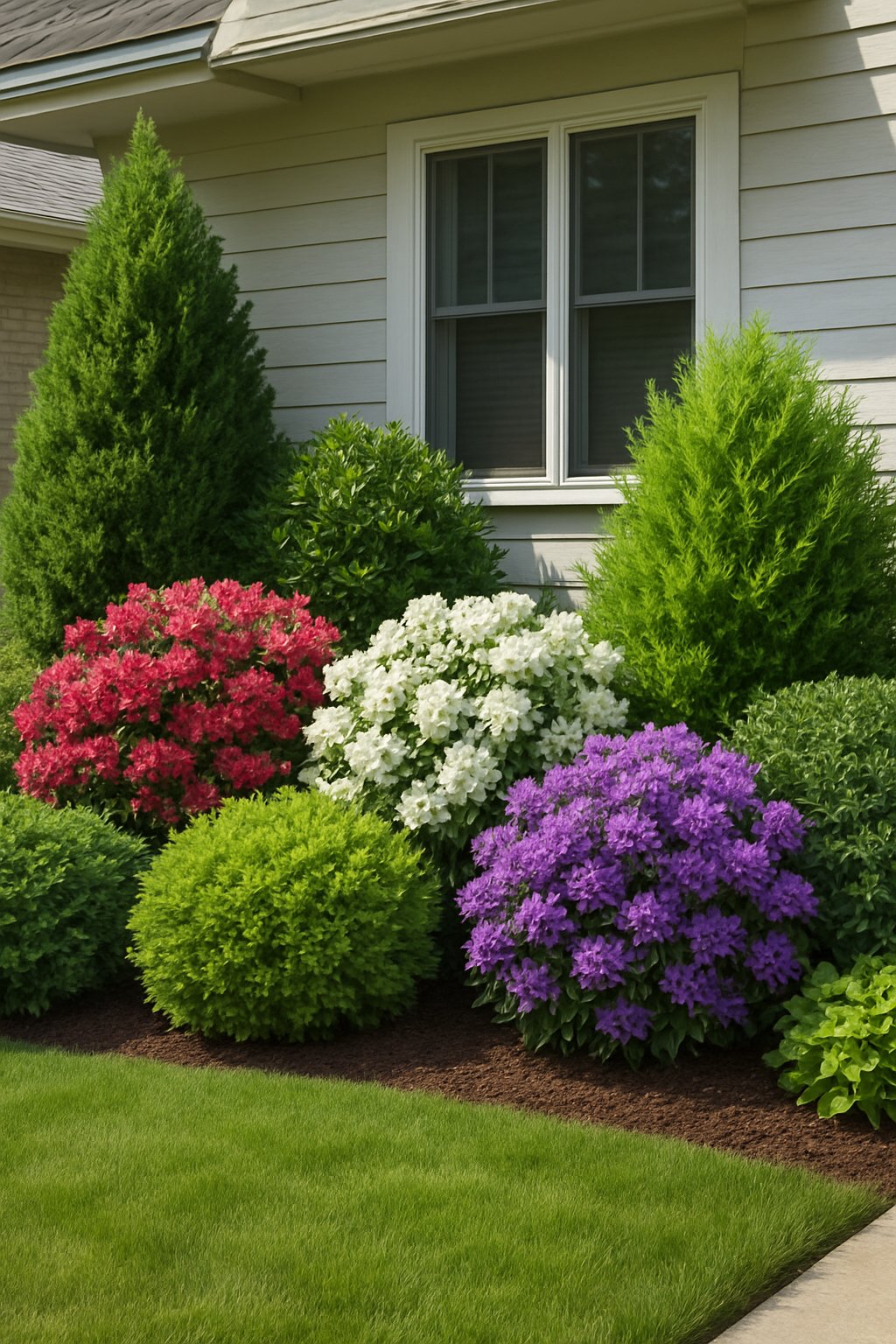
For year-round color, blend evergreen and flowering shrubs in your landscape. Evergreens provide a consistent green backdrop, while flowering shrubs deliver exciting bursts of seasonal color. You could pair small boxwoods with hydrangeas or azaleas to create a beautiful contrast. To keep your garden visually interesting, select shrubs with a variety of shapes and textures.
Try placing a wide, low evergreen at the front and positioning taller flowering shrubs behind it. This layering technique adds wonderful depth to your design. Always choose shrubs that are compatible with your climate and soil type, which will minimize the amount of care they need. Give each plant plenty of room to grow to avoid a crowded, messy appearance later on.
For continuous color, mix shrubs that bloom at different times of the year. Remember to prune them regularly to keep your plants looking tidy and healthy.
4. Blue grape hyacinths and yellow daffodils mix
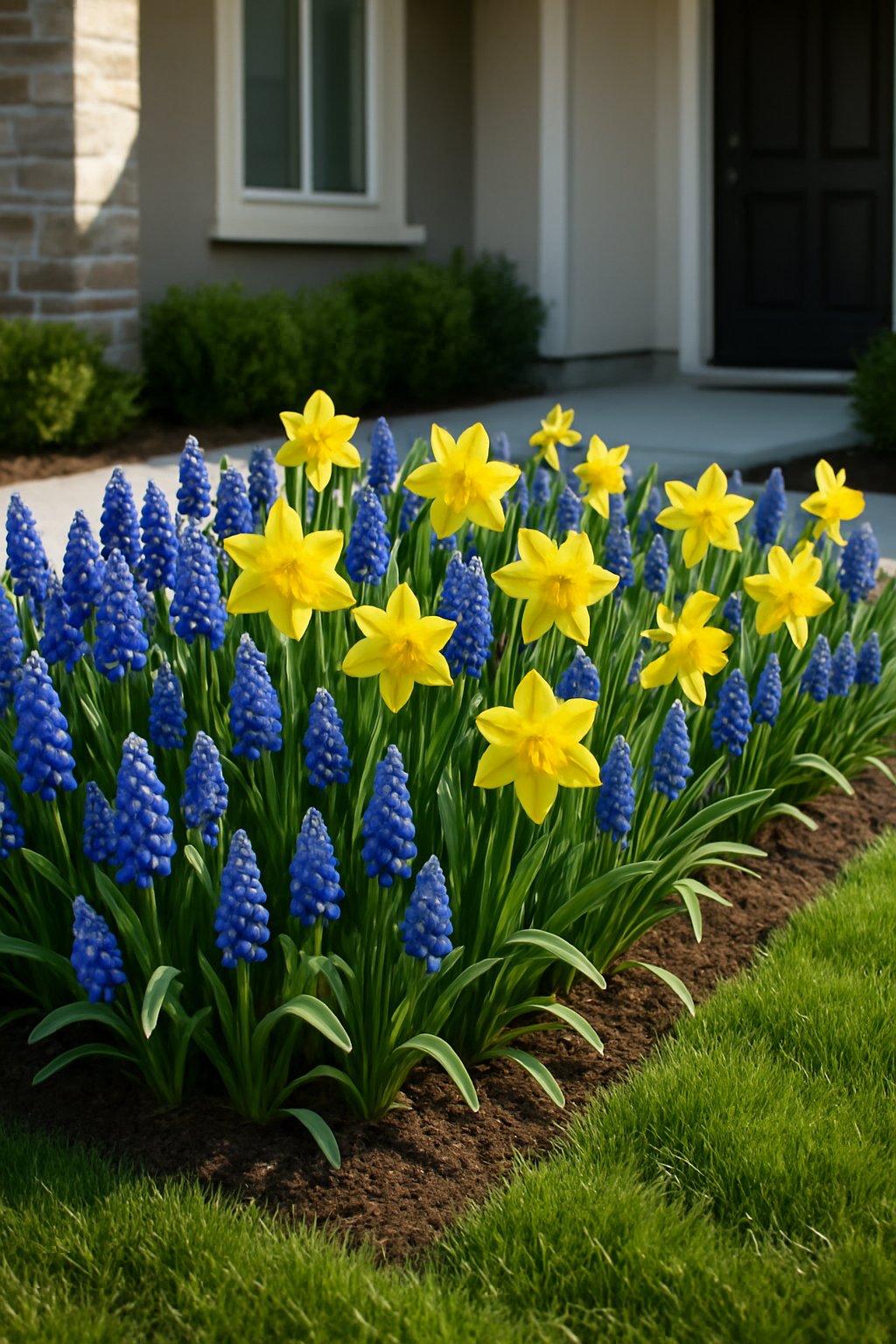
Create a bright and cheerful display by planting blue grape hyacinths alongside yellow daffodils. The combination of deep blue and sunny yellow is particularly striking, especially as it emerges in the early spring. Grape hyacinths are low-growing, making them ideal for borders, while the taller daffodils add a layered dimension.
Both of these bulbs are perennials, so they will return each year and even multiply, enhancing your display over time. They are also great for attracting pollinators, and deer tend to avoid them. For the most impactful visual effect, plant these bulbs in groups to create a more vibrant and fun arrangement.
To achieve a naturalistic look, plant clusters of grape hyacinths around the base of the daffodils. This will help extend the blooming color and keep your garden looking fresh for a longer period.
5. Window boxes with vibrant flowers
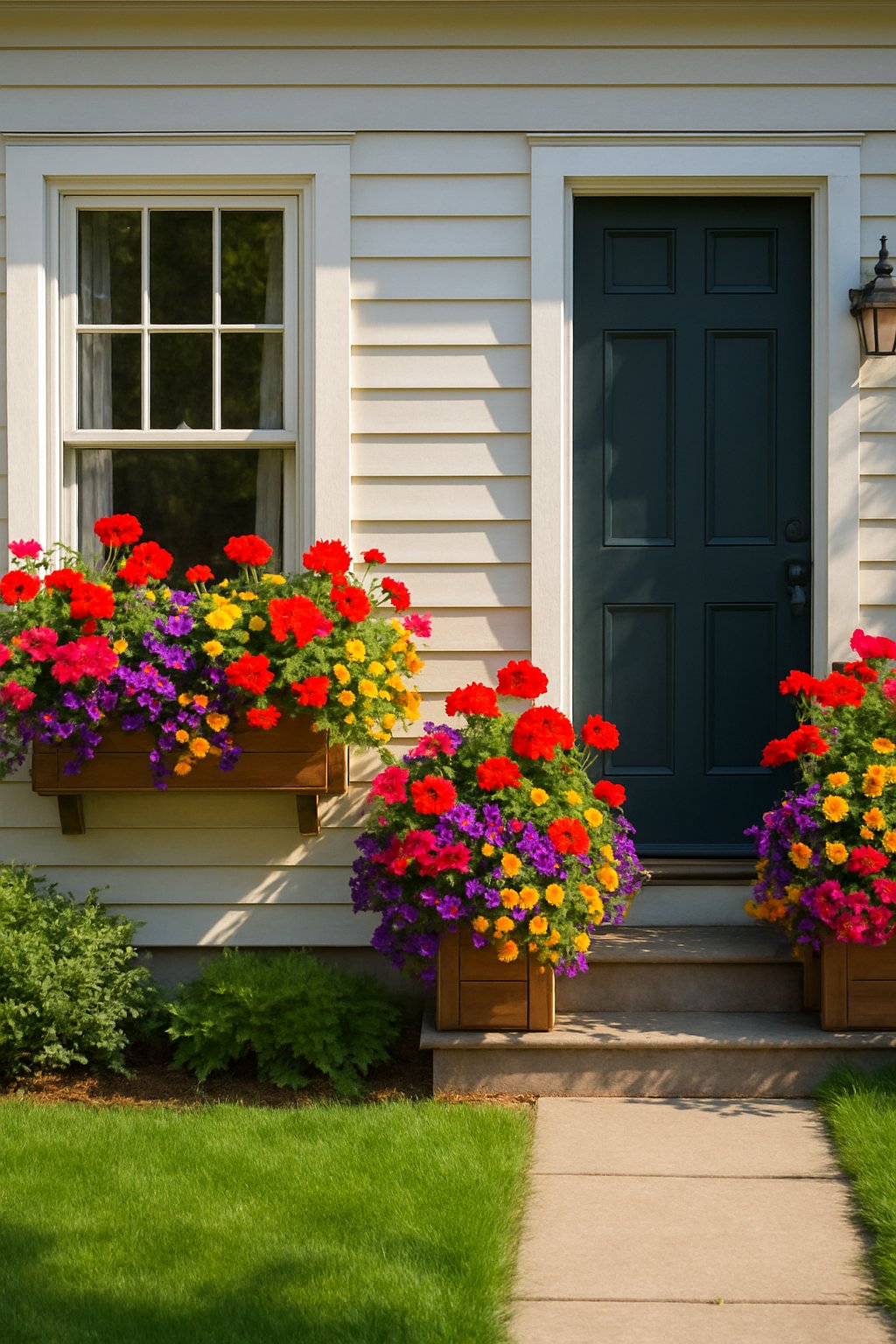
Window boxes overflowing with bright flowers can add instant color and charm to your home’s exterior. To keep things looking lively all year, select flowers that bloom in different seasons. A mix of reds, yellows, and purples can create a bold, eye-catching look. Allow some plants to trail over the edges for a softer and fuller appearance.
It’s important to ensure your boxes have good drainage to keep your plants healthy and happy. If your windows are in a shady area, be sure to choose flowers that thrive without a lot of direct sun. You can use window boxes made from wood, metal, or plastic, depending on what best fits your home’s style. Keep them looking fresh with regular watering and by snipping off any dead blooms.
For the best aesthetic, pick flowers that complement the style of your house. Always check the amount of sunlight your window box will receive before you select your plants.
6. Custom-cut metal house numbers
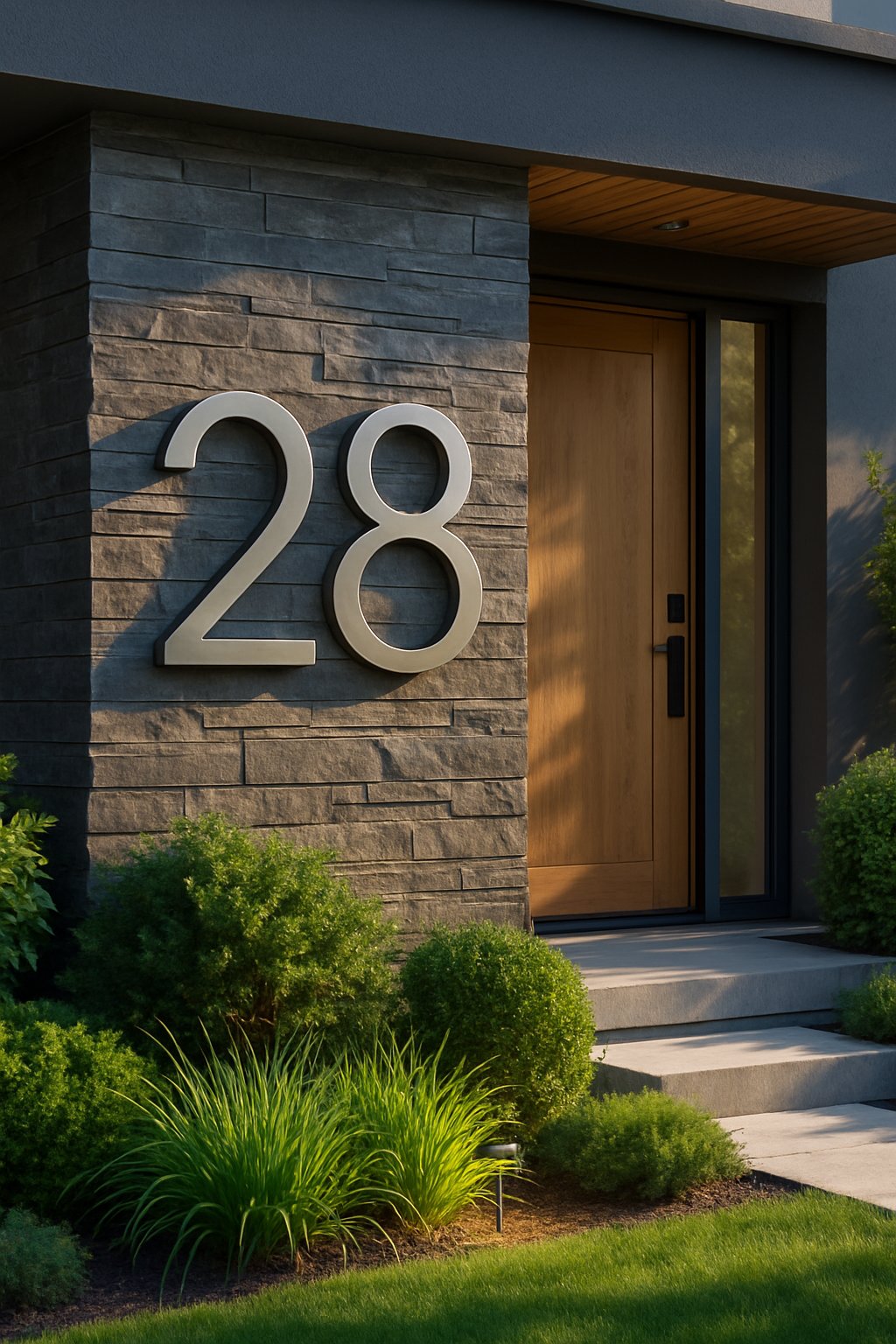
Custom-cut metal house numbers offer a durable and stylish touch to your front yard. Materials like steel or aluminum are weather-resistant and maintain a sharp look. You can choose from a range of fonts, from simple to ornate, to match your home’s architectural style. Powder-coating adds an extra layer of color and protects the numbers from sun and rain, keeping them vibrant.
You can mount them on your house, a mailbox, or even a stone pillar for a custom look. Metal numbers are easy to clean and resist fading over time. For a more personal touch, you can select finishes such as brushed, matte, or shiny. Custom numbers are a unique way to display your address and make it stand out.
To make your metal numbers more visible at night, consider using lighting. Small LED spotlights can illuminate them effectively and add a sleek, modern touch.
7. Rock garden accents with succulents
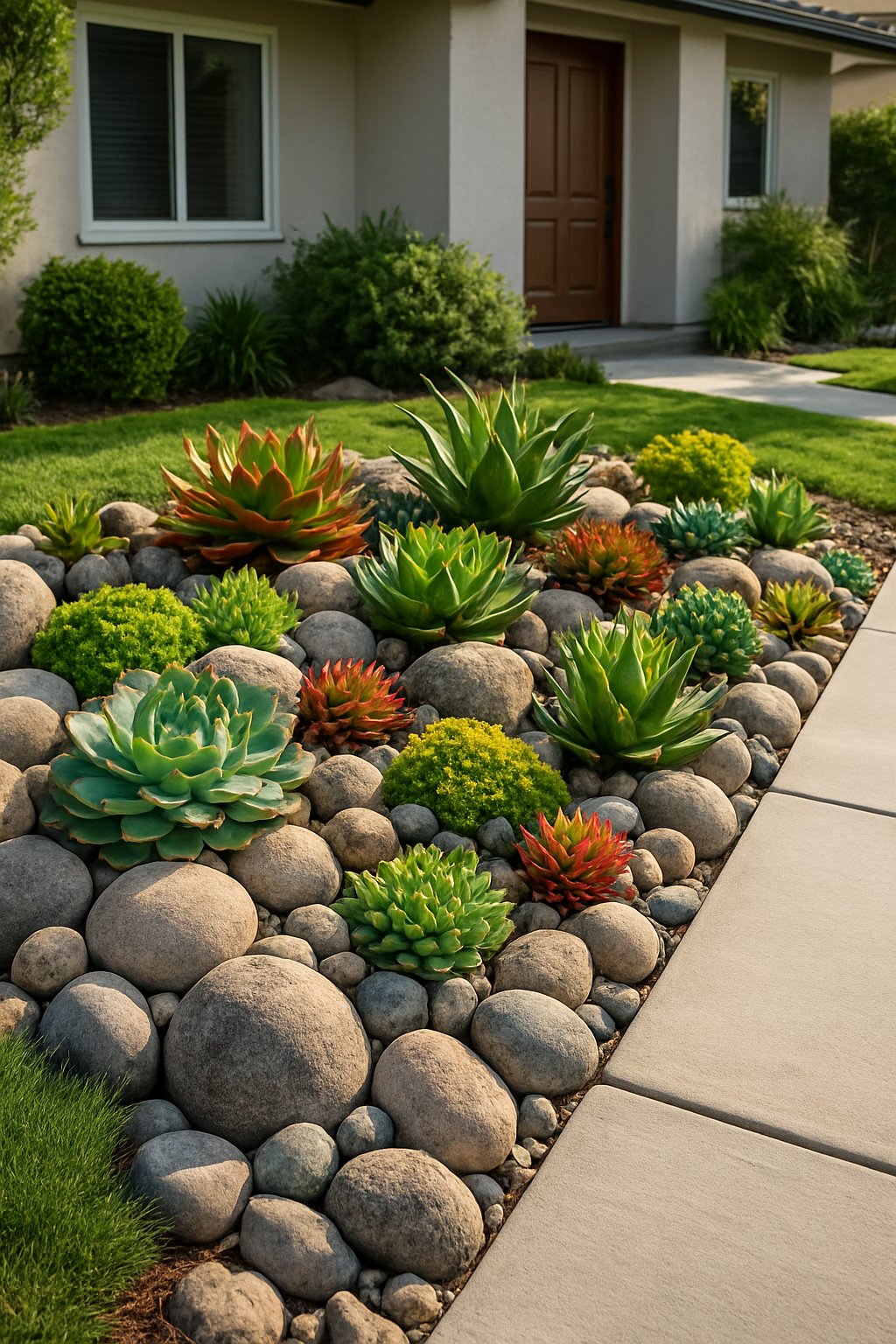
For a unique and low-maintenance front yard, create a rock garden with succulents. Start by laying down rocks to form a base, then nestle succulents in the spaces between them. Succulents are available in a wide variety of colors and shapes, ensuring your garden always looks fresh and interesting. Varieties like hens and chicks, sedums, or aloe are great choices as they require minimal water and thrive in sunny conditions.
Use rocks of different sizes and colors to add texture and visual interest. For a more natural appearance, group the succulents together. Spreading gravel or small stones around them can help suppress weeds and keep the area looking tidy. If you’re aiming for a desert-inspired look, mimic the way plants grow in arid climates for a simple yet eye-catching design.
Choose rocks that complement the color of your home to create a balanced look. During hot months, water the succulents lightly about once a week to keep them healthy.
8. Layered plant heights for depth
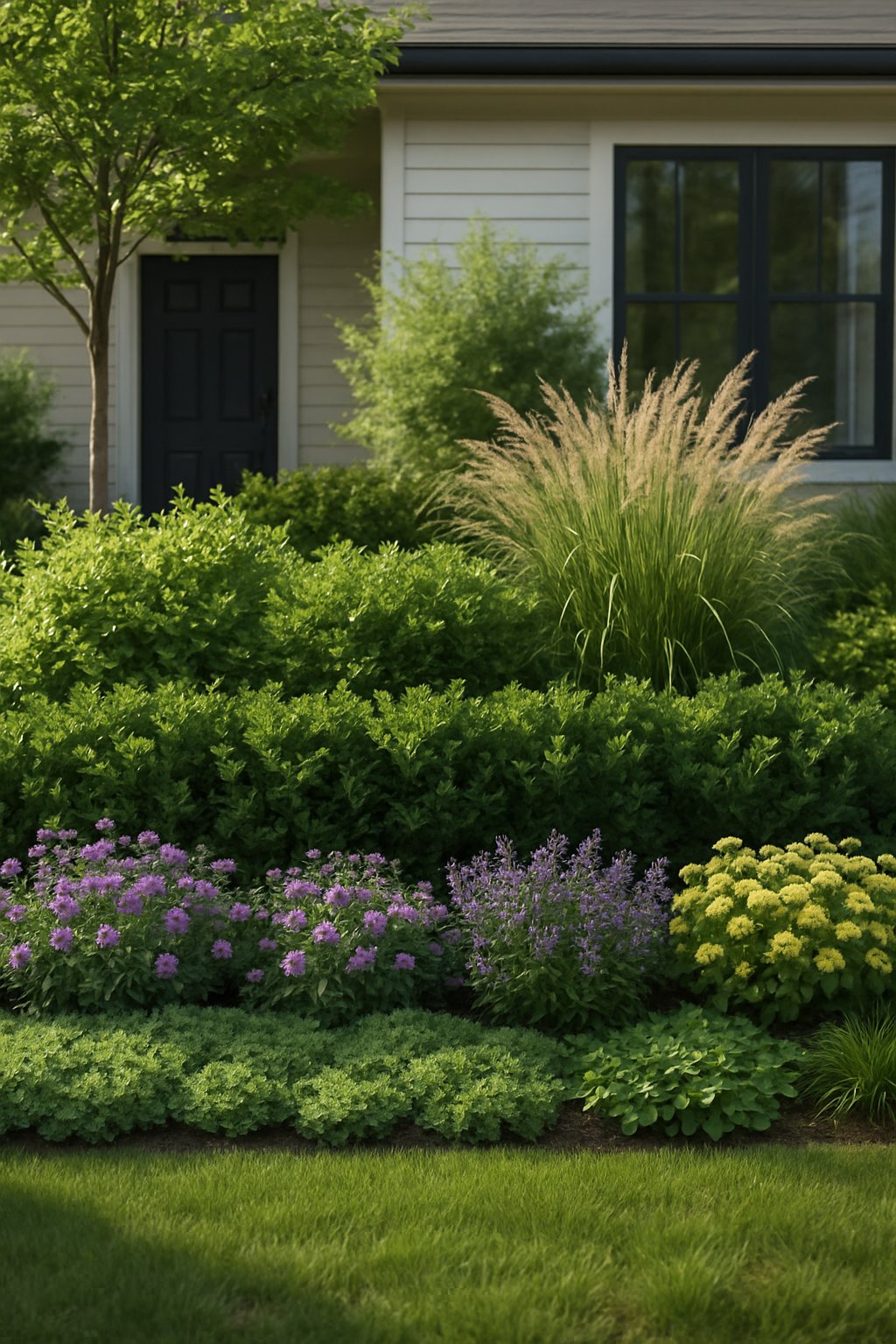
Create depth in your front yard by layering plants of different heights. Position tall trees or large shrubs at the back to serve as a beautiful backdrop. In the middle layer, place medium-sized bushes or flowering plants to fill out the space. For the front, use ground covers or small flowers to frame the area and complete the look.
This layering technique makes your landscape feel fuller and more dynamic, drawing the eye from the front to the back. For added interest, mix up the textures and colors within each layer. Be sure to give each plant enough space to grow so they don’t end up crowding each other.
Before you start planting, it’s helpful to create a rough sketch of your layered design. This allows you to visualize how each plant will fit into the overall composition.
9. Symmetrical plant arrangements by the walkway
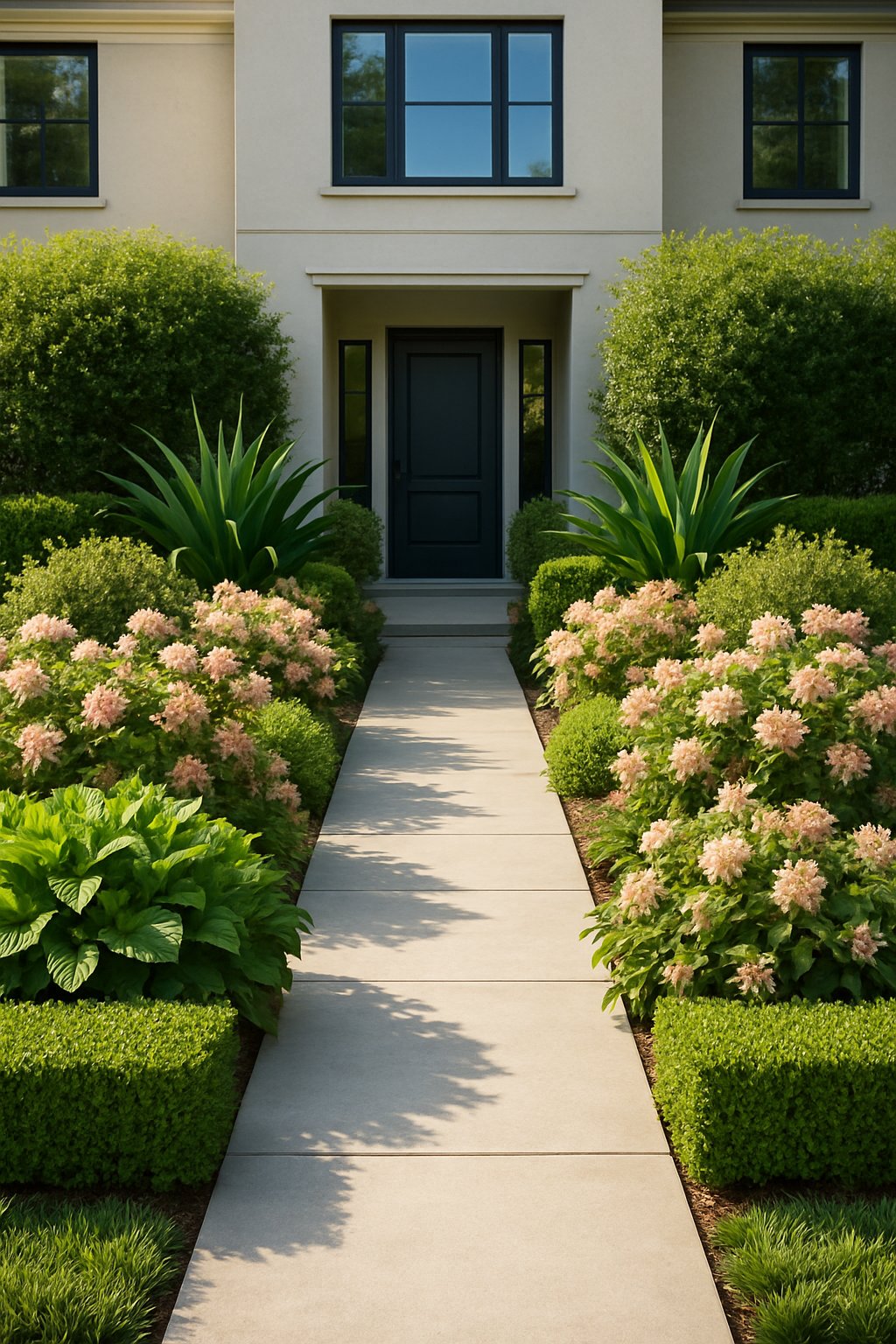
Symmetrical plant arrangements give your walkway a neat and balanced appearance. By planting identical shrubs or flowers in matching pairs on both sides, you can create a clear path that guides visitors to your door. This design feels welcoming and incredibly tidy. For the best effect, use plants that grow to a similar size and shape to maintain clear symmetry.
You can mix tall and short plants, but it’s important to keep both sides as identical as possible. Evergreens, boxwoods, or shaped topiaries can provide a clean and classic look. Add matching flowers for a pop of color. Also, consider how the plants will grow over time to ensure your walkway remains balanced and uncluttered.
To keep your walkway looking tidy, choose plants that maintain a consistent size each year. Regular trimming is key to preserving the perfect mirror image.
10. Low-maintenance ornamental grasses
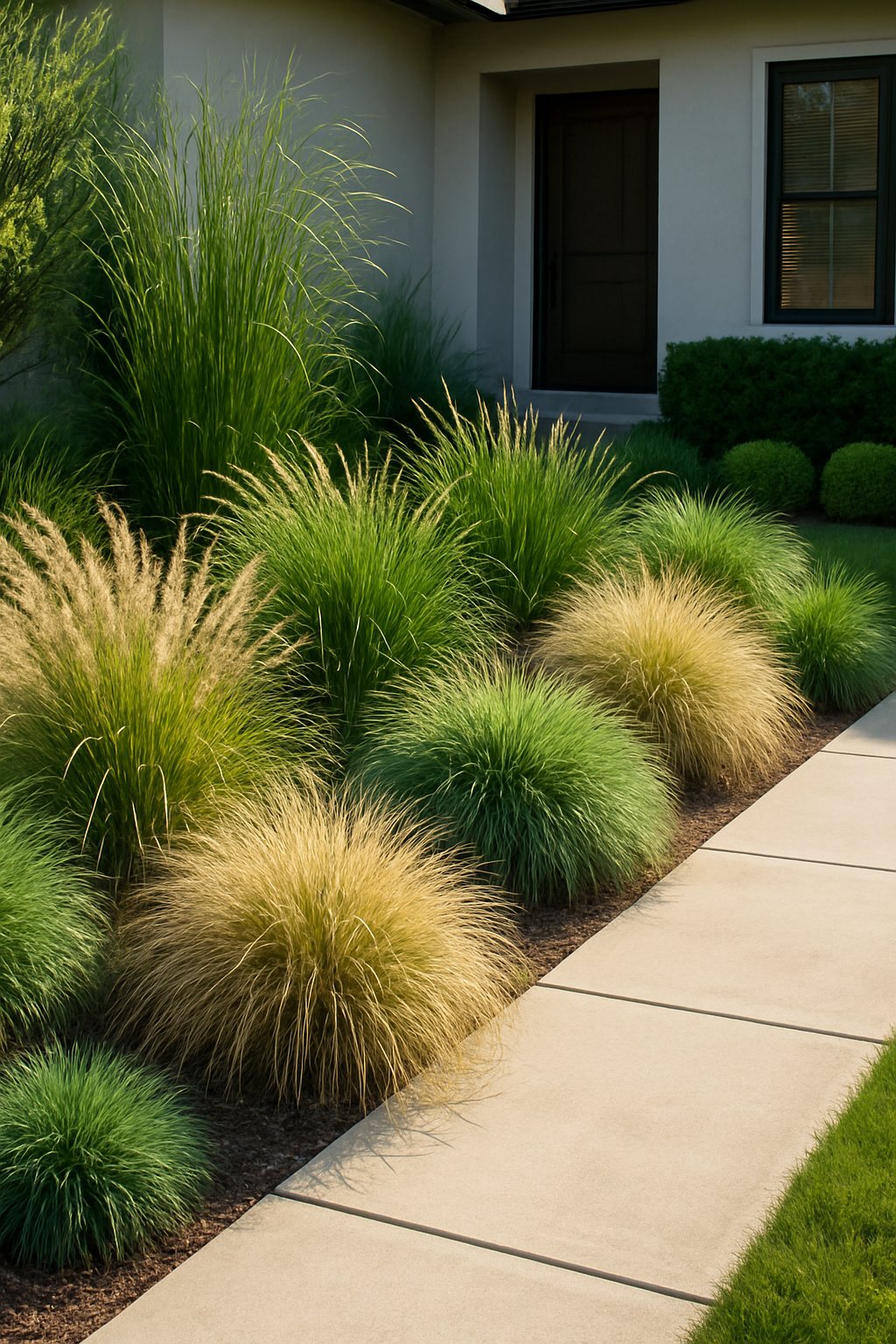
Ornamental grasses are an incredibly easy way to introduce texture and movement into your front yard. Once they are established, they require very little watering, making them an ideal choice if you prefer to avoid spending hours on lawn care. You can plant them in clusters or use a few as focal points near your entrance. Their colors shift throughout the seasons, offering an ever-changing visual appeal.
These grasses can thrive in a variety of soil types, and their maintenance is minimal, typically requiring just one cutback per year. For a more dynamic look, try mixing different types of grasses to achieve a variety of heights and colors. This will make your yard appear fuller without the need to add more plants.
Select grasses that are well-suited to your climate to minimize extra care. Grouping several together will create a bigger impact with less effort.
11. Privacy hedge with boxwoods
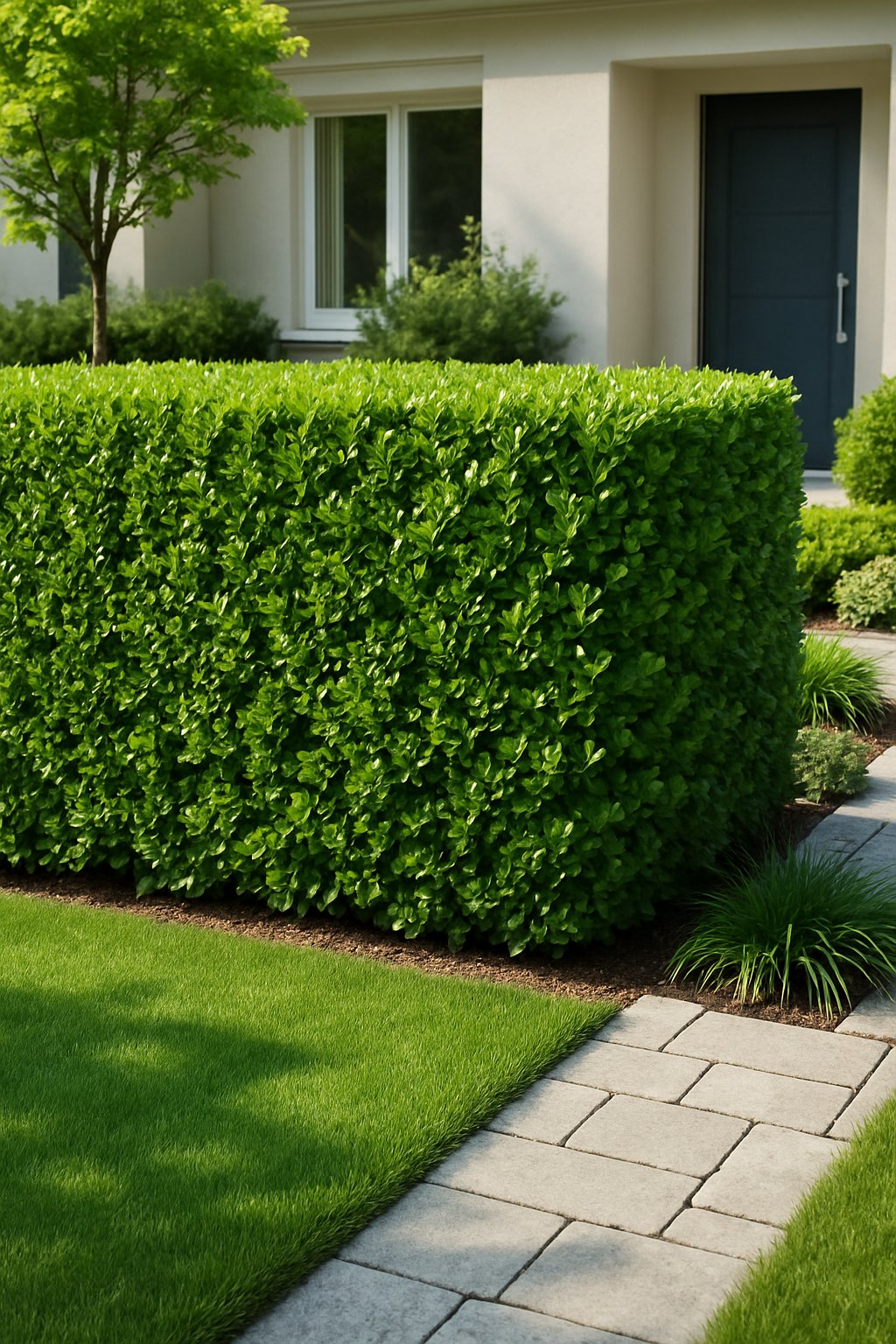
A boxwood privacy hedge can create a natural and elegant barrier in your front yard. As evergreen shrubs, they remain green throughout the year, ensuring your privacy is maintained even during the winter months. You can trim boxwoods into neat, formal shapes for a clean and tidy appearance. The height of the hedge can be adjusted to meet your specific privacy needs.
To form a solid wall, plant the boxwoods close together, but be sure to leave a little room for air circulation and light. Regular pruning is essential to keep the hedge thick, healthy, and well-shaped. A boxwood hedge adds structure to your landscape and complements the lines of your house, significantly boosting your curb appeal. They are also great for lining walkways or marking the boundaries of your yard.
If you want your hedge to fill in more quickly, consider starting with young boxwoods. Trimming them twice a year will help them stay dense and full.
12. Climbing roses on trellises
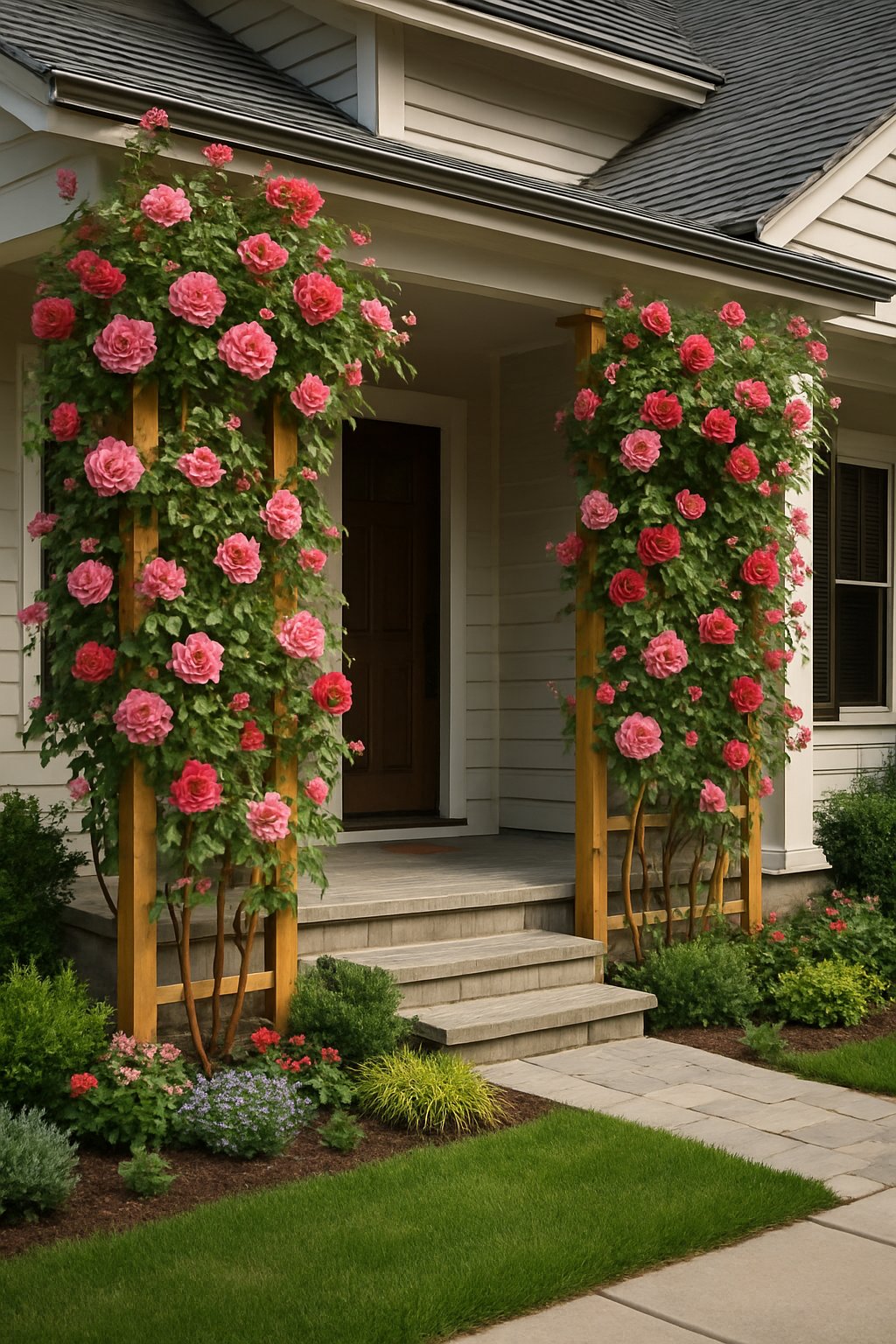
Climbing roses are a wonderful way to add height and vibrant color to the front of your house. For a classic and romantic look, train them to grow up a trellis or over an arbor. Roses thrive in sunlight, so it’s best to choose the sunniest spot available for them. A sturdy trellis made of wood or metal is necessary to support the weight of the rose canes. If you want the roses to climb vertically, you can secure the trellis directly to a wall with screws.
Look for climbing roses with long, flexible canes, as they are much easier to train and tend to produce abundant blooms. Frequent pruning will help keep them healthy and encourage more flowers. If you’re feeling creative, you can even build your own trellis from wood scraps or repurposed items like old bicycle rims. Roses can be a bit particular, so be sure to water them deeply and keep an eye out for pests.
Choose climbing rose varieties that are well-suited to your climate. When tying the canes to the trellis, keep the ties loose to avoid damaging the plant.
13. Pathway lined with solar lights
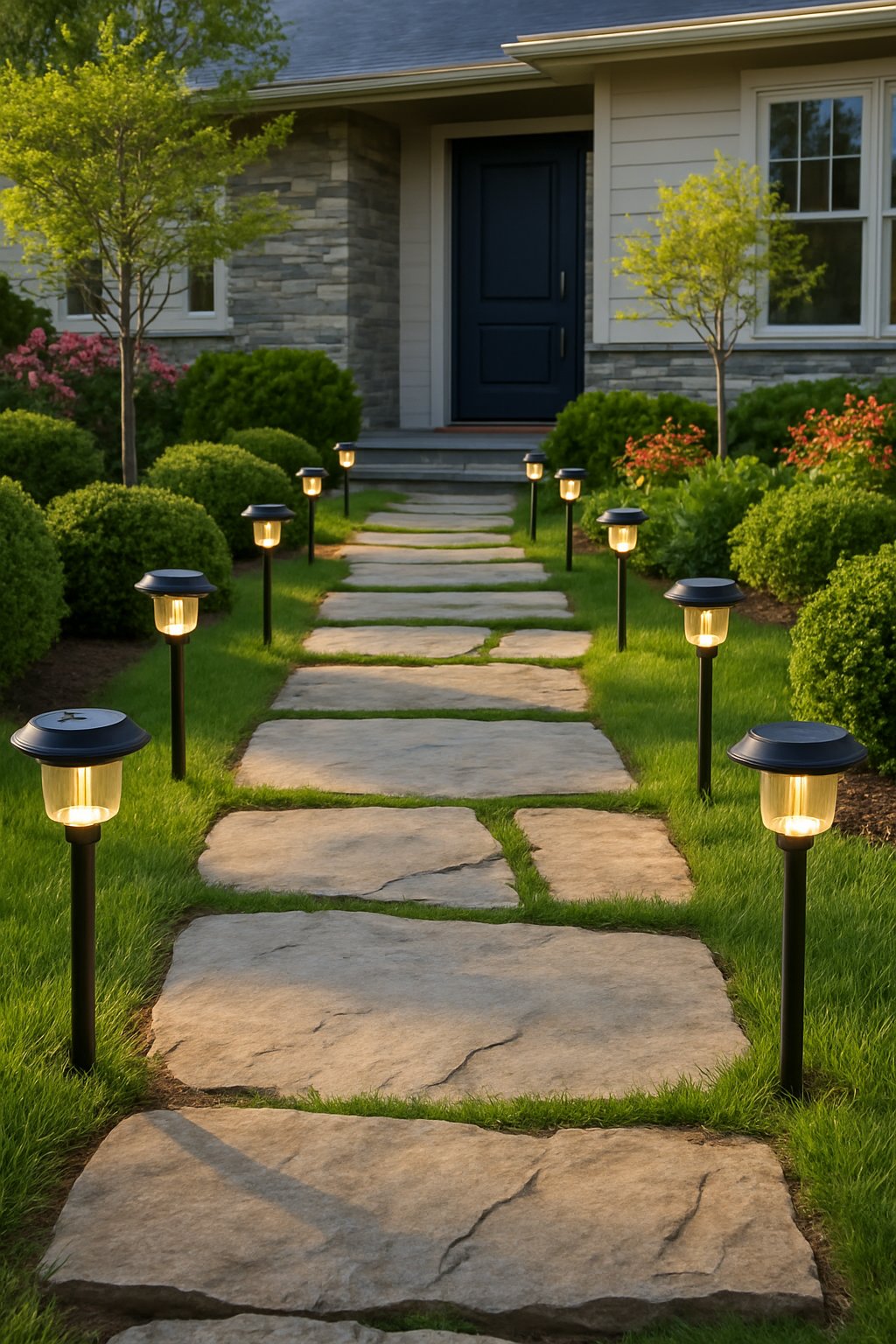
Lining your front pathway with solar lights adds both safety and a touch of style. These lights absorb sunlight during the day and automatically illuminate at night, ensuring you can see where you’re walking without the need for any wiring. Solar lights are available in a wide variety of designs, so you can easily find a style that fits your home’s aesthetic. For a well-lit and safe path, place them evenly along the walkway.
Installation is simple, just stick them into the ground. Since they run on sunlight, they are an energy-efficient lighting solution. Maintenance is also straightforward; just wipe the solar panels occasionally and ensure they receive plenty of direct sunlight.
For a cozy and inviting glow, opt for warm white lights. Placing them close to the edge of the path will provide the best illumination and guidance.
14. Seasonal bulb planting like tulips and crocuses
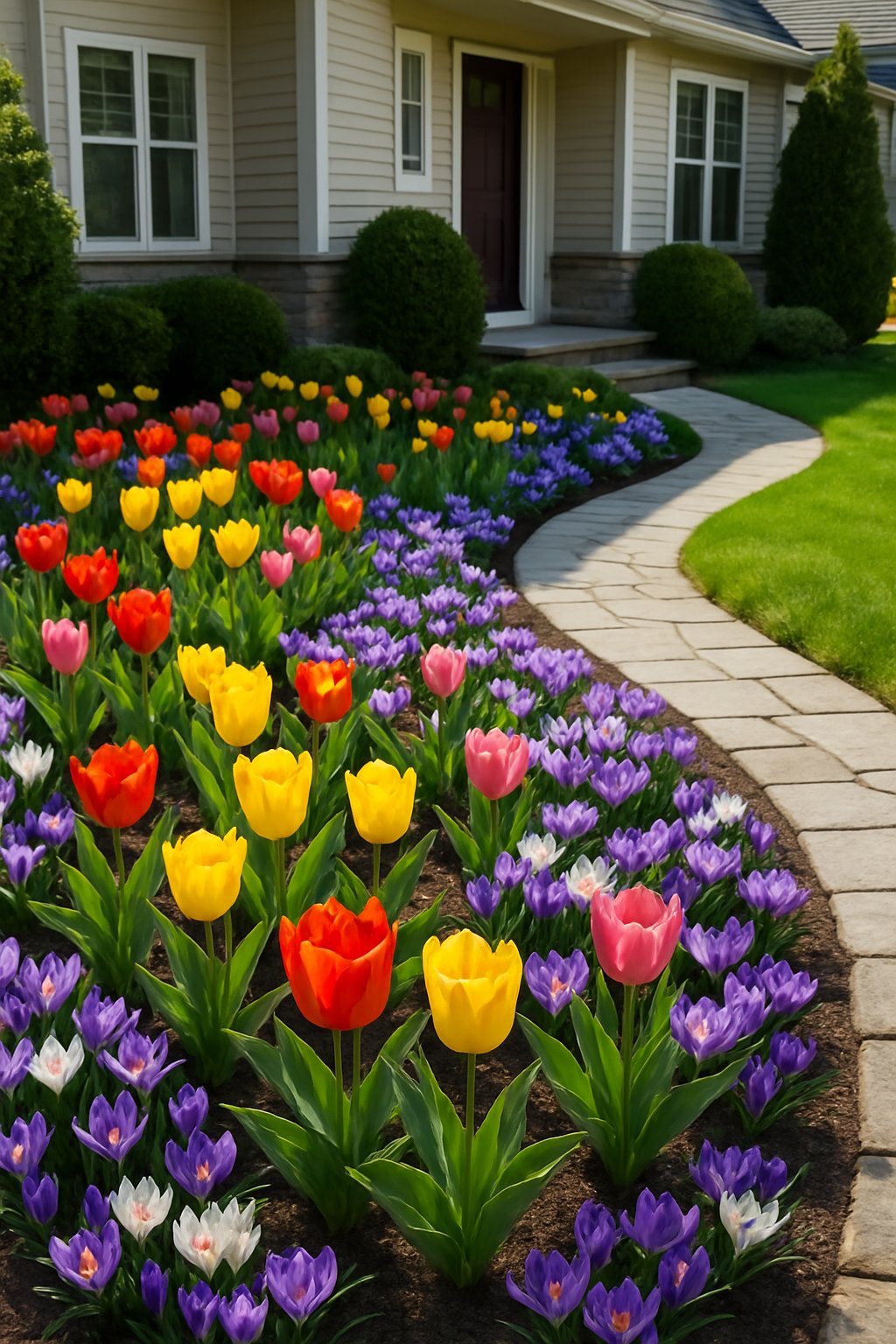
Planting bulbs like tulips and crocuses will fill your front yard with a burst of bright color each spring. Crocuses are typically the first to appear, often right after winter, followed by tulips with their classic, bold hues. Plant the bulbs in the fall before the ground freezes. It’s important to dig holes to the correct depth: about 2 inches for crocuses, 5 inches for tulips, and around 7 inches for daffodils. For a more natural and random look, plant them in clusters.
If deer are common in your area, be aware that tulips can attract them, so you might consider adding a small fence for protection. Bulbs do not tolerate soggy soil, so ensure your planting area has good drainage.
For a greater visual impact, plant bulbs in groups of five or more. After planting, water them to help the roots settle in.
15. Decorative mulch to boost curb appeal
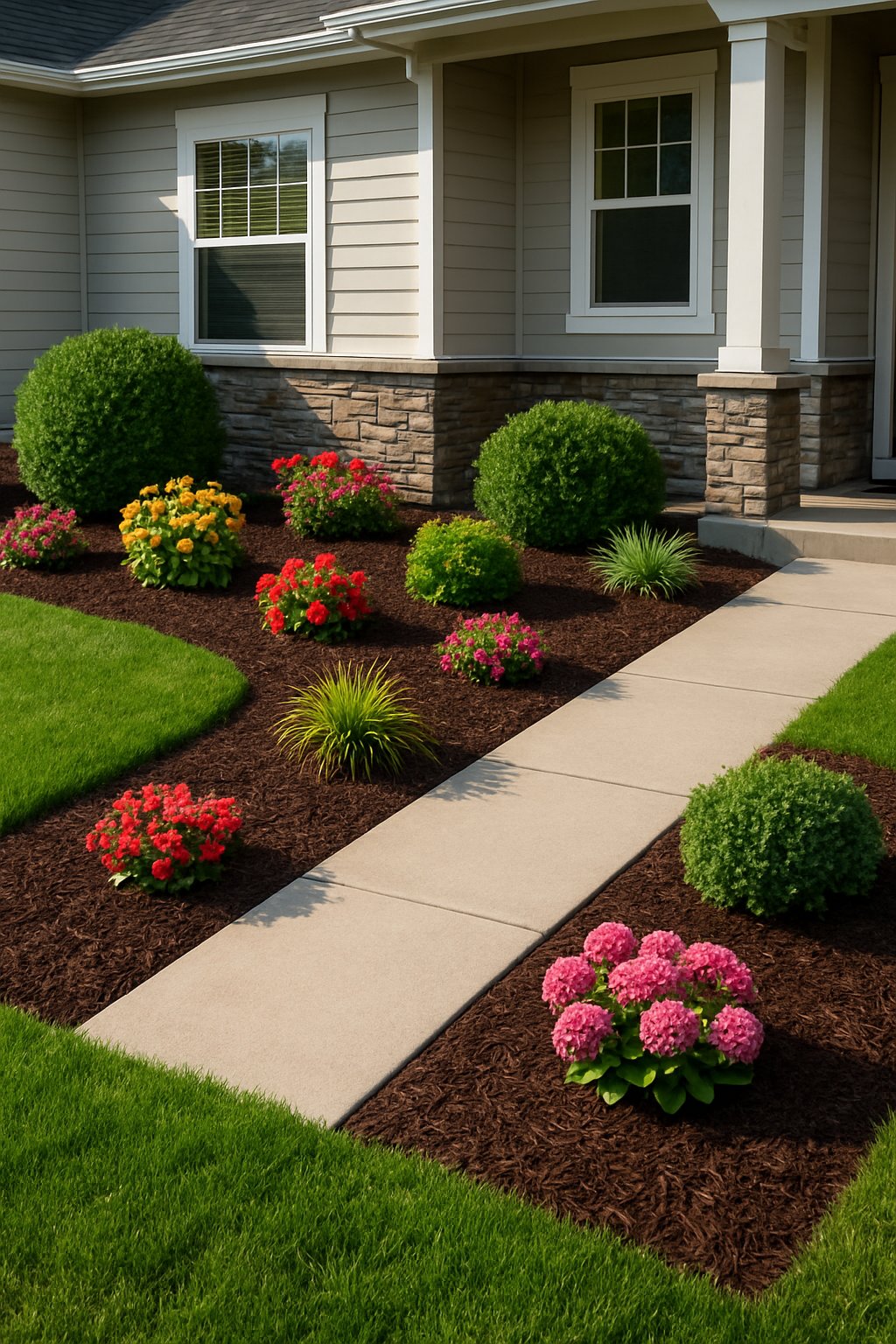
Using decorative mulch can instantly make your front yard look neater and more polished. Mulch adds color and texture around your plants, giving everything a well-cared-for appearance. You can choose from black, red, or natural brown mulch, each creating a different mood and highlighting your plants in a unique way. For example, black mulch provides a striking contrast and looks exceptionally clean.
Mulch is also functional, as it helps suppress weeds and allows the soil to retain moisture, keeping your plants happy with less effort. It also protects the soil from erosion and extreme temperature fluctuations. You can spread mulch in flower beds, around trees, or along walkways to create clean and defined borders. It’s a simple change that can completely transform the feel of your yard.
For a cohesive look, match the color of your mulch to your house. Refreshing it annually will keep your landscape looking sharp and vibrant.
16. Native wildflowers for easy care
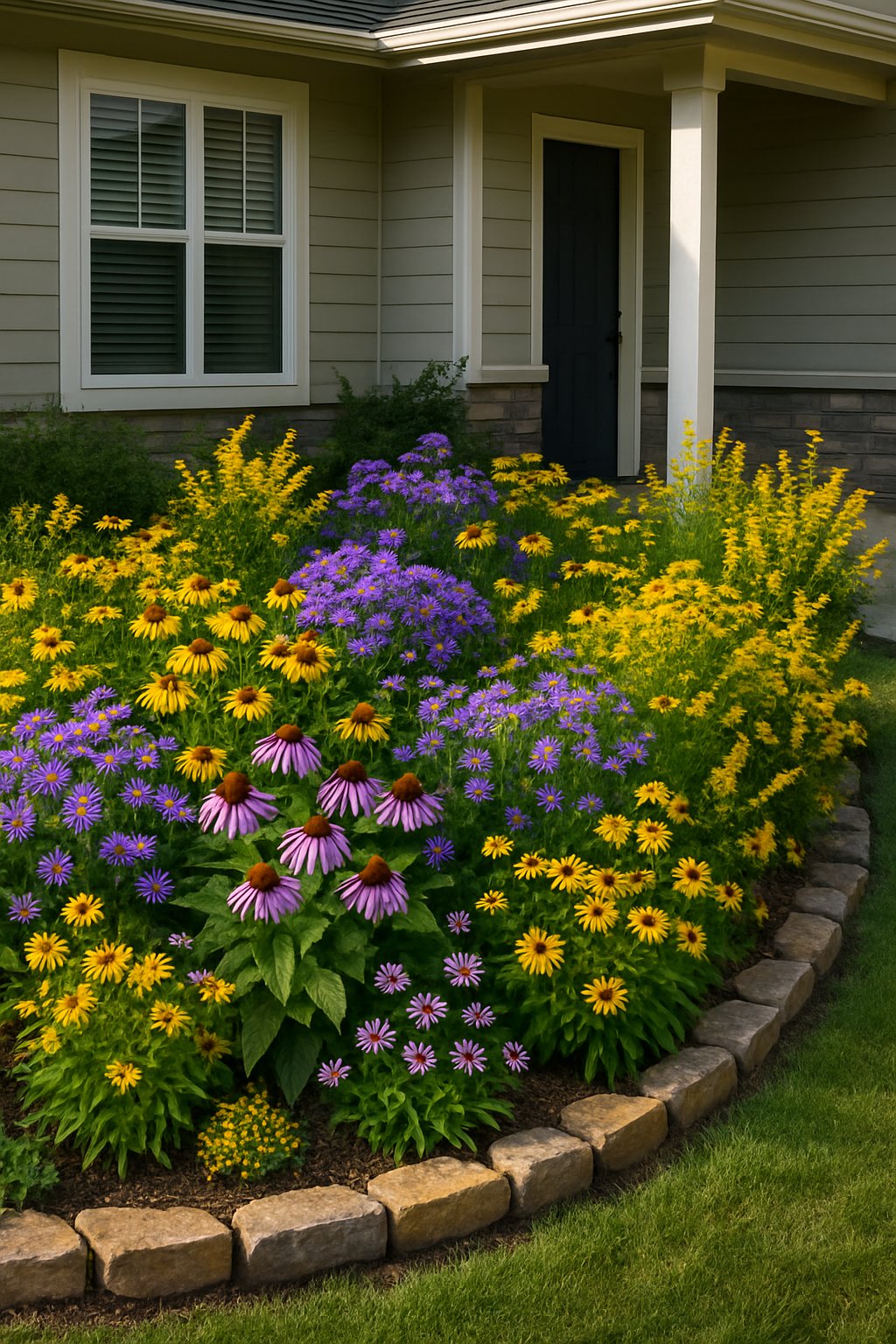
If you’re looking for a low-maintenance front yard, native wildflowers are an excellent choice. Since they are already adapted to your local soil and weather conditions, they require minimal watering or fertilizing. These plants reliably return every year, which is a huge convenience. By planting native wildflowers, you’ll also attract beneficial pollinators like bees, butterflies, and birds, which can help your other plants and support local wildlife. You can achieve a wild, colorful look without dedicating your weekends to yard work.
Wildflowers will spread on their own, allowing your garden to evolve and grow over time. You can choose to mow once or twice a year or let it grow wild for a more natural, meadow-like vibe.
Select native species that bloom at different times to ensure you have continuous color. Once they are established, you will rarely need to water or fertilize them.
17. Front lawn with curved planting beds
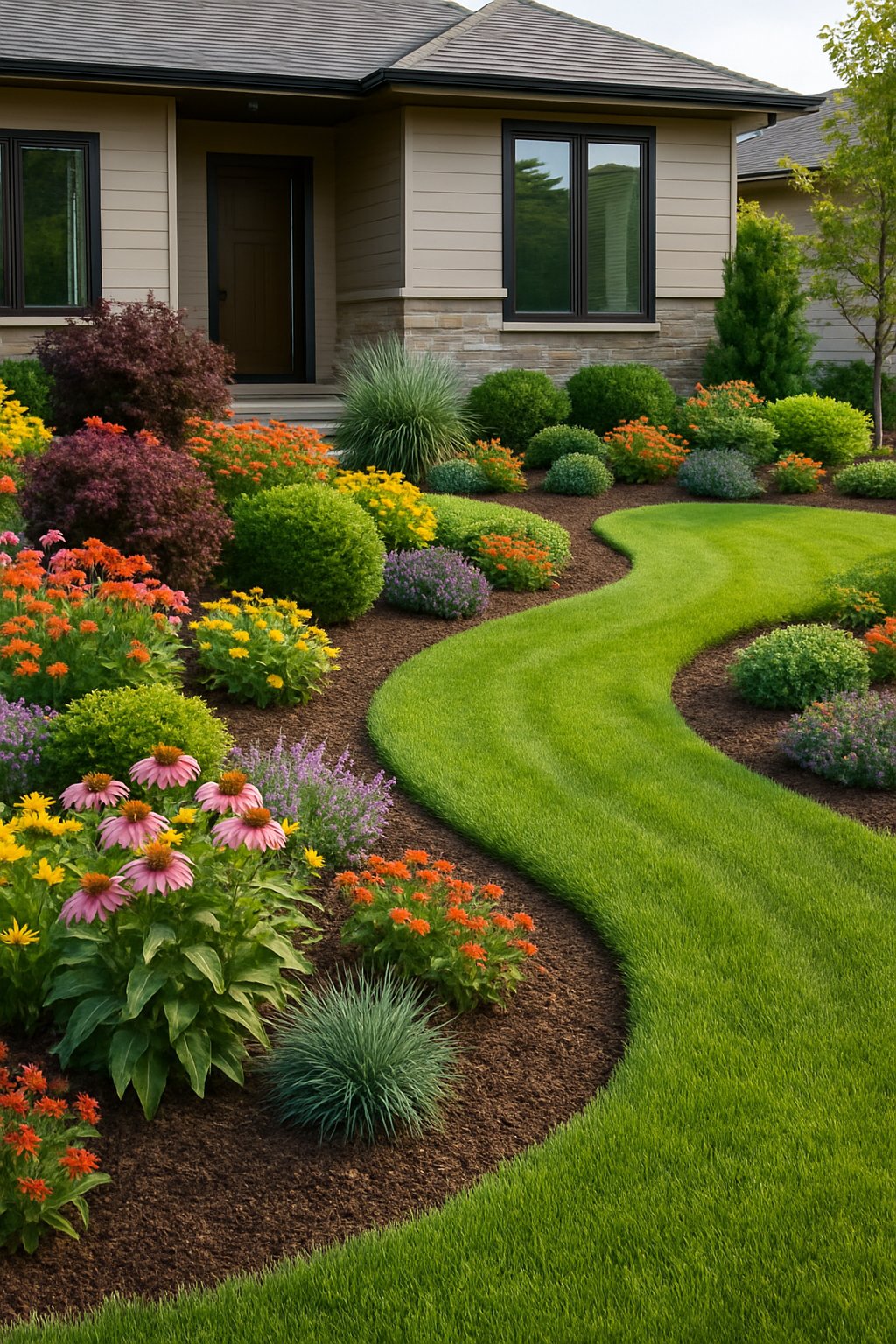
Curved planting beds can give your front lawn a softer and more natural feel, breaking up the straight lines of sidewalks and driveways that can sometimes feel a bit monotonous. Fill these beds with a mix of flowers, shrubs, and ground cover to add color and texture. Using mulch or stones within the beds will help keep them tidy and prevent weeds from taking over. The gentle curves can also subtly and welcomingly guide visitors toward your front door.
For a layered look, plant taller shrubs along the outer edge and shorter ones closer to the lawn. If you want to keep maintenance to a minimum, choose plants that are well-suited to your climate and require little care. Consider colors that will pop against your house and blend harmoniously with the grass.
Before you start digging, you can lay a garden hose on the ground to plan out your curves. This is a great way to help you achieve smooth, natural-looking lines.
18. White brick wall accented with flowers
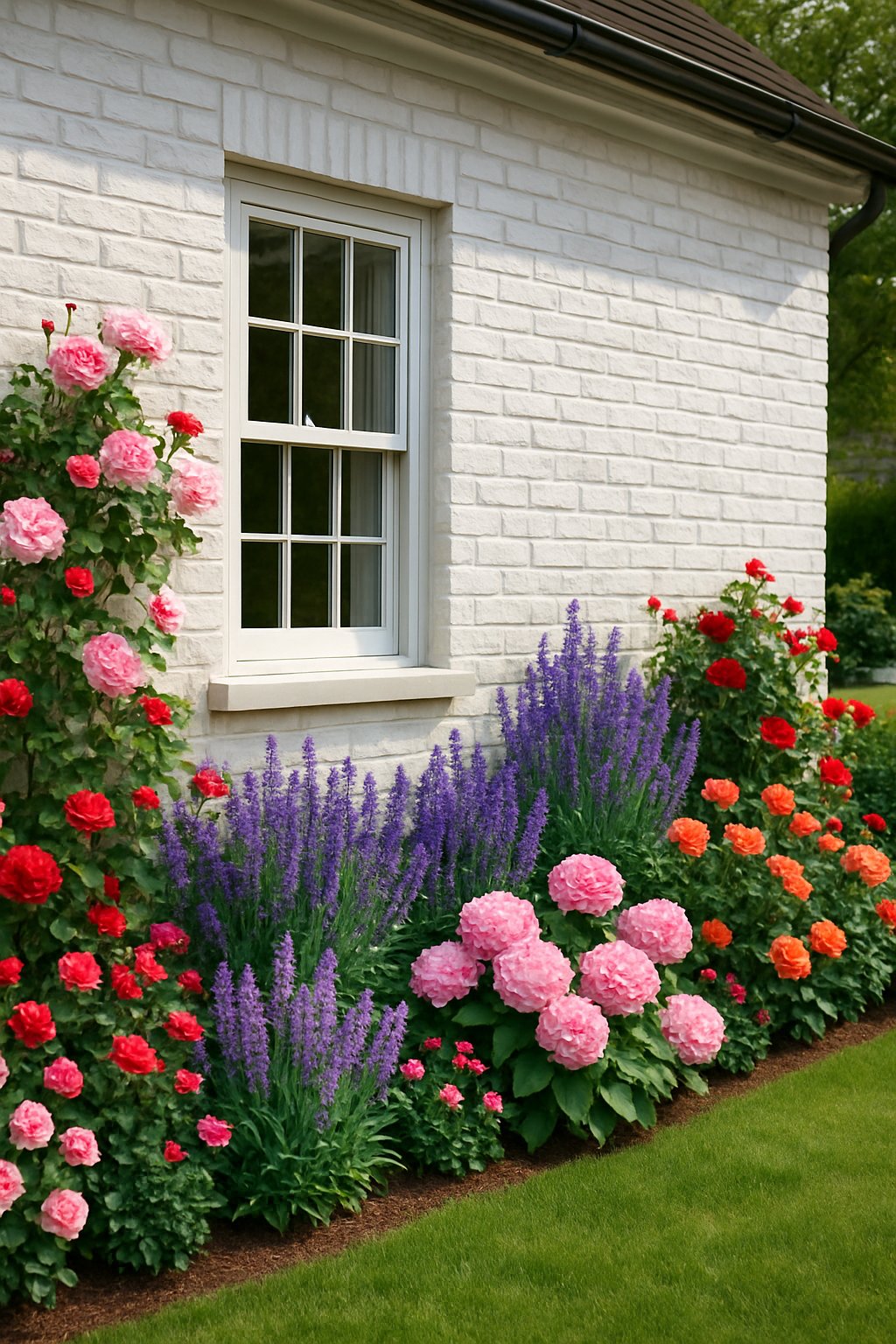
A white brick wall provides a crisp and bright backdrop for a stunning flower display. Planting colorful blooms at the base of the wall can bring life and personality to the space. To create a striking contrast, choose flowers in vibrant shades like red, pink, or purple that will really stand out against the white. You can use flower beds or pots to keep the arrangement organized. If you’re looking to add some height, climbing plants and vines are an excellent choice.
For variety, mix different types of flowers, including both perennials and annuals, to keep your garden looking lively throughout the seasons. A white brick wall reflects sunlight, which can help your flowers grow even better, so be sure to pick plants that can handle plenty of sun. To create balance and make the colors pop even more, you can tuck in small shrubs or greenery between the flowers.
For a powerful color display, choose flowers that bloom at the same time. Using mulch will help keep your beds tidy and retain moisture for your plants.
19. Miniature topiary shapes
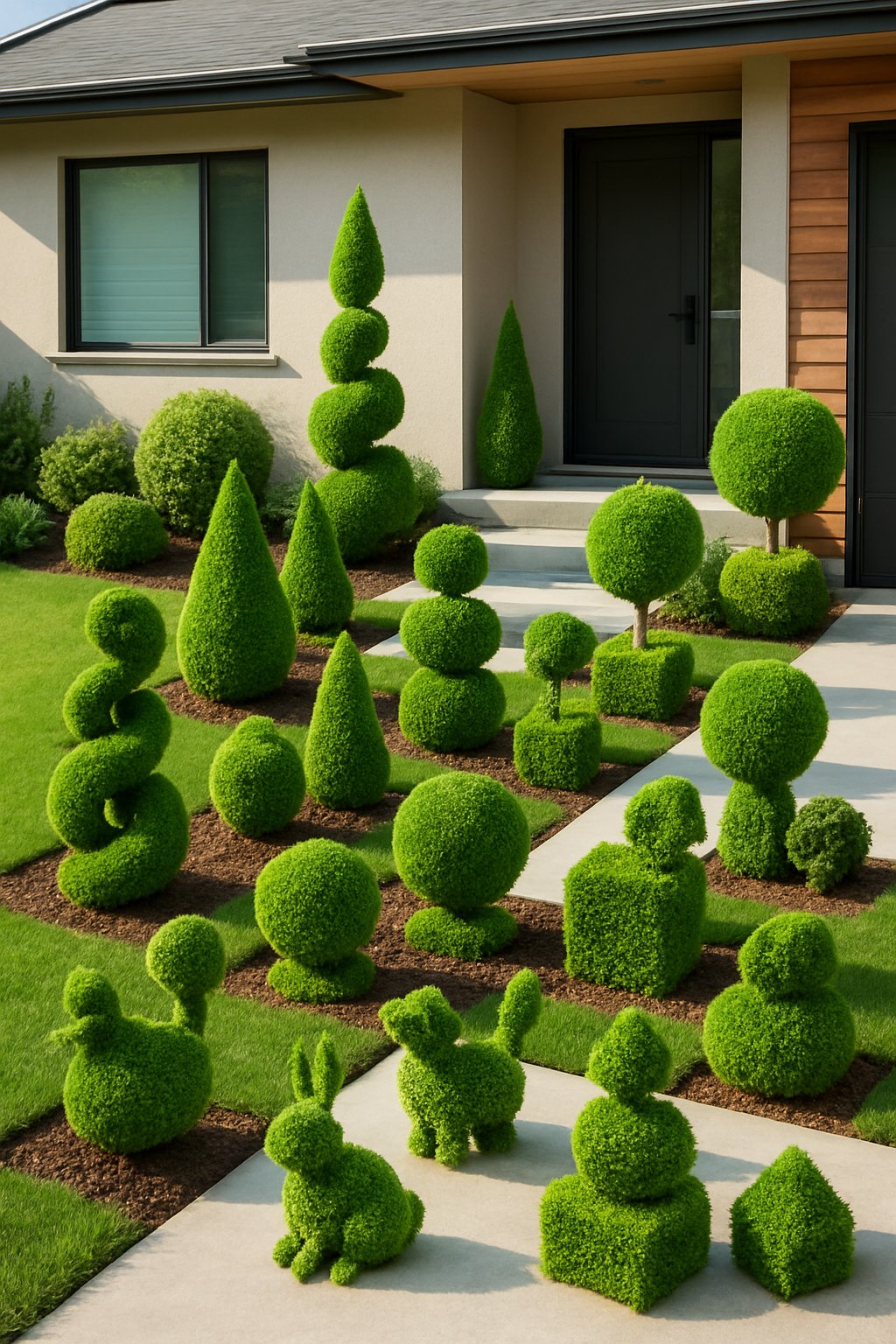
Miniature topiary shapes can bring a touch of charm to your front yard without overwhelming the space. Simple shapes like spheres or cones are a great choice for a tidy look, as they are the easiest to trim and maintain. Small topiaries are perfect for placing in pots on your porch or near the front door, adding a hint of elegance and structure to your yard. For extra visual interest, you can mix up the shapes.
Shrubs like boxwood or small evergreens are well-suited for topiaries and will stay green all year. Regular trimming is necessary to keep the shapes crisp and attractive. Once you get accustomed to the shaping process, they require very little care. Miniature topiaries are also a perfect fit for small gardens or along narrow paths, allowing you to add style without creating clutter.
For the best results, start with young, healthy plants. Trim them often, but only a little at a time, to keep your topiary looking sharp.
20. Front yard perennial garden bed
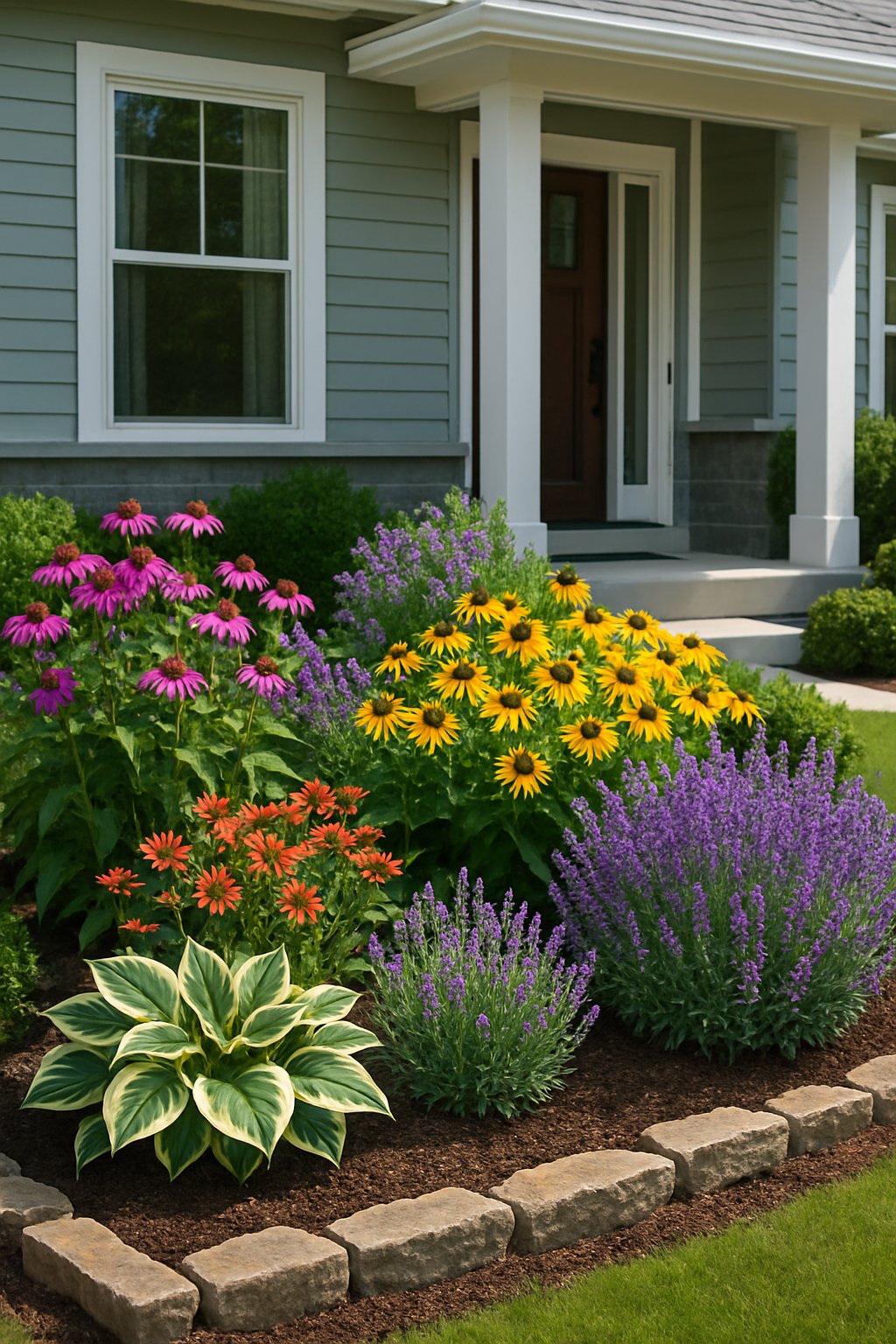
A perennial garden bed can bring color and life to your front yard year after year. By choosing plants that bloom in different seasons, you can ensure there is always something interesting and beautiful to look at. To add texture and height, mix tall grasses with flowering perennials. For a neat, layered appearance, place taller flowers in the back and shorter ones in the front.
Perennials such as coneflowers, black-eyed Susans, and hostas are smart choices as they come back every year. Adding mulch to the bed will help the soil retain moisture and reduce the growth of weeds. To save yourself a lot of work, choose plants that are well-suited to your local climate. Grouping plants with similar water needs together will also make watering easier and more efficient. For a more natural feel, you can scatter a few stones or small rocks around your flower bed; it’s a simple touch that can make a big difference.
Select a mix of perennials that bloom at different times to keep your garden colorful all season long. Including some evergreen plants will help the bed look fresh even in the winter.
21. Colorful flower bed with evergreen contrast
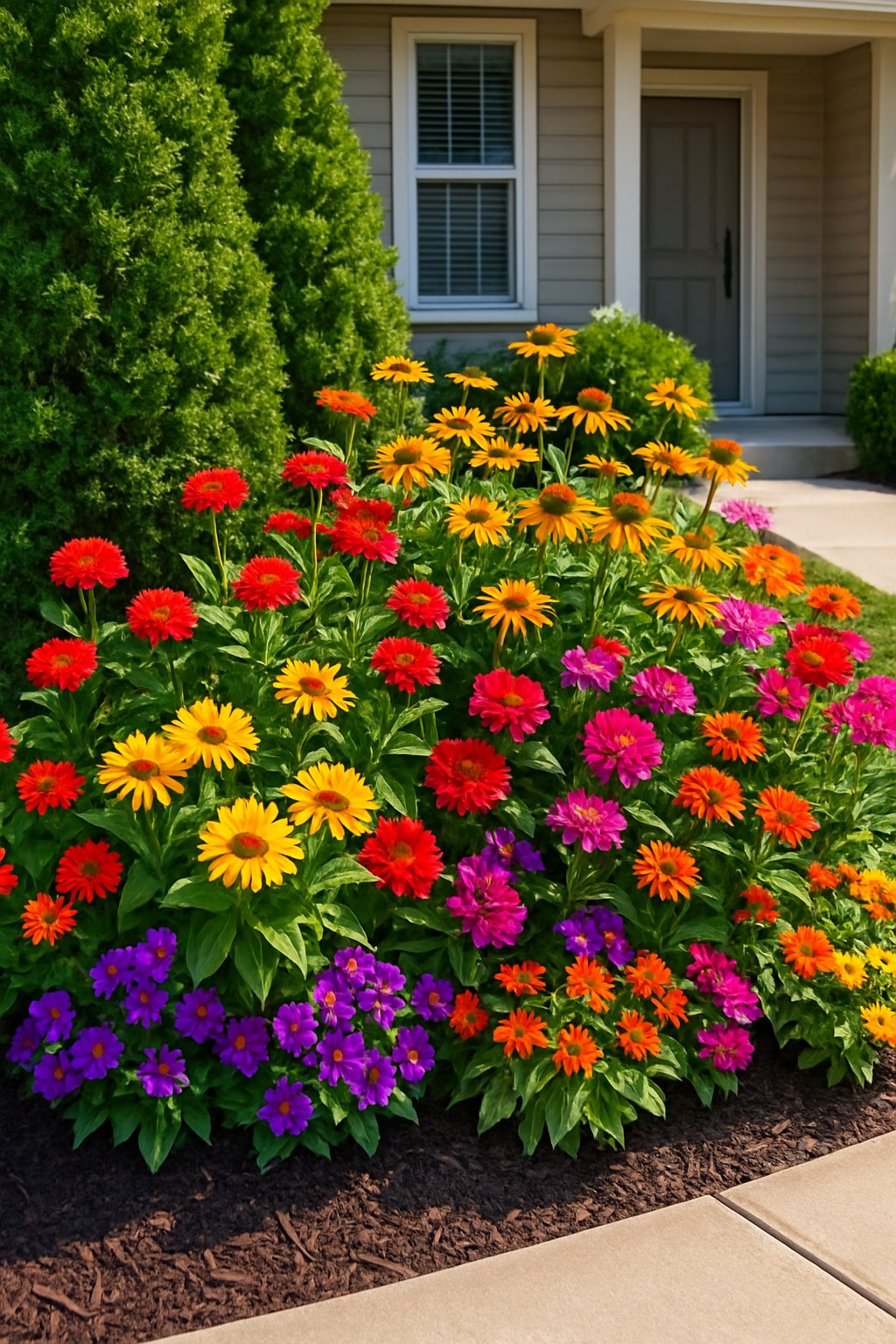
Consider creating a flower bed that mixes bold, colorful flowers with evergreens. The evergreens will keep the bed looking full and green throughout the year, making your flowers truly pop, especially during the winter when blooms are less common. For a burst of summer color, choose flowers like petunias, marigolds, or zinnias. Pair them with shrubs like boxwood or juniper to add structure and year-round greenery.
This combination can also simplify maintenance, as evergreens typically require less attention than annuals, creating a nice balance. To create a layered look, place taller evergreens in the back and shorter flowers in the front. This adds depth and makes the area near your front door or walkway more visually interesting.
Use mulch around your plants to help keep the soil moist and reduce weeds. For a more natural appearance, select evergreens with different textures.
22. Mix of shade and sun plants
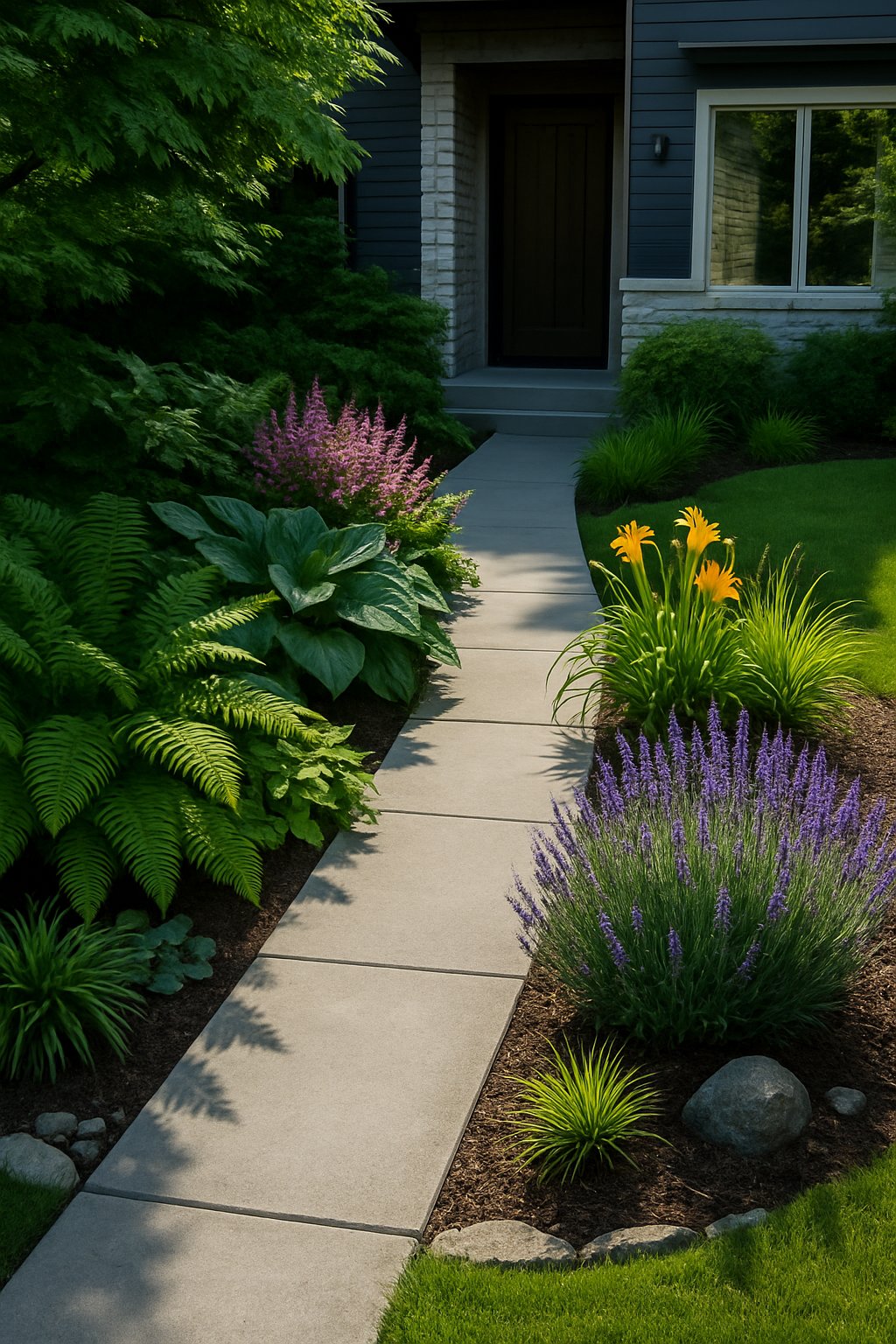
You can create a balanced and dynamic garden by mixing plants that thrive in the sun with those that prefer shade. For bold color, choose sun-loving flowers like hydrangeas. Then, you can add shade-tolerant plants such as foxgloves, which will produce tall, colorful spikes. To bring in texture and fill any empty spaces, you can add grasses or shrubs. Viburnum is a great choice for shady spots and can also tolerate some sun.
This mix will keep your front yard looking varied and full all year long. Just be sure to choose plants that are compatible with your soil type and climate. Since water and sunlight needs can vary, it’s important to plan your layout carefully, but the extra thought will be worth it.
To make care easier, group plants according to their light requirements. Using mulch can help maintain steady moisture levels in both sunny and shady areas.
23. Front yard rock garden with boulders
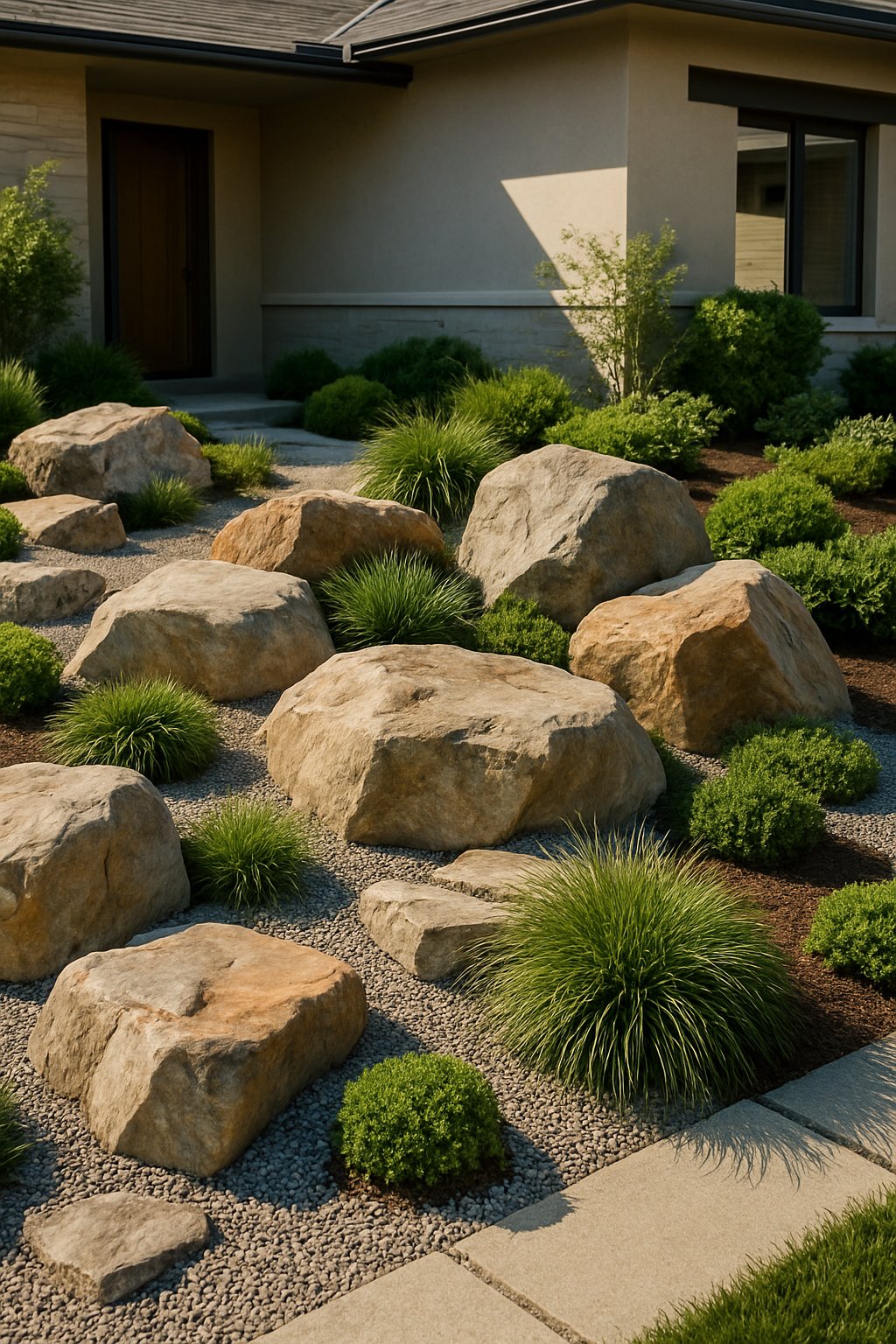
A front yard rock garden featuring boulders can give your home a strong and natural look. Large boulders serve as striking focal points and add texture with very little maintenance. You can either group the boulders together or spread them out to create a balanced design. Fill in the gaps with smaller rocks and gravel to define different spaces.
Drought-tolerant plants like succulents or ornamental grasses are a great choice for rock gardens, as they thrive around stones and keep maintenance low. This type of garden is particularly well-suited for dry climates or for those who prefer not to water frequently. You can also add flat stones to create a simple path through the garden, which is both practical and makes the space feel more inviting. For a touch of softness, you can tuck in some moss or ground cover in shady spots between the rocks.
Choose boulders of varying sizes to make your garden feel more natural. Place plants that require less water near the rocks to ensure everything thrives with minimal care.
24. Front porch planter mix
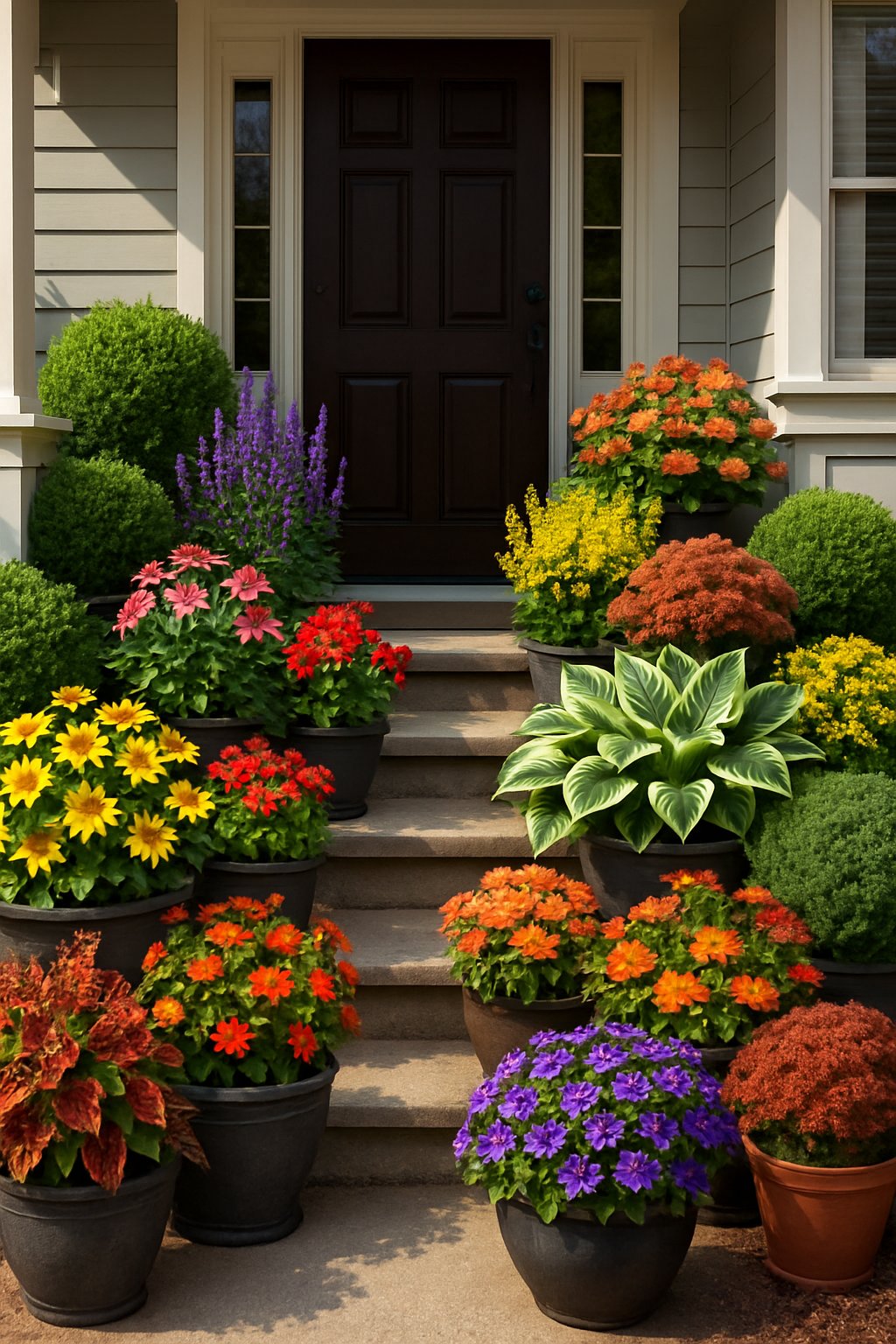
Mixing a variety of planters can make your front porch look lively and welcoming. Try using a combination of tall, medium, and small containers to add depth and visual interest. For a more eclectic look, you can pair ceramic pots with wicker baskets or metal planters. To create a vibrant display, choose plants with different textures and colors.
For a layered effect, combine leafy greens, bright flowers, and trailing vines. You can also use hanging baskets alongside standing pots to fill up vertical space. Adding comfortable seating with cushions near your planters can make your porch feel like an extension of your living space. It’s an easy and effective way to enhance your home’s entrance.
For the best results, choose plants that will thrive in your specific light conditions. Mix textures and heights to create a balanced and eye-catching porch display.
25. Herb garden near the entryway
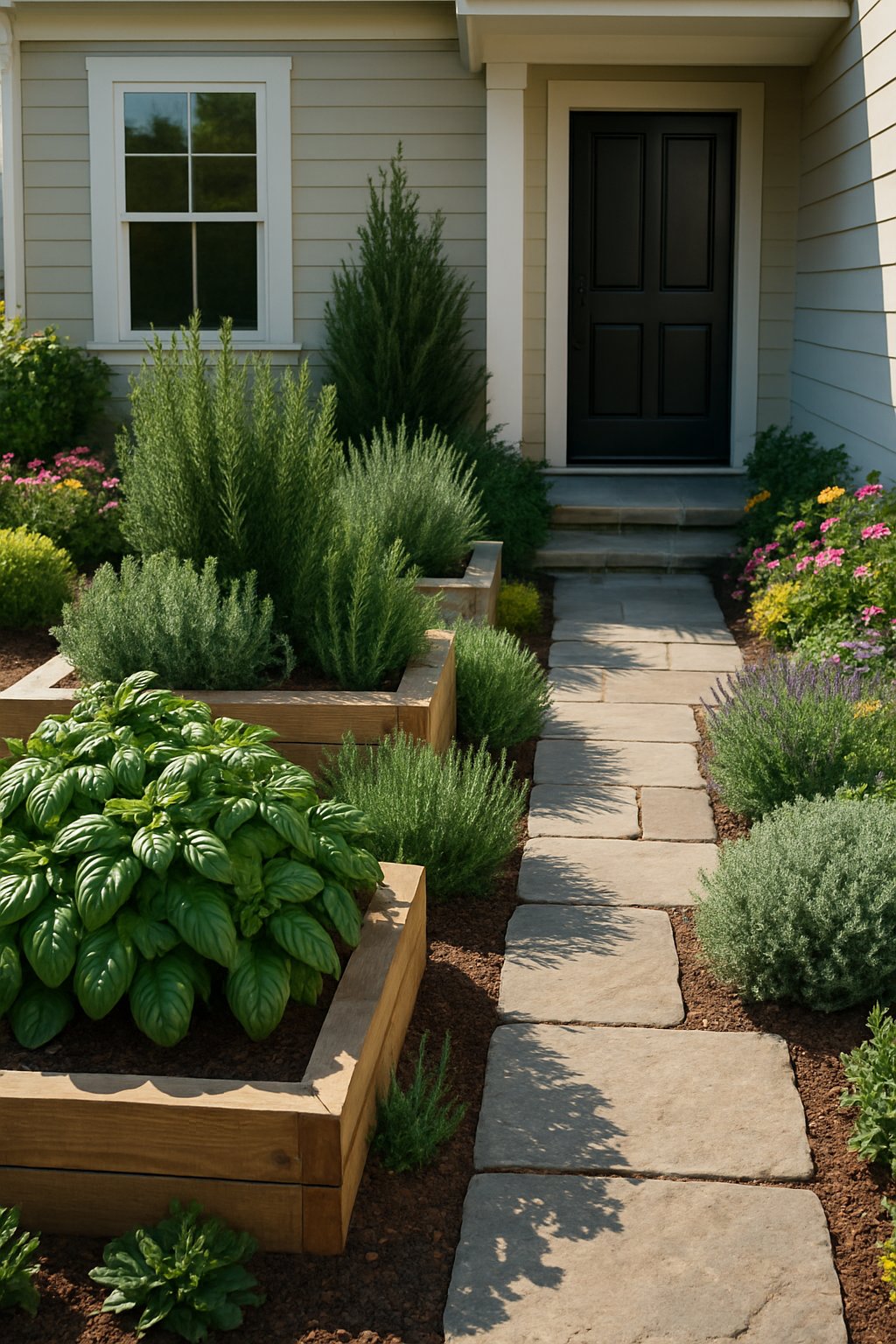
Placing an herb garden near your front door is both beautiful and convenient, as you’ll have fresh herbs for cooking just a few steps away. For the best results, choose a sunny spot with good drainage. You can plant your favorite herbs, such as basil, thyme, rosemary, and mint, in decorative pots or raised beds to keep things tidy. Herbs also release wonderful scents that will greet your guests as they arrive.
This style is a great fit for small or awkwardly shaped spaces. You can tuck herbs into window boxes, narrow beds, or along your walkway. Regular pruning will help keep everything neat and productive.
Choose herbs that you will use frequently to keep your garden looking lively. Water them in the morning to avoid damp leaves, which can sometimes lead to disease.
26. Door flanked by potted palms
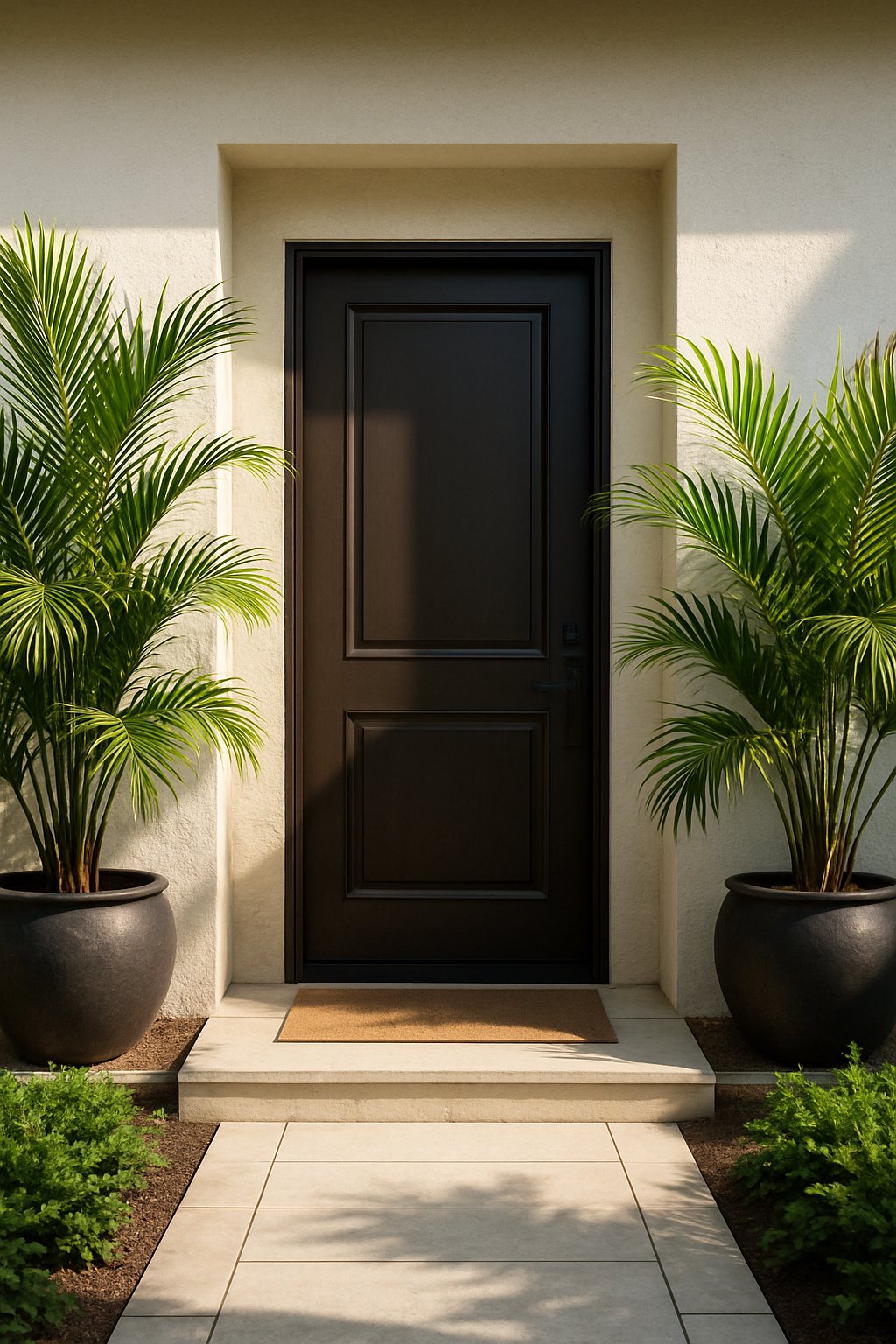
Placing potted palms on each side of your front door can create a balanced and welcoming atmosphere. Palms add height to the entryway without making it feel crowded. Choose pots that complement your home’s style; terracotta or sleek black are often good choices. Palm varieties like the areca or kentia palm do well in pots and can adapt to changes in light.
Ensure your palms receive enough indirect sunlight and water them regularly. This setup is great for porches or steps and can add a tropical touch without taking up a lot of space. For a fresh look, you can swap out the pots or palms with the seasons, making it a flexible and fun design element.
To avoid extra maintenance, select palms that are well-suited to your climate. Make sure the pots have good drainage to keep the roots healthy.
27. Bold statement tree like Japanese maple
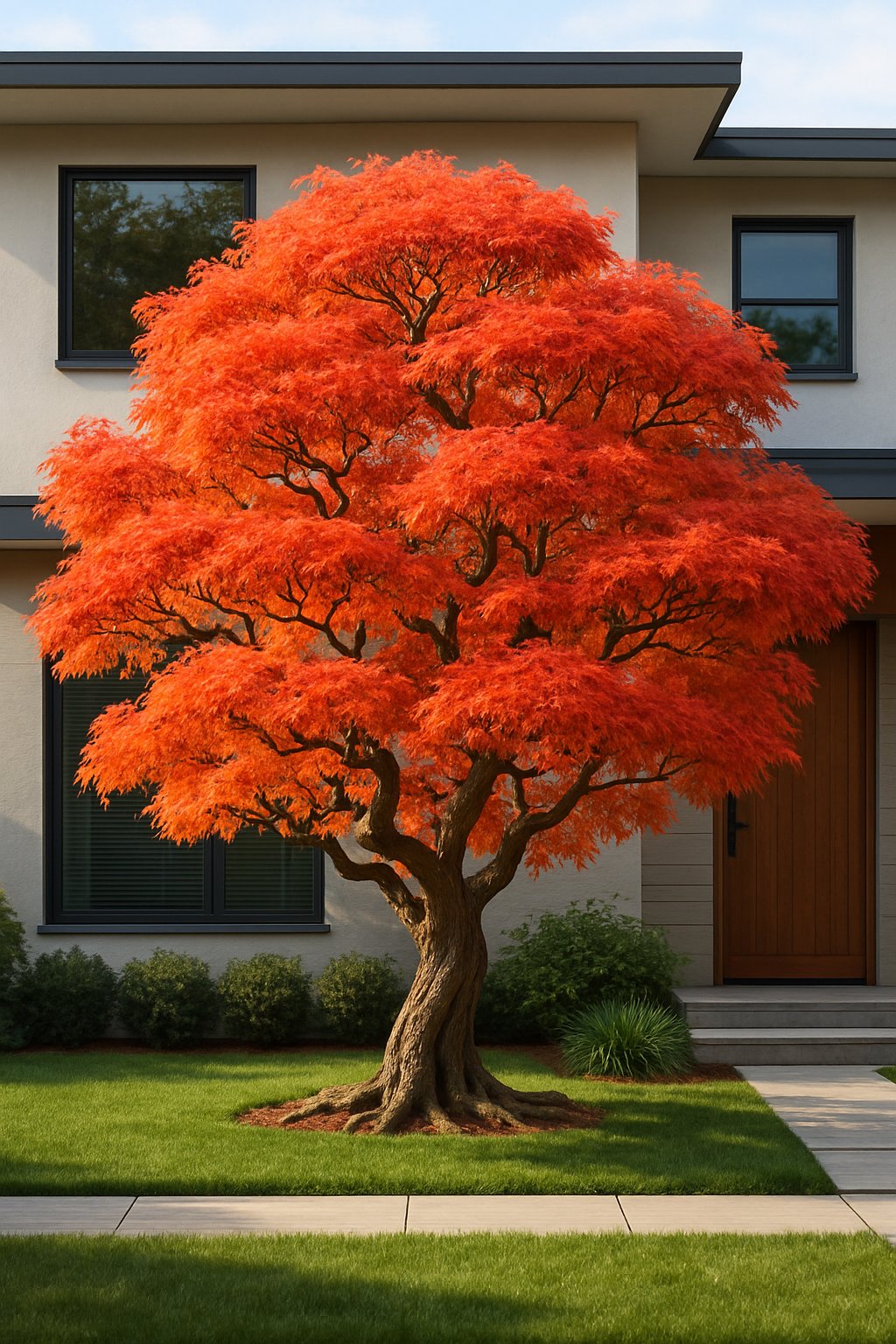
A Japanese maple can make a bold and beautiful statement in your front yard. Its unique shape and colorful leaves will immediately grab your attention. To create a focal point, you can place one near your walkway or at the corner of your house. The tree’s delicate canopy can also soften the sharp edges of stone walls or pergolas.
For extra color and texture, you can plant bright flowers or small shrubs at its base, which will keep your yard looking lively throughout the year. Japanese maples are a great fit for small spaces, so you don’t need a large yard to enjoy one. For the best results, choose a variety that is suited to your climate.
To protect its leaves, plant your Japanese maple where it will receive morning sun and afternoon shade. Applying mulch around the base will help keep the soil moist and the roots cool.
28. Flower beds edged with natural stone
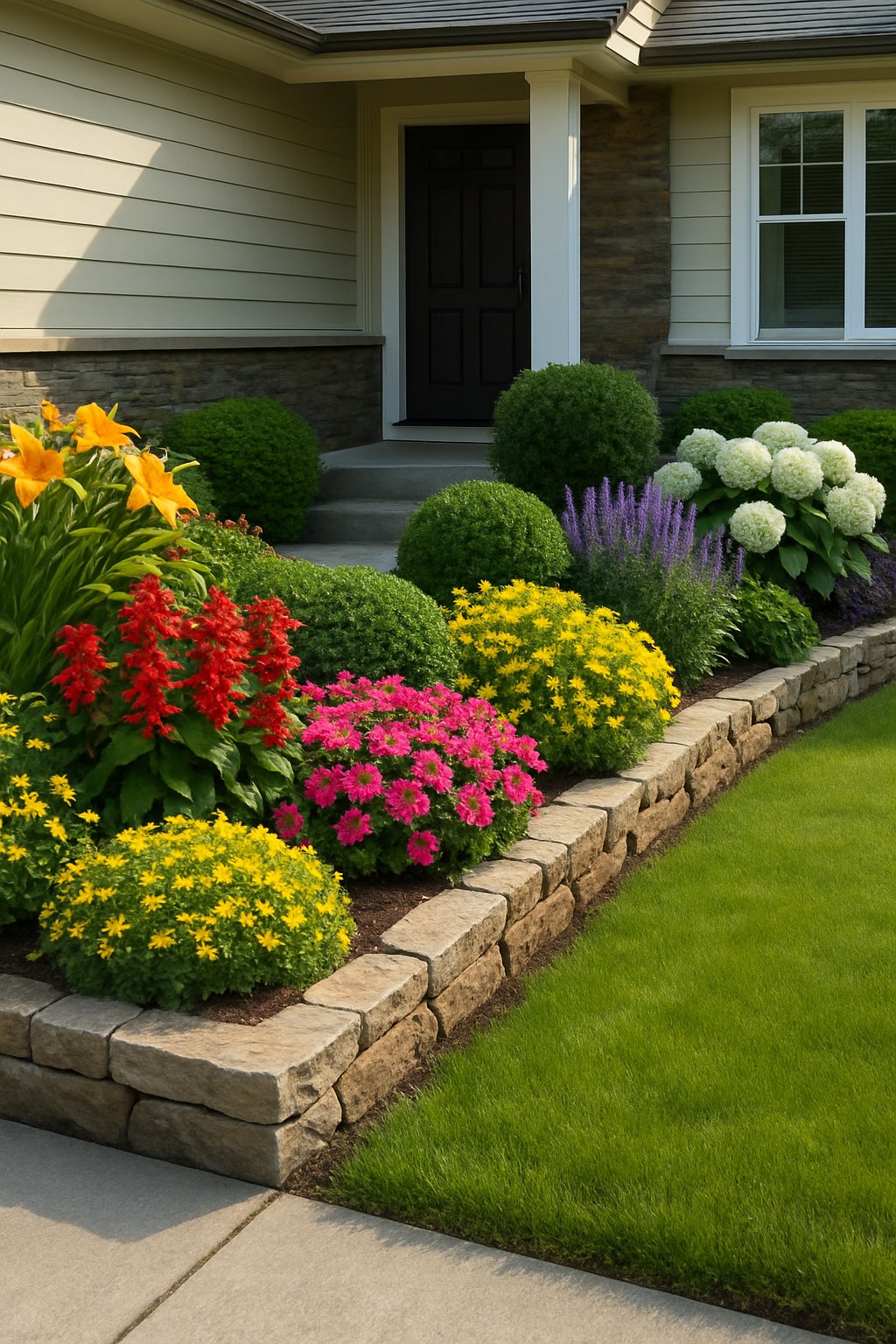
Edging your flower beds with natural stone can instantly give your front yard a cleaner and more polished vibe. The stones will hold the soil and mulch in place, keeping things tidy. They also bring a timeless and natural look to the garden. For a softer appearance, you can use smooth river rocks, or for something bolder, you can opt for rough-cut stones.
Stones are available in a variety of colors, so you can choose ones that complement your house or the plants you have. To add a bit of height and depth, you can try building low rock walls. This will make your flowers stand out more and create a nice, layered effect. Natural stone is a durable option that requires very little maintenance; unlike wood, it won’t rot and can withstand the weather. This type of edging is versatile and can work with any shape of bed, whether curved or straight. As you set them out, consider how the stones will guide the eye through your garden.
For easier stacking and a neater look, use stones that are flat on one side. Sealing porous stones can help prevent the buildup of moss and dirt.