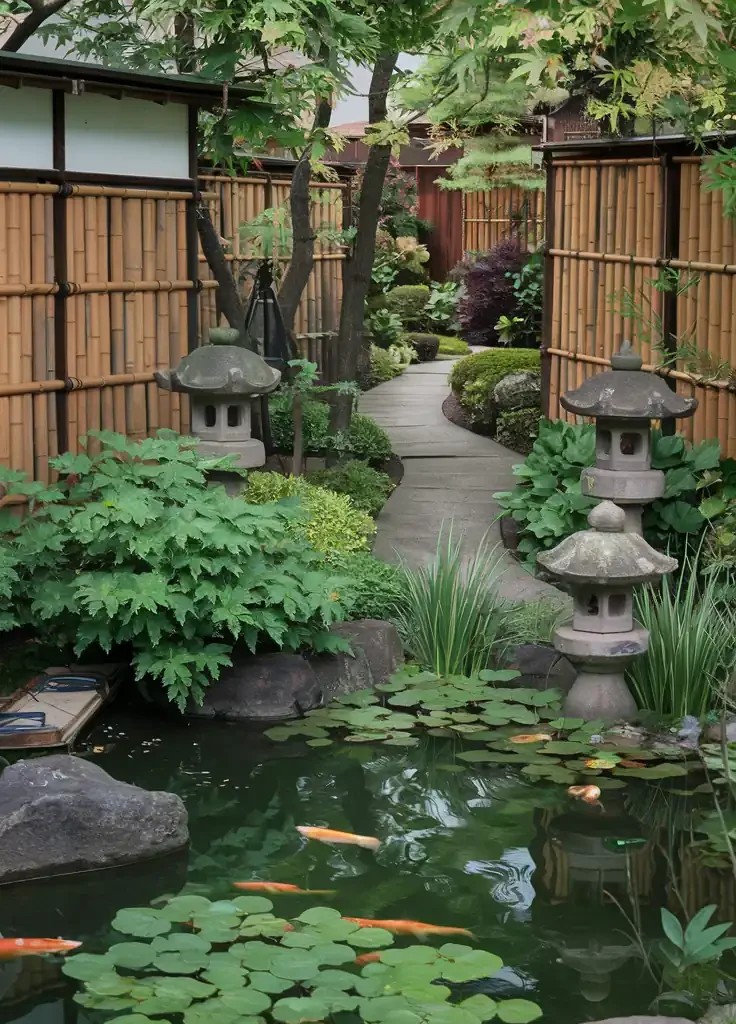
Japanese gardens masterfully combine natural beauty with deep tranquility, offering a way to turn any outdoor area into a peaceful retreat. With these 25 design concepts, you can craft a serene environment that captures the essence of Japanese aesthetics and philosophy. Get ready to dive into the calming elements and understated elegance of Japanese garden design.
1. Zen Rock Gardens
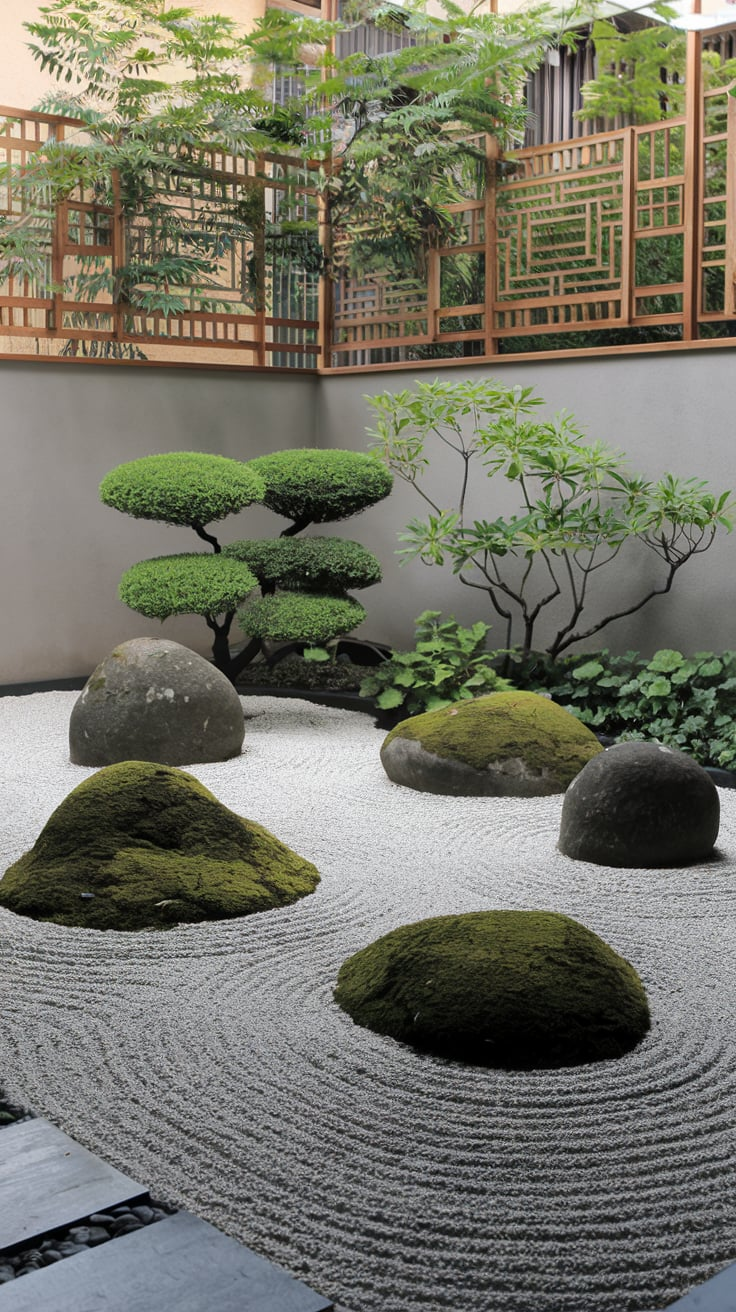
Zen rock gardens, also known as dry landscapes, provide a tranquil space for quiet reflection. These gardens are thoughtfully arranged with rocks, gravel, and very few plants. The intentional simplicity helps quiet the mind and encourages you to unwind.
You can rake unique patterns into the gravel, creating designs that suggest the ripples or waves of water. This practice adds a personal touch and can shift the entire mood of your garden.
Think about using larger rocks to establish strong focal points. Arranging smaller stones around them will enhance the overall composition and create visual harmony.
These gardens are wonderfully suited for smaller areas. They can be designed for a patio or even a quiet corner of your yard.
For a truly calming effect, stick to neutral colors for the rocks and gravel. This choice helps maintain a balanced and serene feeling throughout the space. Raking patterns in the gravel can become a soothing, meditative activity.
2. Pagoda lanterns
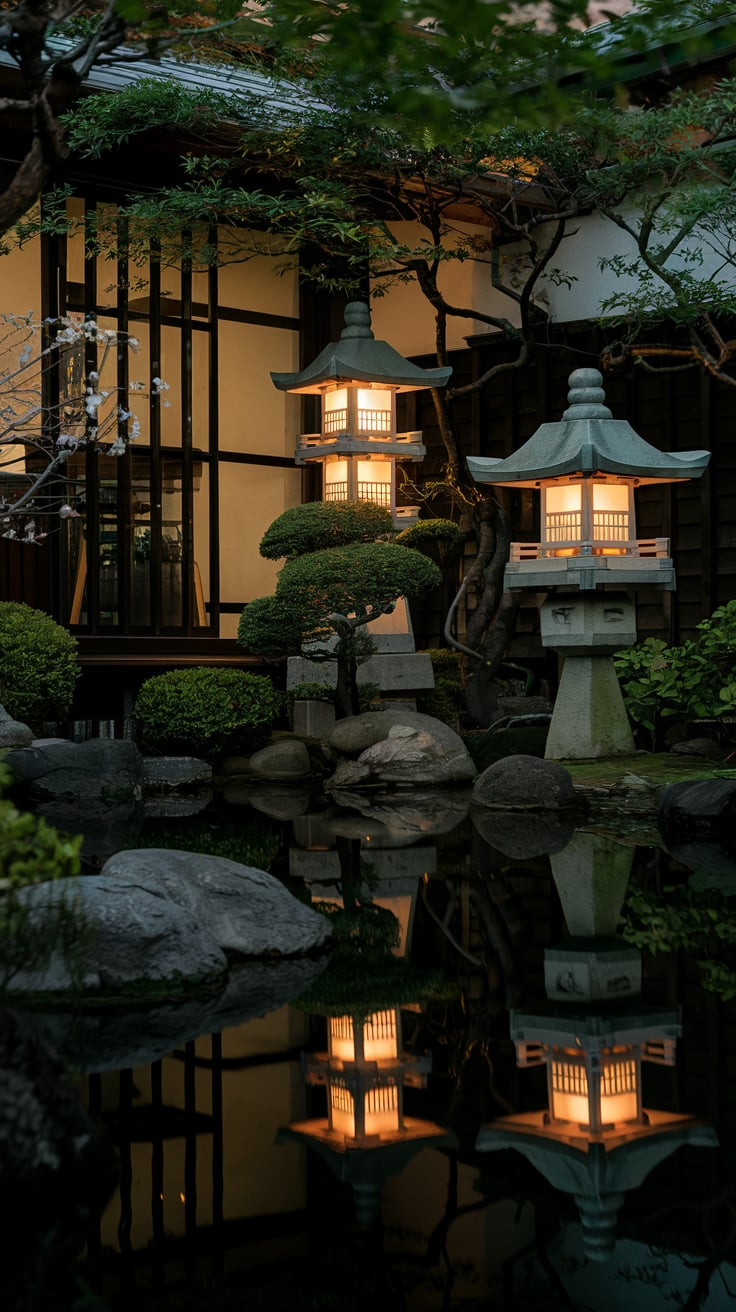
Pagoda lanterns bring a distinctive architectural element to your Japanese garden. These striking structures are available in many different styles and materials, commonly crafted from stone or concrete.
They fulfill both a decorative and practical role, casting a soft glow on pathways and fostering a serene evening atmosphere. You can position them near water features or along walking trails to create an inviting ambiance.
Selecting the right lantern allows you to express your personal style. Lanterns with a red finish offer a classic, traditional charm, while those in more muted colors blend seamlessly with the natural surroundings.
To really make your lanterns stand out, try planting low shrubs around their base. This technique creates a soft, beautiful glow while highlighting the pagoda’s elegant form.
3. Japanese maple trees
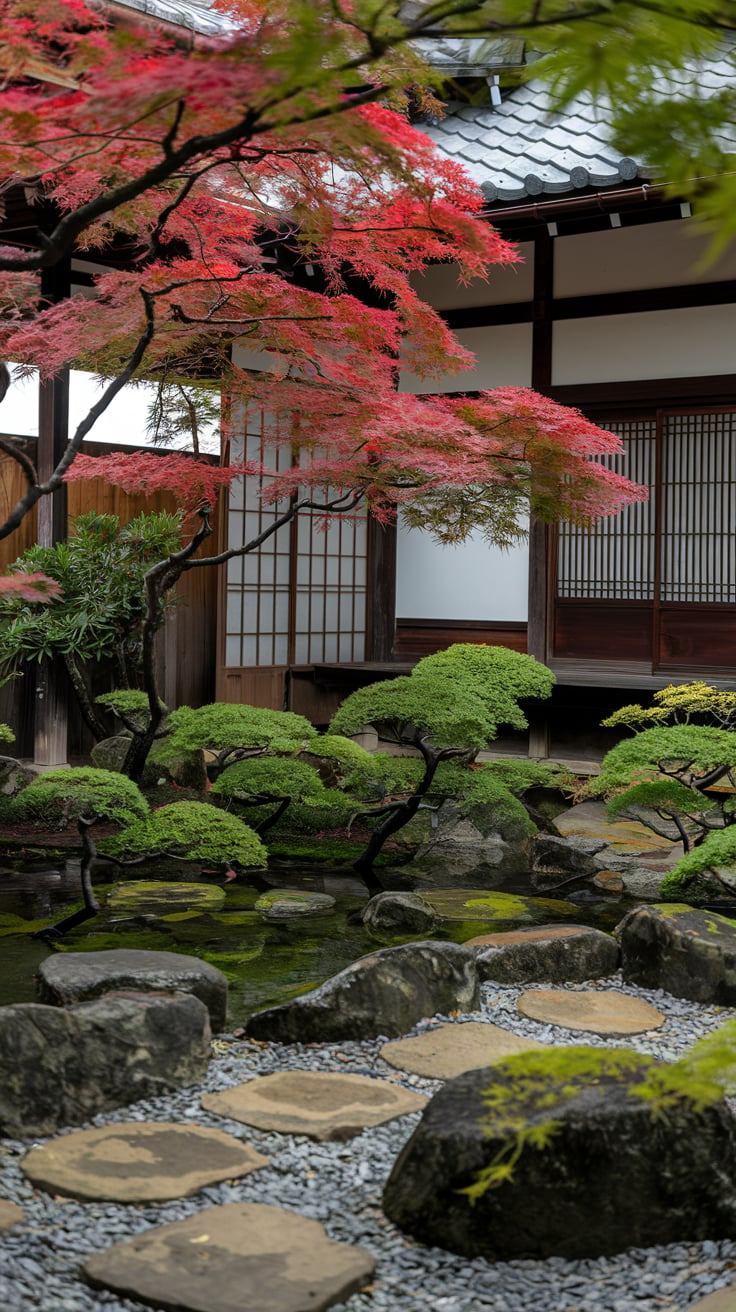
Japanese maple trees are breathtaking additions to any garden landscape. They are available in a range of heights, usually growing from 8 to 25 feet tall. Be sure to pick a variety that is properly scaled for the space you have.
These trees do best in well-drained soil and appreciate some partial shade. Their exquisite foliage transforms with the seasons, offering dynamic color and charm all year long.
You can feature a Japanese maple as a stunning focal point in your yard. They are magnificent on their own or planted alongside other plants. For a truly vibrant display, pair them with azaleas and hydrangeas.
Remember that certain cultivars boast standout colors that produce a truly dramatic effect. Some of the most popular choices include the deep red ‘Bloodgood’ and the vibrant ‘Katsura.’
4. Koi ponds
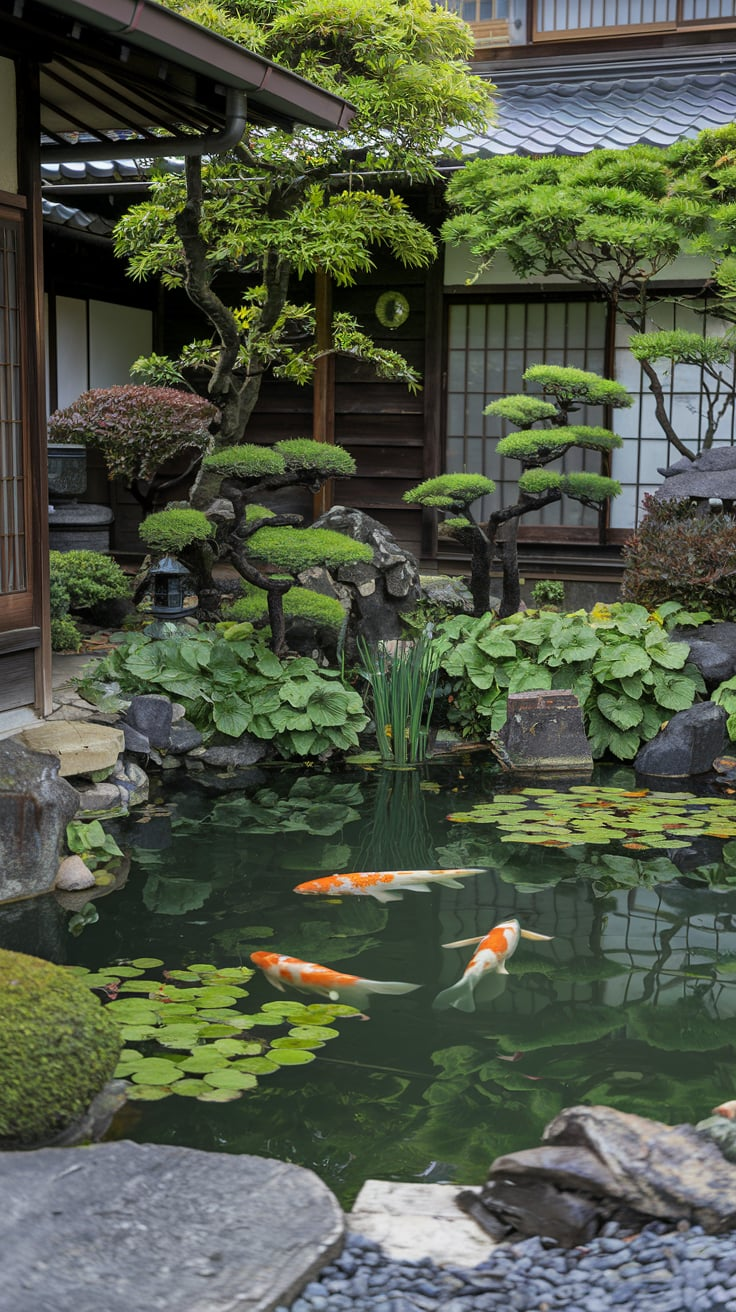
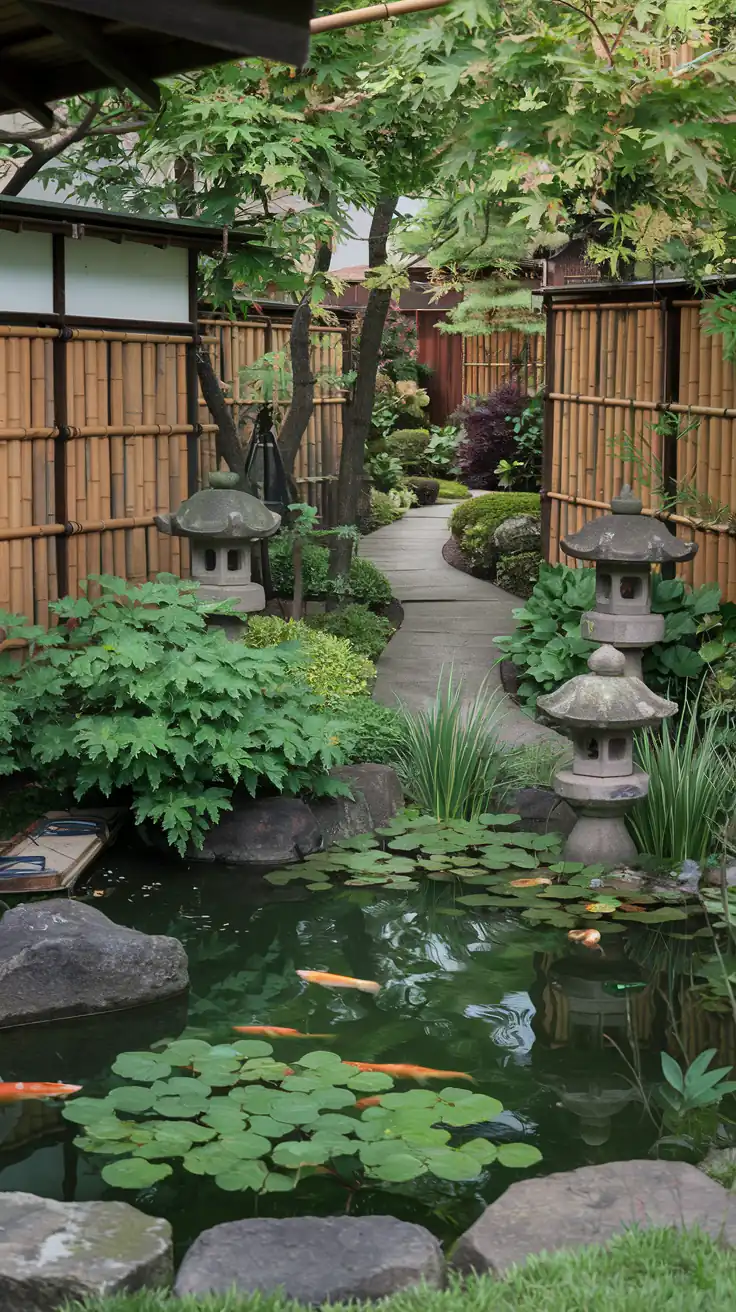
Koi ponds are a spectacular feature in any Japanese garden. They cultivate a peaceful environment and capture attention with the graceful movement of beautiful koi fish. You can design a classic pond filled with colorful fish, aquatic plants, and a few well-placed decorative stones.
Consider incorporating elements like a small, gentle waterfall or a dedicated viewing platform. This addition provides a perfect spot to watch the moon’s reflection on the water’s surface. Make sure you include plants like water lilies to offer necessary shade and oxygen for the fish.
Koi ponds can be built in various sizes, making them adaptable even for smaller gardens. Just remember that adding natural elements will greatly enhance the pond’s overall beauty.
Choosing the right location for your koi pond is critical. It should receive enough sunlight while also having some shaded areas to protect the fish.
5. Stone pathways
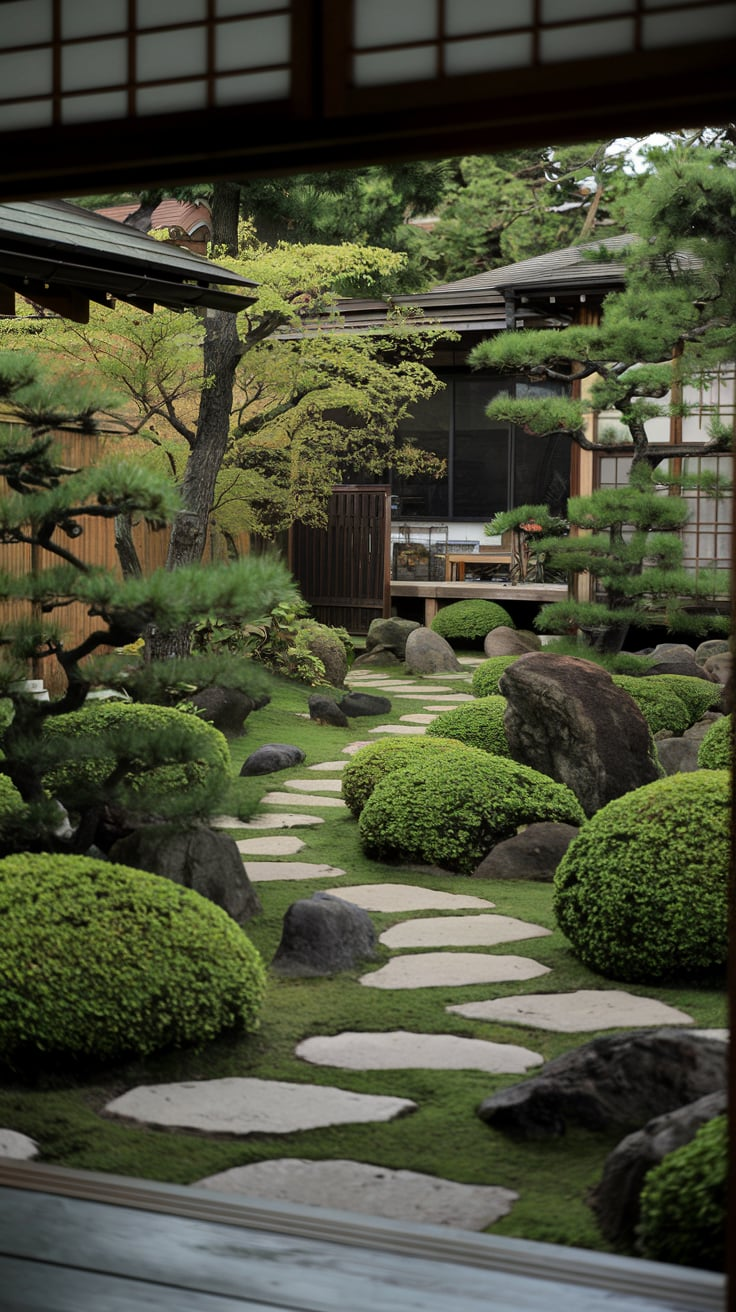
Stone pathways are a wonderful feature to include in a Japanese garden. They establish a natural sense of flow and gently guide visitors through your outdoor space. Walking on these paths is a calming experience, connecting you directly to nature.
You can select from different kinds of stones, such as smooth river rocks or larger, flat flagstones. Every choice brings its own unique character and elevates the garden’s overall appearance.
Think about designing winding paths that inspire a sense of exploration. Gently curved walkways create an air of mystery, inviting guests to discover what lies around the corner.
Planting moss or small ground cover along the edges can make the pathways feel even more inviting. This combination not only beautifies the area but also fosters a deeply tranquil atmosphere.
6. Bamboo fences
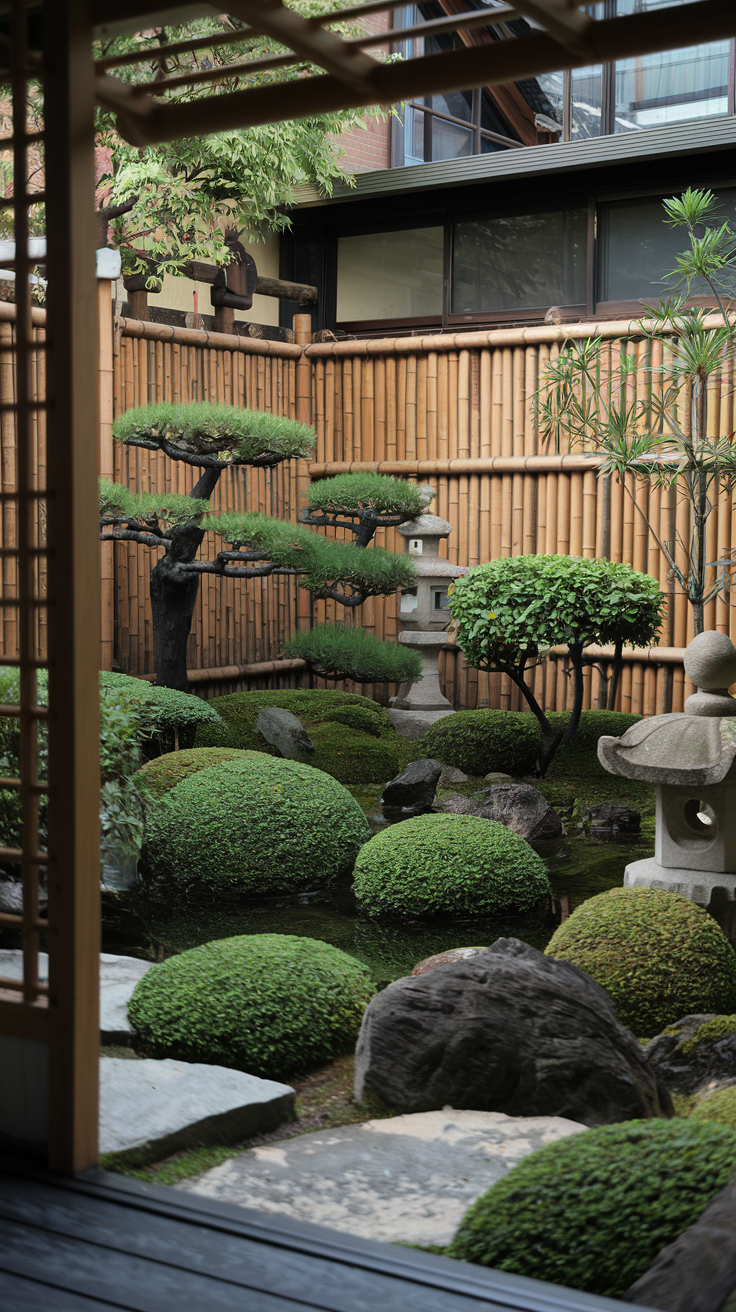
Bamboo fences can introduce a unique and natural texture to your garden. They are not just beautiful but also highly practical. Bamboo is a strong material that can endure for several years with the right care.
You can achieve different aesthetics with bamboo. For a traditional style, try using tall, vertical canes that are tied together. This design offers an elegant appearance while also providing a sense of privacy.
Another great option is to use horizontal bamboo panels. These can be set within a wooden frame and are typically easy to install. You could even incorporate subtle lighting to enhance the fence’s look after dark.
Bamboo is a lightweight material, which makes it simple to handle. You can design your fence to follow the unique contours of your garden.
7. Shishi-odoshi water fountain
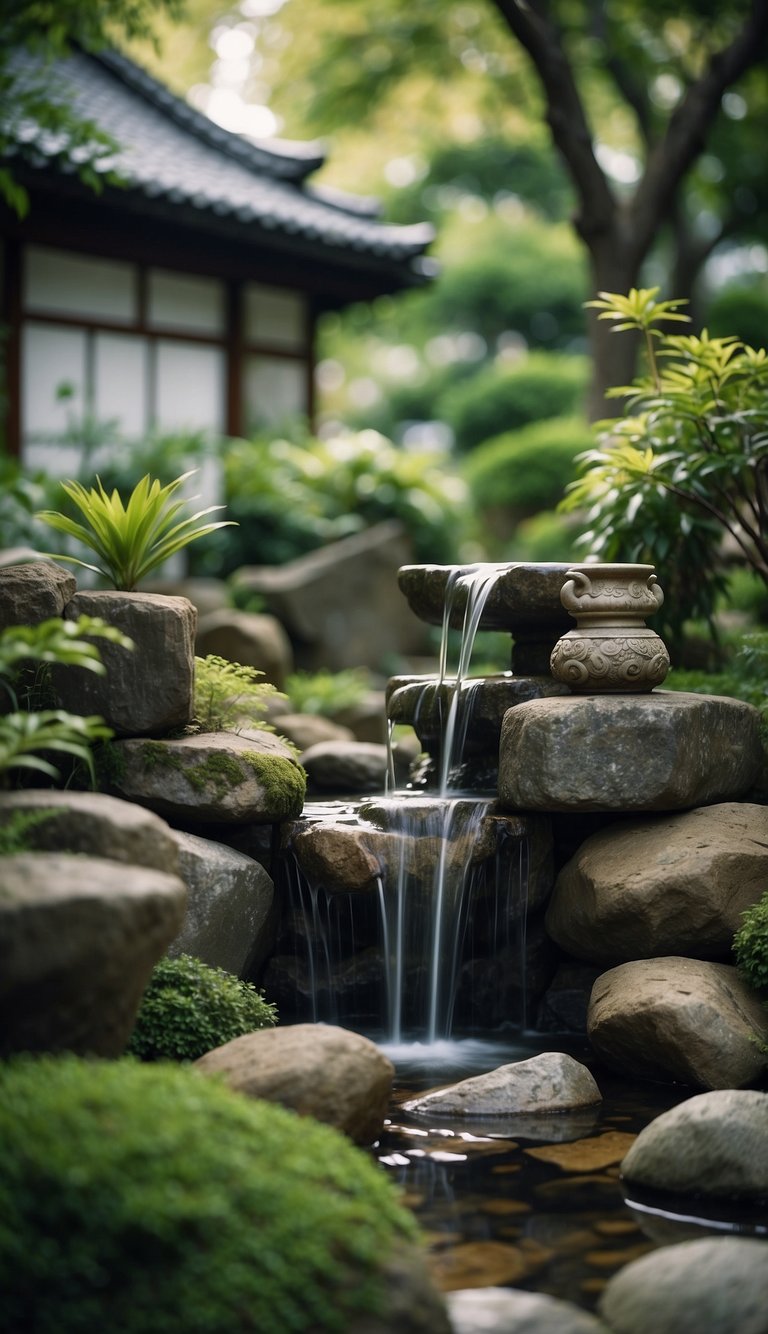
The Shishi-odoshi, often called a deer-scarer, is a delightful water feature for your garden. It features bamboo tubes that slowly fill with water, then tip over to spill their contents, creating a soft clacking sound as they strike a rock. This sound is traditionally used to frighten away unwanted animals like deer.
These fountains bring a peaceful and organic feeling to any outdoor space. You can find them in many styles, from very simple designs to more complex arrangements. They blend beautifully with other garden elements like stones and plants.
To build your own, you will need bamboo, a stone, and a water source. This makes it a creative and enjoyable project for any gardening enthusiast. Consider adding pebbles or moss around the base to enhance its natural beauty.
8. Azaleas and camellias
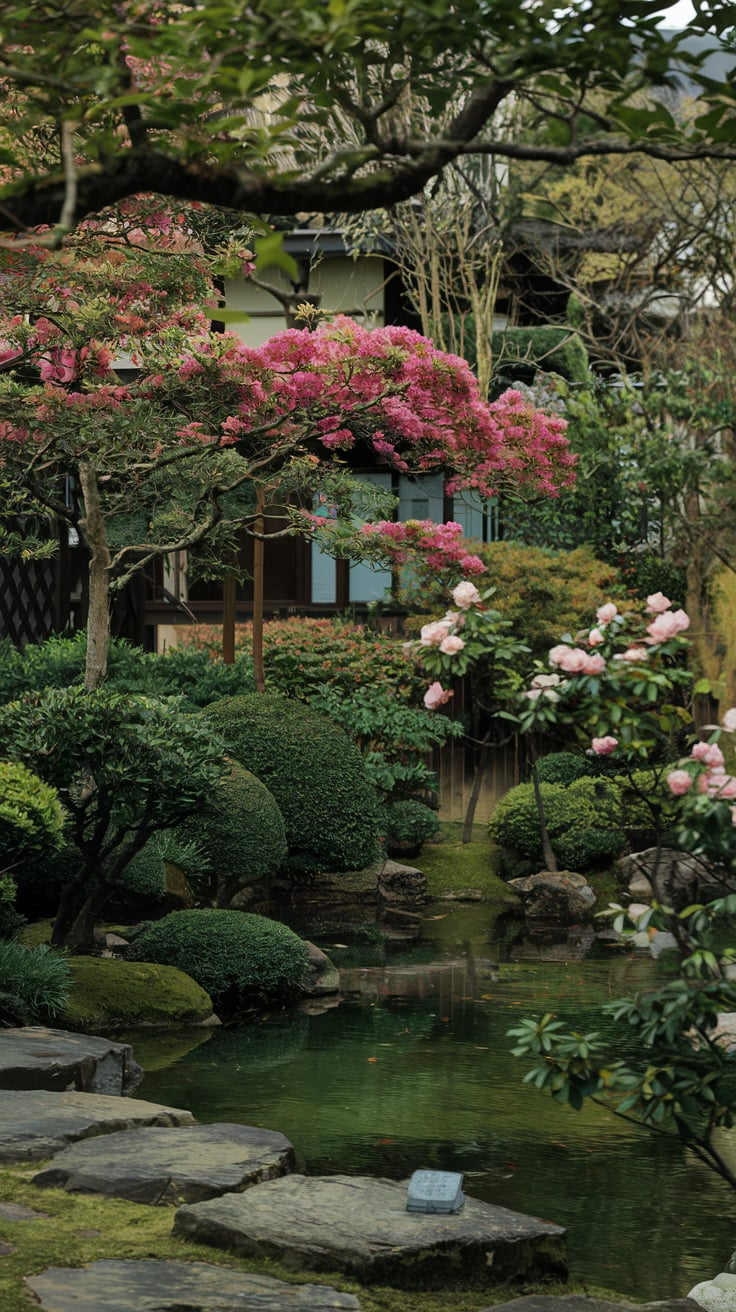
Azaleas and camellias are fantastic additions to a Japanese garden. Both plants bring vibrant color and a sense of elegance to the landscape. Azaleas burst into bloom in the spring, while camellias show off their flowers from late fall through early spring.
This staggered timing means you can appreciate vivid blooms for a much longer season. Azaleas come in a wide array of shades, from soft pinks to deep purples, adding wonderful variety. Camellias can be found in colors like pink and red, providing a rich, beautiful contrast.
These plants grow well in similar conditions, preferring partial shade and soil that drains well. Planting them together creates a stunning and harmonious atmosphere.
For the best results, keep their roots cool and consistently moist. Regular pruning will help them maintain their shape and encourage healthy new growth.
9. Tea House
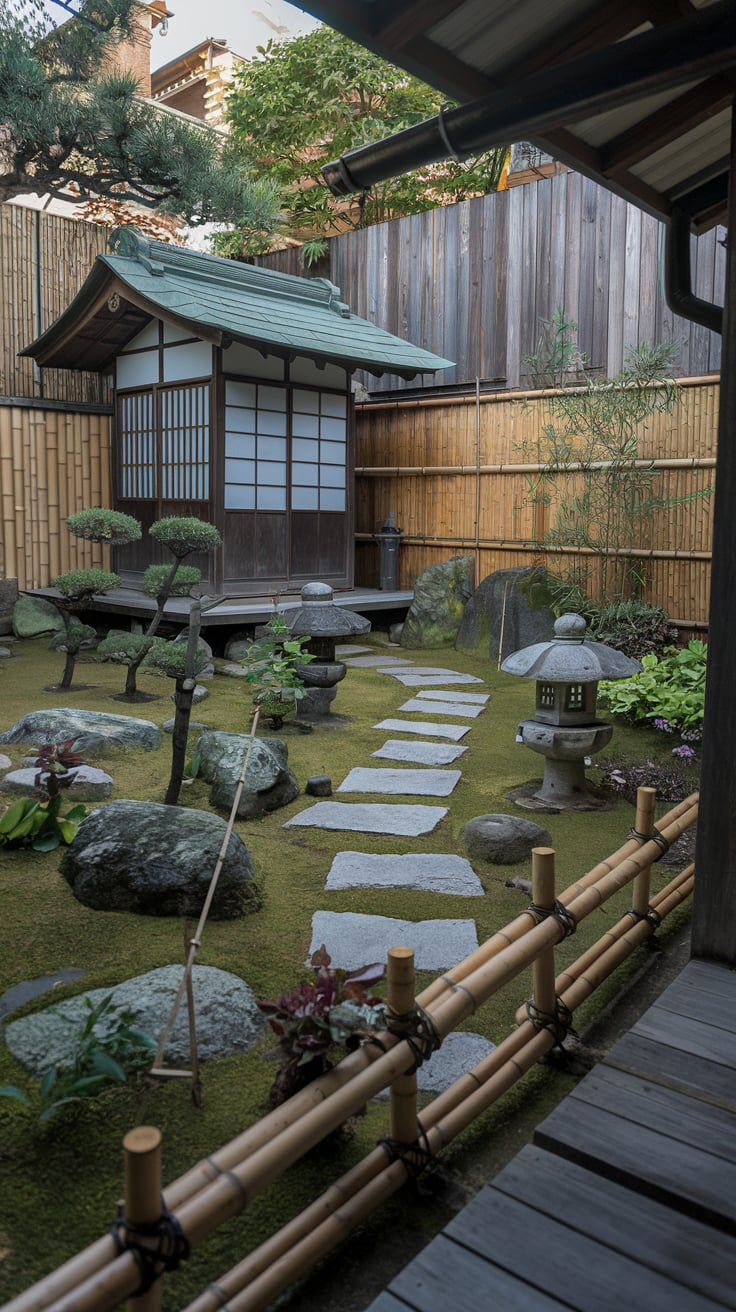
A tea house adds a special charm to any Japanese garden. These structures are typically simple in design and blend seamlessly with their natural surroundings. They often feature sliding doors and tatami mat floors, creating a cozy, intimate atmosphere.
Tea houses are traditionally used for tea ceremonies. The practice focuses on mindfulness and appreciating the present moment. The design itself is meant to encourage a peaceful and reflective experience.
You can situate your tea house near a pond or nestled among trees to heighten the sense of tranquility. Creating a pathway lined with stones or plants can gracefully lead guests to its entrance.
Decorate the interior with natural materials to maintain a calming feeling. Savoring tea while completely surrounded by your garden can be a truly wonderful escape.
10. Wisteria Trellises
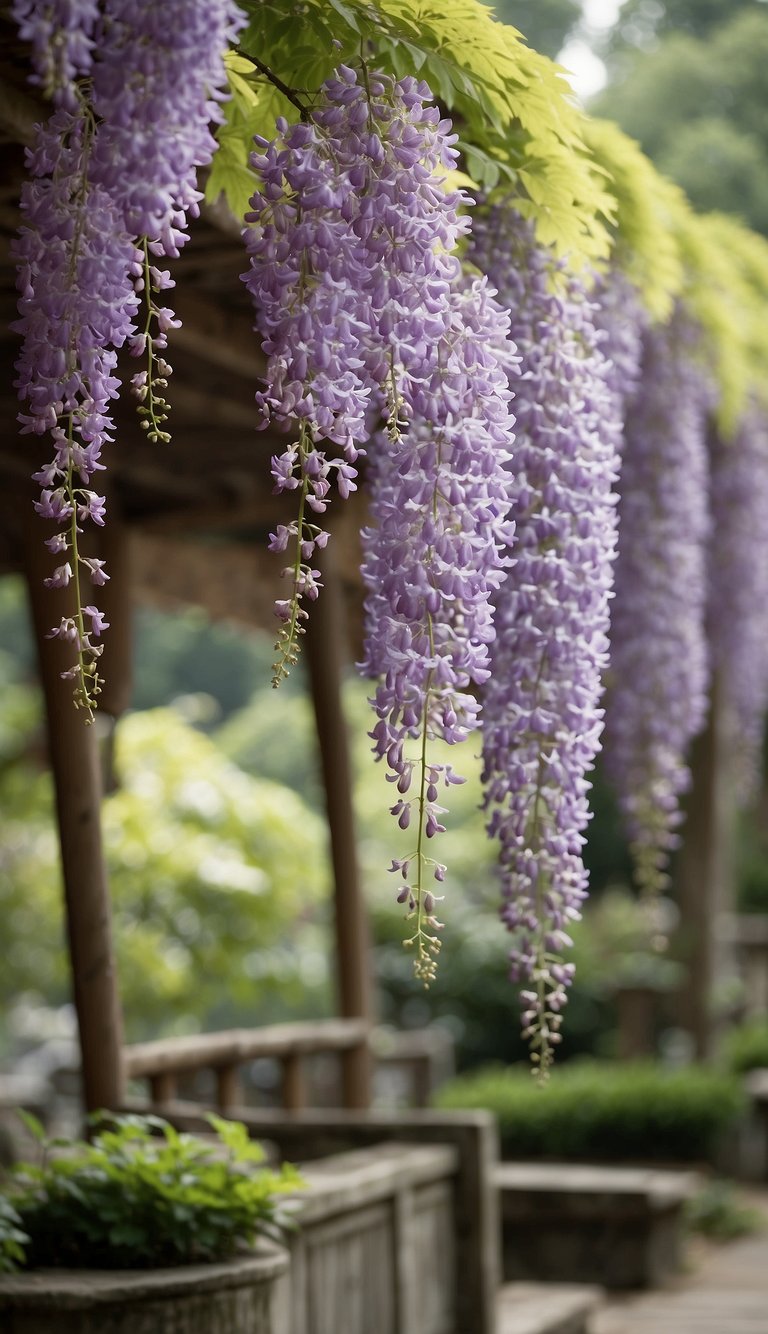
Wisteria trellises bring a cascade of beauty and elegance to your garden. These structures are designed to support the breathtaking blooms of wisteria vines. You can create an enchanting space by using a trellis or a larger pergola.
A pergola creates a shaded walkway where you can relax and unwind. It offers a perfect framework for wisteria to drape gracefully from above. This feature adds a touch of romance to any outdoor area.
For an option that is more friendly to your budget, think about simple wooden arches. They can be adapted to fit any garden size while still showcasing those lovely purple flowers.
As the vines mature, they form a stunning natural canopy. You can enjoy the sweet fragrance of wisteria while sitting comfortably underneath. It’s a wonderful way to elevate your garden’s charm.
11. Pine bonsai
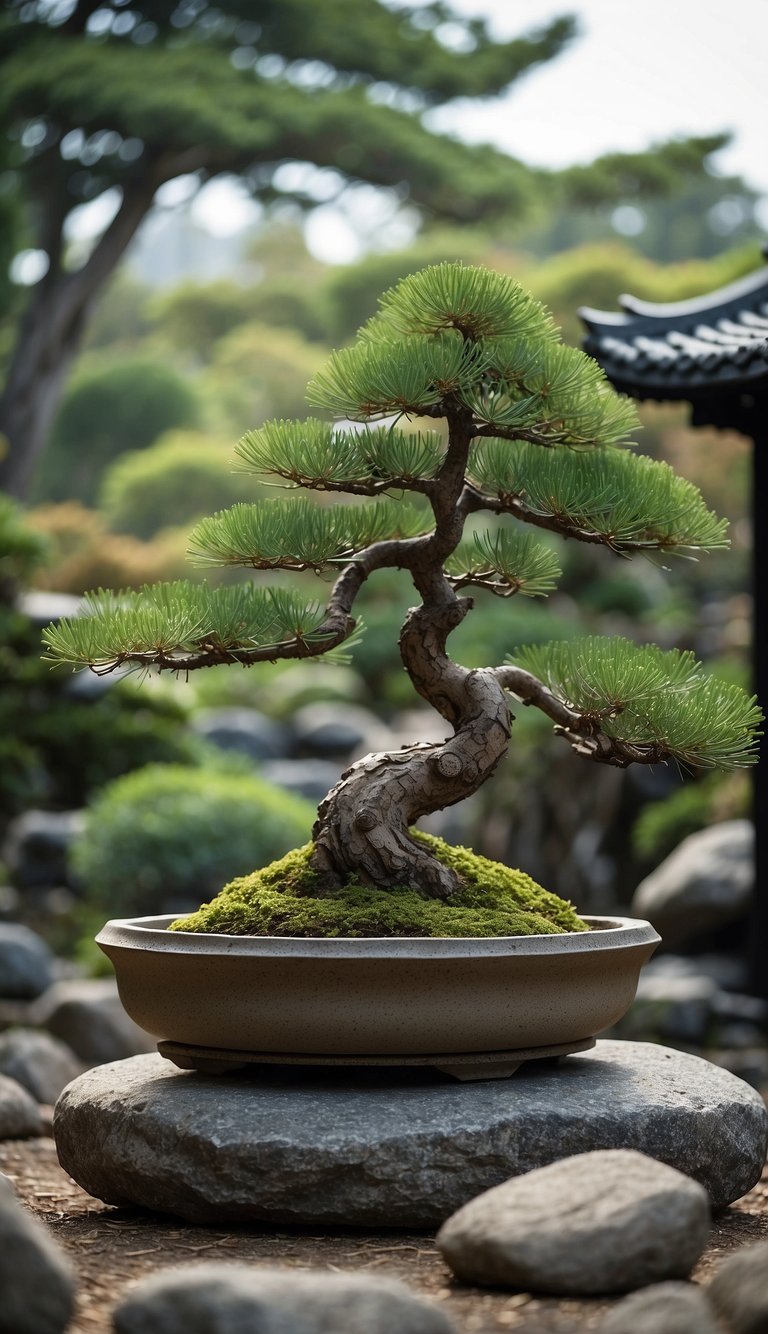
Pine bonsai are a very popular choice for traditional Japanese gardens. They contribute a sense of peace and beauty with their uniquely sculpted shapes and rich textures.
Black pines are particularly valued in this art form. They can be skillfully shaped into incredible forms and add a feeling of strength to your garden. While these trees can grow quite tall in nature, in bonsai form they remain small and manageable.
Caring for a pine bonsai does require some effort. You must water them regularly, but be careful that the soil does not become waterlogged. Pruning is absolutely essential to maintain their distinctive shape.
Each bonsai is a reflection of your personal touch. With both patience and practice, you can cultivate a stunning piece of living art that showcases your gardening skills.
12. Stone Lanterns
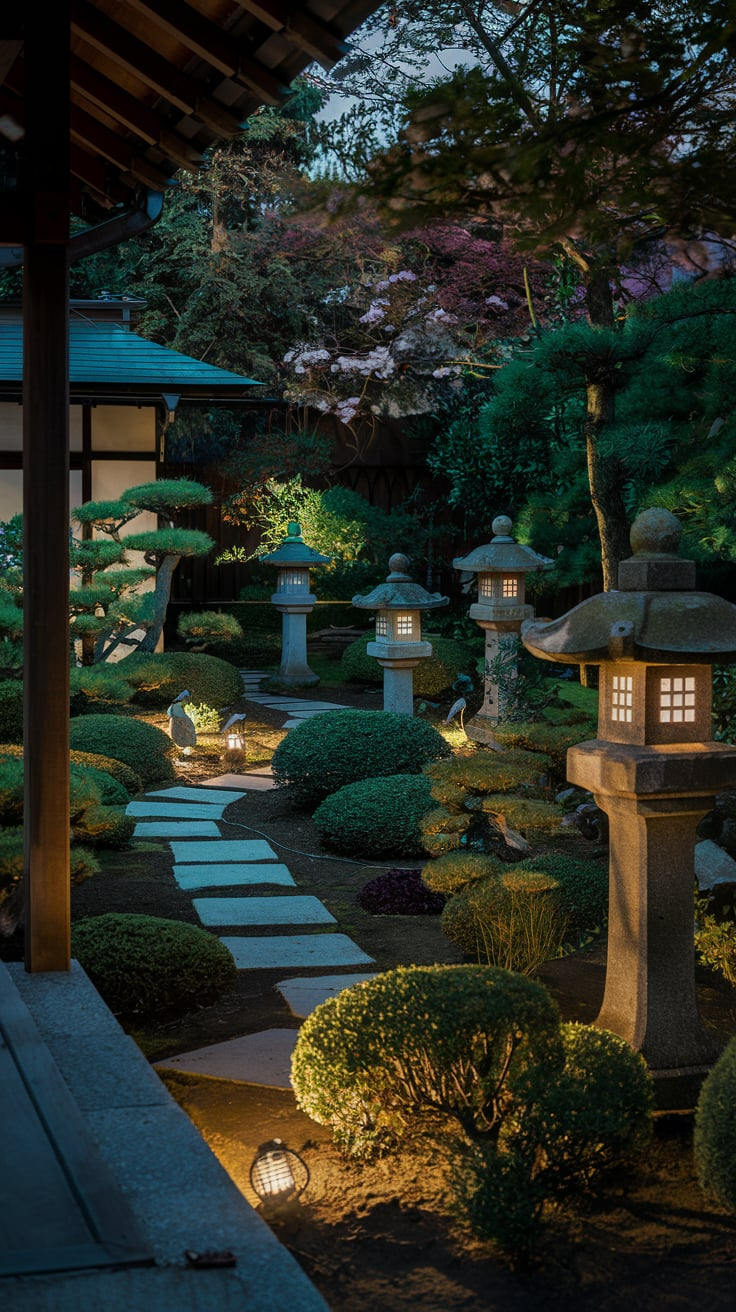
Stone lanterns are a classic and essential feature in Japanese gardens. They add a touch of refined elegance and charm while also providing soft, gentle lighting. You can place them along pathways or near serene water features.
These lanterns are available in a variety of styles and sizes. Traditional versions often feature a tiered roof design and intricate, beautiful carvings. Select a lantern that complements your garden’s overall theme.
Incorporating stone lanterns can greatly enhance the peaceful atmosphere. They create natural focal points and invite moments of quiet reflection. Consider using them in pairs to achieve a more balanced and harmonious look.
Allowing moss to grow around your lanterns creates an authentic, natural feeling. It blends beautifully with the stone and deepens the garden’s sense of tranquility.
13. Waterfalls
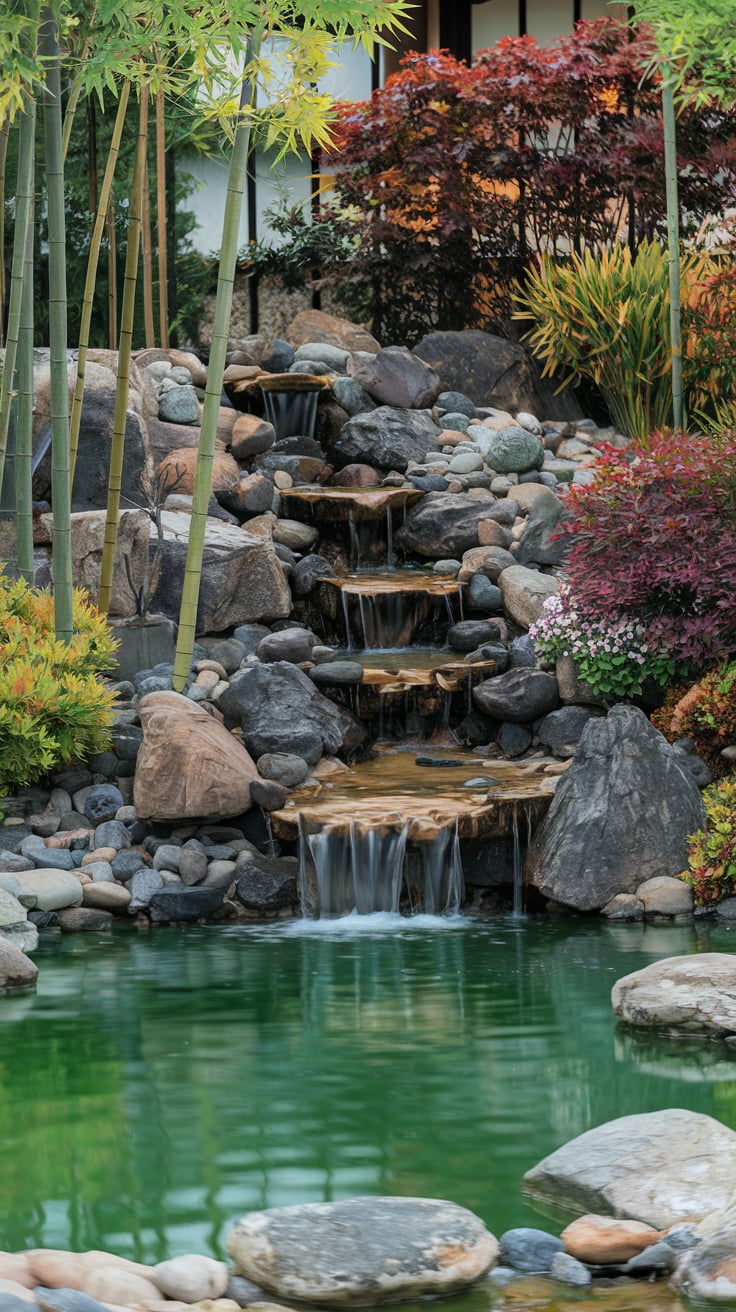
Waterfalls bring a serene auditory element to your Japanese garden. Their gentle, flowing sounds can create a deeply peaceful atmosphere, which is perfect for relaxation.
You can design waterfalls of many different sizes. Some can be tall and dramatic, creating a powerful statement, while others might be small and subtle. Even a tiny waterfall can bring a sense of life to your garden.
If you are looking for ideas, consider using natural stones or wood to construct your waterfall. You can also incorporate lush plants around it for a verdant, natural feel.
Waterfalls can be integrated into a larger water feature, such as a pond or a meandering stream. This integration helps create a more dynamic and cohesive landscape.
14. Stepping stones
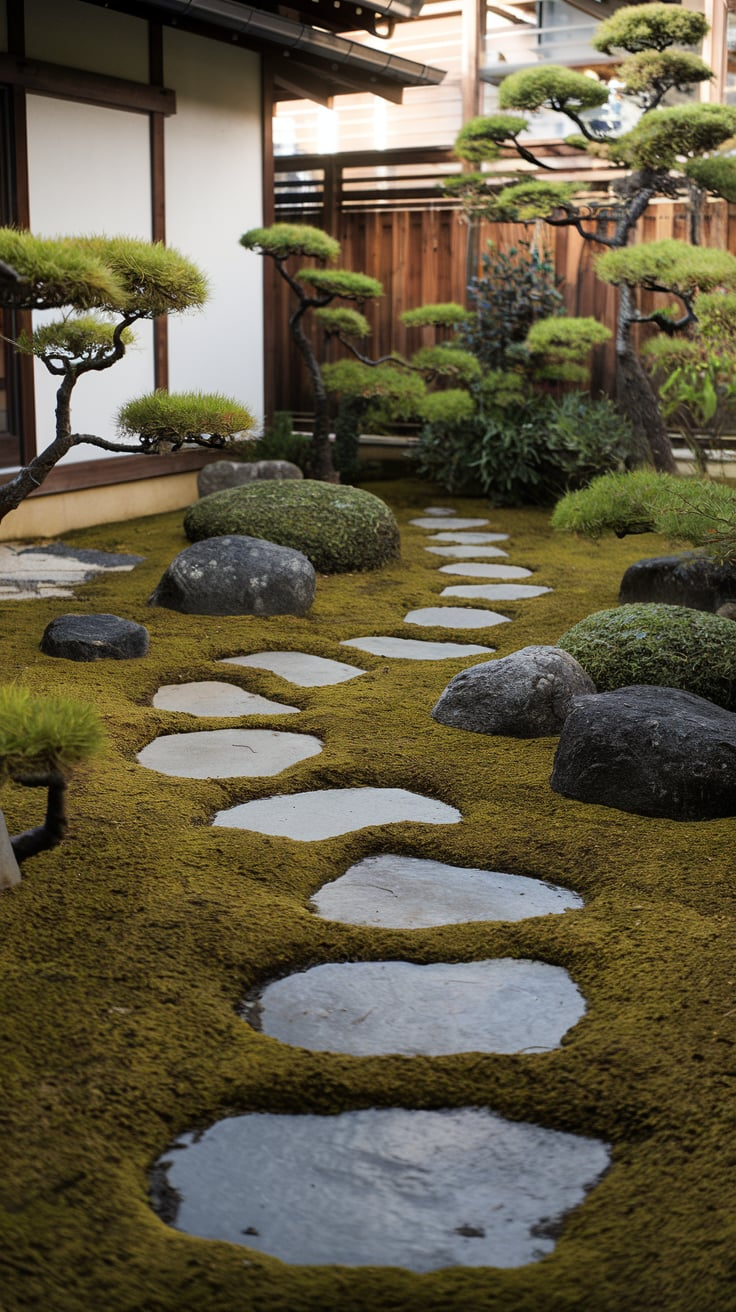
Using stepping stones in your Japanese garden creates a unique and thoughtful charm. They form a lovely, inviting path for you to walk on as you take in your outdoor space.
You can select from a variety of materials, including natural stone, cast concrete, or even rustic wood slices. The texture and color of the stones can be chosen to match the overall theme of your garden.
Try placing the stones at slightly varied distances from one another. This can create a more organic and natural flow, inviting you to wander at a relaxed pace.
Consider encouraging moss to grow around the stones for a soft, aged look. This not only highlights the stones themselves but also introduces a touch of beautiful greenery.
15. Moss-covered grounds
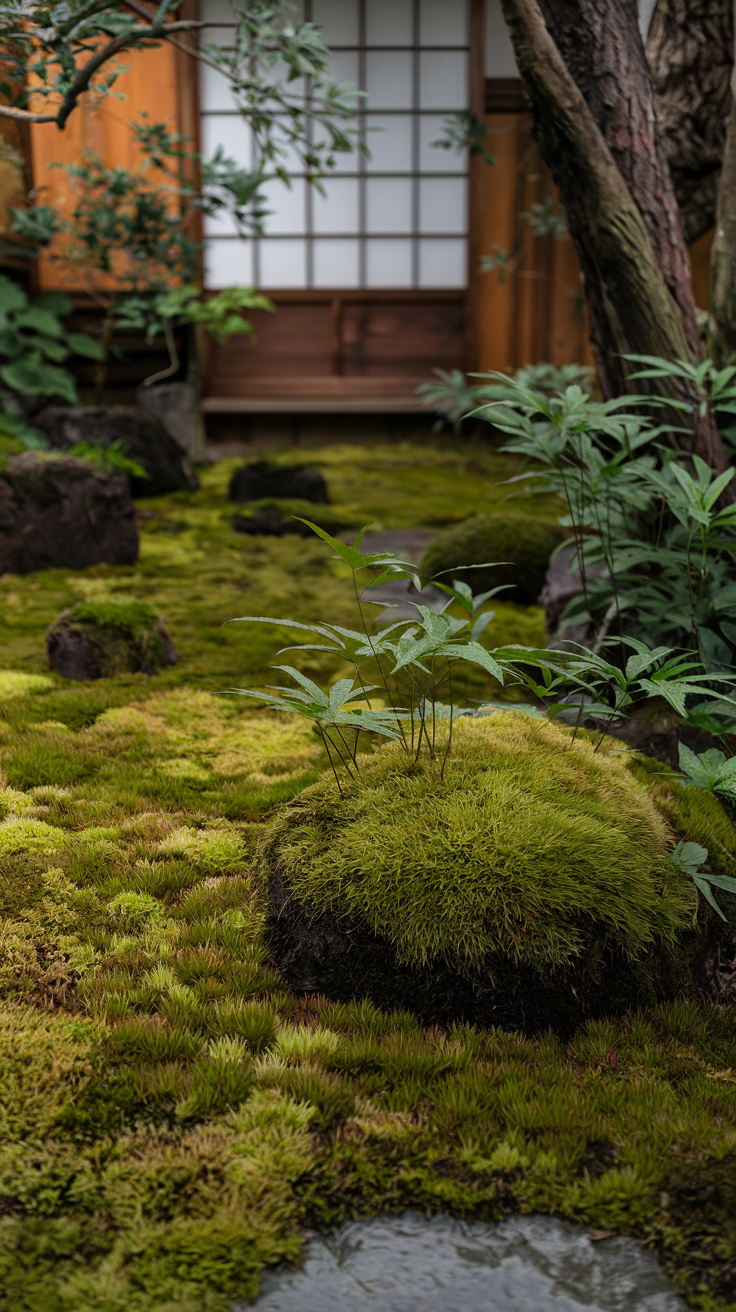
Moss-covered grounds lend a unique and ancient charm to Japanese gardens. They create a soft, verdant carpet that feels both inviting and deeply serene. Moss flourishes in shaded, damp areas, making it a perfect ground cover for gardens with mature trees.
This lush greenery can greatly enhance the calmness of your garden. You can plant moss to surround stones or line pathways, drawing attention to these key features.
Additionally, moss is a wonderfully low-maintenance option. It requires very little care once it has been established, allowing you to enjoy a beautiful, green landscape without a lot of extra work.
Make sure to choose the right type of moss for your specific climate and check moisture levels regularly to keep it thriving.
16. Ornamental bridges
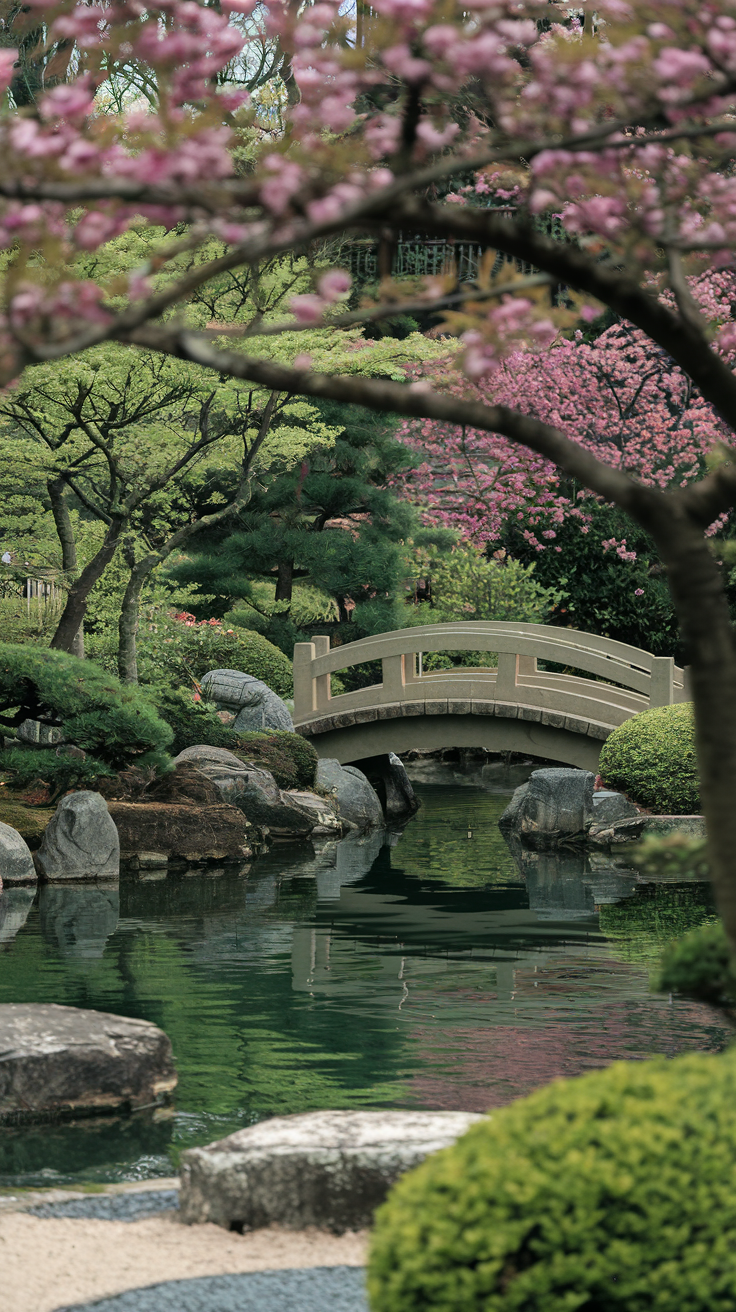
Ornamental bridges add both beauty and charm to your garden. They create a peaceful vantage point from which to enjoy nature. You can find them in many styles, particularly in traditional Japanese gardens.
A classic Japanese design is characterized by smooth, clean lines and natural materials. A wooden bridge with a dark stain fits beautifully with the surrounding plants. Adding minimal railings can enhance the serene and uncluttered look.
You can also take a DIY approach for a truly unique touch. Use pallets or reclaimed wood to construct your own bridge. Personalizing it allows you to match it perfectly to your garden’s specific vibe.
Setting up your bridge is straightforward. Just ensure the foundation is stable and perfectly level. Don’t rush the installation, and enjoy the beautiful result.
17. Cherry Blossom Trees
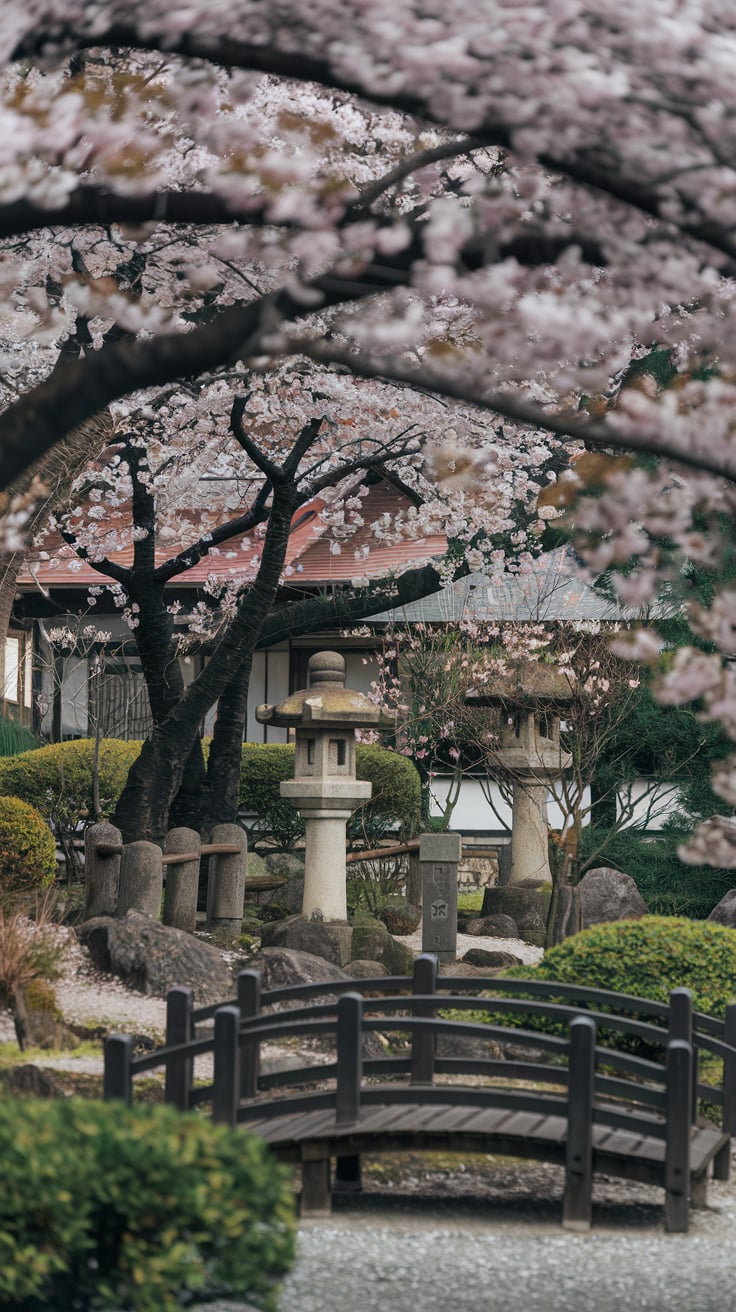
Cherry blossom trees, known as sakura, are a breathtaking choice for your garden. These trees are famous for their delicate pink flowers that emerge in spring, creating a truly beautiful spectacle.
Their blooming period is brief, typically lasting about a week, which makes their appearance all the more special. The sight of the petals falling and fluttering gracefully in the wind is a magical experience.
These trees can represent renewal and the fleeting beauty of nature. They fit well into many different garden styles, adding an undeniable touch of elegance.
For the best blooms, plant your cherry blossom tree in a sunny location. Regular watering during dry periods is also important to keep it healthy and vibrant.
18. Gravel Raking Designs
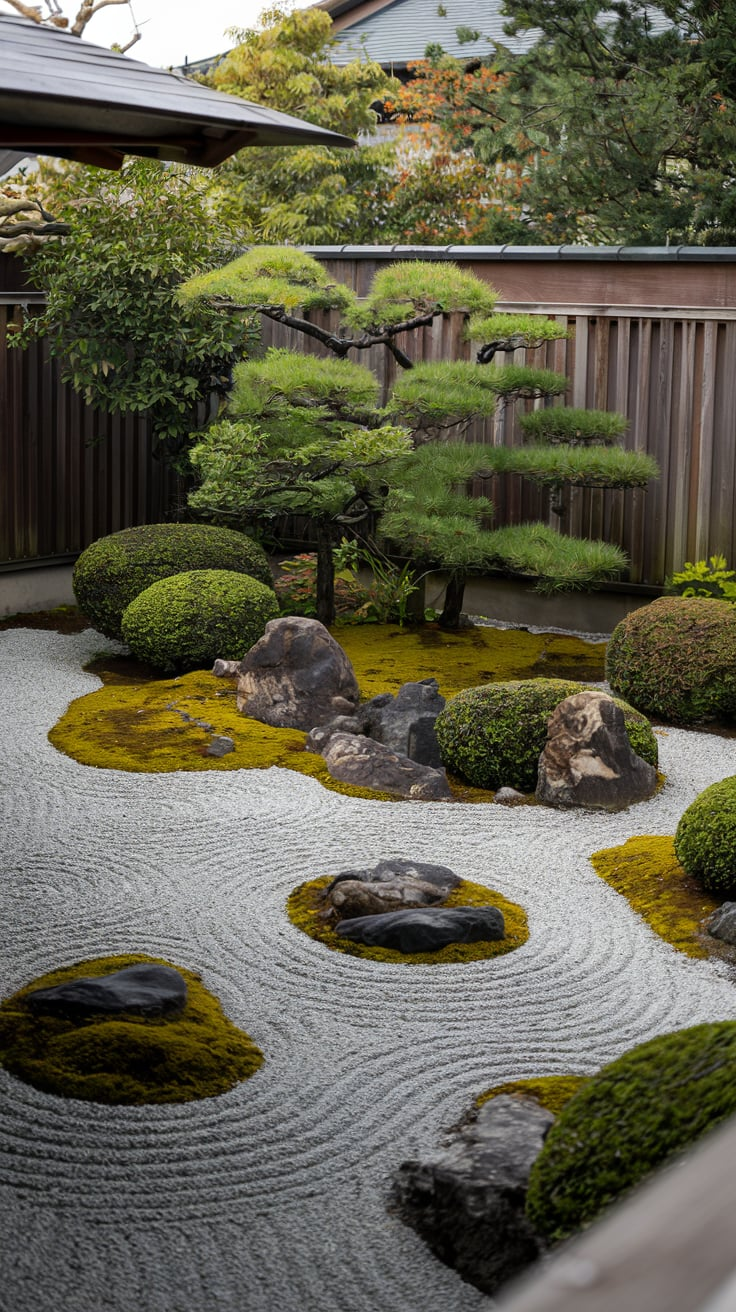
Gravel raking is a key practice in creating a peaceful Zen garden. The act itself is meditative, and the result is a clean and organized appearance. You can create different patterns, such as straight lines or gentle, flowing curves.
Experiment with your rake to draw various designs in the gravel. A wide rake is great for making broad, sweeping strokes, while a narrow rake can be used for more detailed and intricate patterns.
You can also combine the gravel with larger rocks to create visual contrast. Place the rocks with intention to enhance the overall design and balance of the space.
Adding a few plants or small features like lanterns can make your gravel designs stand out even more. For a calming effect, keep your patterns simple, and consider changing them with the seasons for a fresh perspective.
19. Bamboo Water Spouts
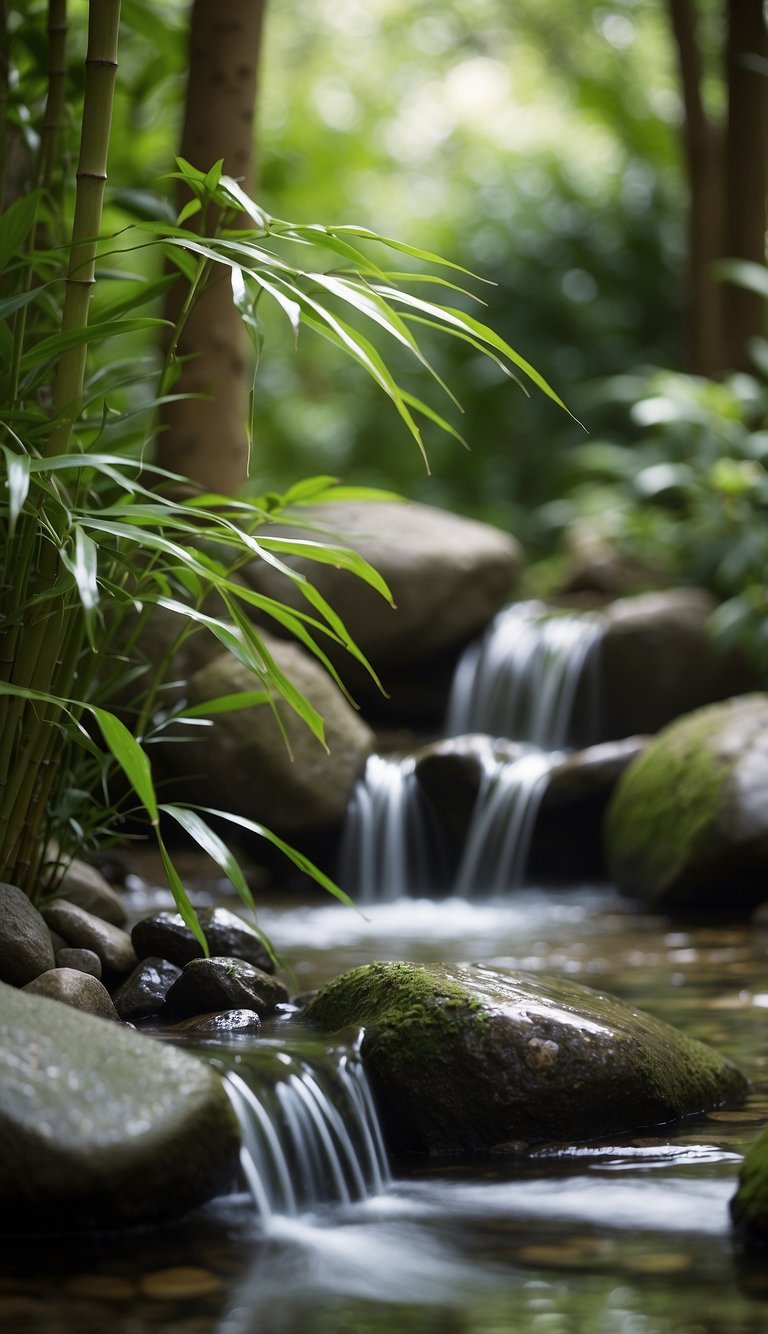
Bamboo water spouts, or “shishi odoshi,” are a charming and traditional feature in Japanese gardens. They produce a soothing sound as water flows through them and splashes back into a basin.
To set one up, you’ll need a bamboo tube tilted with one end in a water source and the other positioned over a basin. As water fills the tube, it tips, releasing the water and creating a gentle clunking noise.
Choose the correct height for your spout to avoid too much splashing. A height of around 70 cm often works well, providing a nice balance between water flow and sound.
Ensure the basin is shallow enough for easy maintenance. You might want to use a nylon screen to keep out debris, which will ensure a clear and consistent water flow. Place your bamboo spout in a quiet spot to best appreciate the relaxing sound it adds to your garden.
20. Lotus Ponds
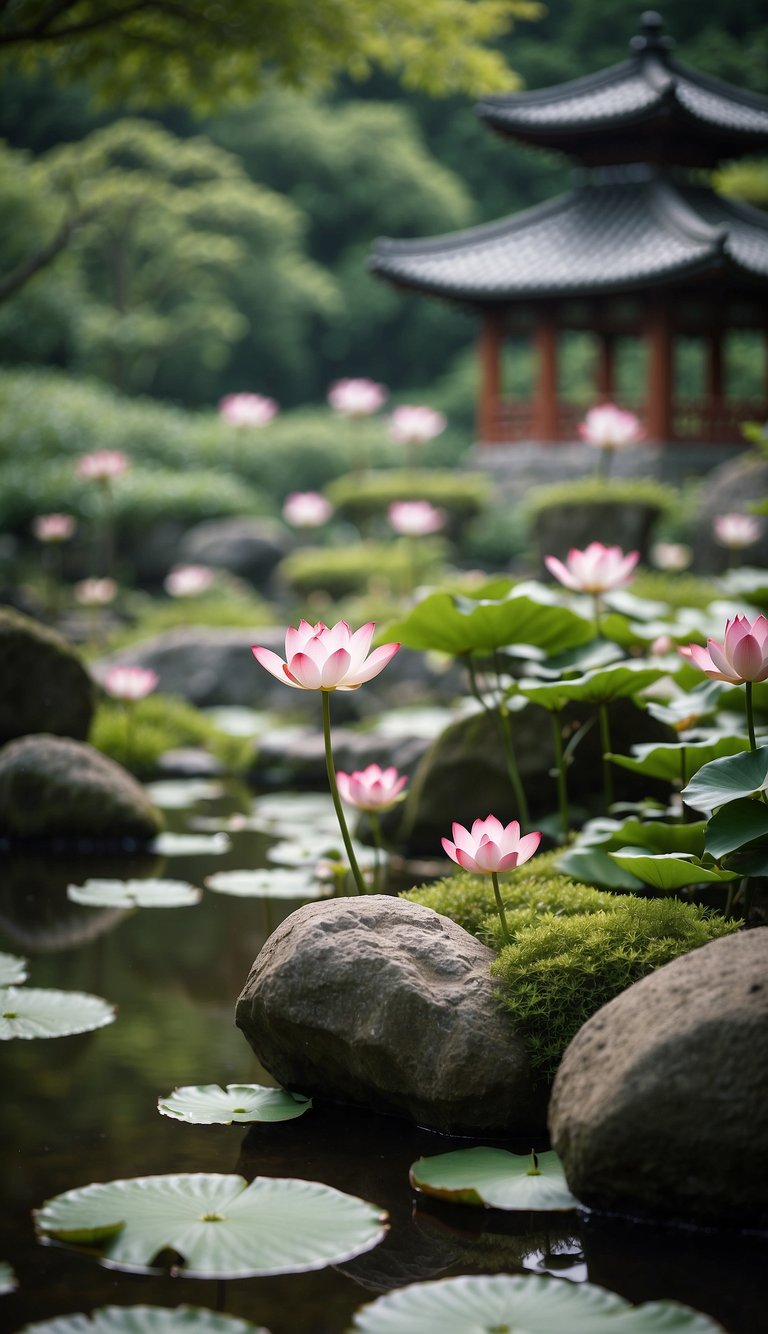
Lotus ponds are a truly stunning addition to any Japanese garden. They create a peaceful and reflective atmosphere with their beautiful, iconic flowers floating on the water’s surface.
You can design your pond to fit the scale of your space, whether it is large or small. Be sure to select a sunny location, as lotuses need plenty of sunlight to thrive.
Adding features like weathered stones, water lilies, and small bridges can enhance the pond’s natural charm. It’s an ideal place to relax, reflect, or meditate.
For easier maintenance, you may want to install a pond liner. This helps to keep the water clean and makes the overall management of the pond much simpler.
21. Pruned pines
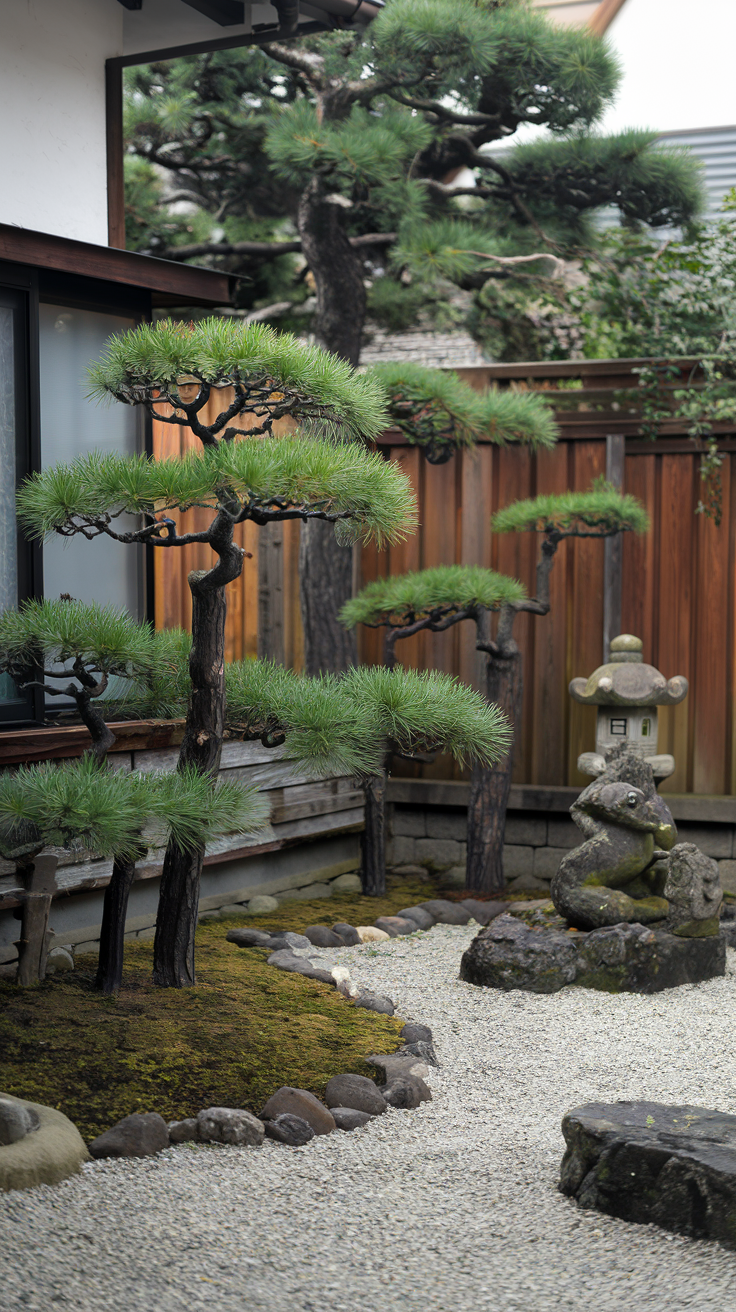
Pruned pines are an essential element in Japanese garden design. They represent a unique art form called niwaki, which places a strong emphasis on controlled shapes and aesthetics. This technique involves shaping trees into visually pleasing, sculptural forms.
The process requires careful and patient pruning to encourage growth patterns that look both natural and serene. By focusing on the tree’s underlying structure, you can create a powerful centerpiece in your garden.
To begin, select a healthy pine tree and study its natural growth habit. Use sharp, clean tools to cut the branches, removing any dead or overly crowded growth. This practice keeps the tree healthy while enhancing its beauty.
Regular maintenance is crucial. You should prune at least once a year to maintain the desired shape. This discipline not only beautifies your garden but also helps to create a deeply peaceful atmosphere.
22. Arched bridges
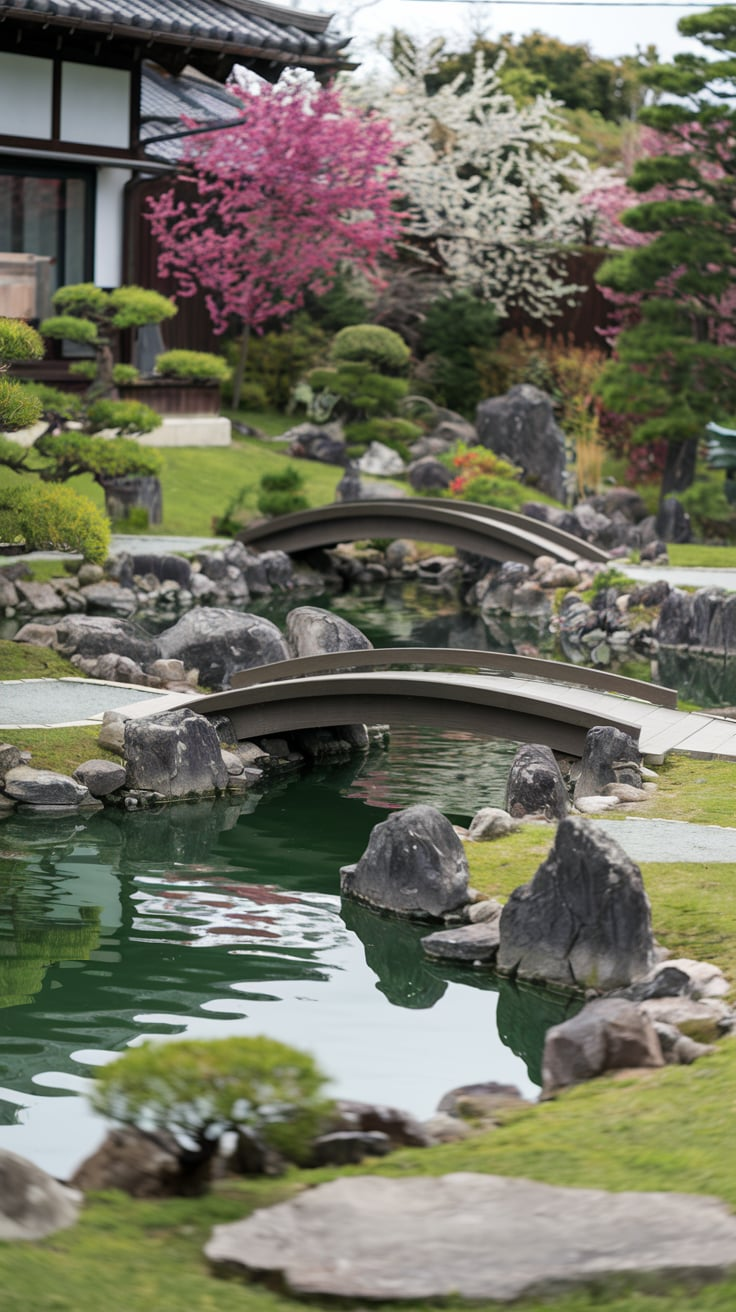
Arched bridges are a classic feature found in many Japanese gardens. They add a sense of elegance and charm to your outdoor space. These bridges often create a graceful arch over ponds, streams, or dry gravel beds.
A well-known type is the Taiko-bashi, or drum bridge, which can symbolize a journey or a spiritual path. Choosing an arched bridge can enhance the peaceful and reflective vibe of your garden.
You can find these bridges in a variety of sizes, from small and delicate to large and dramatic. When you are planning, consider the color and materials that will best match your garden’s existing style.
Building your own arched bridge can also be a fun and rewarding DIY project. It is a more straightforward process than many people realize.
23. Japanese Stone Statues
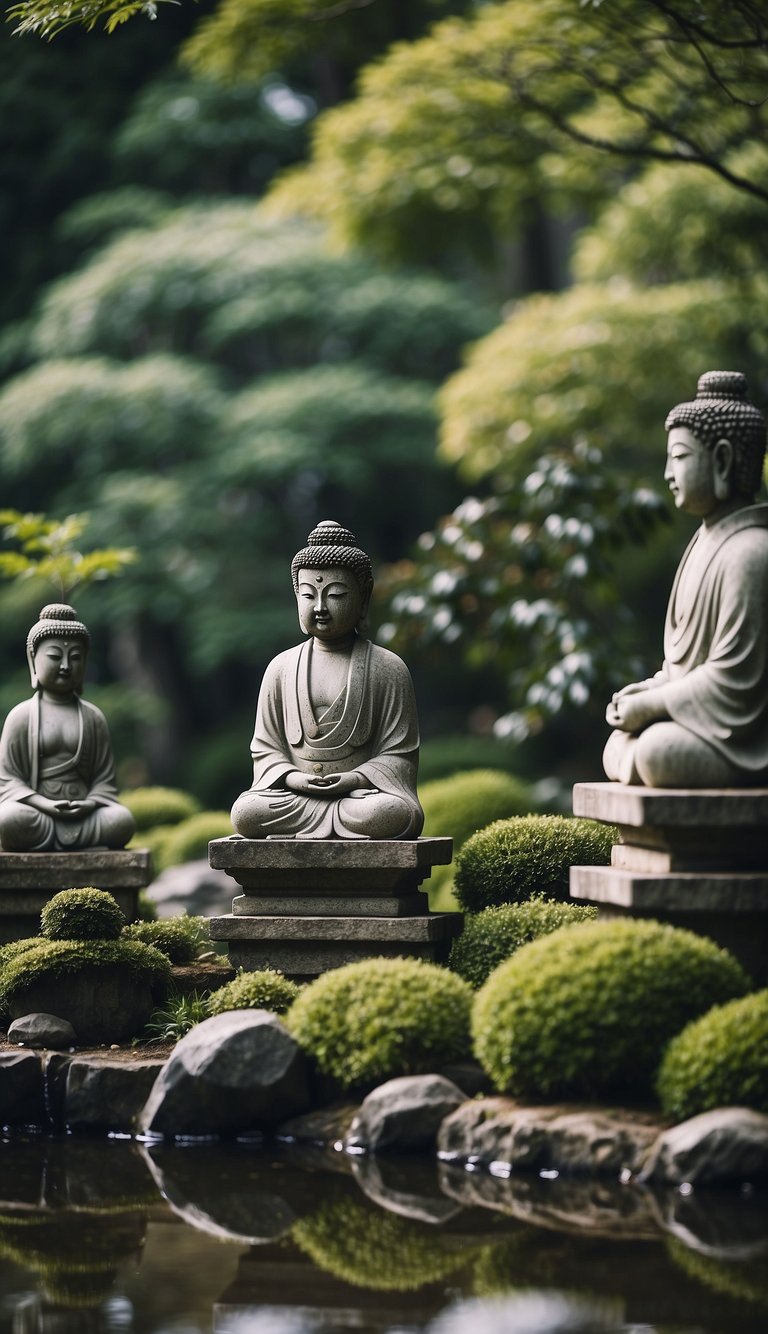
Japanese stone statues can add a unique and meaningful touch to your garden. They often represent powerful symbols like serenity, strength, and harmony. You can find statues of animals, deities, and even mythical creatures.
These sculptures are typically carved from materials like granite or marble. Their natural, weathered textures blend beautifully with the plants and stones in your garden. Positioning them near water features or along pathways can enhance your space.
Adding a stone lantern can also introduce a traditional and functional element. Lanterns create a peaceful, gentle ambiance when they are lit at night.
Make sure you balance the placement of your statues with the surrounding landscape. This will help maintain an overall sense of calm and order. A well-placed stone statue can serve as a compelling focal point in your design.
24. Hedges of Japanese Boxwood
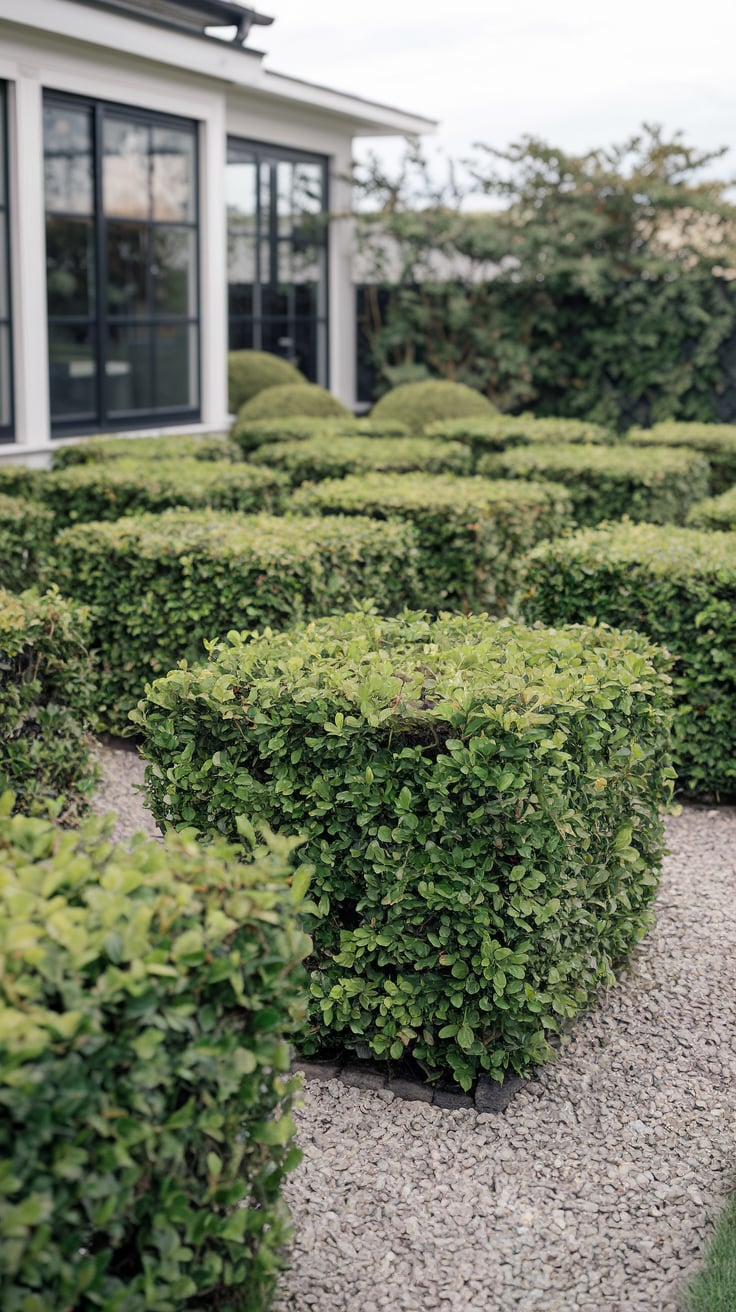
Japanese boxwood is an excellent choice for creating garden hedges. This versatile plant offers a neat and classic look that complements a wide variety of garden styles.
You can use boxwood to form low, formal borders or taller screens for privacy. These plants grow slowly, which helps them maintain their shape very well over the years.
When planting, be sure to dig a hole that is slightly larger than the root ball. Place the plants at the same depth as they were in their original pots to ensure the best results.
These hedges require minimal maintenance and can be easily pruned to keep them looking sharp and tidy. Plus, they adapt quite well to different climates.
25. Traditional torii gates
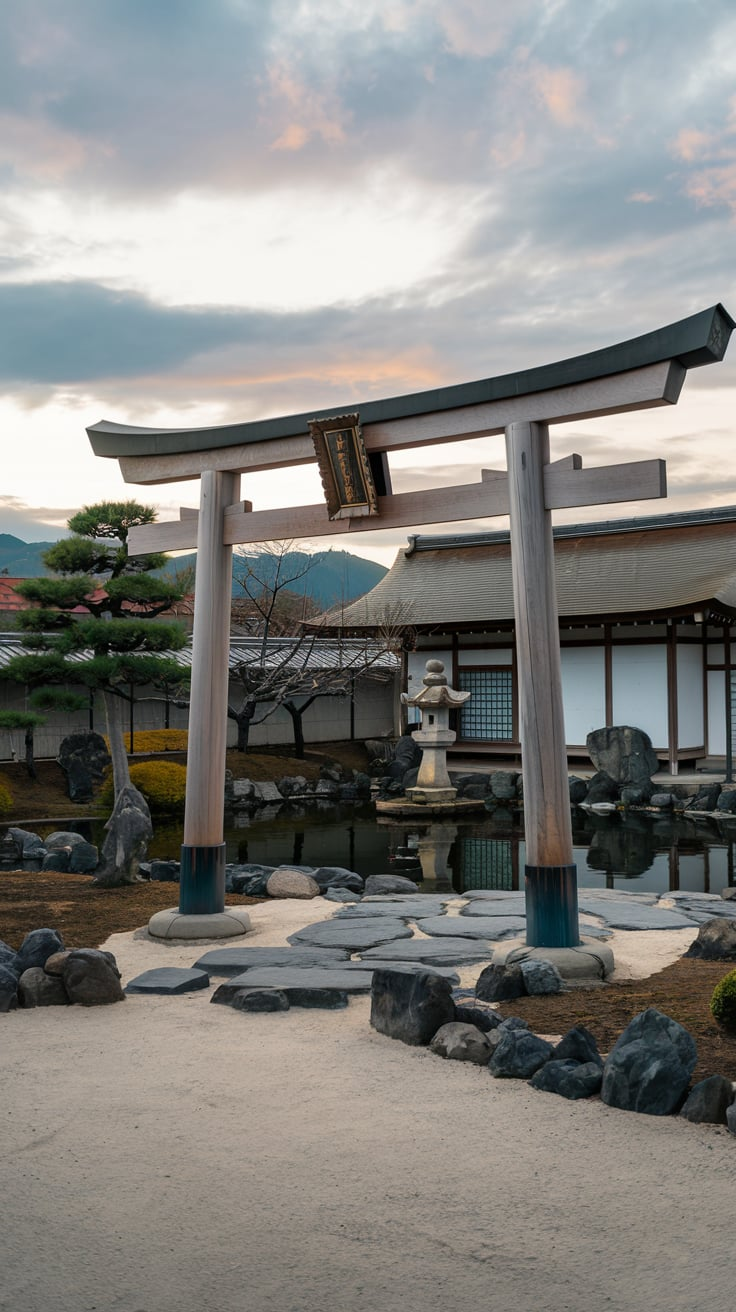
Traditional torii gates are iconic and symbolic elements in Japanese gardens. They typically mark the entrance to sacred spaces, such as shrines. You can find them crafted from wood, stone, or even metal.
The design usually consists of a top beam called the kasagi and a lower horizontal beam known as the shimagi. These gates can be very simple or more elaborate, depending on your personal style.
Adding a torii gate to your garden helps to create a welcoming and special atmosphere. It invites both you and your guests to enter a unique and thoughtfully designed space. Try placing it at the start of a path or near a water feature for a serene and beautiful touch.