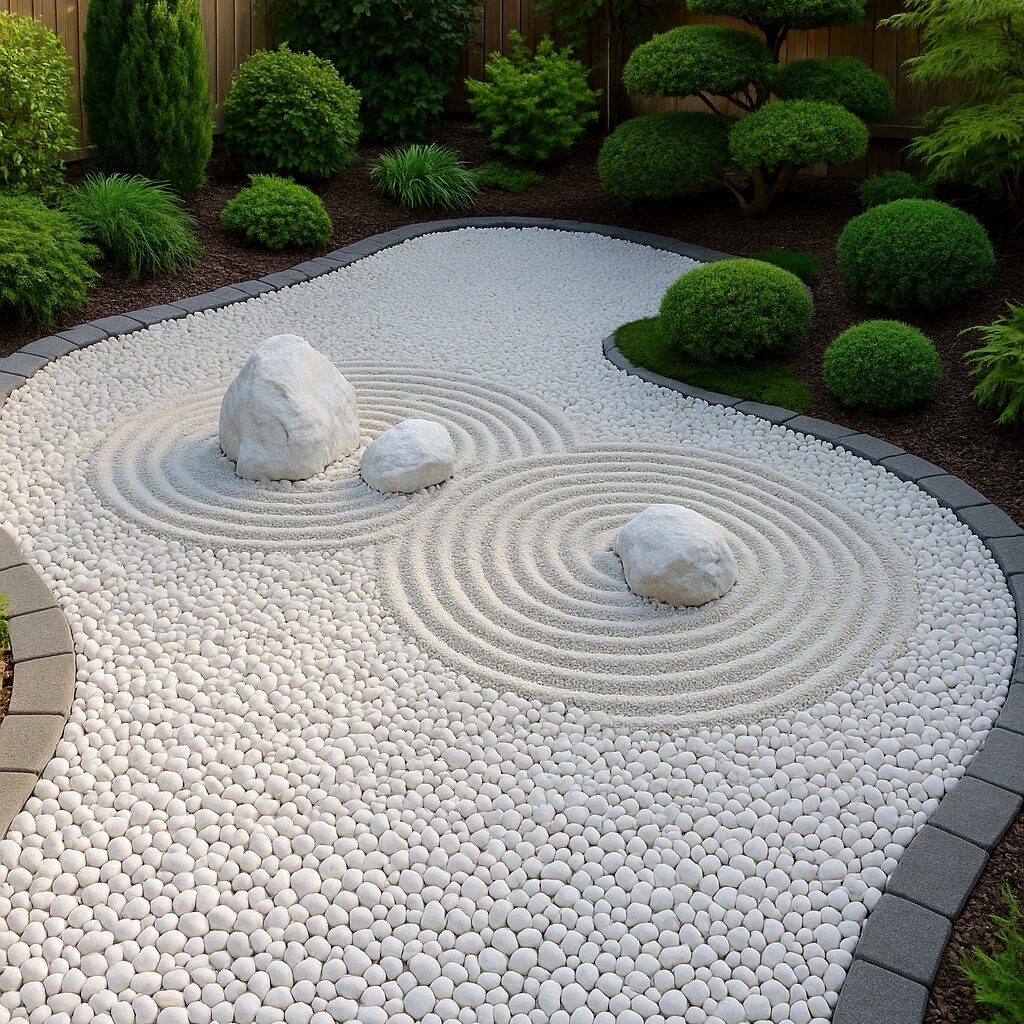
White rocks can bring a clean, contemporary feel to your yard or garden with minimal fuss. You will find that these stones are perfect for defining pathways, creating serene retreats, and giving your outdoor spaces a crisp, luminous quality. These concepts are designed to ignite your imagination, showing you fresh ways to elevate your landscape and make it truly shine.
1. White Rock Zen Garden with smooth pebbles and raked patterns
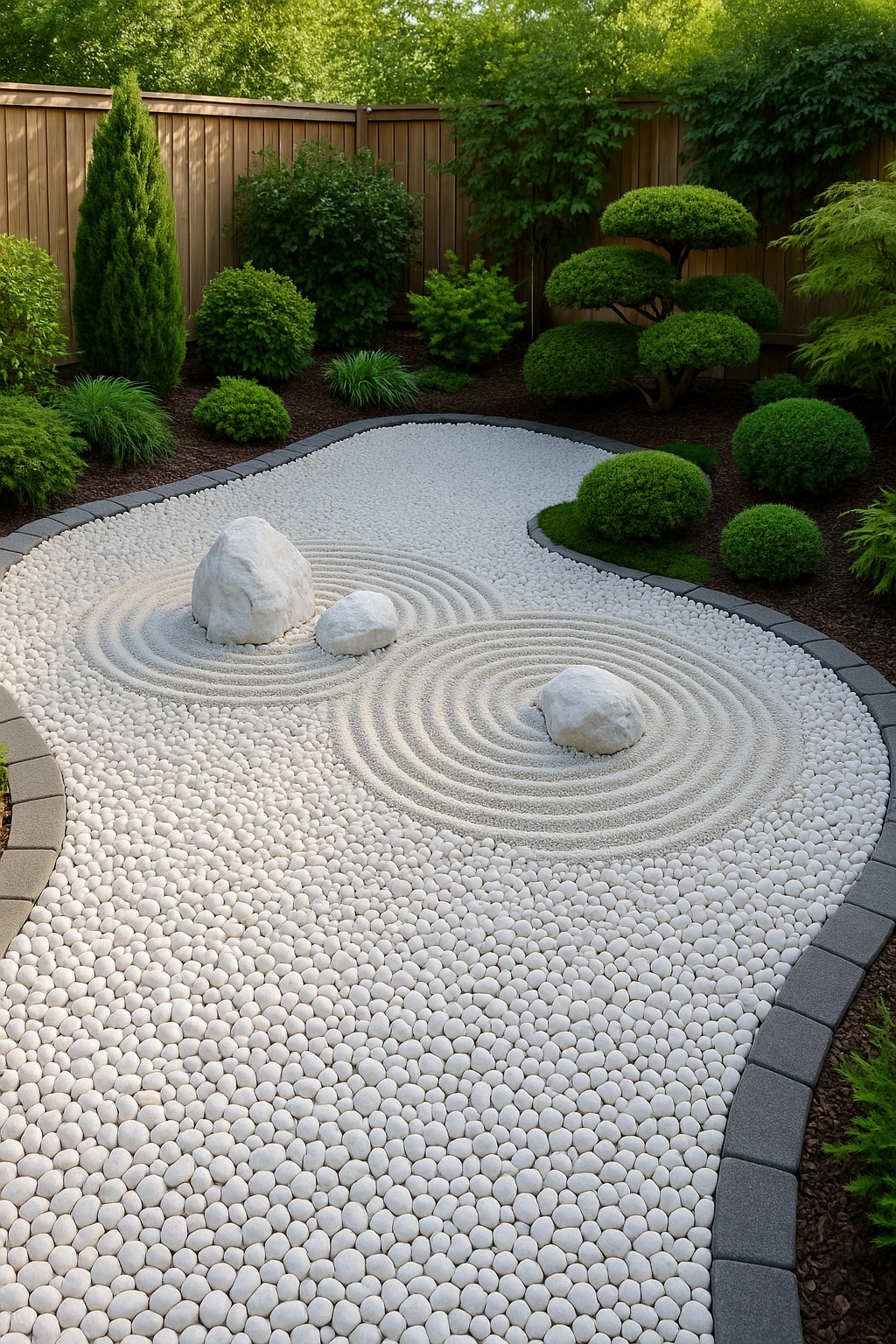
To craft a tranquil space, spread smooth white pebbles evenly over a level section of your yard. These stones establish a clean foundation that feels both orderly and peaceful.
Carve simple wave or circular designs into the pebbles with a rake. This detail adds a soothing, organic element reminiscent of flowing water and provides a calming focal point.
Incorporate a few larger white rocks to act as accents. They can represent small islands or mountains, adding visual interest and breaking up the uniform surface of the pebbles.
Complete the Zen atmosphere with a bench, a couple of small shrubs, or perhaps a Buddha statue. Keep the stones looking pristine by rinsing them with water whenever they gather dust.
2. Matte White Pebble Border with illuminated edging
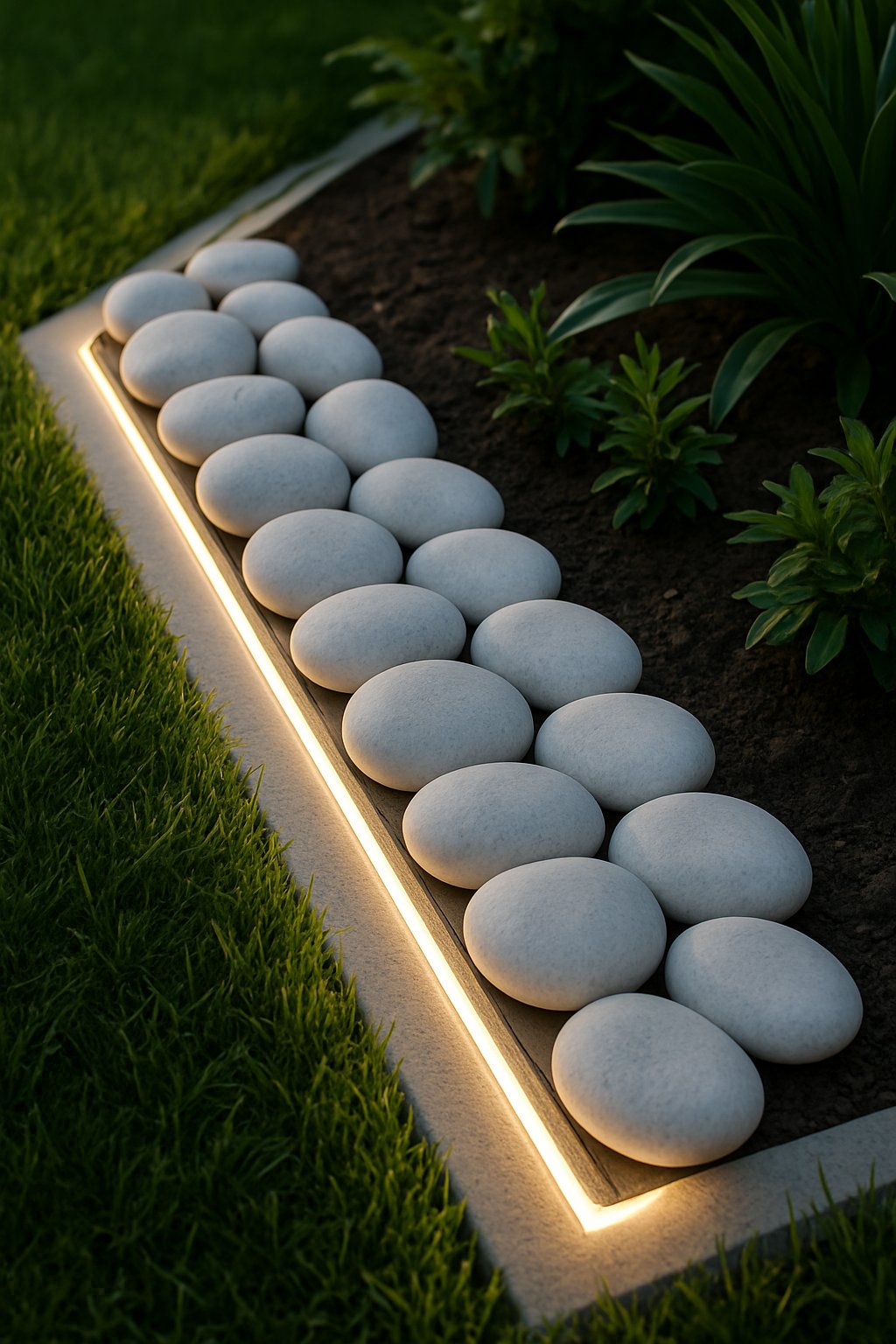
Define your garden beds with a border of matte white pebbles for a sharp, modern finish. These pebbles provide a gentle contrast against grass and plants, keeping your beds looking exceptionally neat.
The non-glossy finish maintains a natural appearance without any distracting glare. For an evening glow, install illuminated edging along the pebble border to light up your garden.
Low voltage LED lights can highlight the contours of your beds and improve the safety of walkways after sunset. The lights can be tucked under a thin trim or nestled directly among the pebbles.
Choose warm white LEDs for a welcoming ambiance or cool white for a more contemporary look. This type of border is highly effective along paths, patios, or flower beds.
3. Box-shaped white rock bed surrounded by colorful flowers
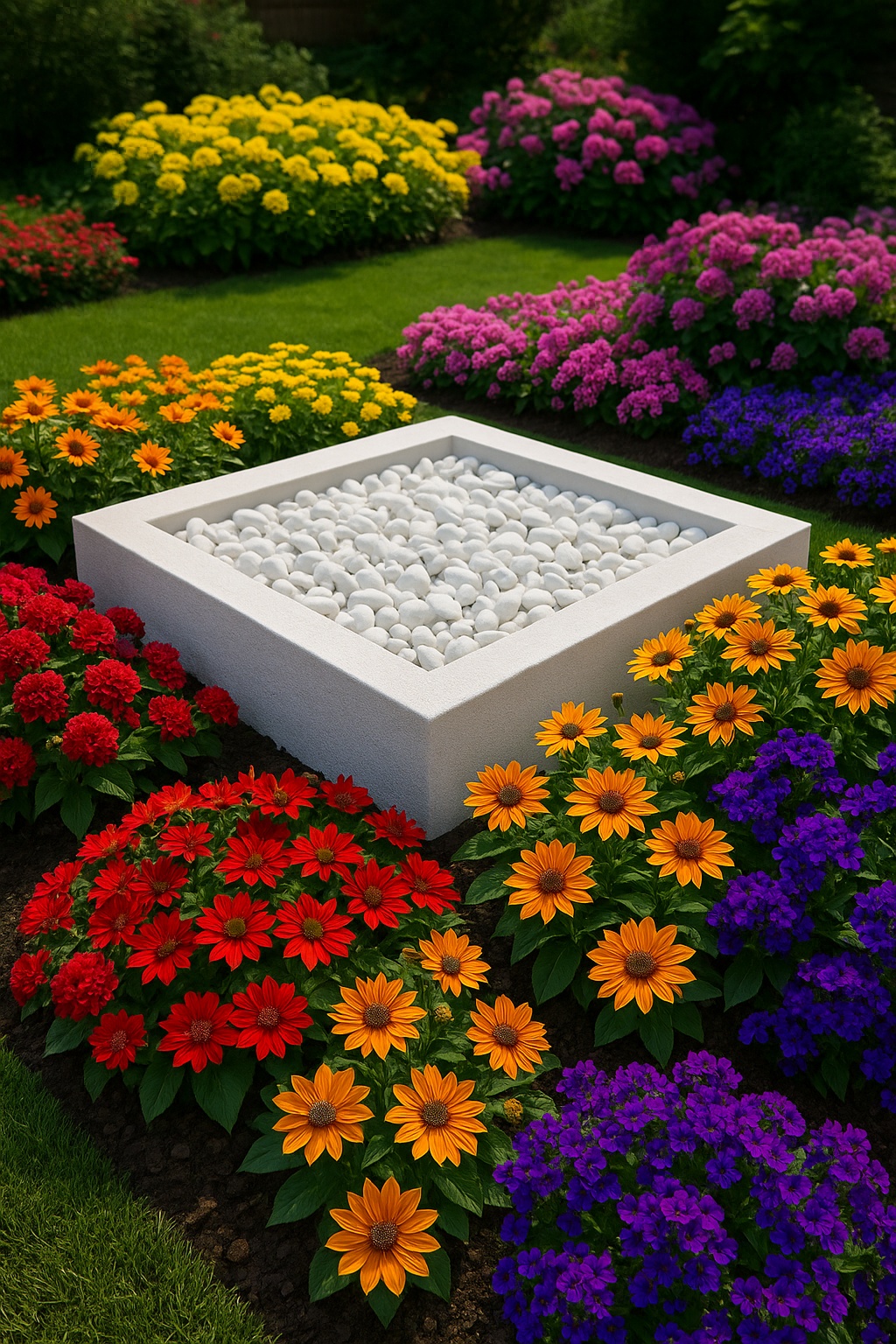
Construct a rectangular bed filled with white rocks within your garden. For a simple and striking statement, leave the interior of the box free of plants.
Surround the entire box with a vibrant array of flowers. Bright reds, yellows, and purples create a stunning contrast against the stark white of the rocks.
Frame the perimeter with low growing flowers or compact shrubs. This design maintains a clean, modern aesthetic and also promotes good air circulation for your plants.
The white rocks act as a mulch, helping to suppress weeds and retain soil moisture. It is a low effort way to keep your garden looking fresh and well maintained.
4. White rocky edging paired with bromeliads
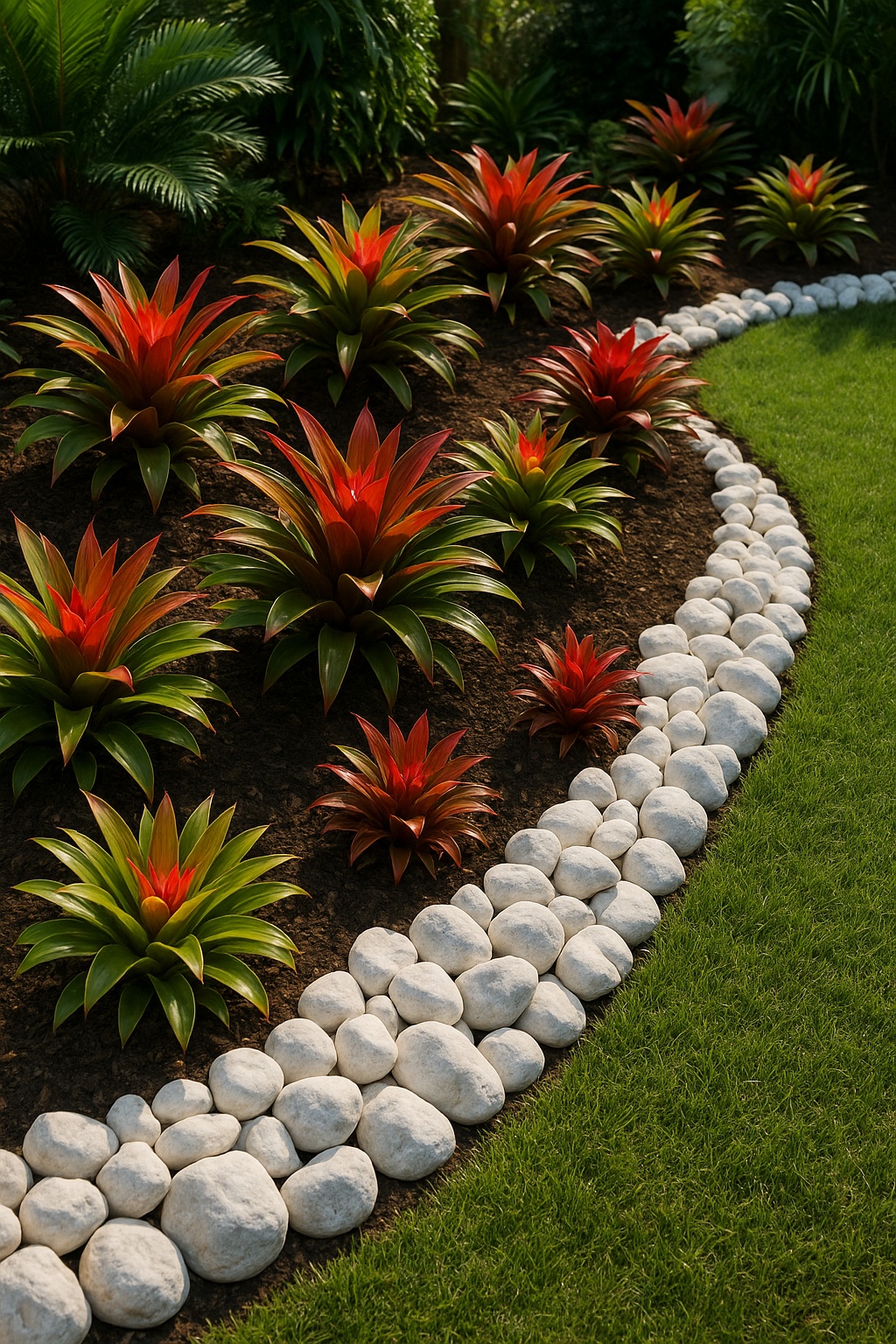
Create a crisp, defined look for your garden beds by using white rocks as an edging material. This technique keeps soil contained and gives your landscape a tidy appearance.
Combine the white rocks with bromeliads to introduce a burst of color and unique texture. Bromeliads are easy to care for plants known for their vibrant leaves and interesting forms.
Arrange groups of bromeliads along the rocky border to make the area a true focal point. A white rock edge also helps delineate walkways or planting zones, while improving drainage by directing water away from plant roots.
Since bromeliads prefer well drained soil, this arrangement is ideal for their health. Rinse your white rocks occasionally to maintain their brightness.
You can also add some mulch or ground covers between the rocks and plants to further reduce weed growth.
5. Desert Garden Landscape using white rocks and drought-tolerant plants
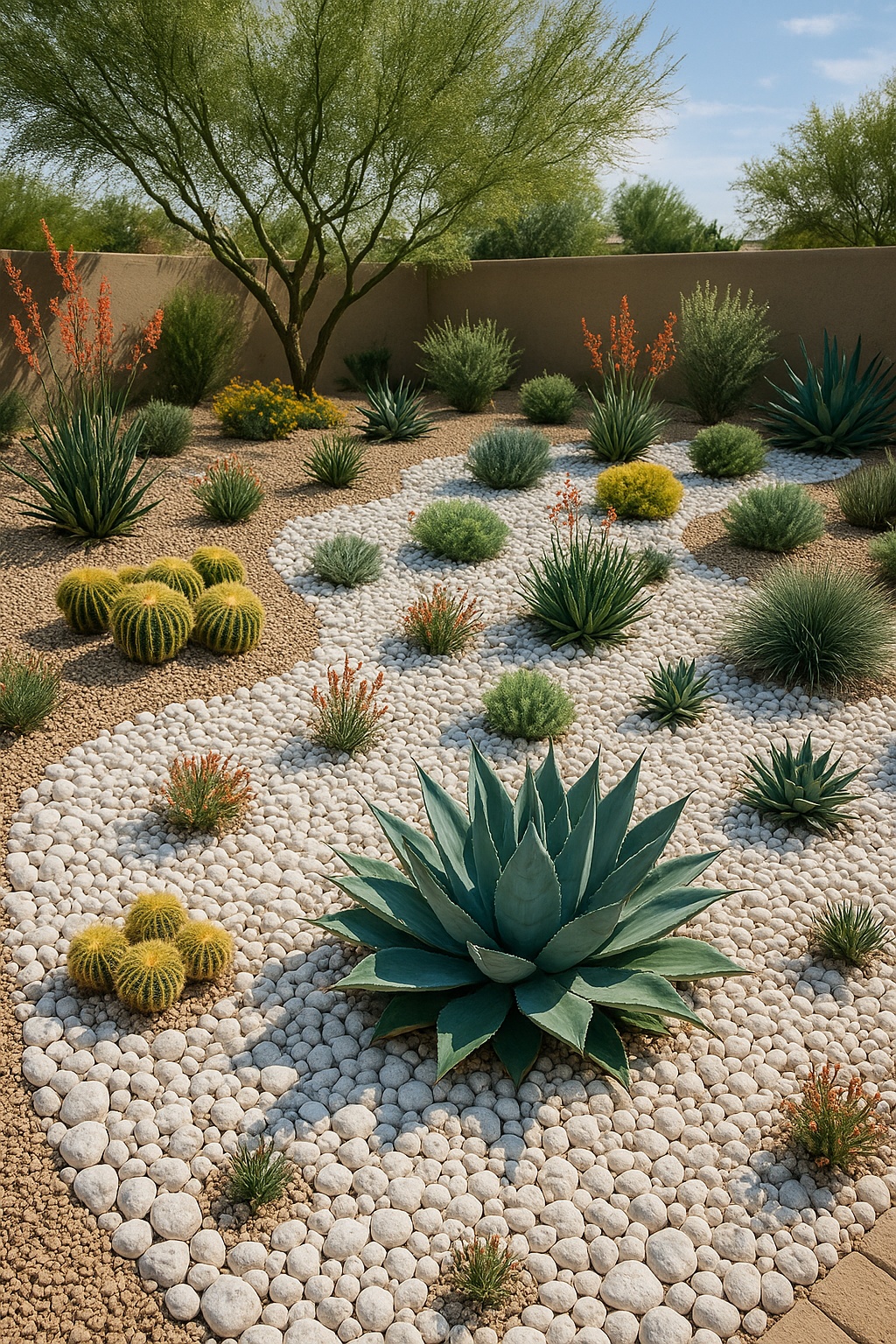
Establish a simple, low maintenance desert garden by using white rocks as a ground cover. These rocks reflect the sun’s rays, which helps keep the soil cooler and reduces water evaporation.
Complement the rocks with drought tolerant plants such as cacti, agave, or sage. They are perfectly adapted to dry conditions and look completely natural in this setting.
Group the plants in a way that mimics their natural growth patterns in the wild. Use smaller white stones or gravel around each plant to introduce additional texture.
Incorporate a few large boulders or a desert palm to add height and a strong visual anchor to the landscape. This design is not only attractive but also water efficient, making it a smart choice for hot, arid climates.
The white rocks also act as a weed barrier, reducing the need for chemical treatments.
6. White rock pathways to create clean lines in the yard
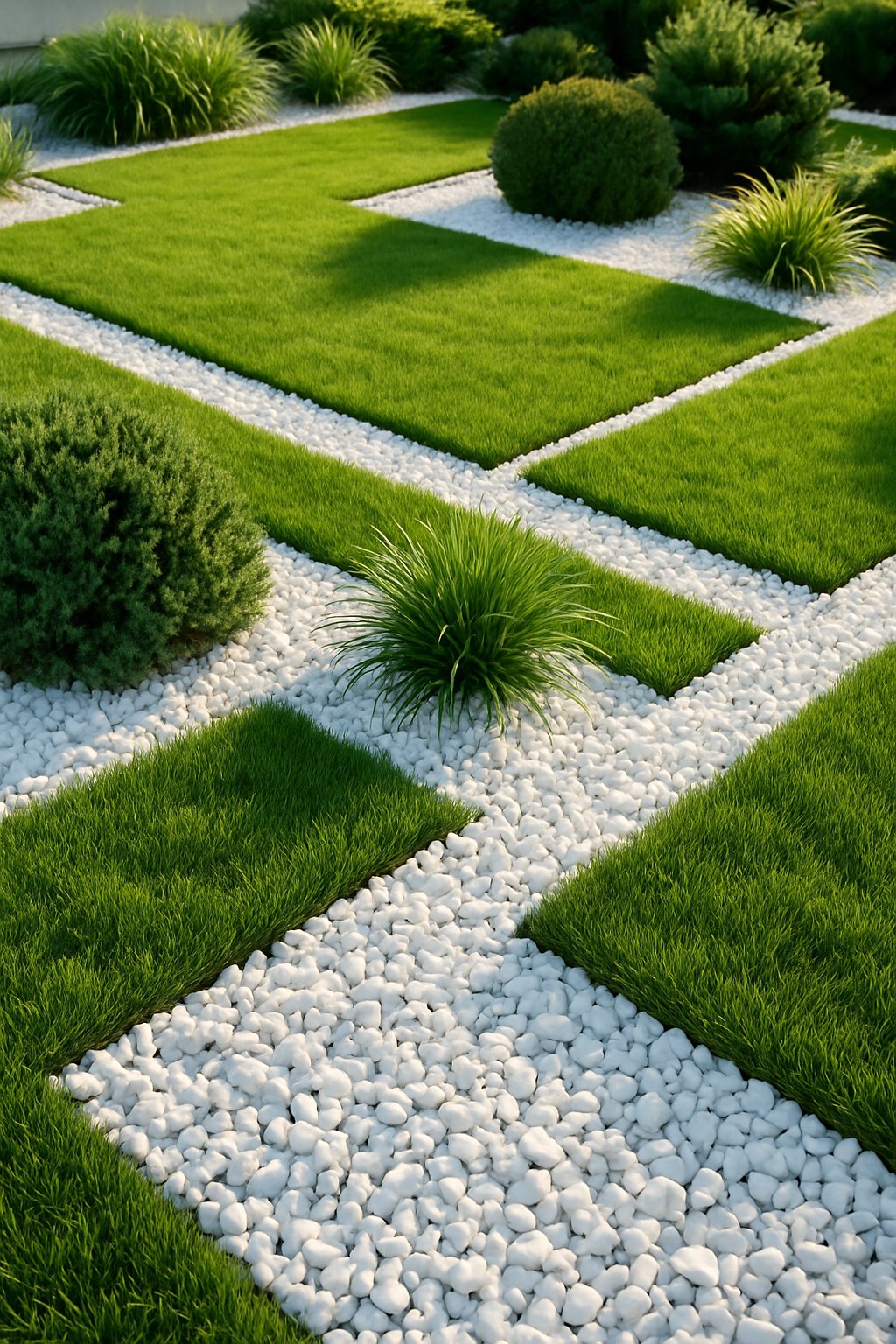
White rock pathways introduce a crisp, organized appearance to your yard. Begin by digging a shallow trench for the path and lining it with landscaping fabric to prevent weed growth.
For proper drainage, add a layer of crushed pea gravel before the white rocks. Finish with small, round white pebbles for a smooth surface that contrasts beautifully with grass or other plants.
You can line the edges with larger white rocks to create a natural, complete border. These paths help guide visitors and divide your garden into distinct, orderly sections.
For a rustic yet modern touch, you can integrate wooden steps within the white rock paths. This added texture keeps the design engaging.
7. Dry bed landscaping with white rocks and lawn pavement
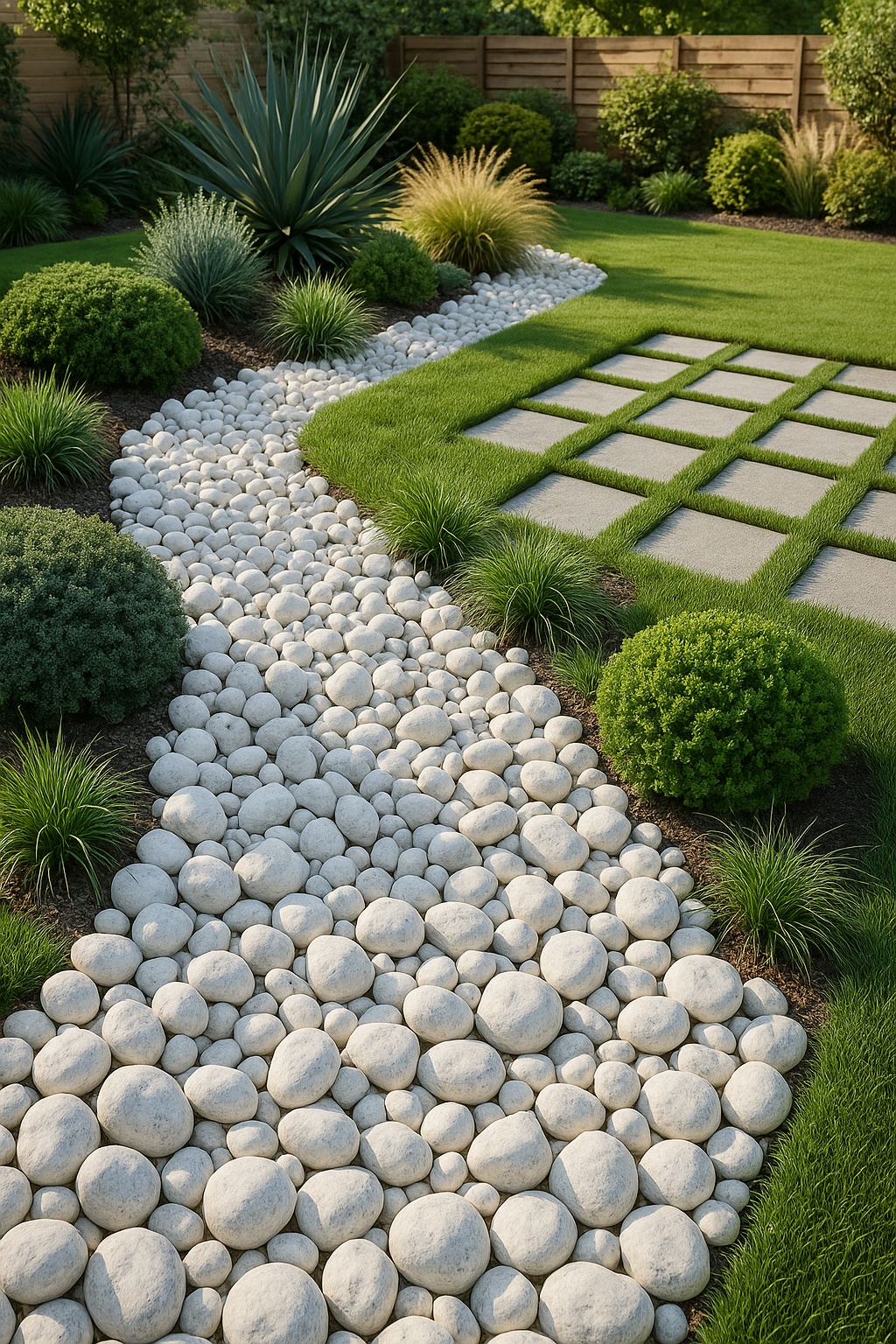
A dry bed featuring white rocks can bring a modern, uncluttered feel to your landscape. You can combine it with lawn pavement to create a neat walkway or patio area.
The white rocks reflect light, making your outdoor space feel brighter. This design also helps manage water, directing it away from your lawn and reducing the risk of muddy patches or erosion.
You can soften the look by lining the dry bed with plants or small shrubs. For added texture and visual appeal, vary the sizes of the rocks you use.
Lawn pavement tiles or stones provide a stable walking surface while maintaining a natural look. This type of landscaping requires very little upkeep and looks great throughout the year.
It is an ideal choice if you are seeking a stylish yet low effort solution for your yard.
8. Urban landscape decor combining sandstone and white lava chips
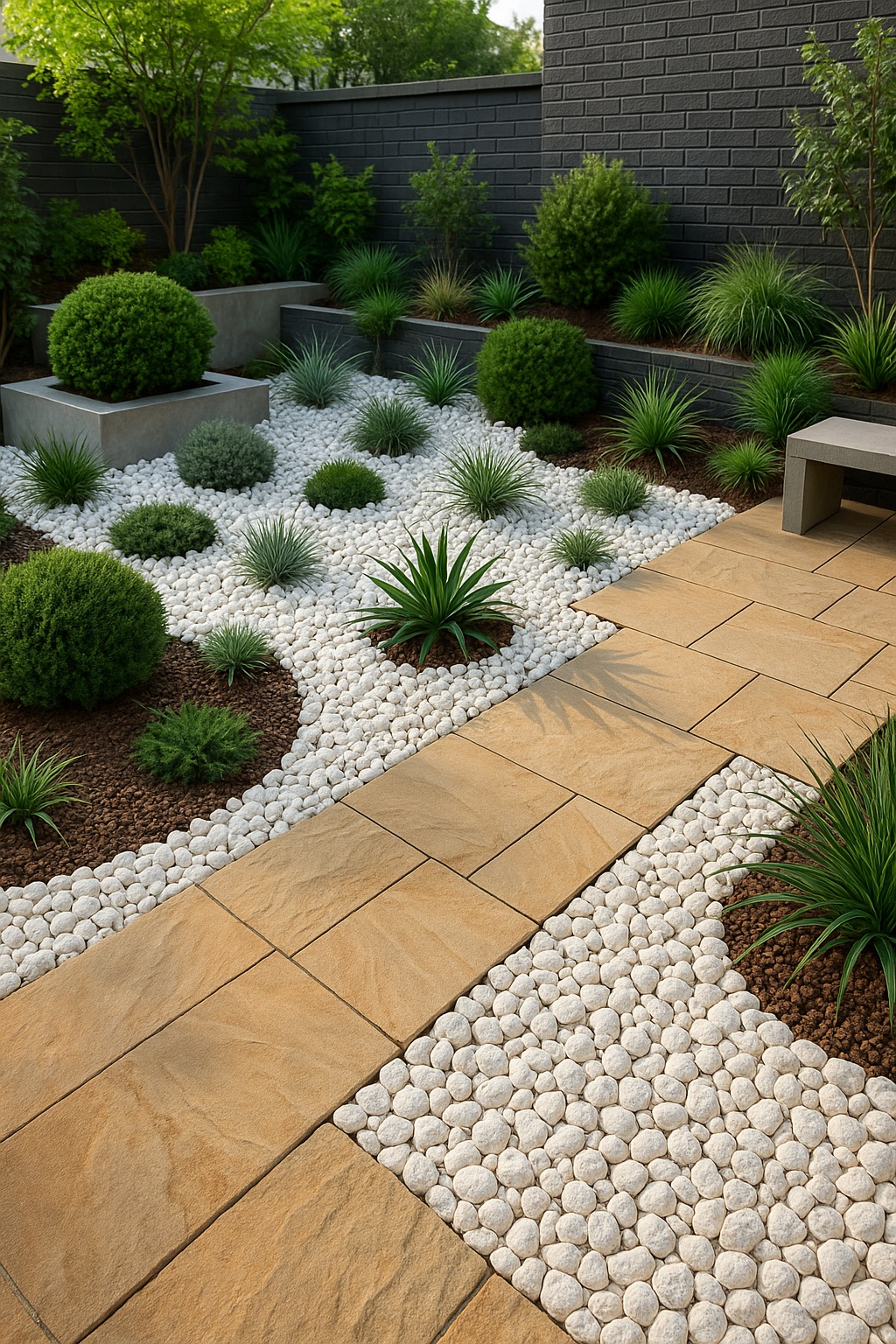
Pairing sandstone with white lava chips can give your urban garden a sleek, contemporary update. The warm hues of the sandstone contrast beautifully with the bright white lava rocks, adding a sense of depth.
Consider using sandstone for edging or low retaining walls, then fill in garden beds or walkways with the white lava chips. Both materials are durable and weather resistant, so they require very little maintenance.
This combination is highly effective around planters, along paths, or on patios. It introduces texture and keeps your garden looking fresh with minimal effort.
To soften the hardscape, you can tuck in some small, drought tolerant plants among the rocks. The stones will help the soil retain moisture and suppress weeds.
This style is equally suitable for compact city yards and larger properties. It effectively blends natural colors with a clean, structured design.
9. White rock garden beds to retain soil moisture and regulate temperature
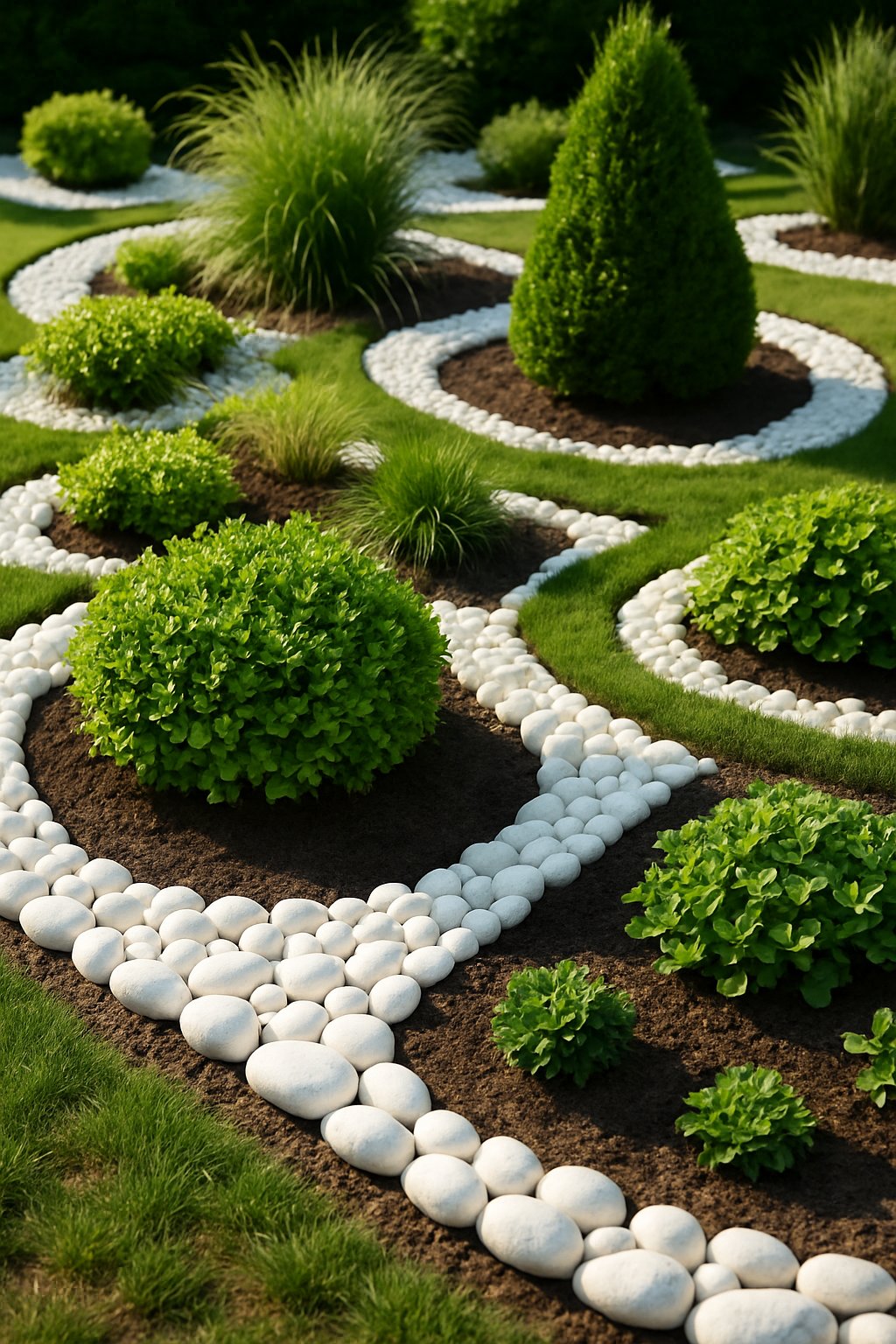
Using white rocks in your garden beds helps to lock in moisture, providing your plants with more consistent hydration. They effectively slow down evaporation, which makes plant care easier.
These rocks also reflect sunlight, a quality that helps regulate the temperature of the soil. This keeps the ground cooler during hot weather, protecting the delicate root systems of your plants.
With white rocks as a mulch, you will find that you need to water less frequently. They also serve as a barrier, preventing weed growth by covering the bare soil.
For the best results, distribute the rocks evenly across the surface. You can combine them with traditional mulch or use them alone for a tidy and fresh aesthetic.
White rock garden beds are suitable for both drought prone areas and regular gardens. They are visually appealing and contribute to the health of your plants.
10. Black and white rock landscaping with strategic lighting
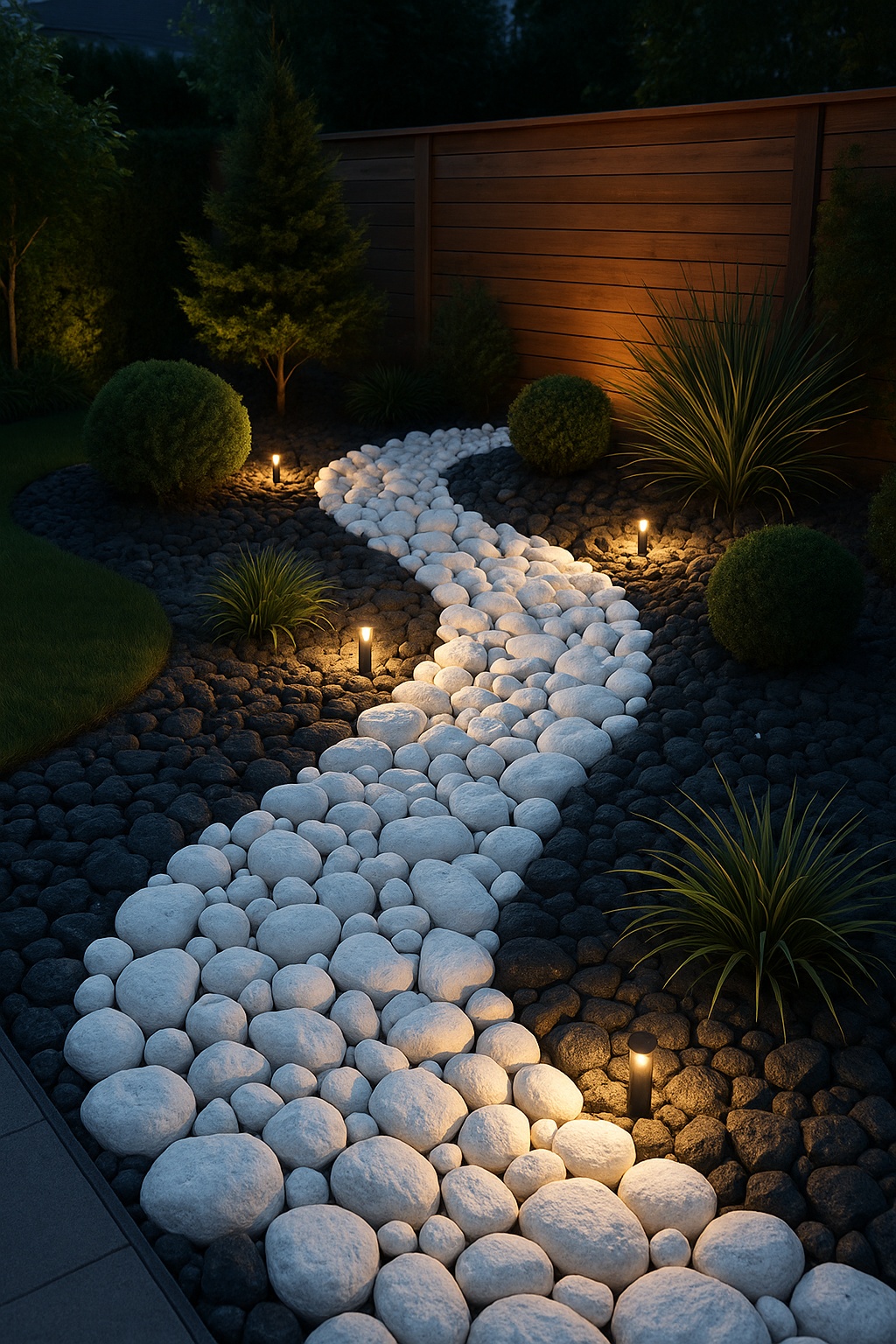
Combining black and white rocks can give your yard a striking, contemporary look. The sharp contrast makes both colors stand out and adds a dynamic texture to your landscape.
Use white rocks for the larger areas, and then use black rocks to outline pathways or define the edges of garden beds. This approach creates a design that is both neat and a bit theatrical.
Incorporate lighting to showcase the patterns you have designed. Soft LED lights are effective for illuminating paths or highlighting stone walls made of black and white rocks.
You can use spotlights to feature specific plants that are surrounded by the rocks. This technique makes your yard visually interesting at night and keeps the space feeling lively.
For a cozy atmosphere that showcases your rock layout to its best advantage, stick with warm or neutral lighting to avoid harsh glare.
11. White rock texture added in garden beds instead of mulch
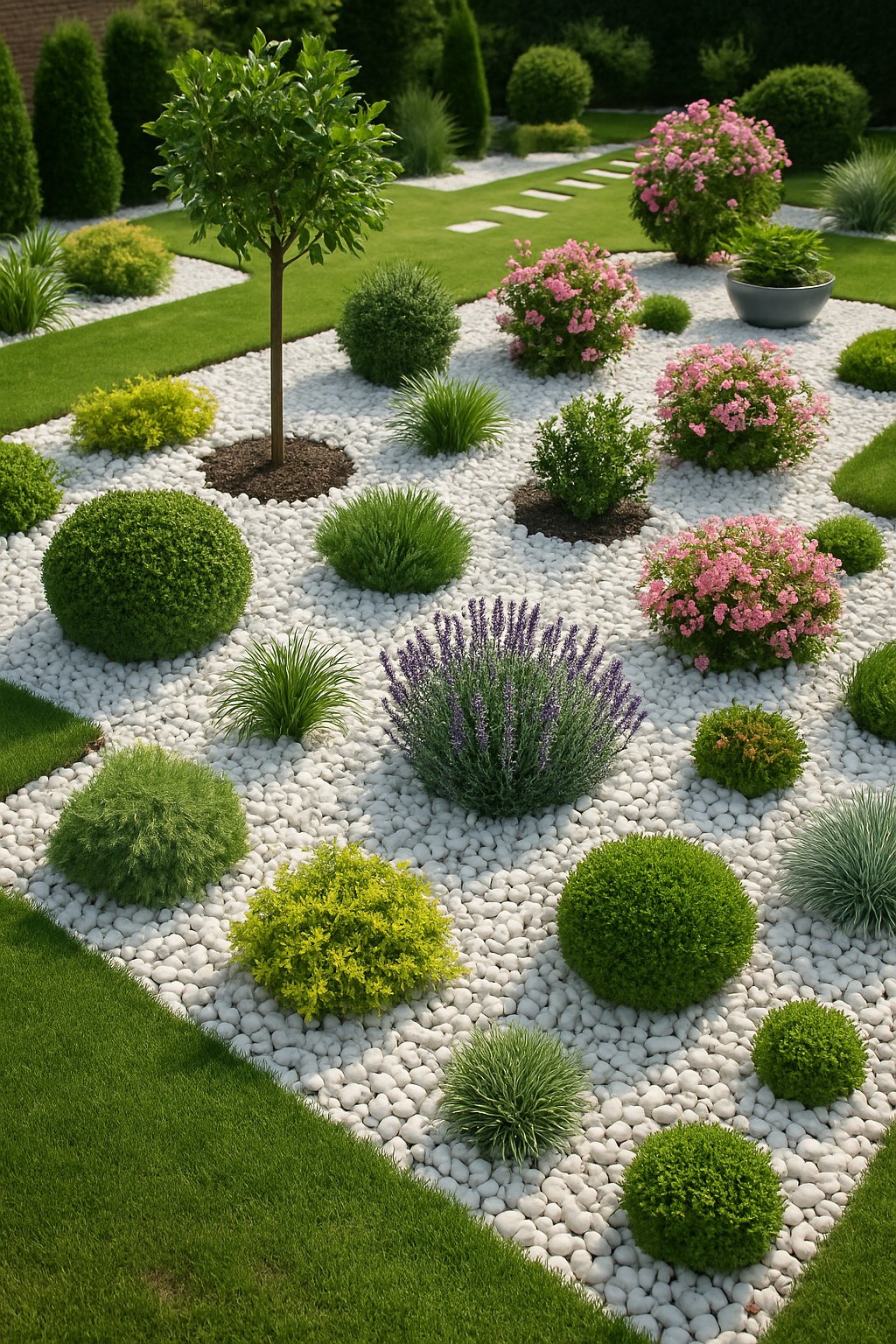
Consider using white rocks in your garden beds to introduce texture and brighten your landscape. Unlike organic mulch, these stones provide a clean, tidy appearance that lasts much longer and does not need to be replenished as often.
White rocks can help suppress weeds and improve drainage around the base of your plants. They also reflect sunlight, which helps to keep the soil cooler on very hot days.
You can choose small pebbles for a fine texture or larger stones for a bolder statement, depending on your desired aesthetic. Mixing different sizes can create more depth and visual interest in your beds.
White rocks complement most plant types and colors, making your garden’s foliage and flowers stand out. They also reduce your workload, as they will not decompose like traditional mulch.
If you are aiming for a fresh, modern look that is easy to maintain and visually striking, white rocks could be the perfect solution for your garden beds.
12. White gravel used as a base for potted plants outdoors
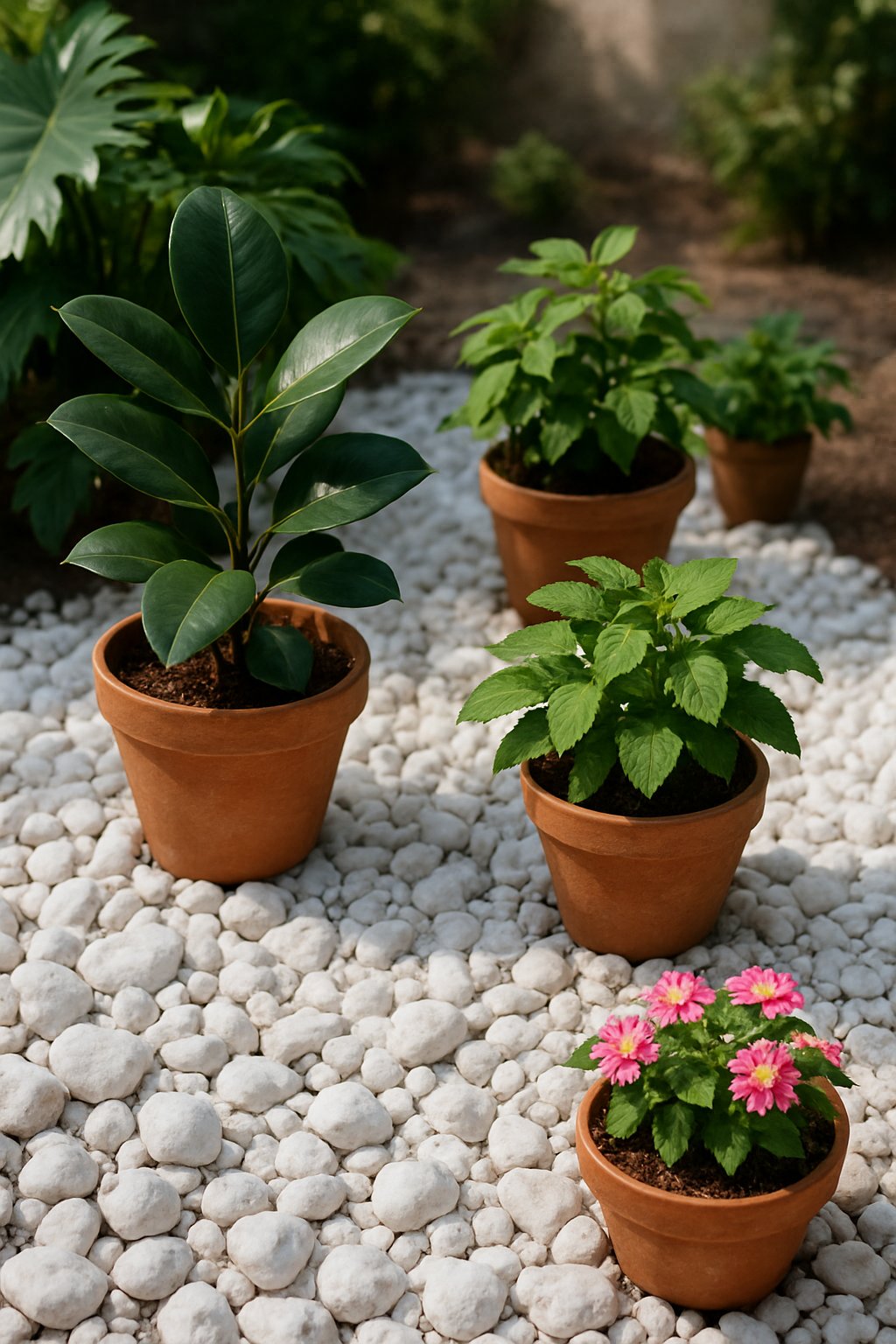
Consider placing a layer of white gravel at the bottom of your outdoor pots to enhance drainage. The gravel prevents water from accumulating, which protects your plants’ roots from the risk of rot.
It also helps to keep the soil from becoming overly compacted. This allows for better air circulation to the roots, which is crucial for healthy plant growth.
White gravel adds a clean, bright aesthetic to your potted arrangements. It can also elevate the soil level, giving your plants a neater and more polished appearance.
You may also observe a reduction in insect activity. The dry gravel layer is not an inviting environment for many common pests.
When adding white gravel beneath the soil, a layer of about one inch is recommended. This layer can help retain moisture and keep the soil cooler in warm weather.
13. Highlighting focal points with larger white boulders
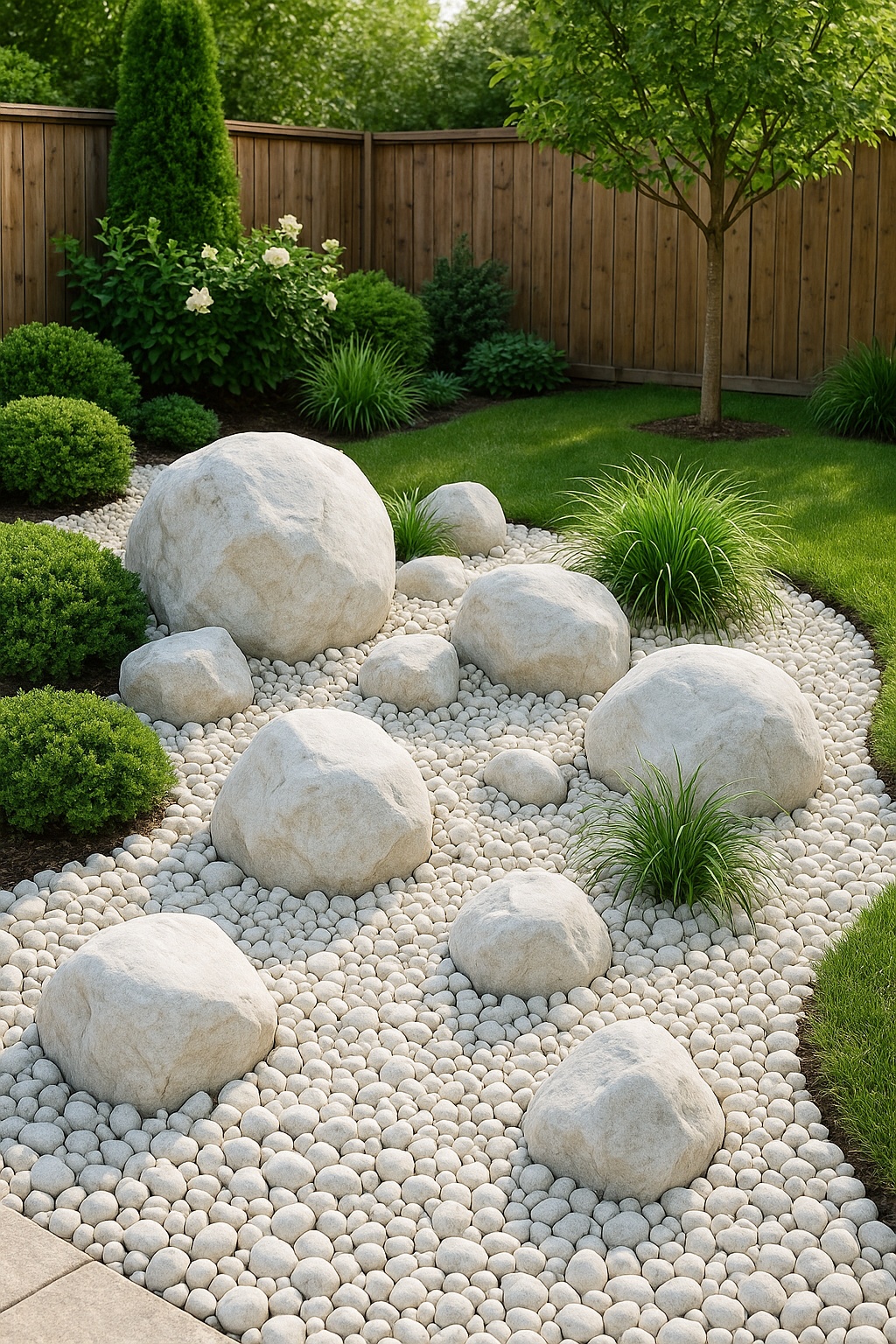
Create a bold statement in your yard by using large white boulders to emphasize key areas. Position a significant boulder in front of a tree, near a statue, or by an entrance to capture immediate attention.
Place the boulder in a location where it is visible from the street or as people approach your home. You can frame it with smaller white rocks to make the feature even more prominent.
Select a boulder size that is appropriate for your yard’s scale. One that is too large can feel overwhelming, while one that is too small may go unnoticed. You might choose a rounded boulder for a softer look or a jagged one for a more rugged, natural feel.
For added visual impact, try incorporating some dark stones around the boulder. The contrast will make the white boulder stand out more and give your yard a sharp, designed look.
If desired, you can add nearby plants that complement the boulder’s color. Green shrubs or colorful flowers can help soften the hard edges of the stone.
14. Modern art-inspired clusters of white rocks in front yards
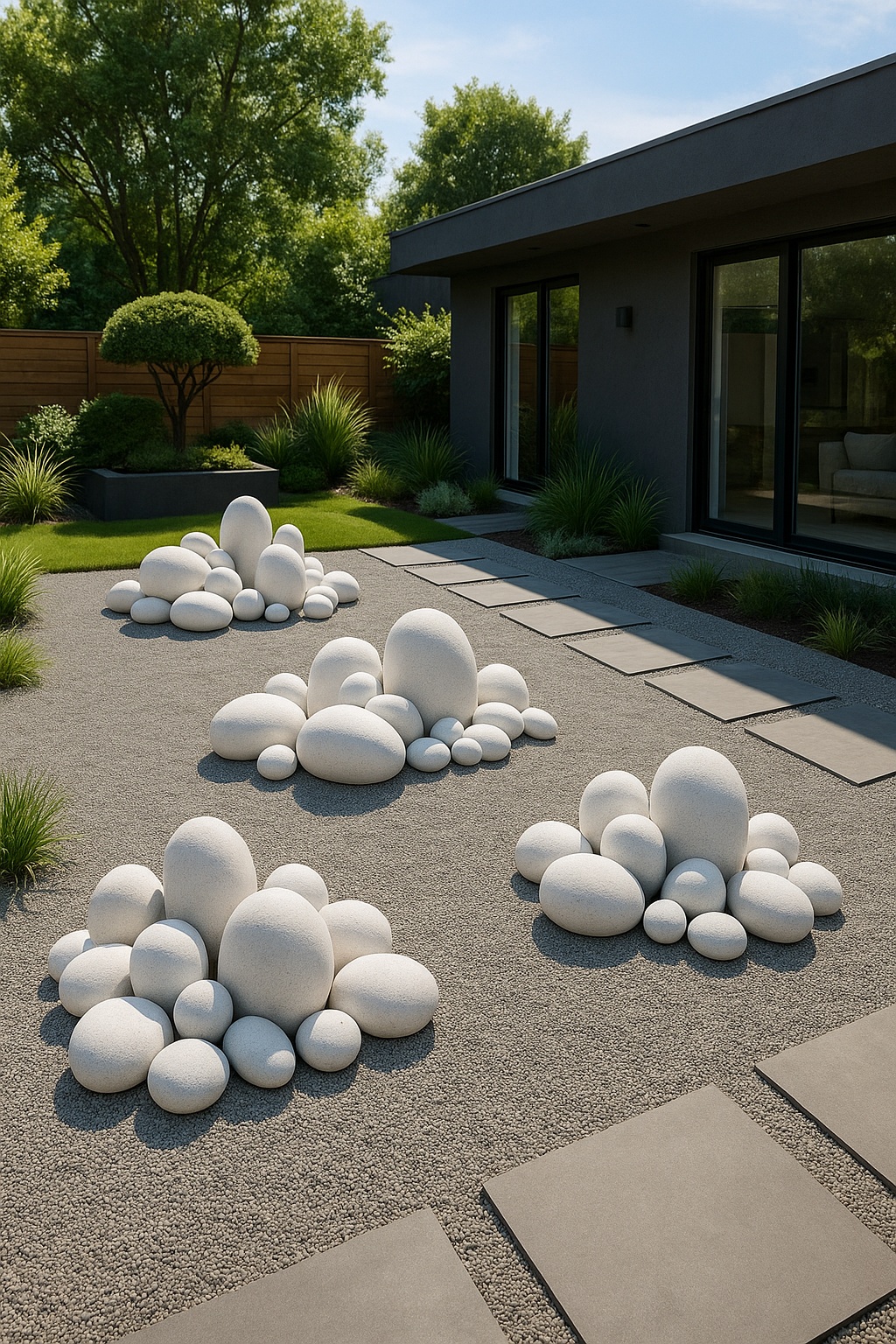
For a touch of modern artistry in your front yard, try creating visually appealing clusters of white rocks. Group rocks of various sizes and shapes into small arrangements to form interesting patterns. This technique adds texture and a crisp aesthetic with very little effort.
Position the clusters near plants or along walkways to ensure they stand out. For a fresh, contemporary style, opt for smooth, bright white rocks. You can enhance the artistic feel by adding low growing plants or sculptural elements.
To avoid a cluttered look, keep the clusters well spaced. Each group should be a distinct, intentional focal point. This is a simple method to give your outdoor space a unique character.
15. White rock zen garden with mountain-representing stones
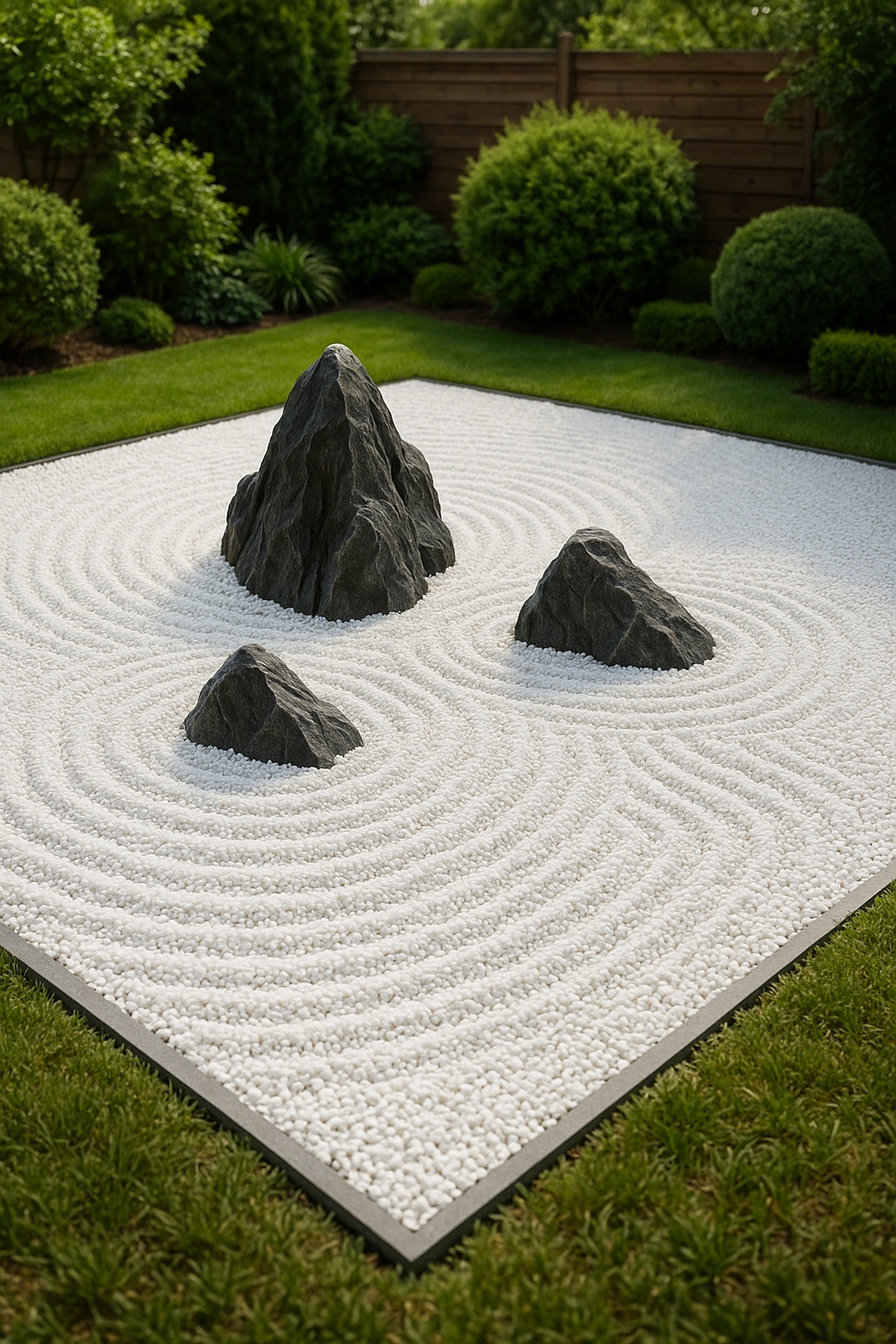
You can transform a corner of your yard into a serene retreat by creating a Zen garden with white rocks. Begin by covering the ground with smooth, small white pebbles. Then, introduce some larger, more rugged stones to symbolize mountains.
For added texture and visual interest, you can rake patterns into the white rocks. Simple wave or circular designs are effective and contribute to the garden’s calming atmosphere.
Place the “mountain” stones in a way that feels natural and balanced, rather than randomly dropped. This careful placement is key to making the space feel inviting. If you like, you can soften the edges with a few small plants.
This style of garden requires minimal upkeep and is well suited for small areas. It is an excellent choice if you desire a quiet spot for contemplation and relaxation.
16. Using white rocks as border stones around flower beds
If you want to give your flower beds a crisp, fresh boundary, consider lining them with white rocks. This approach helps to define the planting area and makes your flowers stand out.
For a neat and tidy edge, you can use smooth white stones. To add visual interest, try mixing larger rocks with smaller pebbles.
White rocks are practical as they prevent soil and mulch from spilling onto your paths or lawn. They are easy to maintain and, unlike mulch, do not decompose over time.
For a delightful contrast, pair the white stones with brightly colored flowers. This combination keeps your garden looking orderly and cheerful.
White rock borders are durable and retain their color throughout the year. You can shape them to follow curves or straight lines, depending on your garden’s design.
17. Creating a minimalist white rock centerpiece in the patio
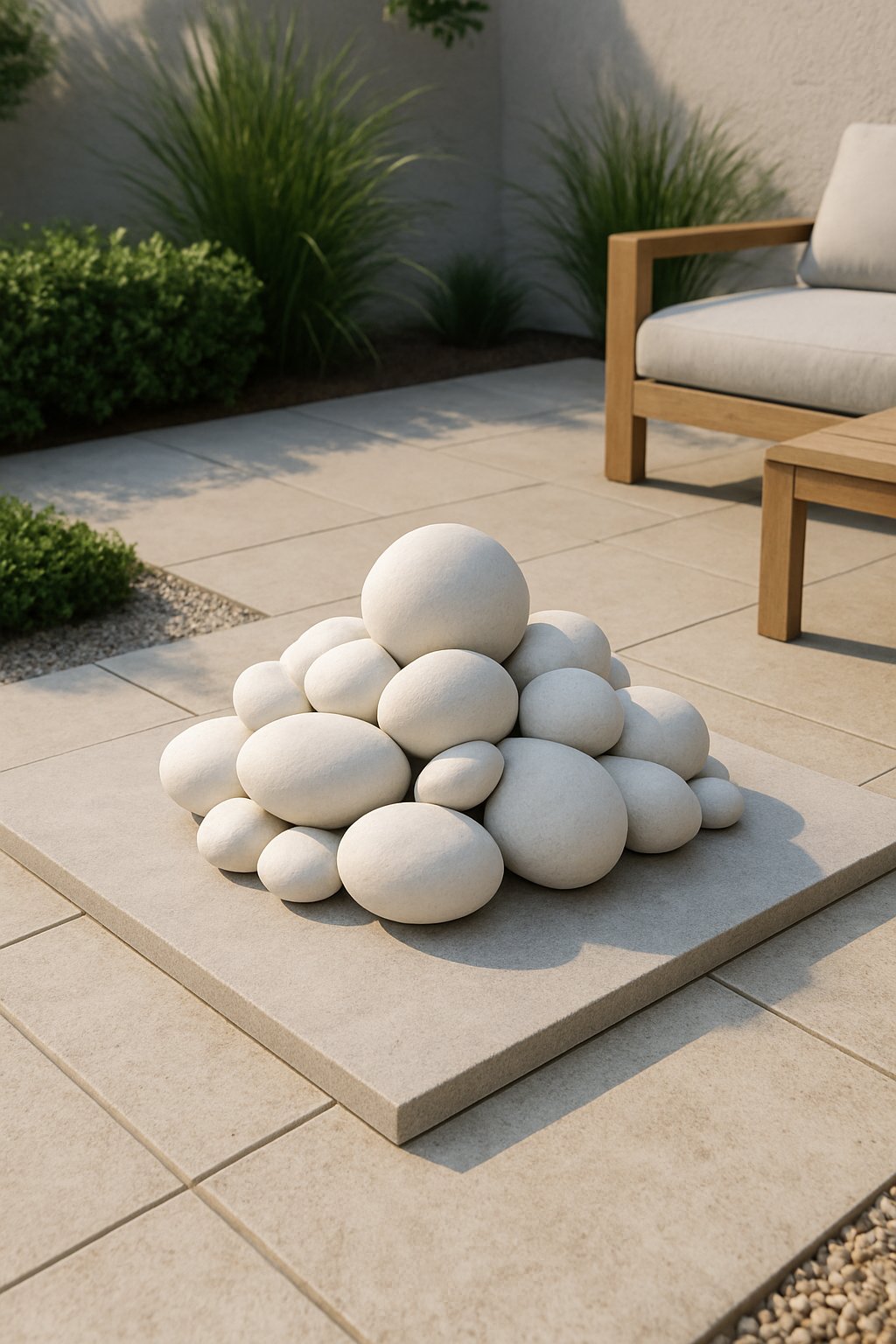
Choose a level, open area on your patio to establish your centerpiece. For a simple base that effectively catches the light, lay down smooth white rocks.
To achieve a clean, minimalist aesthetic, stick to basic shapes and use rocks of a similar size. For a bit of contrast, you can introduce a few larger stones or a single decorative boulder.
Surround the rock feature with low maintenance plants like succulents or small shrubs. This touch of green adds life to the arrangement without creating a cluttered look.
This type of design can brighten up a dark patio and create the illusion of a larger space. Additionally, it is extremely easy to care for; you can essentially set it and forget it.
To keep the rocks contained and your centerpiece tidy, use pavers or metal edging to create a border.
For a more finished look that draws the eye, consider arranging the rocks in a simple geometric pattern, such as a circle or a square.
18. White rock dry riverbeds to guide rainwater flow
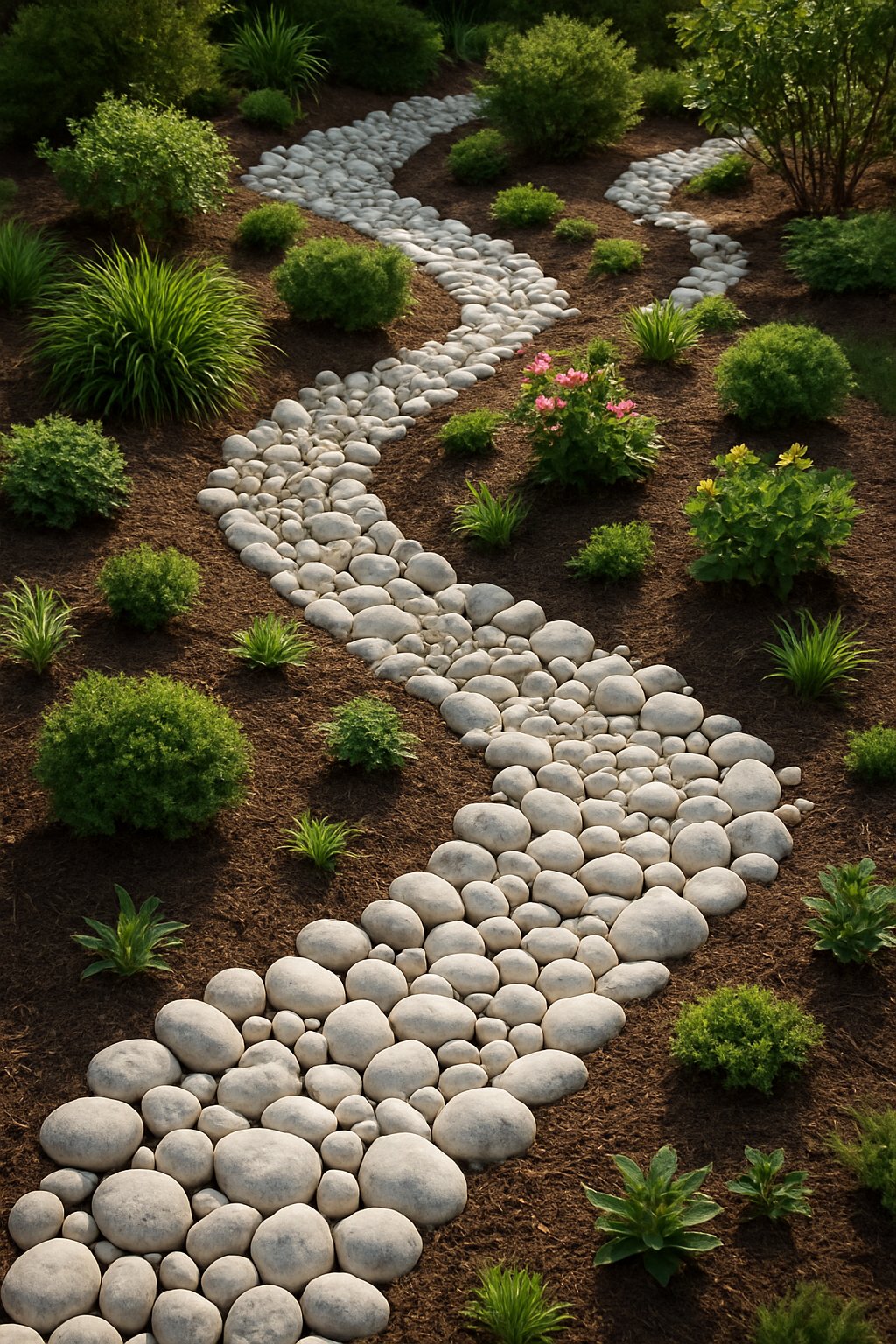
White rock dry riverbeds offer a smart solution for managing rainwater in your yard. Start by digging a shallow, winding trench. This channel will direct water away from areas prone to puddling or erosion.
The white rocks provide a bright, clean look while also slowing the flow of water. This action helps prevent soil from being washed away during heavy rains.
If you want to create a “pool” effect where water can briefly collect, you can widen certain sections of your riverbed. To prevent weed growth and keep soil from mixing with the rocks, place filter fabric underneath.
This feature not only addresses drainage issues but also looks like an attractive stream, even when dry. It can guide the eye across your landscape and add pleasing texture.
19. Mixing white rocks with bold black pebbles for contrast
For a bold, modern contrast in your landscaping, try mixing white rocks with black pebbles. The white stones stand out sharply against the dark black, creating a timeless and visually striking look.
You can use the white rocks as your primary ground cover and then sprinkle black pebbles around plants or along pathways. This technique highlights specific areas without making the design look cluttered.
For added texture, you can try layering the two colors. For example, you could place larger white stones on the bottom and then add a layer of smaller black pebbles on top.
This black and white combination works exceptionally well with green plants or vibrant flowers. The colors of the foliage and blooms become even more pronounced against the neutral stone backdrop.
If you have a small yard, this mixture can make it appear neat and well organized. It effectively breaks up the space and makes each section distinct.
20. White rock mulch under shrubs for a clean look
For a garden that appears fresh and well kept, spread white rock mulch beneath your shrubs. The rocks aid in retaining soil moisture, a benefit your plants will certainly appreciate. They also inhibit weed growth, reducing the need to pull unwanted plants.
White rocks reflect sunlight, which can brighten up shaded areas under shrubs. The contrast between the white stones and green leaves or colorful flowers creates a sharp, attractive look. The rocks are also durable and do not wash away easily in the rain, ensuring a long lasting application.
To keep the rocks contained and to clearly define your planting area, you can add a border of landscape timbers or stones. For improved weed control and to maintain soil health, lay landscape fabric underneath the rocks.
21. Using white stones to line walkways and driveways
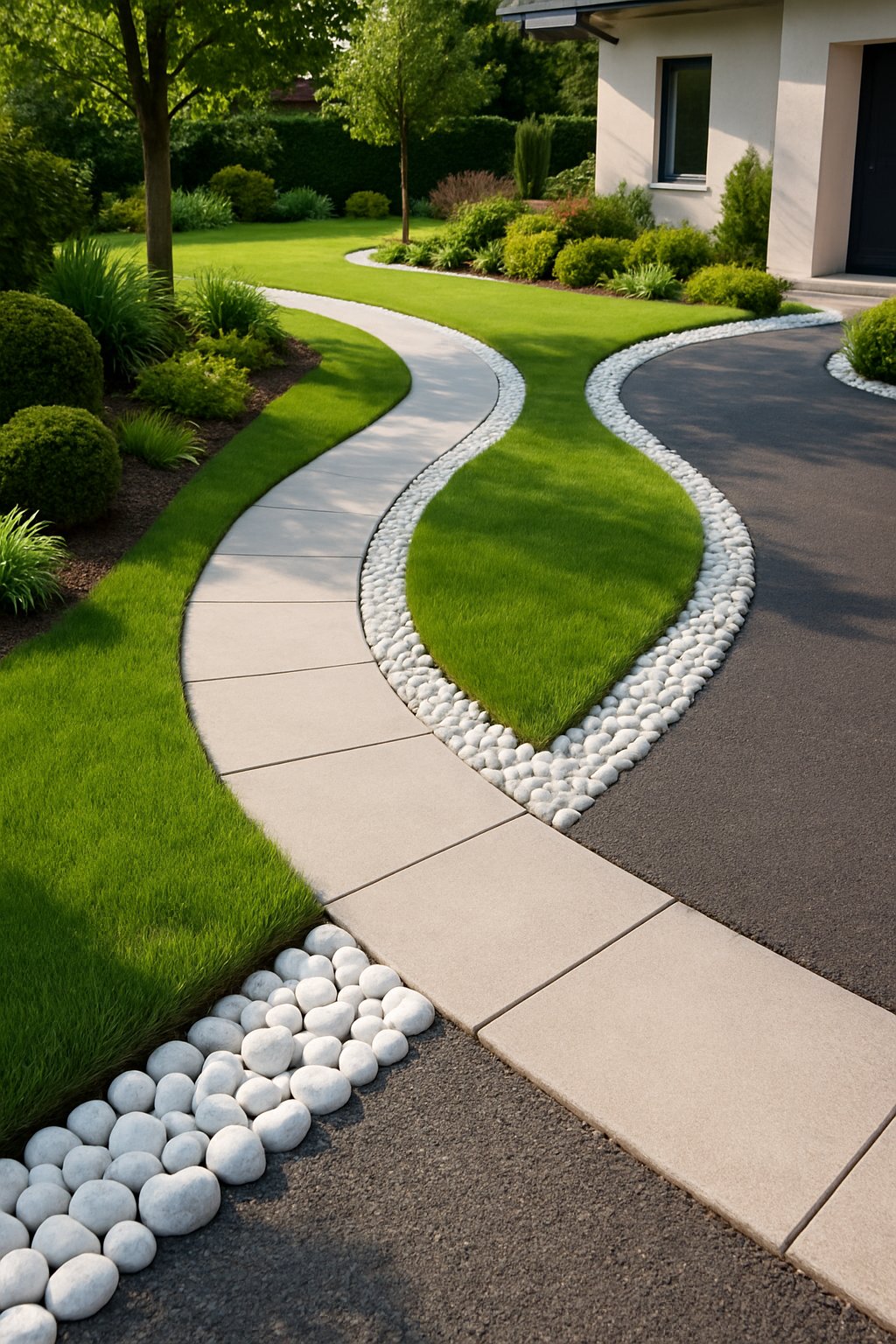
White stones can give your walkways and driveways a crisp, well defined appearance. They clearly delineate the paths and provide a bright contrast against lawns or darker paving materials.
Consider using larger stones along the edges; they will help keep mulch or soil from spilling onto your driveway. Smaller white stones are excellent for filling the gaps between stepping stones or flagstones.
This type of installation requires minimal maintenance. Water drains through the stones readily, so you will not have to contend with puddles or mud on your paths after it rains.
To ensure the stones stay in place and do not shift, arrange them so they are slightly below the edge of the driveway. Placing a weed barrier underneath will help to minimize unwanted plant growth.
22. White rock bed with native succulents for low maintenance
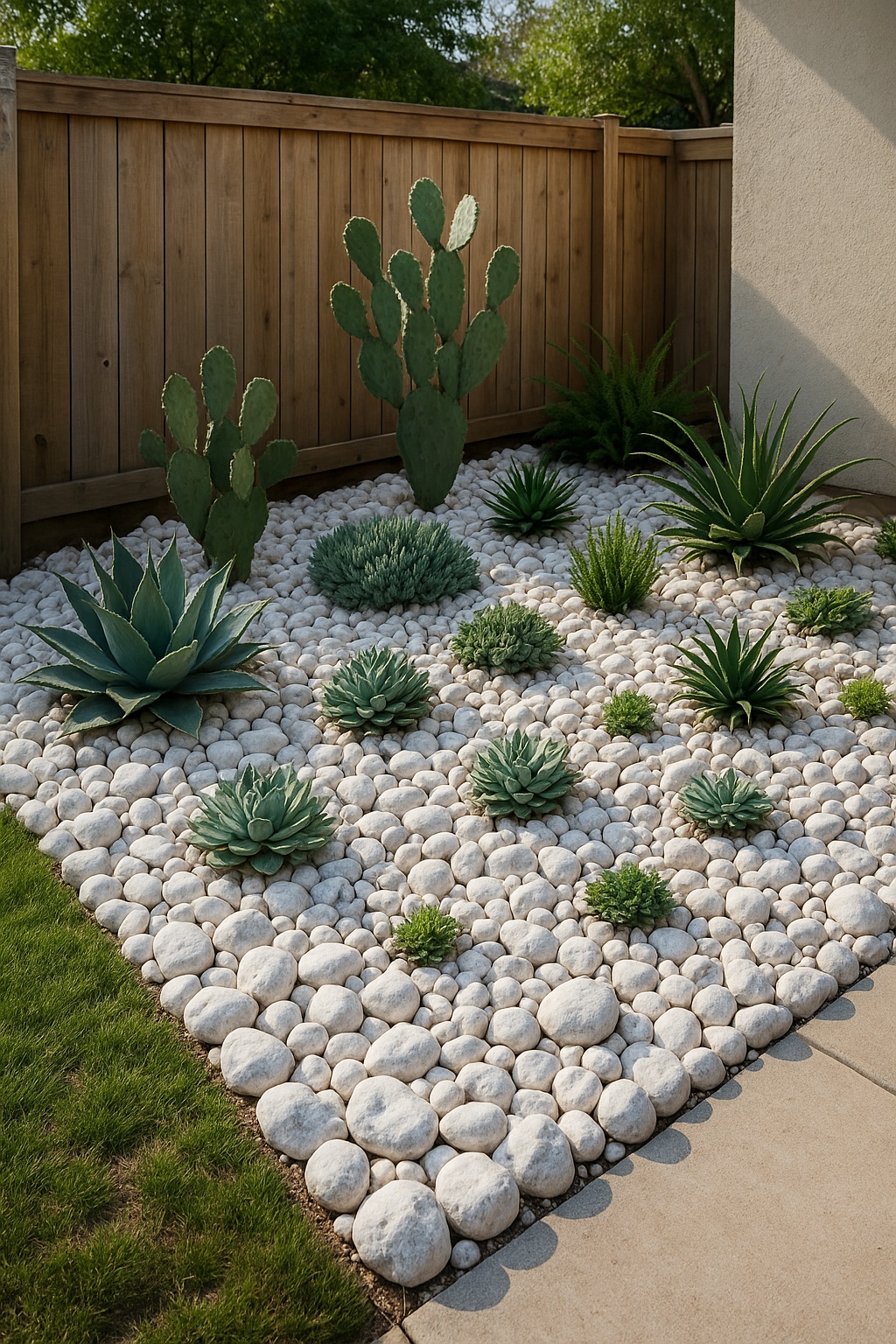
If you are looking for a garden that is easy to maintain, a white rock bed featuring native succulents is an excellent option. The white rocks help to keep the soil cool and reduce water evaporation, allowing your succulents to thrive with less frequent watering.
Native succulents are a great choice because they are already adapted to your local climate. They require little water and can withstand challenging conditions. To give your white rock bed some texture and character, you can mix different sizes and shapes of succulents.
The combination of white stones with green or blue hued succulents always creates a fresh and appealing look. For added interest, you can include some small groundcover plants that are also suited to dry soil.
Choose a sunny location for your bed, as most succulents love bright light. You will not need to spend much time tending to this garden, which is ideal if you are busy or prefer a low maintenance yard.
23. Incorporating white pebbles in raised garden planters
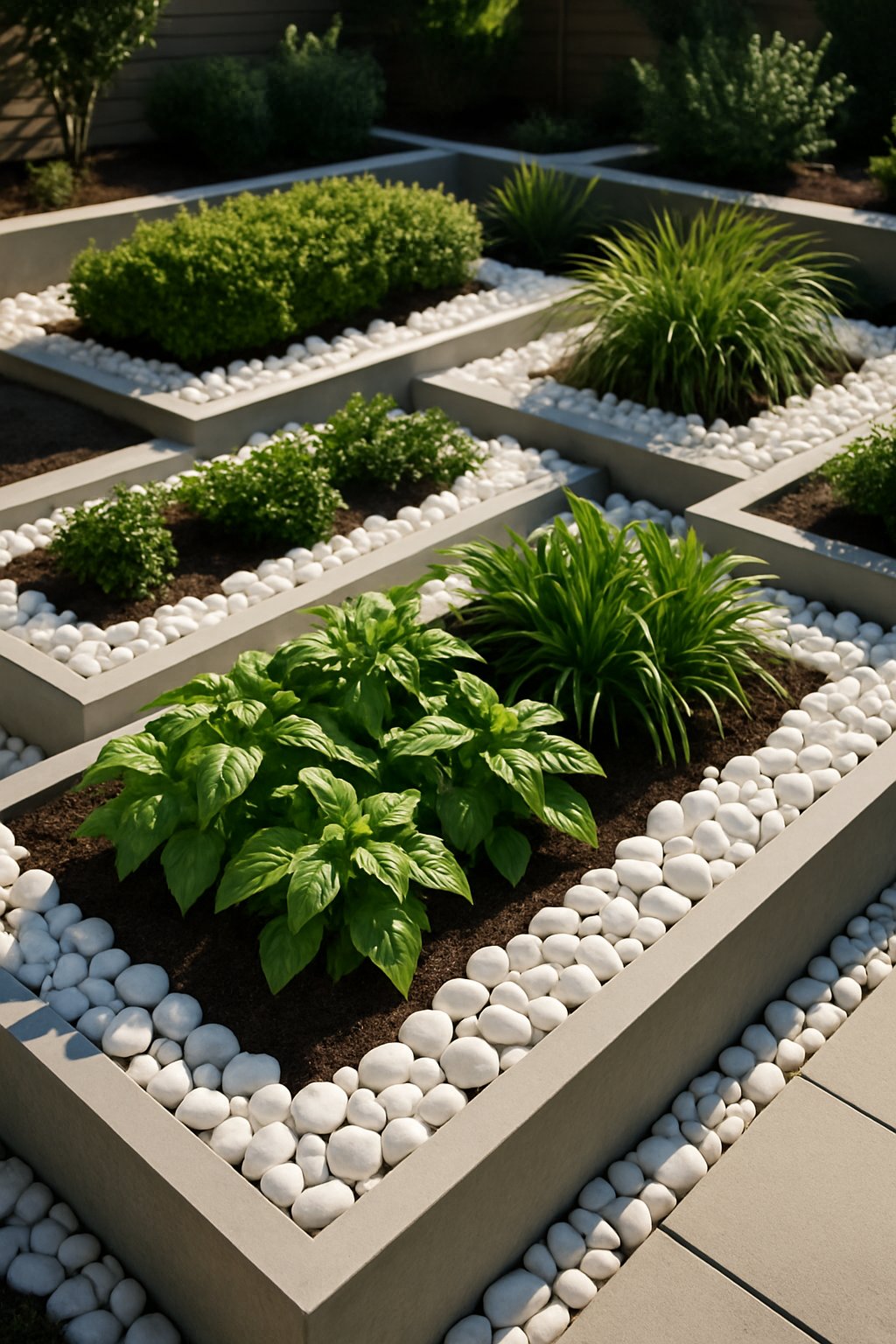
Adding white pebbles to your raised garden planters can give your outdoor space a clean and luminous feel. The contrast with green plants makes the foliage and flowers really stand out.
These pebbles help the soil retain moisture by reducing the rate of evaporation. As a result, you will need to water less often, which is a significant advantage if you want to conserve time or water.
The pebbles also block sunlight from reaching the soil surface, which prevents weed seeds from germinating. This helps keep your planters looking neat and saves you the chore of weeding.
For a more natural appearance, you can mix the white pebbles with stones of other sizes or tuck in a few small succulents. The pebbles also facilitate good drainage, preventing the plant roots from becoming waterlogged.
After you have planted your flowers or shrubs, apply a layer of white pebbles on top of the soil. This not only looks fresh but also helps to protect your plants.
24. White rock mosaic patterns in garden terraces
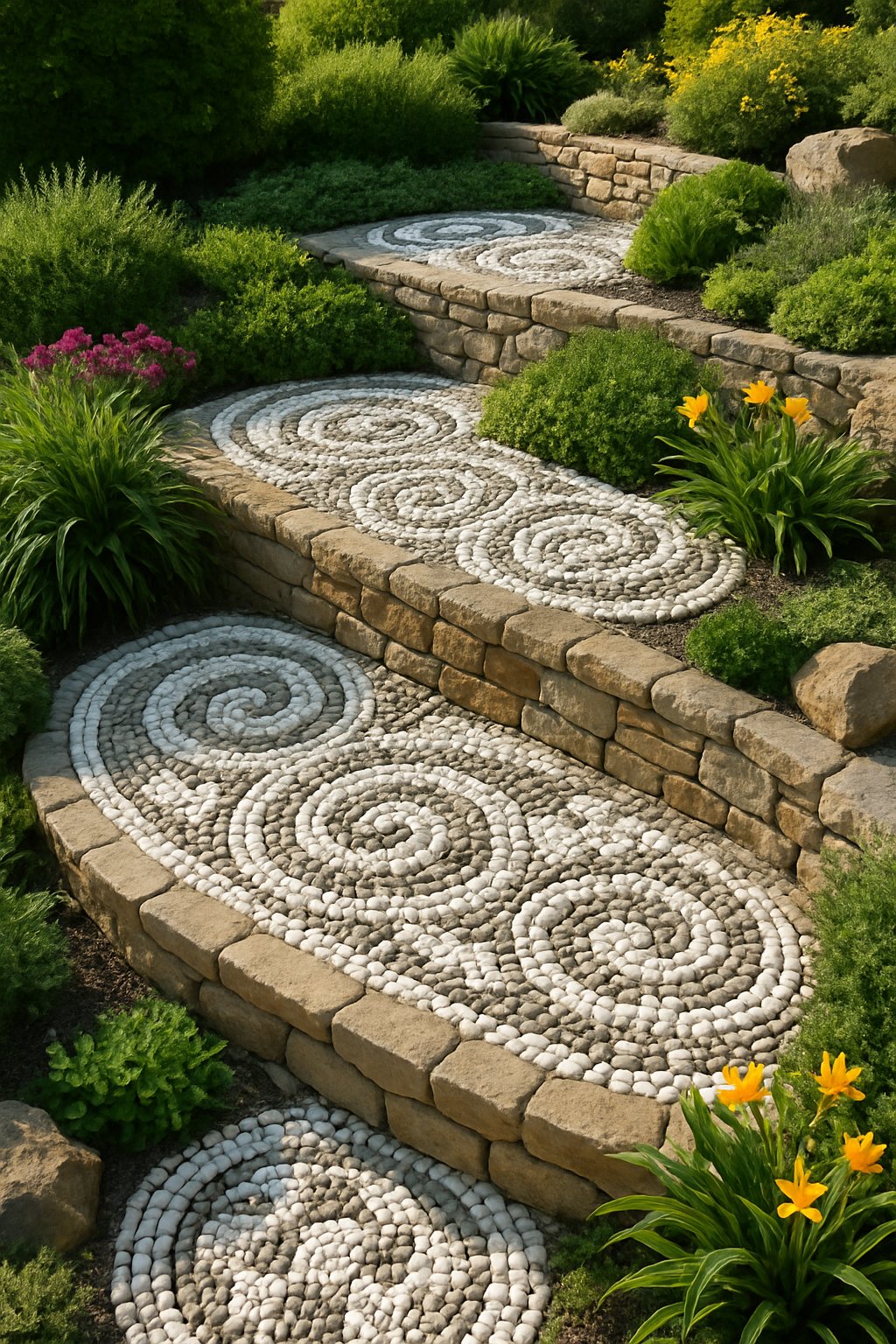
White rock mosaics on garden terraces can be a captivating feature that makes your outdoor space truly unique. You can arrange small white stones into various patterns to create interesting textures on each level of the terrace.
Consider creating geometric shapes, flowing wave designs, or even your favorite symbols. This allows you to personalize your garden and express your creativity. The white stones will brighten the area and contrast nicely with the plants and soil.
While building these patterns requires some patience, the final result can transform a simple terrace into a charming and artistic focal point. For a balanced design, you can integrate greenery or small shrubs into your mosaic.
25. Zen garden style white rock sandboxes for small yards
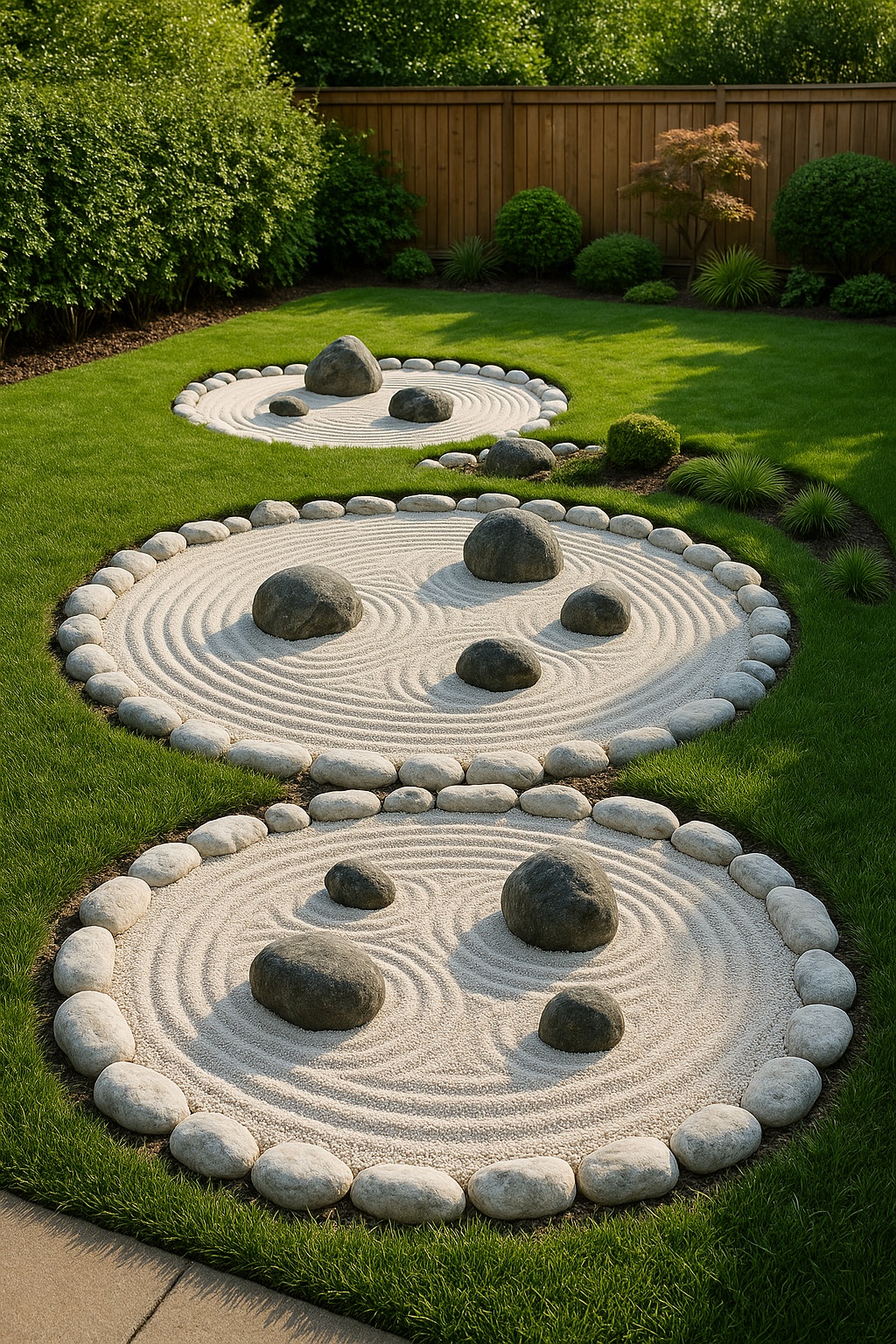
You can transform a small yard into a tranquil Zen garden using white rocks and sand. For a clean and calming foundation, cover the ground with smooth white pebbles or gravel. You can add a few larger stones to represent mountains or other natural elements.
A small area of raked sand introduces texture and contributes to the sense of calm. This style does not require a lot of plants; simple greenery like moss or a few succulents is sufficient and keeps maintenance to a minimum.
To enhance the Zen atmosphere, you can incorporate bamboo or wooden accents. For a peaceful feeling, it is best to stick with a simple and balanced layout. The white rocks will reflect sunlight, making your yard feel brighter with very little effort.
Keep the pathways narrow and use edging stones to separate your Zen sandbox from the rest of the yard. This helps to create a neat and focused design. If you desire an extra soothing element, you can add a small water feature, such as a basin.
26. White rocks with solar garden lights for nighttime appeal
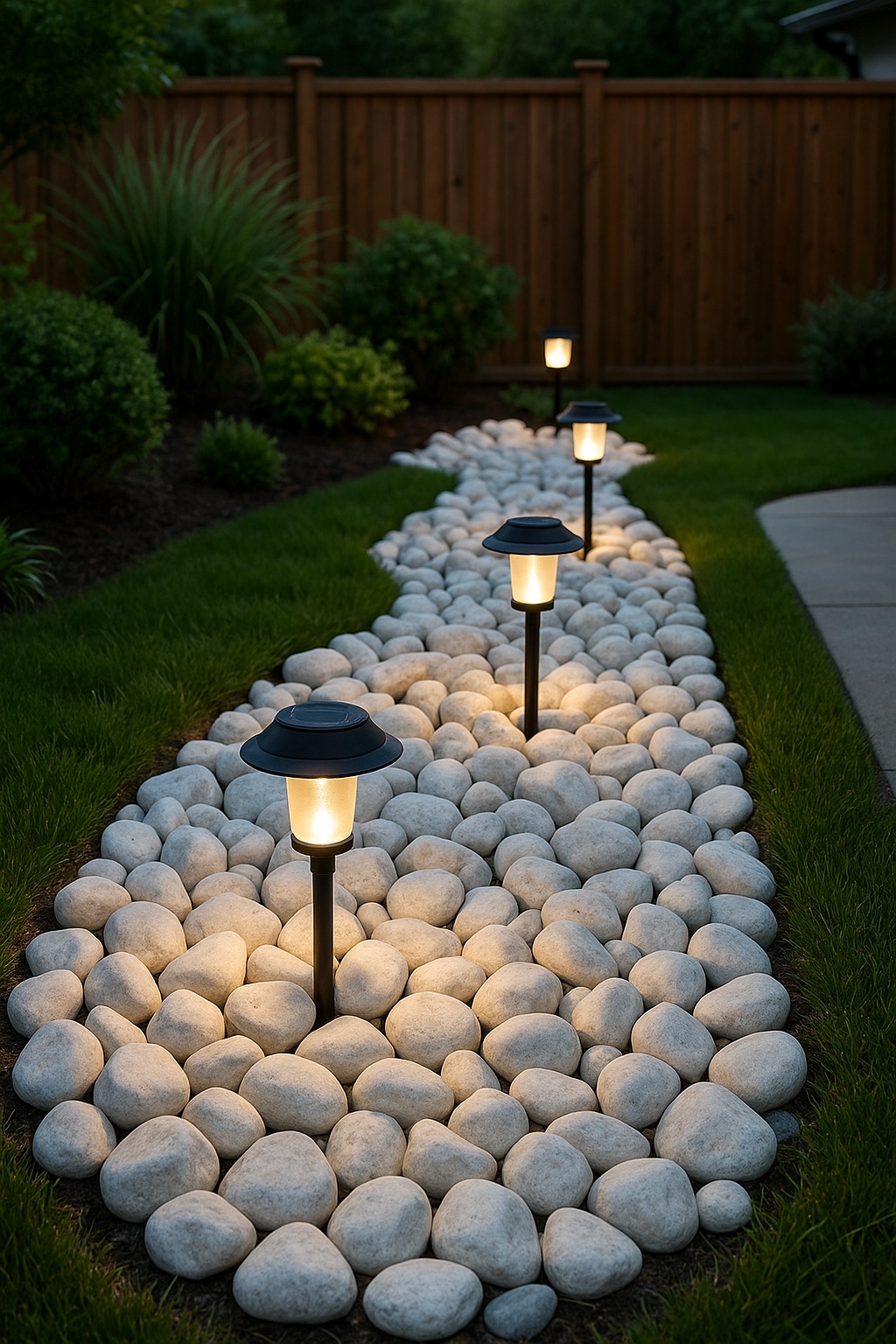
Pairing white rocks with solar garden lights can make your yard look incredibly inviting after the sun goes down. The rocks reflect the light from the fixtures, helping to brighten walkways and garden beds.
Solar lights are very easy to install as they do not require any wiring. Simply place them along paths or around flower beds to create a soft, glowing ambiance.
The white rocks help to disperse the light, giving your garden a clean and modern feel. This combination also illuminates dark areas, which enhances safety while looking great.
You can select solar lights in various shapes and sizes to match your personal style. Low growing plants are a good choice for these areas as they will not obstruct the light.
This lighting setup requires very little maintenance. The solar lights charge during the day and automatically turn on when it gets dark.
27. White gravel-filled gaps between stepping stones
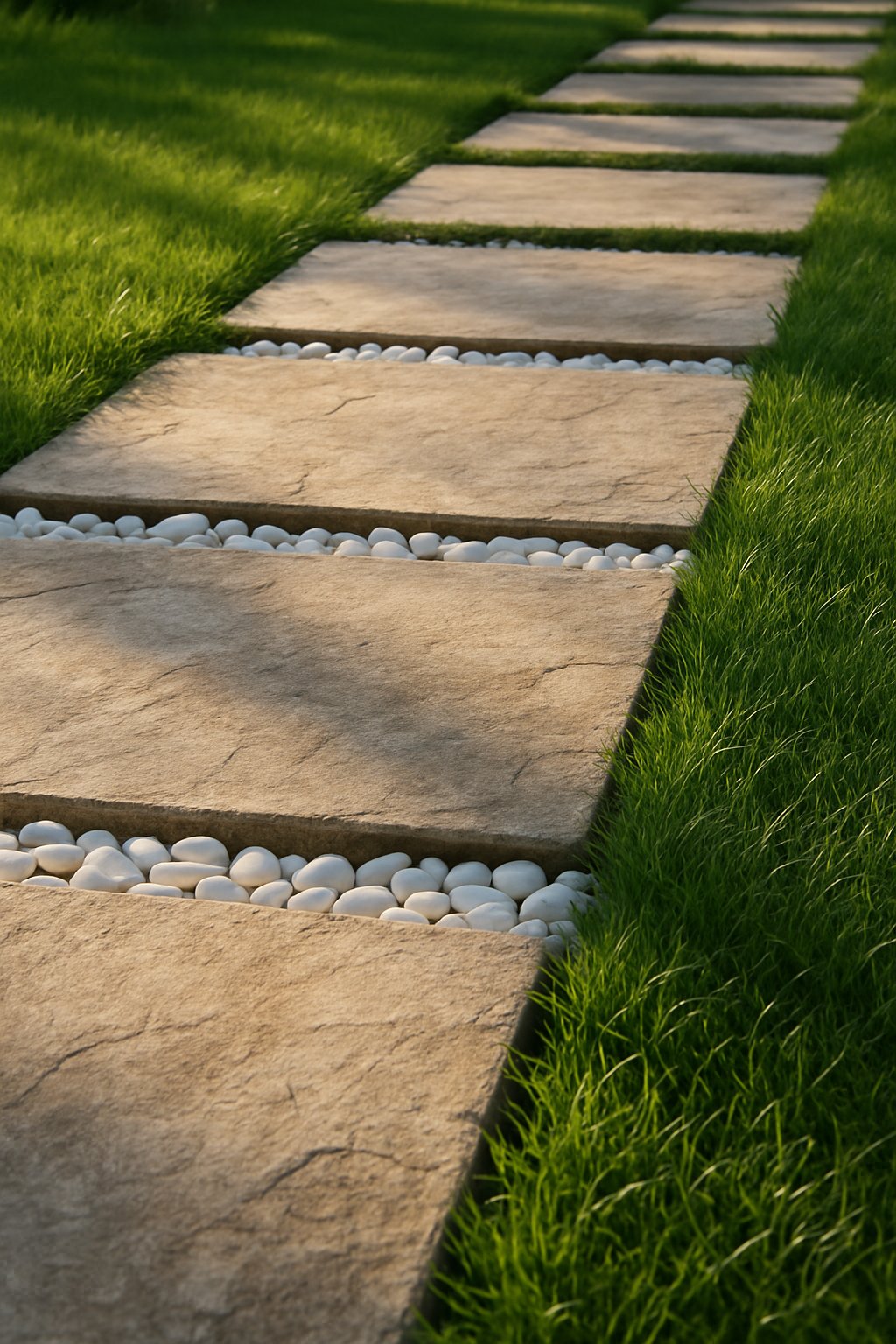
Using white gravel to fill the spaces between your stepping stones can give your path a clean, bright look that is hard to match. The gravel also serves a practical purpose by suppressing weeds and improving water drainage.
For a smoother walking surface, you might opt for large, flat stones like flagstones. Then, simply pour small white gravel or pebbles into the gaps to create a consistent and attractive look.
The white color of the gravel contrasts sharply with the stepping stones, giving your path a crisp, finished appearance. This detail can make the walkway feel much more polished.
To prevent the gravel from scattering and to keep your walkway looking tidy, you can install rubber or steel edging along the path.
Before you begin, it is a good idea to excavate the area by a few inches. A layer of crushed rock or sand beneath the stones will help everything stay securely in place.
To soften the sharp edges and add a touch of color, you can plant light greenery around the stones. Low growing ground covers are an excellent choice for this purpose.