Transforming your yard doesn’t have to be a massive, intimidating project. You can create an outdoor space that truly feels like an extension of your home, with ideas that fit every budget and style. Whether you’re after low maintenance plants or dreaming of bold hardscaping, there’s something here for every kind of gardener.
How to Assess Your Small Yard Before Starting Your Transformation
Jumping straight into a landscaping project without understanding your yard is a common mistake. Before you start digging, take some time to simply observe your outdoor space. A weekend afternoon spent just hanging out in your yard can reveal key details you might otherwise miss.

First, track the sun’s movement. You might find that your “sunny spot” actually gets only a few hours of direct sunlight. Walk around at different times of the day and take note of the light patterns. Planting delicate flowers in a spot that becomes a blistering sun trap by afternoon is a recipe for disappointment.
Next, get a feel for your soil. Grab a handful and see what it does. If it’s sticky and forms clumps, you have clay soil, which holds a lot of moisture. If it’s gritty and falls apart, it’s sandy and will need more frequent watering. Understanding your soil type can explain why certain plants might struggle or thrive.
Pay attention to where water pools after it rains. Ignoring drainage issues can lead to a soggy patio or drowned plant roots every time there’s a storm. That is not exactly ideal for an outdoor living area.
Most importantly, be realistic about how you’ll use the space. An elaborate garden might look great on your inspiration board, but what your family really needs could be a simple play area and a small patio for morning coffee. A fancy water feature is lovely, but a low maintenance yard you can enjoy without constant work might be a better fit.
A little observation now can save you a lot of time, money, and effort down the line. Your future self will be grateful.
Now, let’s explore some incredible landscaping ideas for your yard.
1. Create a cozy fire pit area with seating

A fire pit adds instant warmth and a welcoming atmosphere to any yard. Surround it with comfortable seating, and you have the perfect spot for relaxing evenings or social get togethers.
You can use benches, individual chairs, or even built in stone seating. While cushioned chairs offer superior comfort, wooden or stone benches provide a more rustic, natural look.
Arrange the seating in a circular or semicircular pattern to ensure everyone can enjoy the fire’s glow. Adding soft lighting or a few throw blankets can make the area feel even more inviting when the sun goes down.
It’s the ideal setting for roasting marshmallows, sharing stories, or simply enjoying a quiet night outdoors. That is what a fire pit is all about.
Pro tip: Choose weather resistant cushions to keep your seating comfortable throughout the year. Make sure to place seats a safe distance from the flames, yet close enough to feel the heat.
2. Add a vibrant butterfly garden with milkweed and lavender

Butterflies find a yard filled with milkweed and lavender completely irresistible. Milkweed is essential for monarch butterflies, as it feeds their caterpillars, while lavender provides beautiful color and a delightful fragrance.
The nectar in lavender attracts a wide variety of butterflies, so planting both creates a dynamic, colorful garden. You can try different types of milkweed; swamp milkweed thrives in wetter soil, while butterfly weed is incredibly easy to maintain.
Plant the flowers in clusters to make them easier for butterflies to spot. A butterfly garden also supports other pollinators, which helps the rest of your garden flourish.
This is a simple yet effective way to bring more life and natural beauty to your outdoor space.
Pro tip: Ensure young milkweed plants are watered regularly until they are established. Plant lavender in a spot with plenty of sun and well drained soil to encourage the best blooms.
3. Build a raised herb garden for fresh cooking essentials

A raised herb garden puts fresh ingredients just a few steps from your kitchen. You can build a simple planter using wood or stone blocks; no elaborate construction is needed.
Choose a sunny location that receives at least six hours of direct sunlight each day. Using good quality soil mixed with a bit of compost will give your herbs the best possible start.
Plant kitchen staples like basil, rosemary, and oregano. Raised beds offer better drainage and make it much easier to control weeds.
Water your herbs regularly, but be careful not to overwater them. Snip off leaves as needed for your cooking; this practice keeps the plants healthy and encourages new growth.
Pro tip: Construct your raised bed at a comfortable height for easy access. Combine fast growing and slow growing herbs to ensure your garden always looks full and vibrant.
4. Install string lights around your patio for ambiance

String lights can completely transform the atmosphere of your patio. Their soft, warm glow creates a cozy and inviting environment for evening relaxation.
You can hang them overhead, wrap them around support posts, or drape them along railings. A crisscross pattern above the patio distributes the light evenly and adds a touch of style.
For durability and energy efficiency, choose LED string lights. Make sure they are rated for outdoor use to withstand rain and sun exposure.
Surround the area with potted plants or hanging greenery to enhance the lush, comfortable feel while the lights cast their gentle glow.
Installation is simple, requiring only hooks or nails. You can adjust the arrangement until you achieve the perfect look.
This small update will make you want to spend more time in your yard after sunset.
Pro tip: Use warm white LED bulbs to create a mellow, relaxing ambiance. Double check that all connectors are waterproof to ensure your lights endure the weather.
5. Incorporate a vertical garden on a fence or wall

A vertical garden can turn a plain fence or wall into a vibrant, living feature. Attach wire mesh or a trellis to support climbing plants like cucumbers or flowering vines, which is an excellent way to add privacy and save ground space.
Wall mounted planters allow you to grow herbs, flowers, or even small vegetables in a neat, stacked arrangement. This is an ideal solution for small yards where you still want a lush garden.
You can change the plants with the seasons to maintain a fresh and dynamic look. A vertical garden can transform a dull wall into a stunning focal point.
Select sturdy containers or felt pockets that provide good drainage. Your plants will be healthier and happier for it.
Pro tip: Start with easy to grow plants like herbs or succulents. Ensure your vertical garden receives enough sunlight for the specific plants you choose.
6. Use decorative rock gardens as a unique focal point

A decorative rock garden can give your yard a distinctive and striking appearance. Use a variety of rock shapes and sizes to create compelling patterns or natural looking designs.
Combine smooth river stones with larger boulders to add texture and visual interest. Intersperse colorful perennials or shrubs among the rocks to keep the garden looking lively.
Rock gardens are very low maintenance and look great throughout the year. They are perfect for creating borders or as a central feature near a patio or walkway.
For an artistic touch, consider adding rock sculptures or cairns. These elements can add a unique personality to your yard.
Pro tip: Choose rocks that complement the style and color of your home. Select plants that are native to your area so your rock garden remains healthy with minimal effort.
7. Plant a mix of native trees for shade and privacy

Planting native trees such as oaks, maples, and dogwoods can provide essential shade and privacy for your yard. Because they are adapted to the local soil and climate, these trees require less water and overall maintenance.
Mixing different species creates a denser, more natural looking screen. Local wildlife will also benefit, as these trees provide food and shelter for birds and other animals.
Plant taller trees strategically to block views of neighbors or busy streets. Fill in the gaps with smaller trees to create a layered, lush effect.
Native trees also improve soil health and help prevent erosion. They integrate seamlessly with other local plants, contributing to a balanced and healthy landscape.
Pro tip: Give your trees enough space to grow to their mature size. Select varieties that flower at different times of the year for continuous visual interest.
8. Design a small koi pond with aquatic plants
A small koi pond can bring a sense of peace and tranquility to your yard. Select a location that receives some sunlight, but not constant, all day exposure, as koi prefer a bit of shade.
Line the pond with a durable, heavy duty liner and install a filtration system to maintain clear water. Arrange rocks around the edge of the pond to create a naturalistic look.
Introduce aquatic plants like water lilies or lotus. These plants not only look beautiful but also help keep the pond healthy by providing oxygen and shade.
Koi fish are available in a wide array of colors and patterns, so you can choose your favorites. Be careful not to overcrowd the pond; the fish need adequate space to thrive.
Adding a small waterfall or fountain will keep the water moving and fresh, which also helps to prevent algae growth.
Pro tip: Use native aquatic plants for easier care and improved pond health. Position plants to provide shade for the koi and to help control algae.
9. Set up a hammock corner for ultimate relaxation
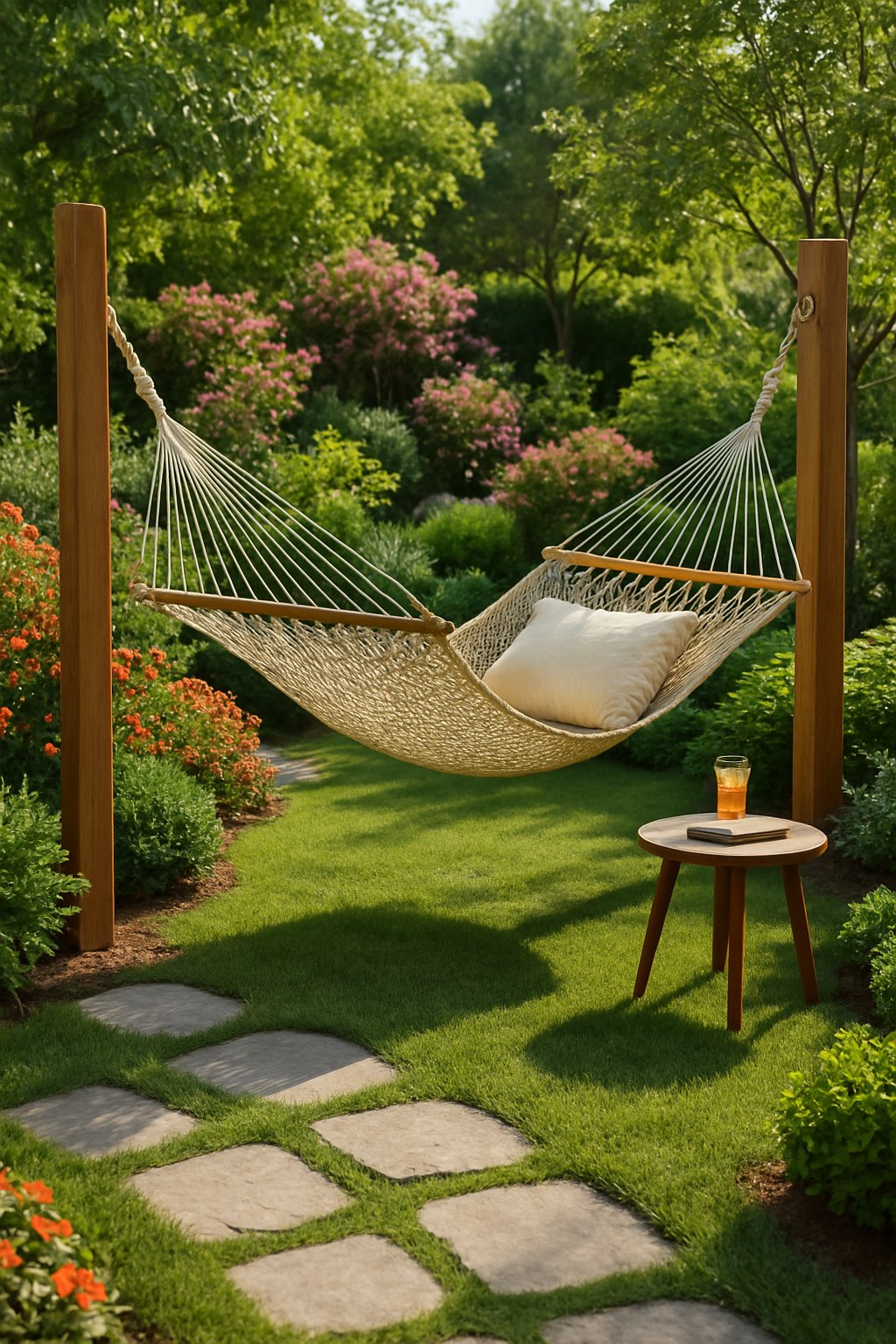
Create a hammock corner in your backyard to serve as a quiet retreat for unwinding after a long day. Choose a shady spot, or install a pergola if sunlight is an issue. You will appreciate the shade on hot afternoons.
You can hang the hammock between two strong trees or use a freestanding frame. To enhance privacy and coziness, consider draping light curtains or arranging leafy plants around the nook.
Soft outdoor lighting, such as solar lanterns or string lights, can create a relaxing mood after sunset. This keeps your retreat inviting even in the evening.
Pro tip: Position your hammock where it can catch a breeze for natural cooling. A small side table is convenient for holding a drink and a book.
10. Create a dry creek bed to manage drainage creatively

A dry creek bed is a creative solution for drainage problems that also adds a natural touch to your landscape. First, identify a low area where rainwater tends to accumulate. It is a good idea to sketch the path of your creek before you begin digging.
Excavate a shallow channel, typically 6 to 12 inches deep. Line it with landscape fabric to prevent weeds and keep the rocks from settling into the soil. Fill the trench with smooth river stones and gravel for an authentic creek appearance.
Edge the bed with native shrubs or ornamental grasses to soften the borders. Adding a few boulders or a log can help direct water flow and add visual drama.
Pro tip: Observe where water pools during a rainstorm and use that as a guide for your creek’s path. Planting native species around the bed conserves water and blends in naturally.
11. Add colorful flower beds with marigolds and daisies

Planting marigolds and daisies in your flower beds will instantly brighten your yard with vibrant color. Marigolds offer bold orange and yellow shades, while daisies provide classic white petals with sunny yellow centers.
Both of these flowers are low maintenance choices. Marigolds naturally deter pests, making them excellent garden protectors. Daisies attract pollinators like bees, which benefits the rest of your flowers.
You can mix them in rows or clusters for a cheerful, informal look. They are great as border plants or can be placed in the center of a bed for a bit of height.
Choose a location that gets plenty of sun, as these flowers need it to grow well.
Pro tip: Plant marigolds closely together to help suppress weeds. Pair daisies with taller plants to create a layered, natural looking flower bed.
12. Build a wooden pergola with climbing vines

A wooden pergola adds structure and character to your yard, creating a cozy outdoor area for relaxation or entertaining.
Train climbing vines to grow over the pergola. They will provide natural shade and a lush, leafy canopy that changes with the seasons.
Use sturdy lumber like cedar or redwood to ensure a long lasting structure. Be sure to check local building codes before you start, as permits may be required.
Select vines that are well suited to your climate; wisteria, clematis, and ivy are all good choices for pergolas. These climbers not only look beautiful but also establish themselves quickly.
Hang string lights or a few hanging baskets to make the space extra inviting at night.
Pro tip: Plant vines at the base of each post and gently guide them upward. This will ensure even coverage and a living roof in no time.
13. Install a stone or brick pathway through the yard

A stone or brick pathway adds structure and curb appeal to your garden. It provides a clear route for guests to walk and defines the garden beds. Choose materials like flagstone, pavers, or classic brick to complement your style.
Paths can be straight or curved, depending on your garden’s layout. A width of 3 to 4 feet is comfortable for walking, but you can make it narrower in tight spaces.
Laying the stones or bricks requires some effort, but it’s a manageable DIY project. Level the soil and add a layer of sand or gravel to create a stable base.
Edge the path with plants or install low voltage lights for safety and a touch of nighttime ambiance. Match the materials to your home’s exterior for a cohesive look.
Pro tip: Use edging to keep the path materials in place over time. Select stones or bricks that can withstand your local climate’s freeze thaw cycles for a durable path.
14. Add a bird bath to attract local wildlife

A bird bath will quickly attract more feathered visitors to your yard. Birds need a reliable source of fresh water, especially during hot summer months or dry periods. A bird bath can turn your landscape into a small wildlife sanctuary.
Choose a style that suits your space. You can opt for a classic pedestal design or a compact version that hangs from a tree or attaches to a fence. Ensure it is easy to clean and refill.
Surround the bird bath with a variety of flowers and shrubs. Planting taller plants in the middle and shorter ones around the edge gives birds cover and creates a natural look.
Keep the water shallow, just 1 or 2 inches deep, with a gentle slope. Change the water frequently to prevent mosquitoes and algae from developing.
Pro tip: Place the bird bath near a window so you can enjoy watching the birds. In winter, a solar heater can prevent the water from freezing.
15. Create a kids’ play zone with natural elements

Transform a section of your yard into a nature inspired play area for children. Use natural elements like logs, boulders, and native plants to create a space that feels like a small wilderness adventure. These features encourage kids to explore and be creative outdoors.
Provide loose materials such as sticks, pinecones, or leaves for open ended play. Children enjoy rearranging these items, which helps develop their problem solving skills. Plant a few flowers, shrubs, or a small garden nearby to add color and a touch of enchantment.
Consider adding a small pond or a bug hotel to spark curiosity about wildlife. Incorporate different textures like bark mulch, smooth stones, or sand for a sensory experience.
Keep the area clean and free of sharp objects to ensure safety. Place a bench or two nearby so adults can relax while supervising.
Pro tip: Upcycle old materials to create play features. This is an eco friendly approach, and the variety of textures will keep children engaged.
16. Use ornamental grasses for texture and movement

Ornamental grasses introduce a soft texture that provides a beautiful contrast in any garden bed. They pair well with perennials and evergreens, adding a wild, natural element to the landscape.
These grasses sway gracefully in the breeze, bringing movement to your garden. Tall varieties such as fountain grass or miscanthus can add height and drama.
Use them to create privacy screens or plant them in clusters for a lush, full appearance. They help to unify planting beds and give the garden a more natural feel.
Mix different species to maintain visual interest throughout the year. Most ornamental grasses require very little care once established, making them ideal for low maintenance landscapes.
Select types that are suited to your local soil and climate. They will also attract birds and small wildlife.
Pro tip: Plant ornamental grasses along walkways so you can enjoy their movement up close. Layer different heights to create a natural, tiered effect.
17. Set up a cozy outdoor reading nook with cushions

Find a quiet corner in your yard to create a comfortable place to sit. A bench or chair is a good start, but cushions are essential for making the space truly welcoming.
Stack several cushions for extra comfort and choose colors that match your personal style. Use outdoor fabrics that are designed to withstand the weather. Arrange them so you can lean back comfortably and enjoy a good book.
Consider shade. Trees, a patio umbrella, or a pergola can help keep the area cool. Add a side table for your mug or a stack of novels so everything is within reach.
String up fairy lights or lanterns for cozy evening reading sessions. Keep a throw blanket nearby for cooler nights.
Pro tip: Choose cushions with removable, washable covers. This makes it easy to keep your reading nook fresh and ready to use at any time.
18. Add container gardens for herbs and flowers

Container gardens bring pops of color and fresh herbs directly into your landscape. Use pots, planters, or even repurposed items like old wheelbarrows to create unique spots for your favorite plants.
Herbs like basil, thyme, and mint grow well in containers, and having them on hand for cooking is a wonderful convenience. Flowers such as violas and petunias will add a splash of color and liven up small spaces.
Experiment with different arrangements. Try placing tall plants in the center and allowing trailing varieties to spill over the edges for a layered, lush look that requires minimal effort.
Select containers that complement your space. Even a small patio or balcony can accommodate a few container gardens, so a lack of space shouldn’t be a deterrent.
You can move your containers to follow the sun or place them in the shade during hot weather. This flexibility helps your plants thrive all year long.
Use high quality potting mix and water your plants regularly, but avoid overwatering. Feed them every couple of weeks to keep them healthy and blooming.
Pro tip: Group containers with similar sunlight requirements together for easier maintenance. Use lightweight containers if you plan on moving them frequently.
19. Build a multi-level deck for entertaining

A multi level deck can significantly enhance both the style and functionality of your yard. You can designate different levels for various activities, one for grilling, another for dining, and perhaps a cozy spot just for relaxation.
Gardeners often use multiple deck levels to divide the yard without needing fences or walls. The design can follow the natural slope of the land or be configured to showcase a particular view. Wood or composite decking provides a sturdy and low maintenance surface.
Consider adding built in planters or outdoor lighting to make the space feel inviting, both day and night. Steps and railings connect the levels, creating more usable space without sacrificing green areas.
Pro tip: Plan your multi level deck layout based on how you intend to use the space. Prioritize easy access between levels and provide enough seating for guests.
20. Incorporate solar-powered garden lights

Solar powered garden lights can brighten up your yard without increasing your electricity bill. These convenient fixtures absorb sunlight during the day and automatically turn on at dusk.
Use them to line your paths, highlight your favorite trees, or illuminate your flower beds. Solar lights are available in a wide range of shapes and styles, from classic lanterns to whimsical garden stakes.
They are eco friendly and require minimal attention. Just make sure they are placed in a location where they will receive plenty of sunlight for a full charge.
Solar lights also enhance the safety of your garden by illuminating dark steps or corners. The warm glow creates an inviting atmosphere, especially for those who enjoy spending time outdoors after sunset.
Choose sturdy, weather resistant models to ensure they last through the seasons.
Pro tip: Place solar lights at different heights to create a layered lighting effect. Clean the panels regularly to maintain their optimal performance.
21. Plant a mix of evergreens and flowering shrubs

Combining evergreens with flowering shrubs will keep your garden vibrant throughout the year. Evergreens maintain their color in winter, and in the spring, flowering shrubs burst into bloom. This is a classic combination for year round visual interest.
Plant taller evergreens at the back of the bed and place flowering shrubs in front to create depth. Add groundcovers at the base to soften the edges and suppress weeds.
Stagger your plants instead of lining them up to achieve a more relaxed, natural look. Shrubs with different leaf textures or colors will make the garden more dynamic.
You can replace a few shrubs every couple of years to refresh the look. Choose species with different bloom times to ensure you always have something in flower.
Pro tip: Select evergreens with various shades of green and blue to add subtle color variations. Pair them with flowering shrubs that bloom at different times for continuous interest in your yard.
22. Create a succulent garden for low maintenance

Succulent gardens are not only visually appealing but also require very little maintenance. These plants store water in their leaves, so they can tolerate infrequent watering. You can mix various shapes and colors to create a diverse and interesting display.
Choose a sunny location and use well draining soil. Raised beds or rock gardens are ideal for succulents. You can also use them to edge a path or fill in awkward corners.
If you want a lush look without a lot of work, succulents are an excellent choice. They also do well in containers or creative arrangements like pallets or wreaths.
Pro tip: Use sandy soil to improve drainage and prevent your succulents from becoming waterlogged. Group plants with similar water needs together to simplify their care.
23. Install a water feature like a small fountain

A small fountain can provide soothing sounds and create a cool focal point in your garden. Even small spaces can accommodate a compact water feature.
You can choose a tabletop fountain or build one with natural stone for an integrated, organic appearance. Using materials like wood, stone, or metal will help the fountain blend in with your garden’s style.
Water features attract birds and pollinators, bringing more life to your yard. You can float a few aquatic plants or add some colorful stones for extra texture.
Ensure the pump operates quietly and is easily accessible for cleaning. Position the fountain where you can hear it but avoid splashing onto walkways.
Pro tip: Place your fountain near seating areas so you can relax to the sound of flowing water. Keep extra water on hand to refill it during dry periods.
24. Add a vegetable patch for fresh produce
A vegetable patch will provide you with fresh produce right outside your door. It can save you money and allows you to grow exactly what you want. You can start with just a few plants or try a square foot garden for organized rows and simple care.
Find a sunny spot, as most vegetables need at least 6 to 8 hours of sunlight per day. Set up raised beds or use metal edging to create clear borders. This will keep the area tidy and make weeding much easier.
Grow vegetables that your family enjoys eating. Rotate your crops each season to maintain soil health. Water regularly, but don’t let the soil become soggy; vegetables prefer it to be just moist enough.
Pro tip: Plant herbs alongside your vegetables to save space and enhance their flavor. Keep your soil rich with compost to grow strong, healthy plants.
25. Use reclaimed wood for DIY garden furniture

Reclaimed wood can give your garden furniture a lot of charm and is a budget friendly option. You can build a bench, a table, or a few chairs, and each piece will have its own rustic character.
Old wood has unique grain patterns and weathered colors that cannot be replicated. This character will make your furniture stand out from mass produced sets.
Always use dry, treated wood for outdoor projects. Hardwoods like oak or cedar are the most durable against the elements.
Add comfortable cushions designed for outdoor use. You can buy them or make your own with weather resistant fabric. This is an important step if you want to enjoy sitting outside for extended periods.
Upcycling old wood also reduces waste, making it an environmentally friendly choice.
Pro tip: Always seal reclaimed wood before using it outdoors to protect it from moisture. This will keep your furniture looking good and extend its lifespan.
26. Design a zen garden with sand and stones

Turn a quiet corner of your yard into a Zen garden to create a peaceful retreat. Use sand or fine gravel as the base and rake it into flowing patterns for a meditative effect.
Scatter stones of various sizes to create a sense of balance. Place them thoughtfully to achieve a look that is both natural and purposeful. Avoid clutter by keeping the design simple and tidy.
Choose a calm location, perhaps away from the busier areas of your yard. You don’t need many plants; just a few low maintenance ones will suffice if you want some greenery. A wooden bench or a small bridge can add warmth and invite you to linger.
Zen gardens require very little upkeep and encourage a slower pace of life. If you are looking for a peaceful corner without much fuss, this is an excellent approach.
Pro tip: Use a stiff rake to create clean, flowing patterns in the sand. Place stones in groups of odd numbers for a more natural appearance.
27. Create a butterfly-shaped flower bed design

A butterfly shaped flower bed will bring a playful and eye catching element to your landscape. Use curved edges and select colorful flowers that mimic the patterns of butterfly wings.
Choose bright bloomers like milkweed, lavender, or zinnias, as they are excellent at attracting butterflies. These plants not only look beautiful but are also magnets for pollinators.
Start by sketching your design on paper or marking the outline directly in your yard with string. Place taller perennials in the center and tuck shorter annuals or groundcovers along the edges to create a layered look.
Butterfly friendly plants thrive in full sun, so select a spot that receives plenty of sunlight. To support the entire butterfly life cycle, include host plants like parsley or fennel in the bed for caterpillars to feed on.
This way, you’ll be helping not just the adult butterflies, but the whole population. Keep the soil loose and well drained, and remember to water during dry periods.
Consider laying a few stepping stones or a narrow path around the bed. This makes it easier to get up close and observe all the activity.
This type of design is suitable for small or medium sized yards. It’s a fun way to showcase your gardening skills while also helping pollinators.
Pro tip: Choose native plants to support local butterfly species. Plan your flower colors carefully to create a bold, eye catching pattern.