You might be surprised to learn you can give your kitchen scraps a second life. It’s not just a clever trick; regrowing vegetables is a fantastic way to save money and extend your food budget. The crown of a pineapple, the end of a carrot, or the base of a celery stalk can become more than just compost. With a bit of water, soil, and light, some of them can be regrown indefinitely, giving you a recurring harvest right from your windowsill.
While you won’t achieve total food self-sufficiency this way, there’s a unique satisfaction in harvesting fresh onion greens from a piece you were about to discard. Not every vegetable can be regrown, but many common fruits, herbs, and veggies have this amazing ability. Here’s a roundup of the best options and tips to get you started on growing fresh food from what you already have.
Head-Form, Leafy Veggies That Regrow Easily From Leftovers
Leafy vegetables that form heads are surprisingly simple to regrow from their leftover parts. The process is easier than you might imagine. All you need to do is slice off the base, leaving about a one-inch piece, and place it in a dish of water.

1. Regrow a heart of Celery

If you’re just starting your journey into regrowing vegetables, celery is one of the easiest to begin with. Simply cut off the bottom of the celery stalk from the store and place it in a shallow dish containing some warm water. Find a warm, sunny spot for the bowl, and your celery will regenerate with very little effort. You should start to see new growth in about a week. The leaves will sprout first, and you can watch as the plant continues to develop. Harvest what you need as it grows.
For a more robust plant, you can transplant the celery into your garden once it has established new growth and let it mature into a full-sized plant.
2. Regrow Lettuce & Bok Choy scraps in water

You can effortlessly bring lettuce and bok choy back to life from scraps, so don’t throw away those leftover bases. Just place the bottom one-inch portion of the head into a bowl of water. Make sure the bowl is situated in a location that receives ample sunlight, like a windowsill. You will need to lightly mist the leaves with water every couple of days to keep them hydrated.
After about three to four days, new roots and leaves will begin to emerge. At this stage, you can move your sprouting lettuce into a pot with soil to continue its growth.
3. Regrow Lemongrass From kitchen Scraps

Lemongrass isn’t a staple for everyone, and it can sometimes be a challenge to find in stores. A great solution is to regrow it from what you already have. Lemongrass regenerates much like regular grass. Place the remaining root end into a jar or bowl with enough water to submerge the roots. Set the container in a sunny location, and in about a week, you will see fresh growth. Once this happens, you can transfer your lemongrass to a pot or plant it directly in your outdoor herb garden.
4. Regrow Cabbage leaves In Water
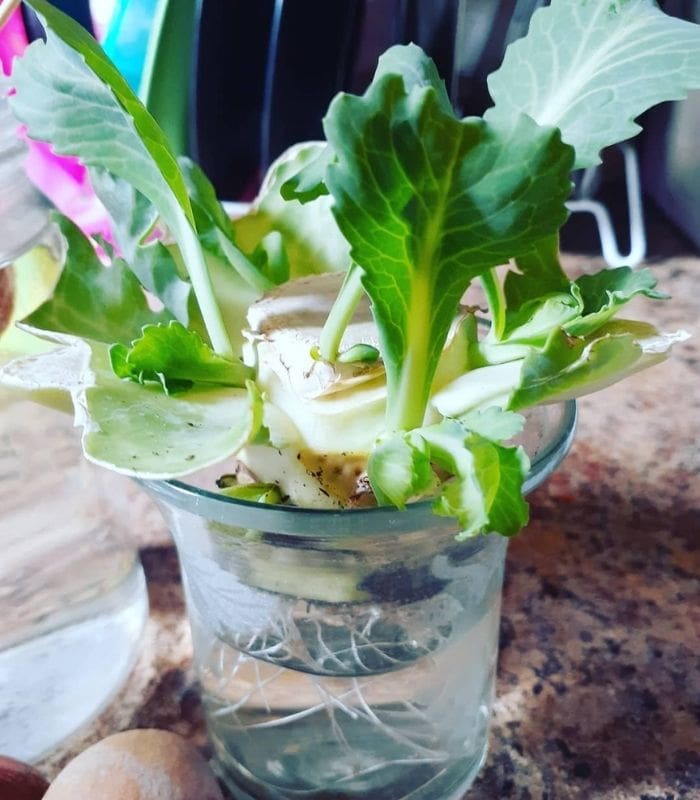
Certain varieties of cabbage have the ability to regrow while still in the ground. When you harvest the head, try leaving the base of the plant in the soil instead of pulling the whole thing out. If you cut a cross into the remaining stem, a second, smaller head will often form. You can also regrow cabbage leaves from a piece of the rooting base. Some cabbages sold in stores still have this part attached.
To do this, take a one-inch chunk of the base and set it in a shallow dish of water. Place the container in a sunny spot in your home. Soon, you will see new leaves begin to grow from the center of the base.
5. Regrow Basil, Mint & Cilantro from Cuttings

Many other herbs can be propagated from cuttings. If an herb grows on a stem, you can likely regrow it using a cutting that is about four inches long. Place a stem of the appropriate length into a tall glass of water, ensuring the leaves remain above the water line. Over time, roots will begin to sprout from the stem. Once the root system is well developed, you can transplant the cuttings into pots or your outdoor garden.
Bulb and Bulb-Like Vegetables

Vegetables with a bulbous base are particularly easy to root. The method is quite similar to that used for leafy greens. All it takes is a piece of the root and a container of water. It sounds simple enough, because it is.
1. Regrow Garlic From Scraps
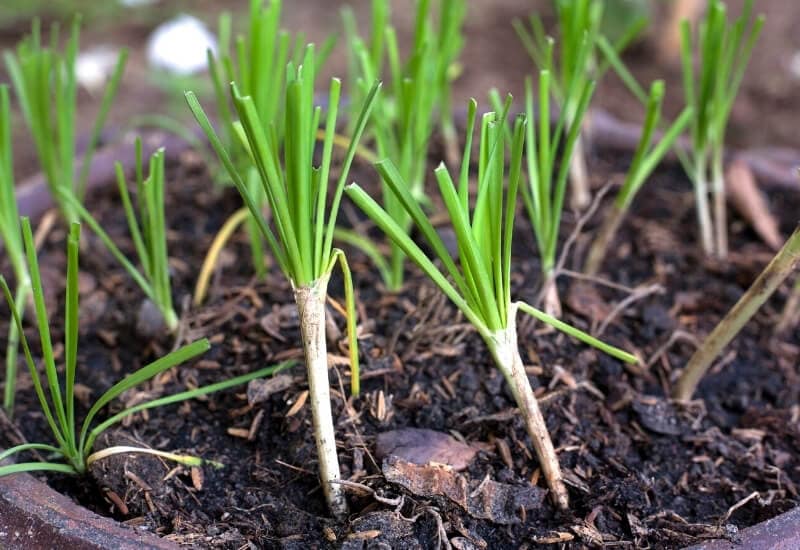
Garlic is a kitchen staple, and growing it is a straightforward process that doesn’t require dedicating large beds to it. If you want to try regrowing vegetables, garlic should be high on your list. A single garlic bulb is made up of multiple cloves, and you rarely need to use all of them at once for a recipe.
Simply take one of the cloves and plant it in potting soil with the pointed end facing up. Keep the soil consistently watered and place it in a sunny spot. New shoots will soon emerge and establish themselves. You can trim back the shoots to direct the plant’s energy into forming a new bulb. After the new bulb has grown, you can harvest a clove from it and start the process all over again.
2. Regrow Supermarket Leeks In Water

Leeks, part of the allium family, can be regrown from scraps just as easily as onions and garlic. You will need the rooting base of the stem to get started. Take a small portion of the leek’s base, making sure the roots are attached. Place it in a shallow dish filled with water. Leeks will rapidly sprout new green growth from this base section, and you can keep harvesting and resprouting these pieces repeatedly.
3. Regrow Bulb Fennel In Water

Though not as common as celery, bulb fennel can be regrown in almost the exact same way. Place the base of the bulb, with its root still attached, into a shallow container of water. With time, the plant will begin to regenerate. For the best chance of success, ensure you keep at least one inch of the base connected to the roots. The new green shoots will emerge from the center of the base. Once they appear, you can transplant the entire bulb into soil.
4. Regrow Onions From Discarded Onion Bottoms

Onions can be regrown from scraps both indoors and outdoors, and they develop quite quickly. To grow a new onion, slice off the root end, leaving about half an inch of the onion attached to it. Plant this piece in potting soil and place it in a sunny location.
If your goal is to grow green onions, place the white base with the root intact into a container of water and set it in direct sunlight. The water should be changed every few days. The green tops will continue to grow, allowing you to snip them off as needed for your recipes.
Root Crops and Root-Like Vegetables to Regrow
Root crops are another excellent choice for regrowing from scraps. With vegetables like turnips and beets, the roots are typically eaten while the tops are often discarded. Instead of throwing them out, you can use these top pieces to grow a new plant.
1. Regrow Potatoes from Old Sprouted Potato Scraps

If you’ve ever kept potatoes in your pantry for too long, you’ve seen the small shoots that eventually grow from them. These shoots are known as “eyes,” and they are how potatoes produce new plants. You can replant these pieces in your garden to grow a fresh crop of potatoes. Here’s how to do it.
Cut a piece of the potato that includes a shoot. Allow the cut piece to dry out overnight. Plant the potato section in a pot of soil with the eye pointing upward, just as you would with a seed potato. Keep the soil moist but not waterlogged. In a few months, you will have a harvest of fresh potatoes.
2. Regrow Carrots And Beets From Waste Tops

Any root crop, including carrots, beets, and parsnips, can be regenerated from its top section. By saving the part where the leaves and stems connect to the root, you can regrow them. The method is the same for all root crops. Place the top portion you’ve saved into a shallow dish of water, with just enough liquid to cover the piece, about half an inch deep. Within a week, new green shoots should begin to sprout.
While you won’t grow a new root vegetable this way, you can harvest the leafy greens as they grow. You can also wait until the tops are large enough to replant in a container or a garden bed for a continuous supply of greens.
3. Grow Sweet Potatoes In Water
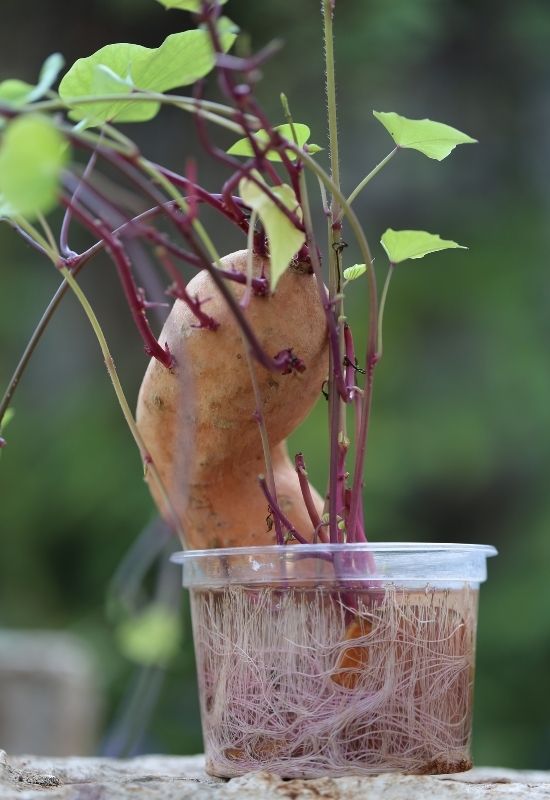
You can propagate sweet potatoes from scraps in the same manner as regular potatoes. They can be regrown from sections and can be started in either water or soil. Growing sweet potatoes in water is a particularly fun project for children to observe. When a sweet potato is past its ideal eating stage, cut it in half. Use toothpicks to suspend the half over a container of shallow water. After several days, roots will begin to form, and sprouts will appear on the top of the potato. Once this happens, you can remove the rooted sprouts, known as slips, and plant them in a pot of soil just like regular potatoes.
4. Regrow Ginger From Store-Bought Ginger Roots
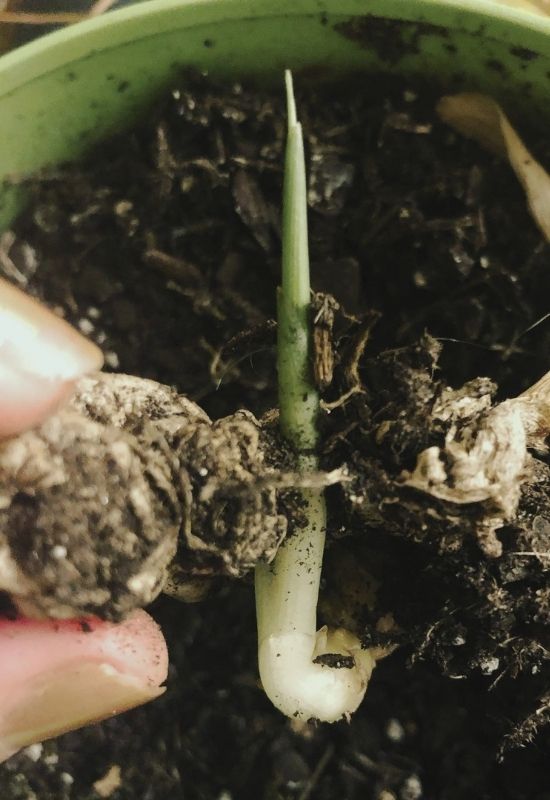
If you frequently use ginger in your cooking, learning to grow it from scraps is a wise move. Ginger root is quite easy to cultivate, ensuring you always have a fresh supply available. Take a spare piece of ginger root and plant it in a container filled with potting soil. Be sure the buds are facing upward. In a week or two, you will see new shoots and roots developing. After that, you can pull up the root whenever you need fresh ginger. Always remember to save a piece to replant for a continuous harvest.
5. Regrow Mushrooms From Ends

This method is a bit more challenging than others on the list. Growing mushrooms at home can be tricky, but the results are worth the effort. While not technically a root vegetable, you plant the stem to regrow them. Save the stems from your favorite types of mushrooms, such as button, cremini, or shiitake. Transfer the stems to a container filled with moist soil. In a few days, you may notice the tops starting to grow again. However, sometimes they may rot instead. If they rot, you will have to start over with a new batch.
For better results, enrich the soil with compost or used coffee grounds and keep the container in a location that gets chilly at night. It is generally best to grow them indoors.
Fruits You Can Easily Regrow From Scraps
1. Grow Pineapple from Its Top

Many believe you need to live in a tropical climate to grow pineapples, but that’s not the case. You can get started with just a fresh pineapple from the grocery store. Cut off the top of the pineapple. Use toothpicks to suspend it over a container of water, and make sure it is placed in direct sunlight. If it is summer, you can keep it on an outdoor table or deck, as pineapples require plenty of sun.
The water should be changed frequently, about every other day. Roots will begin to appear in one to two weeks. Once they do, you can transplant the pineapple top into a container with potting soil. If you live in a colder climate, you will need to grow your pineapple plant indoors.
2. Grow Avocado Plants From Pits

If you enjoy avocados, you can use their pits to grow your own avocado trees at home. Even if you don’t live in a climate suitable for growing them outdoors, they can be cultivated as houseplants. After you’ve eaten the avocado, wash the seed. Use toothpicks to suspend it over a bowl of water, ensuring that only about an inch of the seed is submerged. Keep the bowl in a warm location away from direct sunlight, and check the water level daily, adding more as needed.
Growing avocados from a pit requires patience. It can take up to six weeks for roots to appear. Once the stem reaches a height of six inches, you can plant it in soil.
Regrowing Fruits from Seeds
Many fruits, especially citrus, can be grown from their seeds. While seeds aren’t always considered scraps, you can save them from the fruits you eat to start your own fruit trees at home. It takes years for these trees to mature, but it’s a rewarding process. Citrus trees are an excellent choice because they adapt well to growing in containers. While apple and pear trees typically need to be grown outdoors, lemon trees can thrive indoors in pots.
If you’d like to try growing a lemon tree from a seed, here is the process. Clean the seeds thoroughly and make sure they remain moist. Plant the seeds about half an inch deep in a container filled with soil. Cover the planter with plastic to create a mini greenhouse effect, which will trap humidity and help the seeds sprout. It will be years before the tree matures and bears fruit, but in the meantime, citrus trees are fragrant and make lovely houseplants.
Try Growing Veggies from Scraps
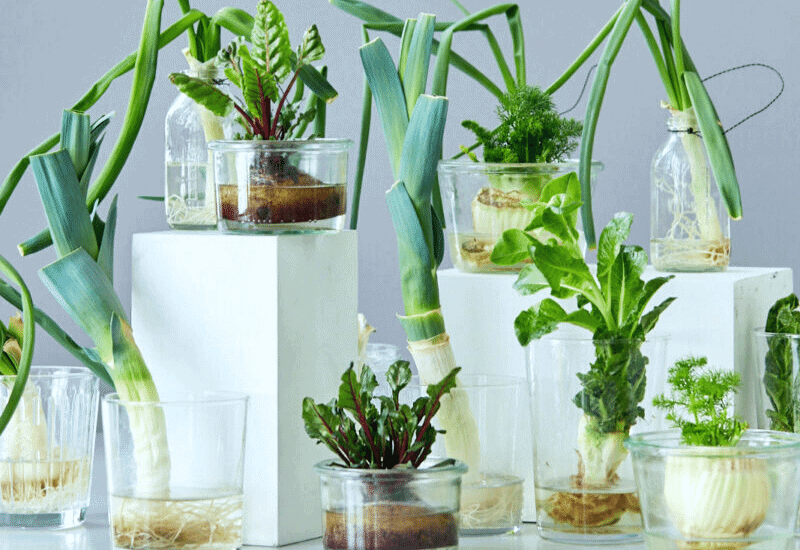
There are many ways to regrow vegetables, fruits, and herbs. Cultivating plants from scraps can help you stretch your grocery budget while also keeping you connected to the source of your food.