Ornamental grasses are your secret weapon for a landscape that pops with personality. These plants, a mix of true grasses and grass-like species, are all about visual appeal. They introduce captivating colors and textures that keep your garden looking lively all year long. With their unique foliage and stunning floral displays, they fill garden spaces with non-stop interest.
Because there are so many varieties out there, choosing the right one can feel overwhelming. The key is to know which species will thrive in your climate and understand their specific needs. This guide breaks down some of the best ornamental grasses, detailing what makes each one special and what it needs to grow well, so you can pick the perfect plant for your yard.
23 Stunning Ornamental Grasses To Add Color To Your Landscape All Year Long
The world of ornamental grasses is incredibly diverse. You’ll find a wide range of sizes, colors, and textures, along with different native habitats and ideal growing conditions. Even within the same species, there are numerous hybrids and cultivars that offer distinct physical traits.
To discover the perfect ornamental grass for your landscape, you need to explore the many options available.
Here are 23 of the most beautiful and easy to grow ornamental grasses for adding year-round texture to your yard:
1: Fountain Grass (Pennisetum Alopecuroides)
Fountain grass establishes itself in low-growing formations that usually reach three feet in both height and spread.
The foliage of this perennial is composed of slender, dark green blades. This color often softens as the summer progresses.
The most striking feature of fountain grass is its floral display. The flowers are fuzzy and white, with a spire-like shape that emerges throughout the plant.
These blooms stick around for a large part of the season. Their color starts to fade in the fall, but they remain on the plant well into winter.
Fountain grass is versatile and can grow in many settings, though it thrives best in full sun. It can also handle both drought and consistently moist soils, and it isn’t picky about soil pH, tolerating both high and low levels.
For maintenance, simply cut fountain grass back to the ground in late winter, right before new growth begins.
Hardiness Zone: 6-9
Mature Height: 2.5-5’
Mature Spread: 2.5-5’
Sun Requirements: Full Sun to Part Shade
Soil PH Preference: Acidic to Alkaline
Soil Moisture Preference: Medium to High Moisture
2: Eulalia Grass (Miscanthus Sinensis)
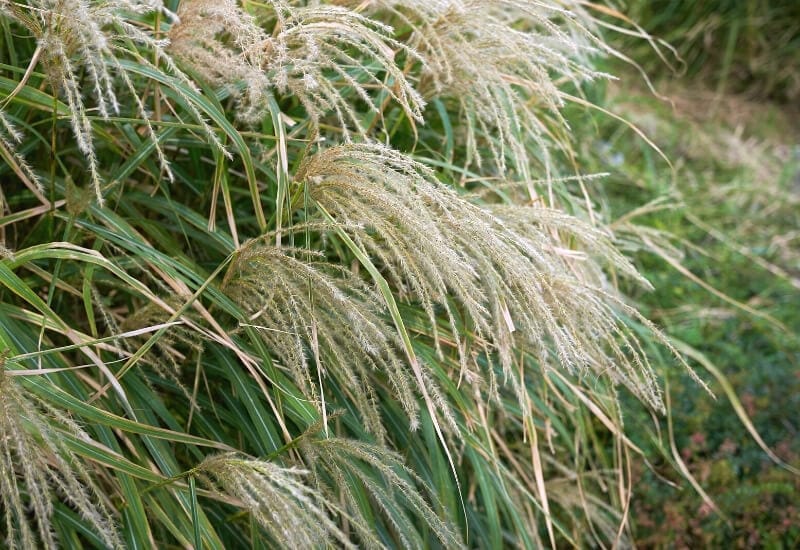
Grasses within the Miscanthus genus are generally substantial plants. Eulalia, for example, develops into a mature form with dense foliage that frequently climbs to a height of six feet.
Its elongated leaves shoot straight up from the ground before arching outward near the top.
Floating above this foliage are light, wispy flowers. The color of these blooms varies by variety, ranging from a soft purple to silver and white.
Despite their size, individual eulalia plants tend to keep their growth contained, avoiding a spreading habit.
For the best results, plant this ornamental grass where it will get full sun and moist soil. Cut it back to the ground in late winter.
Hardiness Zone: 5-9
Mature Height: 4-7’
Mature Spread: 3-6’
Sun Requirements: Full Sun to Part Shade
Soil PH Preference: Acidic to Alkaline
Soil Moisture Preference: Medium to High Moisture
3: Zebra Grass (Miscanthus Sinensis ‘Zebrinus’)
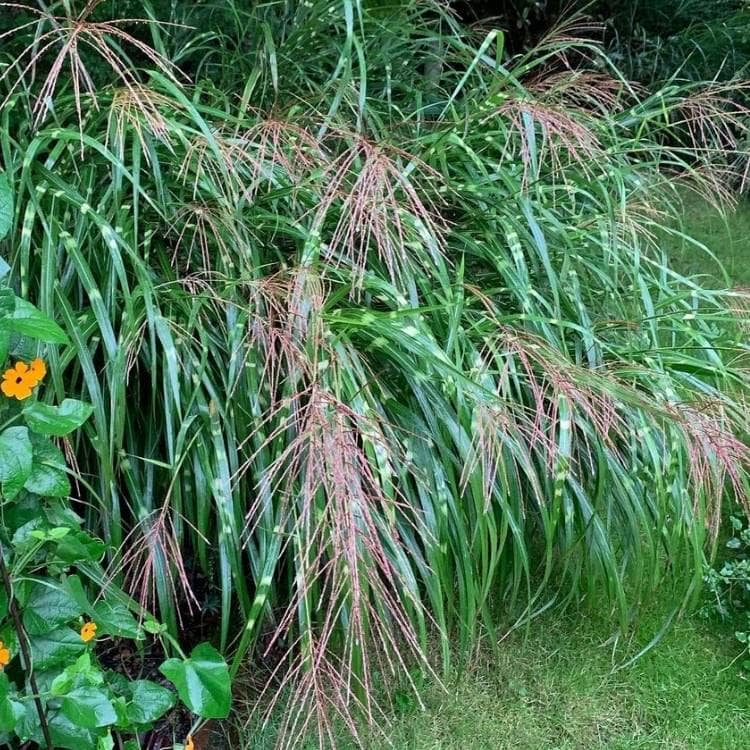
Zebra grass is a cultivar derived from the Miscanthus sinensis species and shares many traits with its parent, eulalia. This includes similar growing requirements and a nearly identical size and form.
The key difference is in the foliage. The leaves of zebra grass are variegated, but unlike many other variegated plants, the color pattern is very regular.
Each leaf is mostly green, with bands of light yellow spaced evenly along its length from base to tip. This creates a consistent and striking striped effect that holds through the growing season. In winter, the leaves fade to brown.
The flowers of zebra grass also transition through the season, starting with a copper hue and eventually turning white. When it comes to growing conditions, you should care for zebra grass just as you would for eulalia.
Hardiness Zone: 5-9
Mature Height: 4-7’
Mature Spread: 3-6’
Sun Requirements: Full Sun to Part Shade
Soil PH Preference: Acidic to Alkaline
Soil Moisture Preference: Medium to High Moisture
4. Switch Grass (Panicum Virgatum)
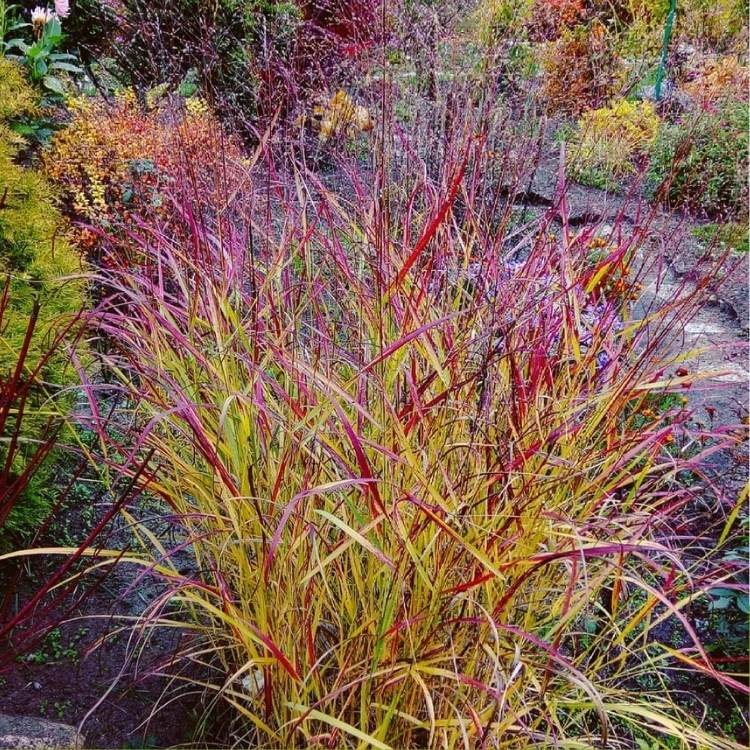
Switch grass is a native ornamental grass of the United States. It is a common prairie plant found in the midwestern states.
Switchgrass has a slender form, typically reaching heights of five to six feet with a spread that’s about half as wide.
Both the flowers and leaves contribute a maroon accent to the otherwise green plant. The leaves are long and thin, and the maroon coloration usually appears more than halfway up the blade.
The individual flowers of switch grass are subtle. Together, they form a light purple haze that floats over the top of the plant.
This grass adapts to many soil types. Ideally, it prefers moist soil and full sun, but it can also survive in dry areas or places prone to flooding.
Hardiness Zone: 5-9
Mature Height: 3-6’
Mature Spread: 2-3’
Sun Requirements: Full Sun to Part Shade
Soil PH Preference: Acidic to Alkaline
Soil Moisture Preference: Medium to High Moisture
5. Feather Reed Grass (Calamagrostis × Acutiflora ‘Karl Foerster’)

The flowers are the most remarkable feature of feather reed grass. They last from spring into winter and make up a significant part of the plant’s appearance during that time.
These flowers grow in the form of an elongated spike, with a color similar to wheat. This color often deepens as the season wears on.
This grass features narrow but sharp leaves attached to rigid stalks. Its overall form is slender and cylindrical.
Feather reed grass needs full sun and prefers moist soils. It is also capable of surviving in heavy clay.
Varieties of feather reed grass are among the most popular ornamental grasses sold in nurseries today. This is largely because it forms spreading masses that add a wonderful texture to the landscape.
Hardiness Zone: 5-9
Mature Height: 3-5’
Mature Spread: 1-2.5’
Sun Requirements: Full Sun
Soil PH Preference: Acidic to Alkaline
Soil Moisture Preference: Medium to High Moisture
6. Blue Sedge (Carex Flacca)
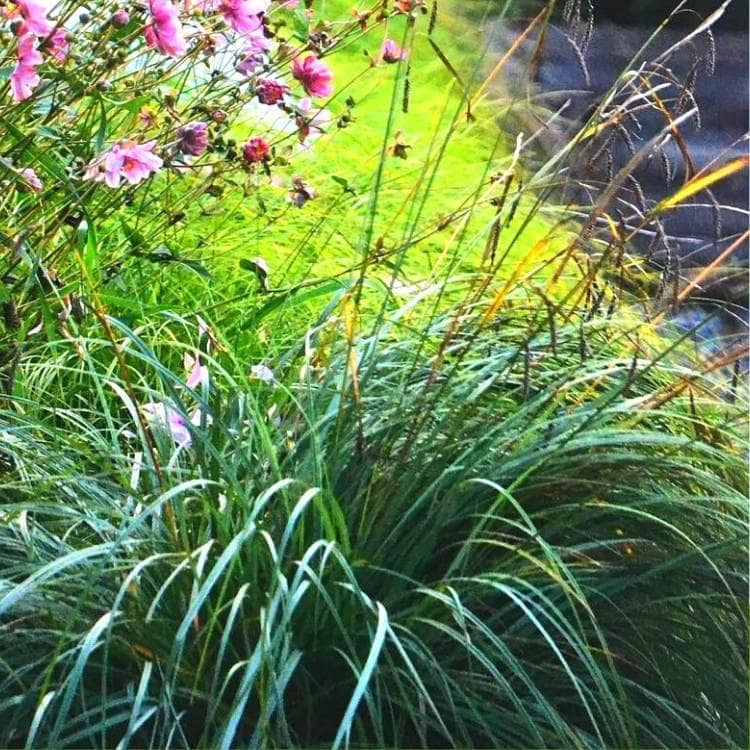
Blue sedge is a short ornamental grass variety that grows in a rounded form. It often creates a small, ball-like shape with a diameter of about one and a half feet.
The leaves of this plant are incredibly narrow, measuring less than a quarter of an inch in width. Each leaf has a distinct blue-green color and grows in a dense habit with a rough texture.
This unusual foliage color is the primary reason people plant blue sedge, as its flowers are far from showy.
Blue sedge needs less sunlight than many other ornamental grasses. It can also stay evergreen in warmer climates.
This sedge works well as a colorful groundcover and can even tolerate some foot traffic.
Hardiness Zone: 5-9
Mature Height: 1-1.5’
Mature Spread: 1-1.5’
Sun Requirements: Part Shade to Full Shade
Soil PH Preference: Acidic to Alkaline
Soil Moisture Preference: Medium to High Moisture
7. Japanese Sedge (Carex ‘Ice Dance’)
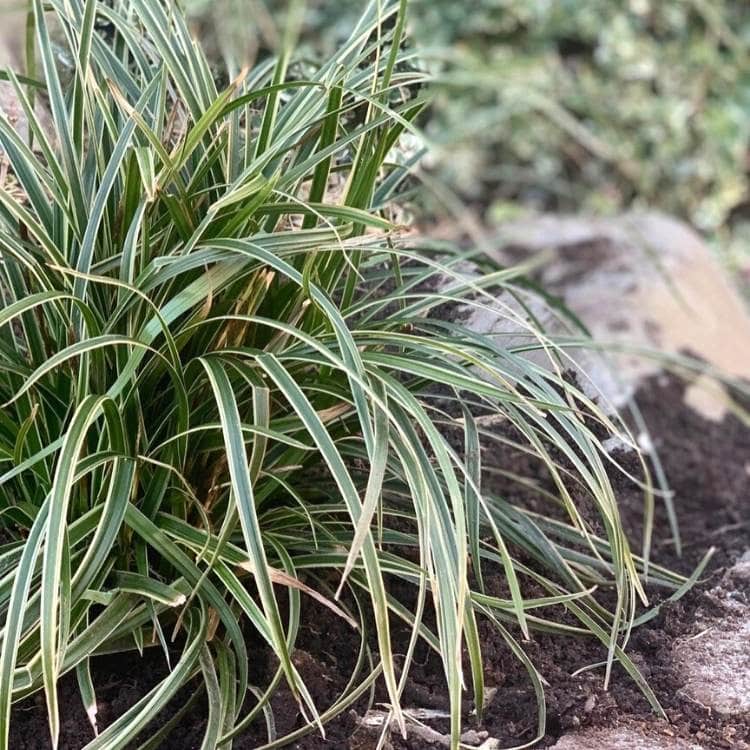
Among the many sedge grass varieties, the ‘Ice Dance’ variety is one of the most attractive. This plant grows low to the ground, forming dense clumps of semi-evergreen foliage.
The leaves of Japanese sedge are thin, shiny, and tend to arch slightly. They feature a two-toned color pattern, with a deep green center and brilliant white edges.
This foliage inspired the ‘Ice Dance’ name and is the plant’s most valuable visual asset, as the flowers are small, brown, and barely noticeable.
Japanese sedge is also a breeze to care for. It is pest-free, deer tolerant, and adaptable to a range of light conditions, from full sun to full shade.
Hardiness Zone: 5-9
Mature Height: .75-1’
Mature Spread: 1-2’
Sun Requirements: Full Sun to Full Shade
Soil PH Preference: Acidic to Alkaline
Soil Moisture Preference: Medium to High Moisture
8. Little Bluestem (Schizachyrium Scoparium)
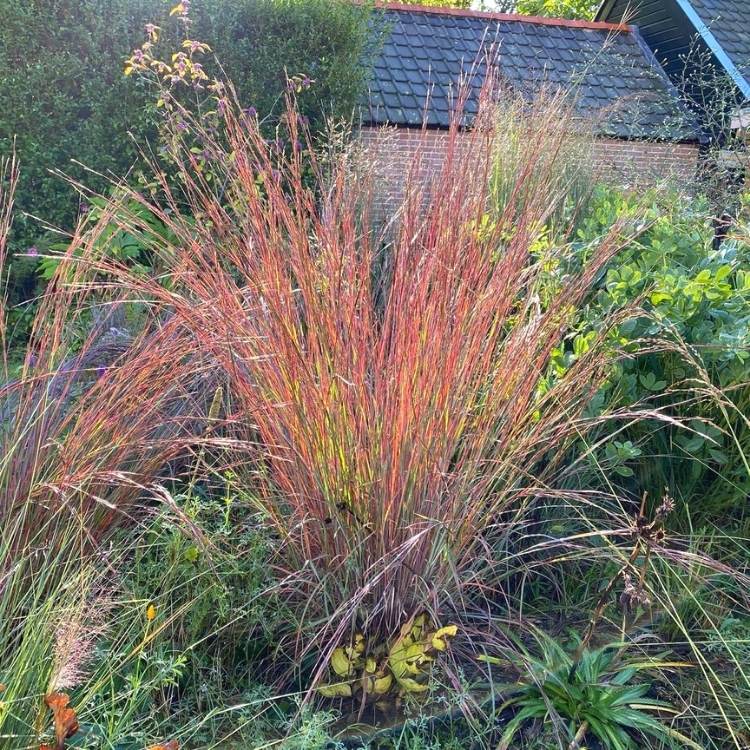
Little bluestem is a well-known prairie grass across North America. It boasts a wide native range, stretching from Canada down to the American Southwest.
Overall, this plant has an upright and narrow growth habit. Its leaves are thin and often have a blue tint at the base, while the rest of the blade is entirely green.
Much of the ornamental appeal of little bluestem comes from its flowers. These purple blooms are three inches long and appear in August. After they die back, a cloud of seed heads follows.
The foliage is also an attractive feature, turning a vibrant orange in the fall.
Little bluestem prefers soils that are slightly dry and slightly alkaline. However, this plant is resilient and can survive in many soil types, especially when it receives plenty of sun.
Hardiness Zone: 3-9
Mature Height: 2-4’
Mature Spread: 1.5-2’
Sun Requirements: Full Sun
Soil PH Preference: Neutral to Slightly Alkaline
Soil Moisture Preference: Dry to Medium Moisture
9. Big Bluestem (Andropogon Gerardii)
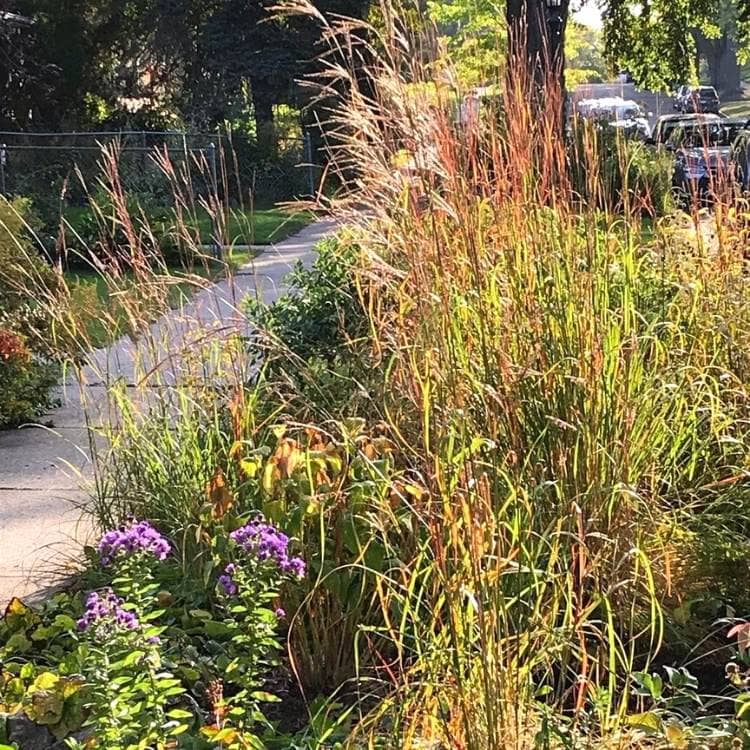
Despite having similar common names, big bluestem and little bluestem do not belong to the same genus. They do, however, share some physical traits.
The stems of big bluestem emerge with a blue color, which is similar to the color found year-round at the base of little bluestem’s leaves.
These stems support leaves that can grow up to two feet long. In the fall, the foliage develops a deep purple color. The flowers are also purple and emerge in late summer.
You should plant big bluestem in soils with dry to medium moisture. Full sun is also ideal. Once it’s established, this plant is easy to maintain. Just cut it to the ground in late winter.
Hardiness Zone: 4-9
Mature Height: 4-6’
Mature Spread: 2-3’
Sun Requirements: Full Sun
Soil PH Preference: Acidic to Slightly Alkaline
Soil Moisture Preference: Dry to Medium Moisture
10. Blue Oat Grass (Helictotrichon Sempervirens)
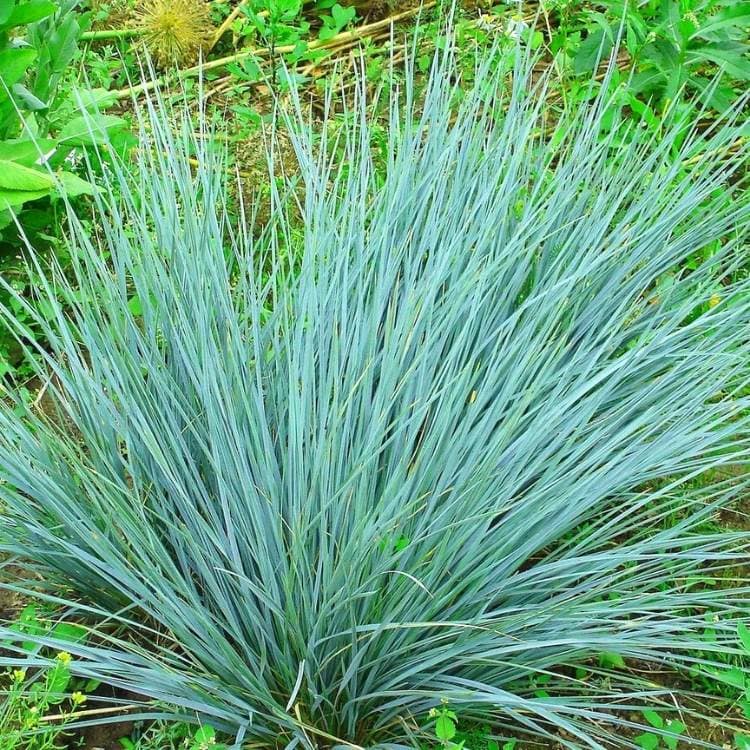
Helictotrichon sempervirens, commonly known as blue oat grass, grows in small, rounded clumps. It is native to regions in central and southern Europe.
Its foliage consists of needle-like leaves that are blue to blue-green in color.
The flowers arrive in June. When this happens, the plant’s height and spread can nearly double. The flowers grow as long, slightly curved spikes that extend far beyond the leaves. Each flower is thin and brown with hints of blue.
Over time, some leaves will wither and turn brown, so be sure to remove them from the plant. In warmer regions, this plant grows as an evergreen.
When planting blue oat grass, steer clear of areas with poor drainage, as this can lead to crown rot. Otherwise, this plant presents few problems.
Hardiness Zone: 4-8
Mature Height: 2-3’
Mature Spread: 2-3’
Sun Requirements: Full Sun
Soil PH Preference: Slightly Acidic to Slightly Alkaline
Soil Moisture Preference: Dry to Medium Moisture
11. Blue Fescue (Festuca Glauca)

Blue fescue grass (Festuca glauca) shares some similarities with blue oat grass. In certain respects, blue fescue is like a smaller version of blue oat grass.
A great example of this is its semi-evergreen foliage. This foliage appears in the form of sharp, narrow leaves that are blue-green in color.
The flowers are wheat-like and bloom in mid-summer as small panicles at the ends of thin stalks.
The foliage color of this decorative grass is more vibrant with increased sun exposure, but this doesn’t mean blue fescue can’t survive in limited shade.
Regardless of the conditions, blue fescue often has a short lifespan. While it’s around, this plant adds an interesting, rough texture to any area it grows in.
Hardiness Zone: 4-8
Mature Height: .75-1’
Mature Spread: .5-.75’
Sun Requirements: Full Sun
Soil PH Preference: Acidic to Neutral
Soil Moisture Preference: Dry to Medium Moisture
12. Tufted Hair Grass (Deschampsia Cespitosa)
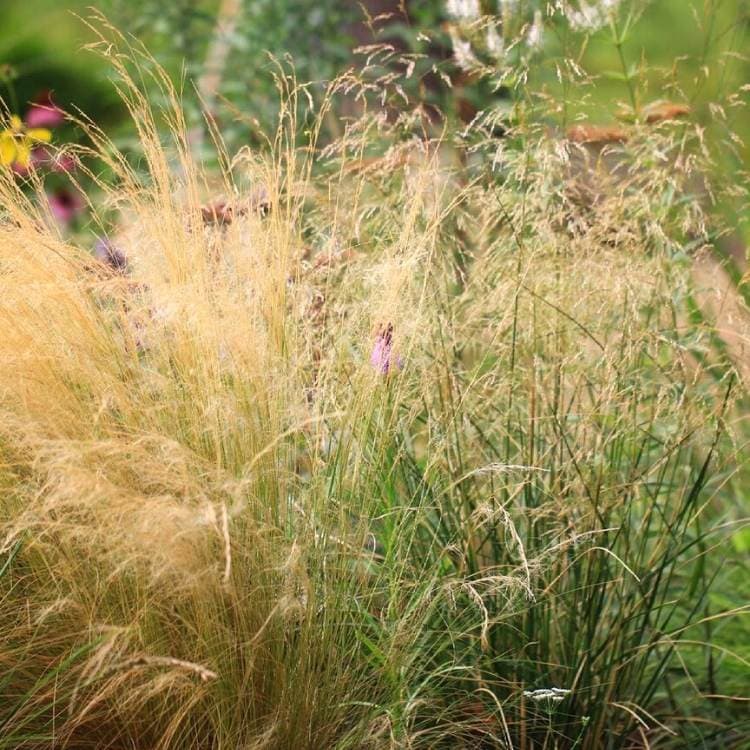
Tufted hair grass (Deschampsia cespitosa) is a small, cool-season ornamental grass that grows in clumps. The mature height of this plant rarely surpasses one and a half feet, although in some cases it can reach a maximum of three feet.
The leaves of tufted hair grass are a major factor in its density. Each leaf is very narrow, but they often grow in large quantities. The leaves are also not perfectly straight; instead, they have a slight inward curl.
The flowers appear in abundance as well, typically from late summer to early fall. The flower stems are long, temporarily increasing the height and spread of the grass.
The flowers themselves are light panicles and come in a variety of colors, including purple, silver, and gold. Later in the season, they turn a tan color.
This grass needs moist soil and partial shade. Once established in the right growing conditions, it requires little to no maintenance.
Hardiness Zone: 4-8
Mature Height: 2-3’
Mature Spread: 1-2’
Sun Requirements: Part Shade
Soil PH Preference: Slightly Acidic to Slightly Alkaline
Soil Moisture Preference: Dry to Medium Moisture
13. Mexican Feathergrass (Nassella Tenuissima)

Mexican feather grass (Nassella or Stipa tenuissima) is an ornamental grass well-suited for warmer regions. In these climates, its foliage often remains evergreen.
The foliage is incredibly narrow and flexible. For most of the season, it is green, but in unseasonably warm summers, it can turn a light brown.
It’s no secret how this plant got its common name. The flowers look just like feathers. They bloom above the foliage from late spring to early summer, appearing light and a few inches long with a very light brown to white color.
You should check with local authorities before planting Mexican feathergrass, as some regions consider it invasive. This is partly due to its impressive ability to self-seed.
Mexican feathergrass is also tolerant of dry conditions and may even prefer them. In fact, too much water can be a threat to this ornamental grass. When planting, select areas with full sun and be prepared to manage this plant to prevent it from spreading out of control.
Hardiness Zone: 6-10
Mature Height: 1.5-2’
Mature Spread: 1.5-2’
Sun Requirements: Full Sun
Soil PH Preference: Acidic to Neutral
Soil Moisture Preference: Dry to Medium Moisture
14. Japanese Bloodgrass (Imperata Cylindrica)
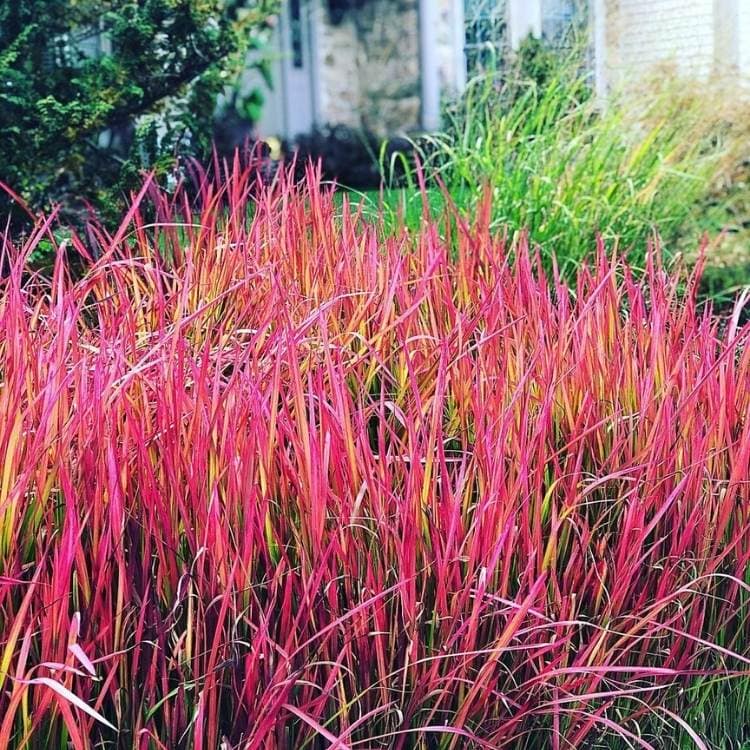
Japanese bloodgrass is an upright ornamental grass. Many varieties showcase attractive two-toned foliage.
This foliage starts green at the base and transitions to a bright red about halfway up the plant. This color tends to intensify as the season progresses.
In terms of visual appeal, the flowers are secondary to the foliage. They are thin with a silvery color and bloom in the summer.
Japanese bloodgrass is highly flammable. It burns rapidly and, as a consequence, is a factor in many wildfires.
If you decide to add this ornamental grass to your garden, you will find it has very few maintenance needs. Providing medium moisture soil and full sun helps ensure this plant will be a pleasing accent in your garden.
Hardiness Zone: 5-9
Mature Height: 1-2’
Mature Spread: 1-2’
Sun Requirements: Part Shade to Full Shade
Soil PH Preference: Acidic to Alkaline
Soil Moisture Preference: Medium Moisture
15. Black Mondo Grass (Ophiopogon Planiscapus)
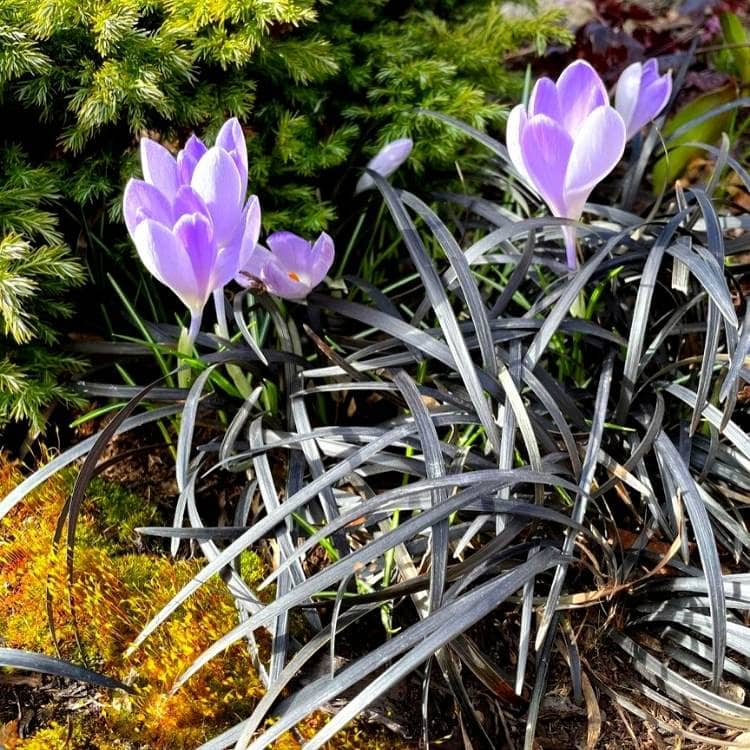
Black mondo grass is a small ornamental grass that works best as a ground cover. The main draw of this plant is its foliage color.
The leaves of black mondo grass are narrow, evergreen, and have smooth margins. They grow in a dense habit. Most notably, their color is a deep purple that is almost black.
This color remains constant throughout the year and has a lustrous appearance in the light. Other parts of black mondo grass are also purple.
For example, both the flowers and the fruits are typically purple. The fruits appear after the small flowers, which bloom in mid-summer.
Black mondo grass is tolerant of many soil types, including those with high salt content. It also has no common diseases. For the best results, find soils that are slightly acidic with medium moisture and good drainage.
Hardiness Zone: 6-11
Mature Height: .5-1’
Mature Spread: .75-1’
Sun Requirements: Full Sun to Part Shade
Soil PH Preference: Acidic to Neutral
Soil Moisture Preference: Medium Moisture
16. Japanese Forest Grass (Hakonechloa Macra)

Japanese forest grass is native to East Asia and features bright green foliage. This foliage is made up of sharply pointed, elongated leaves that grow outward and droop downward.
In the fall, the leaves of this grass-like plant turn an orange color. Depending on the variety, there can be variations in this as well as the summer color.
Unlike many ornamental grasses, Japanese forest grass prefers to be out of direct sun. Instead, partial shade yields the best results for this plant.
Soil moisture is also important. The ideal soil for Japanese forest grass is moist with good drainage. The addition of organic matter and humus is also beneficial to its growth.
As long as these conditions are met, Japanese forest grass proves to be easy to care for.
Hardiness Zone: 4-9
Mature Height: 1-2’
Mature Spread: 1-2’
Sun Requirements: Part Shade
Soil PH Preference: Slightly Acidic to Neutral
Soil Moisture Preference: Medium Moisture
17. Gulf Muhly (Muhlenbergia Capillaris)
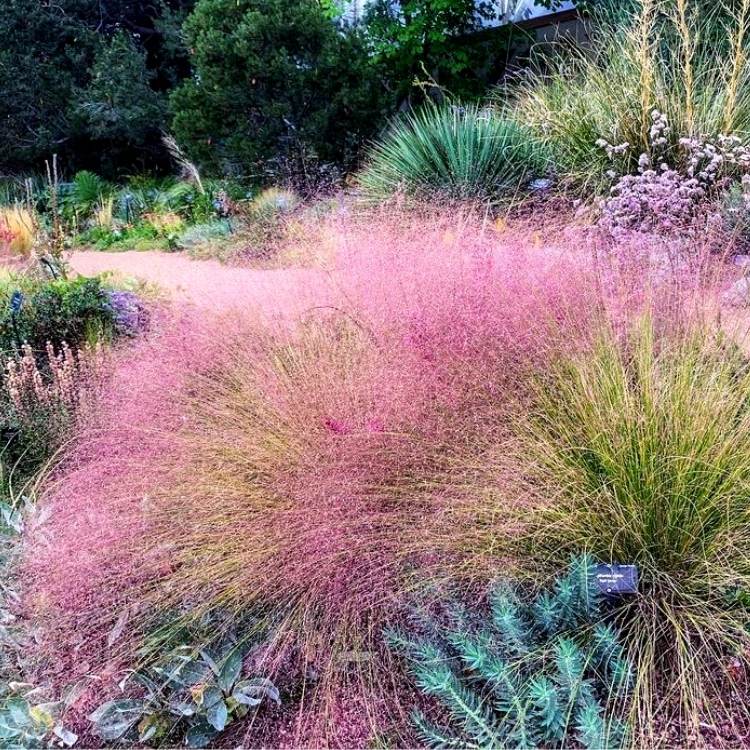
Gulf muhly is a medium-sized ornamental grass with interest across multiple seasons. It is named in honor of the German minister and botanist Henry Muhlenberg.
Gulf muhly forms large clumps as it grows. The flowers of this plant are showy and have a major impact on its appearance when in bloom.
These flowers emerge in late summer and essentially double the size of the plant. But size isn’t the only significant aspect of these flowers; they also have ornamental value.
The flowers are pink with a light, hazy texture. When planted in large groups, they look like a pink mist hovering above the foliage.
The foliage is dark green and composed of thin leaves. In the fall, they fade to a tan color.
If you live in a hot climate, gulf muhly is an excellent ornamental grass choice. This plant adds extraordinary texture and color to the landscape while being able to survive in soils with low moisture.
Hardiness Zone: 4-9
Mature Height: 1-3’
Mature Spread: 1-3’
Sun Requirements: Full Sun
Soil PH Preference: Acidic to Alkaline
Soil Moisture Preference: Dry to Medium Moisture
18. Pampas Grass (Cortaderia Selloana)

Pampas grass is one of the largest ornamental grasses available, growing up to ten feet tall at maturity. As a native of South America, this plant thrives in warmer climates.
Its foliage is narrow but grows in a dense, upright form. In most cases, this plant stays evergreen, especially in the hotter parts of its range.
For nearly half the season, pampas grass displays large, fluffy flowers. These flowers are about six inches long and have a white to tan color.
Anyone considering planting this grass should be aware that its leaves are exceptionally sharp. This isn’t just a description of the leaf shape; the margins of the leaves can genuinely cut like a knife.
Due to its massive size and evergreen nature, pampas grass is an excellent choice for a privacy screen. Unfortunately, this plant is considered invasive in many areas of North America.
Pampas grass spreads quickly, so be responsible when deciding to plant it. If you live in a region where this grass is not invasive, choose a planting area with full sun. Even in partial shade, pampas grass is easy to maintain and adds a significant textural element to the landscape.
Hardiness Zone: 8-11
Mature Height: 6-10’
Mature Spread: 6-8’
Sun Requirements: Full Sun
Soil PH Preference: Acidic to Alkaline
Soil Moisture Preference: Medium Moisture
19. Northern Sea Oats (Chasmanthium Latifolium)
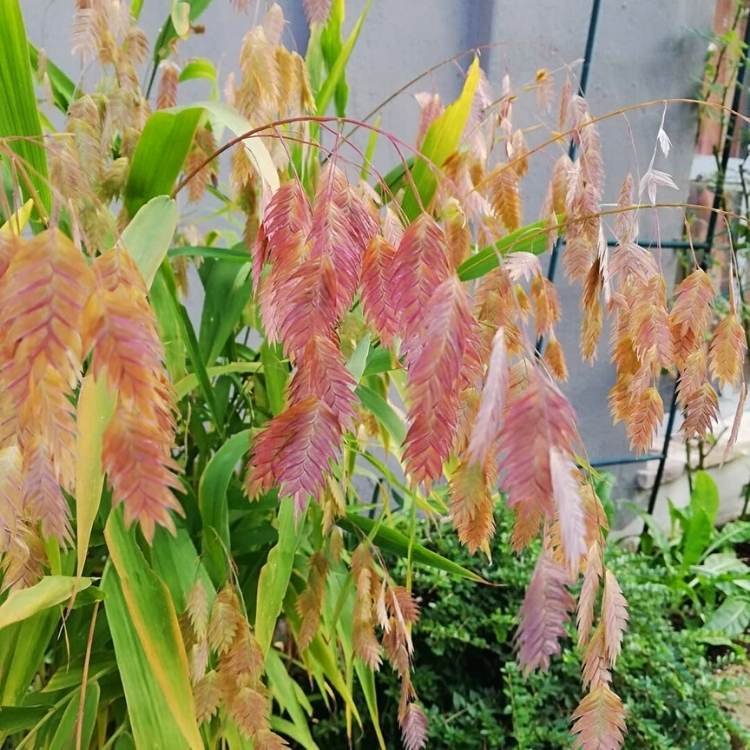
Northern sea oats is native to the eastern parts of the United States. It often grows on riverbanks and slopes, with a range that extends from the mid-Atlantic states to Florida.
The seed heads of northern sea oats are one of its most remarkable features. These seed heads have a shape similar to oats and dangle from the ends of drooping stalks. They start with a green color that fades to brown over time.
The leaves of this grass-like plant are long but a bit wider than other ornamental grasses. They are attached to stiff stalks and have a green color with hints of blue. In the fall, this color transforms into a stunning gold.
Reflecting the characteristics of its natural habitat, northern sea oats requires moist soil and shade. Full sun will hinder its growth and damage the foliage.
When caring for this plant, stick to a regular watering schedule. This is crucial for helping northern sea oats thrive.
Hardiness Zone: 4-9
Mature Height: 2-3’
Mature Spread: 2-3’
Sun Requirements: Full Sun to Part Shade
Soil PH Preference: Acidic
Soil Moisture Preference: Medium to High Moisture
20. Prairie Dropseed (Sporobolus Heterolepis)
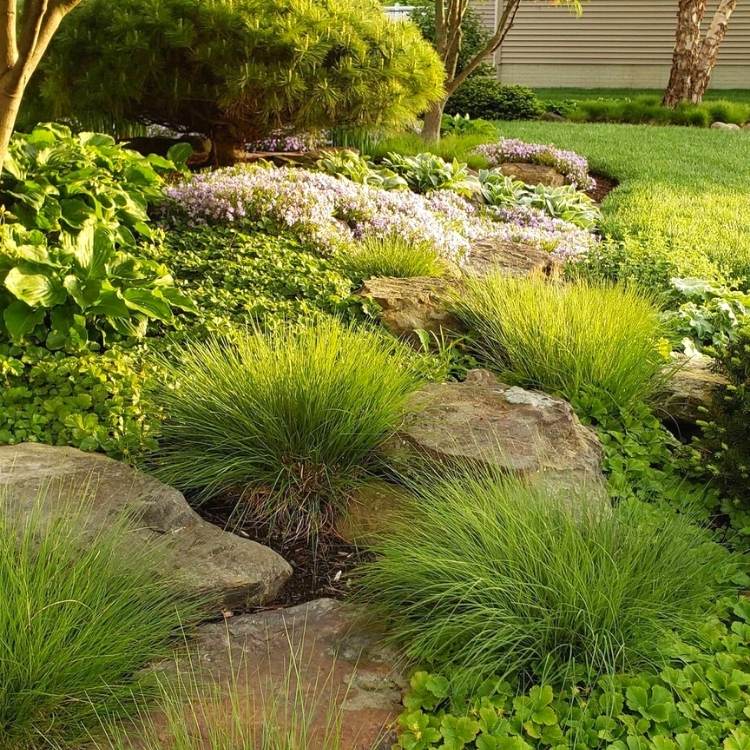
Prairie dropseed is a small native grass that reaches three feet in both height and spread. It has long, narrow leaves that often droop and move freely in the wind.
This ornamental grass is valued more for its textural qualities than anything else. Overall, the plant maintains a consistently neutral green color.
Late in the summer, the flowers appear above the leaves. These flowers are light and fuzzy with a subtle purple tint. They are also fragrant and give way to seeds that drop to the ground each year, giving the plant its common name.
Be sure to give this plant plenty of sun. In terms of soil, moisture levels can range from slightly dry to slightly wet. While this plant prefers a rocky environment, clay soils are also suitable.
In general, this plant is a dependable ground cover with few pests, diseases, or maintenance needs.
Hardiness Zone: 3-9
Mature Height: 2-3’
Mature Spread: 2-3’
Sun Requirements: Full Sun
Soil PH Preference: Acidic to Alkaline
Soil Moisture Preference: Dry to Medium Moisture
21. New Zealand Wind Grass (Stipa Arundinacea)

New Zealand wind grass is a captivating addition to gardens in warmer regions, such as zones eight through ten. Depending on the zone, this ornamental grass can be either evergreen or semi-evergreen.
The form of New Zealand wind grass is narrow yet open, with thin, arching leaves.
This foliage is one of the plant’s best features. The leaves start the season green, then begin to transition to a bronze and tan color. The result is a two-toned display of foliage in the colder months.
New Zealand wind grass grows quickly and can adapt to many different types of soils, including both dry soils and heavy clay soils.
Caring for this ornamental grass is a simple process. Just remove the dead leaves in late winter. You can also choose to rejuvenate the plant’s growth by cutting it back to the ground. Other than that, there is little you need to do to grow a healthy New Zealand wind grass.
Hardiness Zone: 8-10
Mature Height: 1-3’
Mature Spread: 1-2’
Sun Requirements: Full Sun
Soil PH Preference: Acidic to Alkaline
Soil Moisture Preference: Medium Moisture
22. Indian Grass (Sorghastrum Nutans)
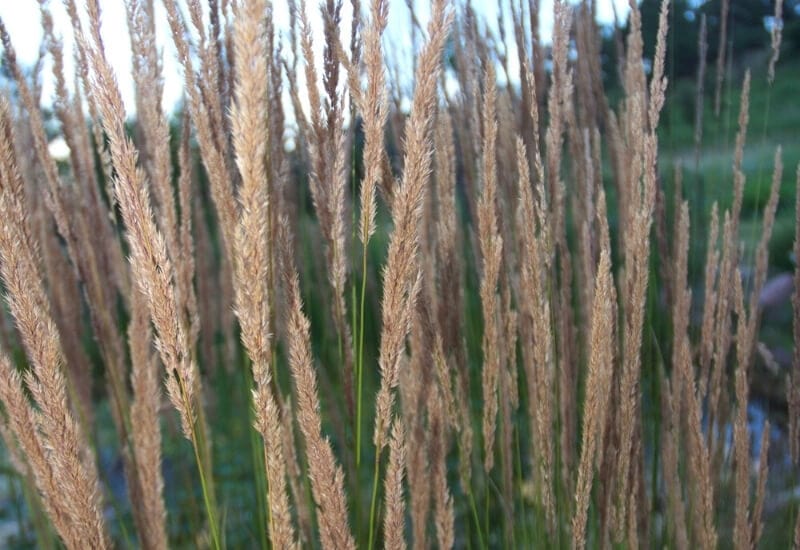
Indian grass (Sorghastrum Nutans) is one of the most cold-hardy ornamental grasses on this list, able to survive as far north as zone 2.
Its native range is a testament to this hardiness, stretching across the northern United States and southern Canada. However, Indian grass also grows well in warm climates, including zone 9.
The foliage is made of broad yet long leaves that begin the season green. In the fall, they display an impressive color ranging from orange to purple.
The flowers form a loose, wheat-like plume that appears late in the growing season with a yellow to tan color.
For the best results, plant Indian grass in soils with a high pH. Dry soil is preferred, but this ornamental grass can also survive brief periods of flooding.
Hardiness Zone: 2-9
Mature Height: 3-5’
Mature Spread: 2-3’
Sun Requirements: Full Sun to Part Shade
Soil PH Preference: Neutral to Alkaline
Soil Moisture Preference: Dry to Medium Moisture
23. Moor Grass (Molinia Caerulea Subsp. Arundinacea)
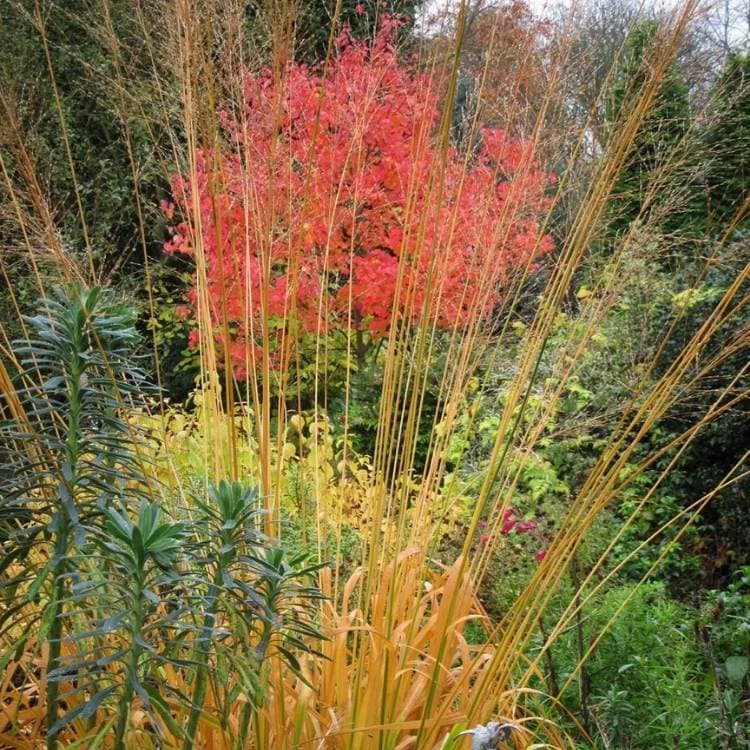
Moor grass is a tall ornamental grass variety with an interesting color change that occurs in its leaves throughout the growing season. These leaves are slender and flexible.
Early in the season, the foliage is a typical green color. It then changes to purple. Finally, in the fall, it takes on a striking gold color.
The growth habit of this plant is upright and open. The flowers have a hazy texture and a generally muted color.
Moor grass is another example of an ornamental grass that requires little to no care. To give this plant the best chance to thrive, plant it in neutral soils that have good drainage.
Hardiness Zone: 5-8
Mature Height: 4-8’
Mature Spread: 2-4’
Sun Requirements: Full Sun to Part Shade
Soil PH Preference: Acidic to Neutral
Soil Moisture Preference: Medium Moisture
Conclusion
Ornamental grasses have the power to elevate the visual character of any landscape. These plants grow well in masses and are available in many different forms.
They also often prove to have minimal care requirements, making them a stress-free addition to the landscape.
If you feel your yard is missing some visual appeal, consider adding ornamental grasses to quickly create a captivating textural effect.