Japandi brings Japanese simplicity and Scandinavian warmth into the same calm, uncluttered space. Natural wood, stone, soft fabrics, neutral colors, low furniture, and thoughtful craftsmanship shape the look across living rooms, kitchens, bedrooms, bathrooms, and outdoor areas.
Japandi Style
Japandi decor brings a functional, warm, and calming mood to a minimal setting. As an interior decoration trend, Japandi blends Japanese aesthetics with Scandinavian aesthetics and combines Japanese and Scandinavian elements as a cultural blend.
Japanese and Scandinavian culture share principles such as minimalism, simplicity, respect for nature, and craftsmanship. Japandi intertwines Nordic Hygge, with its sense of warmth and hominess, and Eastern Wabi Sabi, which centers on accepting imperfection.
Japandi style works in any room, although it especially suits large open spaces.
- Across the room, Japandi decor keeps its lines simple and clean.
- Oak and light wood are common choices in Japandi spaces. More broadly, Japandi decor emphasizes natural materials.
- Natural fabrics bring warmth to Japandi textiles, which have a soothing texture.
- The Japandi color palette uses a neutral base with contrast from light and dark tones.
- Japandi furniture stays low and close to the floor.
- Bamboo is one example of a Japandi material, valued as both eco-friendly and sustainable.
- Japandi materials are high quality, while the craftsmanship is bespoke.
Aesthetic Japandi Living Room Design Ideas
A minimalist style is recommended.
Japandi Yin Yang Contrast
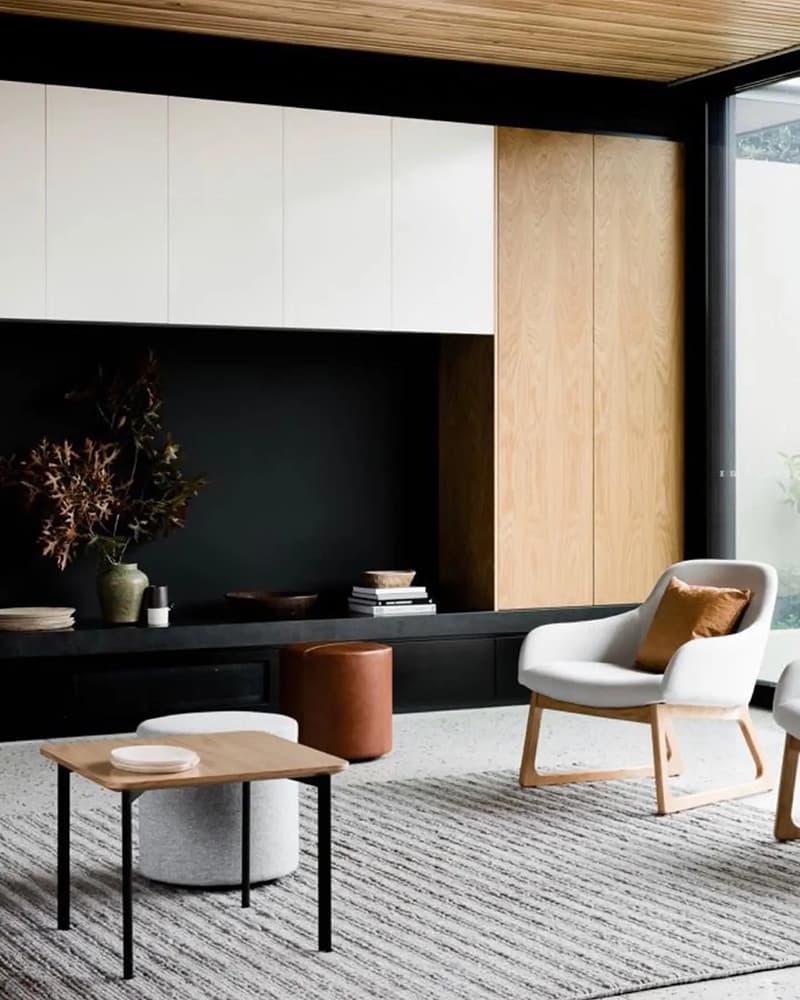
Natural plants need lots of sunlight, and that light supports a brighter mood. In Japandi decor, add natural plants and intersperse black and white colors, then balance the contrast with wooden furniture.
Well-Curated Japandi Furniture
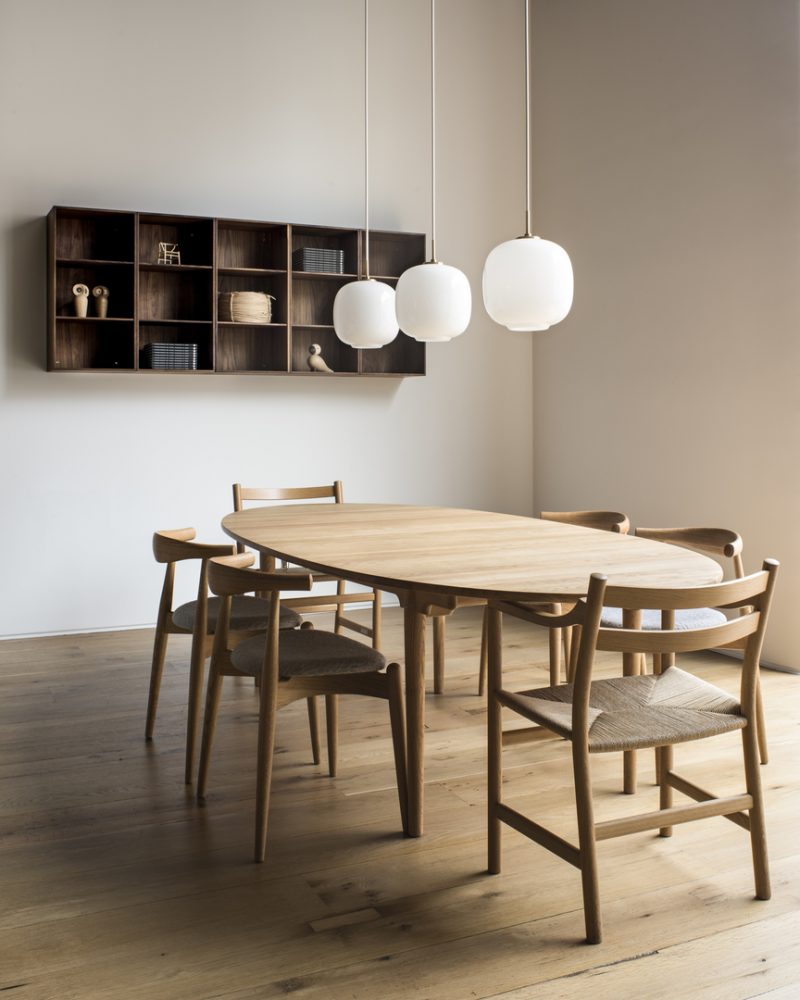
Japandi furniture can have gently curved edges and limited sharp lines and edges. Build it with natural materials such as sturdy wood, which supports the Hygge concept, while combining Scandinavian soft minimalism with Japanese natural elements.
Japandi Kitchen
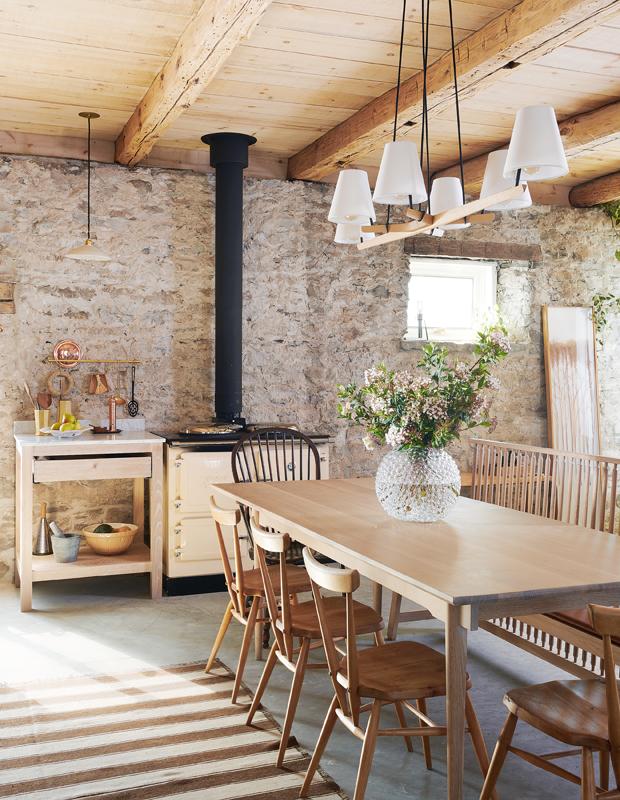
Natural stone replaces drywall in this Japandi kitchen, whose rustic, untouched character keeps the materials natural. The stone also supports wabi-sabi elements.
Clean lines bring balance to the dining area, where a sleek, natural table is paired with matching sleek, natural dining chairs.
Kitchen windows can change the feel of the room and bring in more daylight. See 40 kitchen window ideas for different ways to use them.
Japandi Color Schemes
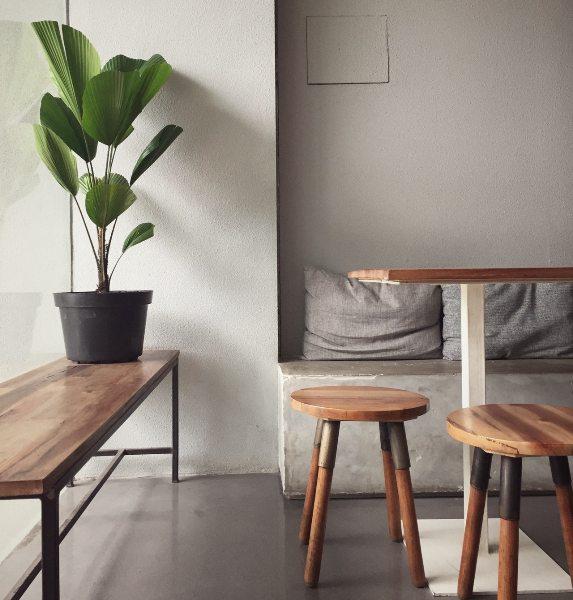
A neutral palette defines the Japandi lifestyle, with light walls pointing to its Scandinavian elements. A gray Japandi sofa sits among many wood elements, while handmade products take center stage. Simple, minimalist, sustainable equipment keeps the room aligned with that approach.
Japandi Children’s Rooms
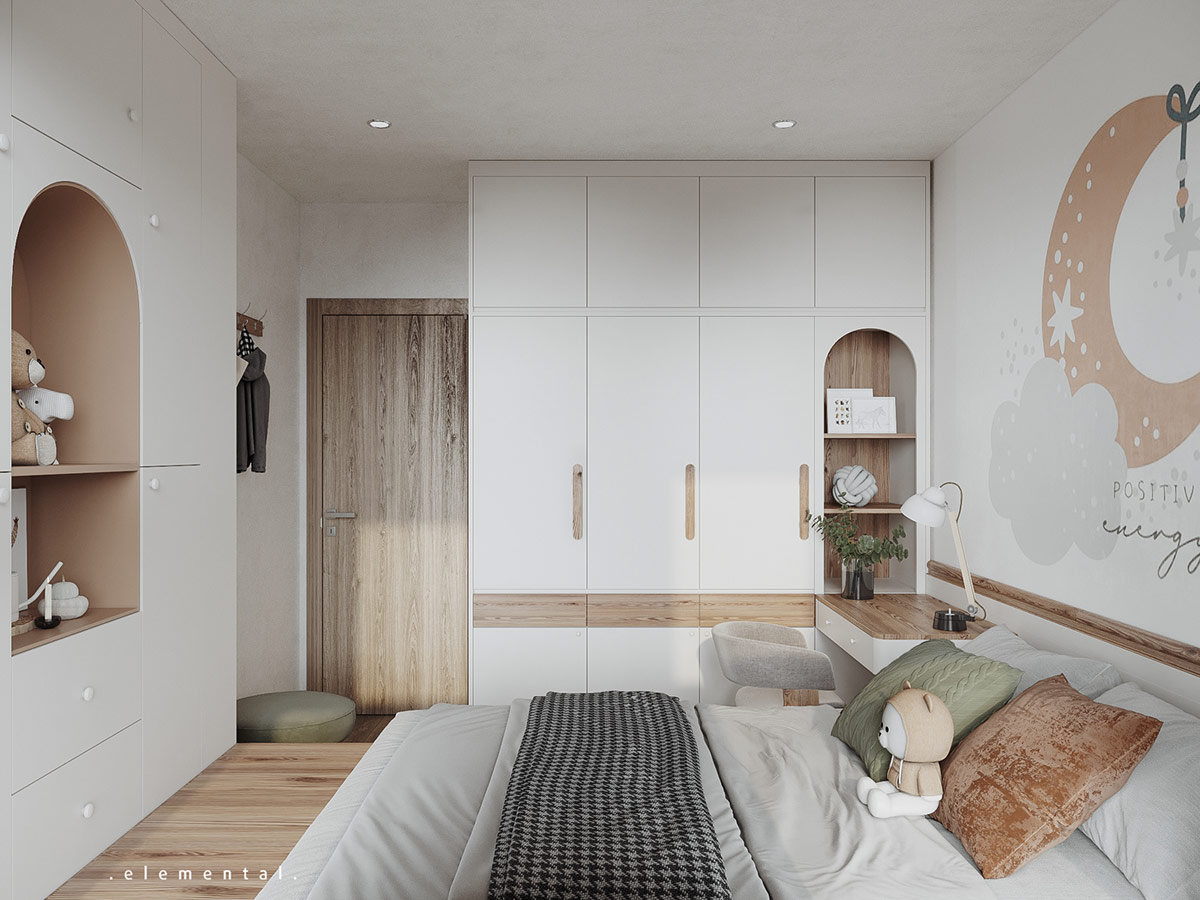
Most people might expect a child’s bedroom to be bright and colorful, but a children’s room can work with Japandi style with some tweaking.
Keep the children’s room’s color scheme neutral, then use very light, functional pieces with a playful mood. Playful fabrics and wall posters add that lighter touch, while well-crafted Japanese furniture introduces Japanese elements and Scandi design encourages minimalism.
Japandi Children’s Room
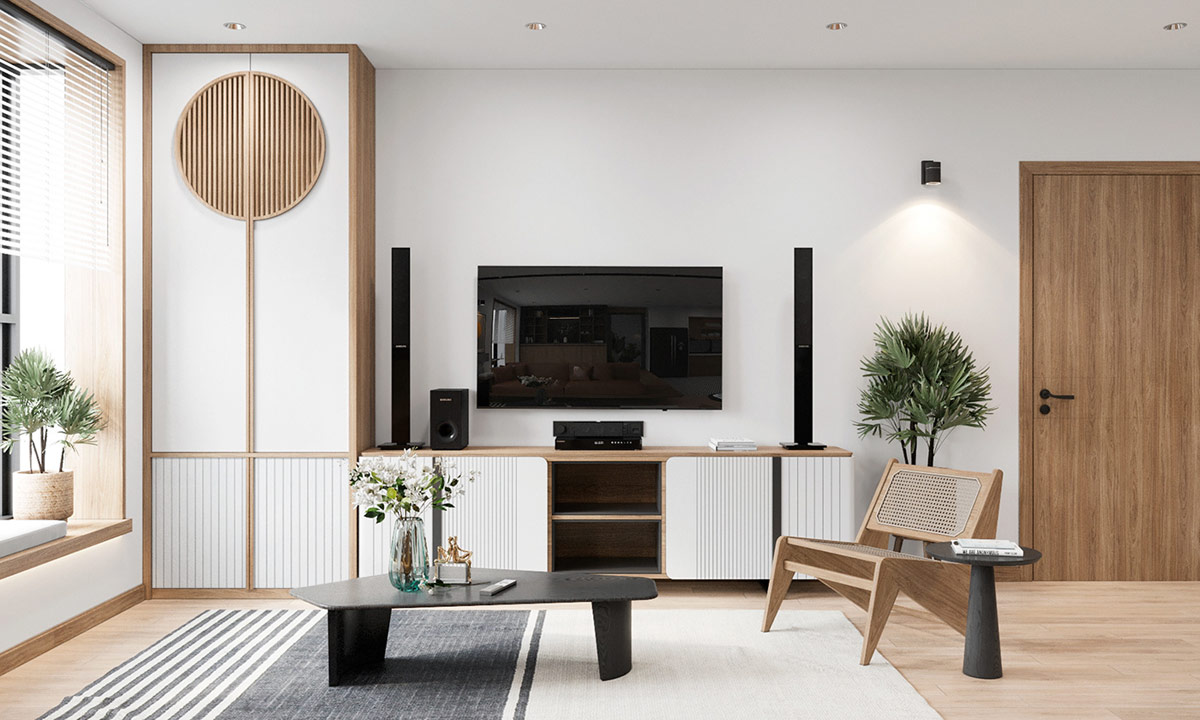
Muted earthy tones in the furniture help the living room tell a cohesive narrative. The Japandi room blends Scandinavian Hygge with a clean, cozy atmosphere and includes a Japanese low-form style.
Light walls and light cabinets keep the room minimal and uncluttered, with light filling the space. Plants and planters sit in open spots, while a dark, low-set Japandi wood coffee table contrasts with the white surfaces. Sound bars are placed on the cabinets.
Natural Earthy Japandi Living Room
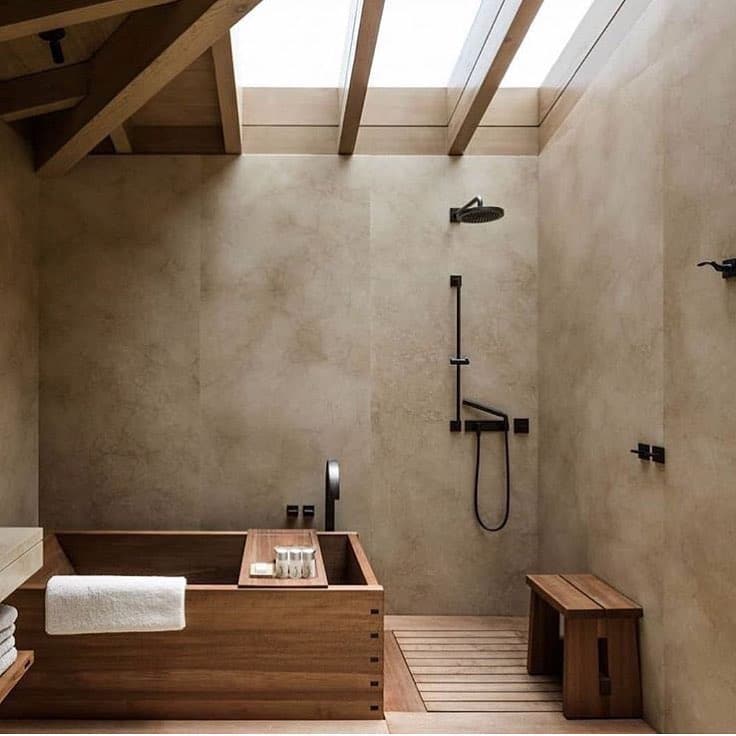
Timber elements bring natural earthiness into this bathroom and contribute to its peaceful, zen-like Japandi mood.
In this bathroom, a glass ceiling enables high natural lighting, while wood ceiling panels filter the light into a partly diffused glow. Simple, functional bathroom elements include a bathtub and clean, simple stone wall panels that create a calm effect.
Stone, tile, paint, and other surfaces can all shape the room. See 38 bathroom wall ideas for more options.
Light Earthy Japandi Bathroom
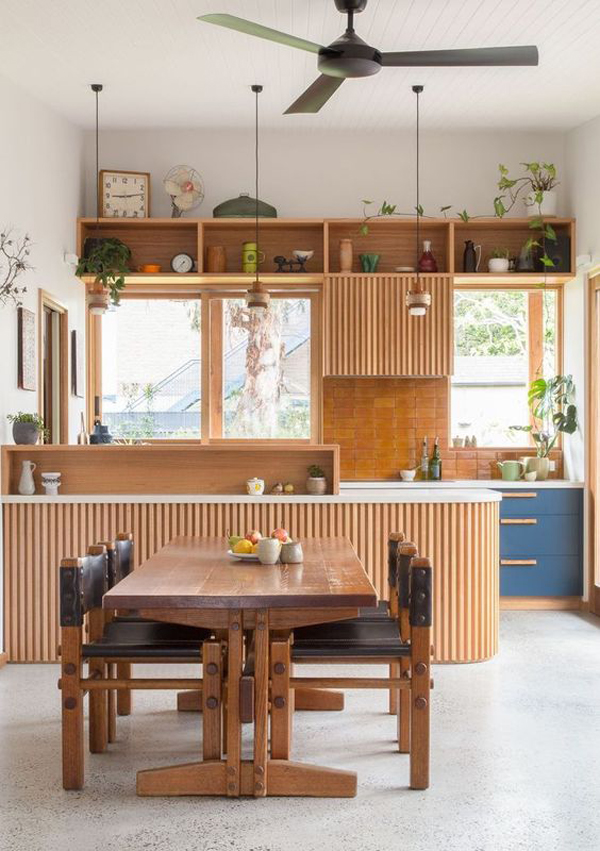
Neutral colors support the kitchen’s minimalist decor, with gray, beige, and white coordinating across the decor. Wood furniture, slatted design, and white marble add the main material details. Use natural materials in the Japandi interior as much as possible.
Large windows in the upper wall let in much light and overlook outdoor scenes, bringing nature indoors. Upper-wall storage leaves room for that light and can make the room feel more spacious.
Playful Children’s Room
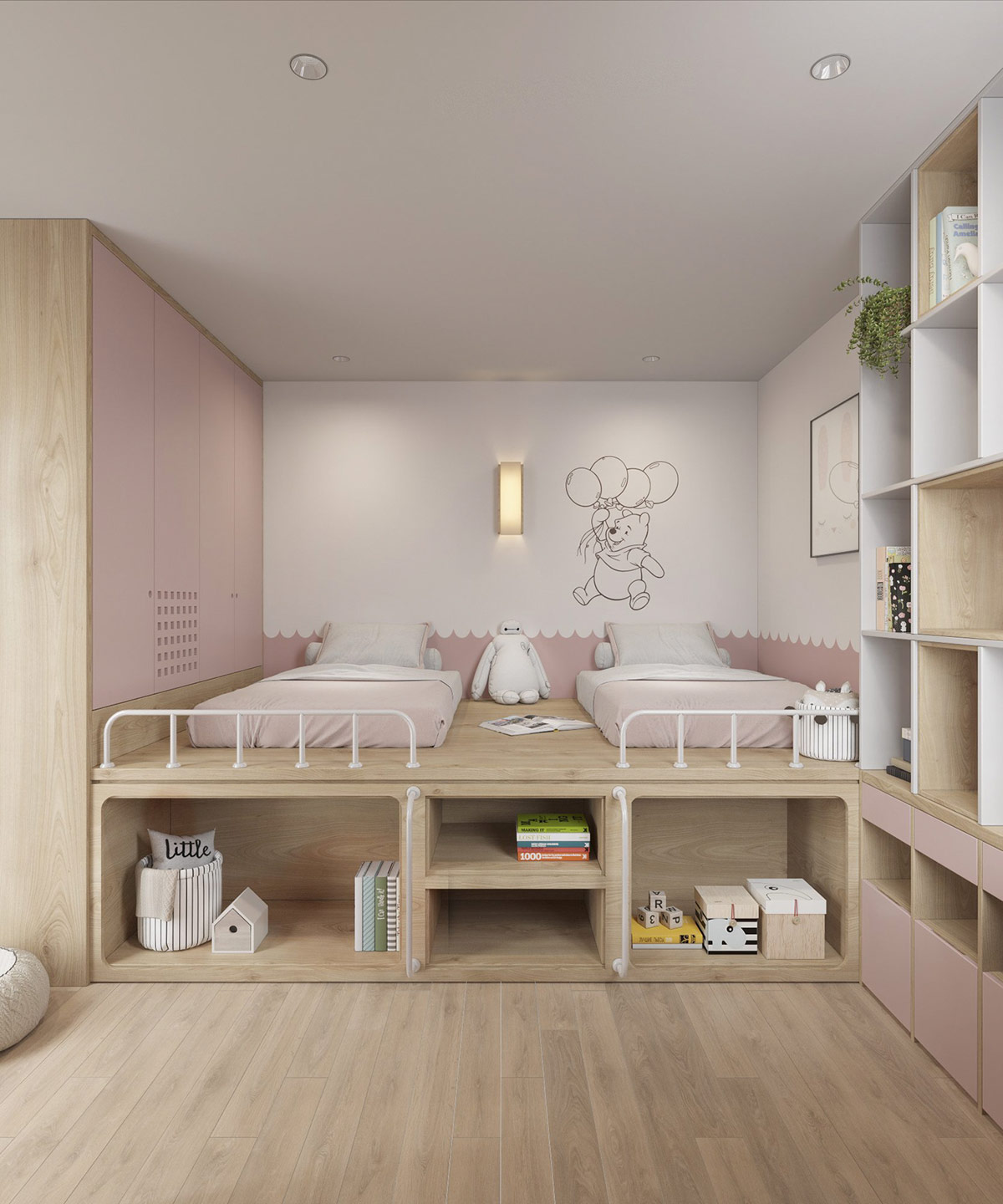
In compact Japandi bedrooms, a children’s room can be both functional and playful, with room colors that interact in a pleasing way.
Neat, crisp lines are balanced by a soft palette, and the space is used effectively with a light, natural bookcase. Together, the line-and-color combination prevents blandness.
Light Dark Contrast
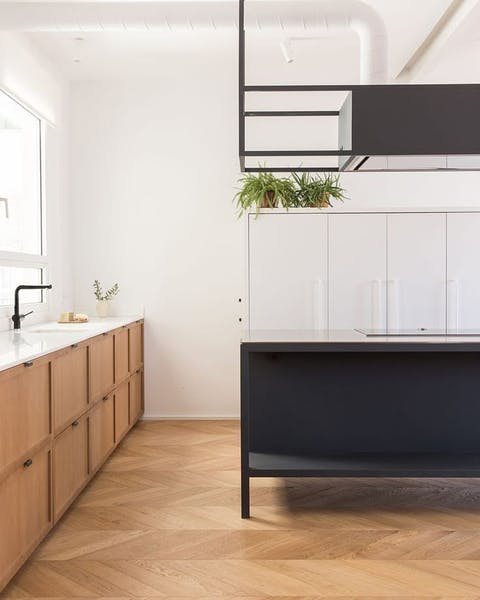
With high natural light in the kitchen, dark, earthy traditional Japanese decor can sit against a very light, blonde Scandinavian palette. Plan the kitchen contrast in a Japandi style by balancing the light kitchen with dark elements.
Kitchen objects should combine beauty and purpose, so consider function as well as appearance. Japandi emphasizes minimalism through complementary colors and natural materials. A dark kitchen island can be both functional and dark.
Light Dark Contrast
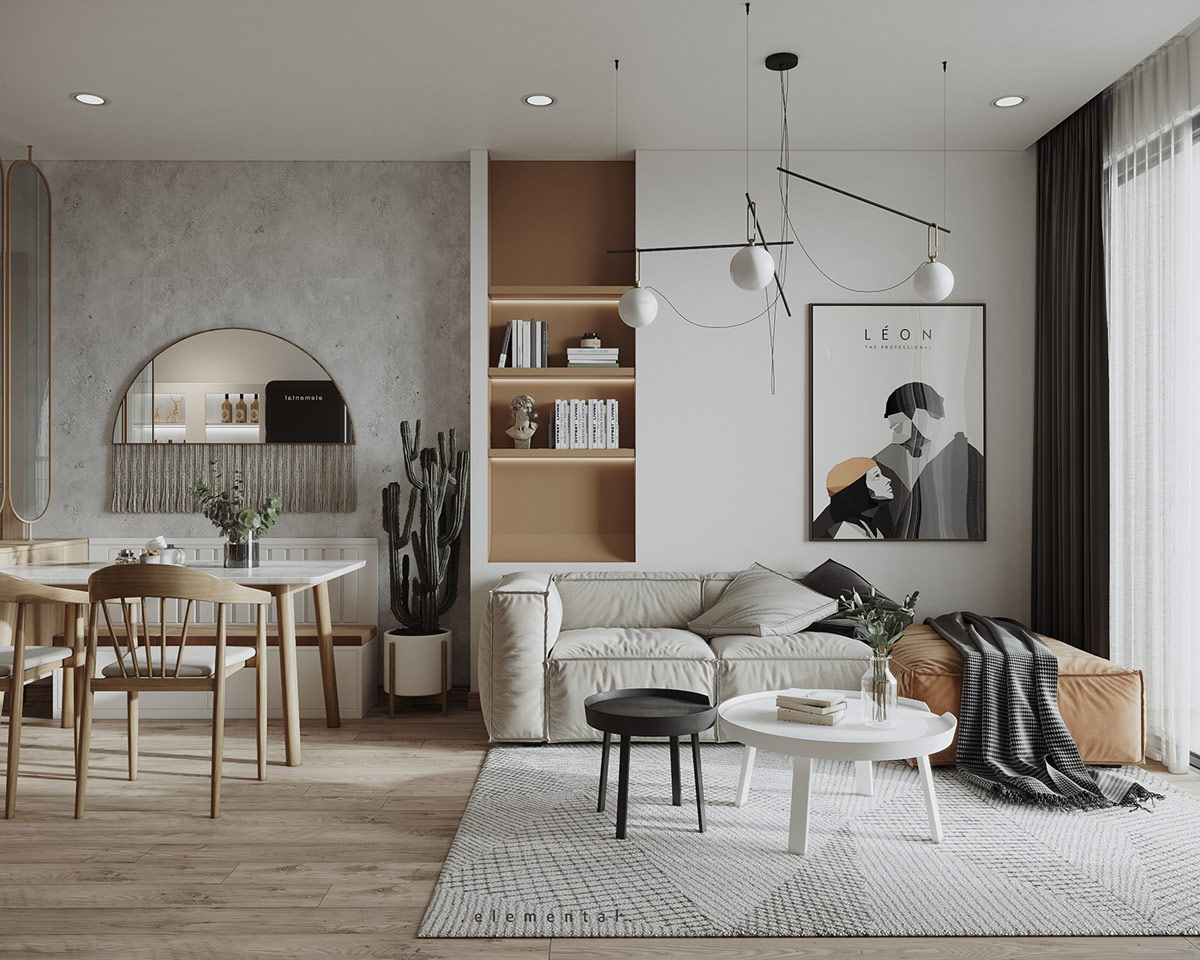
In the seating area, a white patterned Japandi rug sits with muted, minimal artwork. Tan wood elements and white decor weave through an earthy, neutral color scheme, balancing the starkness of the colors. Fresh Scandinavian living room decor combines Scandinavian simplicity with Asian influence.
Japandi Living Room
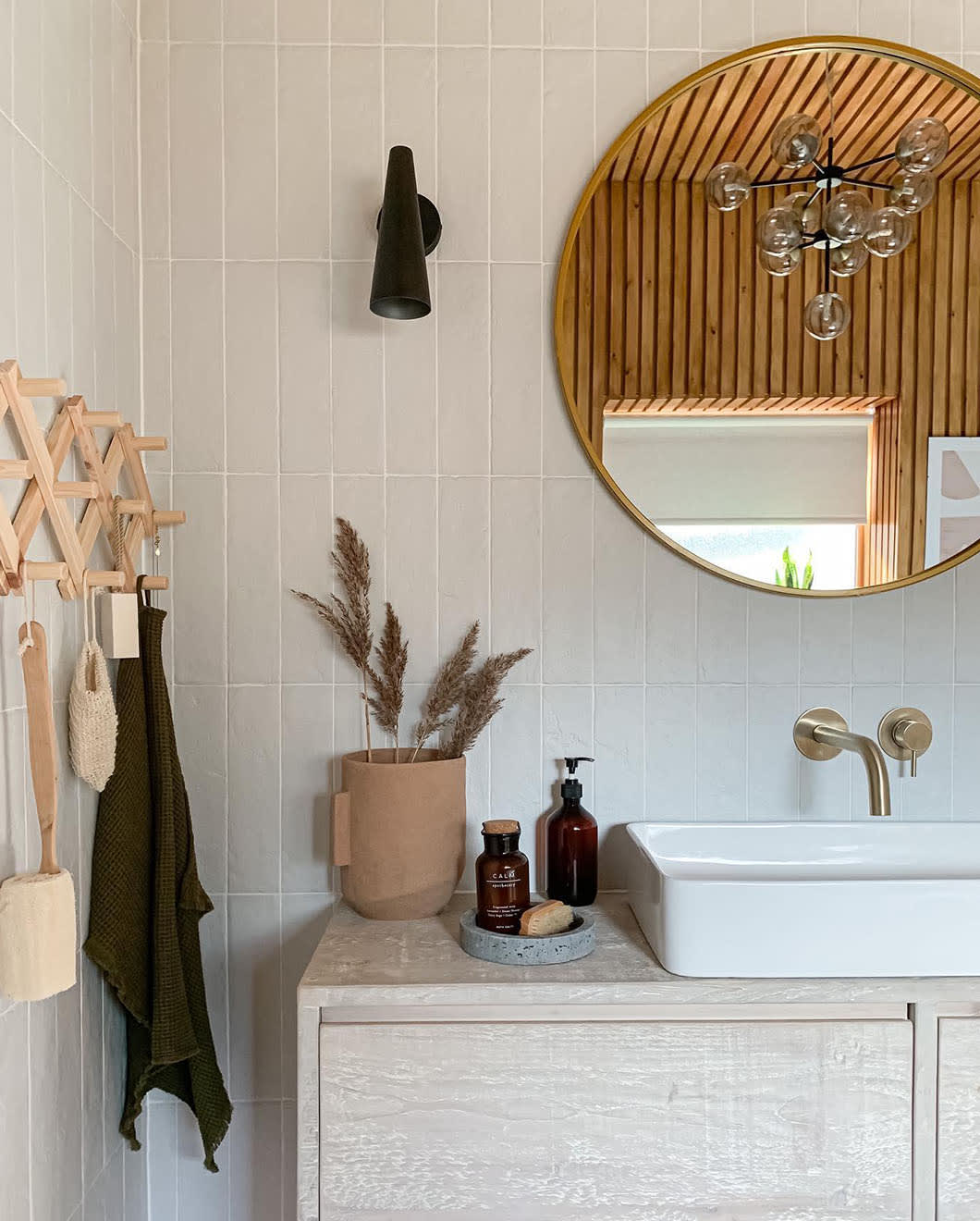
A light bathroom palette pairs with airy bathroom fabrics and other natural materials. Pale wood and cane can be used for fixtures and wall panels, while rattan belongs on accessories. Cozy bath towels, wood bath bridges, and natural-fabric bath mats complete the materials.
Darker lampshades can work in areas with bright light. Maximize daylight and prefer simple, soft lighting, since lighting affects how the space feels. Use cabinets for toiletry storage while keeping storage minimal.
Wood Furniture With Natural Accents

Japanese wood slats can form a room partition, with a vanity table placed at the partition and soft-neutral closet lighting instead of harsh fluorescent light. Wood elements are highly important to Japandi and are used in the living room and bedroom, where they center energy and break up monotony. Use living plants for a calmer atmosphere.
Wabi-Sabi Japandi Style
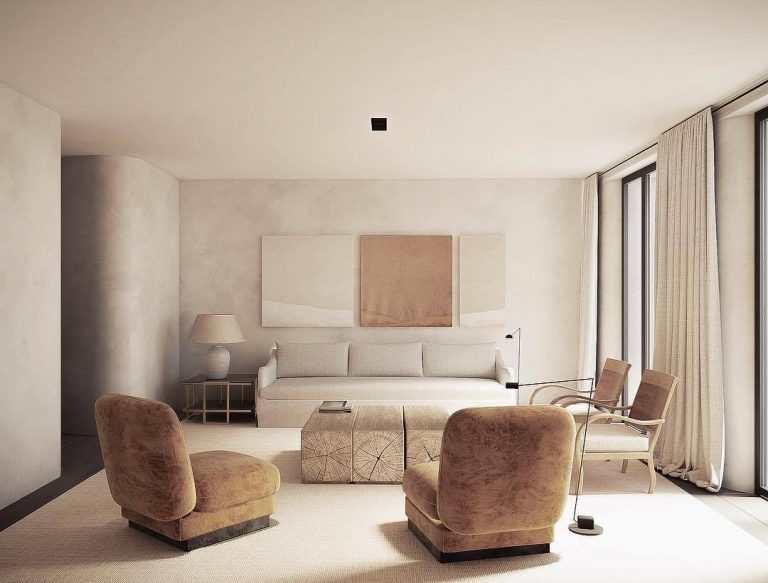
Wabi-sabi decor draws on imperfect beauty through simple, asymmetrical, and subtle elements. Japandi living rooms can accommodate coexisting elements in an unbridled way.
Natural textiles and soft shapes complete a Japandi interior, which excludes mindless pieces and harsh lines. This interior design reflects mindful living and the slow movement, while its elements tell a story and serve a purpose.
Outdoor Japandi Spaces
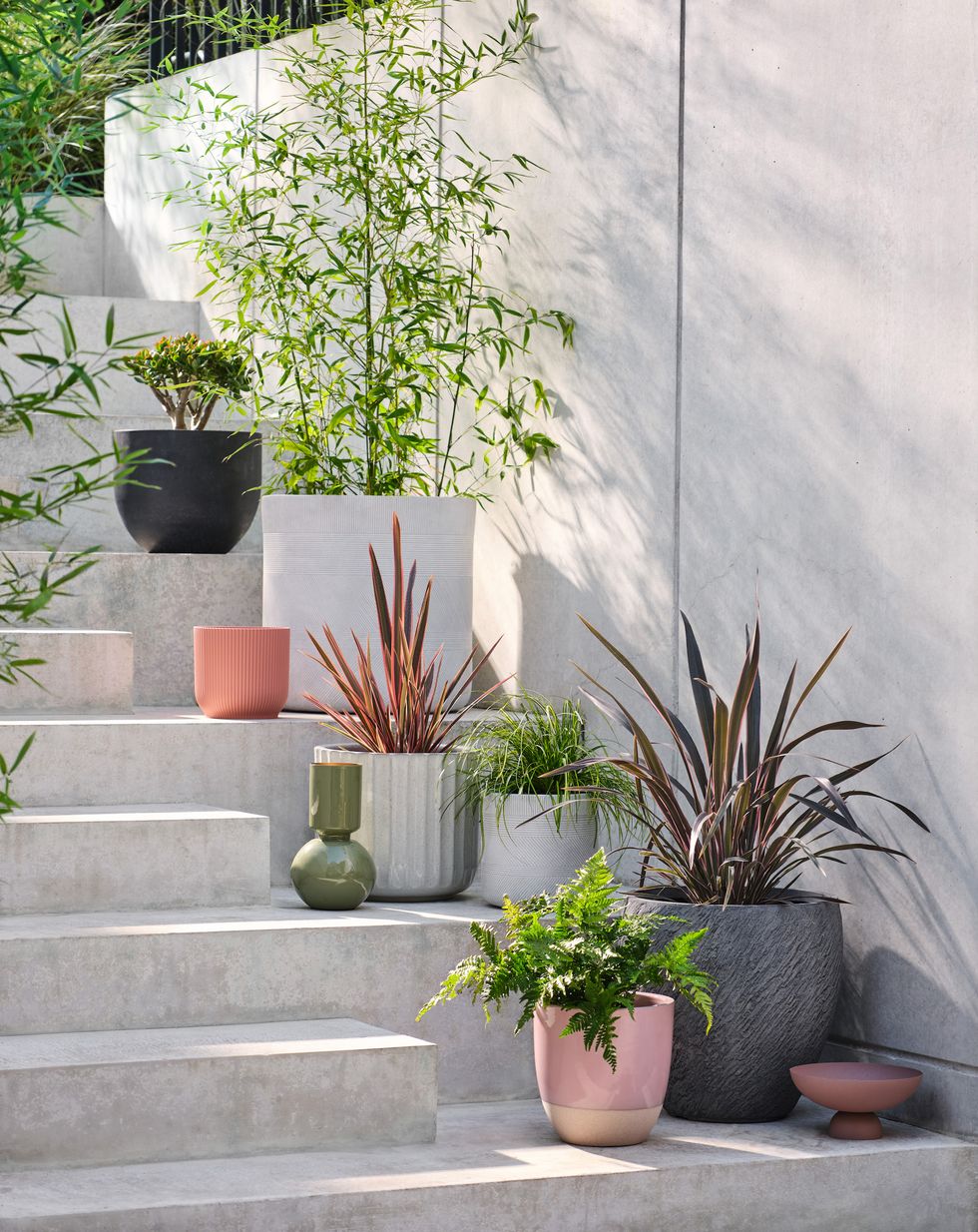
A Japandi home connects naturally with its outdoor space, creating a balance between indoors and out.
Balconies, patios, and gardens can incorporate the indoor principles of Japandi design, with clean lines, natural materials, and earthy tones carried into each outdoor space.
Japandi Bathroom with Dark Elements
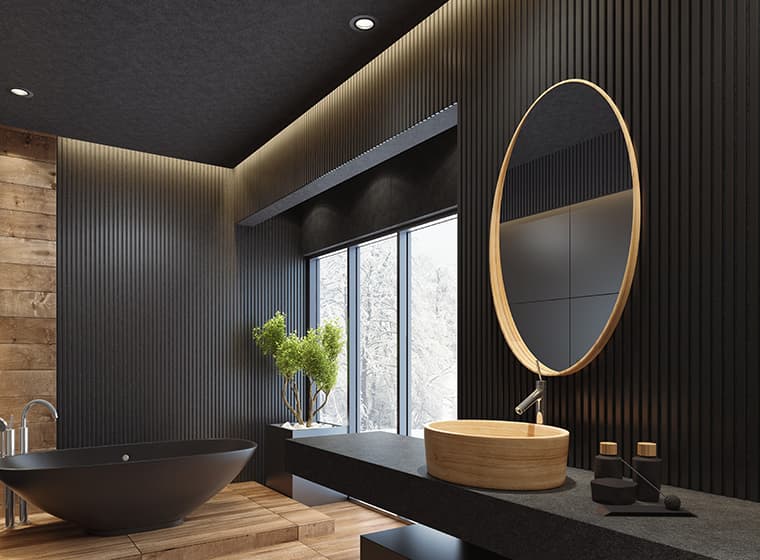
Dark elements may reveal a different kind of inspiration for bathroom design. While most bathrooms typically use white or light decor, a Japandi bathroom can experiment with darker details to create a sleek, relaxing space with a spa-like feel.
A free-form bathtub with a minimal, single-tone look sets a quiet starting point. The floor combines light stone with earth tile, giving the room a balanced, centered feeling, while the dark slatted wood design draws on Japanese decor and evokes mystery.
Warm Natural Japandi Bedroom Fabrics
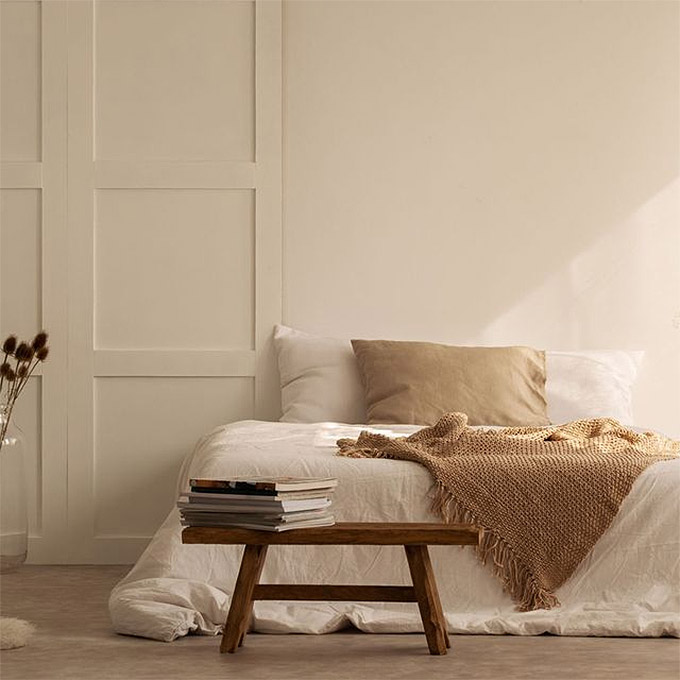
A Japandi bedroom brings together warm natural fabrics with a color scheme that combines bright, light Scandi elements and dark, rich Japanese tones, while earth tones remain present. The result is soothing but still stands out visually.
Soft pastels in blue, pink, and green can be used in the bedroom to balance natural design and earth-color warmth. A comforter and woven wool throw contribute to an atmosphere that feels comfortable and free-flowing.
Light Natural Japandi Kitchen Materials
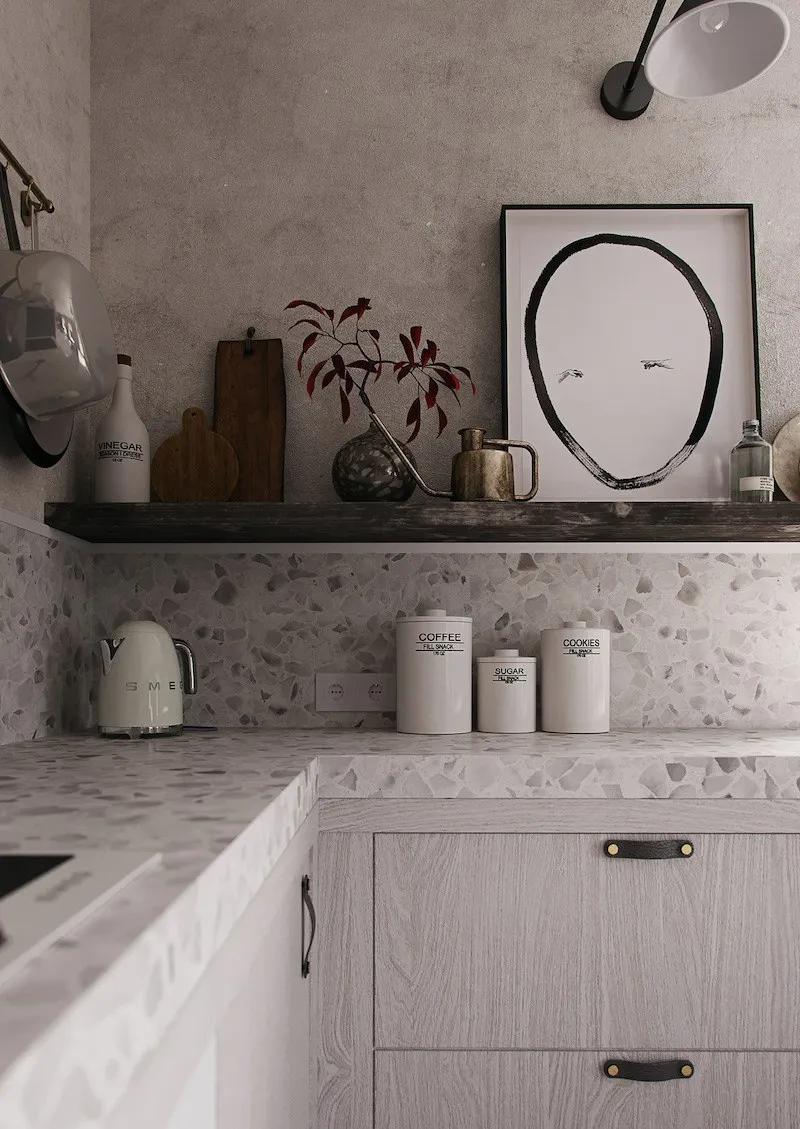
Soft kitchen colors interact with each other around the simple, clean lines of a Japandi kitchen. Light wood works with light marble that has a natural pattern, keeping the materials part of the same look.
An uncluttered display is a core Japandi principle and keeps the display from feeling excessive. Select display items for their purpose and inner qualities rather than choosing too many of them.
Traditional and Luxe Japandi Interior
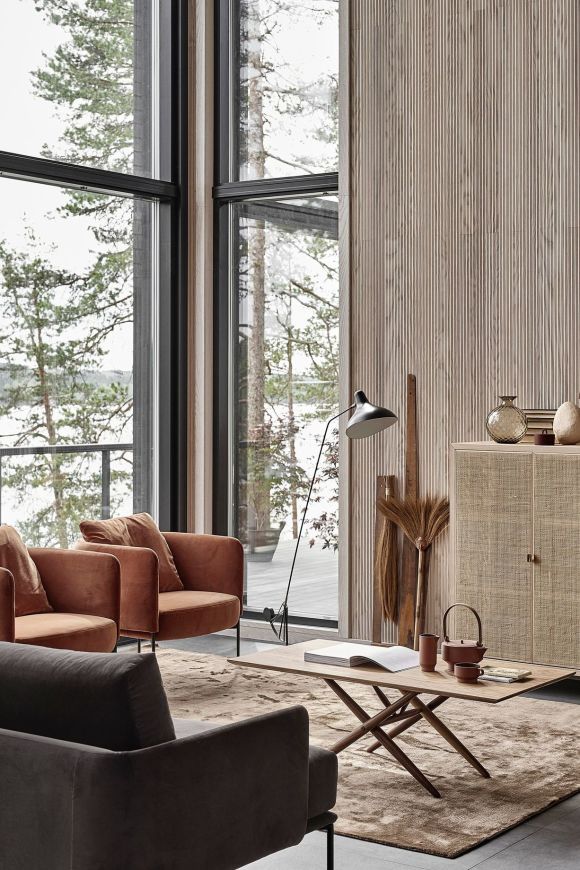
Japandi interior design blends contrasting elements without making the space feel crowded. Modern Scandi design contrasts with traditional Japanese decor, and together they can create balance, with rich earthy decor and accessories complemented by luxurious fabrics and textures. The space still has unobstructed movement.
Handpicked Japandi Interior Elements
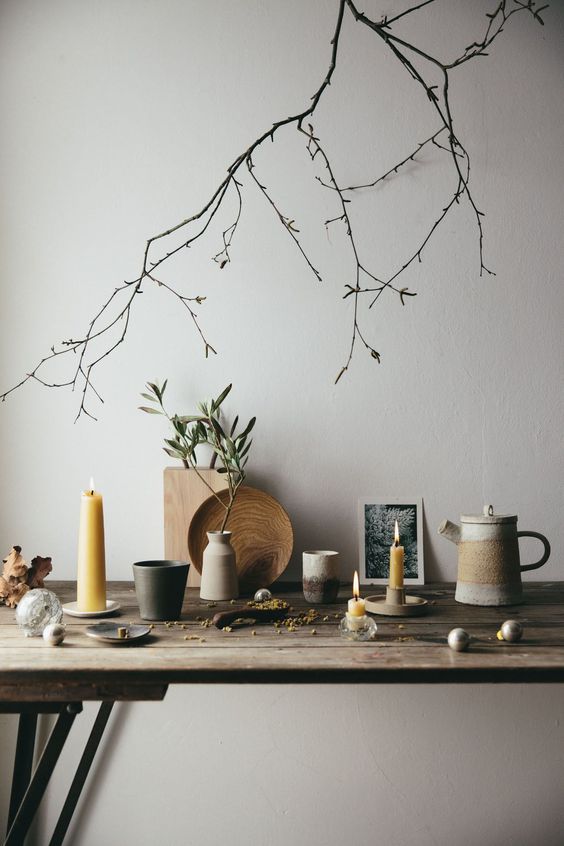
Japandi interior design values high-skill crafts and emphasizes handpicked items. Muted-tone vases, plates, clay pots, cups, and glasses suit Japandi homes, while decorative items can be chosen for earthy textures, Zen-style calm, and natural materials.
Classic Japandi Decor for a Heritage Bathroom

White walls set off the dark floor, creating a yin-yang contrast that keeps the black-and-white blend from feeling monotonous. A freestanding bath sits with a black-and-white vessel basin, while a floating timber basin adds an earthy tone to the room.
The number 31 points to a collection of dark wood floor examples. These floors can transform a home, with the article gathering the different ways they are used.
Low Profile Japandi Furniture
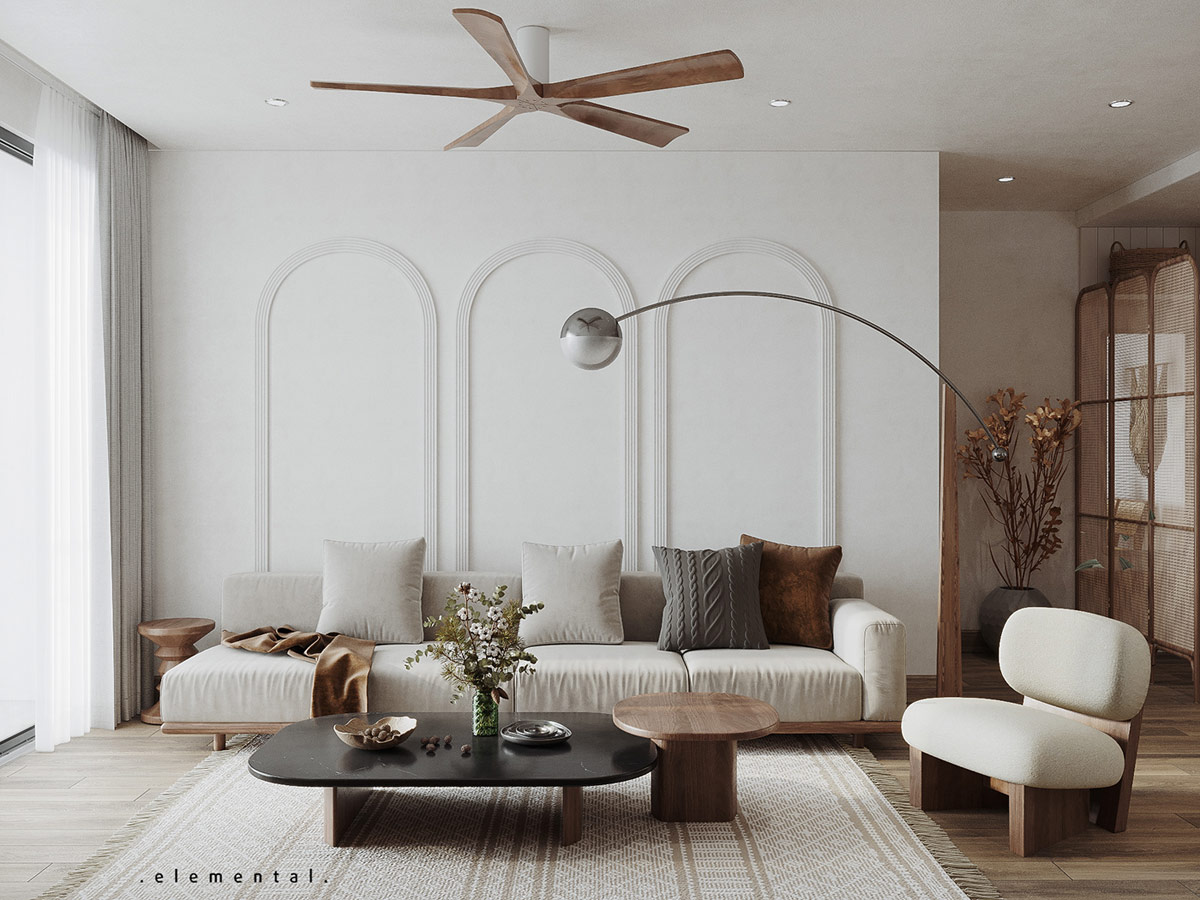
A low sofa coordinates with a low Japandi coffee table, following the low height often associated with Asian furniture. The sofa-table pairing also uses earthy colors, and its height scheme matches the room. An arching lamp echoes the arched wall molding, while the two pieces share the same color scheme.
Minimalist Japandi Kitchen Decor
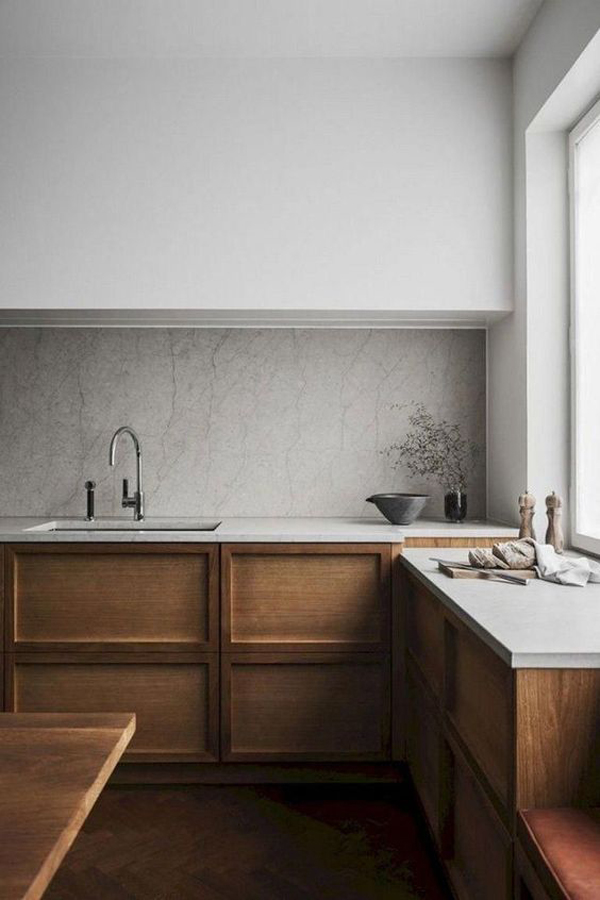
The sparse kitchen uses clean lines, elegant countertops, and earthy, space-saving cabinets. A cabinet design increases the available countertop space, making the layout appear more spacious, while light wood and smooth marble create a luxurious feel.
Low Profile Japandi Decor

Low-profile bedroom elements direct attention toward the views while creating a grounded ambience and supporting a naturally airy feel. Natural-fiber bedspreads in neutral colors help keep the room calm. When choosing Japandi wood, vary the type and style, but keep the selection natural.
Open Japandi Space
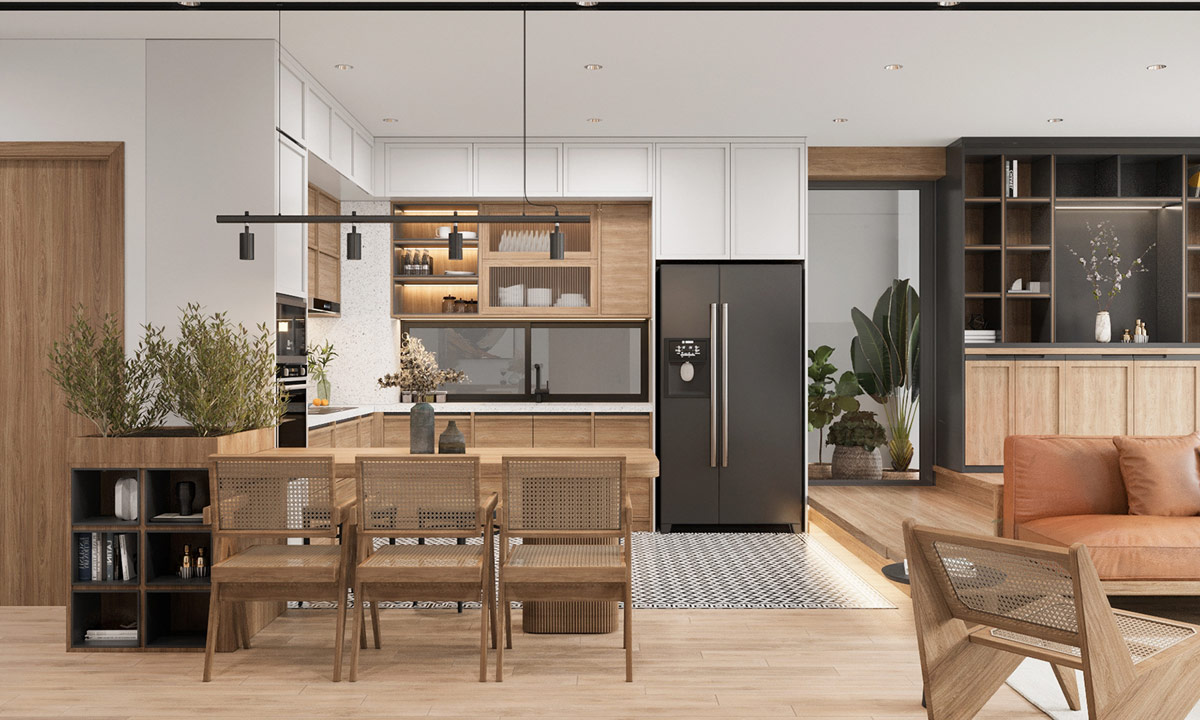
The practical, crisp kitchen flows into the dining area and then into the lounge, supporting easy movement through the home. Japandi aesthetics bring together Asian decor and Scandinavian tranquility, while indoor plants blend in outdoor elements. A two-tone kitchen can appear more airy and the two-tone design also reduces monotony.
Japandi Outdoor Indoor Integration

Japandi homes blur the boundary between indoors and outdoors through free-flowing spaces. Nature is central to both Japanese culture and Scandinavian culture, and Japanese home design places particular emphasis on it.
When possible, create an easy connection to outdoor spaces. If a direct outdoor connection is unavailable, use indoor plants as a substitute, with bonsai and bamboo creating a calming atmosphere indoors.
Two-Toned Decor
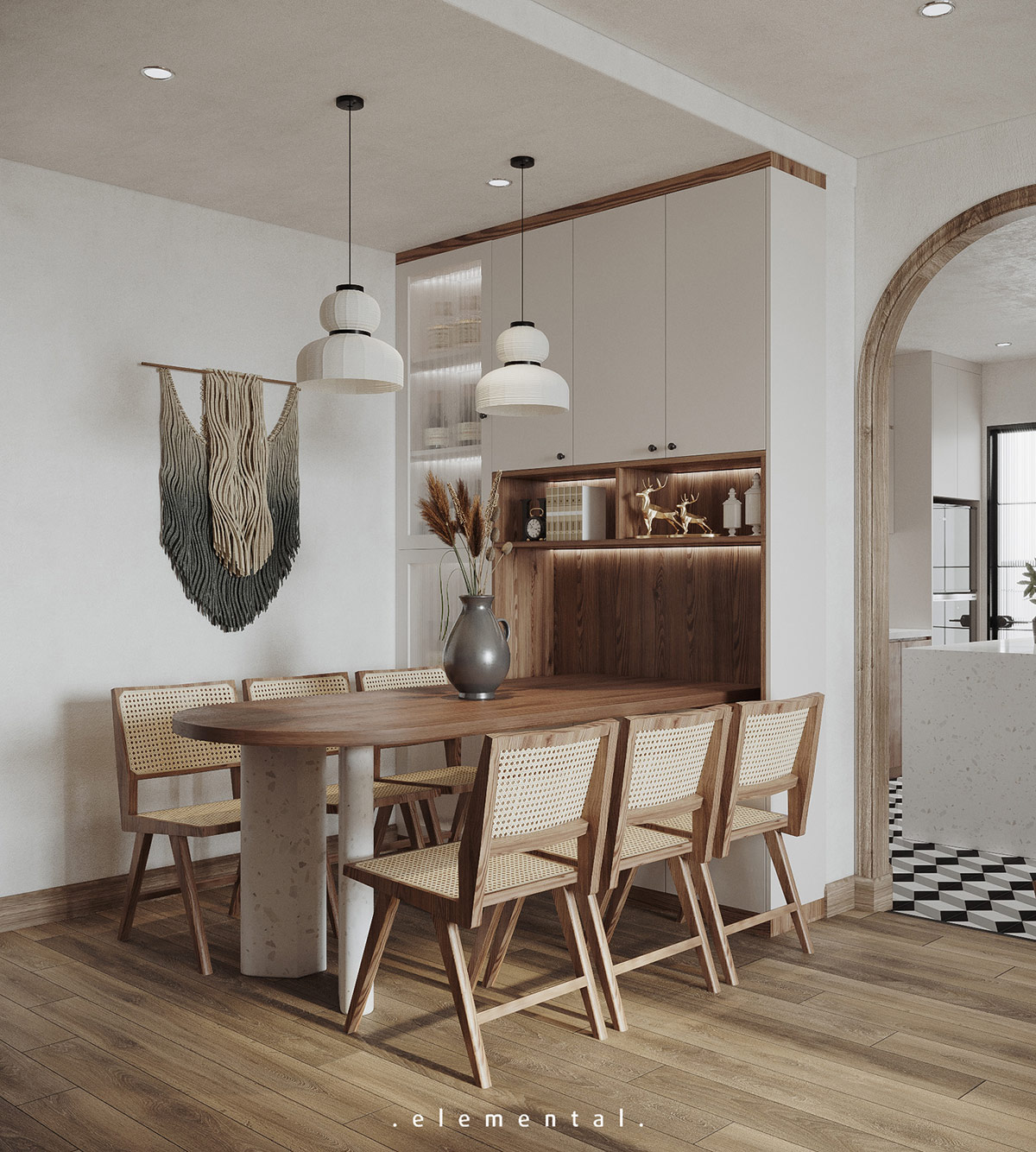
In this Japandi dining room, the storage units support a space-saving layout and fit with the affixed dining table.
Light wood and rattan dining chairs coordinate with the decor, while the natural-fiber macrame wall hanging adds texture. JH4 pendant lights give off a warm glow once they are on.
Japandi Walls
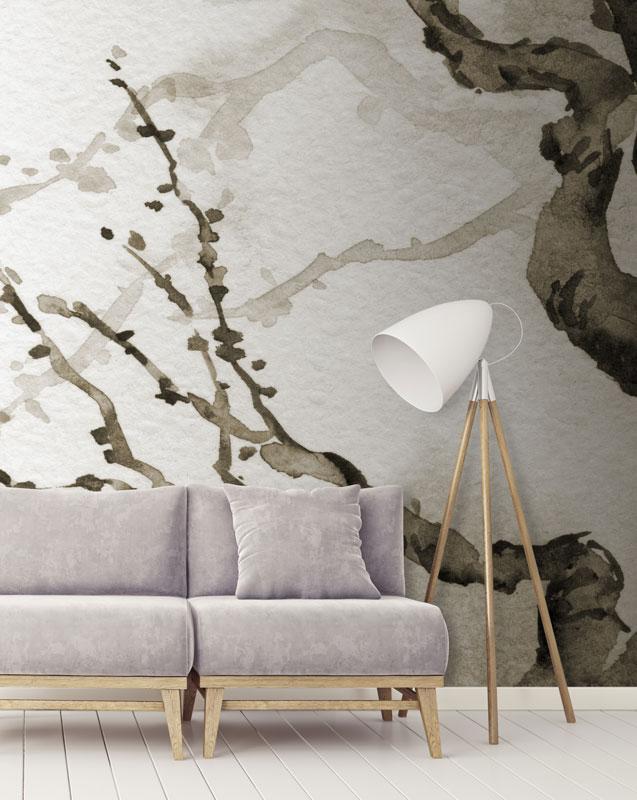
On the wall, an ink blossom mural draws on Japanese ink calligraphy. The minimalist wallpaper adds texture and supports a serene artistic style.
The plain white flooring keeps the room light, while a white bamboo wood lamp stand is paired with low classic Japanese furniture. Its airy, muted upholstery and cushion coordinate with the rest of the decor.
Japandi Furniture Craftsmanship
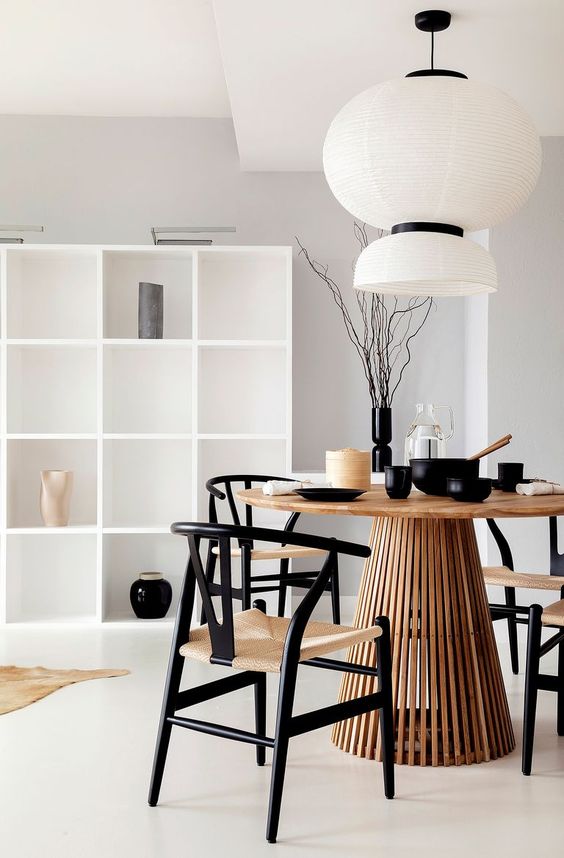
A large white storage case brings Scandinavian elements into the room. It suits Japandi furniture, a style focused on natural materials and high-quality craftsmanship.
Black and neutral chairs support yin-yang energy in the Japanese decor, contrasting with and complementing the round wood table. The decor stays organized and uncluttered, while a pendant lamp adds dimension and black tableware continues the dark accents.
Natural Light Drapes

Light window treatments may reduce treatment costs. Since natural light is associated with Japandi homes, avoid heavy drapes in a sparse room and consider Roman shades, light curtains, or neutral blinds instead. Natural-toned walls allow a more lively space.