

Companion planting is a time-honored gardening method, practiced for centuries by cultures all over the globe. This technique can bring a whole host of advantages to your tomato plants, making them healthier and more robust than ever. Plus, it builds a more resilient and diverse garden for the seasons to come.
Planting tomatoes with partners such as asparagus, basil, beans, borage, and carrots can deliver a range of services. These companion plants can attract pollinators, ward off pests, enhance fruit flavor, or even act as a natural mulch for the soil. The best part? Many of these helpful plants are common garden vegetables and herbs. All it takes is a little strategic placement near your tomatoes.
While many popular garden plants are great neighbors for tomatoes, some should be avoided. Certain plants can compete for essential resources like space, light, water, and soil nutrients, or they might attract harmful insects. In this guide, we’ll explore the incredible benefits of companion planting with tomatoes, highlight the best plant partners, and identify which ones to keep at a distance.
Companion Planting in a Nutshell
If you’re new to the idea, companion planting is simply the practice of growing different plants together to benefit one another. Gardens that embrace this method become vibrant, intercropped polycultures, a stark contrast to single-crop monocultures. This approach fosters a rich biodiversity, creating a complete garden ecosystem.
Companion planting isn’t just for vegetables. It applies to trees, flowers, and herbs, all of which can offer unique advantages to specific plant partners. Because tomatoes have their own particular requirements, there’s a specific group of companion plants perfectly suited to grow alongside them. It’s also important to know which plants are antagonistic and can hinder growth, so keep reading to learn what to avoid planting near your tomatoes.
The Benefits Companion Planting for Tomatoes

Before you start redesigning your garden layout around companion planting, it helps to understand the specific benefits it offers. While some companion plants might excel in one particular area, many provide multiple advantages, creating the ideal environment for your tomatoes to flourish. Here are the main reasons to give your tomato plants some friends.
Attracts pollinators and other beneficial insects
Your tomato flowers must be pollinated to develop fruit. Pollinators like bees and butterflies can be lured to your tomato plants by strategically placing something like bee balm nearby. This simple trick can dramatically increase pollination rates, which in turn boosts your fruit production. Certain plants also attract other helpful creatures, such as predatory insects that prey on common tomato pests.
Deters pests and disease pathogens
Beyond attracting helpful insects, companion plants can actively repel pests with their strong scents. Garlic is a fantastic example; it keeps the dreaded tomato hornworm at bay and releases a sulfur compound into the soil that deters fungal diseases. Many pests create wounds on tomato stems, leaves, or fruit, which then become entry points for diseases. Companion planting offers a two-for-one solution by addressing both problems simultaneously.
Replenish Nutrients In The Soil
Tomatoes are heavy feeders, requiring plenty of nitrogen, phosphorus, and potassium to grow strong. This can leave little for neighboring plants. The best tomato companions often have different nutritional needs, allowing them to coexist happily without competition. Some plants even actively replenish soil nutrients to maintain a healthy balance. Beans, for example, are a popular choice because they are nitrogen-fixing, increasing the availability of this crucial nutrient in the soil.
Provides a living mulch and shades the soil
Low-growing plants with shallow roots and different nutrient requirements can be planted at the base of tomatoes to act as a living mulch. This helps control weed growth and shades the soil, which is highly beneficial. Leaving soil exposed can lead to wind erosion and cause it to dry out quickly in the summer heat. These groundcover crops retain moisture, making your irrigation more efficient and protecting your tomato’s roots. Certain clover varieties are perfect for this and also add nitrogen to the soil.
Increases the productivity of a space
Companion planting takes advantage of the physical shape and size of tomatoes, allowing you to grow more crops in the same area. As mentioned, you can stagger low-growing and mid-sized plants with your tomatoes to create a tiered system that maximizes your garden space. The key is to pair the right plants together, like annuals and perennials, ensuring they offer mutual benefits and successive harvests instead of competing. This technique is also known as interplanting. Alternatively, planting tomatoes with crops that have the same growing season can be useful for clearing the bed all at once for fall planting.
24 Companion Plants to Grow with Tomatoes

Now that you’re sold on the amazing benefits of companion planting, you’re probably eager to know what to plant. Here are the 24 best companion plants to grow with your tomatoes and how they can help your garden thrive.
1: Asparagus

Asparagus is a perennial vegetable that will establish itself wherever you plant it. Intercropping it with tomatoes is an efficient use of garden space since the two are harvested at different times of the year, with asparagus in the spring and tomatoes in the summer. Tomatoes help asparagus by warding off the asparagus beetle with a chemical they produce called solanine. In return, asparagus repels the parasitic nematodes that can attack tomato roots.
How and when to plant with tomatoes: After harvesting the asparagus stalks in the spring, plant your tomatoes at either end of the bed. Asparagus has a delicate root system, so avoid planting directly where you just harvested.
2: Basil

Basil is one of the most well-known companions for tomatoes, and planting them together creates a convenient one-stop-shop for Italian cooking. The strong aroma of basil repels flies and the notorious tomato hornworm. It’s also said to improve the flavor and richness of the tomatoes themselves. Basil plants are much shorter than mature tomato plants, making for an efficient use of space.
How and when to plant with tomatoes: Plant basil starts at the same time you plant your tomato seedlings in late spring or early summer. Basil loves heat, so it needs the same outdoor conditions as tomatoes for transplanting. Place it near the base of indeterminate tomatoes that you’ll be pruning, so it won’t get shaded out. For bushy determinate tomatoes, plant basil at the ends of the rows.
3: Beans

Beans are a fantastic companion for many plants, tomatoes included, because they fix nitrogen in the soil. Since tomatoes are heavy nitrogen feeders, growing them with beans helps replenish the soil throughout the season, preventing depletion. Both are annuals that grow and produce over a similar summer timeframe, and at the end of the season, you can clear the bed at once for a fall crop.
How and when to plant with tomatoes: Both pole and bush beans work well. Sow the seeds when you transplant your tomato seedlings to stagger their initial growth. Plant climbing pole beans on the north side of tomatoes and bush beans on the south side to avoid shading. Ensure you space pole beans far enough away from tomatoes to prevent them from getting tangled up.
4: Borage
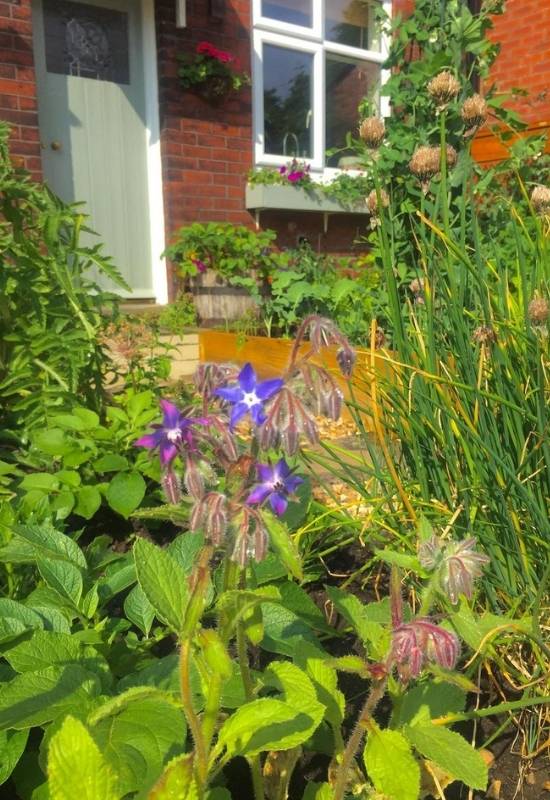
Borage is another popular companion herb beloved by bees and other pollinators. Its purple flowers bloom all season long, which is great for indeterminate tomatoes that require continuous pollination for their ongoing fruit production. The aroma of borage also deters the tomato hornworm.
How and when to plant with tomatoes: Borage is a self-seeding annual that will likely reappear in the same spot for years. Plant borage seeds in the spring before transplanting your tomatoes to give them some time to establish. It’s best to plant borage at the end of tomato beds where its bushy growth can expand without getting in the way.
5: Carrots

Carrots and tomatoes offer mutual benefits for several reasons. As a root vegetable, carrots aerate and loosen the soil around tomato roots, allowing them to get more oxygen and moisture. While carrots are typically cool-season crops, their season can be extended when grown with tomatoes, which provide them with shade. The solanine produced by tomatoes also deters common carrot pests.
How and when to plant with tomatoes: Direct seed carrots around the base of newly transplanted tomatoes to ensure there’s enough shade once they sprout. Be careful not to plant them too densely or too close to the base, as this can affect the size of the carrots.
6: Celery

Celery is a hardy biennial that thrives in the shade provided by tomatoes, as it prefers cooler temperatures and protection from intense heat. Growing celery with your tomatoes is an efficient use of space and allows you to extend the celery season through succession planting.
How and when to plant with tomatoes: Start celery indoors with your tomatoes in early spring and transplant them outside when soil temperatures reach at least 50℉. Opt for self-branching varieties rather than trenching celery.
7: Chives

Chives are a common perennial herb that are hardy and don’t require many nutrients, making them a great companion for heavy-feeding tomatoes. They produce early blooms of spiky purple flowers that attract bees in the spring to pollinate the first tomato blossoms. Better yet, the strong scent of chives, like other alliums, wards off common tomato pests like aphids.
How and when to plant with tomatoes:
Sow chive seeds in early spring as a border around the bed where you plan to plant tomatoes. You can also intersperse them throughout the bed, but be sure to mark where you’ll plant the tomatoes so you don’t have to dig up your chives later.
8: Cilantro

Cilantro is an annual herb that serves as a good companion for tomatoes by attracting beneficial insects that help keep them pest-free. Beneficial insects like hoverflies control harmful insect populations, such as aphids, because their hungry larvae feed on them. Short-lived cilantro plants also share space well with tomatoes, which take a full season to mature. You can plant them successively throughout the year to utilize the space between your tomato plants.
How and when to plant with tomatoes: Sow cilantro seeds between transplanted tomatoes in the spring, and then every three weeks as long as the weather allows. In high heat, cilantro will bolt quickly, but if you let it, it will self-seed in the same area, saving you from replanting.
9: Clover

Clover is an excellent companion for tomatoes. It outcompetes weeds and its low growth creates a living mulch that improves moisture retention and shades the soil. As a legume, clover fixes nitrogen, constantly replenishing soil nutrients for the heavy-feeding tomato plants.
How and when to plant with tomatoes: Sow clover seeds in the spring or fall, marking out where you plan to transplant your tomatoes. Clover can grow close to the base of the tomato plants; just be sure to cut it back continuously to return nutrients to the soil and prevent it from blooming.
10: Cucumber

Cucumbers grow well when alternated with tomato plants, as they can share the same trellising structure. They are also often left to sprawl on the ground around trellised tomatoes to act as a living mulch. Even just growing them side by side is highly beneficial. Cucumbers and tomatoes have similar needs for soil moisture and temperature, making them well-suited to grow together.
How and when to plant with tomatoes: Plant cucumber transplants at the same time as your tomatoes in the spring, after all risk of frost has passed. Alternate the seedlings and plant them at least 18 inches apart to ensure they don’t compete for nutrients.
11: Dill

Dill is a perennial herb that protects tomato plants from pests with its strong scent. It also attracts beneficial, predatory insects that keep caterpillar and hornworm populations in check. However, once dill reaches full maturity, it should be moved away from tomatoes, as it can start to hinder their growth.
How and when to plant with tomatoes: Since mature dill can inhibit tomato growth, it’s a good idea to keep one of them potted. Place pots of dill at the end of tomato rows in the spring and early summer, or place your potted tomatoes near in-ground dill.
12: Garlic

Garlic is perhaps the most famous companion plant on this list, used as a pest and fungal deterrent for a wide variety of crops. For tomatoes, planting garlic nearby will ward off spider mites with its potent scent, much like a homemade garlic spray. Garlic also releases a sulfur compound into the soil that acts as a natural anti-fungal, keeping disease pathogens at bay.
How and when to plant with tomatoes: Plant garlic cloves in the fall or spring at the end of tomato beds or alternated between plants. Garlic benefits from mulching just like tomatoes, so you can grow both with a low-growing crop like lettuce.
13: Gooseberry

Gooseberry bushes and tomatoes are thought to repel each other’s insect pests. By planting these perennial bushes with annuals, you can create a mini agroforestry system. The flowering gooseberry will attract pollinators, and having it established at the end of tomato beds helps maintain soil structure from season to season.
How and when to plant with tomatoes: Plant tomato seedlings near gooseberry bushes in the spring, but not so close that you risk damaging the gooseberry roots. You can use the perennial berry bush to mark the edges of the bed and even use pruned foliage as mulch for the tomatoes.
14: Lettuce

Lettuce can be interplanted between tomato plants to make efficient use of your space and act as a living mulch. As a cool-season crop, lettuce will benefit from the shade provided by the taller tomato plants while helping to cool the soil and retain moisture.
How and when to plant with tomatoes: Depending on the variety, you can either sow lettuce seeds or transplant seedlings in the spring. Either way, plant them at the same time as your tomatoes once the soil has thawed. You can sow seeds fairly densely around the base of tomato plants and then thin as needed.
15: Marjoram

Marjoram, a close relative of oregano, is a heat-loving perennial herb that pairs well with tomatoes both in the garden and the kitchen. Its flowers attract pollinators while its scent deters flying pests, and both plants appreciate similar soil conditions.
How and when to plant with tomatoes: As a perennial, marjoram can be planted at the edge of tomato beds where it can establish itself for future crop rotations. Be sure to leave at least a few feet of space between the two plants so they each have room to grow.
16: Mint

Mint repels aphids that might be drawn to your tomatoes and attracts bees with its blooms. When kept pruned, it provides a lush mulch for the soil surface. It also helps retain moisture in the soil, supplying your tomato plant’s roots with a consistent amount of water throughout the season.
How and when to plant with tomatoes: Sow mint seeds around tomato plants after transplanting. Mint is a vigorous self-seeder that can easily take over a bed, so keep it well-managed for it to remain a beneficial companion.
17: Nasturtiums

Nasturtiums produce colorful flowers that are incredibly productive. They attract pollinators, act as a trap for aphids, and draw in aphid predators to feast on them. As a bonus, the flowers themselves are edible and delicious, providing you with an extra harvest.
How and when to plant with tomatoes: Plant nasturtiums everywhere. Whether at the ends of your beds, interspersed among your tomatoes, or in hanging baskets near potted tomato plants, they will provide numerous benefits. Pluck the flowers to encourage fresh blooms.
18: Onions

Onions are great companions for your tomatoes for the same reasons as other alliums like chives and garlic. They deter pests with their characteristic scent and have a similar growing season, allowing you to clear their shared bed all at once for fall planting.
How and when to plant with tomatoes: Onions can be sown in the fall or spring. When planting with tomatoes, it’s best to sow them in the spring to avoid damaging bulbs during the tomato transplant. Avoid planting onions with tomatoes if you are also companion planting with beans, as beans and onions are garden foes.
19: Parsley

Parsley can be intercropped with tomato plants and will appreciate the shade the taller plants provide. In return, parsley helps tomatoes by acting as a living mulch, which controls weeds and retains moisture in the topsoil.
How and when to plant with tomatoes: Plant parsley seeds or transplants in the spring, either at the same time or just before you plant your tomato seedlings. Parsley is a cool-season crop that can be sown again in the fall around any remaining tomatoes.
20: Parsnip

Parsnip is a member of the carrot family and grows well with tomatoes for many of the same reasons. Its long, edible root loosens the soil, bringing more oxygen and moisture to the tomato plant’s roots. It’s also a cool-season crop that thrives under the shade of bushy tomato foliage.
How and when to plant with tomatoes: Sow parsnip seeds along the edge of beds or interspersed among tomato starts in the spring, once the ground is workable. Choose between either carrots or parsnips for companion planting, as growing both can attract mutual pests.
21: Peppers

Peppers are also in the Nightshade family and share the same sunlight and soil requirements as tomatoes, along with a similar growing season. This makes them well-suited to share a bed that can be cleared all at once for fall planting. Although they can be grown together, they should not be planted one after another in the same bed, as this can lead to the spread of soil-borne diseases.
How and when to plant with tomatoes: Transplant pepper and tomato seedlings into the garden at the same time in the spring. Be sure to space them at least 18-24 inches apart to avoid competition.
22: Sage

Sage is a woody perennial that keeps away many common pests like the tomato hornworm, flea beetle, and spider mites. It makes an excellent border for tomato beds and its flowers will also attract pollinators.
How and when to plant with tomatoes: Since sage is a perennial, it will become established where it is planted for several years. Because tomatoes should be rotated, you can either plant sage throughout your garden or keep it in pots that can be moved to wherever you plant your tomatoes each season.
23: Squash

Squash leaves are broad and flat. If the vines are left untrellised, they provide excellent ground cover that shades the soil and controls weeds around tomato plants. They also appreciate similar growing conditions and can be planted with a third companion like beans or borage for optimal growth.
How and when to plant with tomatoes: Squash seeds can be directly sown into the soil around tomato transplants or started indoors and planted out at the same time. Ensure there is plenty of space between plants, as squash is a notoriously ambitious spreader that can quickly take over a space.
24: Thyme

Thyme is a fragrant perennial herb that wards off whiteflies and tomato hornworms with its powerful aroma. It is low-growing and creates good ground cover but should not be used as a living mulch as it doesn’t like excessive moisture. It is also believed that thyme improves the flavor of tomato fruits when planted together.
How and when to plant with tomatoes: Thyme is a good choice for planting at the end of tomato beds, where it will establish itself and pair well with a number of future crop rotations.
5 Antagonistic Plants to Keep Away from Tomatoes
In the garden, tomatoes have foes as well as friends, though thankfully there are fewer of them. Certain plants can negatively affect the growth of your tomato crop due to chemical secretions, competition for nutrients, or shared vulnerability to the same pests and diseases. Avoid planting your tomatoes with these 5 plants:
1: Brassicas (cabbage, broccoli, cauliflower, kale etc.)
Brassicas are notoriously bad growing companions for tomatoes. They will stunt the growth of your plants by competing for nutrients. Since both brassicas and tomatoes are heavy feeders, planting them in the same bed leads to constant stress and a fight for resources. Additionally, brassicas are susceptible to some of the same fungal diseases and can create an infection hotspot when planted together.
2: Walnut trees
Tomatoes will not thrive when planted under the shade of trees with dense foliage. Walnut trees, in particular, produce an organic compound called juglone that will stunt the growth of tomatoes.
3: Fennel
Although other members of the carrot family make good companions for tomatoes, fennel does not. Certain biochemical secretions from the root system of fennel will actively stunt the growth of nearby plants like tomatoes.
4: Corn
The corn earworm is the same pest as the tomato fruitworm. Growing these two crops next to each other will create a feast for this pest. Keep them on opposite ends of the garden and use companion plants to keep this particular pest at bay.
5: Potatoes
Growing potatoes and tomatoes together can increase the risk of blight infections in both plants. If you have ever dealt with blight, you know how devastating it can be, so keep them on opposite ends of the garden.
Diversity Creates Resilience!
An intercropped, companion-planted garden will be teeming with diversity, beneficial insects, pollinators, and life. Once you start planting crops together based on the benefits they provide each other, you will see how much healthier your garden becomes by default. Pest and disease issues can still arise, but they will be much less likely to cause destructive damage in a companion-planted garden. Just like in natural ecosystems, diversity fosters resilience and will create a healthy garden that can bounce back when faced with threats.


