Indoor swings can reshape home spaces while adapting to the room and adding comfort. An airy hammock can fill a sunlit corner, while a cozy macramé reading nook or a sleek metal cocoon swing creates a different kind of spot.
Indoor swings have a place in home improvement, but the right swing depends on both your aesthetic preference and your lifestyle.
Minimalist Compact Swings
For small spaces, a compact indoor swing with sleek lines and wood and leather materials keeps the look minimalist. These wood and leather swings can provide a modern feel along with a cozy feel, according to interior designer Matthew Uebergang of Cushee.
A swing placed near a window and in a corner can create a relaxation nook, letting in natural light while making the most of limited space. Interior designer Matthew Uebergang of Cushee recommends positioning the swing near a window or in a corner.
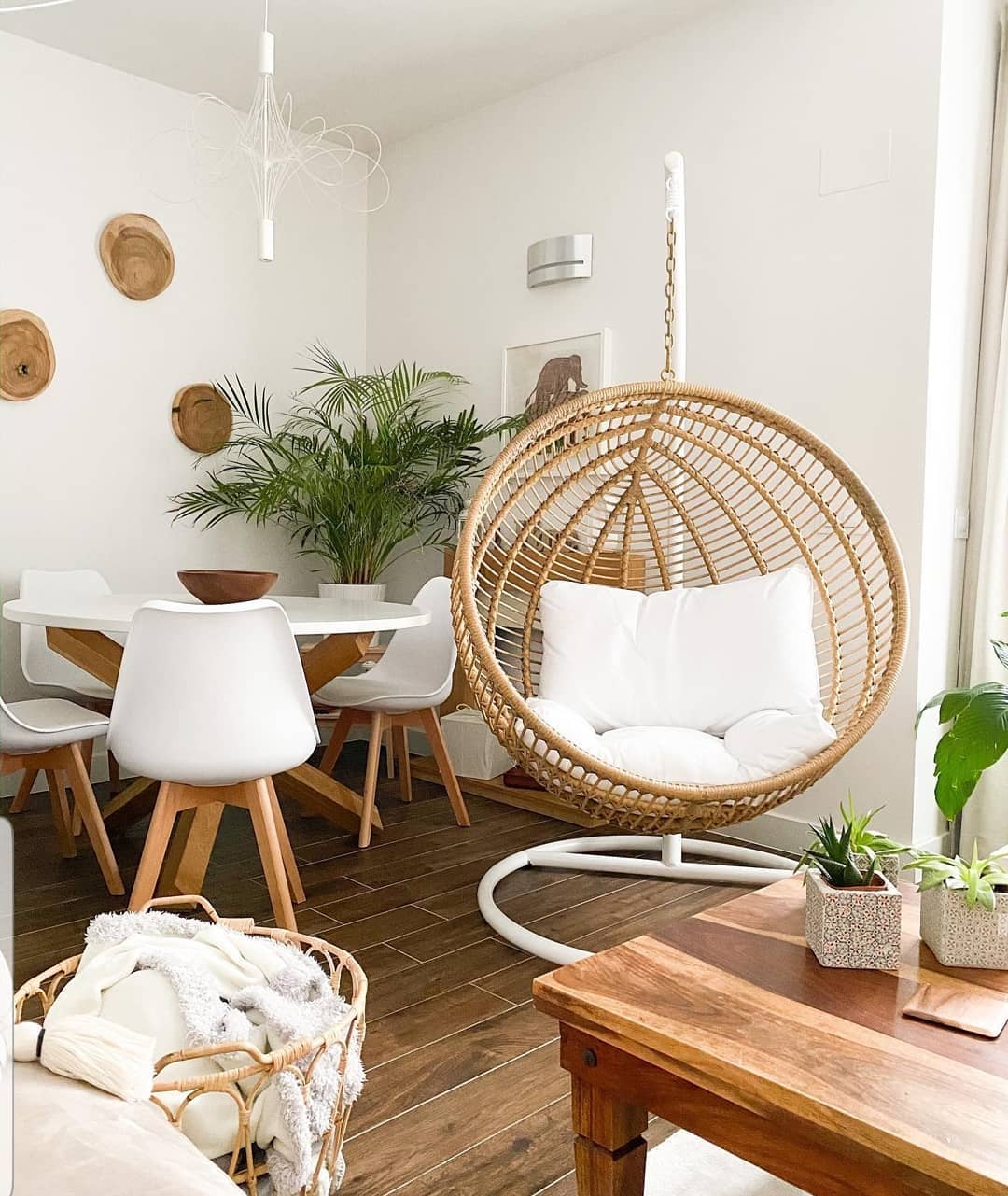
Low ceilings can make swing installation difficult, so ceiling brackets provide secure anchoring. Height-adjustable brackets mounted to the ceiling can support comfort and safety while also creating a focal point, according to interior designer Matthew Uebergang of Cushee.
Multifunctional Indoor Swing Seating
An indoor swing can provide seating while taking up little space, especially when it hangs in a corner from a ceiling beam. Lightweight swing materials make installation and carrying easier, and the swing can be moved when the position needs to change. A swing seat can also work as a chair, while a hanging cradle creates a place to read and adds an accent to the room.
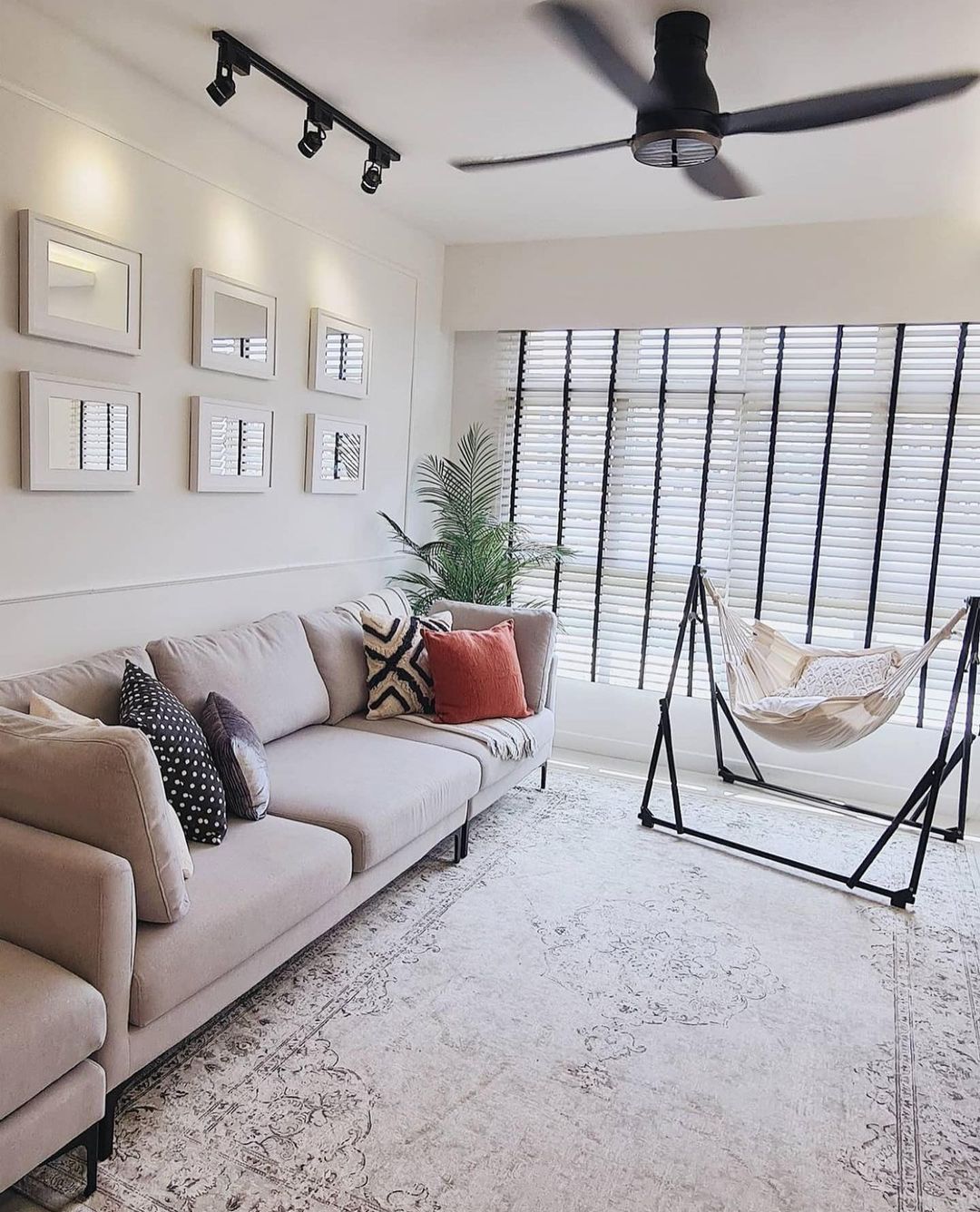
The building design affects which suspending mechanisms are suitable, so sometimes you may need to consult structural engineers, strengthen the ceiling joists, and choose the suspension hardware accordingly. A swing system must provide control, containment, safety, and stability. Small structures may limit the system and could require reinforcement.
Room-matched cushions or blankets can improve comfort while keeping the swing connected to the room. The swing can also function as a play area and support a minimalist feel. Interior Designer Nitya Seth of NITYANAMYA is credited with this approach.
Swiveling Indoor Porch Swings
Wood gives this compact corner swing a warm, simple base, while its 360-degree swivel lets it turn in every direction. A porch swing like this can support reading, relaxation, or napping, and it can serve as a reading nook in a 250-square-foot studio, according to Aaron Alway, president of Black Label Design Group.
A swing should be attached to the structural ceiling joists so they can support its weight, with enough open space around it for movement in every direction. Aaron Alway, president of Black Label Design Group, claims that the swivel feature enables movement in multiple directions.
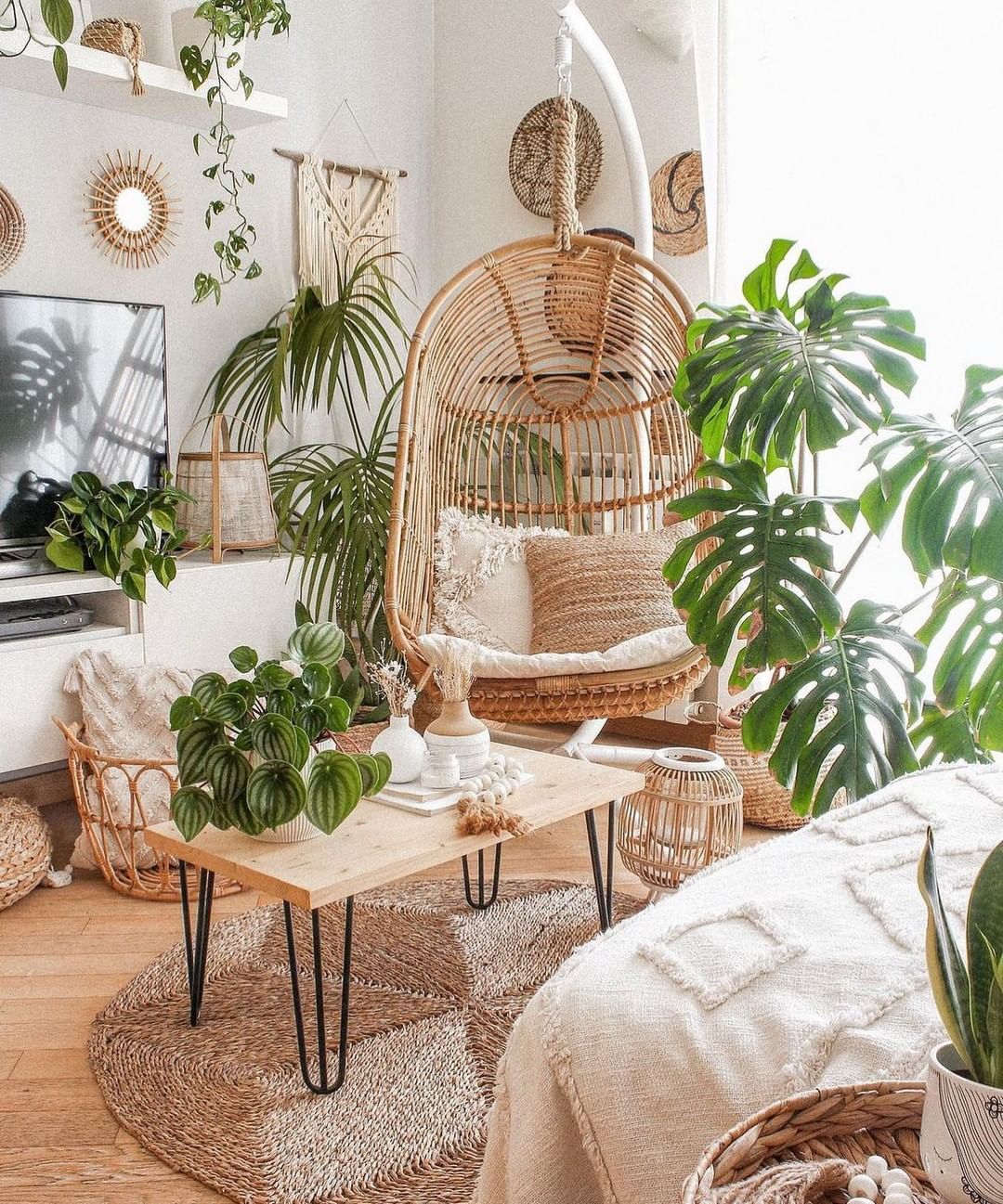
In a small attic, a woven egg-shaped swing can turn part of the room into a hangout area for a teenage daughter. The bohemian swing seats two people, maintains an open room feel, and complements a casual eclectic attic, according to Aaron Alway, president of Black Label Design Group.
Swing selection and proper installation both matter in a small-space swing design. Swings can improve small areas, while proper installation supports style and comfort, according to Aaron Alway, president of Black Label Design Group.
Vertical Space Use
In small spaces, indoor swings require creative planning because they can otherwise overload the room. Careful placement helps use the available area without making the space feel crowded.
Placing the swing near a large window can give it a clear spot without taking over the room. A corner or position near the wall preserves an open central living area, while using vertical space helps when floor space is limited. This arrangement can create a reading nook away from the middle of the room.
Compact swings suit small rooms and work well in modern, Scandinavian, and industrial spaces. Designs with clean minimalist lines, a slim frame, or a rattan style add texture and interest while reducing a cluttered feel.
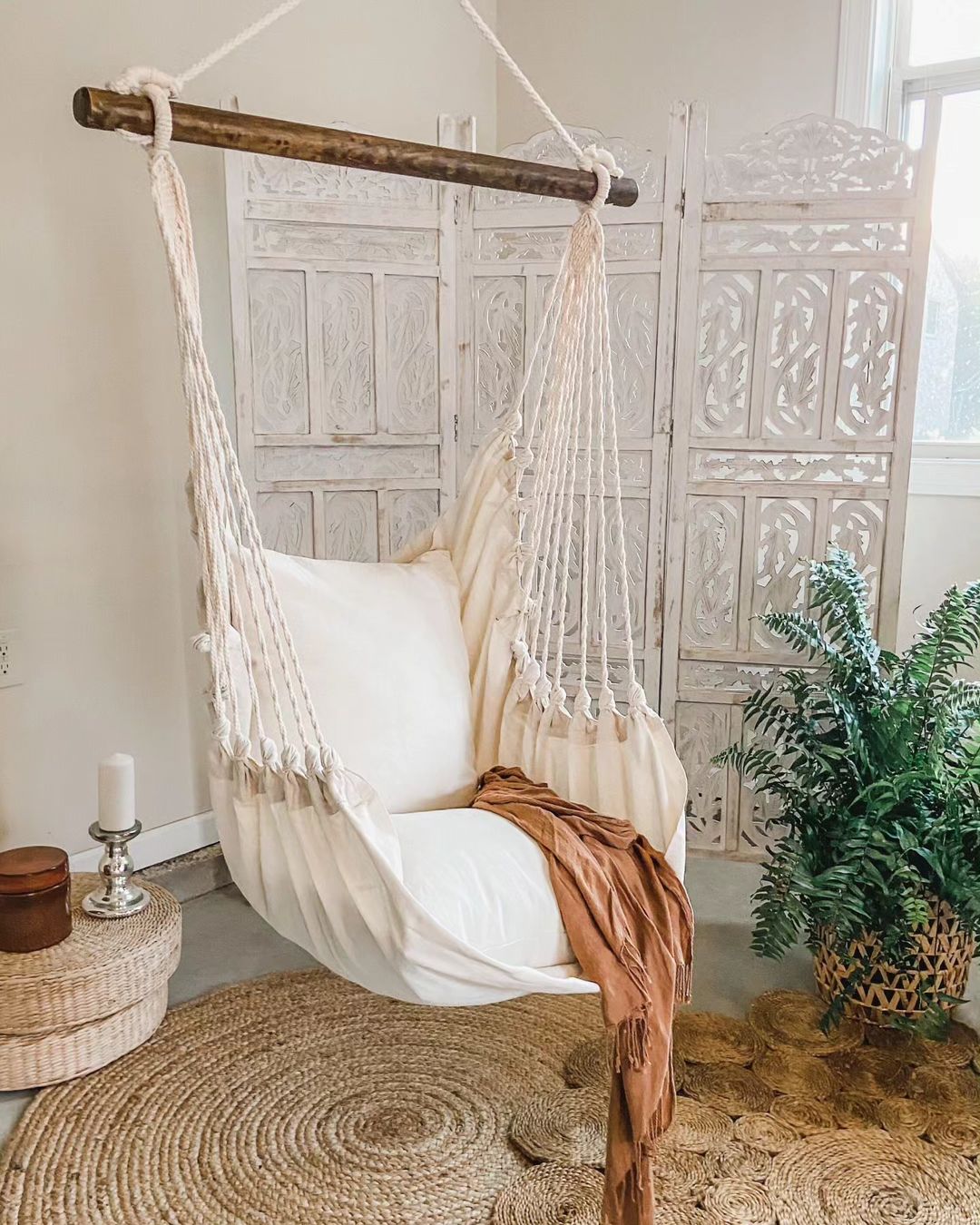
In a dining nook, a swing can serve as dining seating and make the small space more functional. It can also provide playful seating in the living room, so functional swings are useful when every seat needs to do more.
Limited ceiling space can be a problem, and the ceiling may not have enough support strength for a swing. When ceiling strength is insufficient, use reinforced wall brackets to preserve safety and support the security of the swing.
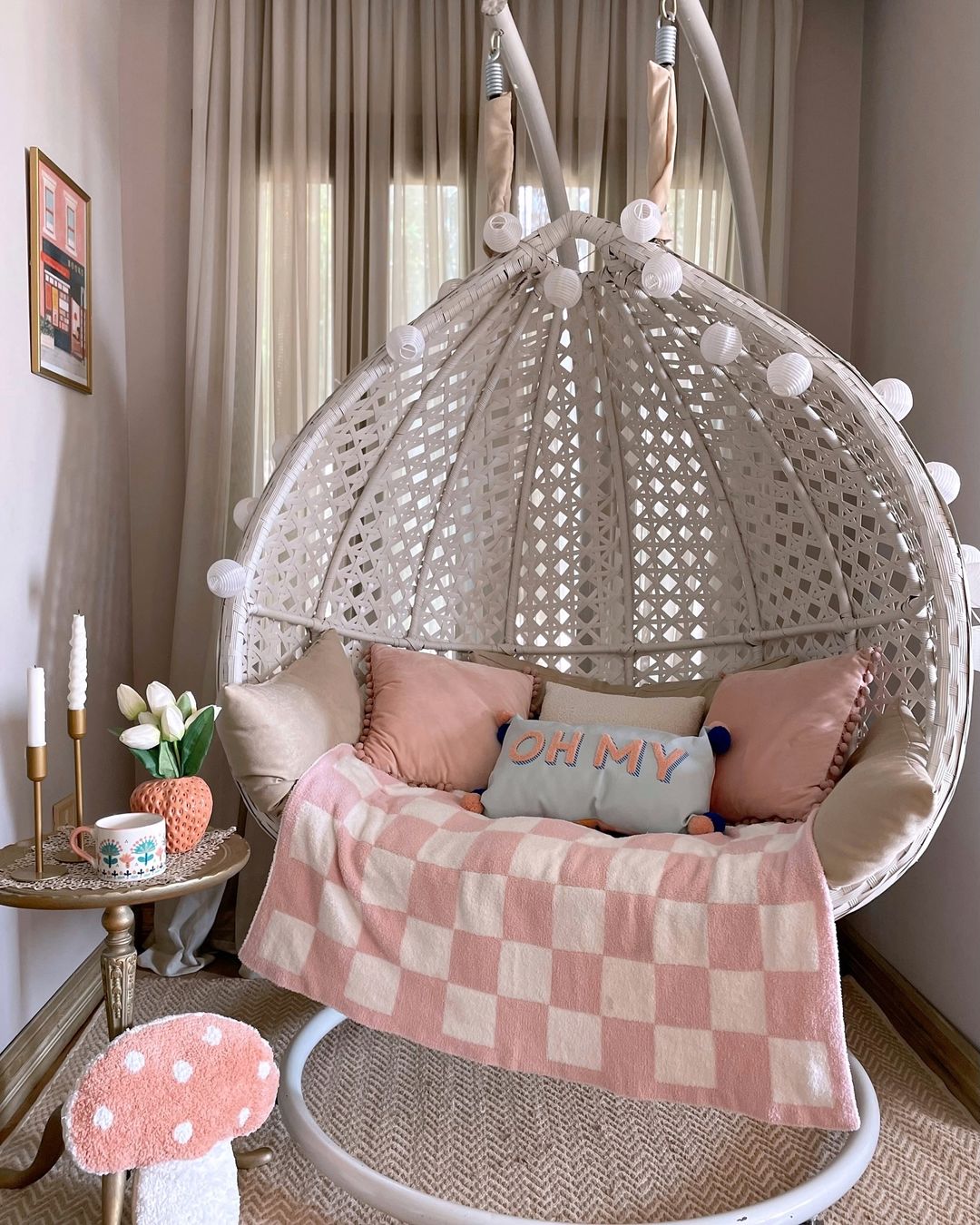
Image credit: chillpillbyz.
In small rooms, ergonomic swing designs with thin supportive cushions can provide comfort without adding crowding. Bulky cushions may make the room feel crowded, while leather or durable fabric can support coziness and low maintenance.
Furniture placed alongside the swing can help it fit into the room rather than interrupting the flow. Competitive placement risks disrupting the room, while complementary placement supports better room integration.
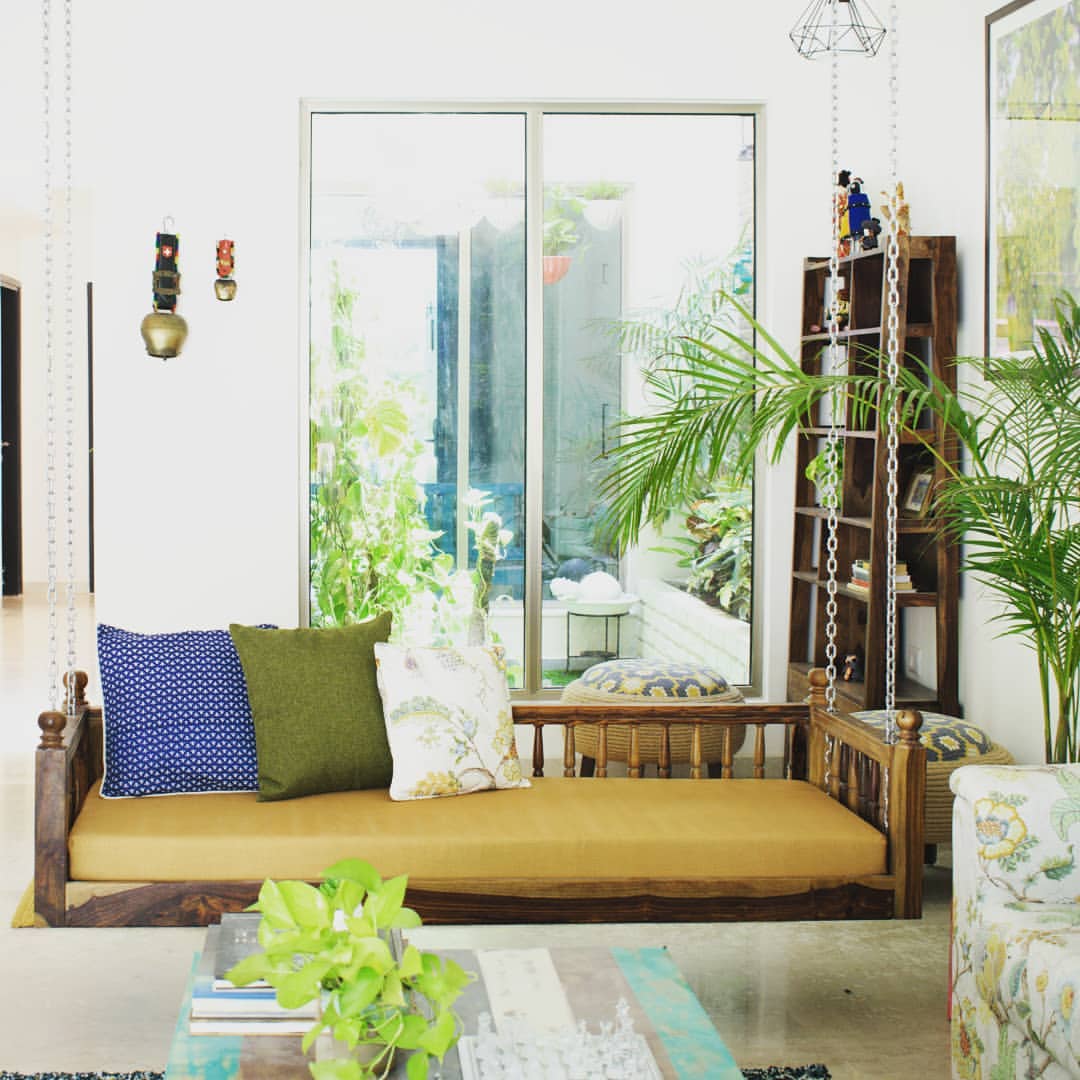
Image credit: spotlightcreativeshomes.
Before installation, verify both ceiling support and wall support, taking the swing weight into account. Secure installation is required, and support verification should be done with a contractor or engineer.
Sleek Foldable Swings with Secure Installation
Underused corners and lofted areas can accommodate a sleek foldable swing or an efficiently space-using hammock swing. Match the swing materials to the surrounding design to support design cohesion and practicality, as advised by Tahn Scoon, interior decorator and designer at Tahn Interiors.
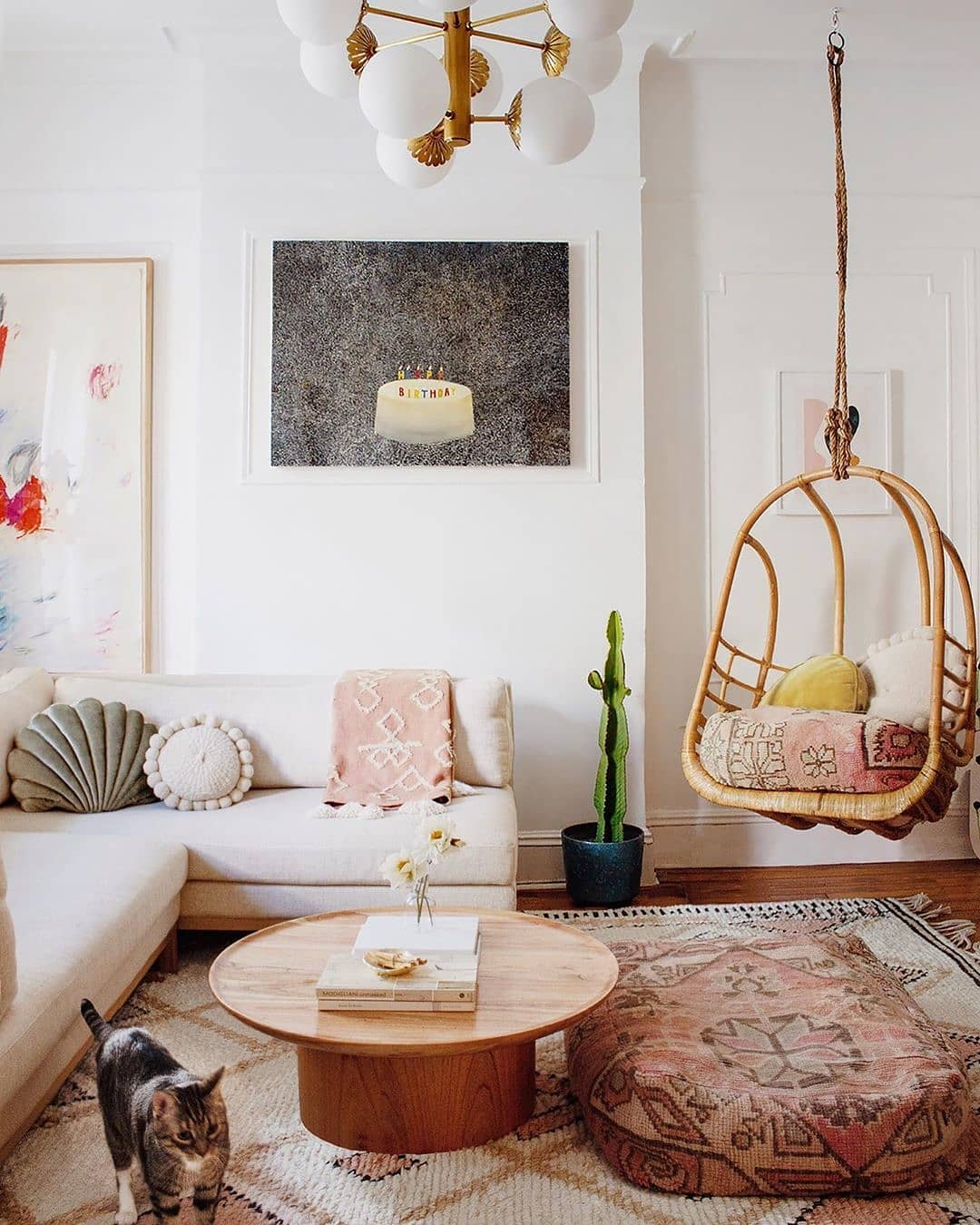
A solid beam provides the surface needed to secure a swing in tight spaces. Use appropriate hardware so the installation supports safety, comfort, and durability, according to Tahn Scoon, interior decorator and designer at Tahn Interiors.
An indoor swing is a home design element rather than simply a seat. It can support relaxation and comfort while also bringing playful expression into the space.