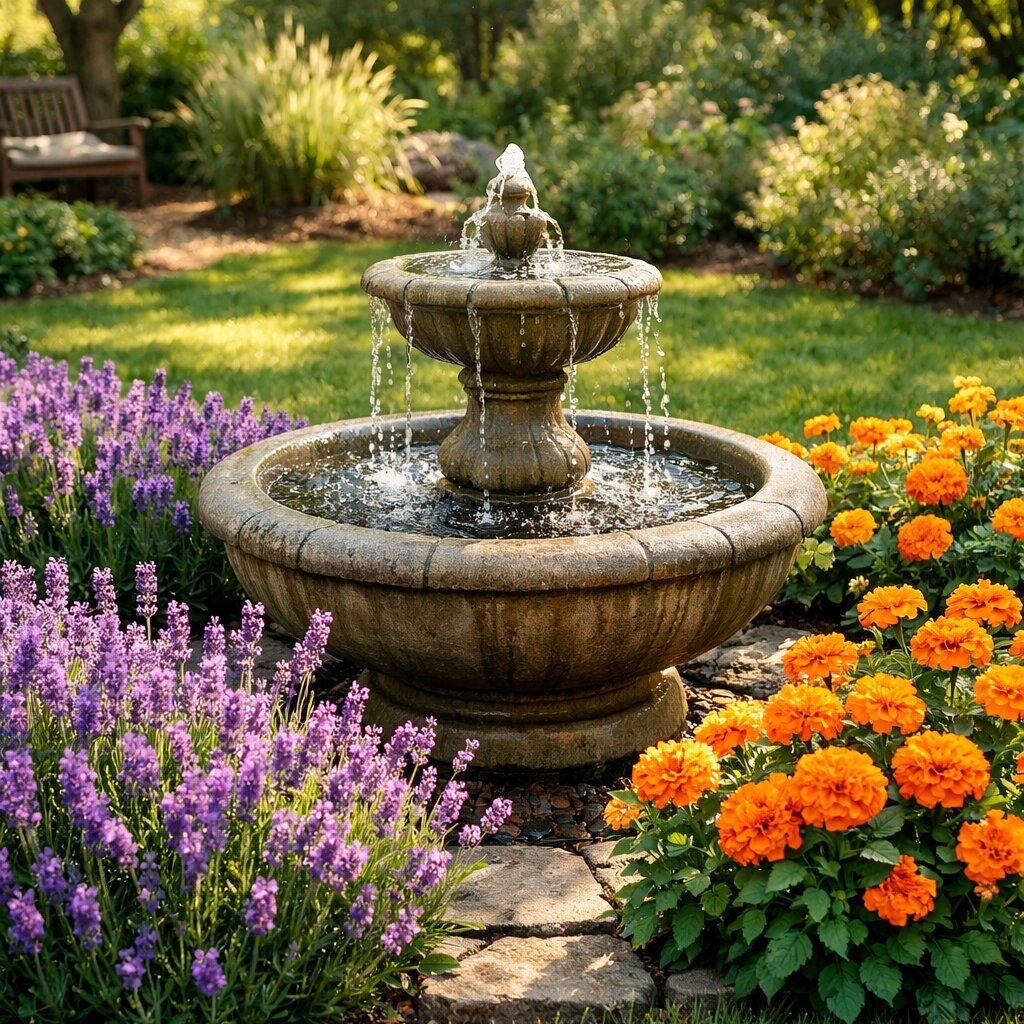
You can transform any backyard, regardless of its size or your gardening expertise, into a space where you genuinely love to spend time. It’s all about finding the right inspiration.
Explore this collection of 17 backyard garden ideas. These are simple, joyful methods for introducing color, delightful scents, and inviting nooks to make your yard feel both functional and welcoming.
Consider this your toolkit of enjoyable projects and charming enhancements. Some ideas are as straightforward as planting a few fragrant flowers, while others focus on creating a perfect spot to relax with friends.
Browse through and select the ideas that align with your style, space, and motivation. Each concept includes a brief guide to help you begin without any unnecessary complication.
1. Create a sensory oasis with lavender, marigolds, and a small water fountain for a backyard that smells and sounds like a dream
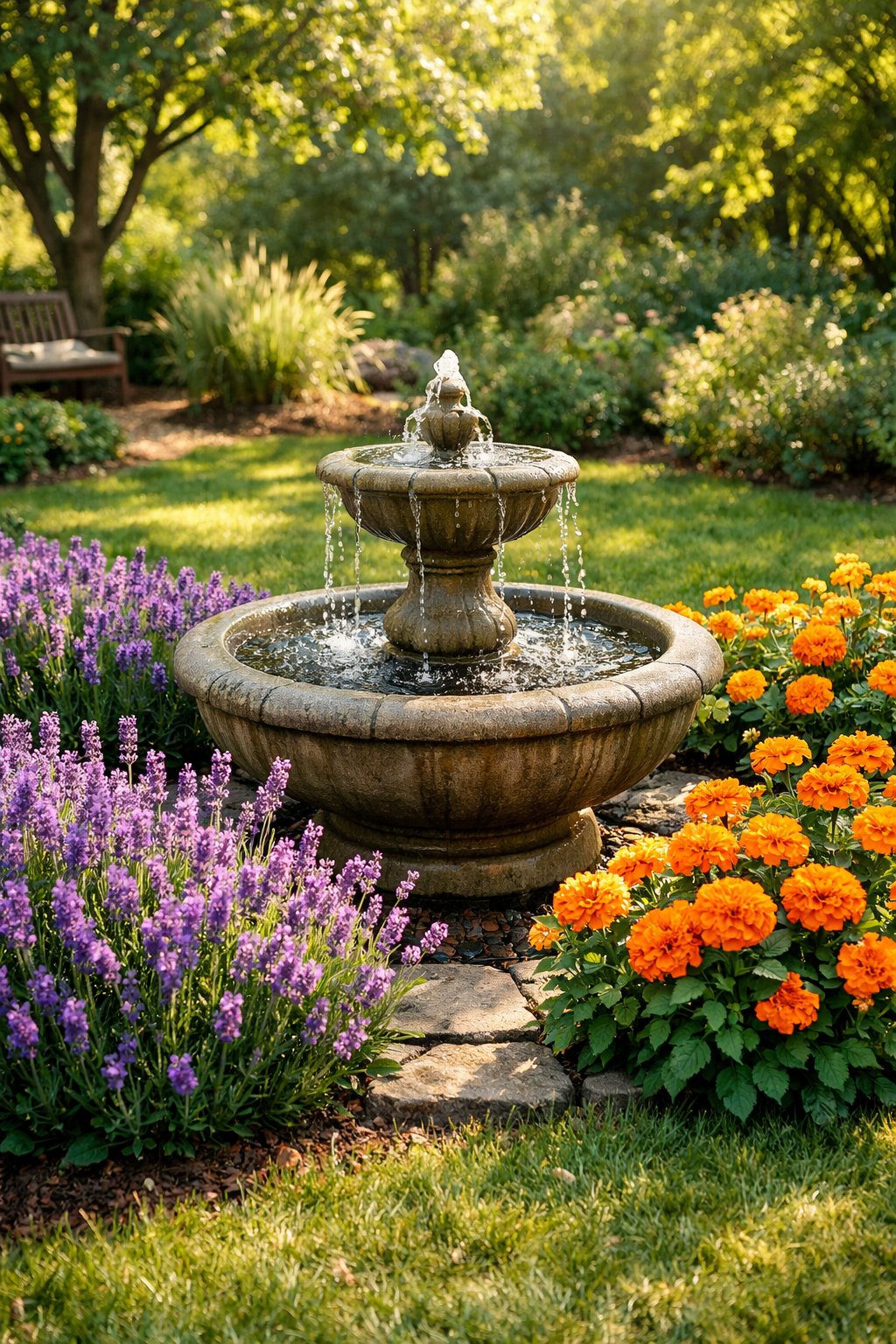
Here is a fascinating truth: scent can recall memories even faster than sight. This means just a couple of lavender plants can quickly turn your yard into a tranquil retreat.
Plant lavender alongside your path. Every time you walk by, you’ll brush against it and release that soothing aroma.
Marigolds provide a splash of bold color and a spicy fragrance that helps deter insects. Honestly, they are simply cheerful. Place them in pots or beds near your favorite seat for a pop of color with no fuss.
A small water fountain introduces a soft, consistent sound that helps drown out street noise and attracts birds. Position it close enough to your home to enjoy its calming sound even from inside.
2. Install raised garden beds to keep your plants organized and give you that neat gardener vibe without the backache
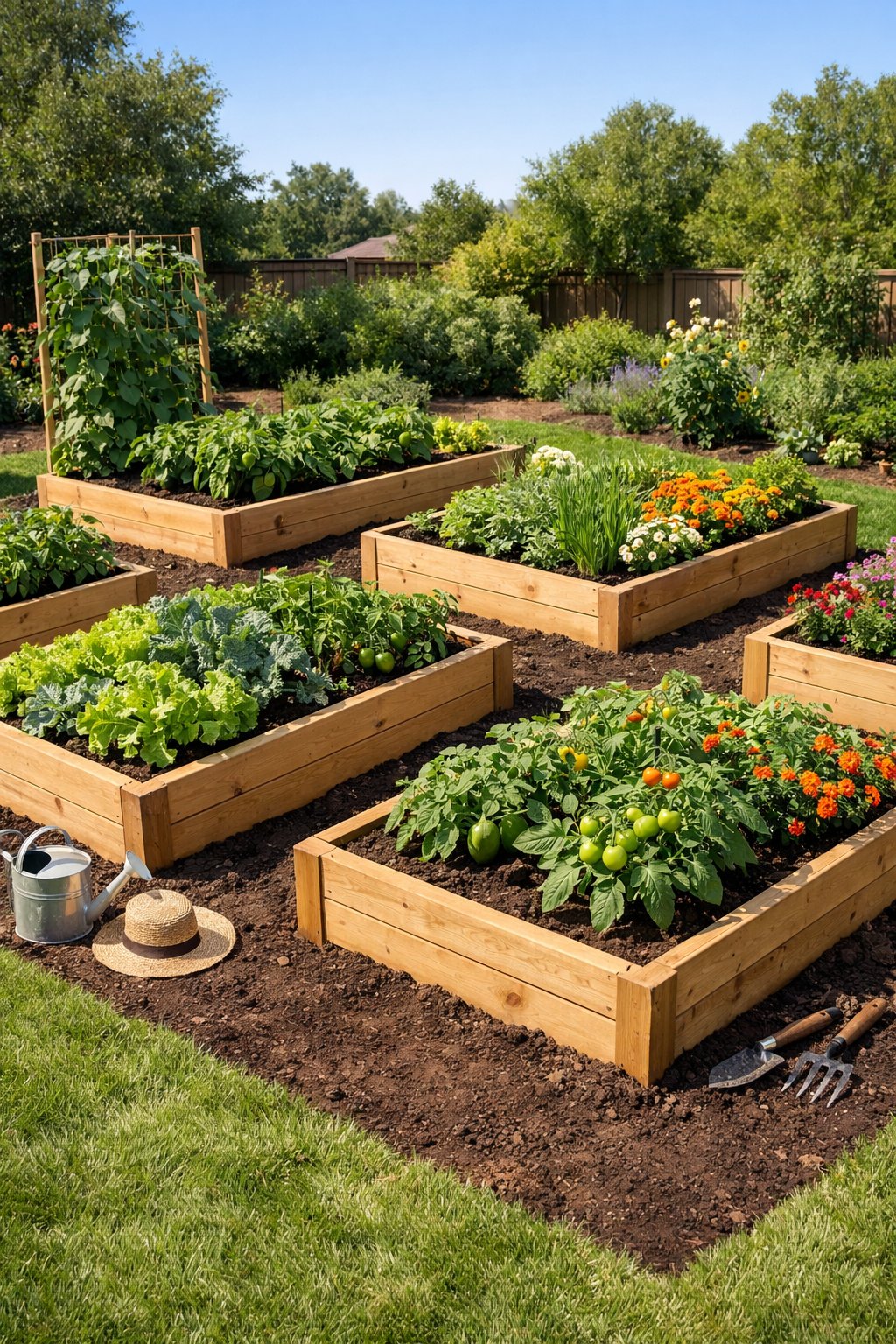
No one enjoys bending over for long periods just to water or pull weeds. Raised beds elevate the soil to a comfortable level, allowing you to plant, harvest, and weed without straining your knees.
They provide structure for your plants and give you complete control over soil quality and drainage. Fill them with nutrient rich soil, and your vegetables and flowers will reward you with robust growth.
Select beds that are narrow enough to let you reach the center easily. Arrange a few with paths between them for convenient access and a clean, organized appearance.
For longevity, opt for cedar or recycled composite materials. Adding mulch and a drip irrigation system will reduce your workload and conserve water.
3. Build a rustic stone path that doubles as a nature runway for your garden gnomes—or you, if you want
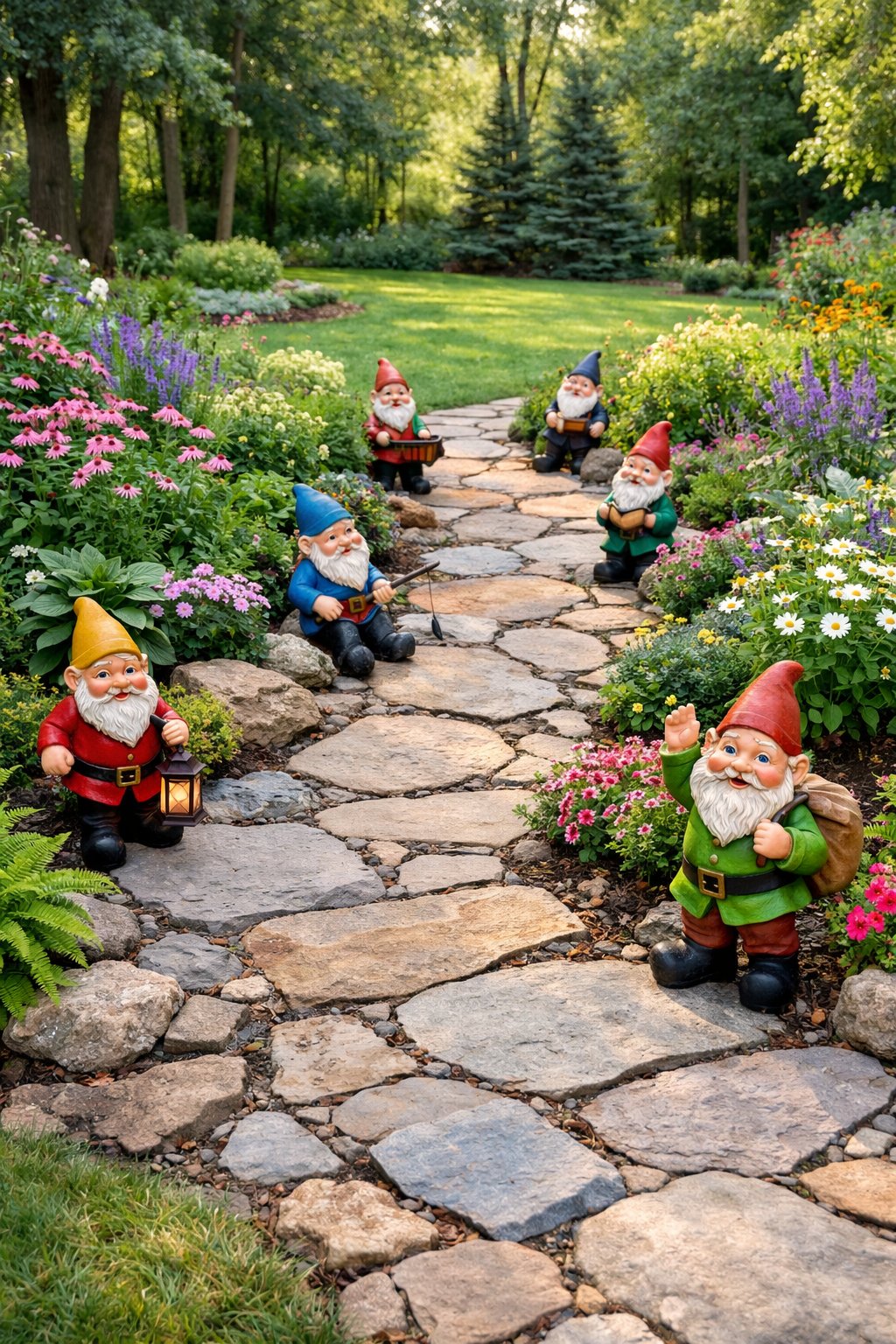
Let’s debunk a common myth: a gorgeous stone path doesn’t need to be expensive or time consuming. You can use flagstones, pavers, or even an assortment of rocks. Just arrange them in a layout that feels natural to you.
Outline your intended path using a garden hose or string to visualize the final design. Dig a shallow trench, add a layer of gravel for proper drainage, and then firmly press each stone into place so it’s level.
You can fill the gaps with sand, small pebbles, or even creeping thyme for soft edges and an extra touch of fragrance.
Vary the sizes of the stones and leave small spaces for plants and insects to find a home. The path should make walking through the garden easier, direct your gaze, and perhaps even encourage a moment of quiet reflection.
4. Add a pergola draped in flowering vines to create your very own outdoor clubhouse for plants and people alike
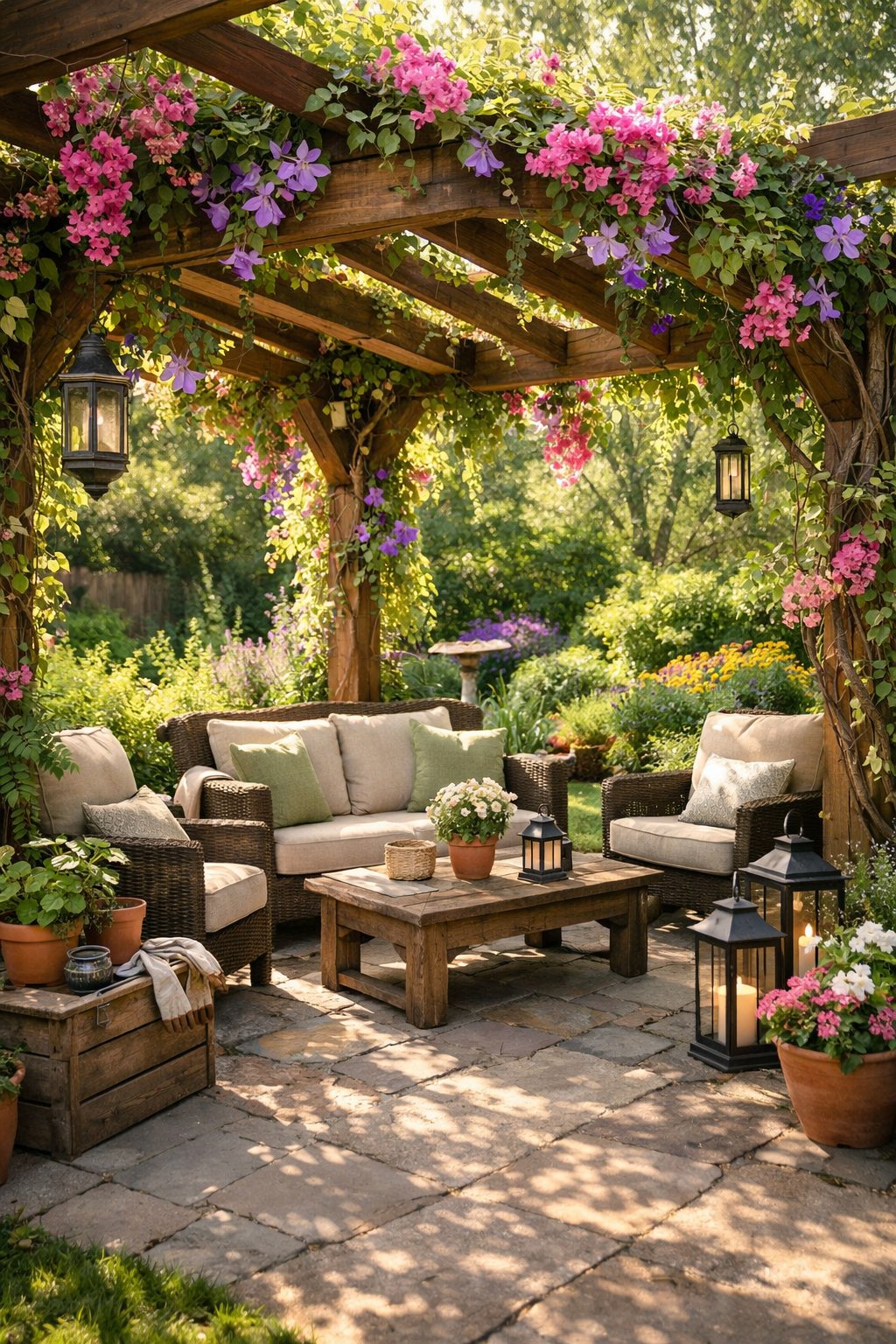
Here’s the deal: a pergola is more than just a decorative structure. It functions like an open air room that welcomes you, your guests, and every bee in the vicinity.
Enhance the space by hanging string lights, adding a hammock, or dangling wind chimes to give it a clubhouse atmosphere. Flowering vines such as clematis, wisteria, or bougainvillea will climb the structure, providing shade, vibrant color, and sweet fragrances.
Plant vines on opposite sides to encourage faster growth across the top and create a natural perch for birds. Keep an eye on the supports and trim the vines occasionally to prevent them from overwhelming the structure.
Place a few potted herbs or a small table inside for snacks or gardening tasks. This way, your pergola is both beautiful and practical.
5. Set up a vertical garden on a fence to save space and impress with your green thumb ninja skills
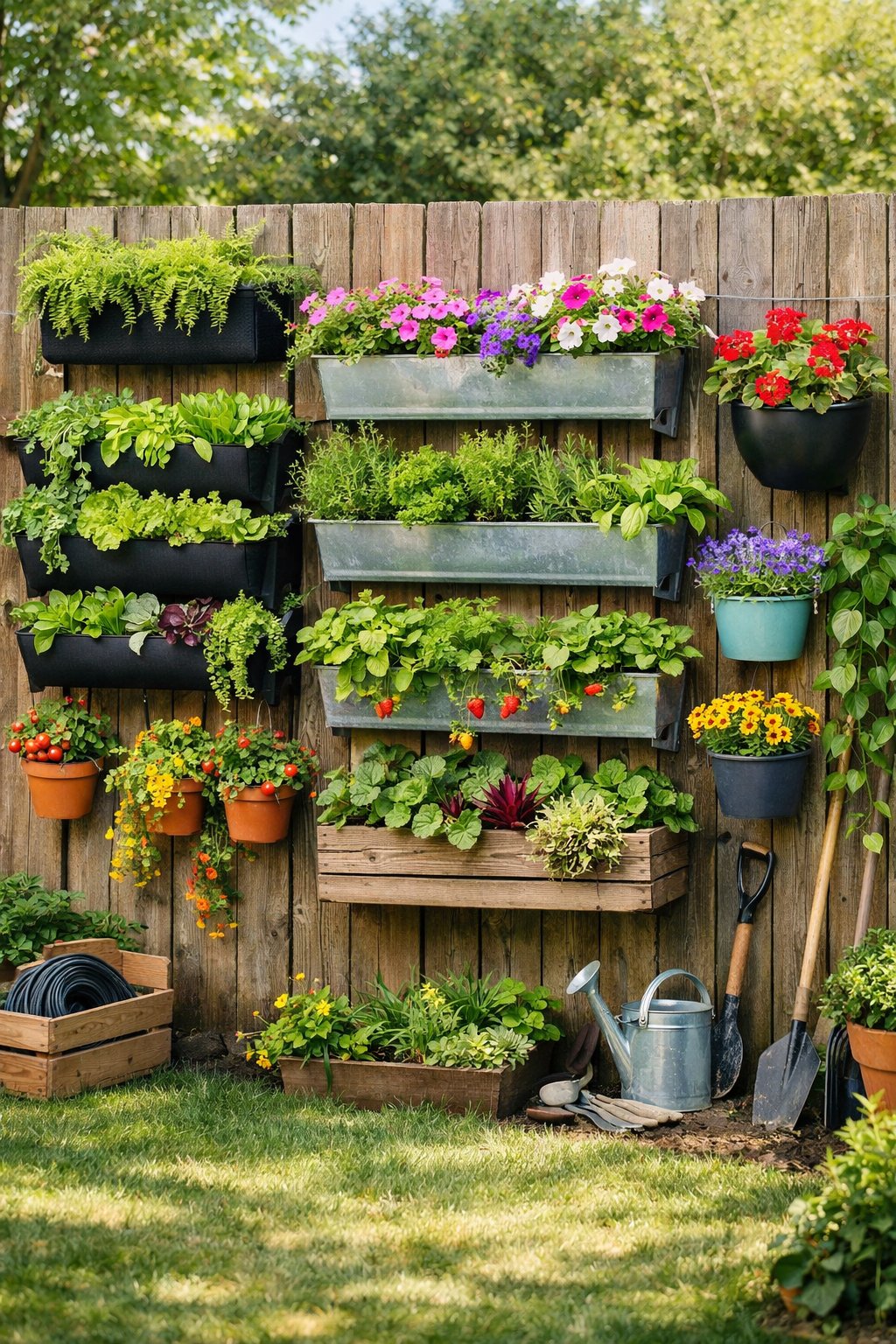
Let’s be honest, you might not have a lot of room, but you still want easy access to fresh herbs and flowers.
A vertical garden can transform a plain fence into a vibrant, living wall. Hang planters, repurposed pallets, or fabric pocket organizers. Suddenly, you have ample space for herbs, lettuces, and trailing plants.
Choose durable pots and ensure they have drainage holes to prevent your plants from becoming waterlogged after a rain. Arrange sun loving and shade tolerant plants based on the direction your fence faces.
Simplify watering with a drip irrigation line, or just give everything a good soak and move on. Rotate the pots periodically to ensure all plants receive adequate sunlight.
6. Incorporate a cozy fire pit surrounded by seating for storytelling nights and marshmallow toasting galore
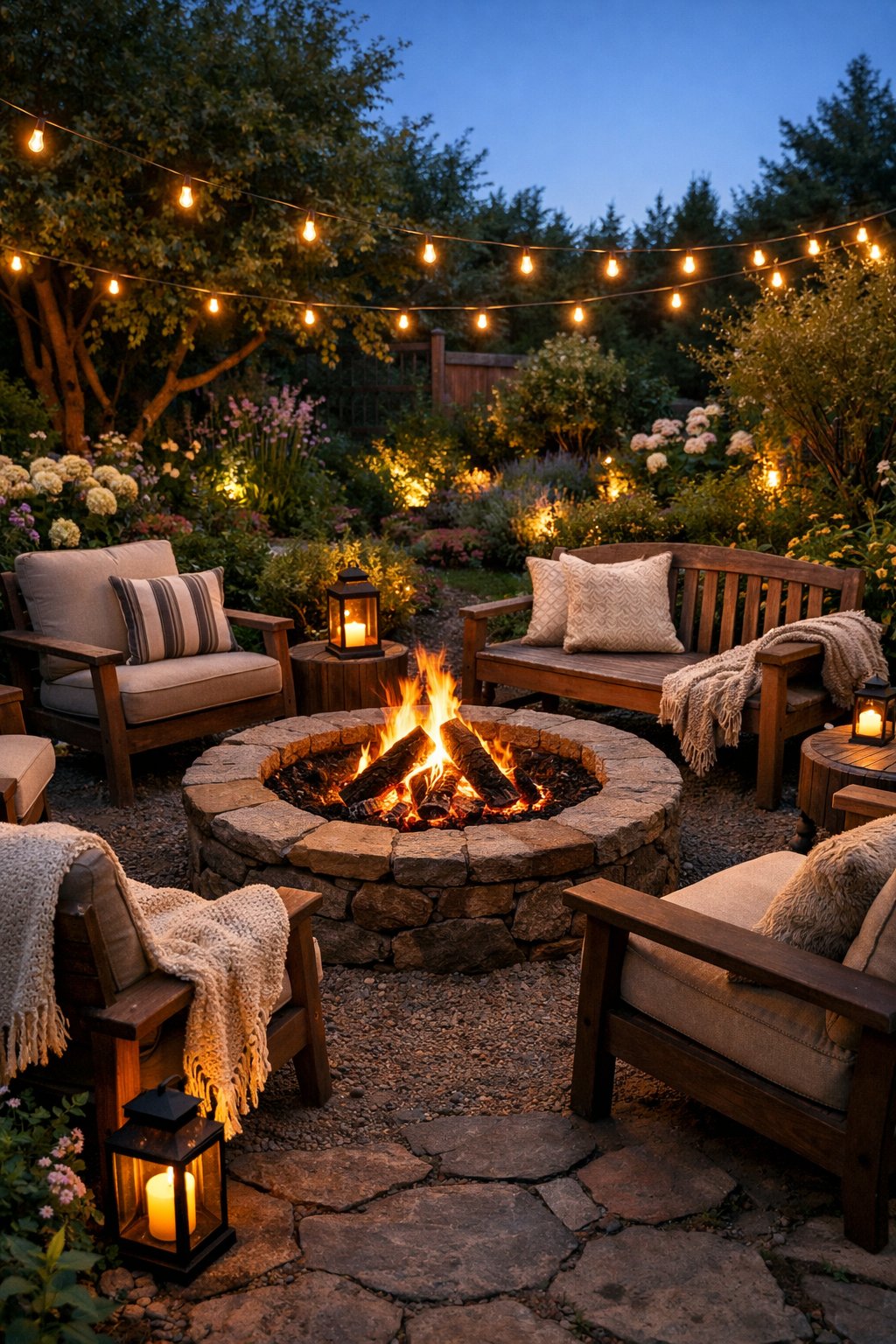
Many believe a fire pit must be large or ornate to create a special atmosphere, but even a small one can work wonders.
Place a safe fire pit at the center of a ring of chairs or benches to encourage conversation. Opt for comfortable seating, whether it’s benches, low chairs, or even stone seating with plush cushions.
String lights or lanterns provide a soft, ambient glow that complements the firelight. Keep a basket of firewood nearby to avoid interrupting the fun for more fuel.
Prioritize safety by setting the pit on a gravel or stone surface and using a spark screen. A mix of materials like wood, metal, and soft textiles will create a warm, inviting space.
7. Plant a mixture of drought-resistant succulents and cacti for a low-maintenance garden that looks like a desert paradise
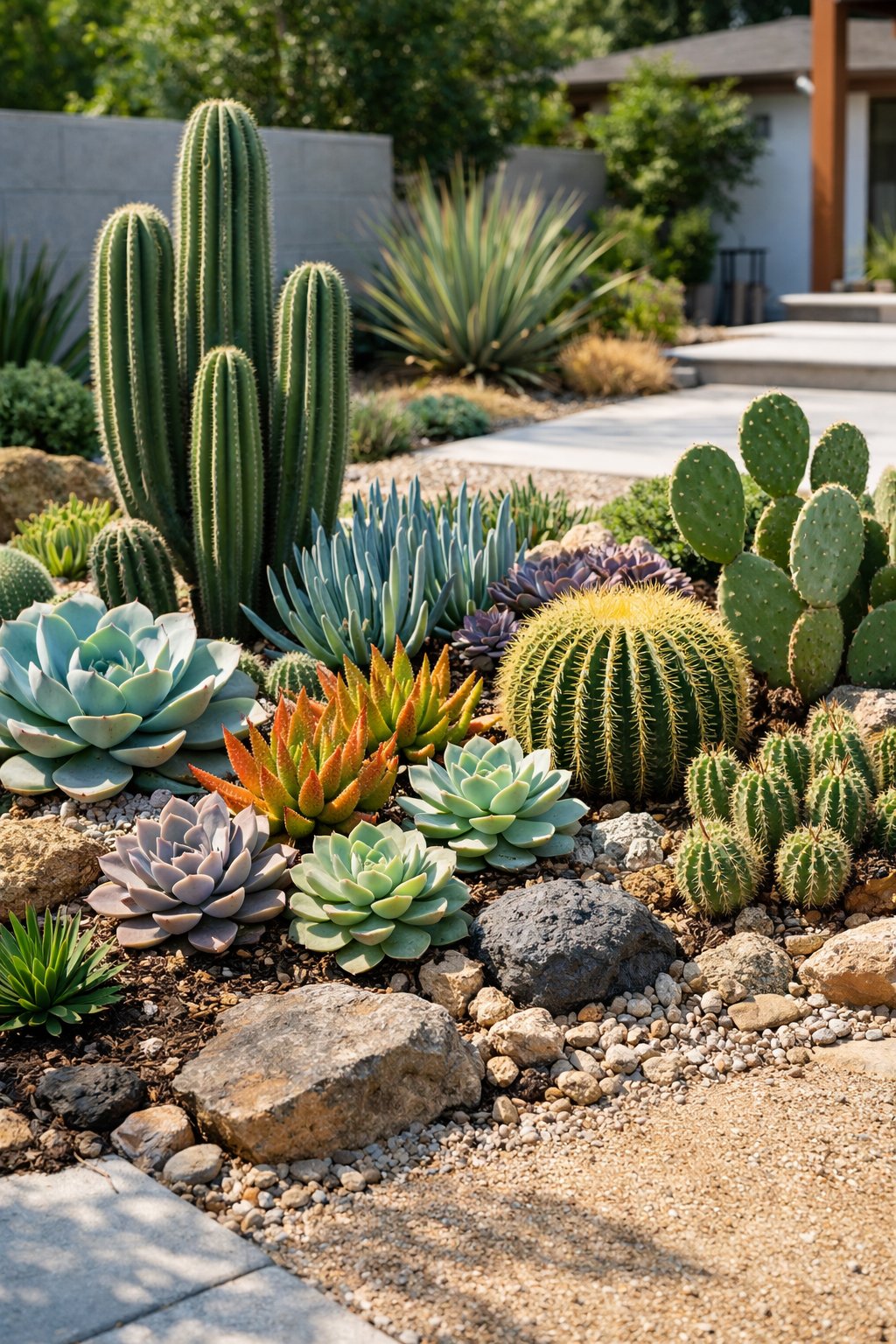
Here’s the reality: you don’t have to water daily or possess perfect soil to create a stunning yard.
Combine several types of succulents with a few cacti for a striking contrast. A tall agave or yucca next to low growing hens and chicks creates a visually interesting arrangement.
Use a gritty, fast draining soil mix and ensure the plants receive plenty of sunlight. Water them deeply but infrequently, allowing the soil to completely dry out between waterings.
Incorporate gravel or rocks as a top layer to suppress weeds and enhance the desert aesthetic. Add a flowering succulent for a burst of color that will attract bees.
Here’s a surprise: a tiny pond can attract more wildlife than a large expanse of lawn ever will.
8. Design a wildlife-friendly garden with bird feeders, butterfly-attracting flowers, and a tiny pond for your new animal roommates
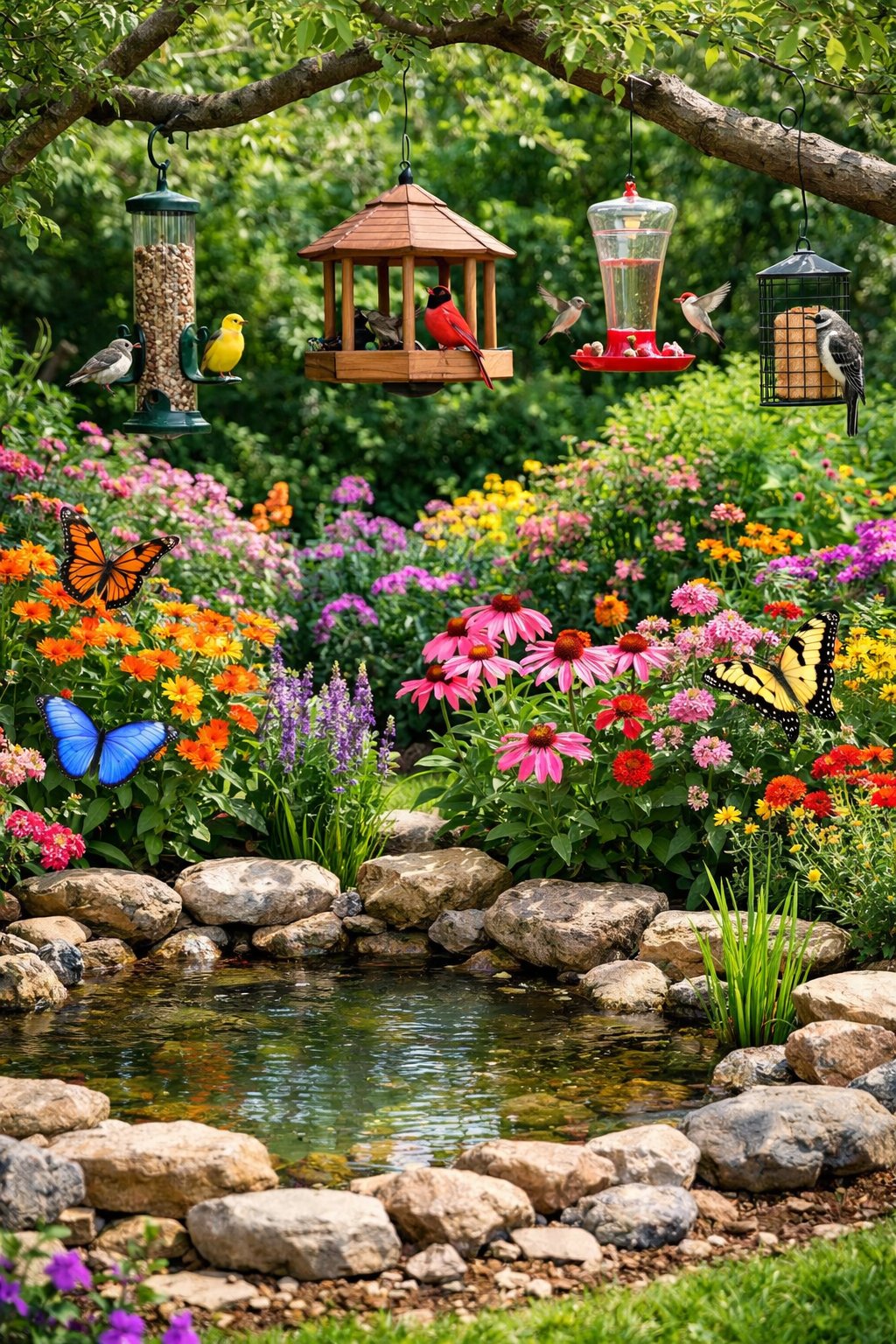
You don’t need a huge yard to welcome birds and butterflies for a visit.
Plant native flowers such as milkweed, coneflower, and asters, which provide food for caterpillars and pollinators. Hang bird feeders at various heights to accommodate different species like finches, chickadees, and titmice.
Include a shallow water dish or a small bubbler for birds to drink and bathe. A tiny pond with sloped sides will also invite frogs and dragonflies to make a home.
Leave some leaf litter and small brush piles to serve as hiding spots, and avoid using pesticides to ensure your new animal visitors stay healthy.
9. Use colorful garden lighting to turn your backyard into a magical wonderland after sunset—bonus points for fairy lights
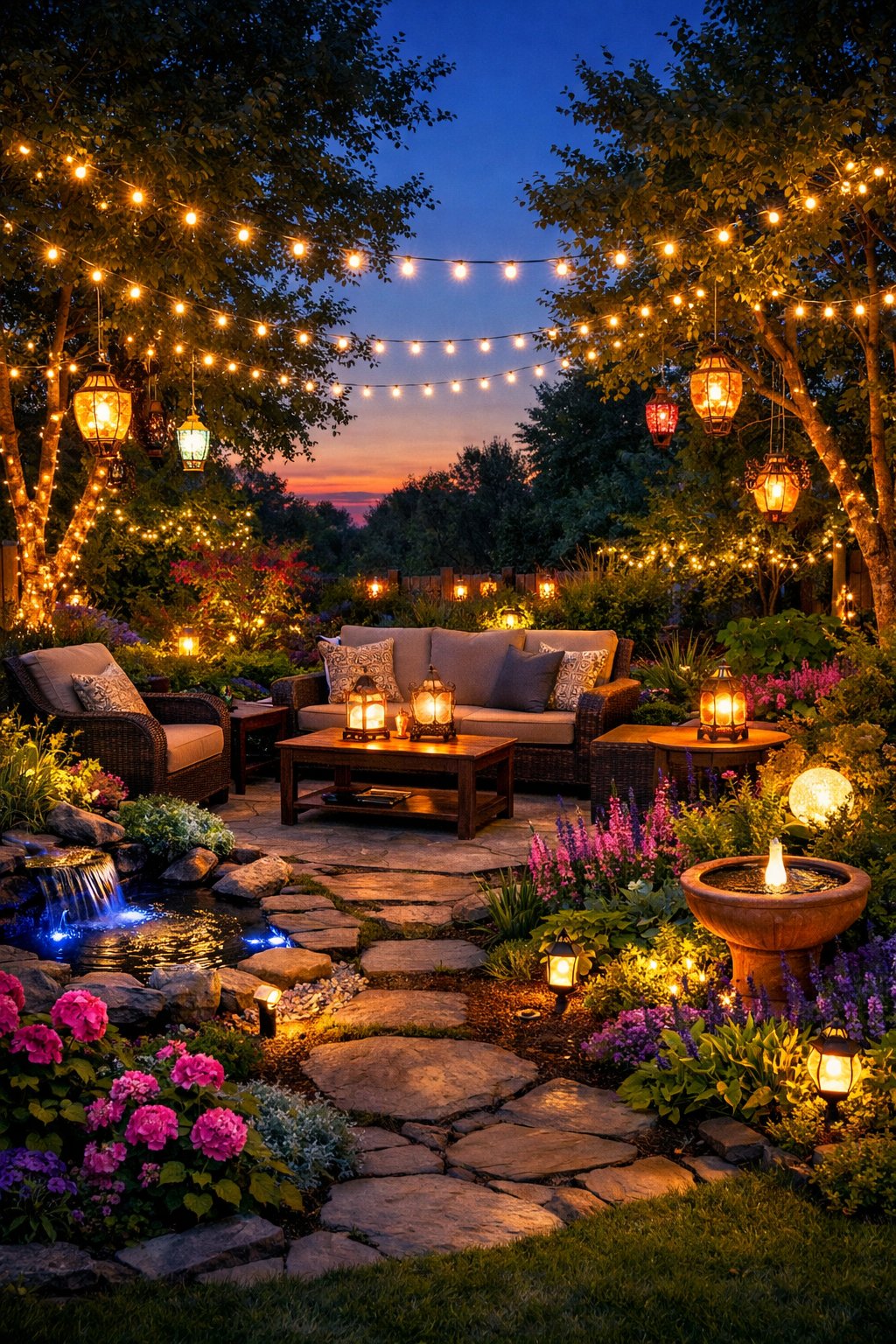
You don’t have to hire a professional to make your yard sparkle like a fairy tale.
String lights, lanterns, and spotlights can illuminate pathways, trees, and gathering areas, making everything feel cozy and vibrant.
Use warm bulbs for seating zones and cooler tones to highlight plants or water features. Drape fairy lights through trees or along fences for an instant touch of charm.
Opt for solar or low voltage lighting to avoid concerns about your electricity bill. Layer the lights at different heights to create a dramatic effect and help people navigate the space safely.
10. Create an herb spiral for a compact, spiral-shaped herb garden that’s as functional as it is Instagram-worthy
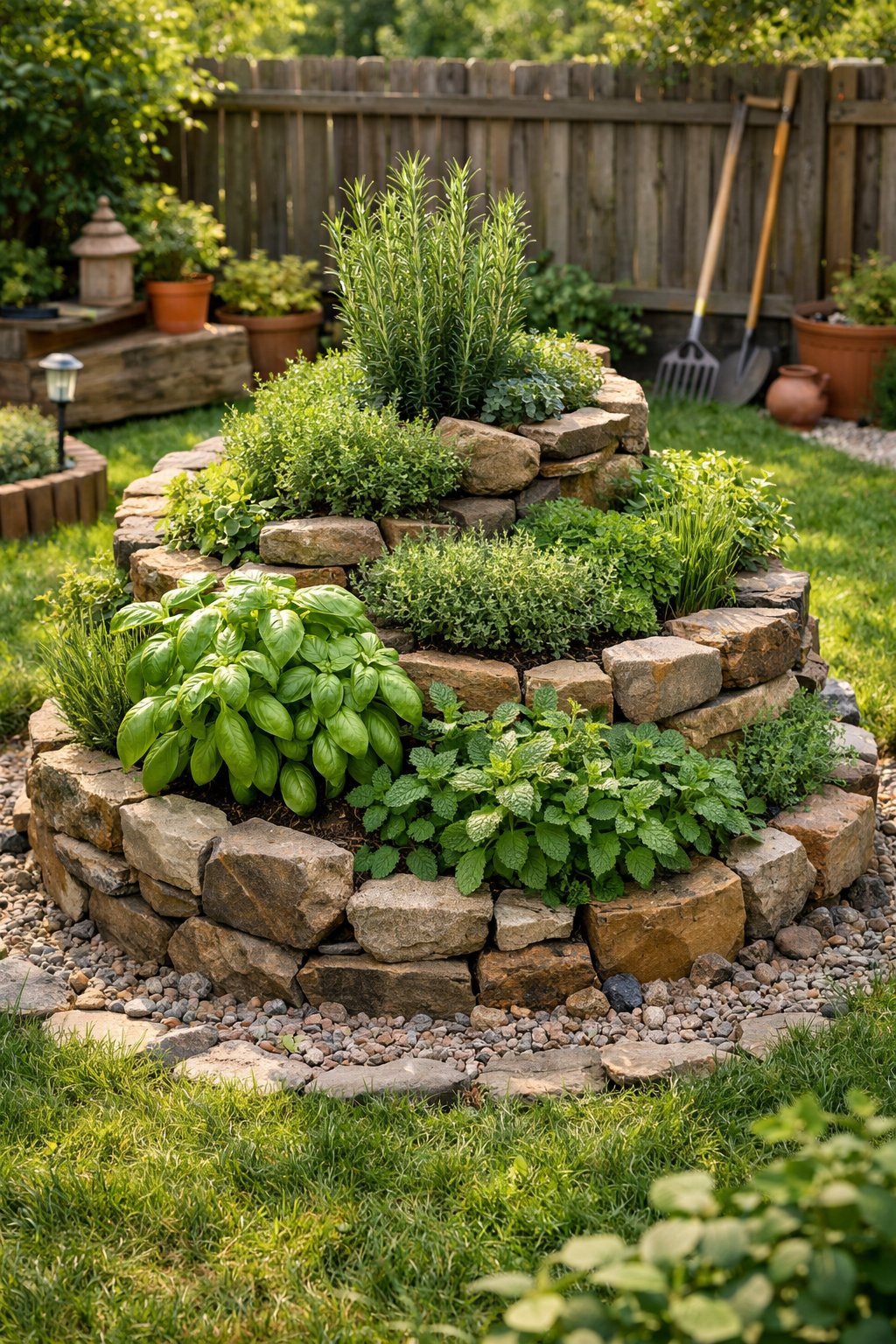
Did you know it’s possible to grow a wide variety of herbs in the space of a single small bed by constructing a spiral? The design starts low and moist at the base, then ascends to a sunny, dry peak, ensuring every herb gets its ideal growing conditions.
Use rocks or bricks to form the spiral shape, and fill it with soil at varying levels. Plant moisture loving herbs like mint and chives at the bottom, and place herbs like rosemary or thyme at the top where drainage is fastest.
Herb spirals are visually appealing and make harvesting for dinner incredibly convenient. They are easy to water and access, turning your backyard into something truly unique.
11. Make a DIY pallet garden to repurpose old wood into a quirky planter that screams eco-chic
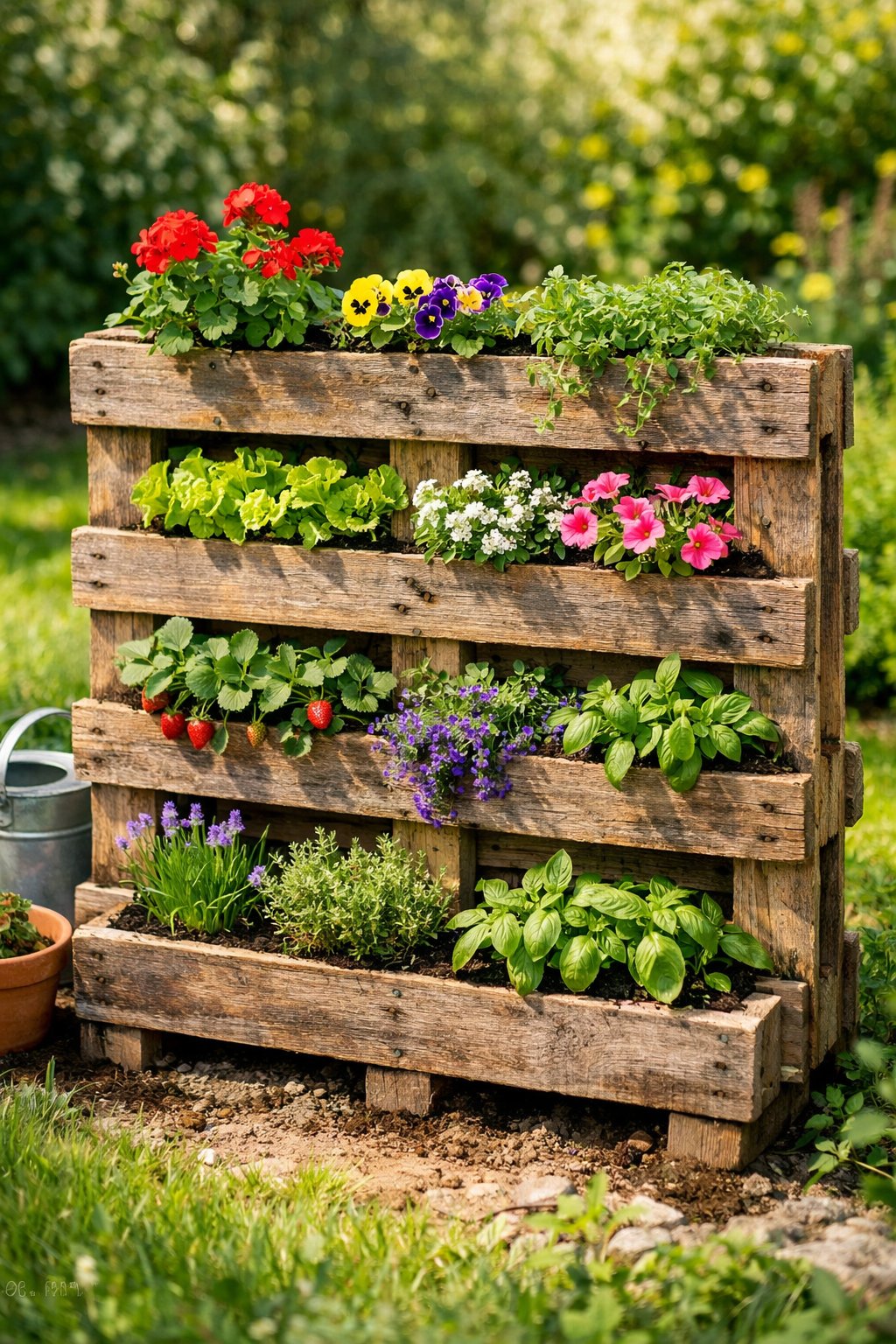
Have a couple of old pallets just sitting around? You can transform them into a vertical planter, saving space and adding a touch of personality to your yard.
Pallet gardens are an inexpensive and spacious solution, perfect for growing herbs, succulents, or flowers. You can stand one upright, lean it against a wall, or lay it flat to use as a raised bed. Sand any rough areas, line the back with landscape fabric, and fill it with soil to prevent any spillage.
You won’t need any specialized tools, just a bit of effort will get you started. Paint or stain the pallet for a pop of color, or let it weather naturally for a more rustic appearance.
12. Construct a small koi pond with floating lilies for zen vibes and a reason to pretend you’re in a Japanese garden
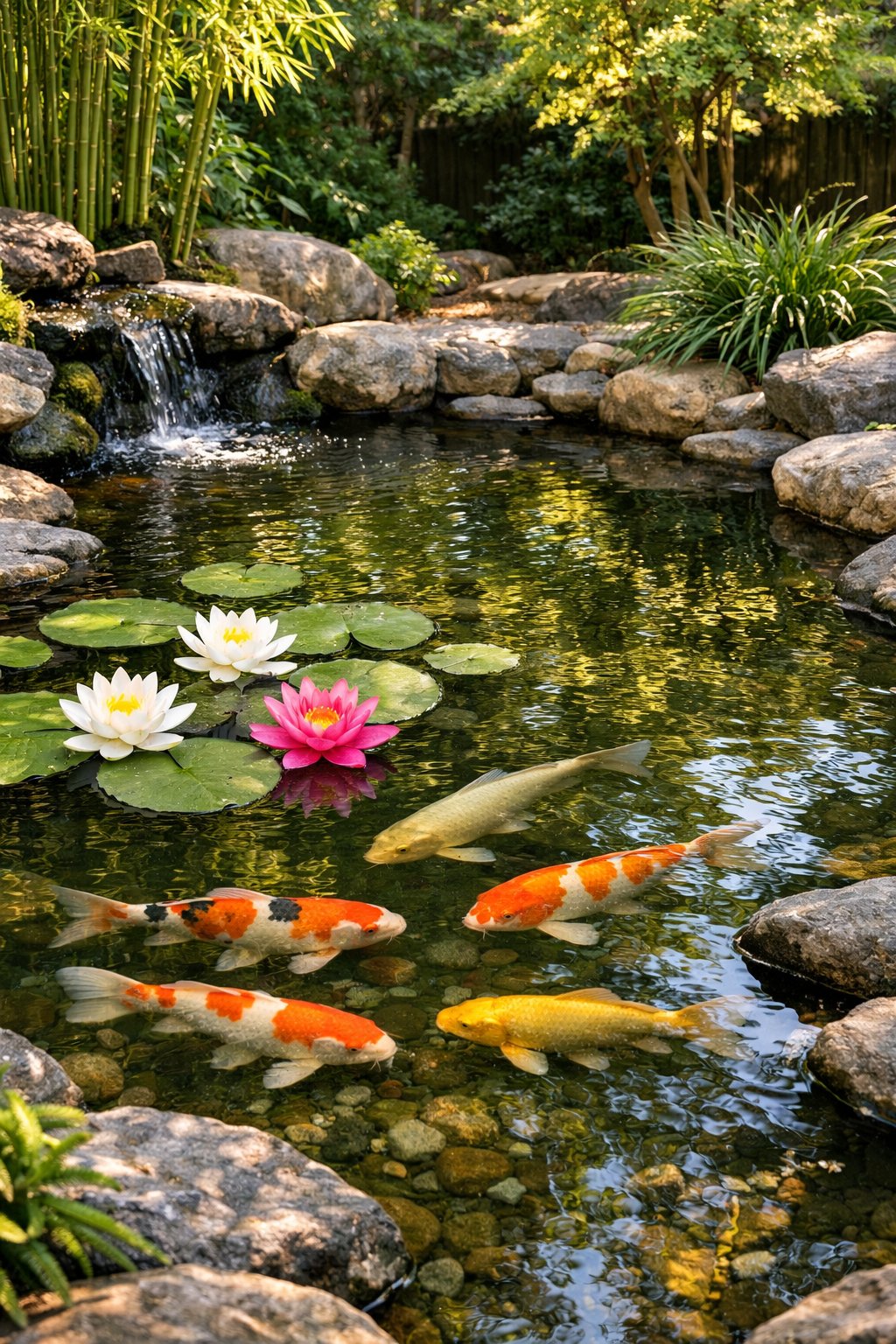
Let’s clarify one thing: you don’t need a massive yard or a professional crew to achieve a peaceful koi pond aesthetic. Simply dig out a small oval or rectangular shape, line it with stones, and install a basic pump to create that gentle water sound.
Adding water lilies and a few floating plants will soften the look and provide some shade for the fish. Surrounding the pond with mossy rocks or a couple of bamboo stalks can suggest a Japanese garden feel without being overly complex.
Choose hardy koi or other pond fish that are suitable for a smaller environment. A simple filter or a bog area will help keep the water clear. Place a stepping stone or a bench nearby so you have a spot to sit and relax. It can become the most tranquil retreat, just outside your door.
13. Grow a mix of perennials and annuals to have flowers that surprise you year-round like a garden party with different guests
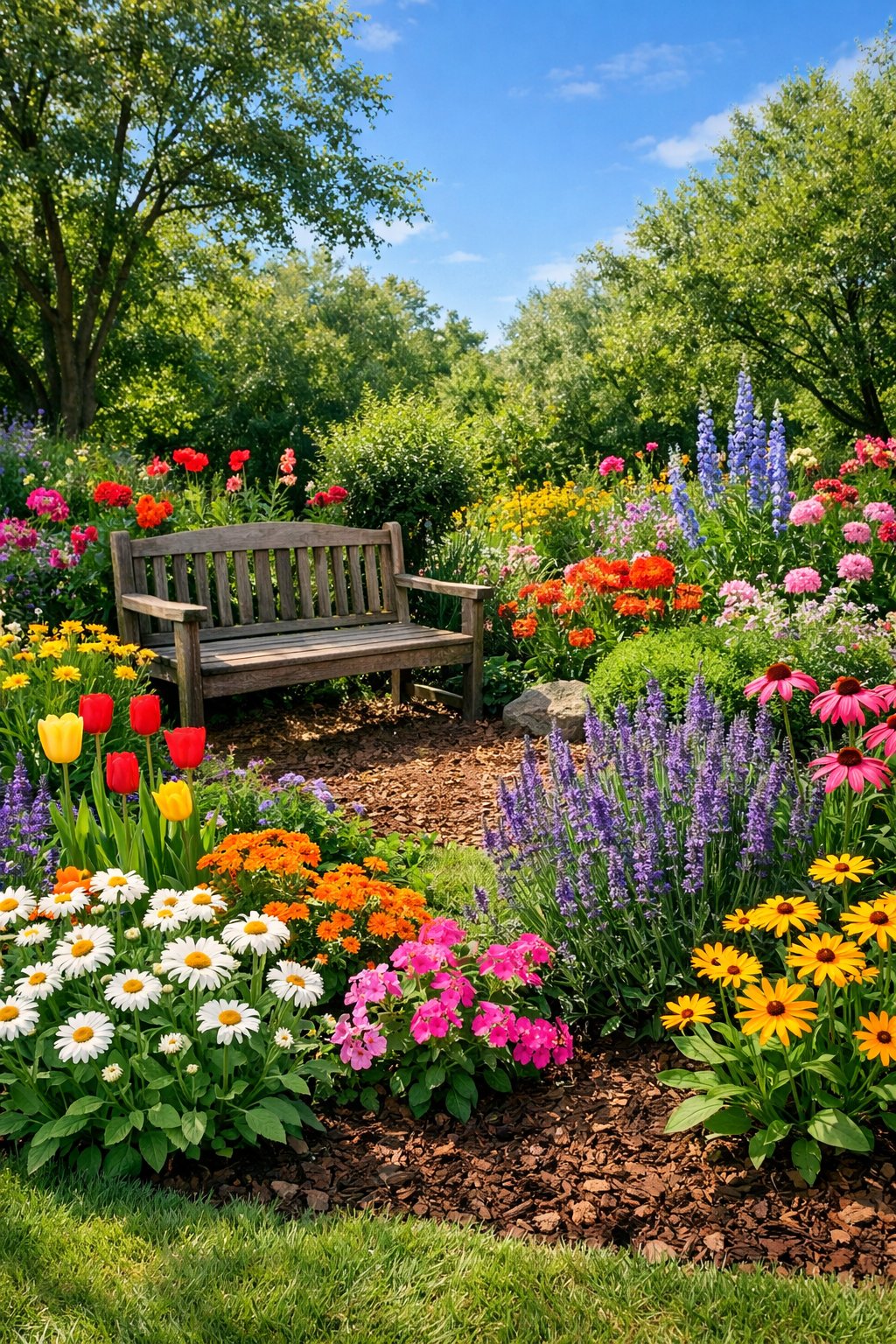
It’s amazing how a single flower bed can evolve throughout the season, much like a party with a rotating cast of guests. Perennials are the reliable friends who return year after year.
Annuals, on the other hand, arrive with a burst of vibrant color and fresh blooms. Use them to fill in any gaps, experiment with bold color combinations, or simply energize the bed when the perennials are in a dormant phase.
Plant taller perennials at the back and place annuals in the front. Each year, you can switch out one or two annual varieties to refresh the look without a complete overhaul.
14. Build a garden bench out of reclaimed wood—it’s a seat with character and stories embedded in every grain
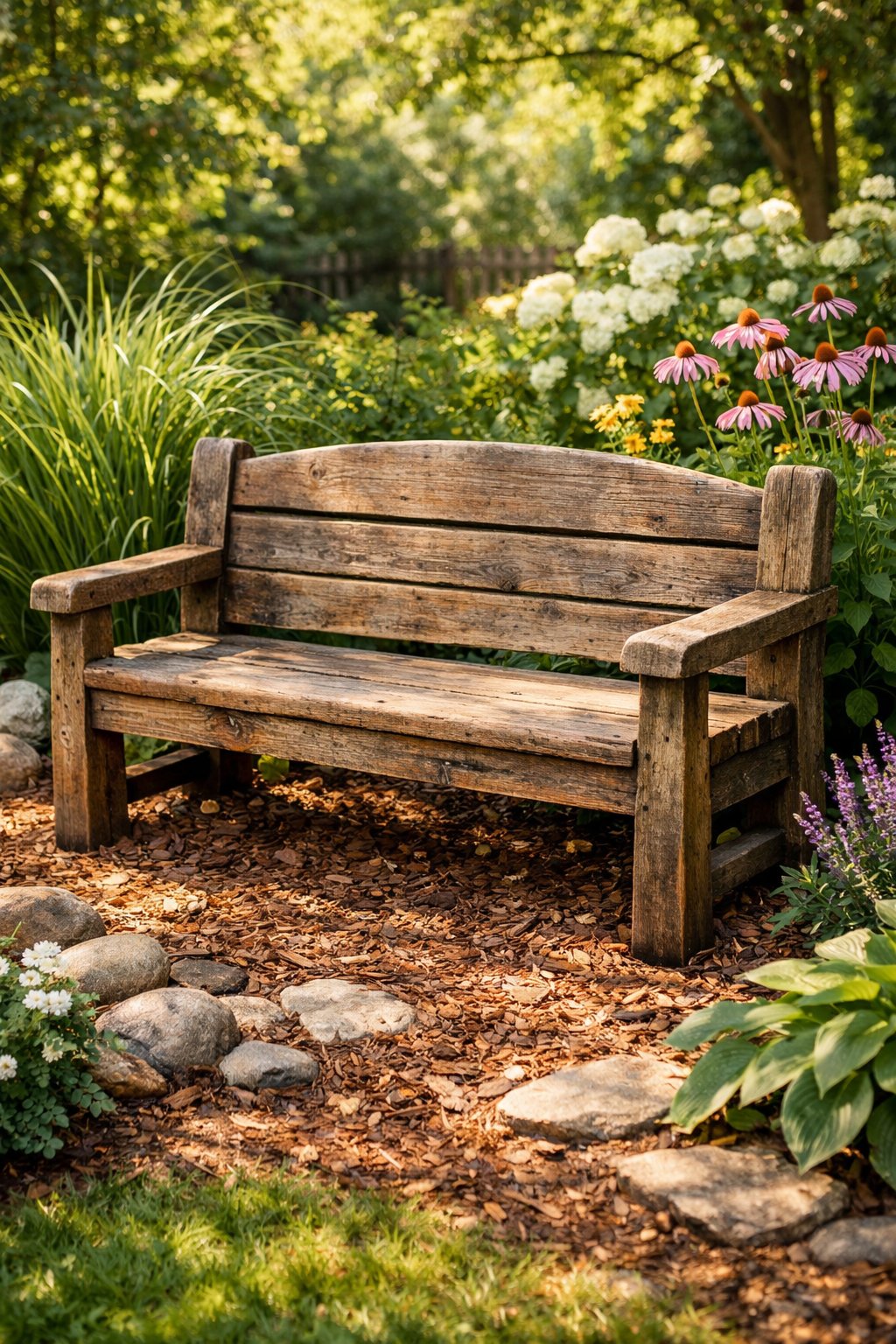
Have you ever wanted a bench that feels truly unique, without spending a lot of money or settling for something generic? You can use old fence boards, doors, or pallets to construct a bench with genuine character.
Keep the design straightforward: a flat seat, two legs, and a backrest is all you need. Sand down any rough surfaces, secure the joints, and apply a protective treatment to the wood so it can withstand the elements.
You might incorporate mismatched slats or carve a small detail to personalize it. This bench can become your favorite spot for a morning coffee or relaxing with a good book.
15. Set up a hanging garden in mason jars on a wall for plants that literally hang around to brighten your day
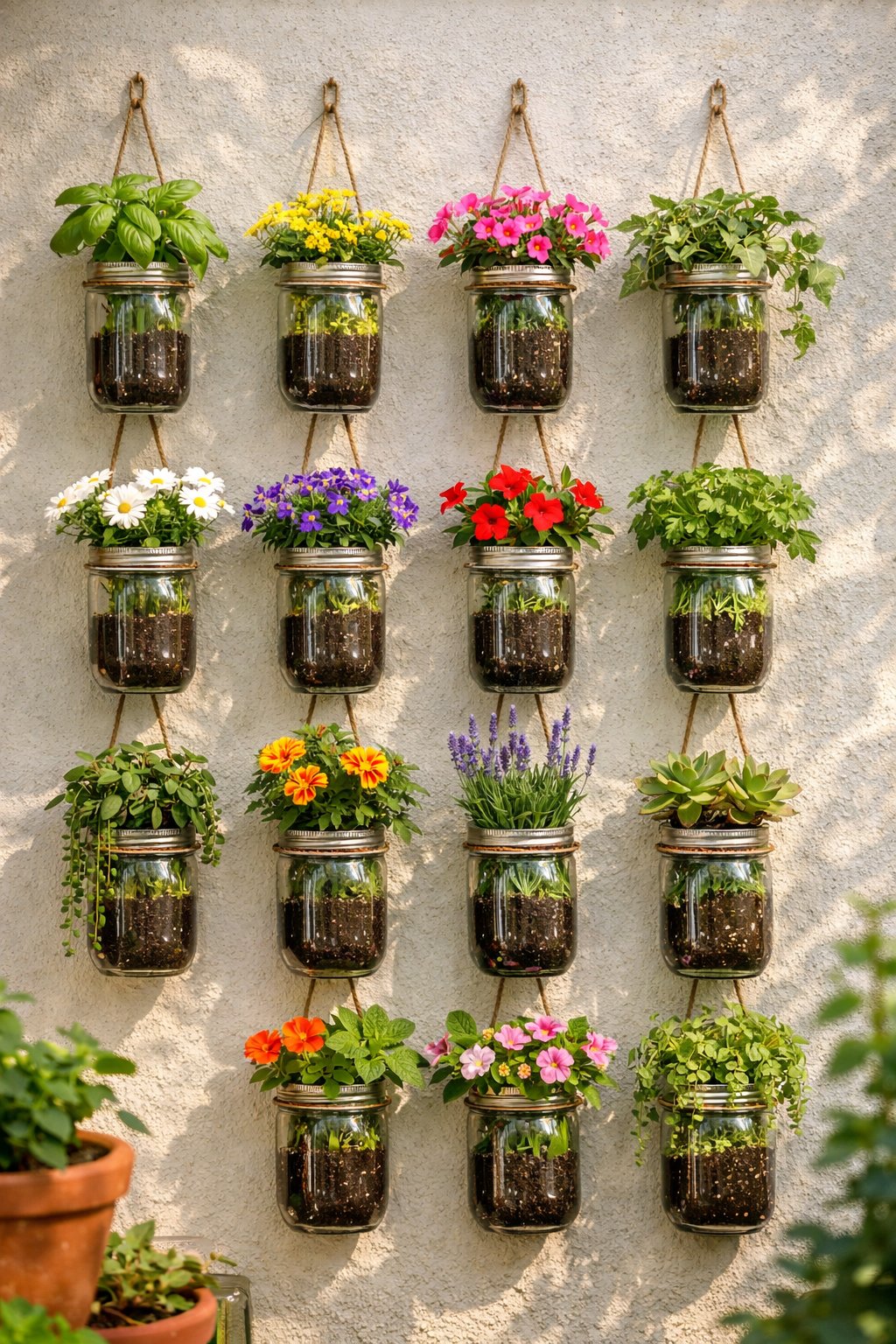
Don’t let a small yard prevent you from growing something wonderful. You can hang mason jars on a wall and fill them with herbs, succulents, or small flowers. It’s an affordable, simple way to add a fun, personalized touch to your space.
Place a layer of gravel at the bottom for drainage, add soil, and select hardy plants that don’t require constant attention. Use metal clamps, twine, or a wooden plank with holders to secure the jars.
Rotate the jars occasionally to ensure they get even sunlight, and use a small syringe for watering to avoid making a mess. Combining trailing plants with upright ones creates interesting texture and a pop of color that is always eye catching.
16. Plant a sensory garden with textures like lamb’s ear and smells like rosemary, so you can hug your plants without the awkwardness
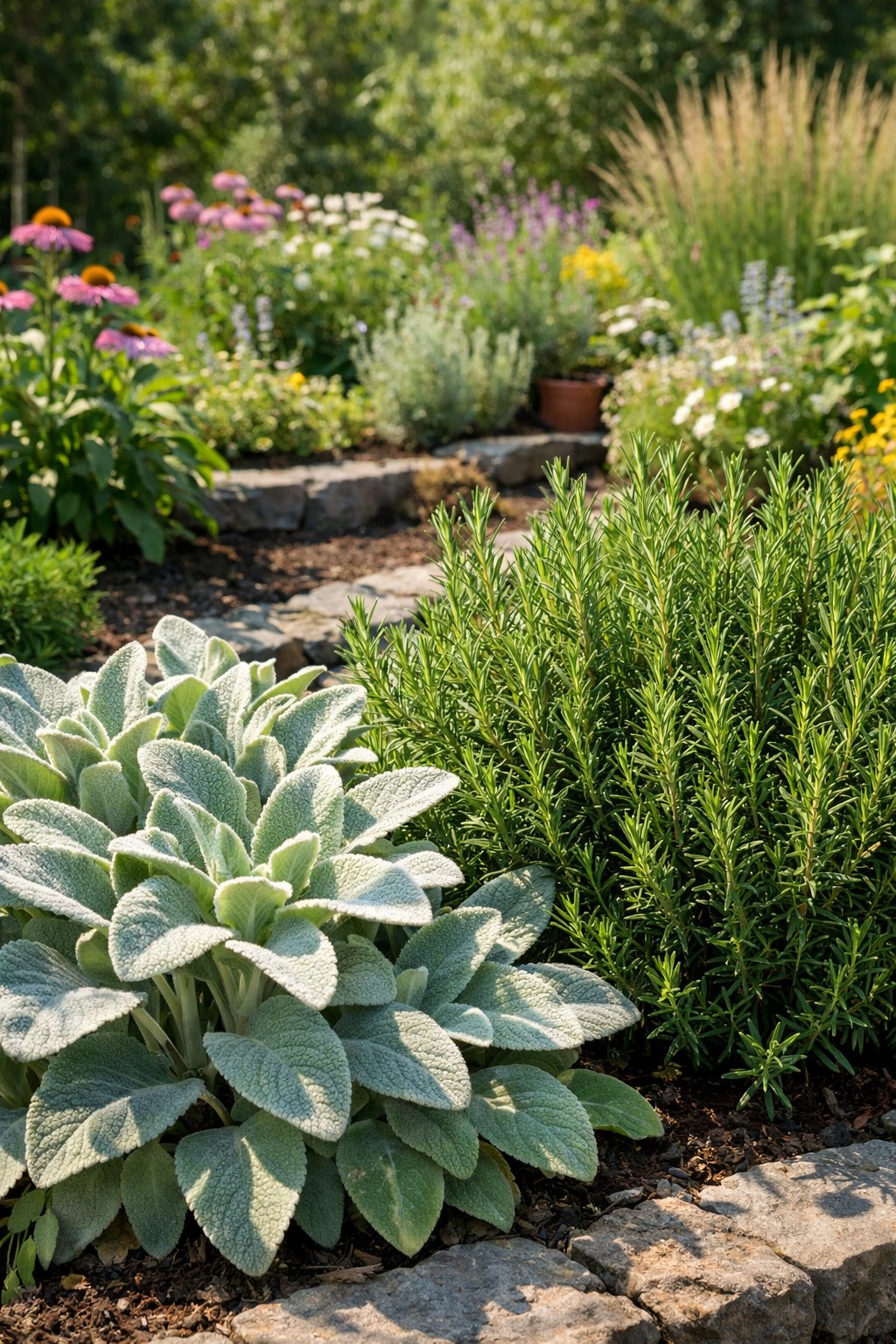
Have you ever wanted to embrace a plant but were concerned it might be prickly or have an odd scent? Stick with soft plants like lamb’s ear for touch, and rosemary or lavender for fragrance. These plants create a calm atmosphere without any thorny complications.
Group plants based on their feel and smell. Place the fuzzy ones near pathways so you can brush against them as you pass, and position fragrant herbs near seating areas to catch their scent while you relax.
Add a small bench and low, accessible paths so everyone, from children to adults, can wander through and safely interact with the plants. Mixing different colors and heights keeps the garden dynamic and encourages exploration.
17. Add a raised deck with a built-in planter box so you can sip coffee while your plants soak up the sun right next to you
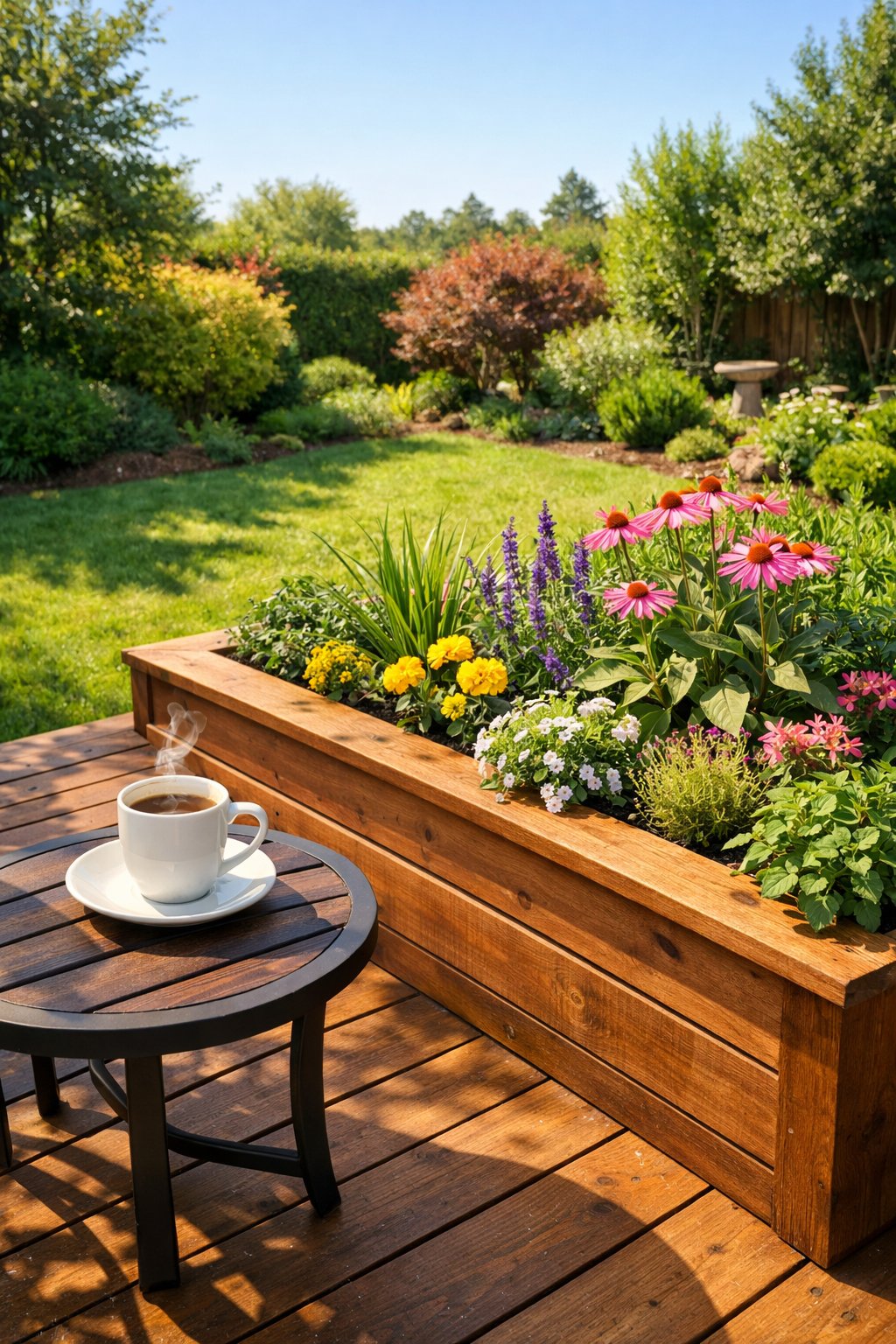
Let’s reconsider the purpose of your deck. It’s for more than just storing chairs or your child’s bicycle.
By integrating a planter box directly into your raised deck, you bring the garden right up to your main hangout area.
Imagine relaxing with your coffee while your basil and petunias thrive just a few inches away. Who wouldn’t want that experience?
These built in planters can also provide extra seating and contribute to a tidy, cohesive look, making your backyard feel more put together.
Planters can be used to conceal awkward deck posts or serve as a fragrant railing, which is much more pleasant than plain wood.
Choose rot resistant wood or composite materials if you prefer to avoid the annual task of sanding and sealing.
Ensure there is proper drainage. Your plants’ roots will appreciate it.