

Tired of the endless cycle of watering, mowing, and maintaining a traditional grass lawn? There’s a fantastic alternative that swaps out the labor for a lush, fragrant carpet of green. Say hello to the creeping thyme lawn, a beautiful and resilient ground cover that transforms your yard into a low maintenance oasis.
Also known by names like “Mother of Thyme” or “Thymus serpyllum,” this plant creates a thick, aromatic mat as it grows. When it bursts into bloom, your yard will be a neighborhood showstopper, covered in a sea of white, red, pink, or purple flowers. But before you can enjoy this stunning display, you need to get it planted.
Can Creeping Thyme Be Used As A Lawn?
Absolutely. Creeping thyme serves as a wonderful ground cover and a stellar alternative to a conventional grass lawn.
Beyond its beauty, creeping thyme is impressively drought resistant. It can handle tough seasons and needs very little water once it’s fully established.
This perennial shrub thrives in sandy or rocky soil and loves soaking up the full sun.
Pros of Creeping Thyme Lawn
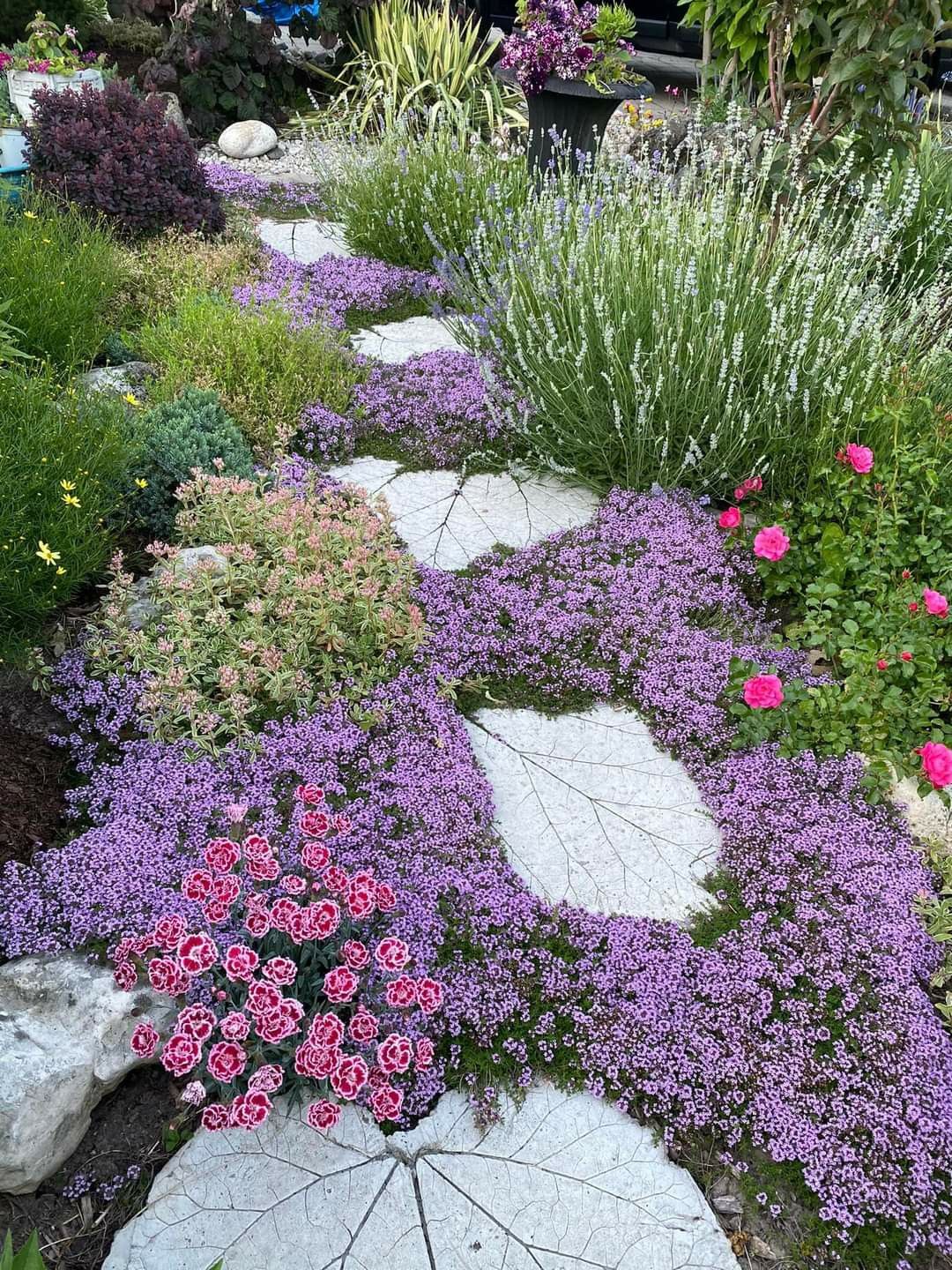
Discover the many advantages of choosing a creeping thyme lawn for your yard.
1. It’s Suitable for Any Climate
Grass lawns often struggle to stay green year round, looking particularly sad during the summer heat.
Creeping thyme, however, is a different story. It needs minimal water to survive and continues to flourish through both summer and winter, thanks to its resistance to moisture and frost.
2. You Do Not Need to Replant
As a perennial plant, creeping thyme doesn’t die off each year; it lives for many years. Because it continuously spreads and grows, you won’t need to replant it annually.
3. Beautiful
A lawn covered in creeping thyme looks like a soft, miniature blanket. Its lovely blossoms are not only aesthetically pleasing but also feel wonderful underfoot.
Depending on the variety you choose, your yard will be blanketed in white, pink, purple, or red flowers during its peak blooming season.
4. Easy to Maintain
Maintaining a creeping thyme lawn is refreshingly simple. You only need to water it when there hasn’t been enough rain.
It’s a low growing ground cover that spreads sideways, typically reaching a height of only 2 to 4 inches, which means mowing is completely unnecessary. Your lawn can maintain its natural, untrimmed look for years.
Furthermore, this type of lawn can grow perfectly well without any fertilizers.
5. Pollinator-friendly
The flowers of creeping thyme are a magnet for pollinators like bees and butterflies, making your lawn a beneficial addition to the local ecosystem.
6. Supports Wildlife
The scented flowers of the creeping thyme plant produce nectar that attracts butterflies and bees. It also provides them with a valuable habitat.
7. Discourages The Growth Of Weeds
Creeping thyme forms a dense, carpet like ground cover that effectively chokes out weeds. This results in a beautiful, weed free lawn with minimal effort.
8. It’s Mosquitos, Rabbits, and Deer-Resistant
If you’re looking to deter mosquitos, rabbits, and deer, consider planting a creeping thyme lawn. The plant’s distinct aroma naturally repels these common garden pests.
9. Emits a Pleasant Scent
Creeping thyme fills the air with a delightful fragrance, making your lawn smell incredible. This is a pleasant contrast to turf or artificial grass, which can sometimes produce unpleasant odors.
Cons of Creeping Thyme Lawn

Here are some of the disadvantages associated with a creeping thyme lawn.
1. Expensive to Install
The initial cost to install a creeping thyme lawn is quite high, often more expensive than putting in sod or plugs. For this reason, it is typically used for smaller spaces rather than large areas.
2. Unsuitable for High Foot Traffic
A thyme lawn can be damaged by heavy foot traffic. It is best suited for areas with low to moderate use.
3. Prone to Root Rot
Thyme roots are susceptible to rot if the lawn is overwatered or if the soil has poor drainage.
4. Needs Direct Sunlight
If your lawn is mostly shady, thyme is not the ideal ground cover, as it requires plenty of direct sun to thrive.
5. Vulnerable to Destructive Insects
Thyme does not repel damaging insects such as spider mites and aphids. You may need to invest in an insect repellent to protect your lawn. On a related note, the flowers will attract a large number of bees to your yard.
How To Plant Creeping Thyme Lawn
While establishing a creeping thyme lawn isn’t overly complicated, it does require more labor than installing traditional turf.
This plant prefers well drained soils with a neutral or slightly alkaline pH between 7 and 8. It flourishes in full sunlight but can tolerate a bit of partial shade.
1) Growing Creeping Thyme From Seeds
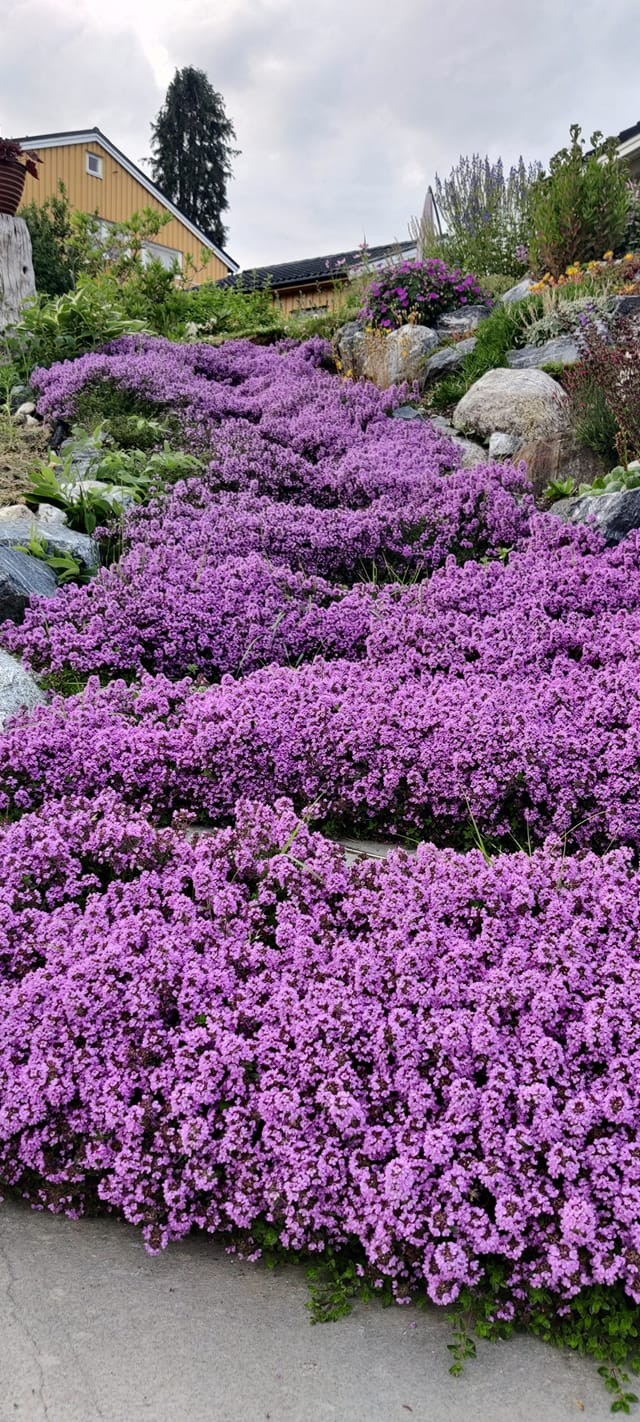
If you choose to start your creeping thyme from seeds, you have two options. You can begin by sowing them indoors in pots, then transplanting them outside once they are 2 to 4 inches tall.
Alternatively, you can sow the creeping thyme seeds directly onto the ground.
If you currently have a grass lawn, you must remove it before planting. While non selective herbicides work, they aren’t the most environmentally friendly choice.
A different method involves smothering the grass by blocking sunlight with layers of newspaper or black plastic sheeting, which will kill both the grass and other vegetation.
Once the grass is gone, or if you’re starting with a bare patch of soil, follow these steps.
First, remove any weeds by hand pulling them or using a post emergent herbicide. Clear away any debris like stones, stalks, or dirt, then use a rake to loosen the soil. Spread the creeping thyme seeds about 1/16 of an inch deep, spacing them approximately 8 to 12 inches apart to give them room to spread. Cover the seeds with a thin layer of soil for protection from wind and predators while still allowing sunlight to penetrate. Finally, water the area two to three times a day, keeping the soil moist but not soggy.
Note
If you start the seeds in a pot, make sure the container has plenty of drainage holes. The seeds should germinate in about 14 to 21 days.
Once your pot grown seedlings are about 2 inches tall, you’ll need to harden them. Leave them outside during the day to get sunlight, and bring them back inside at night.
It takes about a year for creeping thyme to become fully established. After that point, you’ll only need to water it during periods of inadequate rainfall.
2) Growing Creeping Thyme By Subdivision
This technique involves separating the rootballs of mature creeping thyme plants and replanting the divisions to encourage new growth.
The best time to do this is in the spring or fall.
Here’s how to propagate creeping thyme by subdivision:
Begin by digging about 3 to 4 inches away from the center of a healthy, mature creeping thyme plant. Carefully lift the rootball from the soil and shake it gently to remove excess dirt. Using a sharp, sterile blade, divide the rootball into four sections, making sure each piece has a sufficient amount of roots. You can replant these new rootballs in a pot with fresh soil or directly into the ground. Water them two to three times daily to support new growth.
Will Creeping Thyme Choke Out Grass?
Yes, creeping thyme can indeed choke out grass if it is given the chance to spread and establish itself with vigor. Its dense, mat forming growth habit can effectively suppress grass by outcompeting it for sunlight, water, and nutrients.
A lawn with shorter grass species is more susceptible to being overtaken by creeping thyme, as thyme itself does not grow taller than 3 inches.
The Best Creeping Thyme for a Lawn
With numerous thyme variants available, you’ll need to select the one that best fits your needs.
The reality is that you are spoiled for choice when it comes to selecting a creeping thyme for your lawn.
The most common creeping thyme varieties are:
1. Red Creeping Thyme
This vigorous creeping variety features deep red foliage and produces clusters of pink or red flowers in the summer. It is the most popular thyme variety for creating a creeping lawn.
2. Magic Carpet Thyme
This aromatic, dwarf sub shrub forms a tight cushion of tiny, dark green rounded leaves. It blooms profusely from early to mid summer and will remain evergreen in mild winters.
It grows to a height of 1 to 2 inches and spreads to between 12 and 18 inches.
3. Elfin Thyme
This low growing perennial shrub has a dense, mounding habit. It remains evergreen in milder regions and becomes deciduous in colder climates.
It is perfect for planting between bricks, pavers, and in rock gardens.
4. Creeping Golden Lemon
This variety produces shiny, greenish gold leaves with a distinct lemon scent. It also blooms with lavender flower spikes during the summer.
5. Pink Chintz Thyme
This type of creeping thyme reaches about 1 inch in height and can create a spread of up to 18 inches.
It blooms in mid spring, forming a carpet of salmon pink flowers, and it can tolerate occasional foot traffic.
6. Wild Thyme
This variety comes in both upright and prostrate forms. Its foliage can be green, gold, or variegated, and its flowers range in color from purple to red.
7. Woolly Thyme
Recognizable by its gray leaves, this variety is well suited for rock gardens and is great at withstanding foot traffic.
FAQs
Are Thyme Poisonous To Dogs?
Thyme plants are not toxic to dogs, so your four legged companion can safely play on your lawn.
Is Creeping Thyme Invasive?
Creeping thyme does not have invasive roots, so it poses no harm to other plants in your garden.
Can you walk on creeping thyme?
Yes, you can walk on creeping thyme, but it is best to keep the foot traffic low or moderate.
Where is the best place to plant creeping thyme?
The ideal location for planting creeping thyme is a sunny spot with well drained soil. It works beautifully in rock gardens, as a general ground cover, between stepping stones or pavers, or in containers and raised beds. It can also be a lawn substitute in areas that don’t see a lot of foot traffic.