Closing off the space under your deck, stairs, or porch is a fantastic way to upgrade your home’s exterior. If you’re ready to tackle this project yourself, you’ve come to the right place. These 40 deck skirting ideas offer a wealth of solutions for enclosing the area beneath your outdoor deck, staircase, or front porch, with plenty of inspiration for your next DIY adventure.
You have two main paths for skirting your deck: using traditional lattice or exploring lattice alternatives. For years, lattice has been the go-to choice for homeowners and DIY enthusiasts because it’s affordable, common, and simple to install. It works beautifully for both decorative purposes and for keeping critters out from under your deck.
However, lattice alternatives are also gaining popularity. These can include wood planks, faux stone panels, galvanized metal, decorative plastic screens, composite wood, and even expandable faux-greenery trellis. You can also find specific products designed primarily for animal protection.
This collection covers a wide range of deck skirting types, from budget-friendly and inexpensive designs perfect for a weekend project to more high-end, professional-looking installations.
When planning your project, you’ll need to decide between horizontal or vertical layouts, which often depends on the height and length of the space you’re covering. For taller, elevated decks or staircases, that under-deck area can become valuable storage space, complete with a small access door or a larger gate.
The style is all yours to choose. You can opt for modern or rustic skirt designs to complement your home’s architectural style. You can also decide whether to frame the skirting panels for a finished look or leave them unframed for a simpler aesthetic. These concepts apply equally to a front porch or a backyard deck.
Ultimately, deck skirting is a finishing touch that adds a significant decorative element to your house. For those with a knack for DIY, you can craft some truly unique and creative designs using the variety of lattice and decorative panels available today. To help you get started right away, this guide also includes useful tips for cutting and installing lattice.
Let’s explore some photos and design ideas for all these options.
Lattice Deck Skirting Ideas
You can jump straight to the design ideas, or you can first learn about the different kinds of lattice and get a few pointers on creating and installing your latticework.
The first step in choosing the perfect skirting for your outdoor deck or porch is to define its purpose. Are you looking to hide the less-than-sightly space beneath your wood deck? Do you need to keep animals from making a home there? Are you hoping to create additional storage? Or do you want creative ideas to elevate the look of your home’s exterior? Your answers will guide you toward the best design for your needs.
Lattice deck skirting is simple to construct using pre-made lattice panels.
Lattice Panels (for Deck Skirting)
Lattice is sold in panels and is traditionally available in three main materials:
- Wood (typically Pressure Treated Spruce or a similar wood)
- Plastic (Vinyl PVC or HDPE)
- Aluminum
Plastic lattice is often recommended for its superior durability. Wood panels are only slightly cheaper and sometimes can even cost more. At most home improvement stores, ready-made lattice is commonly sold in 2′ x 8′ or 4′ x 8′ panels. Manufacturers that sell directly often offer a variety of sizes, including custom dimensions. The panels are available both framed and unframed. To build your own DIY frame, you can purchase cap and divider moldings made specifically for lattice panels.
There are two design patterns available:
- Diamond Cell Lattice
- Square Cell Lattice
Square cell panels are a popular choice for achieving a more modern deck skirting look, while diamond cells are ideal for rustic or traditional designs.
The crossing boards that make up the lattice, known as laths, typically range from 7/32″ to 1/2″ thick and 1/2″ to 2″ wide. The gaps between these laths vary depending on the intended use and desired aesthetic. Usually, the gaps are uniform, but offsetting the laths can produce unique patterns. Lattice with smaller cells is often called “privacy” lattice, while the standard version is known as “traditional” or “garden” lattice.
A smaller cell size is also effective at keeping smaller animals out.
Depending on the material, lattice panels are available in numerous colors. Natural wood, white, and black are the most common and popular choices.
Lattice naturally allows for air ventilation under the deck. If you choose an alternative solid material, you might need to install dedicated air vents.
Pressure-treated Wood Lattice vs. Plastic Lattice – Pros and Cons
The lifespan of your lattice panels can vary depending on your climate and how close the skirting is to the ground. Here are the general advantages and disadvantages of wood and vinyl skirting panels.
Wood Pros:
- More affordable than plastic
- Resistant to rot and pests
- Can be painted
- Resistant to warping because it doesn’t absorb much moisture
- Doesn’t expand or contract significantly
- Easier to install, often just with a nail gun
Wood Cons:
- Only available in a natural wood color
- The metal staples holding the wood strips together can loosen or disconnect over time
- Requires maintenance; it must be stained or painted to avoid turning gray and decaying
- Doesn’t last as long as plastic, though it can last 15-20 years with regular re-staining
- Like all wood, it will eventually rot
Plastic Pros:
- Resistant to rot and pests
- More flexible and easier to bend than wood
- Designed to mimic the appearance of wood
- Available in many colors, including white, green, and wood tones
- Does not require sealing to protect against moisture
- Simple to clean
- Requires no maintenance
- Extremely long-lasting, with many panels offering lifetime warranties
Plastic Cons:
- More expensive than wood
- Paintable, but requires a special primer
- Can warp if not installed with room for expansion, though this is avoidable with proper framing
- Can develop mildew and mold on its surface, depending on the plastic type
- Requires pre-drilled holes for screw attachment; nails are not recommended
- May become brittle over time with exposure to harsh temperatures
- Colors other than white may fade with sun exposure
As you can see, plastic lattice skirting demands a bit more effort and a higher initial investment for installation, but it offers a longer lifespan, is virtually maintenance-free, and comes in a wider variety of colors.
Can You Paint the Plastic Lattice?
You can paint plastic (PVC vinyl) lattice, but it’s essential to use a special primer before applying paint spray to prevent peeling. A more practical approach is to purchase the lattice in a color that already matches your desired scheme. One good tip on how to paint it can be found through online DIY forums.
How to Cut Lattice (plastic and wood)
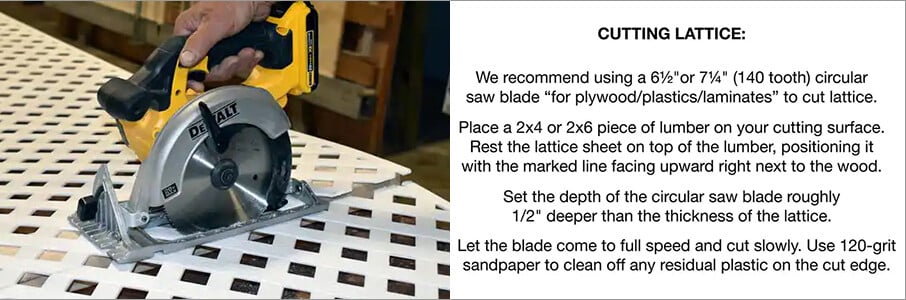
Cutting lattice panels is a straightforward process for both vinyl and wood. While you can use a fine-toothed hand saw, a circular saw provides the fastest and easiest method.
Cutting Lattice:
Whether you’re using a hand saw or a circular saw, a few preparatory steps can ensure your project goes smoothly. For the best results, always use a small-toothed blade to cut either wood or plastic lattice.
- Always measure twice and cut once. Remember a few things when taking your measurements. Ensure the piece is square if you intend to frame it, as you may need to trim the panel to fit correctly. For plastic lattice, leave a 1/4″ gap on all sides to accommodate natural expansion and contraction with weather changes.
- If you’re installing lattice on a slope, measure the grade and cut the panel to match it. A chalk line is an easy way to mark your cutting line.
- Remove any staples before you cut. Check that none are present along your intended cutting line. Popping them out will prevent damage to you or your saw blade. A small screwdriver can help with this.
- Get an extra person to help, if you can. Cutting lattice is much easier with a partner to hold the panel steady. If you’re working alone, make sure the entire panel is well-supported to get the best results.
- Protect yourself by wearing safety glasses.
- Position the ‘face side’ up when using a fine-toothed hand saw or reciprocating saw to minimize splintering. When using a rotary saw, place the ‘back side’ up.
- If you need to make a curved or angled cut, a fine-toothed keyhole saw or a power jigsaw is your best tool.
- Slow down as you near the end of your cut. The lattice requires firm support to keep the panels from splitting or tearing.
Home Depot offers a helpful guide on how to cut a 4 ft. x 8 ft. Garden Vinyl Lattice panel with a circular saw.
The image above shows a small-toothed circular saw cutting a sheet of diamond-patterned vinyl lattice. It is titled “Cutting Lattice” and outlines the necessary steps.
Addressing Plastic Lattice Warping Issue
It’s crucial to address the issue of warping right away. Although a plastic lattice skirt can be very durable, it is susceptible to warping, which must be accounted for during installation.
First, it’s important to understand a key difference. “Plastic” lattice can refer to two distinct materials: Vinyl PVC or High-Density Polyethylene (HDPE). Before purchasing, you should ask for the specifics. Product names can be misleading. For instance, a panel might be labeled “Vinyl Lattice” but is actually made from HDPE. Solid core vinyl and hollow vinyl PVC have very little expansion or contraction. In contrast, according to lattice manufacturer Permalatt, HDPE plastic panels expand and contract with weather shifts at an expected rate of 1/16″ per foot. For an 8-foot panel, that’s a total of 1/2″. HDPE shrinks in colder winter months and expands during warm summer months. If the lattice is fastened too tightly, this can cause problems. In the summer, it leads to warping. In the winter, it can cause cracking near the fasteners.
Let’s review some installation tips that can prevent warping.
How to Install Plastic Lattice
Many people don’t invest enough effort when attaching a lattice to a wood deck. They may not frame the panels or fail to account for potential warping. They might simply staple or nail the lattice to the deck and call it a day. Within a few years, they often end up with a result like the one shown below.
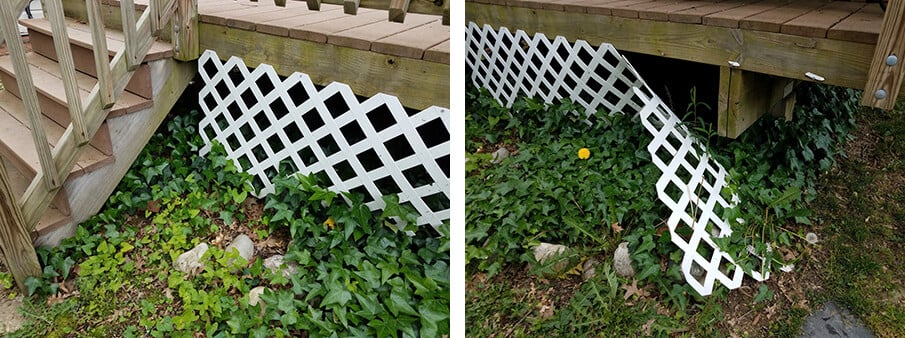
You want to avoid this situation. The picture above shows broken plastic lattice deck skirting that has snapped off the nails due to warping. Do not use nails with plastic. Hammering into vinyl can weaken and dent the material, and nails don’t provide enough room to prevent warping and cracking from weather changes. Also, avoid placing screws in the center of the panel or all around its perimeter. Doing so almost guarantees the lattice will break within a year, even with pre-drilled holes.
There are two primary methods to construct your skirting to prevent damage from warping.
The simplest approach is to nail a 1″x2″ trim plank over the lattice directly into the wood structure, which allows the panel to float freely behind it.
The best solution, however, is to frame your plastic lattice. While it requires extra effort and materials to build a frame, the result is well worth it. A frame provides additional support and significantly reduces the risk of warping. You can easily create a DIY frame with pressure-treated lumber. Just ensure the frame is 1/4″ to 1/2″ larger than the latticework itself to allow for expansion and contraction.
To learn about other installation methods for plastic lattice deck skirts, visit permalatt.com.
Wood lattice panels do not have the same warping issues. Here is a useful guide on how to install wooden under-deck skirting.
Framing Plastic Lattice Panels Using Moulding
Using plastic moldings, like the example below, makes it easy to frame a vinyl lattice skirt. However, it’s wise to consult with store specialists about warping before you buy. You should ask if the frame will expand and contract along with the lattice inside it. You need to know if such a permanently attached frame or fascia might contribute to warping.
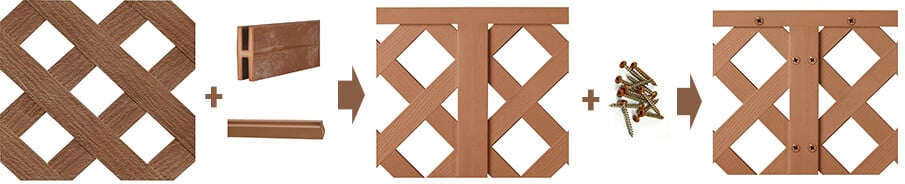
The example above demonstrates lattice framing with Divider and Cap moldings.
The divider molding is designed with twin internal channels to allow two panels to slide in. The cap molding has a single channel and is used to frame the top, bottom, and exterior sides of the lattice. This trim is attached with screws secured into pre-drilled holes.
Here are some excellent examples of lattice deck skirting designs. Let’s look at pictures of 40 beautiful installations, some of which are DIY projects.
Wood Lattice Skirting Ideas
Wood lattice skirting provides a classic aesthetic that is both simple to install and budget-friendly.
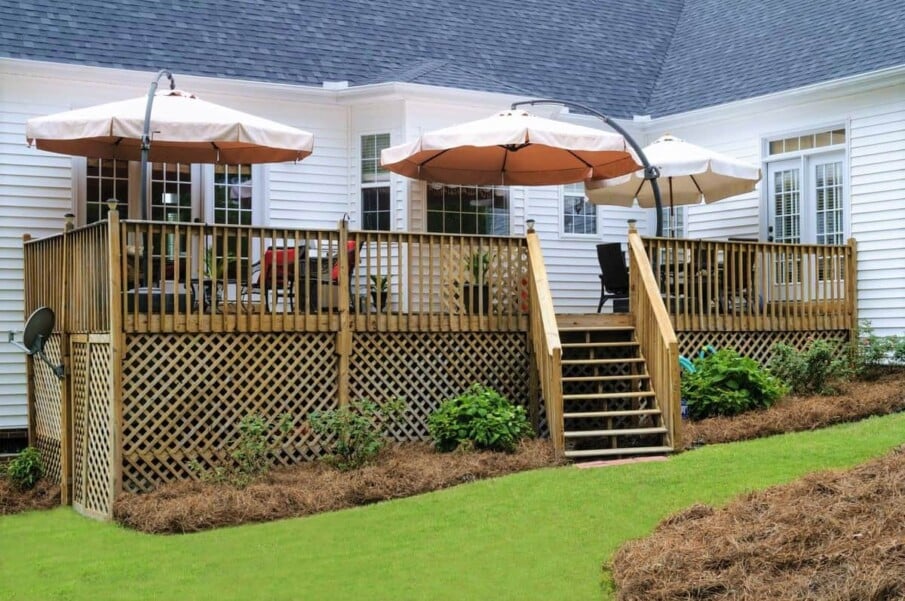
This design features an unframed wood lattice in a large diamond pattern, installed on a taller deck. A gate is integrated into one side, providing access to the storage area below. The natural wood color adds warm, earthy tones to this otherwise all-white home. Image from decks-docks.com. The white umbrellas and bluish-gray roof create a lovely contrast. Note the use of hay instead of mulch, which gives it a very rural feel.
White Vinyl Lattice Skirting Ideas
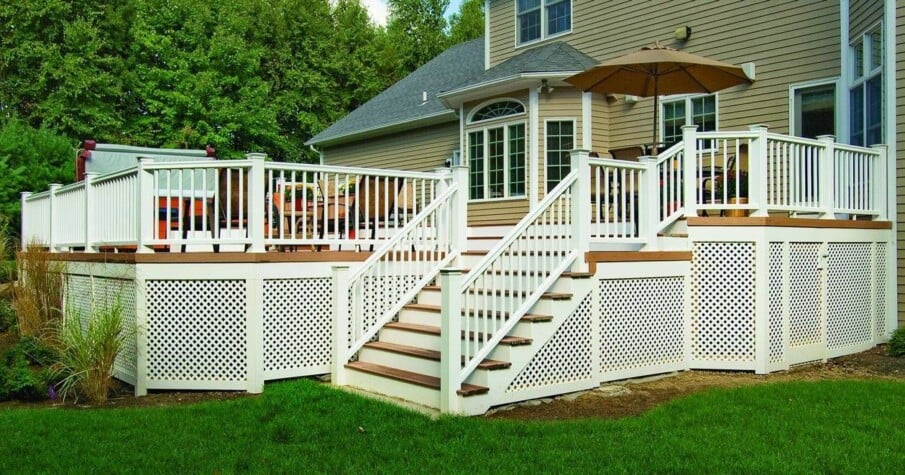
With its crisp framing and small diamond cell panels, this white lattice offers an elegant and classic skirt for this raised deck. The small openings effectively keep pests out, while the access door allows for convenient storage beneath the deck. Notice how the color of the skirt coordinates perfectly with the window frames and deck railing.
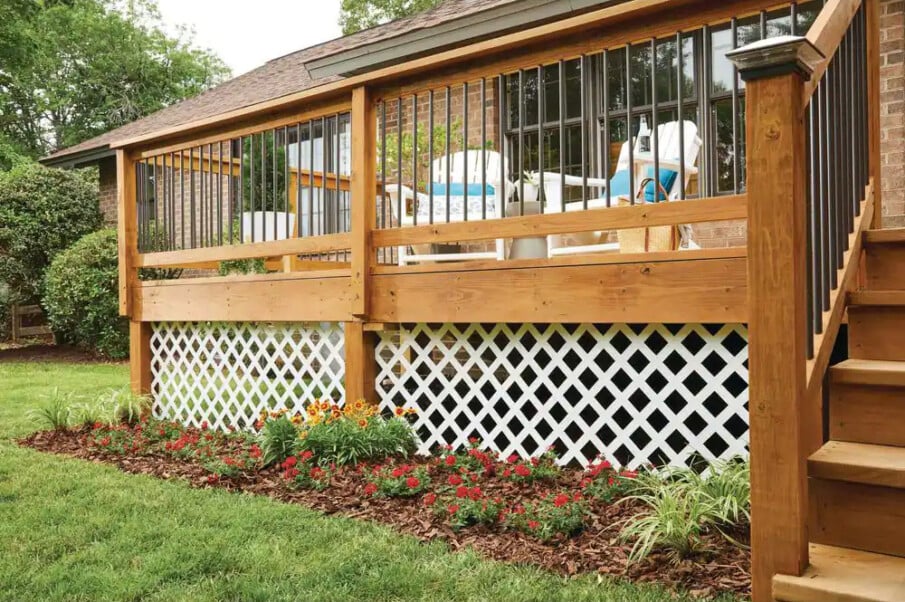
For an easy-to-install and affordable raised deck skirting option, consider this unframed vinyl lattice. This project used 4 ft. x 8 ft. White Garden Vinyl panels from Home Depot. The bright white color adds significant visual interest to this back deck design. Note that the sides are left open, making this a great example of using skirting for primarily decorative purposes.
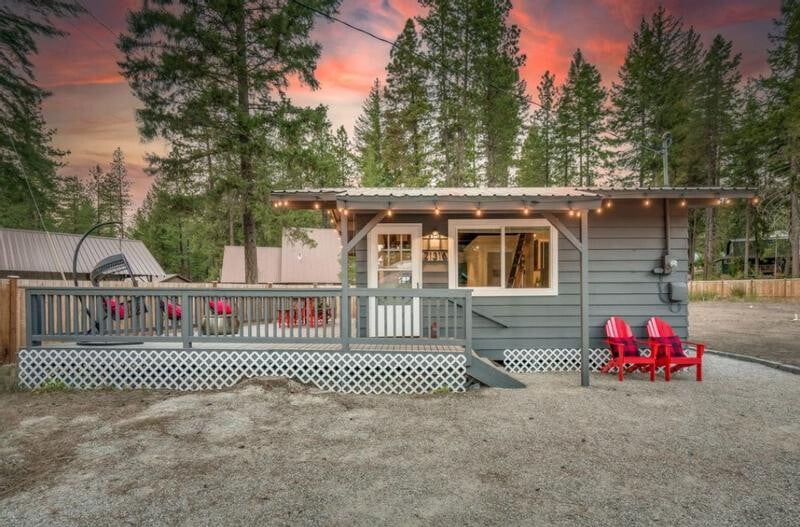
Here is another great example using the same large-cell garden lattice panels. This time, it’s applied to the low deck of a vacation cabin. For lower decks, it is cost-effective to cut wider panels in half lengthwise. The white vinyl creates a classic look while securing the space beneath the deck.
Black Vinyl Lattice Skirting Ideas
This raised deck gets a touch of modern sophistication with a square-cell black lattice that contrasts dramatically with the wooden deck. Black provides a perfect backdrop when you want something that is easy to install and doesn’t draw too much attention. If you have trouble sliding the trim pieces on, you can shave the edges with a utility knife to make the cap fit more easily. For colored panels, using matching screws will give you the best final appearance.
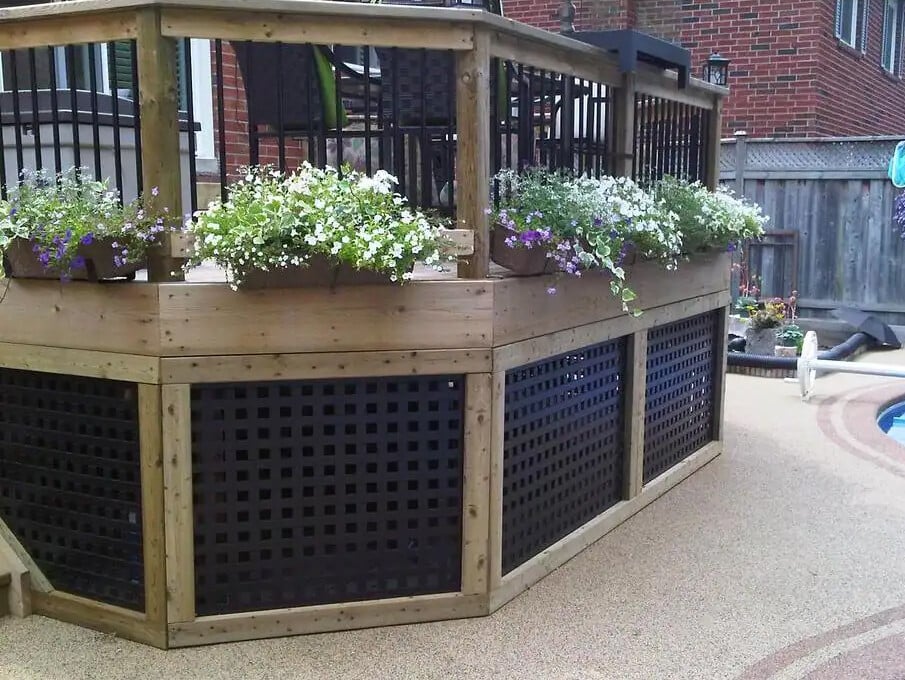
Not all vinyl is the same. Higher-quality decorative vinyl lattice is available in a variety of styles and offers better durability. The Acurio Latticeworks Black Decorative Screens shown here come with a 12-year limited warranty, backing their lightweight, UV-stabilized, and weather-resistant PVC construction.
Black lattice is often chosen to blend discreetly into the background. However, you can also use it to create a bold design, like this circular lattice installation wrapping around a high deck by Keystone Custom Decks. Unlike wood, vinyl can be easily bent to follow curves. The only thing missing from this creative design is some landscaping. Notice the nice contrast between the Redwood deck and the black skirting.
Installing Lattice Under Stair Skirting
Lattice is a perfect material for a stair skirt. Take a look at these design ideas to see how you can boost your home’s curb appeal.
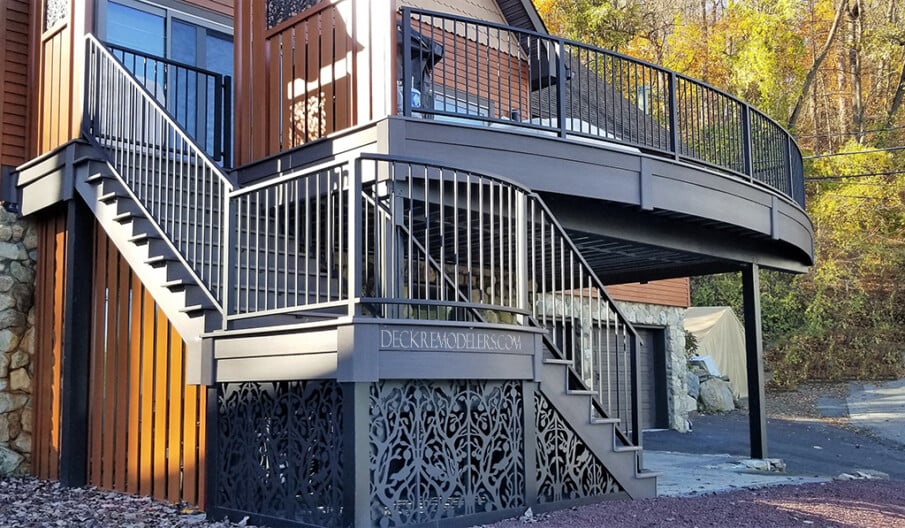
This beautiful under-stair skirting design uses decorative PVC panels to create a dramatic effect. If you are tired of straight lines, consider incorporating a decorative pattern lattice for a change of pace. Deck Remodelers completed this project.
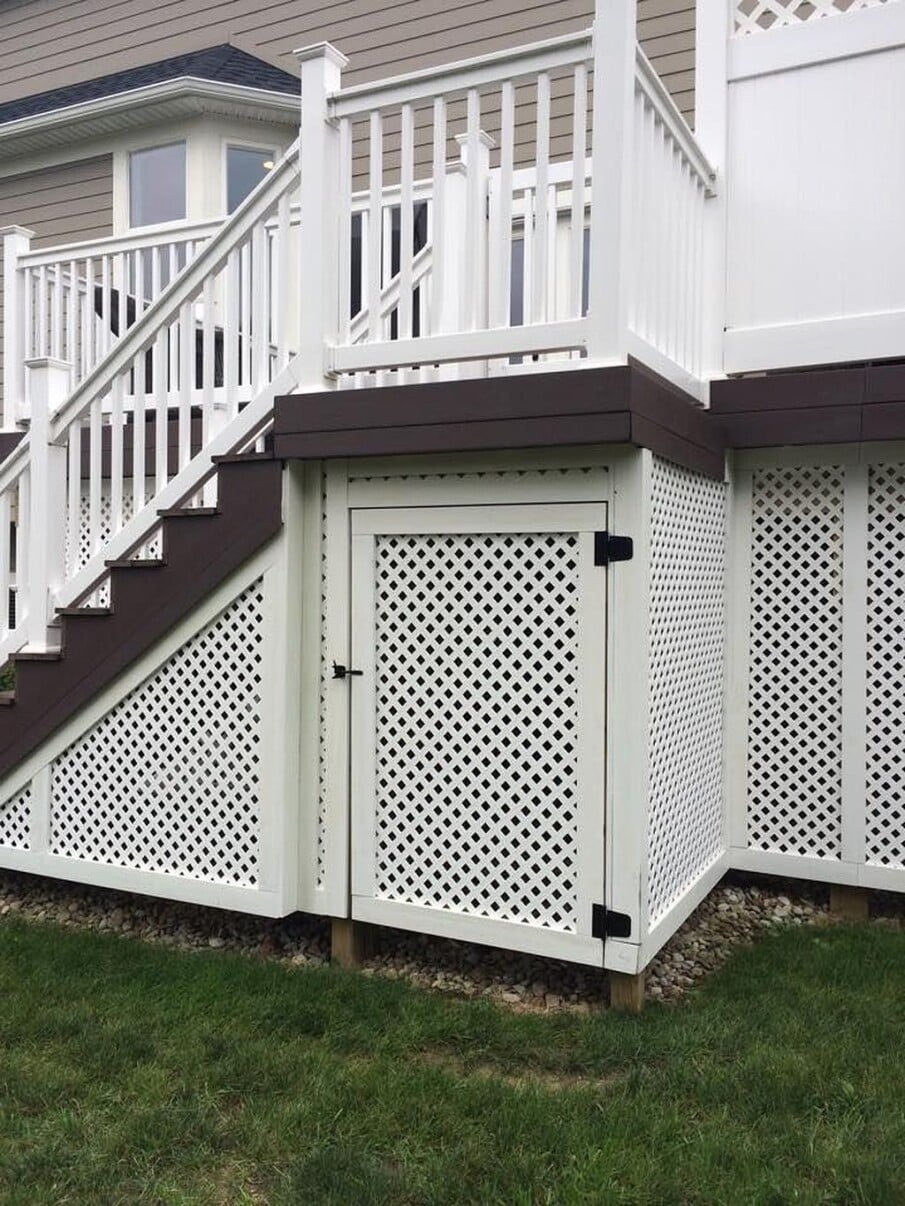
The space beneath these outdoor deck stairs is neatly enclosed with lattice, creating extra storage space.
It is important to remember that under-stair storage needs proper ventilation to prevent items from becoming damp and moldy. Lattice is naturally ventilating, which makes it an excellent choice for allowing airflow while keeping pests out. Metal mesh is another option. For the best results, line the ground under your stairs with heavy plastic sheeting. You can also add a padlock to your gate to keep your stored items secure.
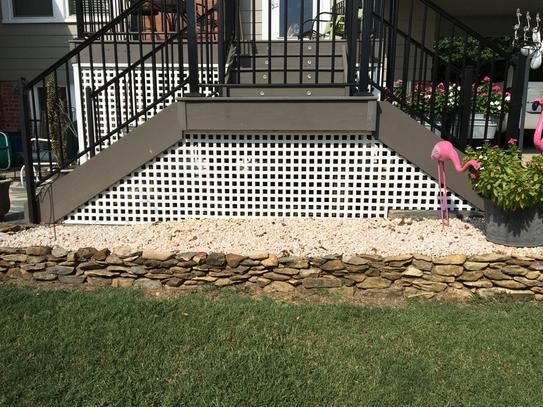
Lattice can also add style to your front porch. This under-stair skirting idea is an example of using an affordable small-square vinyl lattice to enhance your curb appeal. A single heavy-duty 4’x8′ panel was cut into a trapezoid shape to fit neatly under two symmetrical stairs.
Aluminum Lattice Understair Skirting Idea
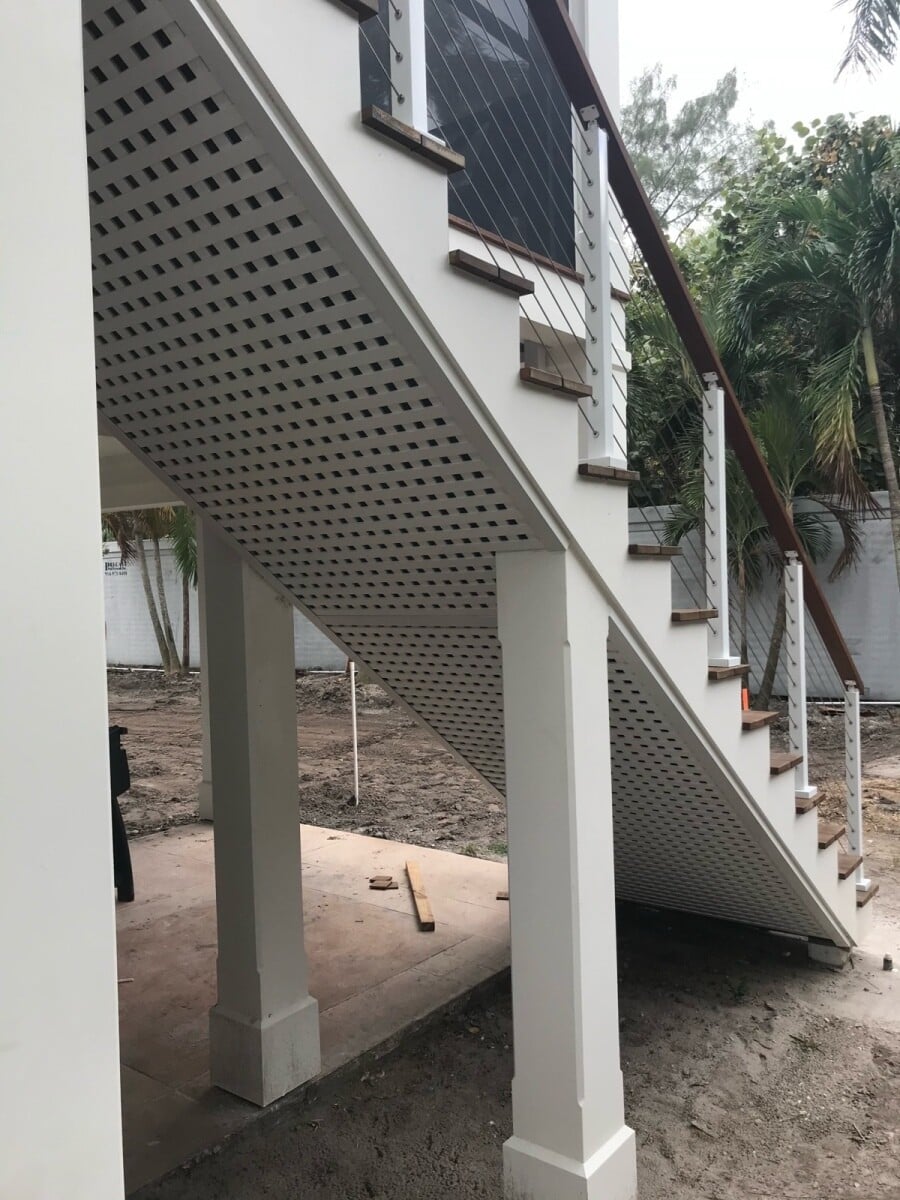
How do you enclose the bottom of a staircase? The image above demonstrates how lattice can be used to conceal the underside of stairs. This clean, modern design uses Permalatt’s 1-inch square cell aluminum lattice in a gloss white finish. Your spandrel no longer has to look unattractive. What a clever solution!
Lattice Skirting for Ramps and Steps
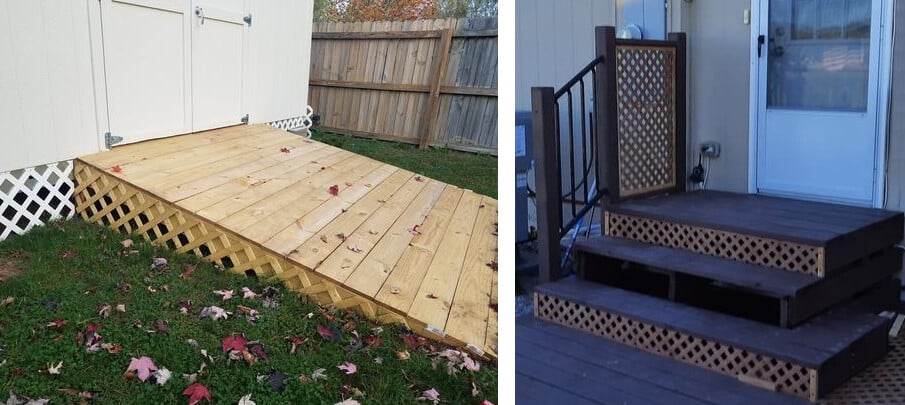
The use of lattice isn’t limited to decks and stairs. The ramp in the left image features an angled lattice trim that enhances its appearance using inexpensive garden lattice, such as a 2 ft. x 8 ft. Pressure Treated Garden Wood Lattice.
In the image on the right, vinyl lattice adds an elegant touch by closing up the steps and providing structure to the railing. This example shows a 4 ft. x 8 ft. framed Nantucket Gray Privacy Diamond Vinyl Lattice.
Deck Skirting Alternatives to Lattice
If you’re looking for what to put under your deck besides lattice, here are some great examples.
There is a wide variety of beautiful deck skirting ideas that go beyond lattice. It’s important to keep in mind that some of these alternatives may require more effort to install and maintain. While wood and plastic lattices can break, they are simple and relatively cheap to replace. Deck skirting alternatives such as brick, faux stone, and metal involve a greater investment and more effort to repair. They are generally more expensive to install and may require more technical skill or specialized tools. However, once installed, these materials are typically very durable and easy to maintain.
The following list includes some of the best materials for deck skirting, such as galvanized metal, expandable PVC trellis, faux stone, decorative metal panels, and polypropylene panels. There are also DIY ideas using composite skirting and cedar planking. All these materials and concepts are suitable for both backyard decks and front porches.
Galvanized Metal Skirting
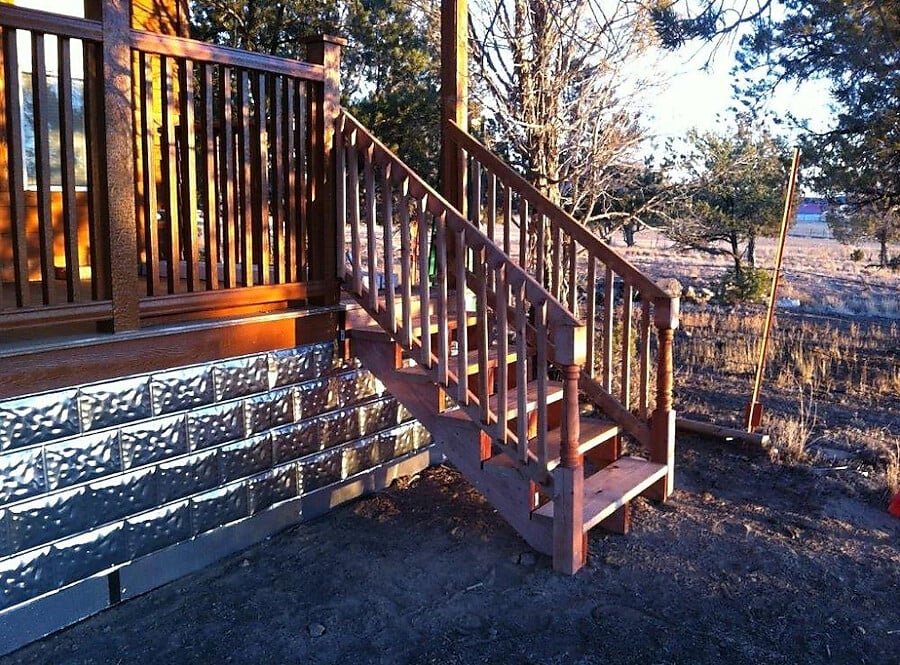
As shown in the example above, galvanized metal skirting panels offer an attractive and easy-to-install alternative. These panels can help reduce energy costs by trapping heat and also prevent animals from getting under your deck. They provide a sturdy barrier against wind and can be removed and reused if needed. If you intend to use your under-deck space for storage, they create a highly secure area. Just remember to include a ventilation system, especially if you pair solid panels like these with wooden decking. The product shown here is a 28-in x 5-ft Galvanized Metal Skirting Panel.
Typically made from steel, these durable panels are easy to attach to a wooden deck with screws, nails, or pop rivets. Depending on your deck’s construction, you might need to build a simple wooden frame first and then attach the metal skirting to it.
As a quick tip, using screws instead of nails will ensure a more stable installation. Screws can better withstand the seasonal contraction and expansion of the metal skirting. Nails, on the other hand, can be pushed outward over time. Galvanized screws are the perfect choice to match the skirt’s color and resist the elements.
Faux Stone
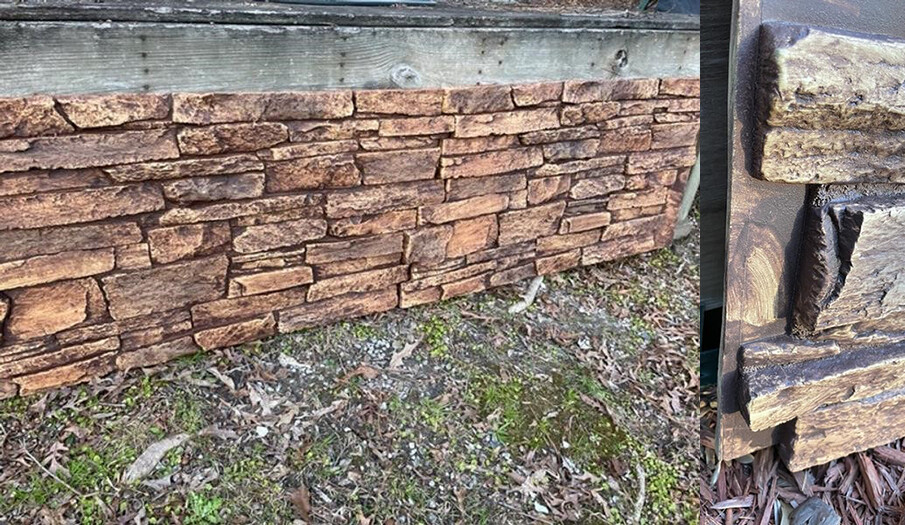
This lattice alternative uses faux stack stone panels to create the look of a much more expensive finished skirting around your deck. Made of polyurethane, they are lightweight and easy to install. The panels can be easily cut with a skill saw or a hand saw. For a seamless installation, you overlap the edges and secure them with screws and a bit of adhesive to ensure they stay firmly in place. Pictured here is a Ledge Stone Polyurethane Interlocking Siding Panel in Volcanic Ash.
Cedar Skirting
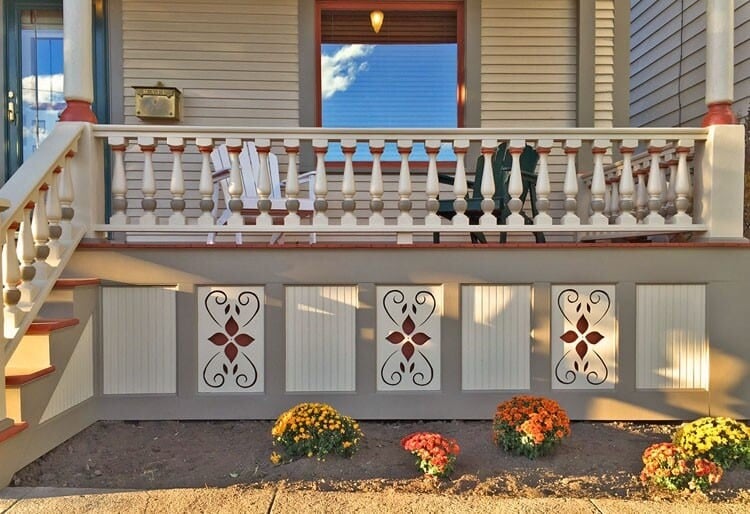
Cedar is a naturally pest- and weather-resistant wood that can be used to create beautiful skirting, as seen with the paneled planking above. Cedar skirting can be stained to highlight its natural beauty or painted to match a home’s design and trim. This design idea comes from American Porch.
Artificial Expandable PVC Trellis
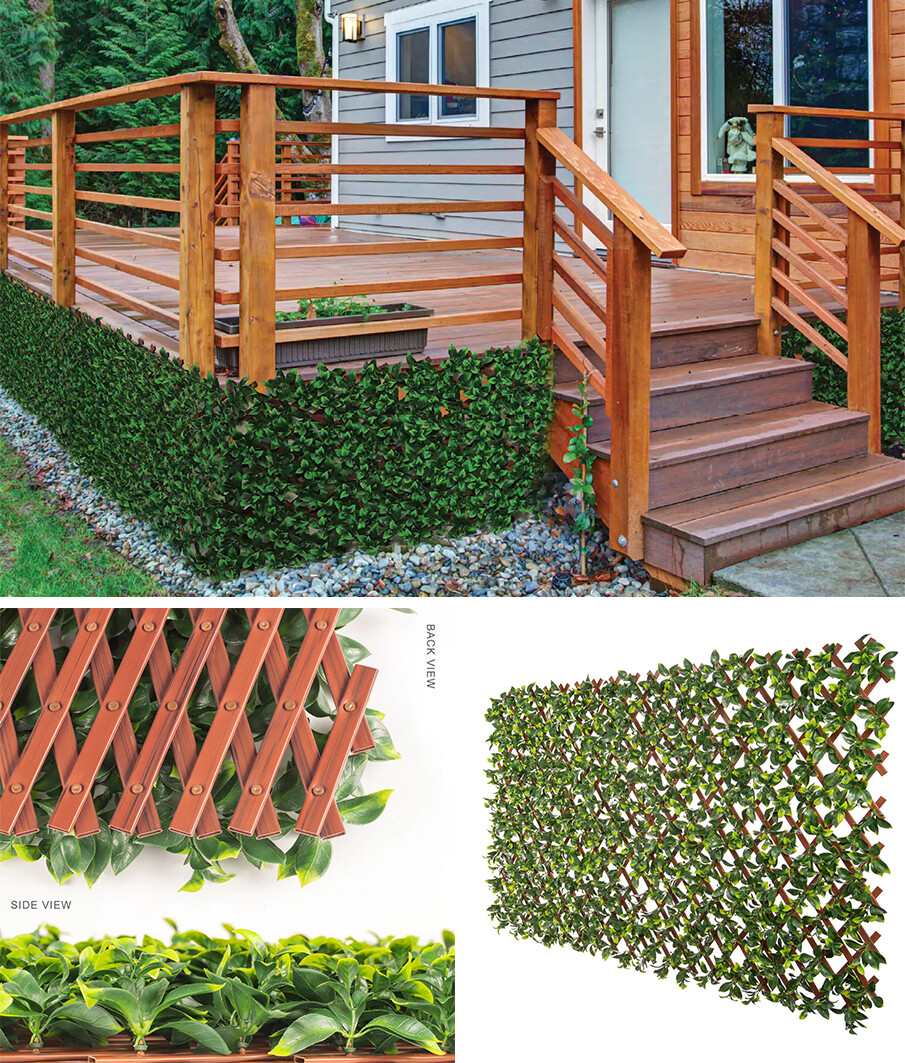
This expandable plastic trellis is incredibly easy to install. It can be hung with cable ties to create the illusion of a lush, maintenance-free garden. Made of PVC, it is both durable and easy to clean. The expandable trellis shown above features faux Gardenia leaves for a quick and super simple under-deck skirting that adds a garden flair. Before installation, remember to check the direction the leaves are laying, as they can be easily adjusted.
Outdoor Decorative Metal Panels
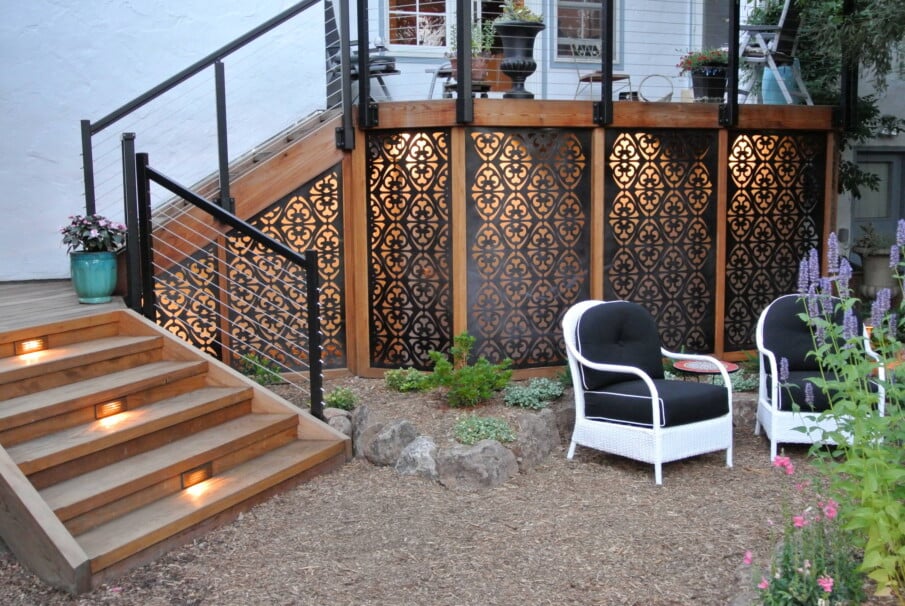
You can create stunning backyard spaces with decorative metal panels like the ones pictured here. These panels form a memorable backdrop while skirting an elevated deck and staircase. Their dramatic effect is enhanced by an outdoor fabric lining and backlighting. The panels are from Parasoleil, and the pattern is called Flanigan. This elegant deck skirt design was created by Garden Studio by Laura Grams.
Outdoor Decorative Polypropylene Panels
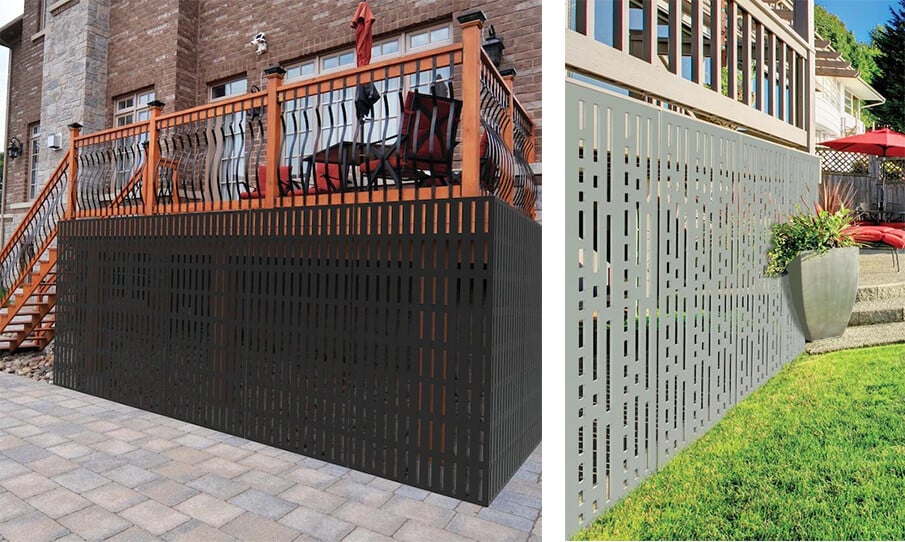
These tall decks get a modern update on under-deck skirting with easy-to-install polypropylene decorative screens, which are available in a wide range of colors and designs.
Composite Deck Skirting Ideas
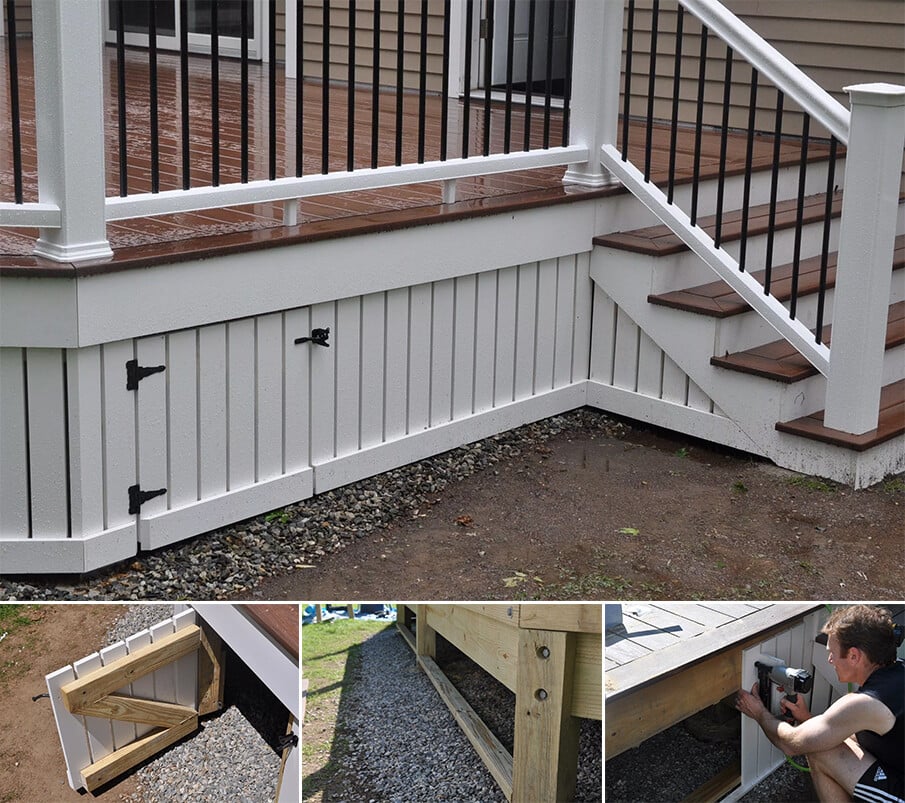
Composite decking offers many alternatives to lattice skirting. These materials are durable, easy to maintain, and simple to cut and install, making them an attractive option. While the initial cost of materials and installation is higher, they will last much longer.
The pictures above and below showcase some composite deck skirting ideas. The image above is an example of a DIY installation of deck skirting, fascia, and a storage access door, all constructed from solid composite wood boards. You can find a complete installation guide at decks.com.
One trick to make a shorter deck look taller is to install the decking boards vertically. You can even place a lattice behind them for a classic touch and better pest control. Installing the boards horizontally is a great choice for those who want a more rustic look.
The photo below illustrates how combining a fascia with composite deck boards can create a refined and simple DIY porch skirting.
The fascia covers the edge of the deck and the supporting joists. You can match the fascia to your decking material. If you are building both the deck and the skirt at the same time, it’s easy to ensure the entire project has a consistent finish.
You might also want a contrasting look for your fascia. In that case, consider cellular PVC. It is available in both boards and sheets and comes in various textures. Typically white, cellular PVC is paintable, unlike vinyl, yet it offers the same durability and low-maintenance benefits.
When framing the supports for composite skirting, avoid anchoring the bottom support directly to the ground. Instead, attach it to the leg supports and leave clearance for the natural shifting of the earth with seasonal temperature changes. Remember to leave gaps between the boards to allow for ventilation, which prevents mold and rot from damaging your decking. Otherwise, be sure to install a ventilation system to ensure proper airflow.
Even if you don’t plan to use the under-deck area for storage immediately, it’s a good idea to include an access point, like a door or gate, when you install your skirting. You may need to access the space later, and opening a door is much easier than uninstalling your skirting.
For more ideas and information, visit decks.com.
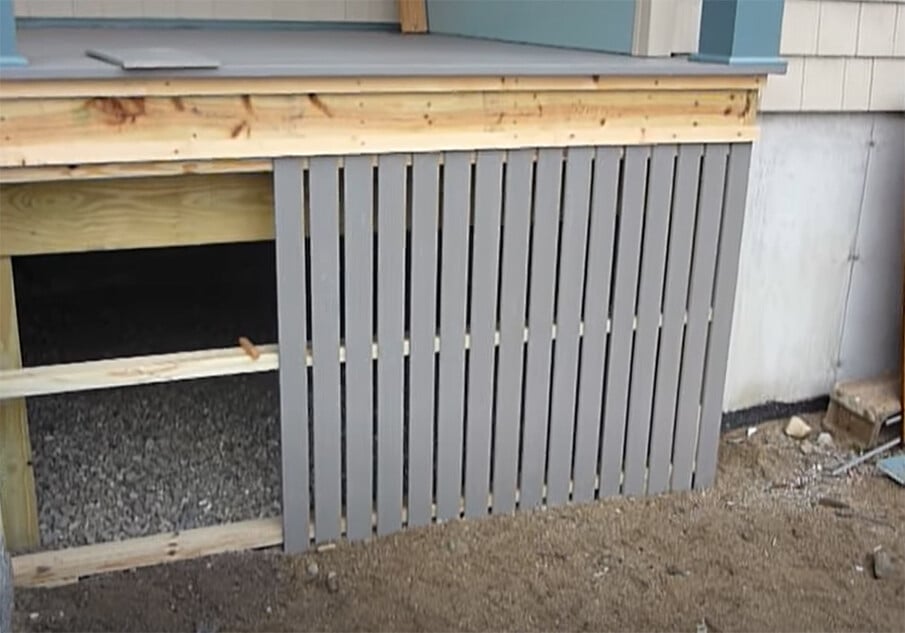
You can learn more about creating weather-resistant skirting with composite materials in this video. Anne Gronningsater from Inner Works Construction explains how using composite materials can help prevent porch skirts from rotting.
Deck Skirting Ideas for Uneven Ground
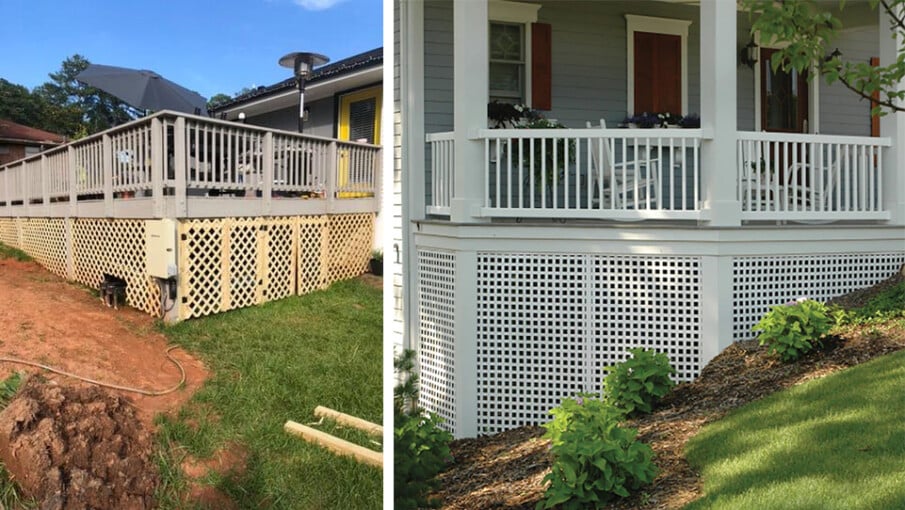
The image on the left shows a deck skirting installation on uneven ground, featuring unframed wood diamond lattice panels. These panels also provide access to under-deck storage. As you can see, wood lattice is easy to cut to fit the contours of a sloped surface. This project used 4 ft. x 8 ft. Pressure Treated Garden Wood Lattice with a 2.5″ grid opening.
When working with wood lattice panels like these, it’s a good practice to pre-drill your holes during installation, as the wood laths are prone to splitting if you drive screws directly into them. The skirting design on the right uses a vinyl square lattice to enclose the space under an elevated deck built on a steep slope.
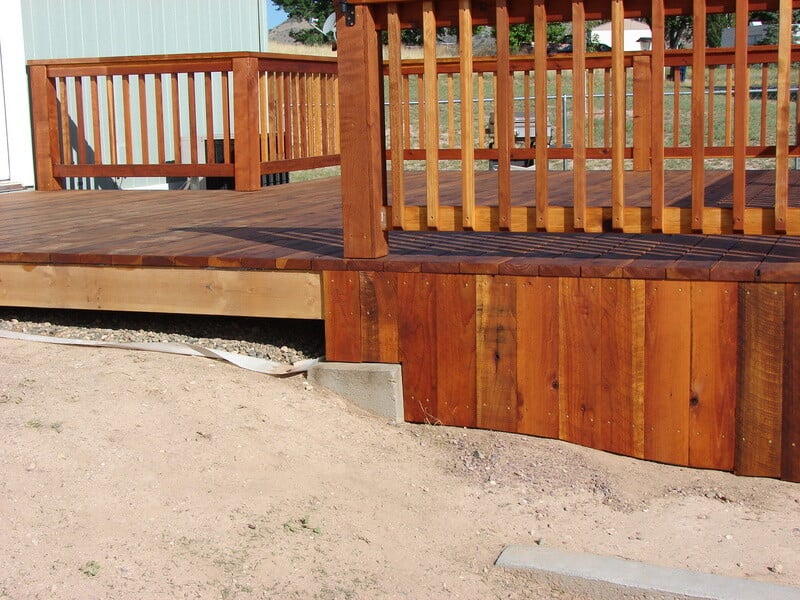
The picture above showcases a deck skirting on a slope made from fencing boards. The design uses Redwood boards and clearly shows how the builders cut the planks to follow the curve of the slope.
The skirting is made from the same color boards used to finish the deck. A 2×4 board is attached to the posts with a 2″ gap to the ground to help secure the boards and keep animals from getting underneath. Allow the skirting boards to overhang slightly, then cut them to create about a 1/2″ of ground clearance.
Elevated Deck Skirting Ideas
A tall deck provides a lot of possibilities. As shown below, raised deck skirting ideas can include using different types of panels for a dramatic effect. It’s important to remember that panels used beneath an elevated deck should be framed to provide extra support to the otherwise flimsy latticework.
With a high deck, you can also incorporate built-in features, like the alcove created here to house a wicker loveseat.
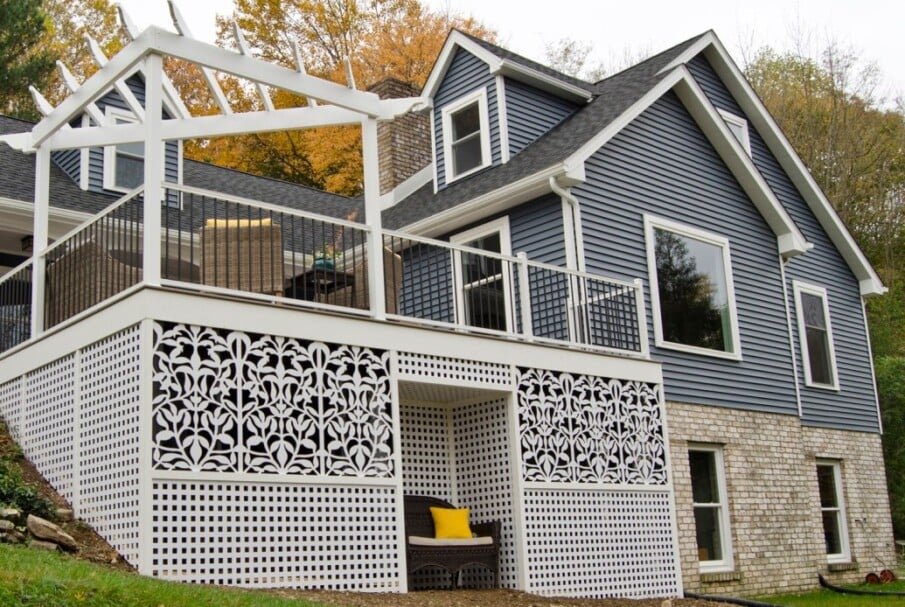
Keystone Custom Decks created this beautiful deck and its custom latticework.
They used a combination of decorative floral and square white PVC lattice panels from Acurio Latticeworks to achieve this look. Acurio lattice is suitable for both indoor and outdoor use. It’s made from lightweight PVC and is both UV-stabilized and weather-resistant.
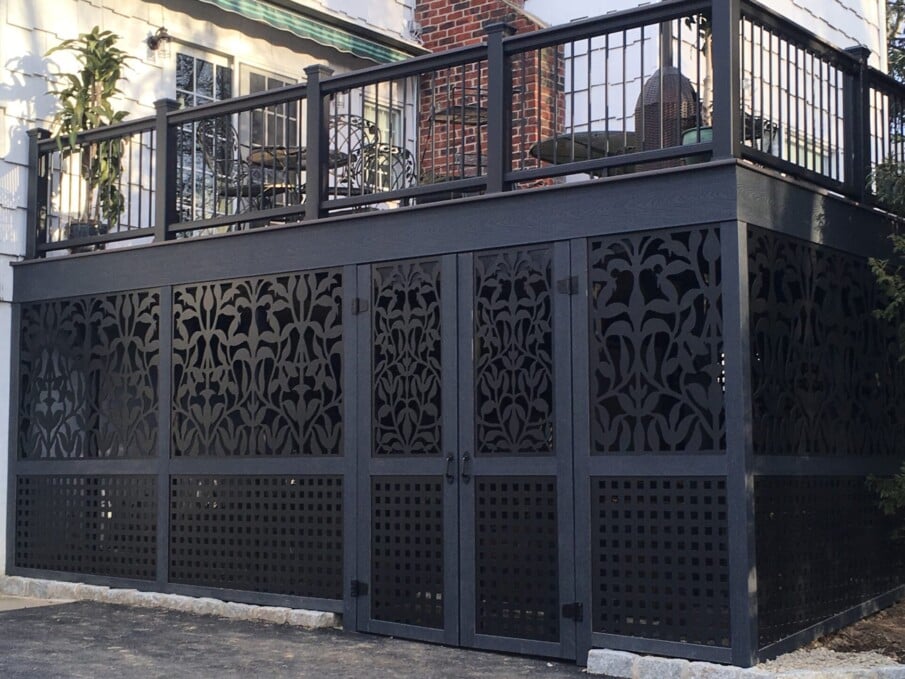
Split panels of black decorative floral and square lattice create a beautiful skirting in the image above. This elevated porch design features twin doors for easily accessible under-porch storage. Acurio Latticeworks was also used to create this stunning installation.
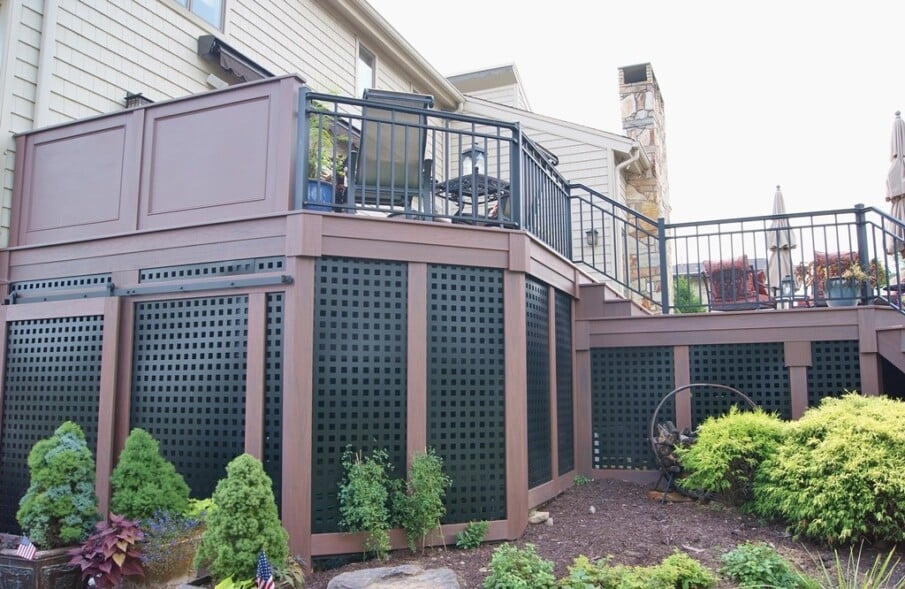
Black square lattice can create a dramatic contrast with composite wood decking, as seen in this high deck under-skirt design by Deck Remodelers.
Vertical Deck Skirting Design Ideas
The following vertical deck skirting concepts create attractive designs that complement both modern and classic architecture. Additionally, it’s easy to manage uneven ground with vertical skirting.
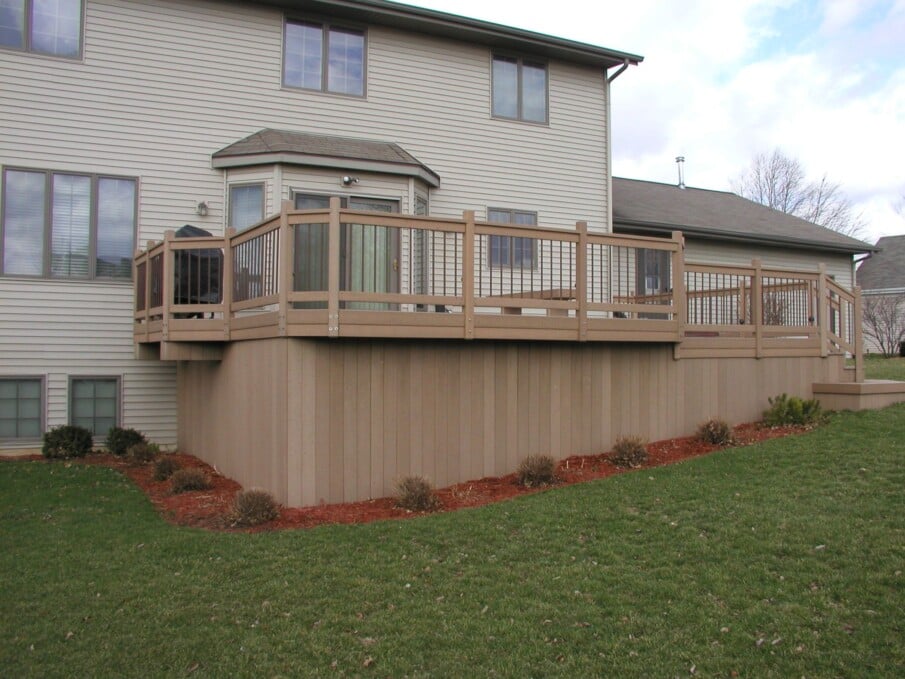
This vertical design demonstrates how to use composite wood to create a clean line, even with uneven ground below your deck. The deck and the skirt are constructed using the same material for a cohesive look.
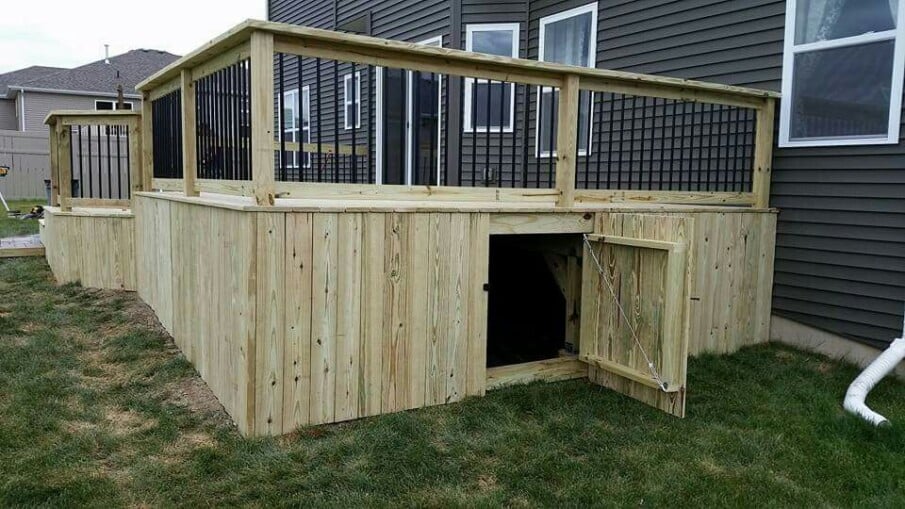
This clever and resourceful example of pallet deck skirting ideas uses pallet boards to create an attractive under-deck enclosure. It’s easy to add an access gate for extra storage. When the gate is closed, the vertical installation helps maintain a uniform overall design.
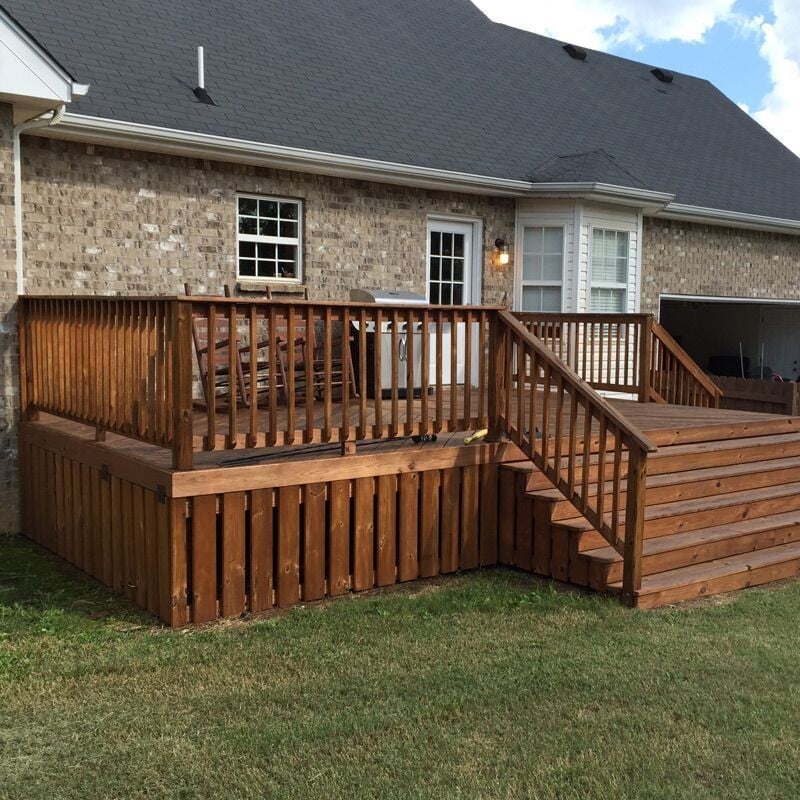
Built by The Faulkner Group, this custom-built Woodland Oil stained deck likely uses pressure-treated, weather-resistant lumber to create its classically elegant vertical deck skirting. The design includes a small access door that opens upward, with hinges attached to the top fascia board. The skirt is built by mounting vertical planks to top and bottom horizontal boards. The vertical planks are evenly spaced with about a 1-inch gap between them, providing ventilation for the under-deck area. You can see more images of this deck design on Houzz.com.
Horizontal Deck Skirting Ideas
If you’re looking for skirting with a more rustic charm, check out these horizontal deck skirting ideas.
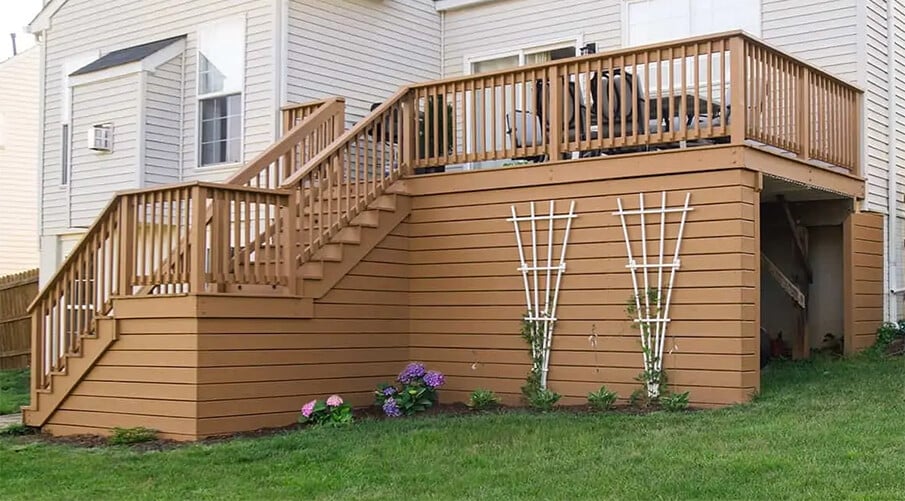
This gorgeous DIY horizontal skirting idea not only results in a beautiful high deck design but also guides you through creating a waterproof ceiling beneath your deck. This allows you to use the space for storage without worrying about water damage. The lumber used is pressure-treated, ground-contact southern pine. This elevated deck is tall enough to attach two climbing vine trellises to the skirt. You can see the details at cravingsomecreativity.com.
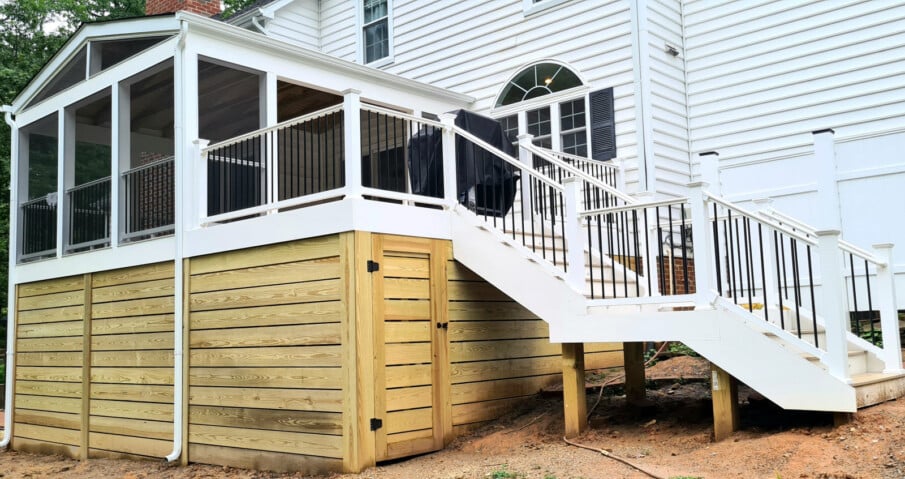
Above is a horizontal porch skirting idea from ARCA Construction. It’s an attractive shiplap-style skirting design with a built-in, full-height access door. By using a horizontal design, they were able to install it over the slope. To allow for ventilation under the porch, small gaps were left between the planks.
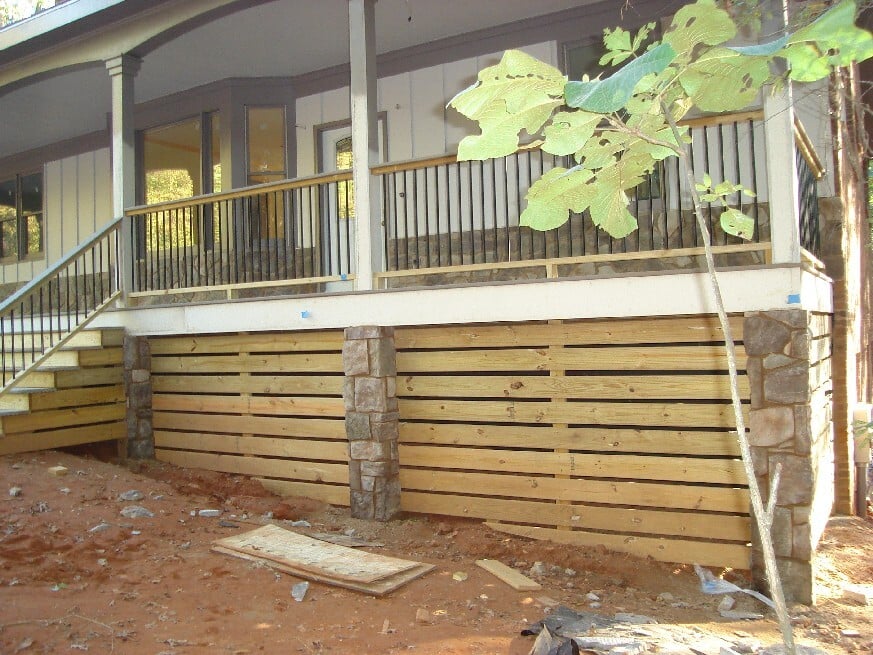
Here’s another fantastic horizontal deck skirting idea, described in detail at UpFromTheAshes. This could be a great DIY project. The creators paired faux stone columns with horizontally installed wood planks to create an attractive porch design. You can clearly see how the planks were trimmed to fit over the uneven ground.
Animal Proof Deck Skirting
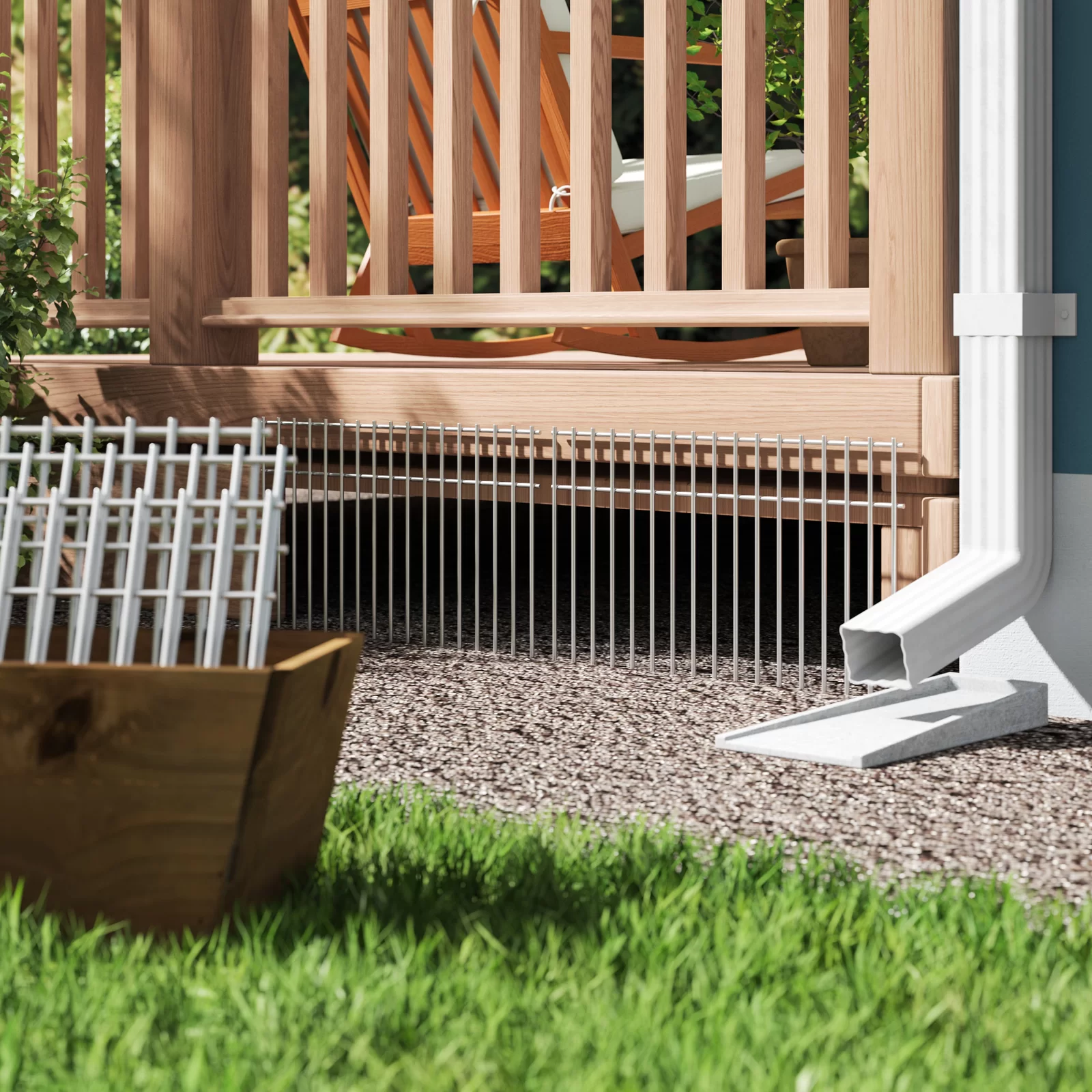
Sometimes you need something more robust than lattice to keep animals out. If your main goal is to deter determined critters, the Cornwell Dog Pen or Dig Defence might be your best solution. This type of skirting is easy to install and humane to use. Solid, narrow bars made of galvanized metal prevent even persistent wildlife from getting through. Durable and weather-resistant, they offer a lasting solution against damaging pests like skunks, raccoons, and squirrels.
For the best results, bury wire mesh beneath this skirting to stop animals from digging under it. The mesh should be buried 8″ to 12″ below the ground and form an “L” shape, with the bottom edge extending outward away from the deck. This method is known as deck trenching and helps keep out even the most skilled burrowers.
Low Deck Skirting Ideas
Even if your deck is low to the ground, you can still benefit from skirting. Installing panels on a low deck is often easier than on tall ones, as the skirting panels typically don’t require framing. However, framing will still add durability and create a cleaner, more finished look.
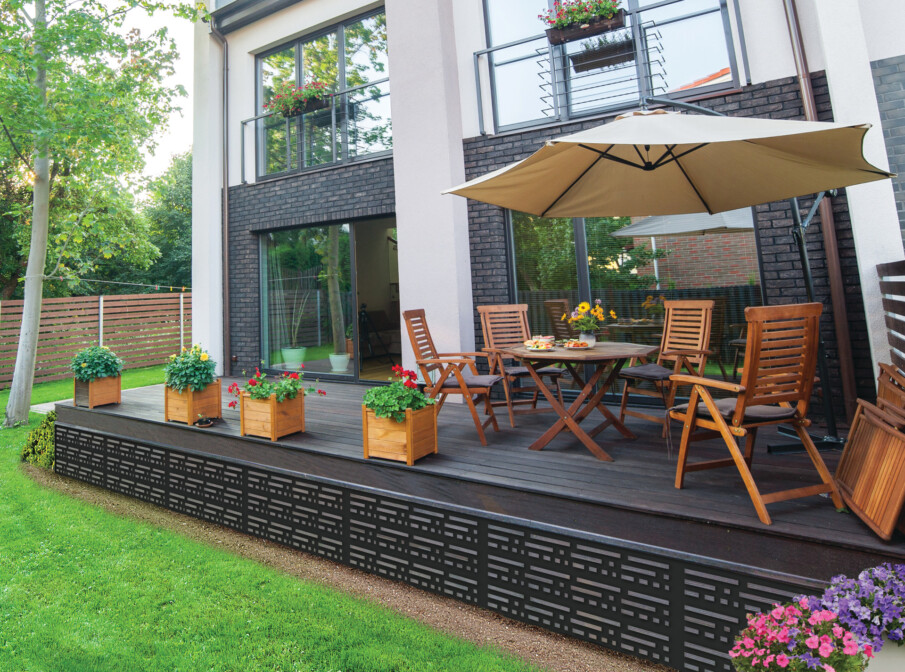
These weather-resistant and easy-to-install polypropylene decorative panels provide an attractive alternative skirting for a low deck. Polypropylene panels are resistant to rot, warping, splitting, scratching, and discoloration, and they remain stable even in harsh climates for long-lasting appeal. Shown here is the Freedom 1-in x 48-in x 2-ft Morse Clay Polypropylene Decorative Screen Panel.
Under the Front Porch Skirting Ideas
Whether you want to enhance the appearance of your front porch or your back porch, these ideas offer plenty of inspiration. Typically, you might want a more decorative solution for porch skirting than for a deck. Below, you’ll find several simple ways to boost your home’s appeal.
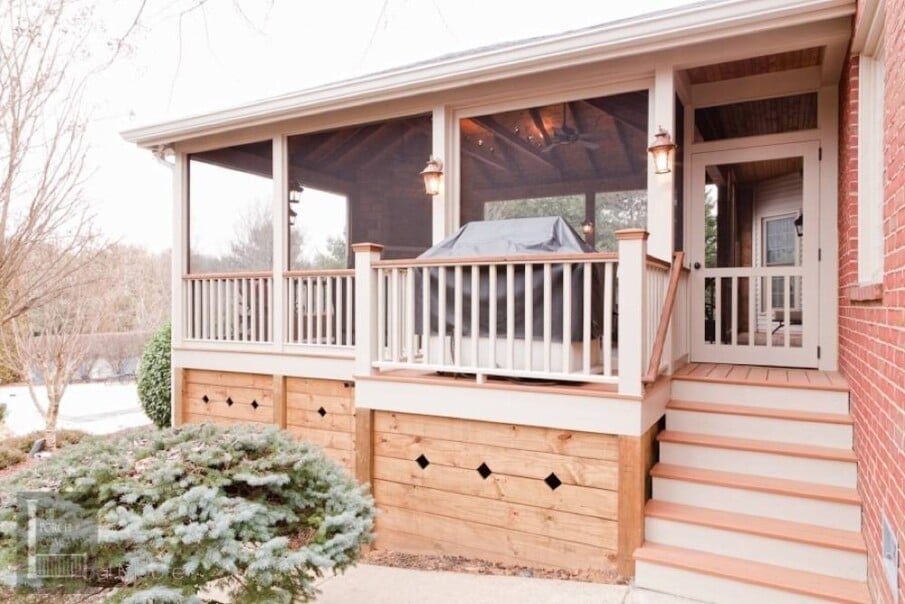
A simple touch can add a lot of visual appeal, as seen with these diamond-shaped holes cut into the horizontal wood skirting shown above. This project is by The Porch Company.
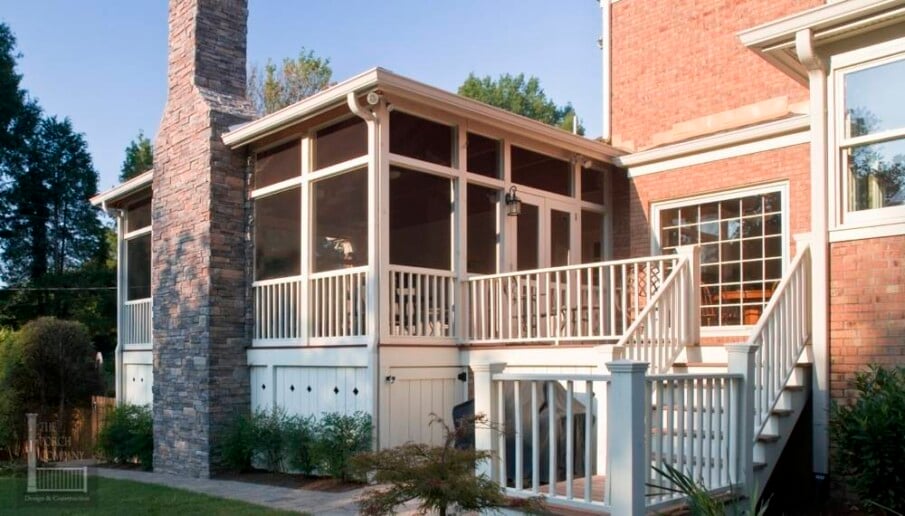
Here is another porch skirting idea from porchco.com. The photo above shows how simple elements like diamond cut-outs, black hardware, and framing can create a sense of handcrafted beauty on this white vertical board skirting beneath a screened-in porch.
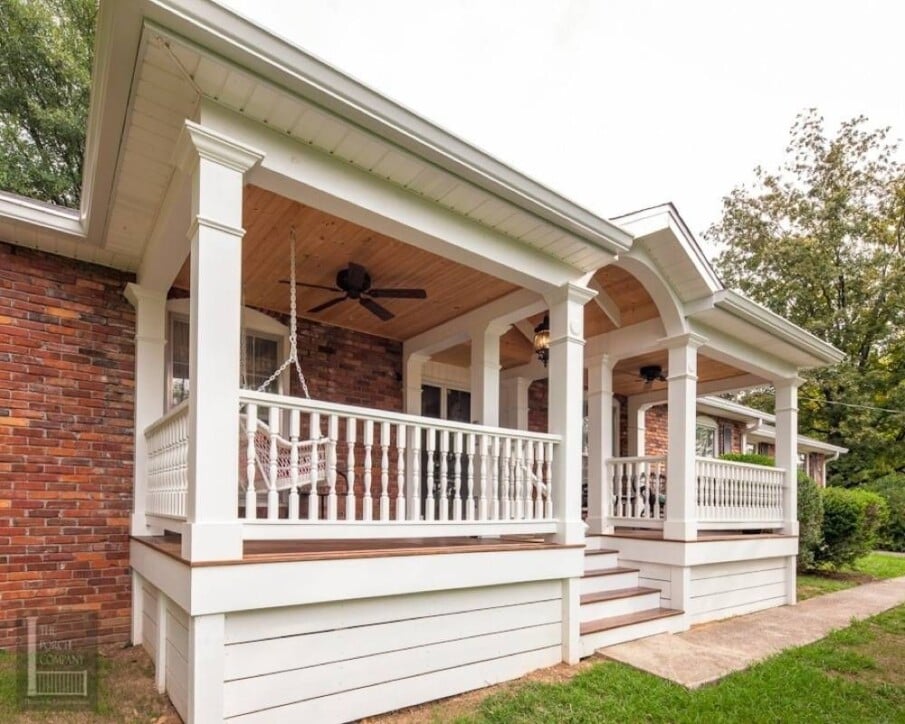
White horizontal boards with external supports create classic, clean lines on this front porch skirting design from The Porch Company.
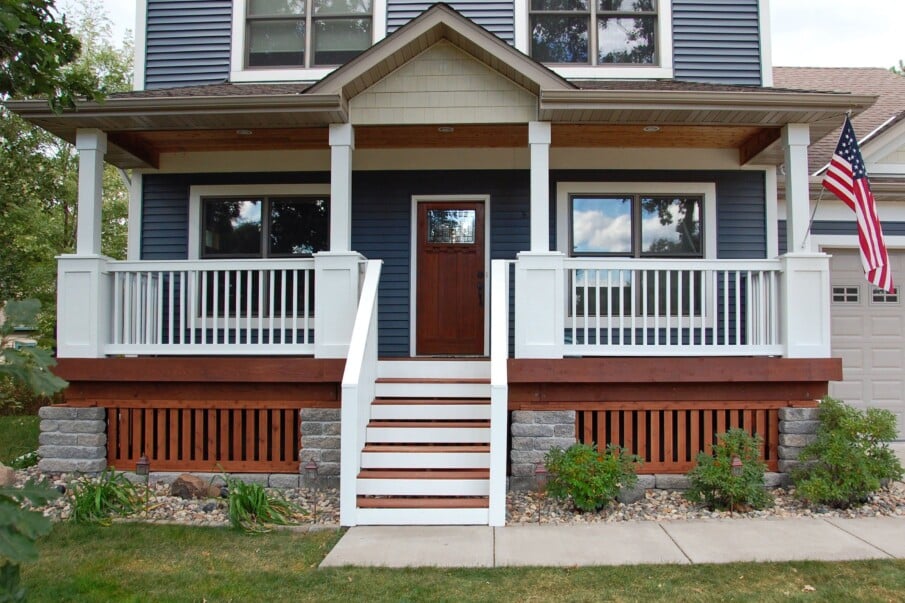
If you feel particularly ambitious and want something that will truly stand out, consider this unique DIY skirting project that uses brick-encased pillars and stained wood vertical slats to create a stunning front porch skirt.