Tired of staring at a plain, boring fence? Your fence line is a golden opportunity, a blank canvas just waiting for a splash of creativity.
That boundary isn’t just for marking property; it’s a prime spot for adding personality, texture, and vibrant life to your yard.
This guide is packed with ideas to match any style or effort level, whether you’re aiming for a minimalist look or a jaw dropping garden feature.
You’ll be surprised how a small adjustment along the fence can completely transform the atmosphere of your backyard. Adding a few plants or changing the layout can turn a simple barrier into something you genuinely love looking at every day.
It’s all about making your outdoor space a true reflection of you.
1. Plant climbing roses for a romantic, fragrant fence line.

Climbing roses may seem self sufficient, but they actually need a bit of guidance. You’ll have to give them some support by gently tying their stems to a fence or trellis. In return, they will produce a spectacular wall of color and a sweet, classic perfume that makes your yard feel wonderfully cozy.
There are many varieties to choose from. You can mix a riot of colors or opt for a single, elegant shade for a more traditional aesthetic.
They require some watering and a bit of pruning, but the results are well worth the effort. With proper care, they will continue to bloom for several months.
If you desire a lovely privacy screen, climbing roses serve a dual purpose. Imagine soft petals obscuring unwanted views and giving your fence a fairy tale quality.
Expert Tip: Provide your climbing roses with ample sun and water them thoroughly to keep them healthy. Remember to prune them regularly to promote the growth of more flowers.
2. Use bamboo for a fast-growing, privacy-enhancing hedge

Bamboo is truly the speedster of the plant kingdom. Certain varieties can grow up to four feet in a single day, which is an incredible feat.
If you need privacy in a hurry, bamboo delivers quickly. It grows tall and dense, transforming your fence into a green barrier that blocks prying eyes and muffles street noise.
Bamboo is remarkably low maintenance. It resists most pests and endures unusual weather conditions with ease.
It also brings a serene, zen like quality to your fence line. Be aware that some bamboo varieties spread aggressively, so choose clumping types if you wish to prevent a backyard takeover.
Expert Tip: Select clumping bamboo to maintain a neat and contained hedge. Water it generously during the first year, and you will soon have a fast growing, beautiful green wall.
3. Create a living wall with vertical planter pockets
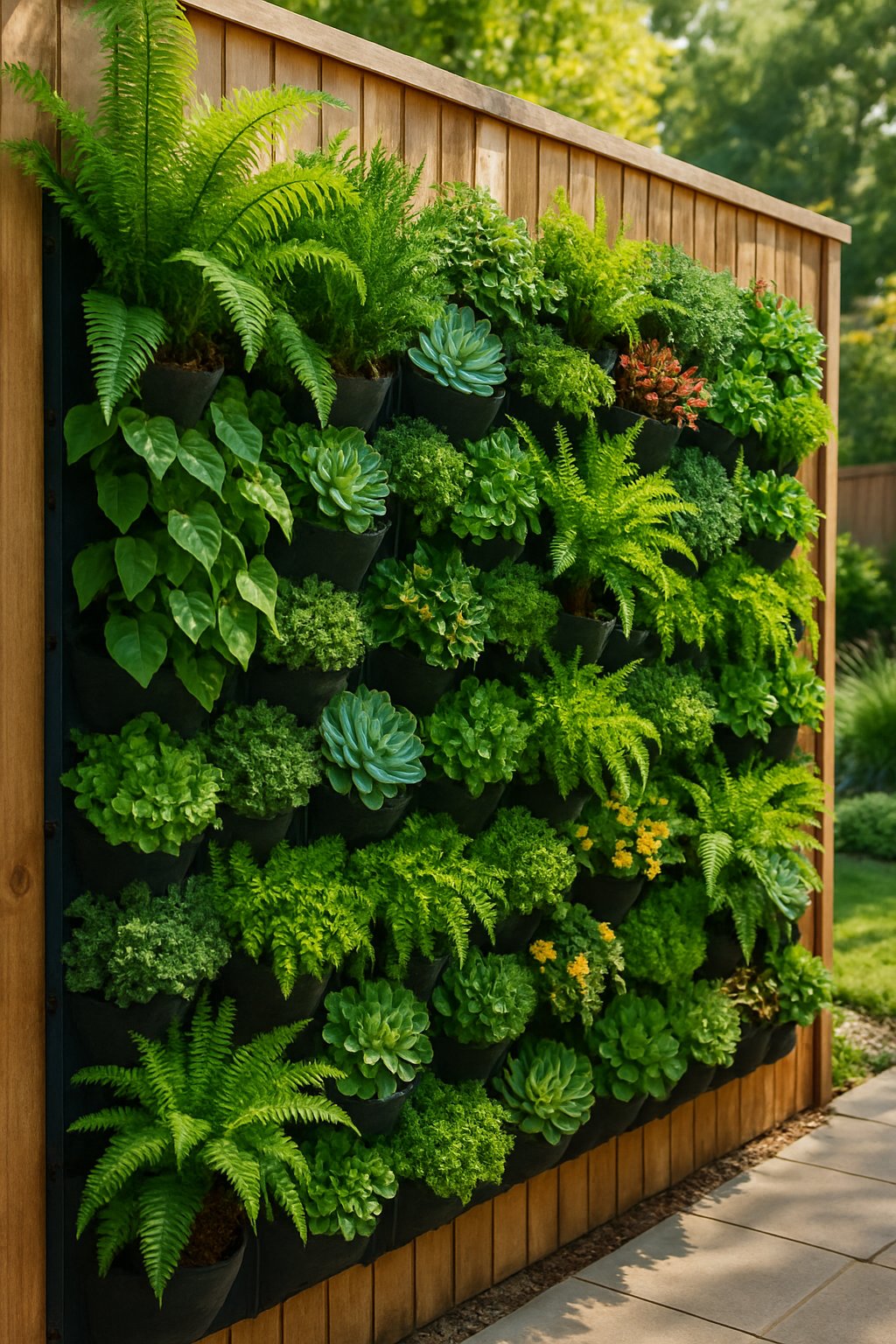
Your fence can be more than just a dull partition. By using vertical planter pockets, you can transform it into a living wall that functions as watered art.
These pockets serve as individual homes for your plants, perfect for flowers, herbs, or even some vegetables if you’re feeling adventurous.
Vertical planters conserve valuable ground space and introduce a lush green element to smaller yards. Simply hang them, fill them with soil, and plant your chosen flora.
Watering is simple, particularly with self watering pockets. Your fence will suddenly become a dynamic part of your garden.
Expert Tip: Begin with resilient plants like succulents or herbs, as they are easy to maintain. Water the pockets consistently, but avoid overwatering; plants thrive with just the right amount of moisture.
4. Add lavender bushes to attract pollinators and smell amazing.

Lavender is essentially a welcome sign for bees and butterflies. Planting a few bushes along your fence will fill your yard with the buzz of happy pollinators.
This activity benefits not only your flowers but your vegetables as well.
Lavender’s striking purple blossoms are beautiful and release a fragrance that is both calming and fresh. It is also quite drought tolerant once established.
You can pair lavender with other plants that thrive in shade or let it stand alone for a clean, classic appearance. Either choice provides color, fragrance, and a delightful wildlife display near your fence.
Expert Tip: Plant lavender in soil with good drainage and ensure it receives plenty of sunlight. A light trim after it flowers will keep it looking neat and encourage new growth.
5. Line the fence with ornamental grasses for texture and movement.

Grasses may sound plain, but they can bring your fence line to life. As the wind moves, these grasses sway and create a ripple effect, making your yard feel almost animated.
Ornamental grasses are available in a wide range of heights and colors. You can mix and match them to create a living work of art along your fence.
They soften the rigid lines of a fence and give your garden a gentler feel. Additionally, they require minimal care once they have settled in.
If your fence has a light color, consider planting tall, dark grasses for a striking contrast. This will give your yard a fresh and stylish look with very little effort.
Expert Tip: Select grasses suited to your local sun and soil conditions for easy maintenance. Cut them back once a year to maintain their shape and allow for new growth.
6. Mix colorful perennials like coneflowers and black-eyed Susans.

Selecting flowers for your fence line doesn’t need to be complicated. Coneflowers and black eyed Susans are a perfect combination.
Their bold purple and yellow blooms create a stunning contrast against green foliage. Your fence will look bright and cheerful throughout the summer.
Both of these plants thrive in sunlight and are tolerant of occasional missed waterings. They also draw bees and butterflies, adding more vitality to your garden.
Plant them together for a relaxed, natural aesthetic. Their contrasting shapes and colors complement each other and maintain visual interest. As perennials, they will return every year.
Expert Tip: Choose locations where these flowers will receive abundant sun and have enough room to grow. They do better when not overcrowded, which helps them stay healthy and robust.
7. Install raised garden beds along the fence for veggies or flowers

A fence does more than just define your property; it can also be a fantastic asset for growing more plants. Raised beds positioned along the fence allow your vegetables and flowers to flourish without taking over your entire yard.
These beds elevate your plants above the ground, resulting in improved drainage, fewer weeds, and less strain on your back.
You have the option of wood, stone, or metal to align with your personal style. Consider adding climbing plants on the fence to introduce a burst of color and extra vitality.
Expert Tip: Start with one or two beds to avoid feeling overwhelmed. Water your raised beds consistently, but be careful not to overwater; keep the soil just moist enough for healthy plants.
8. Plant thorny shrubs like hawthorn for natural security.

Why bother with a security system when thorny shrubs can do the job? Hawthorn bushes are equipped with sharp thorns that make it nearly impossible for anyone to pass through your fence line.
These shrubs grow into a thick, lush barrier, offering both privacy and protection. They are not just functional; their green leaves and small flowers also add a touch of charm.
Plant them in close proximity to form a solid, living wall. This approach provides excellent security without the need for cumbersome hardware.
Expert Tip: Plant hawthorn in sunny areas to achieve the best growth. Water it frequently at the beginning to help the roots establish themselves.
9. Use native wildflowers for low-maintenance, eco-friendly beauty.

Wildflowers are not just for meadows; they can also look stunning along a fence line. Native varieties require very little maintenance once they are established.
This means you can spend less time on upkeep and more time enjoying the beautiful scenery.
Wildflowers provide color and attract pollinators throughout the season. Bees, butterflies, and even birds will be frequent visitors.
Since these plants are adapted to your local climate, they are resilient and can recover from harsh conditions. Your fence line will appear natural, vibrant, and full of life.
Expert Tip: Plant a variety of wildflowers that bloom at different times to ensure your fence remains colorful from spring until fall.
10. Decorate with hanging flower baskets to save ground space

If you think you need a large yard to have a lot of flowers, hanging baskets will prove you wrong.
They allow you to add an abundance of color without taking up any of your valuable ground area.
Hang these baskets from hooks, on fences, or even from tree branches. Your fence line will look cheerful and vibrant, even in a small space.
Flowers positioned at eye level are more easily appreciated for their beauty and fragrance. They are also kept away from curious pets and pests.
For a fuller appearance, try combining trailing plants like petunias with some leafy greens. You can also include a few herbs for added utility.
Expert Tip: Use lightweight pots and ensure your hooks are secure to keep your baskets safe. Water them regularly, as hanging baskets tend to dry out more quickly than plants in the ground.
11. Place fairy lights or lanterns intertwined with vines for nighttime charm.

Fairy lights can make your fence feel magical throughout the year, not just during the holidays. Weave them through your vines, and your backyard will instantly glow with a cozy and welcoming ambiance.
The lights accentuate the leaves and flowers, making your fence a stunning nighttime feature. Add a few lanterns for extra charm, and you will be drawn to spend every evening outdoors.
The setup is simple. Just wrap the lights gently around your plants and let them work their magic.
Expert Tip: Select solar-powered fairy lights to conserve energy and avoid the clutter of cords. Plant fragrant vines nearby to make your enchanted fence smell as wonderful as it looks.
12. Grow clematis for vibrant, vertical pops of color.

Fences do more than just provide privacy; they can also be a showcase for your garden. Clematis vines are natural climbers that can transform a plain fence into a lush, flowery spectacle.
These plants produce large, vibrant blooms each year. They do not require intensive care, just some sunlight and occasional watering.
Training clematis is quite simple. Just guide the vines up posts, trellises, or even along strings. Your fence will soon be adorned with color that changes with the seasons.
Expert Tip: Start with a strong trellis or durable fishing line. Keep the roots cool and shaded while allowing the leaves to absorb sunlight for the most impressive flower display.
13. Create a cottage garden vibe with hollyhocks and foxgloves

If you think a fence line can’t be cozy, try adding some hollyhocks and foxgloves. These tall, traditional flowers create a soft, storybook atmosphere with minimal effort.
Hollyhocks provide old-fashioned charm and significant height. Foxgloves contribute with their delicate, bell-shaped flowers. Together, they give your fence a fairy-tale quality.
Plant them near the fence to form a dense, colorful screen that softens the straight lines. No advanced gardening skills are needed, as these plants are quite easygoing.
Expert Tip: Plant hollyhocks and foxgloves in clusters for a full, natural appearance. Water them well in their early stages so they can establish themselves comfortably.
14. Plant hydrangeas for lush blooms and big impact
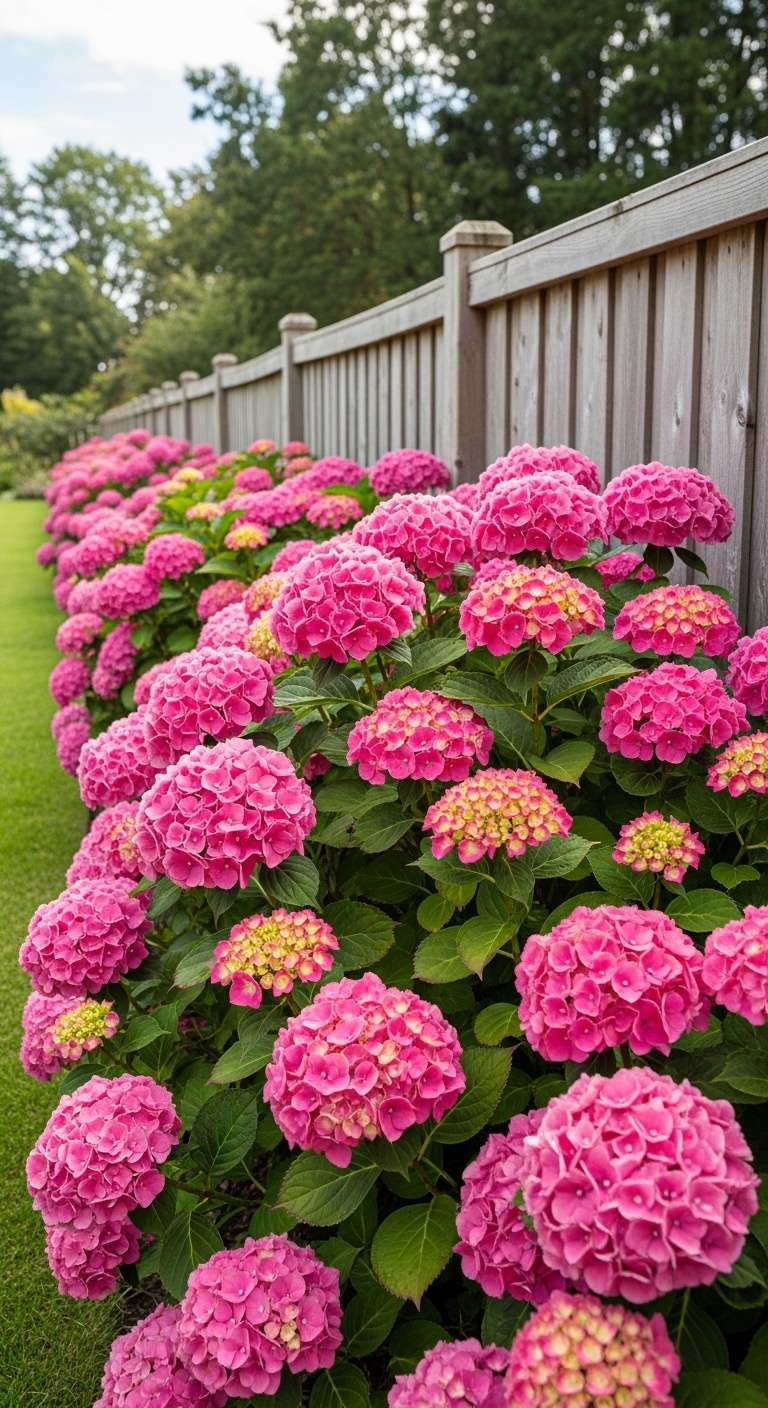
A boring fence line can be transformed by planting hydrangeas. These shrubs grow large and leafy, with blooms that last all summer long.
Hydrangeas are versatile and can thrive in various conditions, from full sun to partial shade. They produce enormous clusters of flowers that brighten up your yard.
For added texture, pair them with hostas or ferns. This combination creates a lush, inviting space along your fence with very little maintenance.
Expert Tip: Hydrangeas require plenty of water, so keep the soil moist, particularly during hot and dry periods. Mulch can help keep them cool and content throughout the summer.
15. Install a trellis and train jasmine or honeysuckle to scent your space.

Certain plants can turn your fence into a natural source of fragrance. By installing a trellis and training jasmine or honeysuckle, your yard will be filled with a delightful aroma.
Simply place a sturdy trellis against your fence and gently guide the vines as they grow, using soft ties to help them weave through. Occasional trimming will keep them tidy and encourage more blooms.
Both jasmine and honeysuckle prefer sunshine but can tolerate some shade. They grow quickly, so your fence will soon be covered in green leaves and fragrant flowers.
Expert Tip: Begin with fresh, nutrient-rich soil. Water your vines consistently, but avoid overwatering, as healthy roots lead to abundant blooms.
16. Use raised stone planters for a neat, modern look

Stone planters are an excellent choice for achieving a clean, modern aesthetic. Raised stone planters frame your fence line and maintain a sharp, organized appearance.
The durability of stone ensures that your beds will remain tidy year-round. You can fill them with flowers, herbs, or even vegetables. Raised beds also make planting and watering easier on your back.
For added height and visual interest, try stacking a few layers of stone. Arrange tall plants in the back and shorter ones in the front to give your fence line a stylish and dimensional look.
Expert Tip: Choose stones that complement the style of your house for a cohesive look. Line the bottom with landscape fabric to prevent weeds and keep your plants healthy.
17. Add edible plants like herbs or raspberries along the fence.

Why have a plain fence when you can have a snackable garden? Planting herbs or raspberries along your fence provides fresh treats right at your fingertips.
Herbs such as thyme, parsley, or mint are well-suited for growing next to fences. They are compact and have a wonderful fragrance. Raspberries tend to spread and will use the fence as a natural trellis.
You can also grow edible vines like passion fruit or blackberries on chain-link fences. This is a delicious way to utilize space and add life to your yard.
Expert Tip: Start with a small selection to see what grows best in your yard. Water frequently, especially at first, to help your edible fence establish itself and become productive.
18. Place birdhouses or feeders to invite feathered friends

Birds can turn your fence line into a bustling social spot. By adding a few birdhouses or feeders, you can fill your yard with the cheerful sounds and vibrant colors of avian visitors.
Hang birdhouses at a height where birds will feel secure, and orient them away from strong winds. Place feeders near flowers or bushes to provide both food and shelter.
Even simple feeders, like pine cones covered in peanut butter and seeds, can be very effective. Choose birdhouses that are appropriate for the local bird species. Soon, your fence will become a haven for birds.
Expert Tip: Position feeders where you can observe the birds without disturbing them. Keep the feeders clean and the water fresh to ensure your feathered visitors return.
19. Combine shrubs and succulents for drought-resistant appeal

Shrubs and succulents may seem like an unusual pairing, but they complement each other very well. Shrubs add height and structure to your fence line, while succulents provide interesting textures and colors at a lower level.
Consider shrubs like rosemary or lavender, which are drought-tolerant and look good all year. Succulents such as echeveria or sedum come in a variety of shapes and require very little water.
Plant taller shrubs behind the succulents to protect them from intense sun and wind. Using gravel or mulch around the succulents helps retain moisture and suppress weeds. This creates a low-maintenance arrangement that saves both time and water.
Expert Tip: Select plants that have similar sun and water requirements. This will ensure your garden remains healthy with minimal additional effort.
20. Use espalier fruit trees against the fence for a neat orchard feel
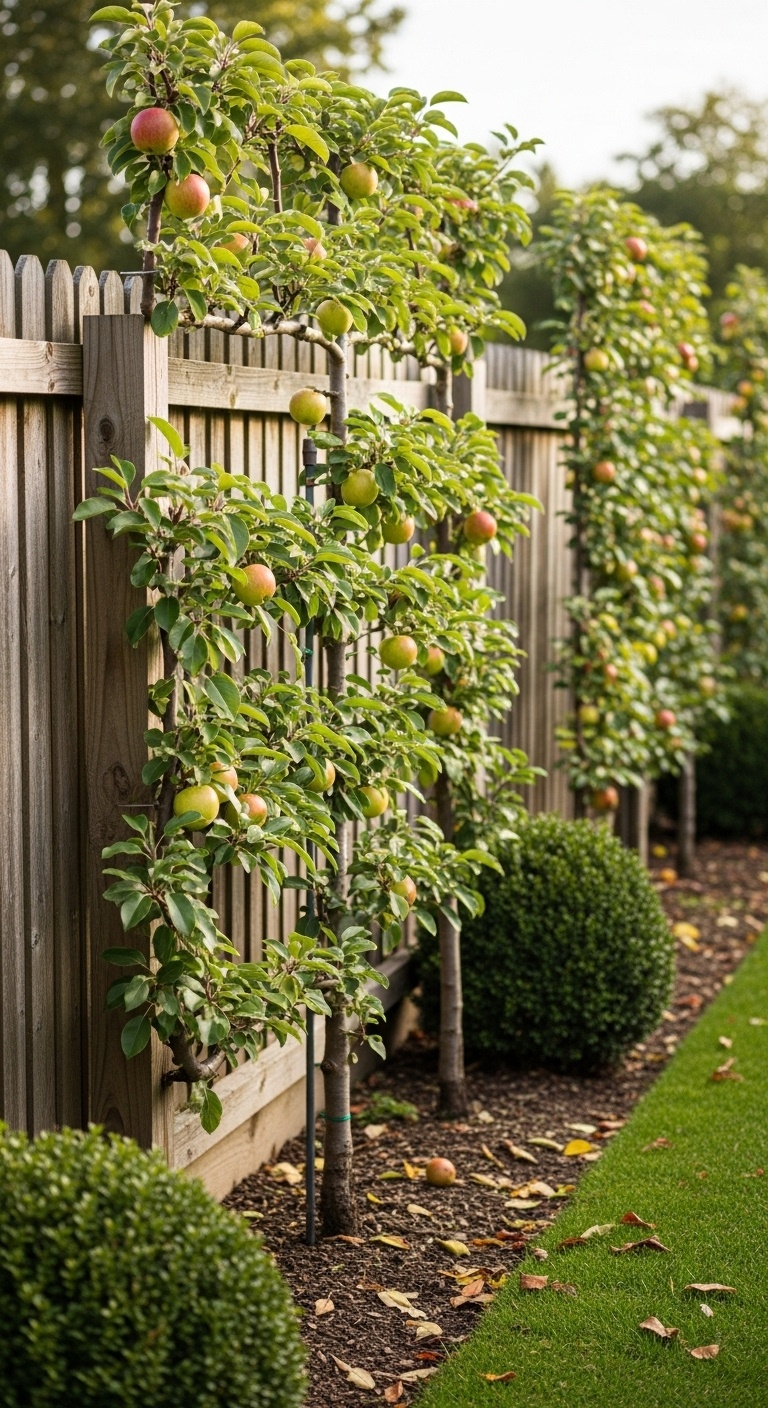
You can transform a simple fence into a productive fruit wall with espalier trees. These trees are trained to grow flat against the fence, creating a tidy appearance and providing fresh fruit.
Guide the branches to grow horizontally for a clean, manageable line. Apples are a great choice, but you can also try pears or other fruits. This technique offers privacy, charm, and a source of food all in one.
Espalier is ideal for narrow areas, allowing you to have an orchard without sacrificing your entire yard. Harvesting the fruit is also very convenient when it is within easy reach.
Expert Tip: Begin training your trees when they are young to achieve the best shape. Patience is key; you will soon have a fence laden with delicious fruit.
21. Incorporate ornamental grasses with flowering bulbs for seasonal contrast

Ornamental grasses and flowering bulbs create a fantastic combination. The grasses provide movement and softness, while the bulbs emerge with vibrant colors at key moments.
Imagine tulips or daffodils blooming in the spring, their flowers peeking through the swaying grasses. After the bulbs have faded, the grasses continue to keep the area looking full and visually interesting.
This pairing ensures your fence line remains lively and fresh throughout the year. The grasses are extremely low-maintenance, and the bulbs add bursts of color with no extra trouble.
Expert Tip: Plant bulbs in clusters for a bold visual impact, and allow the grasses to grow tall behind them. This is a simple way to keep your fence line looking beautiful all year.
22. Plant viburnum for fragrant flowers and colorful berries
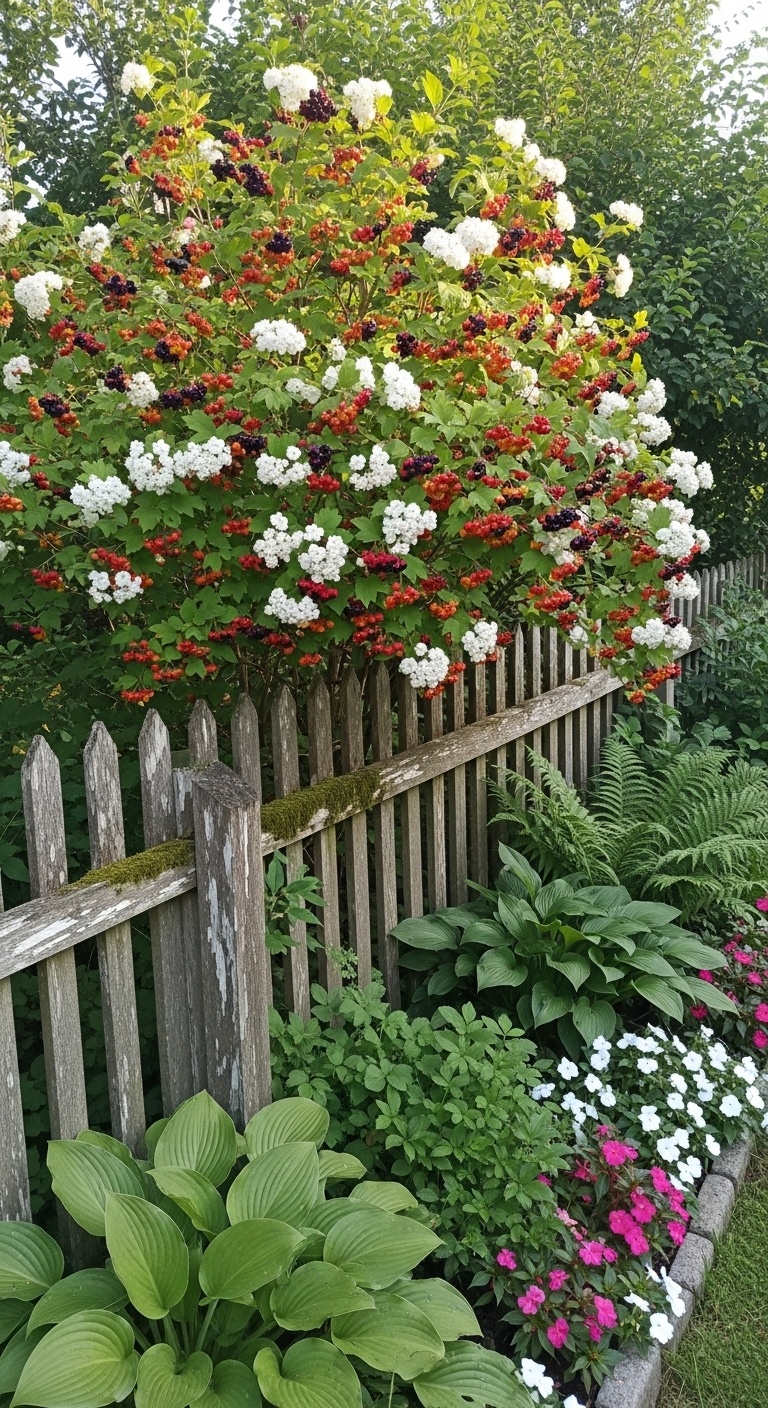
Viburnum plants are true garden superstars, offering multiple benefits. In the spring, they adorn your fence line with fragrant flowers. Later in the season, they produce colorful berries that attract birds and add a splash of life.
These shrubs grow quickly and can function as a living fence or screen. Their fall foliage is also impressive, turning red or orange and maintaining brightness as the weather cools.
Plant viburnum along your fence for year-round interest with very little maintenance. It acts as a living decoration that evolves with the seasons.
Expert Tip: Plant your viburnum in a location with sun or partial shade for the best blooms. Water it well during dry periods, and this fragrant, colorful companion will enhance your fence line for years to come.
23. Add bold, architectural plants like yucca or agave for a desert vibe

You might think yucca and agave are too spiky for your fence line, but these hardy plants are surprisingly manageable and can make your yard look incredible.
Their strong, defined shapes stand out without demanding constant watering or care.
The spiky leaves bring a modern, almost futuristic feel to your space.
They thrive in dry conditions, so you will not need to fuss over them.
Imagine your fence line becoming a dramatic backdrop, all thanks to these striking plants.
Consider adding small rocks or gravel around them to keep the area tidy and allow the plants to be the main focus.
Your yard will suddenly have a unique personality, and you will not have cluttered it in the process.
Expert Tip: Choose younger agave or yucca plants so they are easier to shape as they mature. Give these bold plants plenty of space to avoid overcrowding and let them truly stand out.
24. Use creeping ground covers like creeping thyme at the fence base.

The empty area at the bottom of your fence is not wasted space; it is a perfect opportunity to make your garden look more lush while reducing your workload.
Creeping thyme is a remarkable little plant.
It spreads quickly, covering bare spots with soft green leaves and tiny, cheerful flowers.
It effectively suppresses weeds, which means less time spent on tedious pulling.
This plant thrives in sunny locations and is very drought tolerant.
You will need to water less, and when you brush against it, your fence line will release a lovely fragrance.
Try planting it between stepping stones or along pathways to create a living green carpet that enhances the overall look of your garden.
Expert Tip: Start with small patches of creeping thyme and allow it to fill in naturally. Do not overwater; it prefers slightly dry conditions to remain healthy and robust.
25. Create a zen garden strip with bamboo, pebbles, and miniature lanterns.

While a fence line is often used for planting, you can also transform it into something truly special.
Imagine a narrow strip along your fence becoming a small zen garden.
Bamboo adds a calm, peaceful quality with its tall, swaying stems.
Scattering smooth pebbles encourages a slower, more mindful pace.
A few miniature lanterns can provide gentle light for cozy evenings.
With just a few simple details, your yard can feel more balanced and soothing.
A zen garden strip does not require much space, making it suitable even for small yards.
It is easy to maintain; just rake the pebbles occasionally and trim the bamboo to keep it looking neat.
Expert Tip: Keep your bamboo healthy with regular watering, but ensure the soil does not become waterlogged. Space small lanterns evenly for the best effect; try using soft LED candles for a safe and gentle glow.
How To Choose the Right Plants for Fence Line Landscaping

Selecting plants for your fence line is a bit like matchmaking.
You need to find a good fit for your yard’s atmosphere, achieve the right balance of privacy and style, and avoid any incompatible pairings.
Let’s focus on the key factors so your fence can finally be the star of the show.
Understanding Your Yard’s Microclimate
The specific conditions in the corner of your yard where the fence is located make a significant difference.
Is it exposed to direct sun or situated in the shade?
Is it subject to strong winds, or is it a sheltered and cozy spot?
These details will determine which plants will thrive and which will struggle.
If your fence line receives full sun (6+ hours daily), choose sun-loving vines or shrubs that can tolerate the heat and still look their best.
If there is more shade, plants like ferns or hostas will be quite content there.
Do not overlook the soil!
Is it dry and sandy, or does it retain moisture after it rains?
By choosing plants that are suited to your existing conditions, you will spend much less time on maintenance.
Balancing Privacy and Aesthetics
Your fence line serves two main functions: providing privacy and looking attractive.
If privacy is your priority, plant tall, dense shrubs or bamboo to block views and add texture year-round.
If you feel creative, you can mix in flowering climbers and short shrubs to create layers and introduce pops of color.
Consider the mature height of your plants and their growth rate.
Slow-growing plants require patience but are easy to manage, while fast-growing plants fill in quickly but need more frequent trimming.
A mix of both can provide a good balance and some pleasant surprises.
Common Mistakes to Avoid
Avoid overcrowding your fence line with too many plants, as this will make them all struggle.
Provide each plant with enough space to grow to its full size.
Be mindful of plant compatibility, as some do not coexist well. Research which plants get along before planting them side by side.
It is also advisable not to plant large trees directly next to your fence.
Their roots can cause damage, and they will block sunlight from smaller plants.
If you have a busy schedule, select low-maintenance plants that do not require constant watering and pruning.
This will save you time and effort in the long run.
Fence Line Landscaping Maintenance Tips
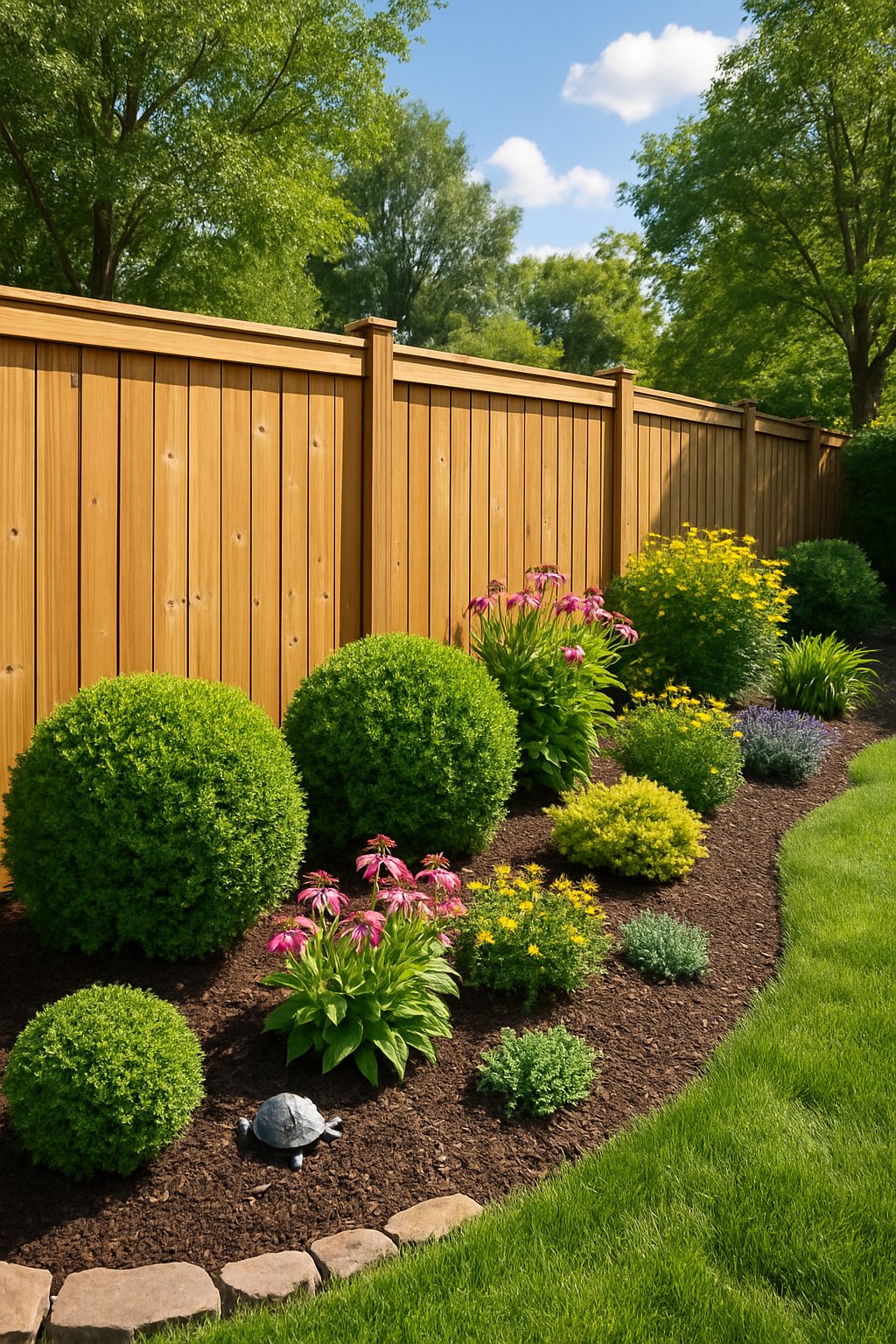
Maintaining a sharp-looking fence line is not overly complicated, but it does require some regular attention.
You will need to trim plants, remove weeds, and be aware of when your landscaping needs extra care.
Pruning Without the Drama
Pruning does not have to be a major undertaking.
Trim your fence line plants gradually; think of it as a light trim rather than waiting until they are overgrown.
This approach keeps things looking tidy and allows sunlight to reach all of your plants.
Use sharp, clean tools to avoid causing damage.
Begin by removing any dead or yellowing leaves.
Do not be too aggressive; a good general rule is to cut back about one-third of the plant.
For flowering shrubs, prune them immediately after they have finished blooming to avoid cutting off next year’s flowers.
Keeping Weeds at Bay
Weeds have a tendency to invade your fence line, but you can prevent them.
Mulch is an effective tool.
Apply a thick layer around your plants to block sunlight and help the soil retain moisture.
Remove weeds as soon as they appear, as they are much easier to pull out when they are small.
Use gloves and a hand fork to remove the roots completely, so they do not grow back.
Planting dense shrubs or groundcovers also helps by filling the space and leaving no room for weeds.
Seasonal Upkeep Strategies
Each season presents unique challenges for your fence line. In the spring, it is a good time to clear out any dead branches that have accumulated.
Applying fresh mulch is also beneficial. This is often the time when the urge to add new plants or seeds strikes.
During the summer, the soil can dry out quickly. Water deeply but infrequently to encourage strong root growth.
Inspect your plants for pests or any signs of trouble. It is best to address any issues early on.
When fall arrives, it is time to prune back some plants and gather up fallen leaves. Leftover leaves can harbor mold or insects.
Winter is generally a quiet period. Protect tender plants with covers or a thick layer of mulch. That is usually all that is needed.
Keeping a calendar or setting phone reminders for these tasks can help keep your fence line looking its best and make your entire yard more attractive.