
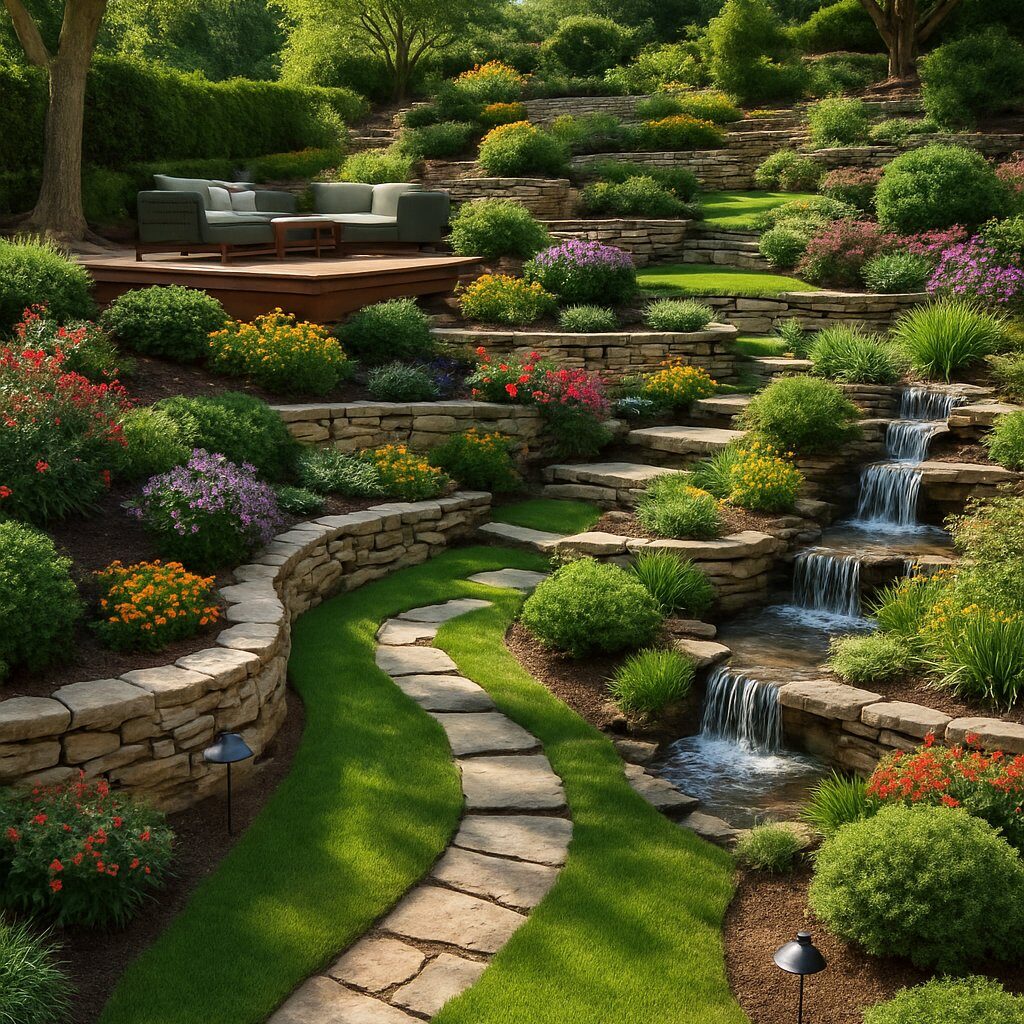
Got a backyard with a slope? You already know the challenge of making that space usable and beautiful. These creative ideas will help you transform that uneven terrain into a personal oasis where you’ll actually want to spend your time. You’ll discover smart ways to embrace the incline, turning your yard into an inviting and functional retreat.
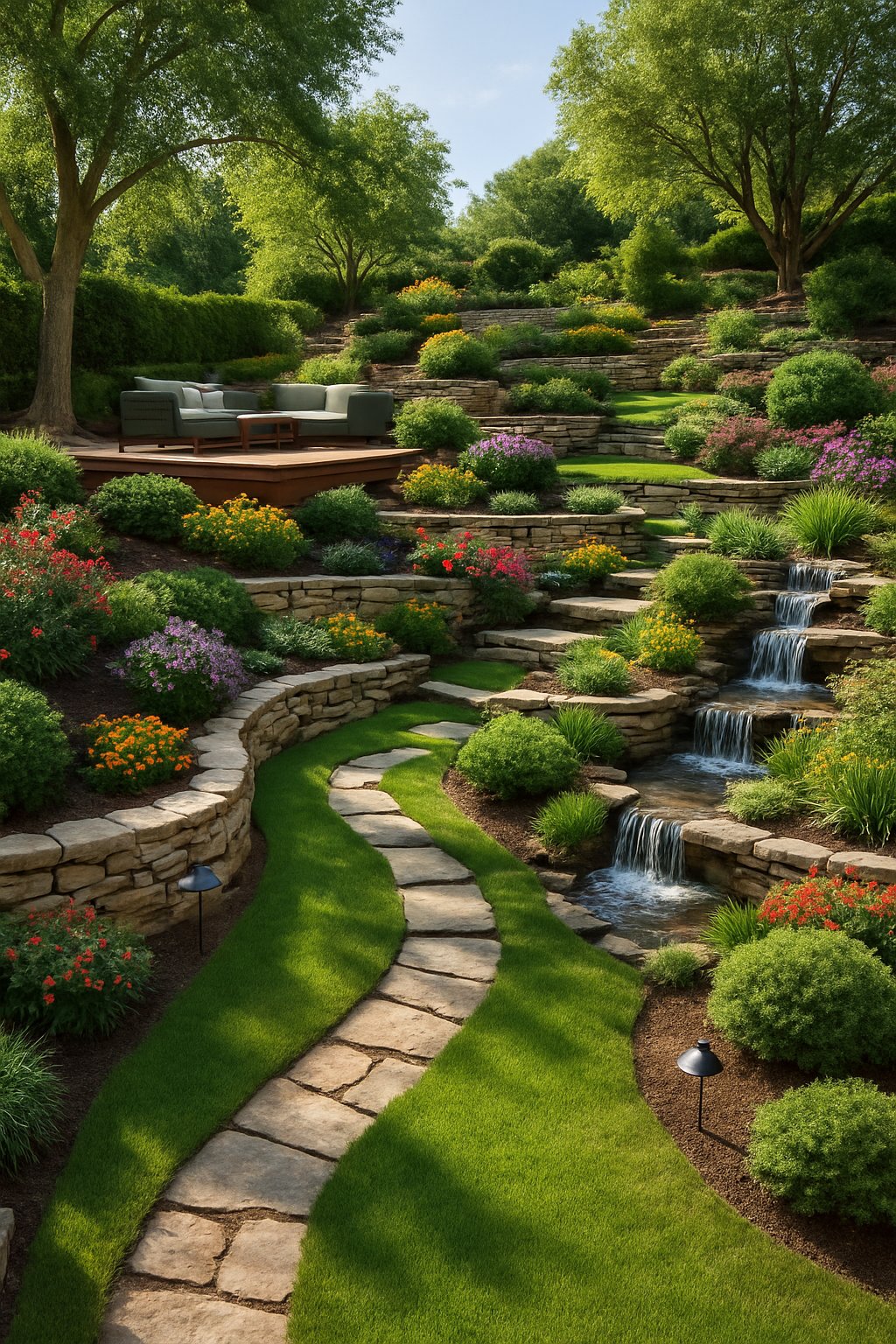
1. Build a tiered retaining wall to create flat planting areas
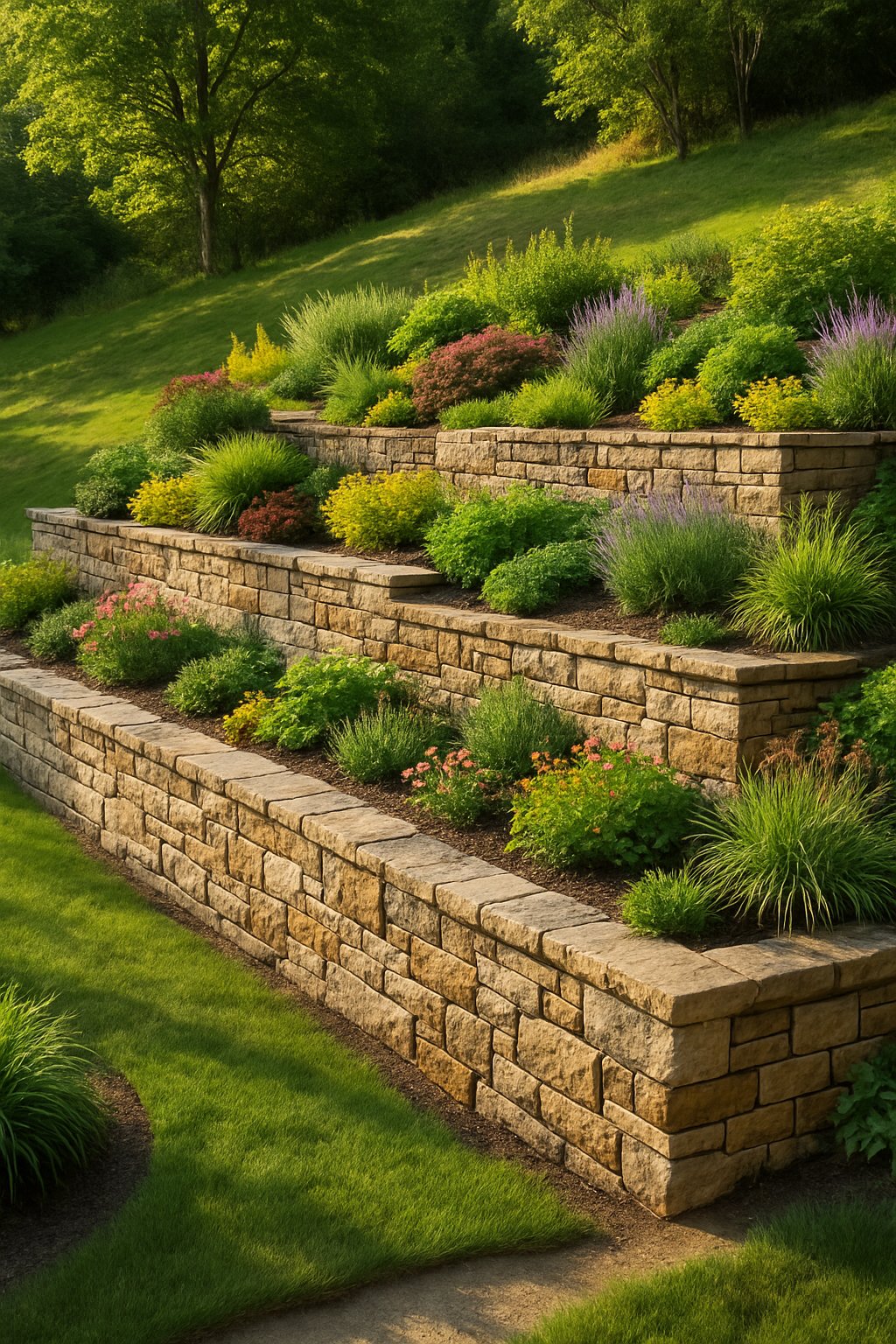
For a sloped backyard, a tiered retaining wall is a game changer, letting you sculpt flat areas for gardens or patios. These structures hold soil in place, creating level steps or terraces down the hill.
You can choose from materials like stone, wood, or concrete blocks to match your style and budget. Creating flat ground this way helps stop soil erosion and makes gardening so much simpler.
Each tier becomes a new canvas for plants, allowing you to play with different colors and textures to add visual interest. It is crucial to ensure each level is stable and has proper drainage to prevent water from collecting behind the wall. Add a seating area on one of the tiers, and your once-unusable slope becomes a favorite hangout spot.
Expert Tip: Always use durable materials and ensure good drainage is installed behind your retaining walls. This simple step will make them last longer and help your plants thrive.
2. Install a multi-level wooden deck
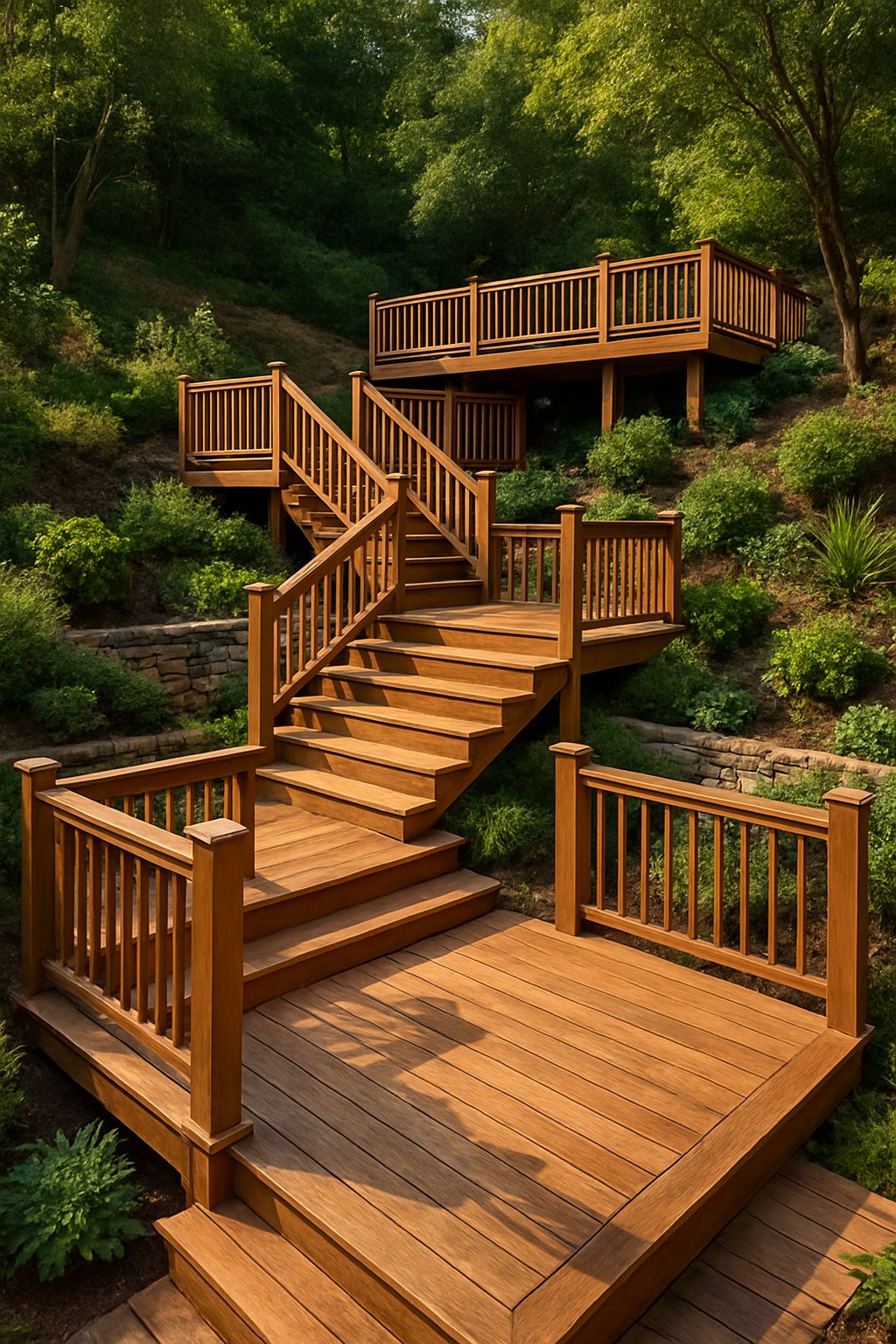
A multi-level wooden deck can completely transform a challenging slope into a functional outdoor living space. It provides flat, stable surfaces for everything from lounging to entertaining.
Consider creating different zones on each level, perhaps one for seating, another for dining, or even a dedicated spot for container gardening. First, map out how many levels you need and their ideal placement.
Opt for sturdy, weather-resistant wood so your deck can withstand the elements for years to come. Connecting the different tiers with stairs or ramps ensures the entire space is accessible and flows together.
This design works with the natural contour of the land, minimizing the need for extensive excavation or numerous retaining walls. It also adds a dynamic look to your yard while maximizing usable square footage. Remember to check local building codes for any necessary permits, as proper drainage and a strong frame are essential for safety.
Expert Tip: Select a natural wood that complements the surrounding landscape for a cohesive feel. Wider steps are a great touch, as they can serve as extra seating or display areas for potted plants.
3. Create a rock garden with native stones
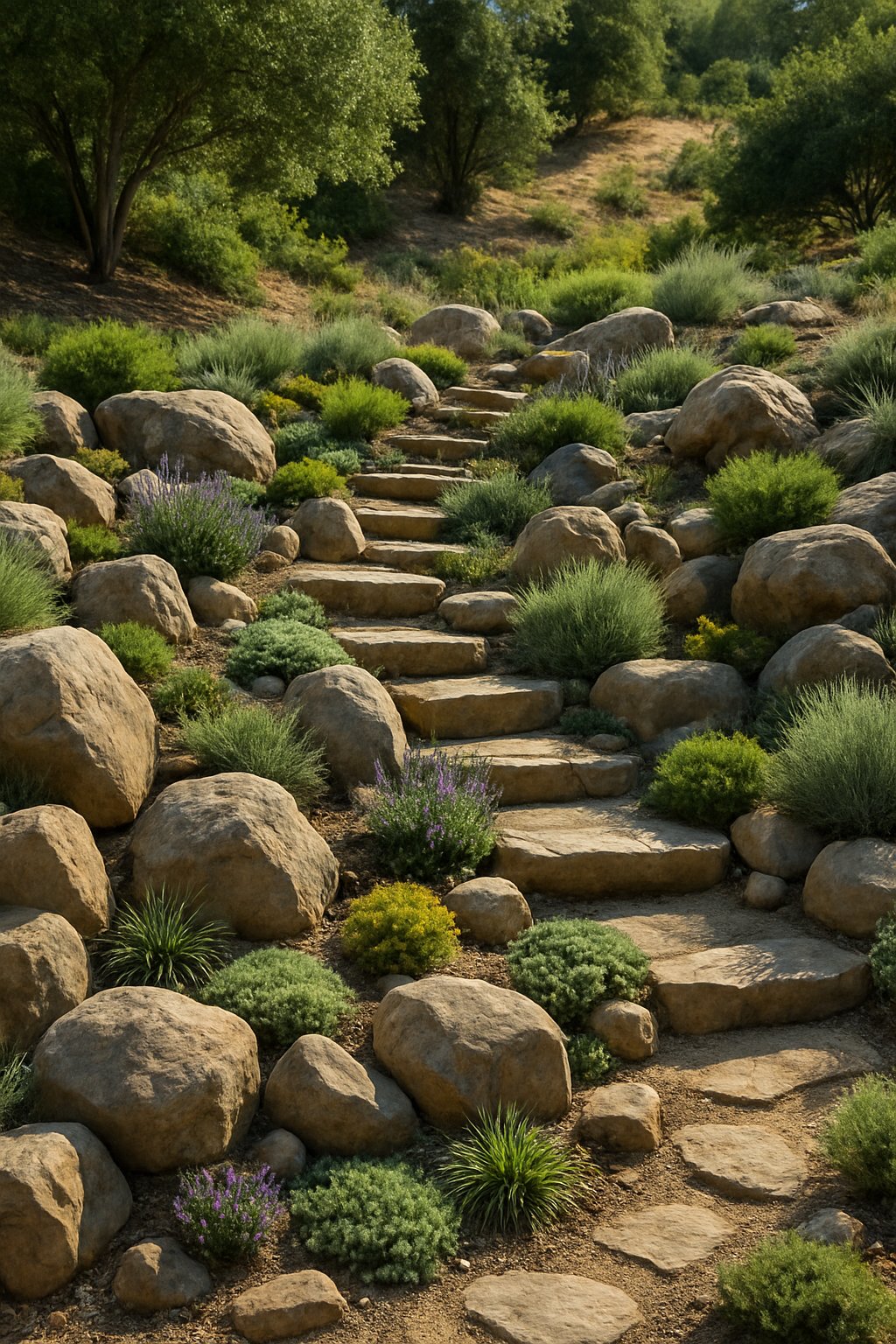
Using native stones to build a rock garden on your sloped backyard creates a look that feels completely natural and integrated with the local environment. Stones sourced from your region are often easier to find and blend seamlessly with native plants.
You can arrange the rocks to form small terraces or low walls that help stabilize the incline. In the gaps between the stones, tuck in plants like succulents, ornamental grasses, or small shrubs. These types of plants typically require little water and look fantastic emerging from the rocky crevices.
A rock garden is also excellent for improving drainage and preventing soil from eroding during heavy rain. For a more dynamic appearance, use a variety of stone sizes, placing larger rocks at the base and smaller ones toward the top. This layered approach not only looks good but also enhances stability.
Expert Tip: Choose stones that match the color and texture of your local soil to create a seamless transition. Be sure to give your plants plenty of room to grow so they do not become overcrowded.
4. Plant colorful perennials along the slope
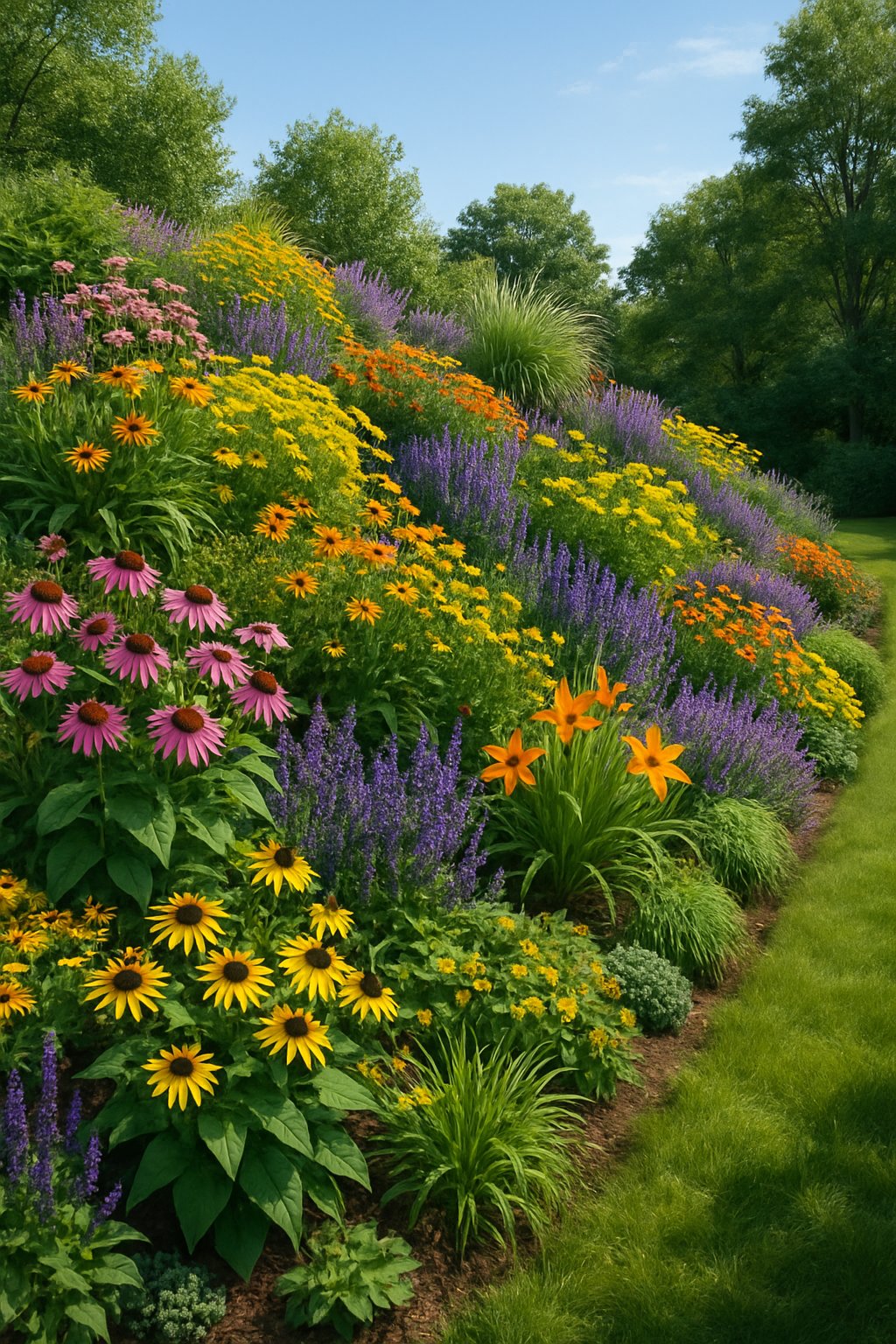
Planting a slope with vibrant perennials is a beautiful way to tackle erosion. The deep roots of these plants anchor the soil, while their flowers splash your yard with brilliant color.
Select perennials that thrive in sunny, dry conditions, such as coneflowers or black-eyed Susans. These varieties are low-water and are well-suited for life on a slope. For a lush, full appearance and better erosion control, plant them in clusters rather than single rows.
Other hardy options like daylilies and lavender offer long blooming periods, ensuring your yard has color for months on end. Just remember to give your plants enough space to spread out as they mature, as overcrowding can cause problems later.
Expert Tip: Pick perennials with staggered bloom times to maintain continuous color throughout the seasons. To make watering easier, group plants with similar moisture needs together.
5. Add low retaining walls for plant beds
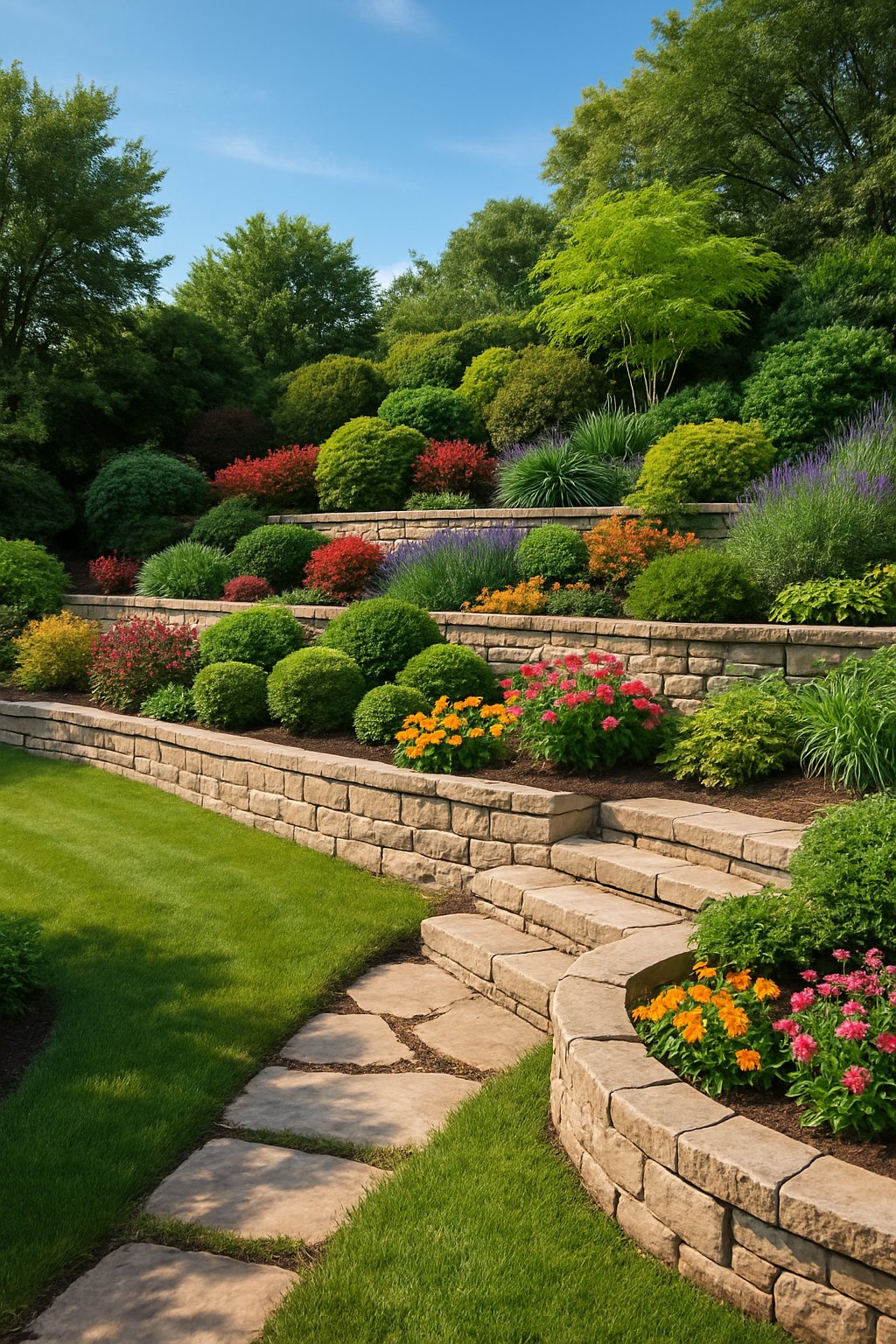
Low retaining walls are perfect for carving out level planting areas on a slope. They effectively hold soil in place, which makes gardening significantly more manageable.
You can construct these walls from stone, wood, or concrete blocks, choosing the material that best complements your yard’s aesthetic. These structures add a sense of order and make your plants the star of the show.
Use them to define separate beds for flowers or vegetables. Retaining walls also play a practical role by slowing water flow, which helps protect your plants from the damaging effects of erosion. Keeping the walls relatively low ensures they do not obstruct views or make the yard feel enclosed. The goal is a look that is both sturdy and subtle. If the wall is wide enough, it can even double as extra seating, blending form and function beautifully.
Expert Tip: For a natural and durable finish, use untreated cedar or stone. Place a layer of drainage gravel behind the wall to prevent water damage.
6. Use groundcover plants to prevent erosion
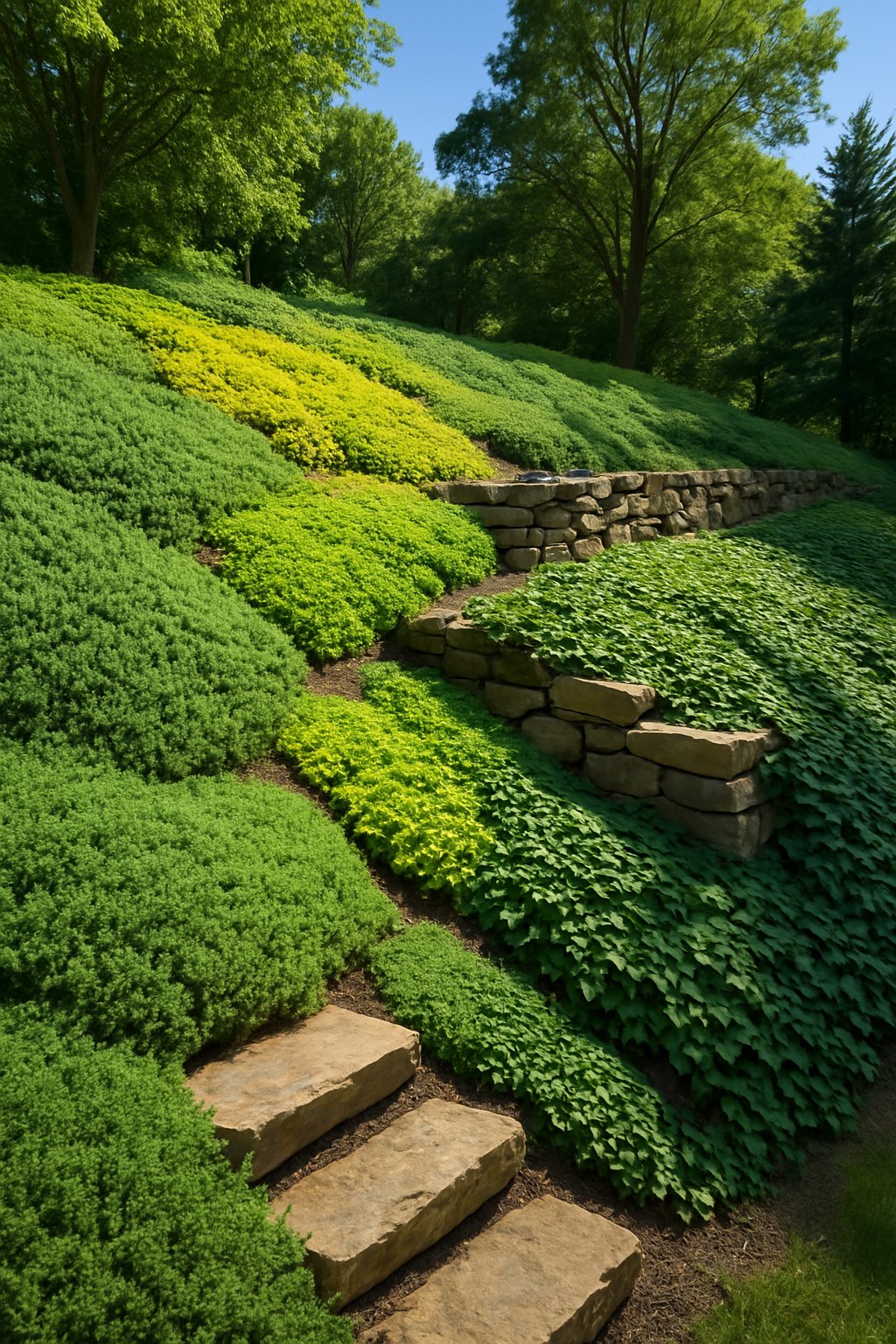
Groundcover plants are fantastic for sloped areas because their root systems create a web that holds soil securely in place. This dramatically reduces runoff and prevents dirt from being washed away during a downpour.
Consider low-growing varieties like creeping juniper, blue rug juniper, or creeping phlox. These plants spread to form a dense, green carpet across the ground. Some species, such as low sumac, feature thick stems that are ideal for stabilizing very steep hills. For shadier spots, vinca minor or pachysandra are excellent choices.
Groundcovers eliminate the bare patches that are prone to erosion. Once they are established, most of these plants are incredibly low maintenance.
Expert Tip: Select plants that are well-suited to the amount of sun or shade on your slope. Water them consistently at the beginning to help their roots become strong and established.
7. Terrace the slope with stone or wood steps
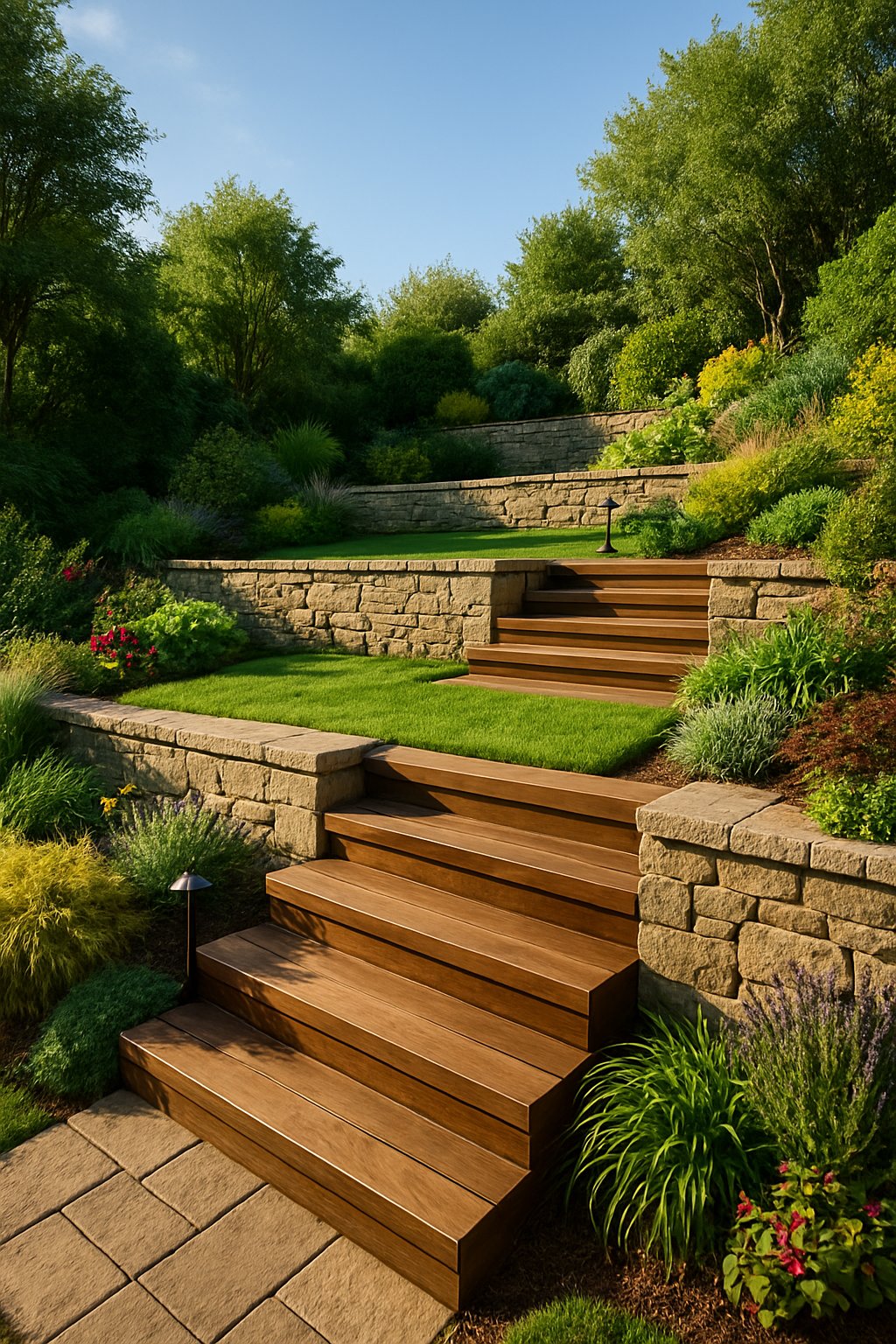
Introducing terraces with stone or wood steps is a brilliant way to break up a steep incline, creating flat and functional levels. This approach not only looks fantastic but also makes navigating the yard much safer and easier.
Opt for natural stone if you are aiming for a rustic, earthy aesthetic, or choose wood for a warmer, more inviting feel. The terraces themselves serve as a natural barrier against erosion by slowing down water flow. You can use each level for planting flowers, shrubs, or even vegetables. The steps connecting the terraces make the entire area more accessible and comfortable to walk through.
Make sure to select durable materials that can withstand various weather conditions. For safety, keep the height of each step consistent to prevent tripping. Adding subtle lighting along the steps can enhance both safety and ambiance at night.
Expert Tip: To prevent the soil from shifting, be sure to tamp it down firmly behind each terrace. Placing gravel beneath the steps will improve drainage and extend their lifespan.
8. Install a floating deck backing into the hillside
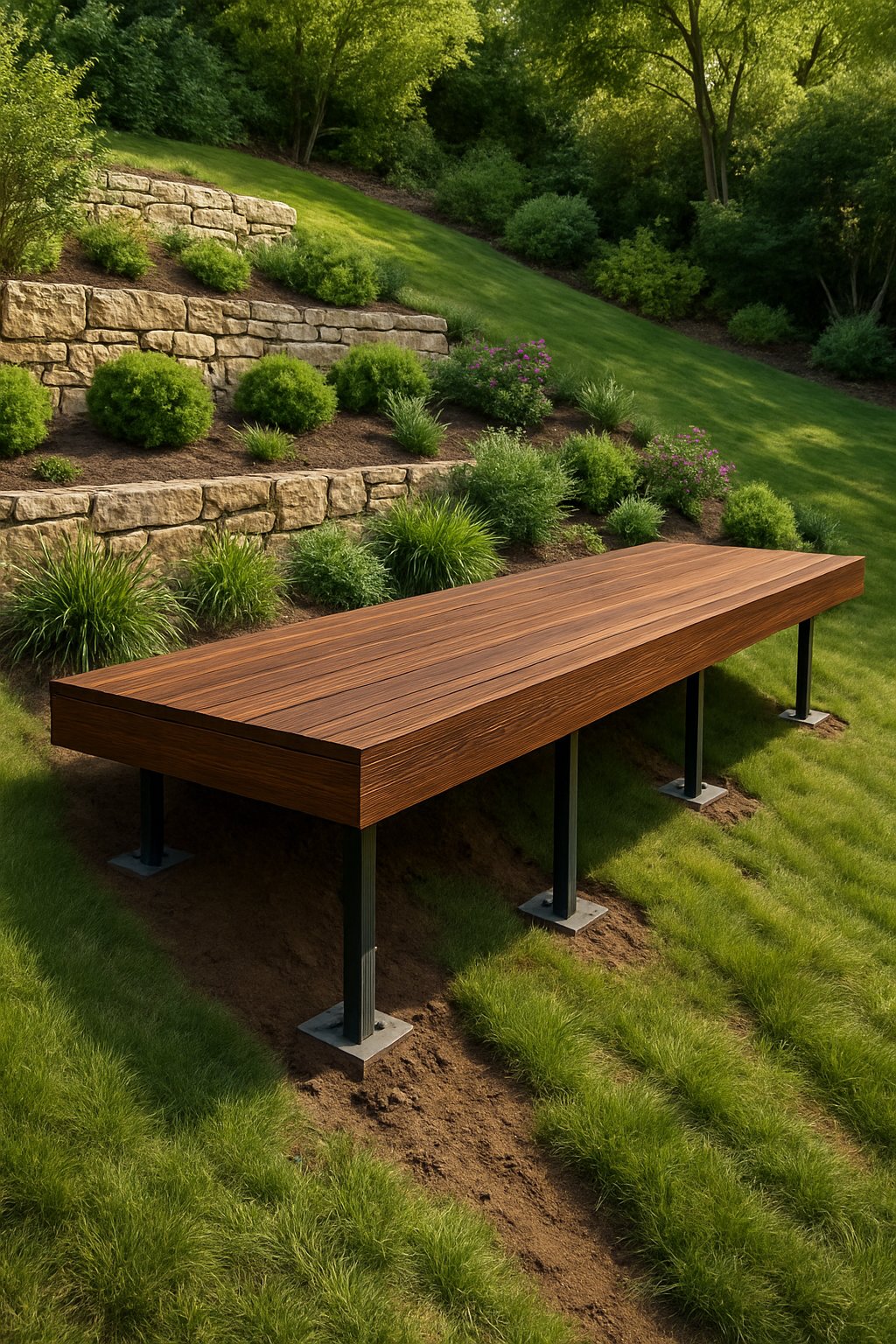
A floating deck offers a practical way to gain usable outdoor space without the need for extensive excavation. It is built on posts, allowing it to “float” gracefully above the natural slope.
By positioning the deck so it backs into the hillside, you can create a cozy and secluded retreat. The slope itself acts as a natural wall, providing privacy and protection from the wind. To make the deck feel like an organic part of the landscape, you can integrate it with retaining walls or surrounding plants. Because it is elevated, it will not interfere with the hill’s natural drainage pattern.
This type of deck is often easier to build and adjust compared to those requiring deep foundations. For longevity, use weatherproof materials like cedar or composite decking. Ensure the support posts are correctly spaced to maintain the deck’s strength and stability. Stairs leading down the hillside will connect the deck to the rest of your yard, providing convenient access. Ultimately, a floating deck can make a sloped yard far more functional and appealing.
Expert Tip: Anchor the deck securely into the hillside to prevent any shifting over time. Before you begin construction, always check local building codes regarding slope regulations and deck height restrictions.
9. Plant a mix of shrubs and small trees
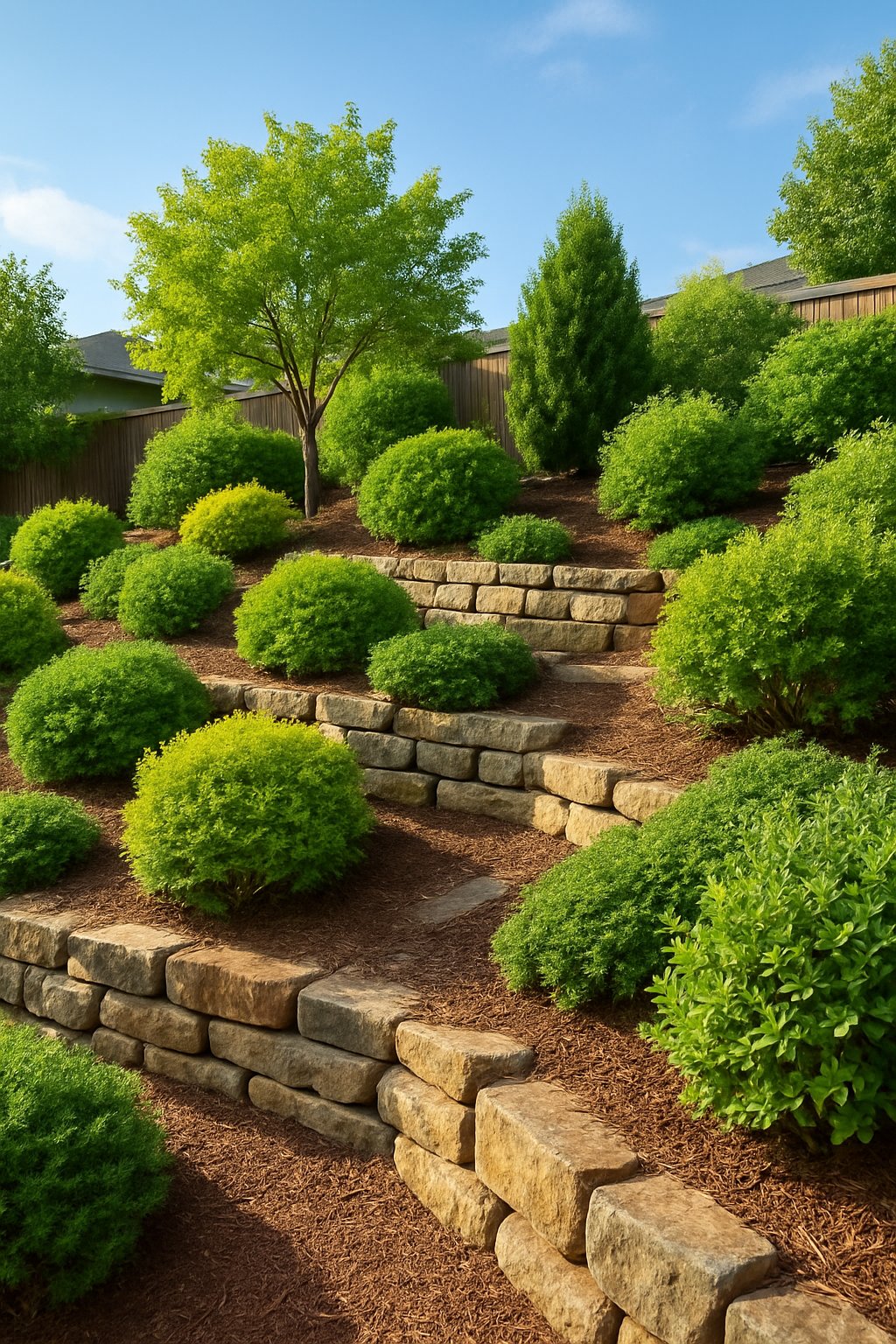
A combination of shrubs and small trees is an effective way to stabilize a slope. The varied root systems work together to hold the soil, making the entire area more secure.
For visual appeal, choose plants with different heights and textures. Taller trees can provide welcome shade, while shrubs are perfect for filling in gaps and adding splashes of color. Select plants that are well-suited to your specific climate and soil type. Evergreens offer green coverage throughout the year, while flowering shrubs contribute seasonal beauty.
For a more natural and less formal appearance, plant in clusters rather than rigid rows. Placing some plants near walkways or seating areas can help create a cozier, more intimate atmosphere.
Expert Tip: Begin with native plants, as they generally require less water and maintenance. Grouping similar plants together will also simplify your upkeep routine.
10. Create winding grassy paths to break up the hill
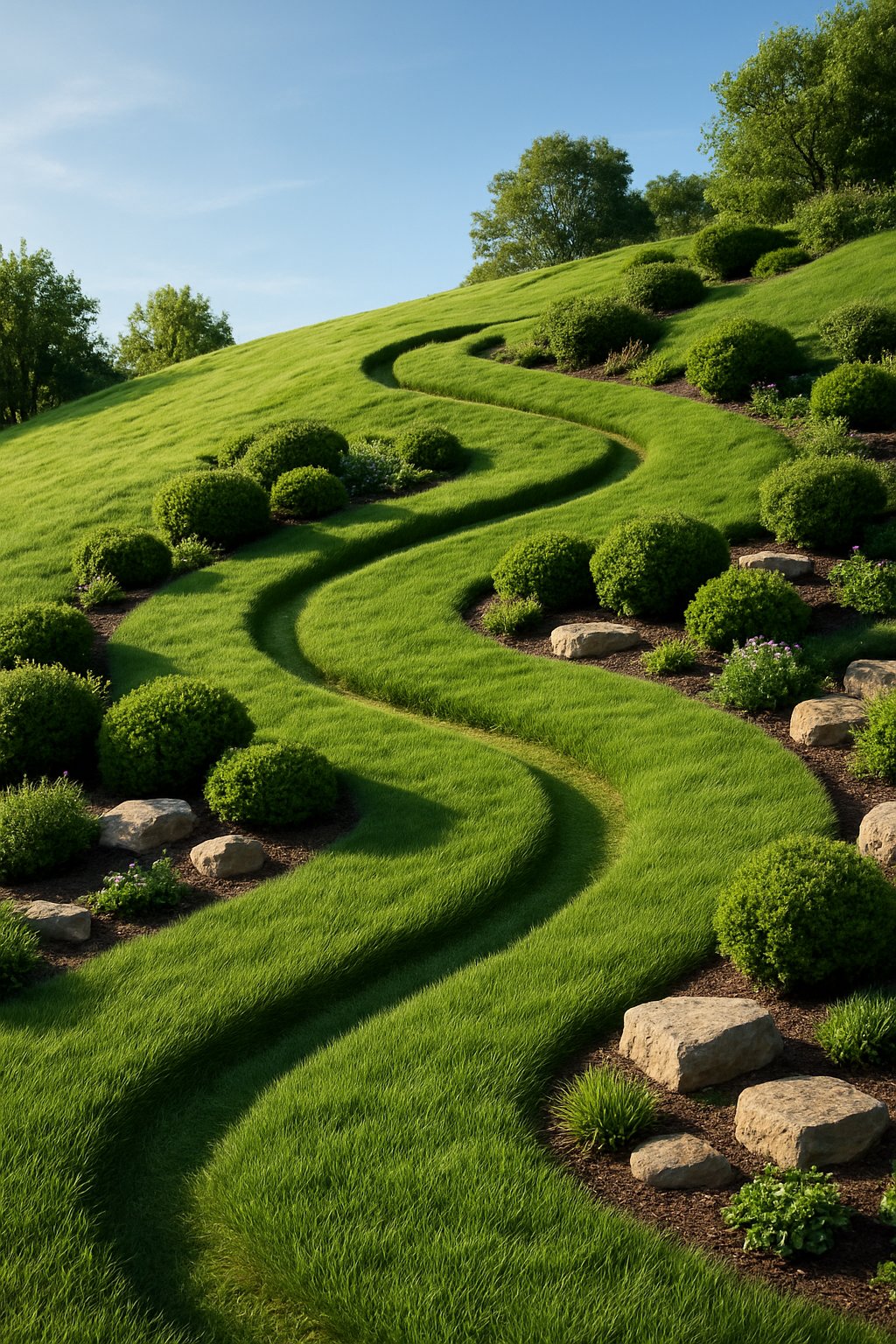
Winding grassy paths can soften the appearance of a steep yard, adding a touch of natural charm while providing a safe route for walking up and down.
By curving the paths through your landscape, you can divide the slope into smaller, more manageable sections. This design also opens up opportunities to create planting areas or cozy seating nooks along the way. Grass paths are relatively easy to maintain and contribute to erosion control by holding the soil in place. Choose a grass variety that can withstand foot traffic, such as tall fescue or Bermuda grass.
To keep the path looking neat and defined, add edging made from stone or wood. This will also prevent soil from washing onto the path during heavy rain.
Expert Tip: Ensure paths are wide enough for comfortable walking and plant low-growing varieties along the edges for added texture. Curves tend to feel more natural and harmonious in sloped environments.
11. Add a calming water feature like a small waterfall
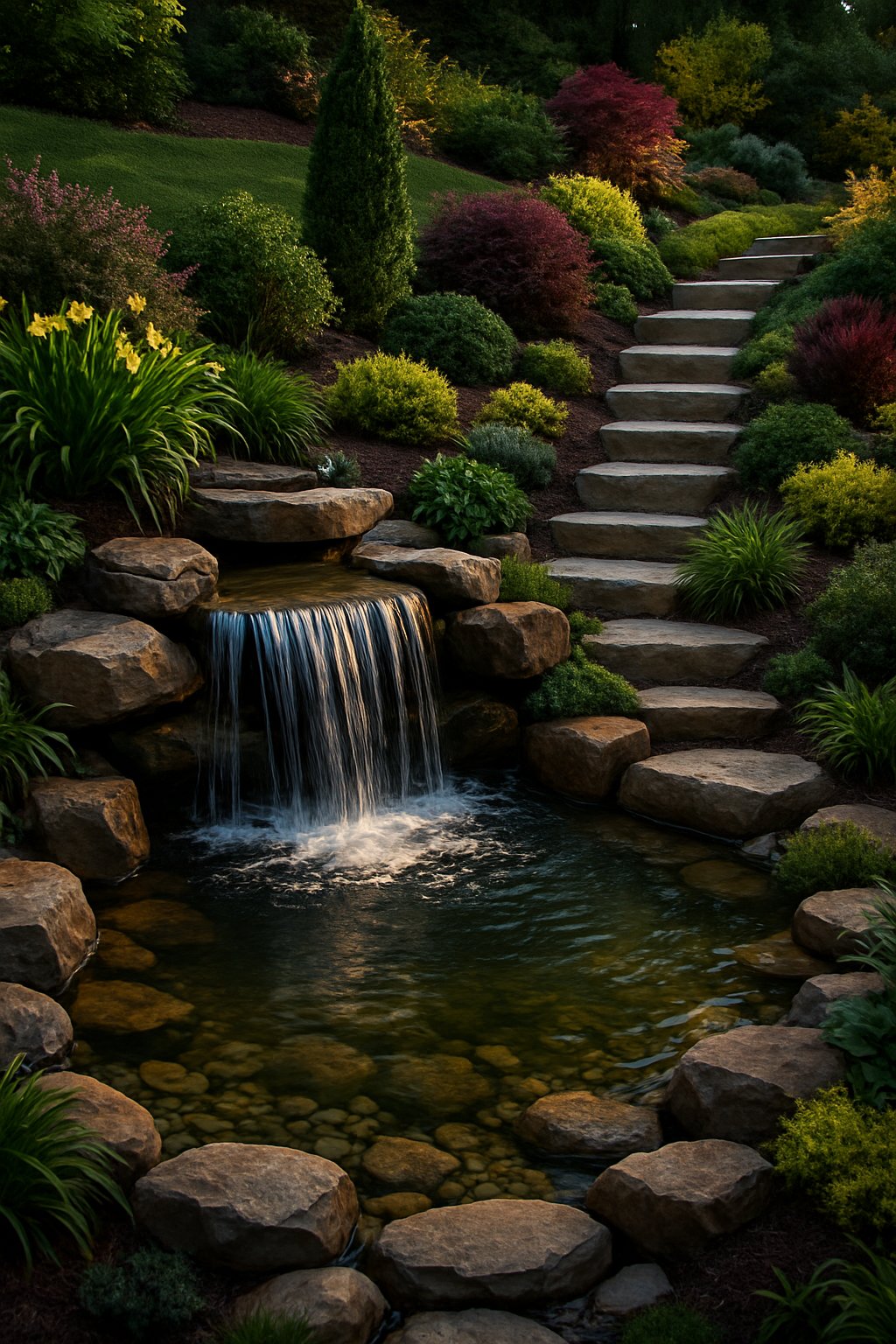
A small waterfall is a perfect addition to a sloped backyard. The natural elevation of your yard provides the ideal setup for water to flow downward, creating movement and the soothing sound everyone enjoys.
Try placing your waterfall along a rocky part of the slope or nestled among some plants for a more organic look, as if it were always there. Water features are also great at masking unwanted noise from streets or neighbors. Even a compact waterfall can completely transform the atmosphere of a small space.
You can use stone or wood to ensure your water feature blends with your yard’s overall style. You do not need a large pond; a small basin at the bottom is sufficient to collect the water. A pump is essential to keep the water circulating, which makes maintenance much, much easier.
Expert Tip: To ensure a steady flow, match the size of your pump to the height of your waterfall. Planting native species around the feature will support local wildlife and enhance its visual appeal.
12. Use native plants that thrive on slopes
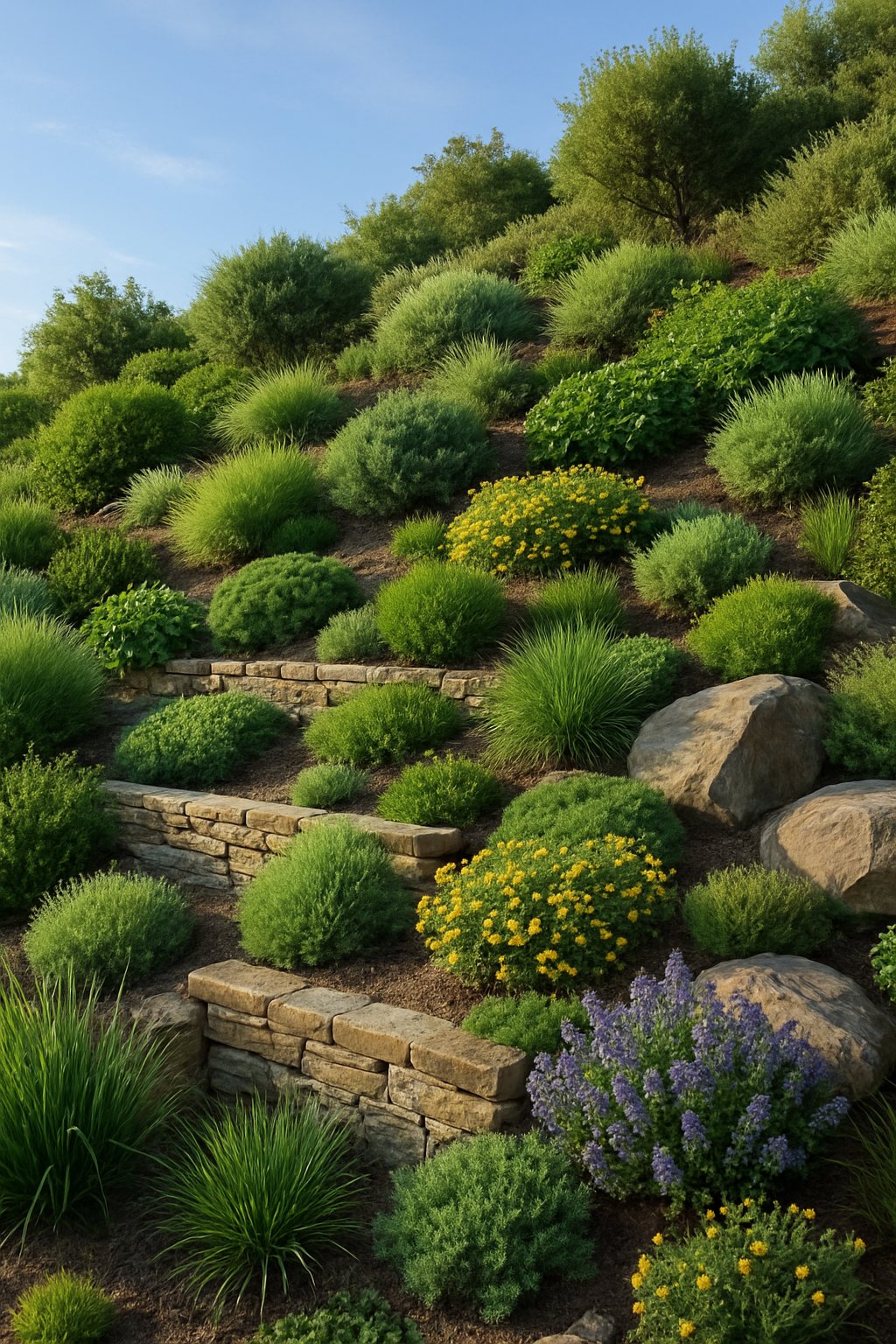
Native plants are perfectly adapted to sloped yards. They are already accustomed to your local climate and soil conditions, which means you will spend less time watering and maintaining them. This saves you both time and money, a win-win situation.
Consider drought-tolerant shrubs like toyons or manzanitas, which are excellent for holding soil in place and reducing erosion. To add extra color and texture, include grasses and flowers such as black-eyed Susans or mountain mint. Native plants typically flourish in the dry, sunny conditions often found on slopes.
They also play a vital role in attracting local wildlife like bees and butterflies. By mixing different native species, you can create a yard that has a wild, resilient, and beautiful appearance.
Expert Tip: Plant native shrubs in groups to quickly cover bare soil and prevent erosion. Apply mulch around the plants to help retain moisture and suppress weeds.
13. Build raised vegetable garden beds on terraces
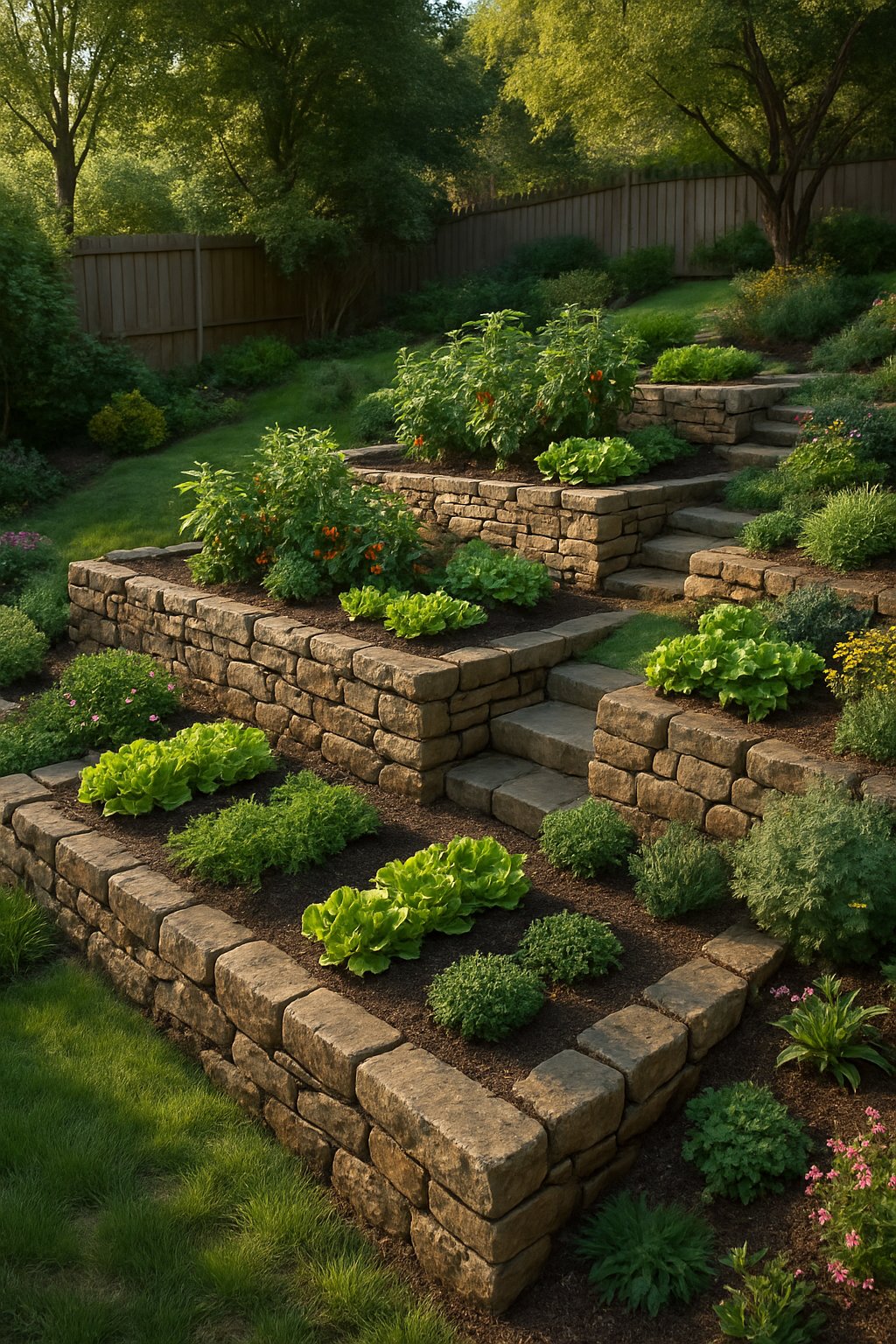
By terracing your sloped backyard, you create ideal flat spots for raised vegetable beds. This setup not only makes planting much more convenient but also helps prevent soil erosion.
You can use wood, stone, or any other sturdy material for the walls of the terraces. Each level functions as a self-contained mini-garden, providing a stable environment for your plants to grow. Raised beds offer superior drainage, which is especially important on slopes. They also help slow water runoff, ensuring your plants receive the moisture they need without being washed away.
Terracing allows for better garden organization. You can dedicate each level to different types of vegetables and easily rotate them from season to season. This method effectively gives you more usable gardening space without requiring a ton of extra labor.
Expert Tip: Use robust materials like treated wood or stone for the terrace walls so they can withstand changing weather conditions. Enrich the soil in your raised beds with compost to improve its quality and help your vegetables flourish.
14. Incorporate large boulders as natural focal points
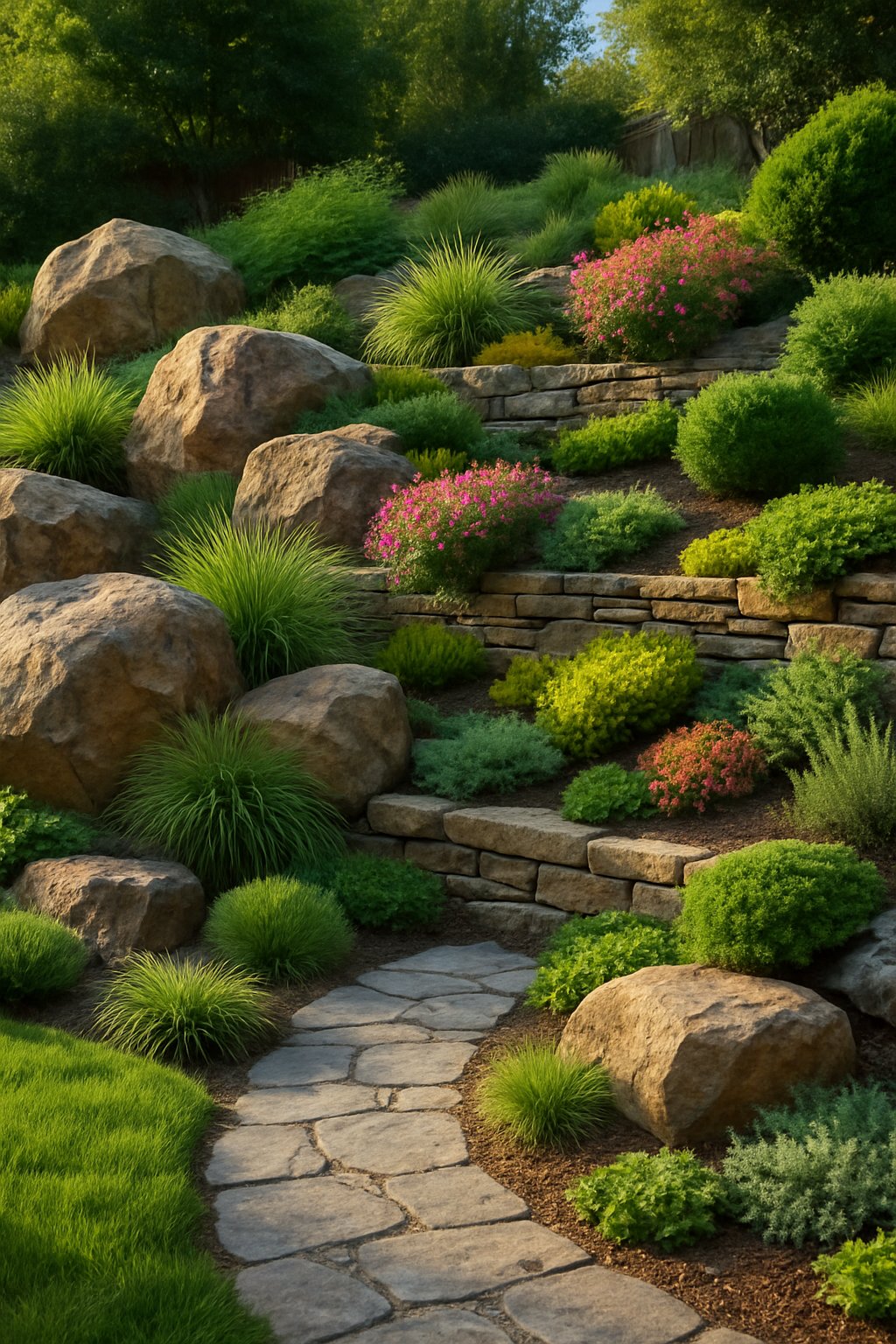
Large boulders can serve as powerful, natural focal points in your sloped backyard. Strategically place one or a group of them where they will capture attention, perhaps near a seating area or adjacent to a garden bed.
To soften their appearance and create visual contrast, surround the boulders with colorful flowers and lush greenery. For a more grounded and natural look, bury the boulders about halfway into the ground. If you find flat-topped boulders, they can even be used as rustic steps to create a charming path up the slope.
Avoid overcrowding the boulders; giving each one some breathing room creates a sense of balance. Natural stone complements almost any plant or landscaping style. Varying the sizes of the boulders will add depth and keep the landscape interesting.
Expert Tip: Burying your boulders more than halfway gives them a natural, anchored appearance. Always add plants and flowers around them to soften their hard edges.
15. Plant a flowering hillside garden
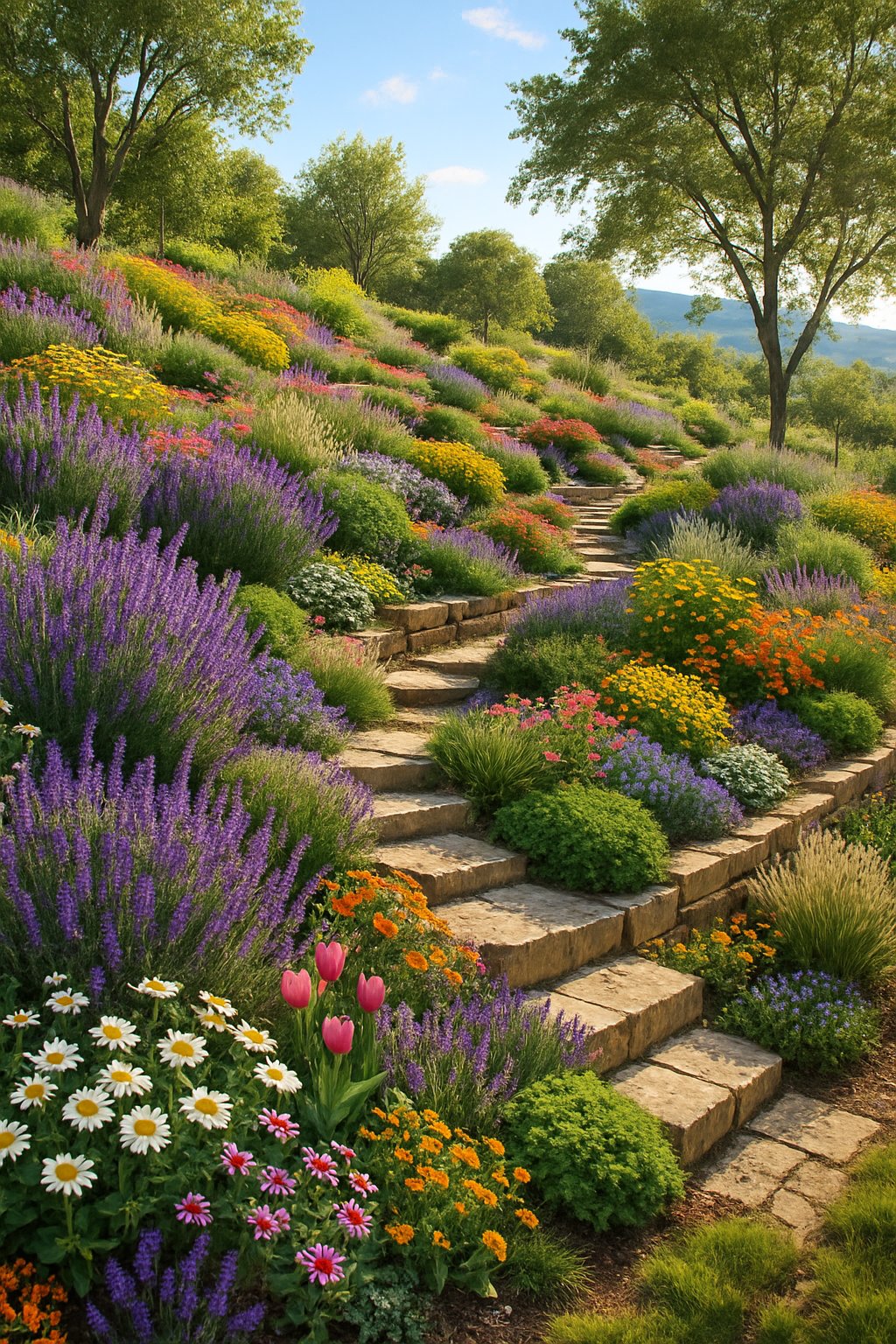
Planting a hillside with flowers brings a burst of color to your landscape and is a practical way to prevent soil from eroding. Choose flowers that have strong root systems, such as creeping phlox, sedum, or lavender.
A mix of different flower varieties will give your garden a more natural and lively feel. It is important to select flowers that can tolerate the sun and wind that are typical on slopes. Applying a layer of mulch around your plants will help retain moisture and protect their roots from extreme temperatures. You can plant in terraces or small pockets on the slope to make the process easier and to help control water runoff.
Be sure to water consistently until the plants are well-established.
Expert Tip: Start with native flowers, as they are best adapted to your hillside’s conditions. To simplify care, group plants with similar watering needs together.
16. Create a cascading garden with tiered planters
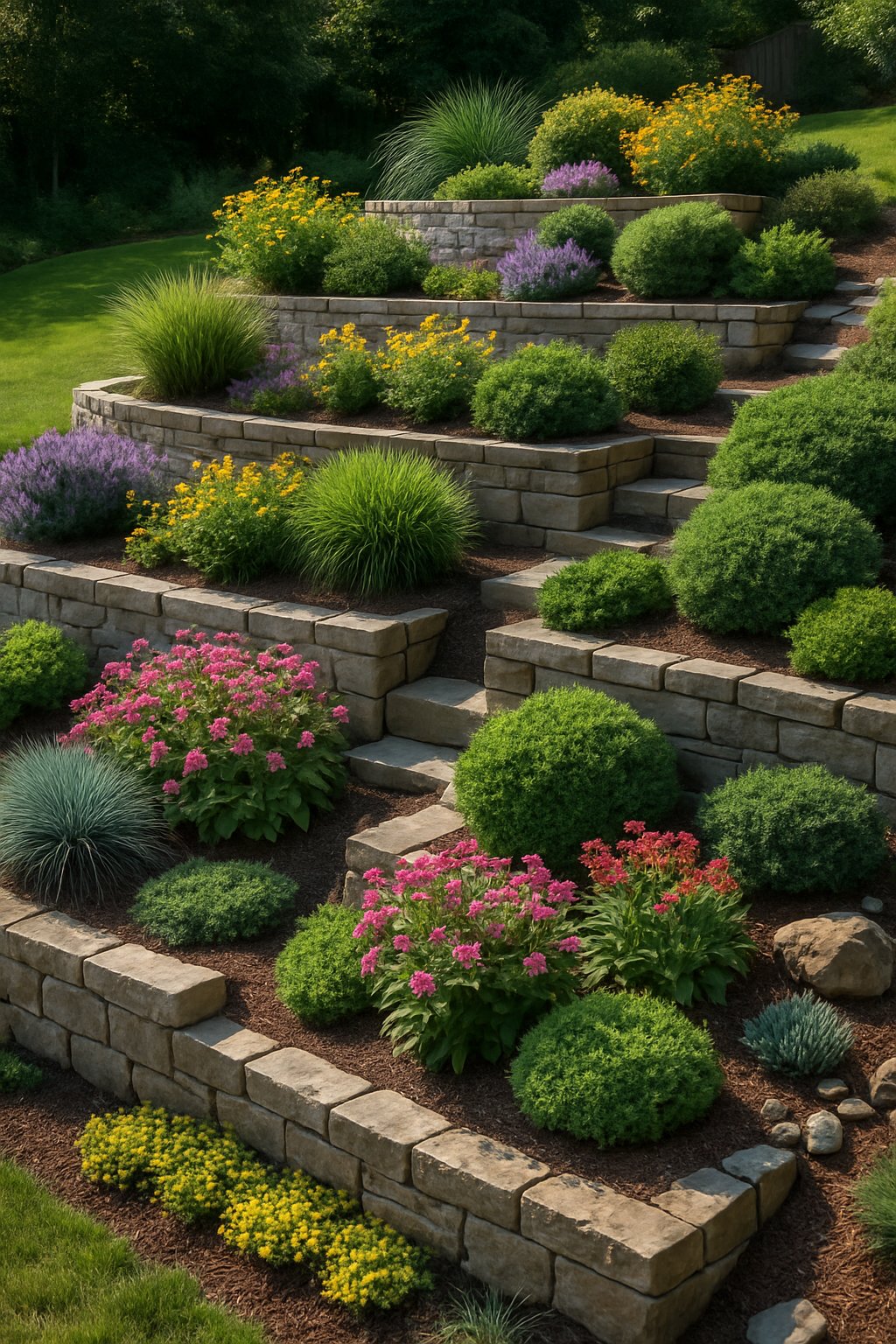
Tiered planters are an ingenious solution for adding height and dimension to a sloped backyard. You can stack pots or construct built-in levels to create a beautiful cascading effect that suits almost any space.
This arrangement allows you to cultivate a greater number of plants without taking up valuable ground space. It also simplifies watering and maintenance, since the plants are conveniently grouped together. When selecting plants, consider the sun and water requirements for each level. A mix of flowers, herbs, and succulents can create a stunning display of color and texture.
Tiered planters can be crafted from wood, metal, or stone. Just choose a material that complements your backyard’s style and is durable enough to withstand the weather. A cascading garden can turn a challenging slope into a standout feature you will be proud to display.
Expert Tip: Use lightweight pots for the upper tiers to avoid placing excessive weight on the lower levels. Ensure each planter has adequate drainage to maintain healthy roots.
17. Install garden lighting along stairways
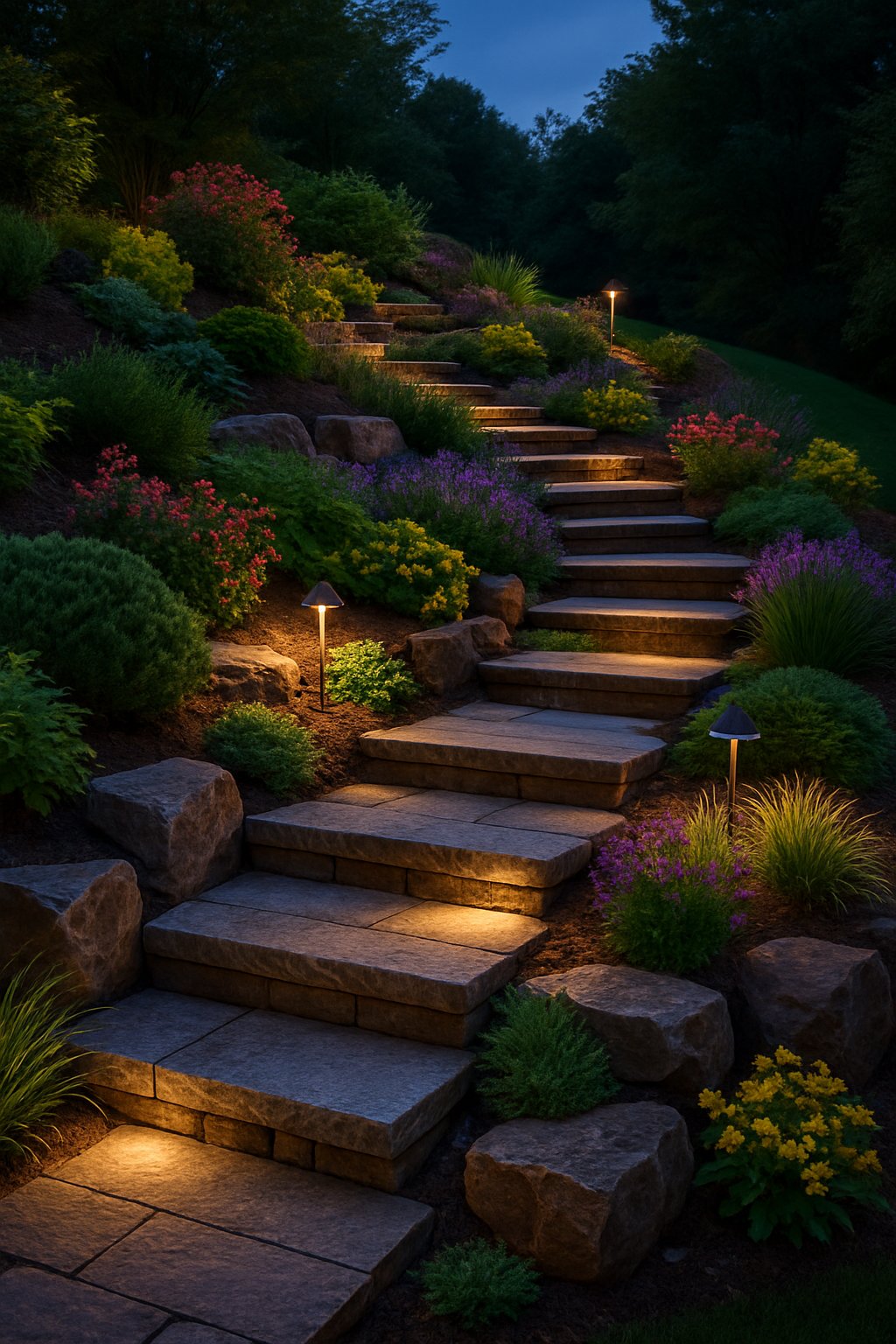
Adding garden lighting to your backyard stairways makes the space safer and more inviting after dark. Proper illumination ensures each step is clearly visible, significantly reducing the risk of trips or falls.
Consider small LED lights or solar-powered fixtures; they are simple to install and do not require additional wiring. You can place the lights on the sides of the stairs or underneath the treads for a soft, subtle glow. Beyond the safety benefits, lighting creates a warm and welcoming ambiance in your backyard. It also accentuates the design of your stairs, making them a beautiful feature at night.
Make sure to use waterproof and weather-resistant lights to ensure they last. The brightness can be adjusted to prevent any harsh glare.
Expert Tip: Solar lights are an excellent choice for easy, eco-friendly installation along your stairs. Position them at even intervals to create a well-lit and attractive pathway.
18. Mix evergreens with seasonal bloomers
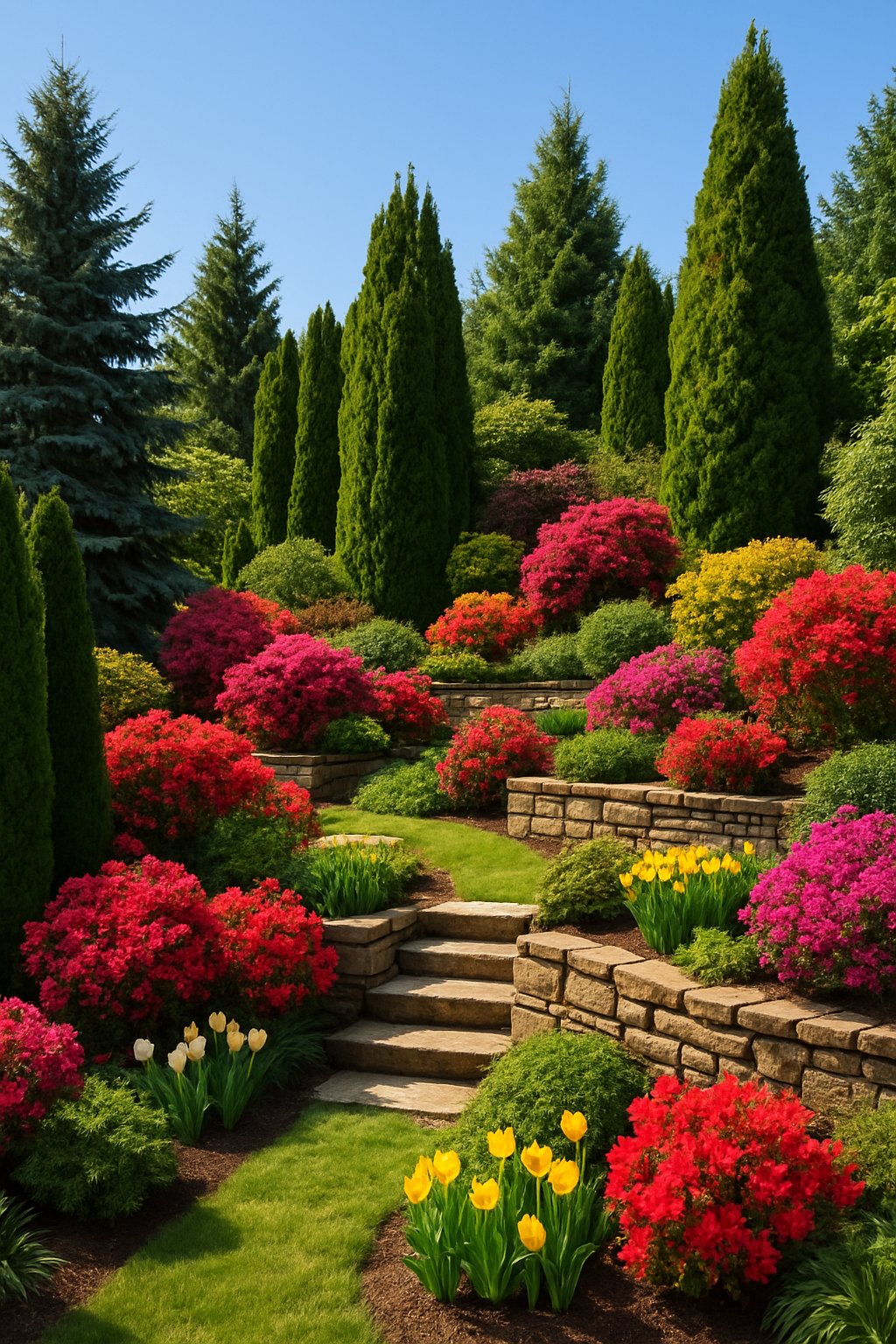
Evergreens are the backbone of a sloped backyard, keeping it vibrant and full of life all year long. They provide structure and consistent color, while seasonal flowers introduce exciting pops of color that evolve with the seasons.
Choose small evergreen shrubs that are easy to plant on an incline. Then, tuck in blooming plants like tulips for the spring or mums for the fall to add layers of interest. Place the evergreens in areas where you are concerned about soil erosion. The seasonal flowers can be planted nearby, offering bursts of color that you can easily change out as the year progresses.
This combination not only keeps your slope stable but also makes it much more engaging and fun to look at.
Expert Tip: A drip irrigation system is ideal for keeping both evergreens and bloomers properly watered on slopes. It conserves water and helps all your plants thrive.
19. Use mulch heavily to retain soil moisture
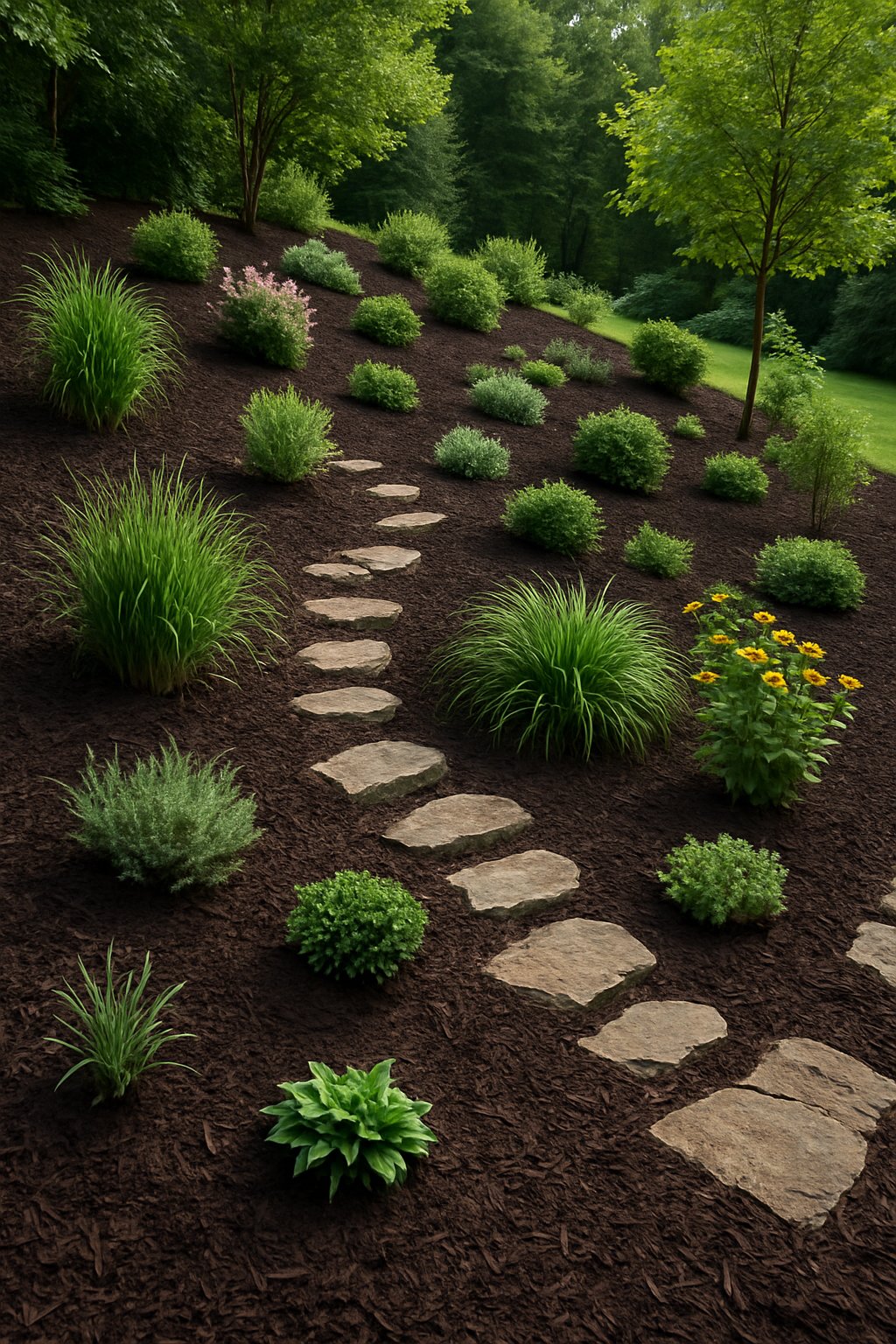
Mulch is one of the most effective tools for maintaining soil moisture on a slope. It acts as a barrier, preventing water from evaporating and locking in moisture for your plants.
Wood chips are excellent for trees, while straw works well for vegetable gardens. Mulch also slows down water runoff, which means less soil is lost during rainfall. It helps keep plant roots cool and prevents the soil from drying out too quickly. On a steep slope, you can lay down branches or other barriers first to help hold the mulch in place.
Adding a layer of compost beneath the mulch can further enhance the soil’s ability to retain water, boosting its overall health and promoting better plant growth. Mulch also prevents soil compaction, allowing water to soak in more easily.
Expert Tip: For the best moisture retention, apply a thick layer of mulch, about 3 to 4 inches deep. Be sure to keep the mulch away from plant stems to prevent rot.
20. Add benches on flat platforms for seating areas
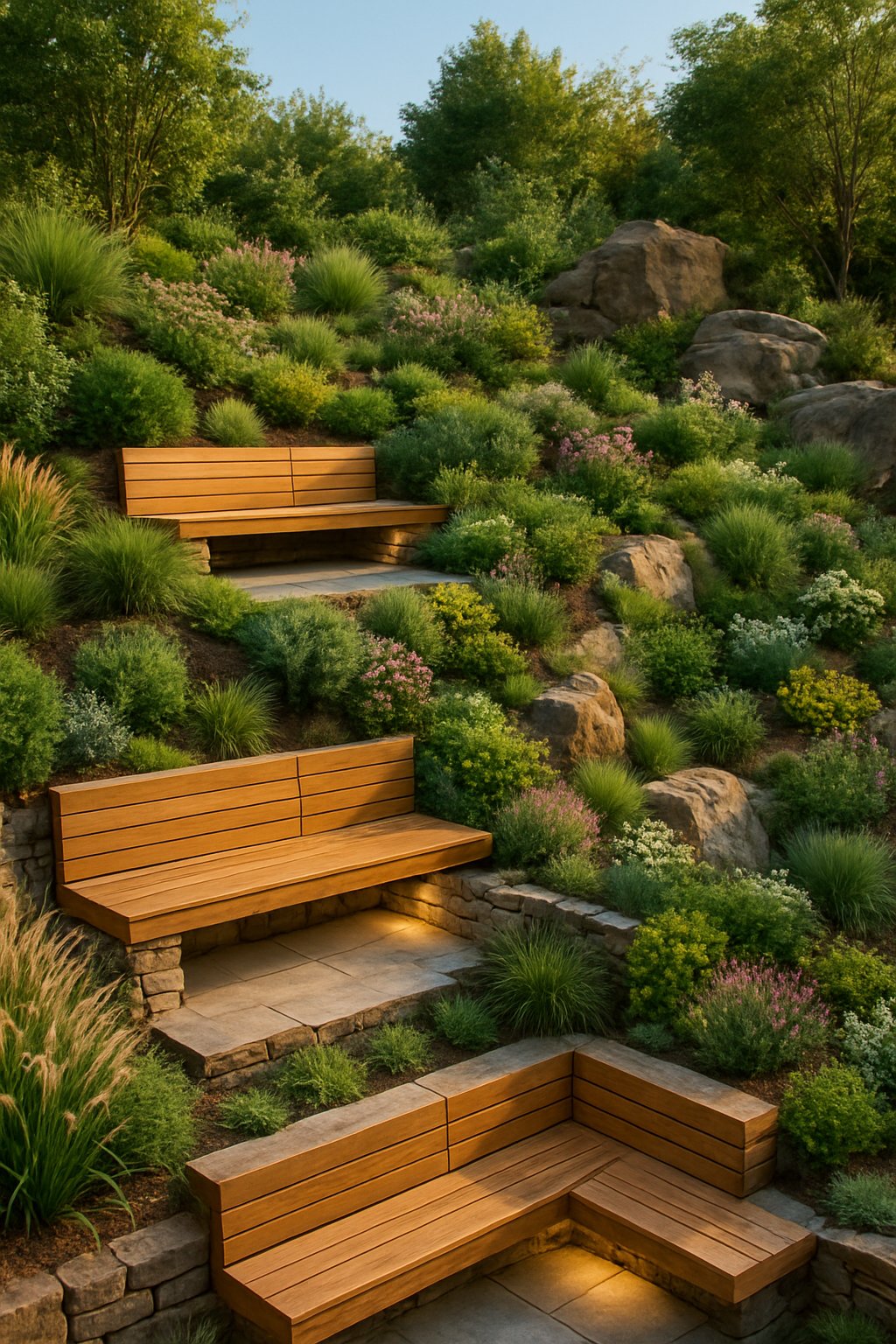
By building flat platforms on your slope, you can create perfect spots for benches. These level surfaces provide a safe and comfortable place to sit, because nobody enjoys sitting at an angle.
You can use wood, stone, or concrete for the platforms. A mix of materials can add visual variety and make the seating areas feel more deliberate and designed. Placing benches on these flat spots allows you to sit back and enjoy the view. It also helps to break up the monotony of the slope, making your yard feel more structured and organized.
Add some plants or a small table nearby to create a cozy and inviting atmosphere. This way, you establish a pleasant spot for relaxation, either alone or with friends. Make sure the platform is wide enough to accommodate the bench and allow for easy movement, so it does not feel cramped. Matching the style of the bench to your yard’s overall aesthetic creates a cohesive, well-planned look. If your slope is particularly steep, you can place benches on multiple platforms to serve as resting points along a path.
Expert Tip: Choose durable, weather-resistant materials for your benches to ensure they last on a slope. Planting low-growth shrubs around the platforms will help stabilize the soil and add natural beauty.
21. Plant drought-resistant ground covers
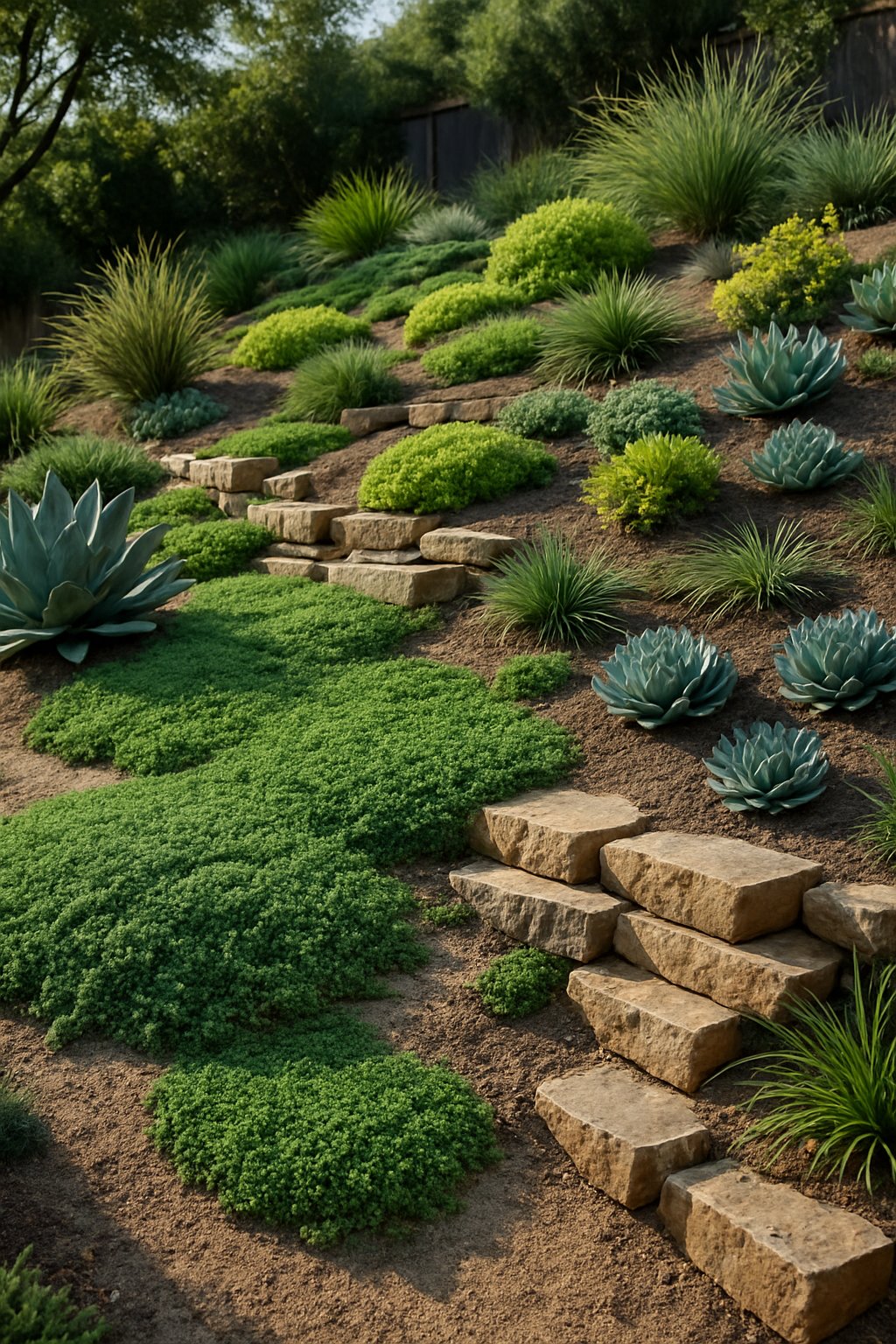
Drought-resistant ground covers are a true lifesaver for conserving water and preventing soil erosion on slopes. Once they are established, they require very little maintenance.
For sunny areas, choose plants like stonecrop or native buckwheat. These varieties can handle heat, drought, and even some light foot traffic. Plants with gray or silver foliage, such as lamb’s ear or lavender, are also great choices as they reflect sunlight and stay healthy in hot conditions. Using these ground covers will give you a green, low-maintenance hillside that looks great throughout the year.
By selecting the right types, you can also attract pollinators to your garden.
Expert Tip: To achieve a fuller look more quickly, start by planting drought-resistant covers in groups. Water them weekly until their roots have grown deep into the soil.
22. Build stone steps with side flower beds
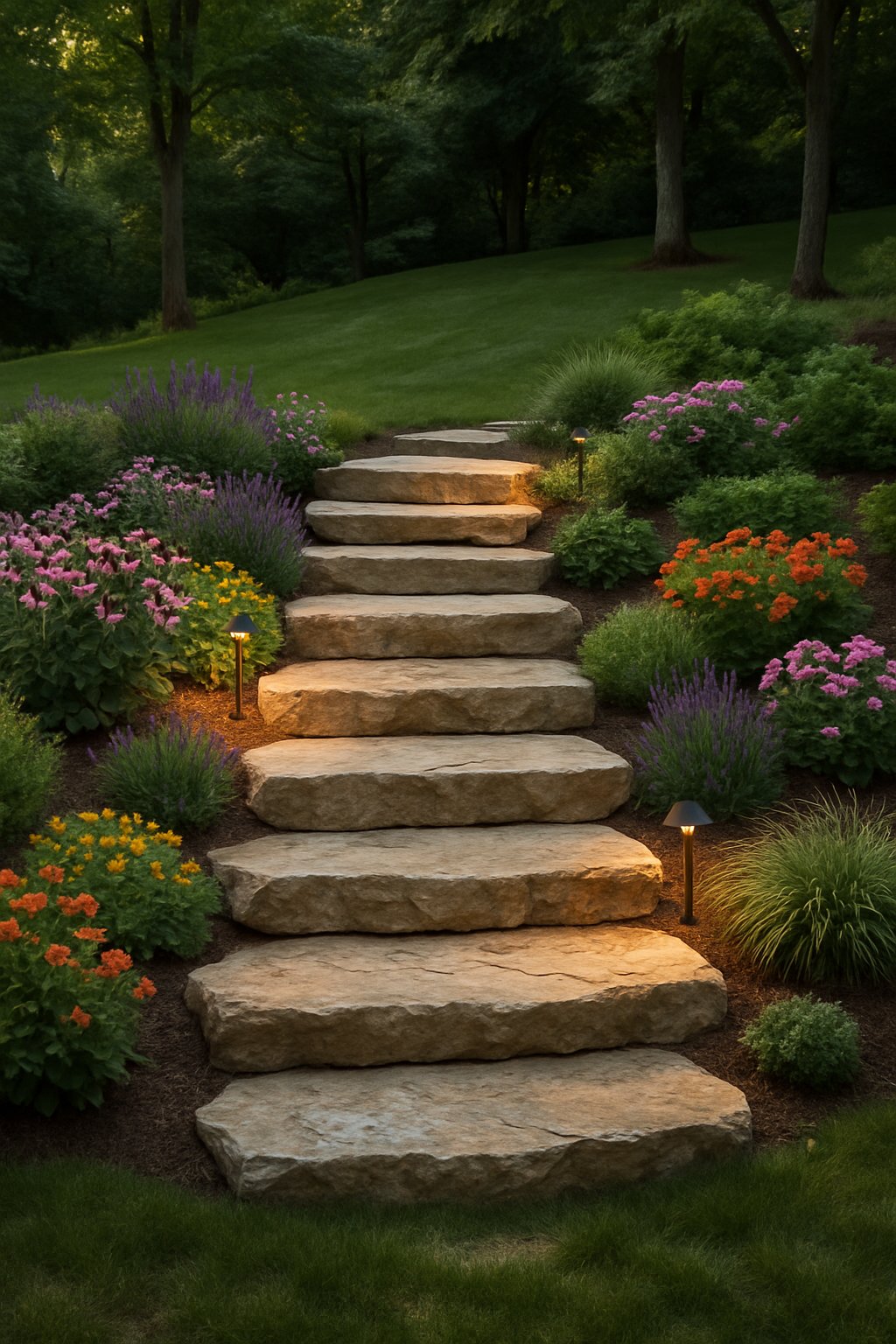
Stone steps can bring a wonderfully natural element to a sloped backyard. When built with care, they provide a safe and sturdy pathway for moving up and down the hill.
Select flat, solid stones for each step to ensure the path is level and easy to navigate. To soften the hard lines of the stone, add flower beds along both sides of the steps. This is a simple yet effective way to introduce color and charm. Opt for plants that are well-suited for slopes and do not require a lot of fuss. After all, nobody wants to spend their entire weekend weeding.
You can use rocks or bricks to create a border for the beds, which helps to keep the soil from sliding away during rain. Fill the beds with a variety of flowers, and perhaps a few small shrubs for added texture. It is also important to ensure your steps have good drainage to avoid puddles and slippery surfaces. Nobody wants that.
Expert Tip: Use drought-tolerant plants to minimize watering needs. Applying mulch to your flower beds will help with moisture control.
23. Design a rock retaining wall with integrated seating
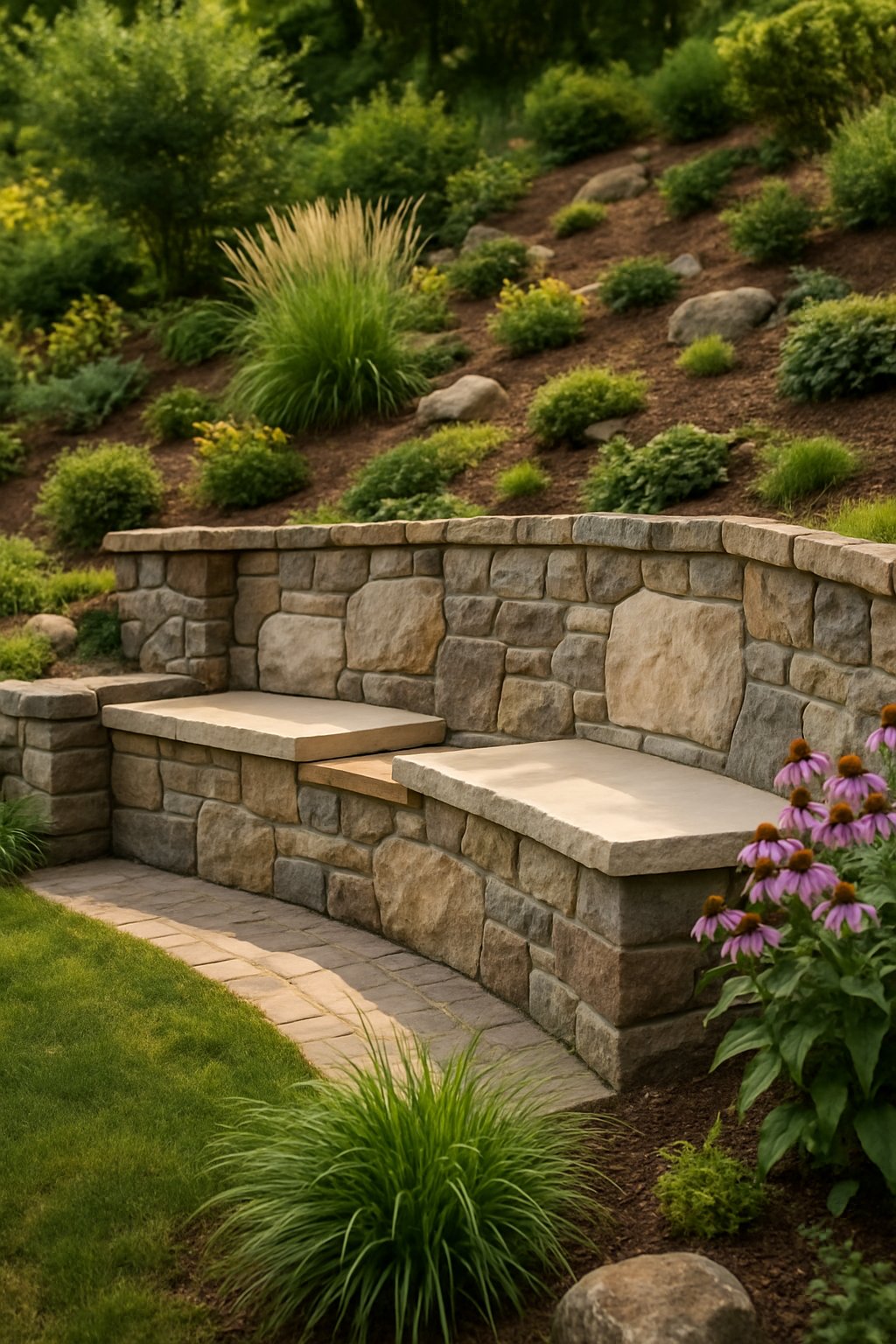
A rock retaining wall can do much more than simply hold back the soil on your sloped yard. By incorporating built-in seating, you can transform it into a functional and inviting spot for relaxing.
Choose flat, sturdy stones for the seats to ensure they are comfortable and stable. This clever design saves space by combining structural support with a practical function. Allowing the seating to follow the natural curve of the wall creates a relaxed and organic look. For added comfort and a splash of color, you can toss on some outdoor cushions or pillows.
Make sure the wall is strong enough to support the weight of people sitting on it. This can be achieved by using mortar or by carefully stacking the stones to prevent any shifting. Planting a few things nearby will help soften the hard edges and blend the wall seamlessly into your garden. Integrated seating creates a cozy destination for outdoor relaxation that friends and family are sure to love, and it adds a unique point of interest to your yard.
Expert Tip: Use weather-resistant cushions to keep your seating comfortable throughout all seasons. Always ensure there is proper drainage behind your wall to prevent water damage.
24. Create a natural habitat garden with native grasses
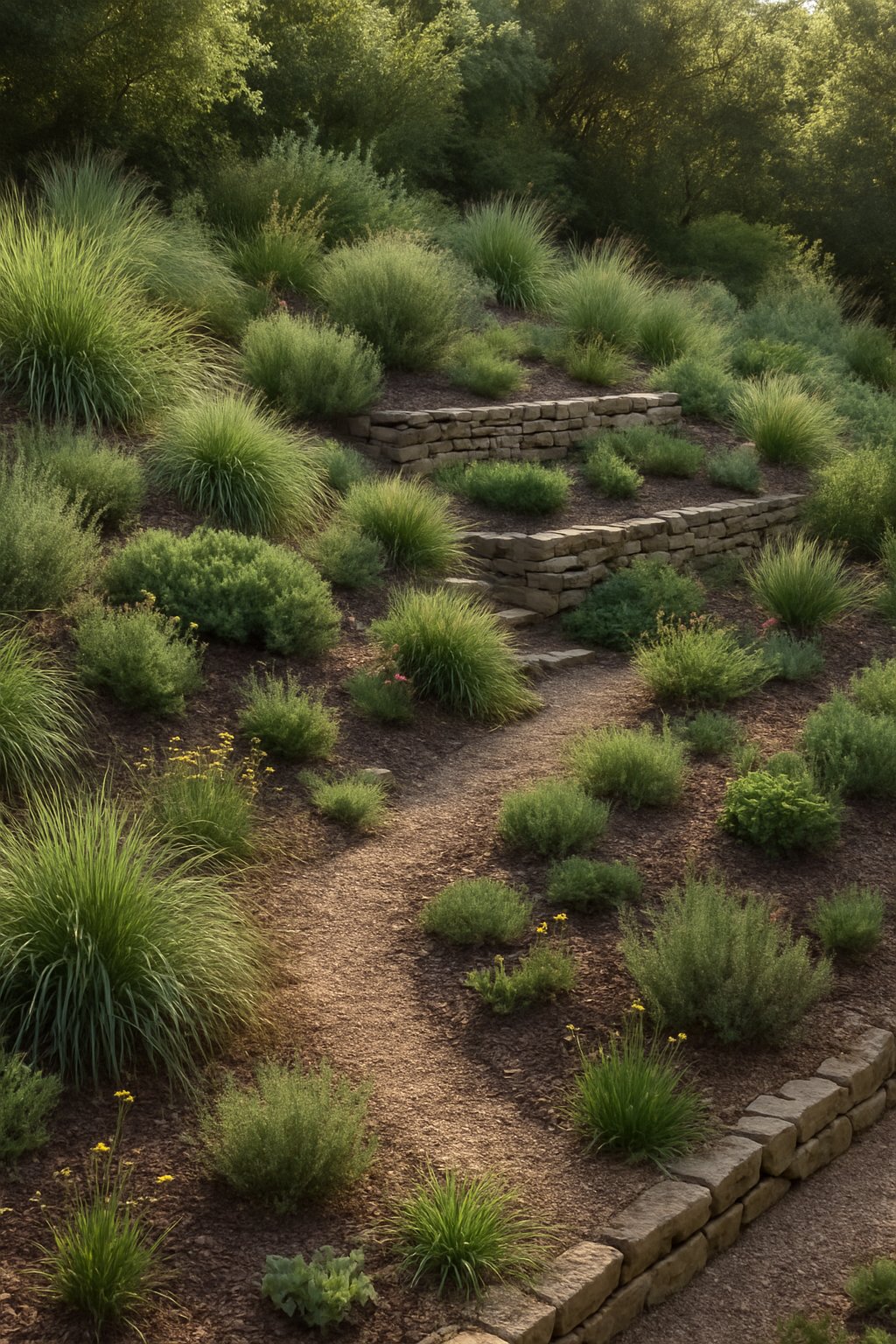
Planting native grasses in your sloped backyard is an excellent way to keep the soil right where it should be. Since these grasses are already adapted to your local climate, they will not require much water or attention.
By using native grasses, you create a welcoming habitat for local birds and insects. You also introduce interesting textures and gentle, graceful movement to your garden. To mimic their natural growth patterns, plant the grasses in small clusters. This approach looks more balanced and helps to keep the slope stable.
For added depth, mix both tall and short grass varieties. Native grasses often display soft, beautiful colors that change with the seasons. You can also pair them with other native plants to create a low-maintenance, eco-friendly landscape that feels perfectly in tune with nature.
Expert Tip: Start with just a few native grasses and observe how they naturally spread over time. This gradual growth will help your slope remain strong and beautiful.
25. Add climbing plants on trellises against retaining walls
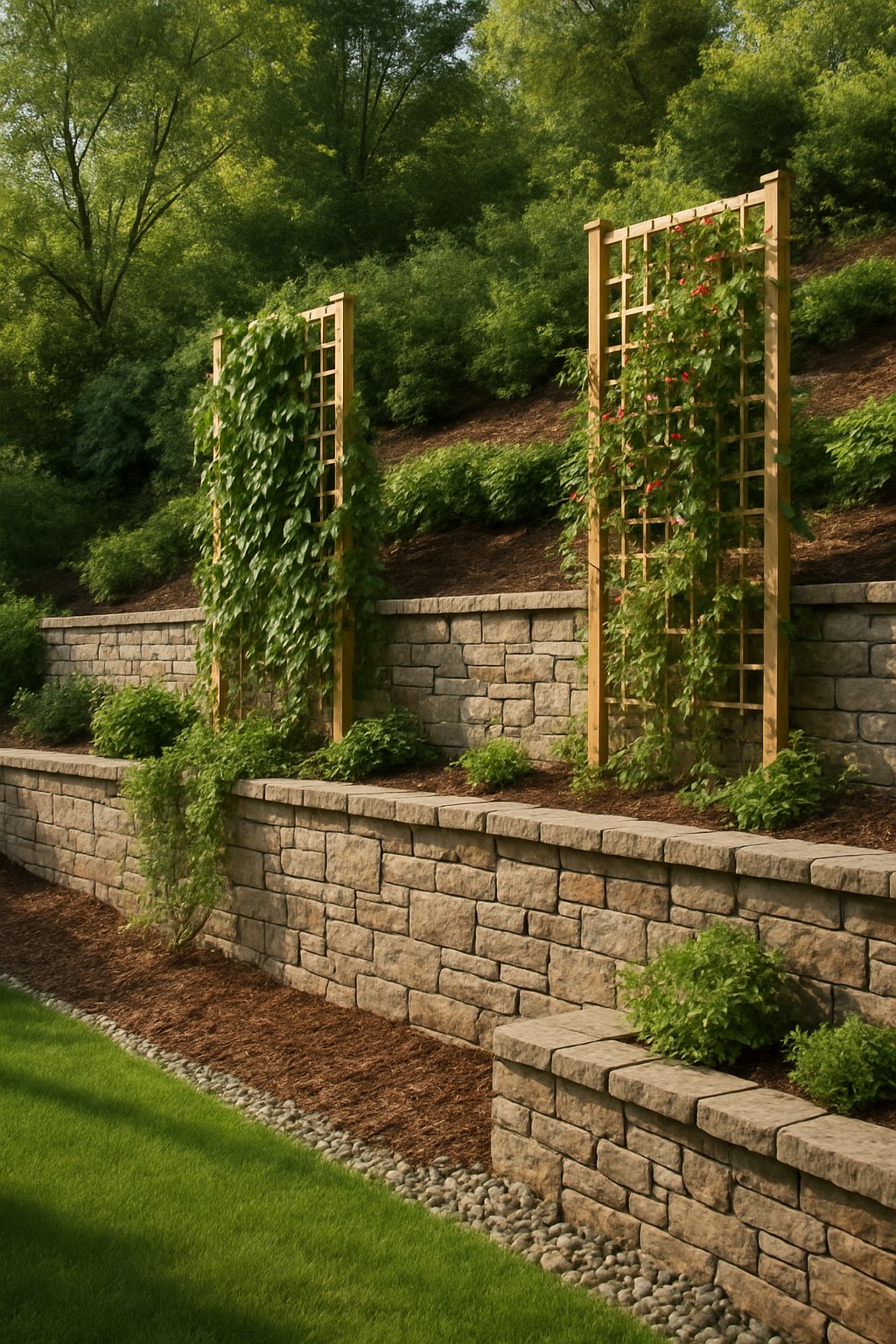
Climbing plants on trellises are a fantastic way to soften the stark appearance of a retaining wall. They introduce lush greenery and vibrant color without taking up much ground space at all.
For a natural, classic look, you might choose vines like jasmine, clematis, or ivy. They are popular for good reason. You can find trellises made from wood, metal, or even sturdy wire. By attaching them directly to concrete or brick walls, your plants will have a structure to climb, quickly covering those hard surfaces.
It is incredibly rewarding to watch a living wall evolve through the seasons. As flowers, leaves, and sometimes even fruit appear, your backyard will feel more alive and inviting. Using climbing plants can also help reduce the heat that radiates from the wall and can even improve the air quality in your yard. Once these plants get established, they are surprisingly easy to care for, with most of the effort being in the initial setup.
Expert Tip: Choose fast-growing vines for quick coverage, but be sure to prune them regularly to keep the growth looking tidy. Use a high-quality trellis system to support your plants securely and prevent any damage to the wall.