
The care you give your clematis after its first big show can completely change the game. Proper attention not only ensures a healthy plant next year but can also convince your clematis to bloom a second time in the very same season.
Clematis is a fantastic perennial for adding vertical drama to your property. This plant reliably produces a ton of vibrant flowers year after year, and its lush green foliage is perfect for adding life to trellises, arbors, and fence lines.
During the spring, clematis bursts forth with gorgeous flowers in a whole rainbow of colors. You can find varieties in pink, red, and purple, or opt for stunning white, yellow, and variegated types. There is a clematis that will fit perfectly into any landscaping vision.
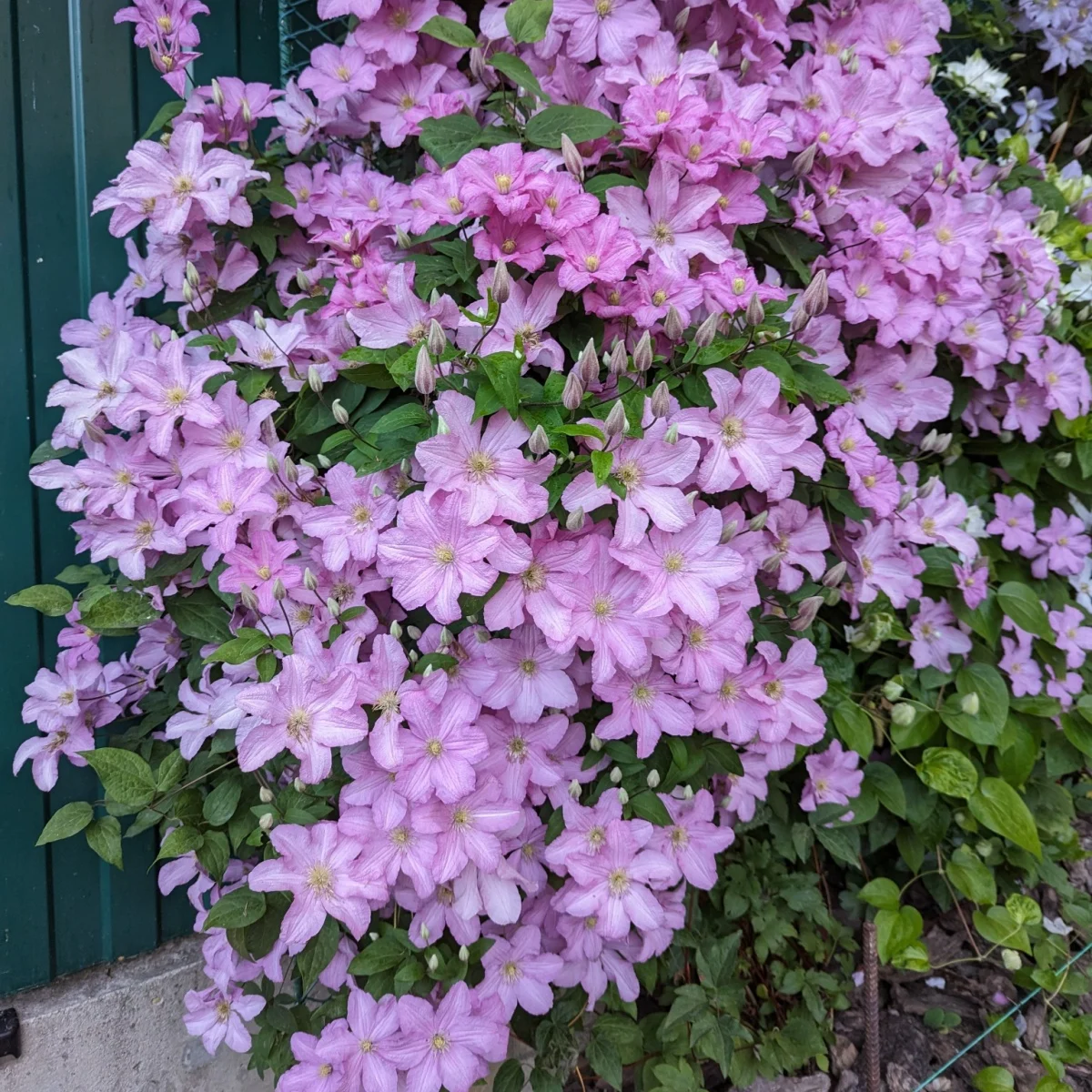
As a perennial, a clematis plant can thrive for twenty years or even longer with very little maintenance. While their iconic star-shaped blooms are a springtime delight, imagine getting to enjoy that same spectacular show again in the summer.
Not only is it possible to get a second bloom from your clematis, but it is also surprisingly easy to achieve. The secret is all about deadheading old flowers, applying the right kind of fertilizer, and handling a few other simple chores right after your plant finishes its first flowering period.
What To Do With Clematis After It Blooms
Deadhead Spent Blooms
The most important task for your clematis, both while it’s blooming and afterward, is deadheading. While some plants clean up their own spent flowers, clematis needs your help to get the job done.
The logic behind this simple chore is all about energy conservation for a potential second bloom. Even after individual flowers begin to fade, the plant continues to use up its energy trying to sustain them.
This process wastes resources that could otherwise be stored for future growth and flowers. On top of that, as the blooms die off, the plant expends even more energy to create seed heads on the stems.
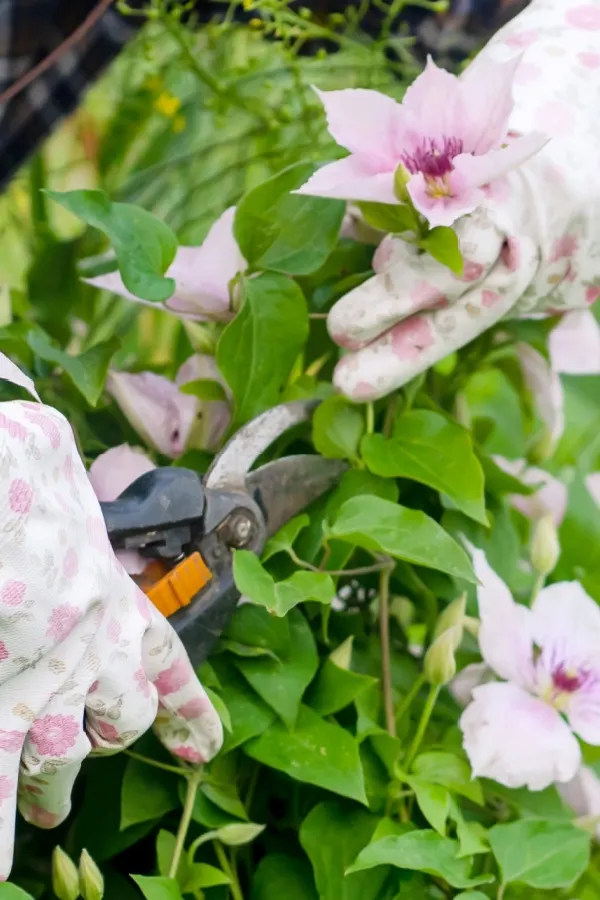
When you snip off the fading blooms and developing seed heads, you immediately halt this energy drain. As a bonus, regular deadheading also keeps your clematis looking neat and attractive.
To deadhead your clematis, just cut off the old flowers right above the next set of leaves. Committing to this task at least once a week can be the crucial difference between a plant that only shows foliage for the rest of summer and one that rewards you with a second round of blooms.
Fertilizing After Clematis Blooms
The next step in caring for your clematis after it flowers is fertilization. You cannot just use any fertilizer, though. You need one that will replenish the specific energy required for the plant to recover and recharge.
Clematis plants use a tremendous amount of energy to produce their massive display of spring blooms.
If you do not replenish those nutrients after the flowering period, the plant will have nothing left to power a second wave of blooms. Even if you are not aiming for more flowers, restoring the nutrients lost is vital to keeping the plant healthy and lush for the rest of the summer. It also helps the plant store energy for next spring’s display.
So, what is the best fertilizer to use after your clematis finishes blooming? To encourage a second bloom, you must avoid fertilizers with high amounts of nitrogen. This nutrient prompts the plant to focus its resources on producing new leaves, which is not what your clematis needs at this stage.
Instead, find a fertilizer that is formulated to support bloom production. You are looking for a product that has a higher percentage of phosphorus and potassium to give the plant the power it needs for re-blooming.
Choose a fertilizer that contains at least double the amount of phosphorus and potassium compared to nitrogen. You can verify this by checking the N-P-K (Nitrogen-Phosphorous-Potassium) label on the packaging, which shows the exact makeup of the fertilizer.
Additional Tips – What To Do With Clematis After It Blooms
In addition to deadheading and using the correct fertilizer, a few other post-bloom tips can significantly help your clematis recover and potentially re-bloom.
First, clematis plants thrive when their roots are cool and shaded while their leaves and flowers receive full sun. You can help create these ideal conditions by applying a thick 4 to 6-inch layer of mulch around the base of each plant.
The mulch acts as an insulator, keeping the soil cool even as the air temperature rises. At the same time, this layer helps retain moisture in the soil and prevents competing weeds from sprouting.
Proper Watering
While mulch is a great help in conserving water, consistent watering is still essential. This is particularly important if your goal is to get a second set of blooms from your plants.
During the first bloom cycle in spring, the plant usually gets plenty of water from rain showers. Once summer sets in, however, the hotter temperatures and drier air can quickly dehydrate your plants.
Clematis plants need about 1 to 1.5 inches of water each week, whether from rain or your hose. When rainfall is sparse, it is better to give your clematis a deep, thorough soaking a few times a week rather than a little bit every day.
This deep watering practice encourages the roots to grow far down into the soil. The deeper the roots grow, the easier it is for them to access moisture and nutrients. Deeper roots also stay much cooler during the hot summer months.
Here is to giving your clematis the care it deserves after it blooms, and to enjoying a second vibrant show of flowers from your plants this summer.


