A few smart changes can make your front yard feel warm and inviting. Planting trees is a perfect way to transform your property, offering shade, better air quality, and a serious boost to your home’s curb appeal. But before you start digging, it’s crucial to pick the right kind of tree. Some species have aggressive, invasive roots that can wreak havoc on your landscape and foundation.
Fortunately, you have plenty of options. Many small trees feature non-invasive root systems, making them ideal for front yards and other compact spaces. Here are some of the best choices to consider.
13 Small Trees With Non-Invasive Roots For Front Yard Or Backyard
1. Japanese Maple (Acer palmatum)
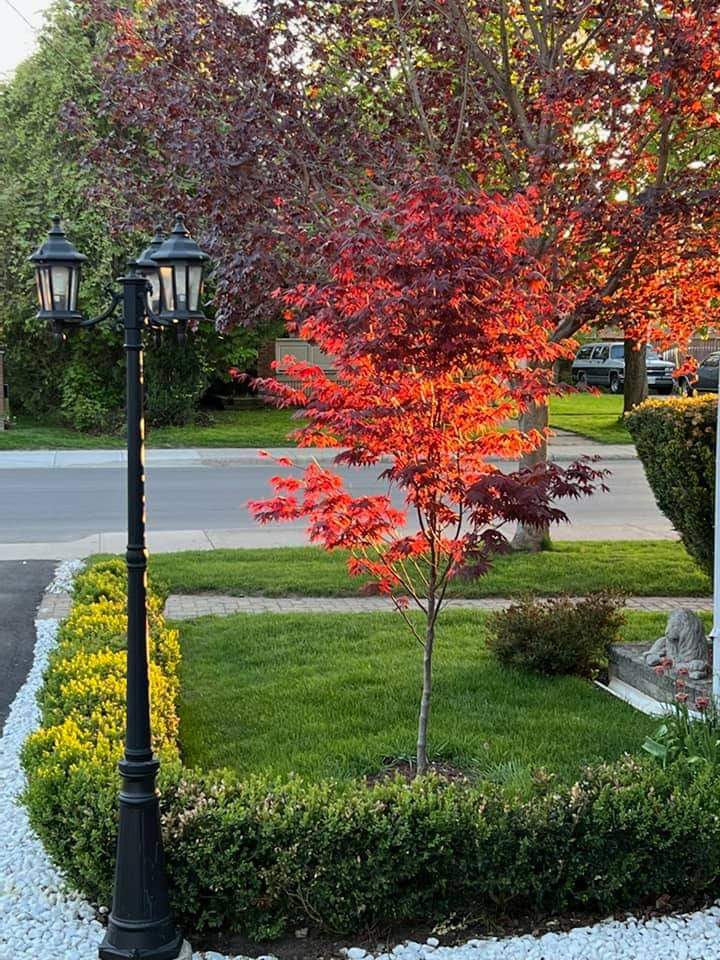
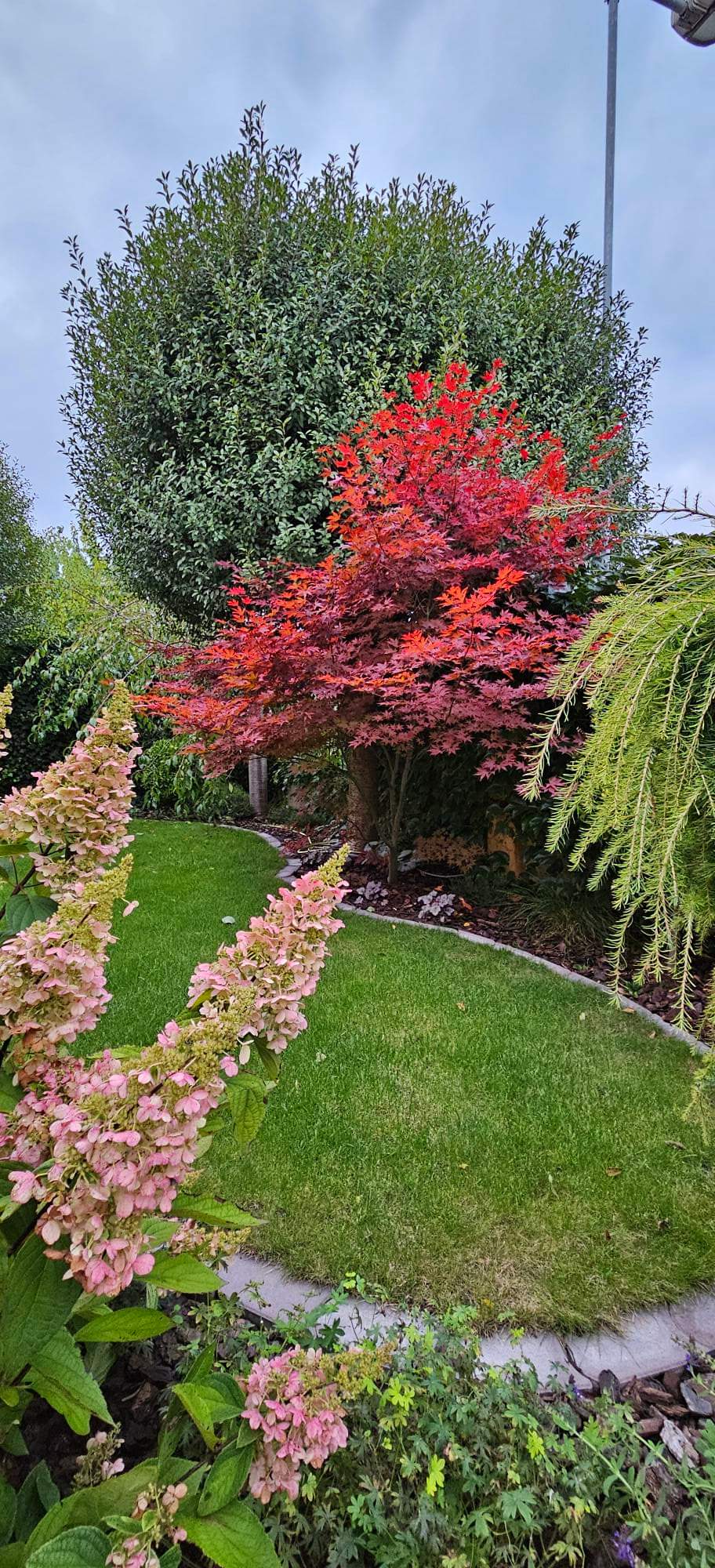
The Japanese Maple transforms front yards into stunning spaces with its intricately shaped leaves, which come in a wide array of colors and forms. This tree is celebrated for its spectacular fall foliage, which can be red, orange, yellow, or purple, depending on the specific variety.
Planting a Japanese Maple means you can create a truly breathtaking autumn scene. Beyond its captivating leaves, you’ll appreciate this tree for its compact size. Japanese Maples have shallow, non-invasive roots and generally grow to a height of 6 to 25 feet.
Hardiness zone: 5-8.
2. Peppermint Ornamental Peach Tree
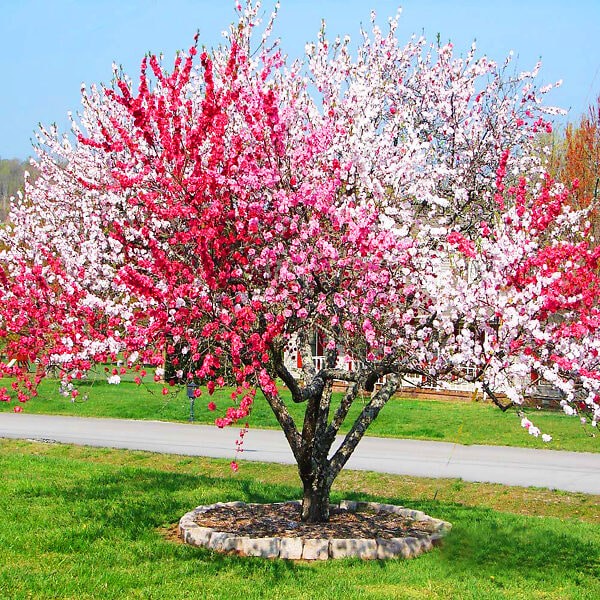
The Peppermint Ornamental Peach tree is a fantastic choice for smaller front yards. Its compact size and non-invasive root system make it perfect for areas where space is limited. This tree delivers vibrant year-round interest, starting with striking pink and white blossoms in the spring that add a delightful pop of color and enhance curb appeal.
Its shallow roots greatly reduce the risk of damaging sidewalks, driveways, or underground utility lines, ensuring it lives in harmony with your landscape for years. It’s also a low-maintenance tree that adapts well to different climates, making it a practical and beautiful focal point for any yard.
3. Dogwood (Cornus florida)
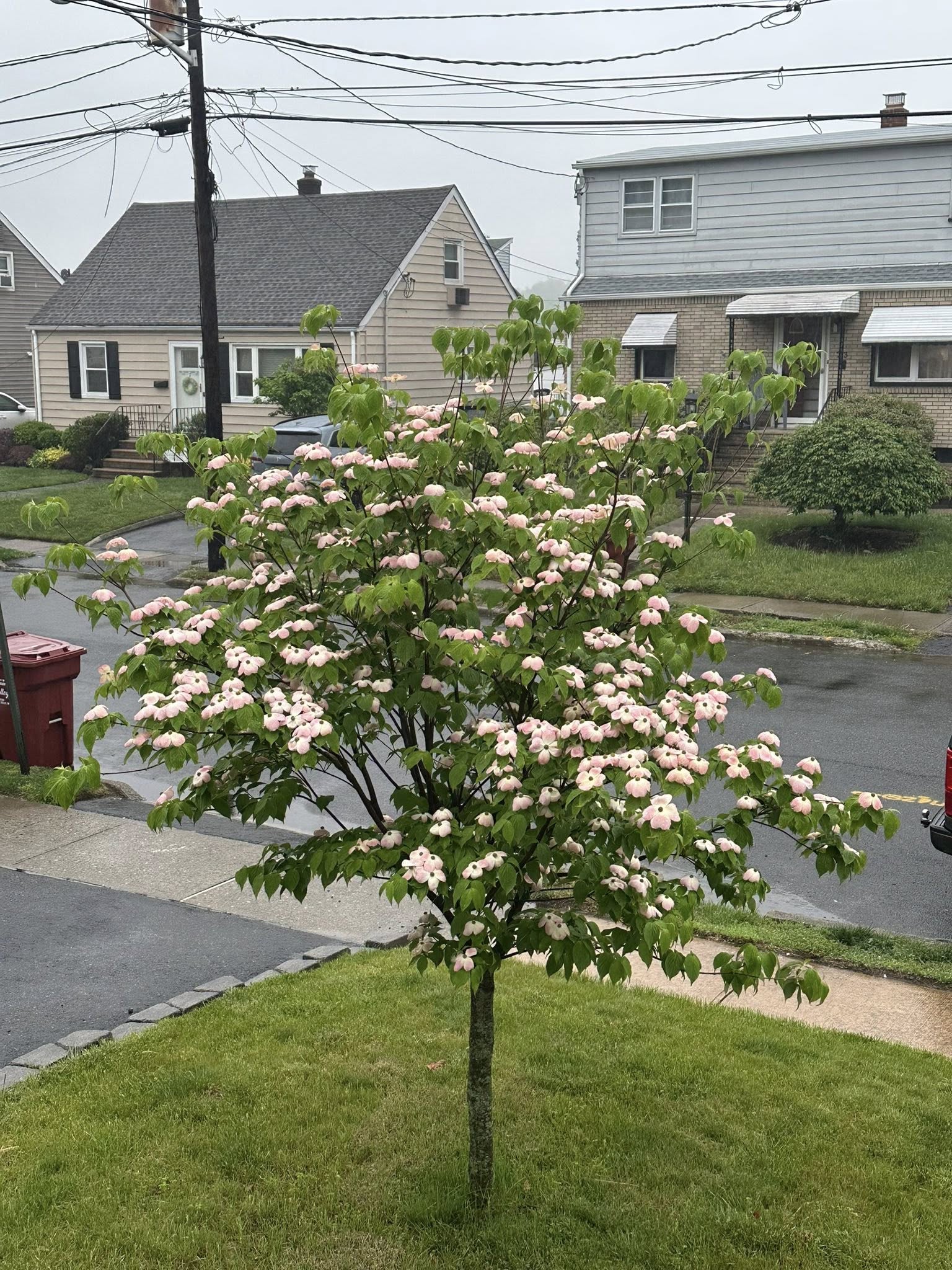
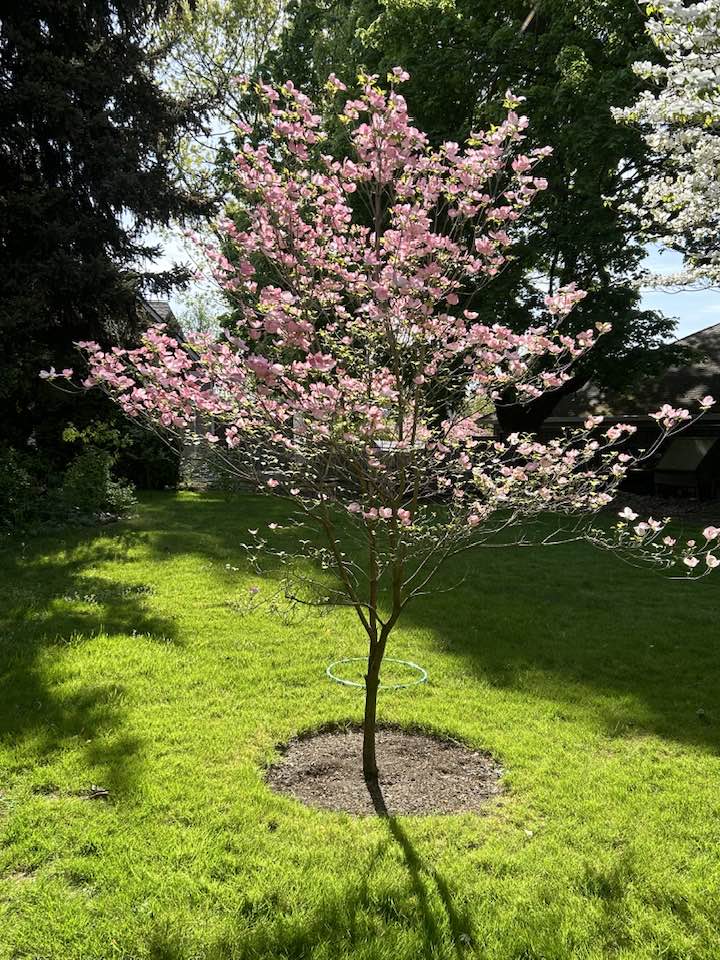
If you’re searching for a plant that provides year-round beauty without invasive roots, the Dogwood is an excellent option. This tree brings timeless elegance to front yards, showcasing stunning blossoms in the spring, lush foliage in the summer, and brilliant color in the fall.
Its simple, ovate leaves feature distinct veins and create an attractive backdrop for the landscape, eventually turning vivid shades of red, purple, or burgundy in autumn. The tree’s true showstopper, however, is its flowers. These blossoms feature four large bracts, which are modified leaves, in shades of white, pink, or red. They surround a central cluster of tiny, subtle flowers.
Hardiness zone: 5-9.
4. Flowering Cherry (Prunus serrulata)
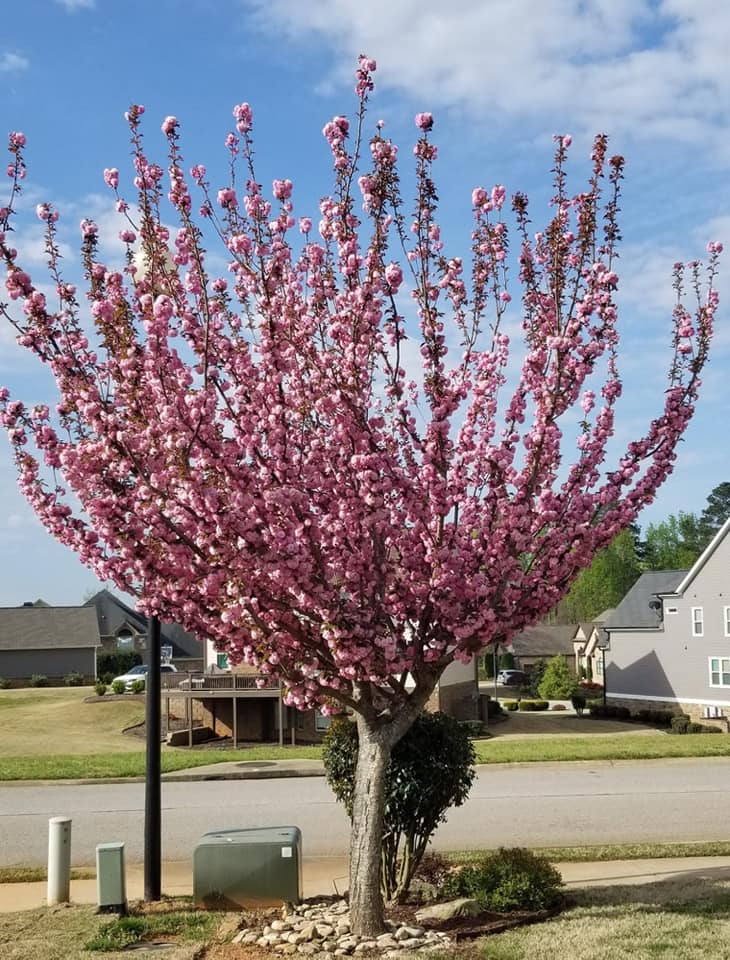
This plant’s beauty shines through in its leaves, flowers, and fruit. Its main draw, though, is the incredible display of springtime blossoms. The Flowering Cherry will grace your yard with gorgeous, showy blooms that burst forth in early spring.
These blossoms, typically pink or white, grow in clusters and create a sensational visual spectacle. Their delicate petals also release a lovely fragrance. In the fall, the leaves add another splash of color to your front yard as they turn vibrant shades of orange, red, or bronze.
You will also love its graceful, rounded canopy that spreads outward, forming a natural umbrella shape. While some Flowering Cherries can reach 30 feet tall, others remain relatively small.
Hardiness zone: 5-8.
5. Eastern Redbud (Cercis canadensis)
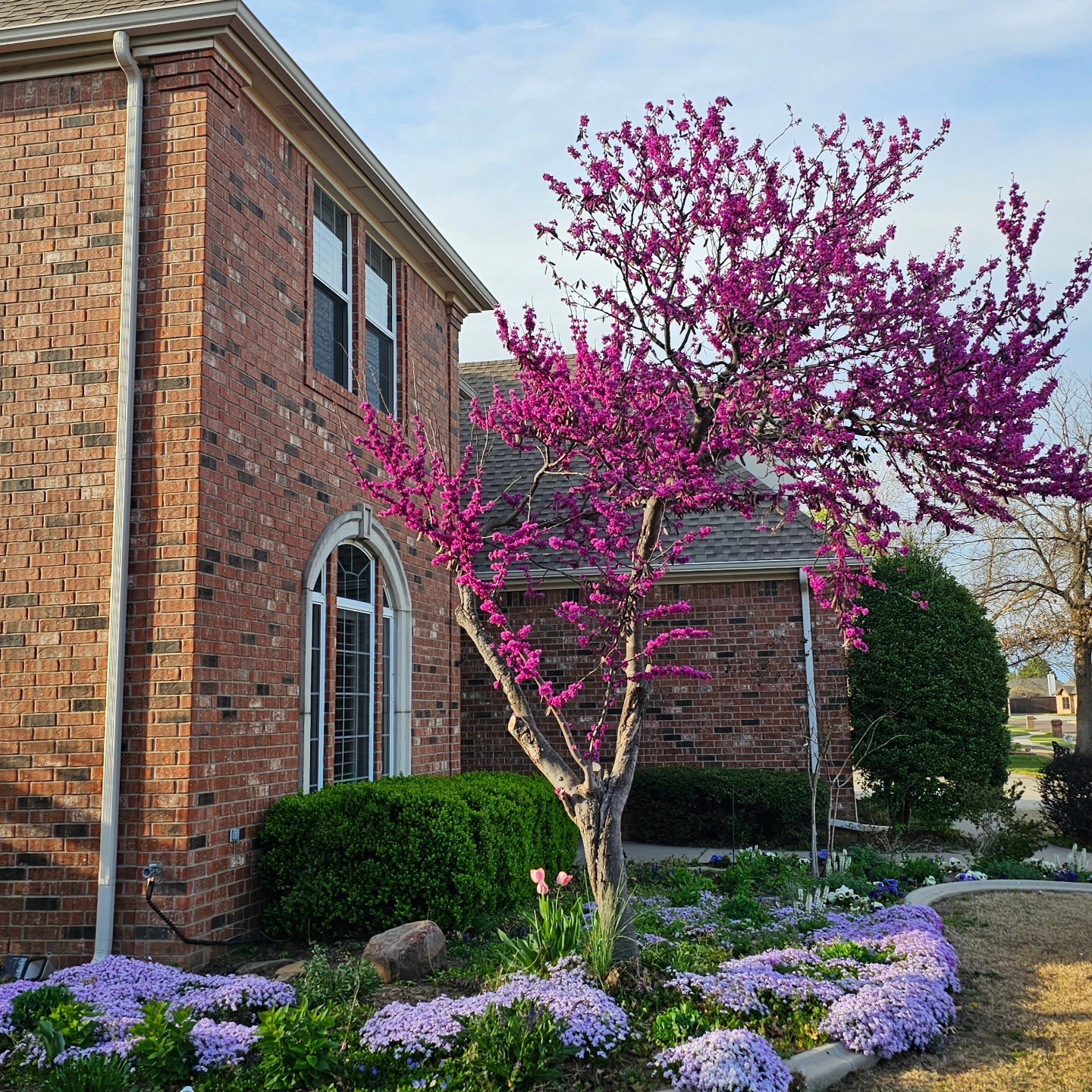
The Eastern Redbud offers plenty of versatility for your front yard. You can use it in understory plantings, as part of your foundation planting, in a mixed garden bed, or as a striking centerpiece for your entire yard.
The Eastern Redbud certainly doesn’t disappoint in the looks department. It produces small, pea-like flowers in early spring, showcasing a range of pink shades from deep magenta to a soft light pink. The sheer number of blooms creates a breathtaking sight that attracts pollinators and delights anyone passing by.
Its leaves are also unique and charming. They are heart-shaped and can vary in color from deep green to a bluish-green. This tree typically reaches a height between 20 and 30 feet.
Hardiness zone: 4-9.
6. American Hornbeam (Carpinus caroliniana)
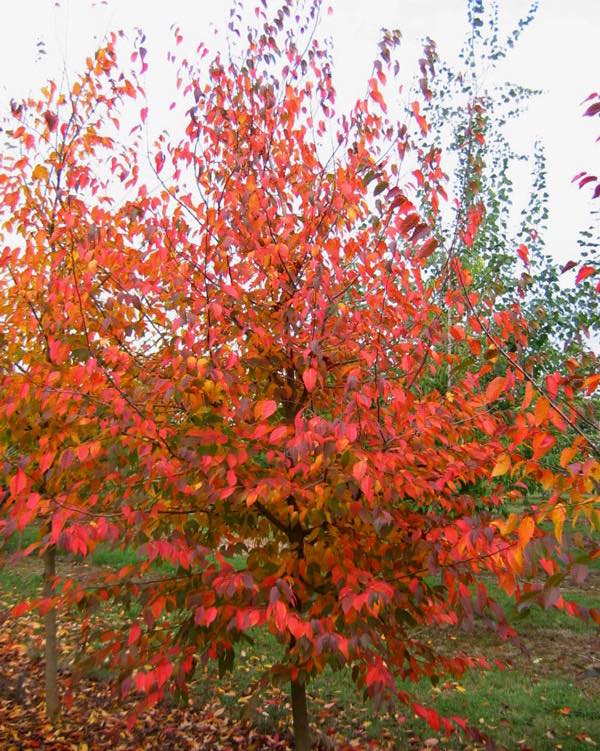
This elegant tree is often overlooked in favor of more popular ornamental varieties, but it can bring a unique touch of charm to your front yard. The American Hornbeam has a distinct appearance, with serrated and prominently veined leaves. These oval to oblong leaves cycle through different shades of green in spring and summer.
Once fall arrives, the foliage will color your yard with brilliant shades of orange, red, and purple. Another striking feature of this tree is its smooth, muscular, and sinewy bark, which resembles rippled muscles and creates visual interest all year long. The American Hornbeam grows up to 20 to 35 feet tall.
Hardiness zone: 3-9.
7. Crabapple (Malus spp.)
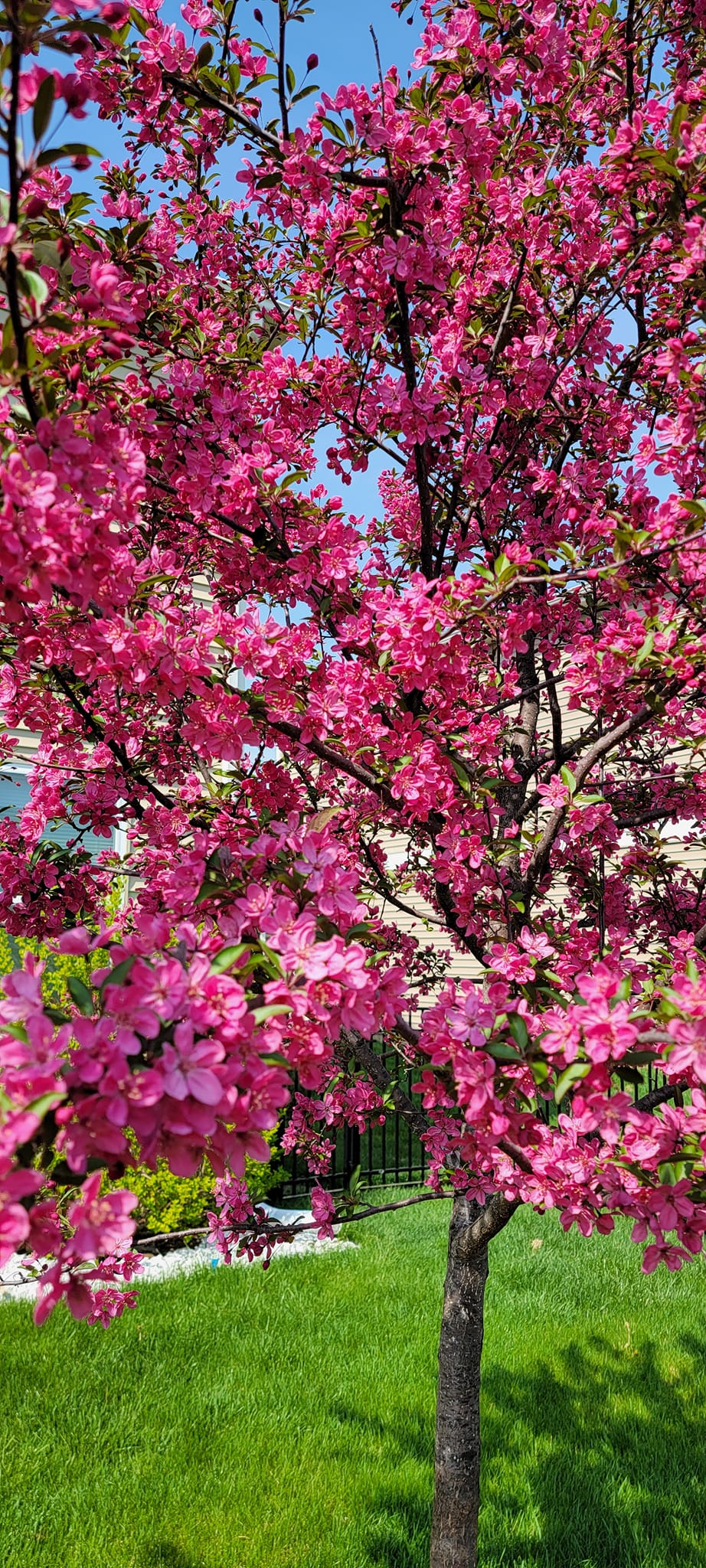
Your home’s spring landscape will never be boring if you plant a Crabapple in the front yard. Its abundant and showy blossoms emerge in the spring. These flowers can be shades of pink, white, or red, and they vary in size and shape depending on the specific cultivar.
The leaves, while typically green, change to vibrant shades of yellow, orange, or red in the fall, providing fantastic seasonal interest. The Crabapple also produces small, edible fruits in summer and fall. These red, orange, or yellow fruits can be used for cooking or making jellies and jams.
Some Crabapple trees stay small, around 6 to 10 feet, while others grow to 25 feet or more, suiting them for a variety of front yard sizes.
Hardiness zone: 3-7.
8. Serviceberry (Amelanchier spp.)
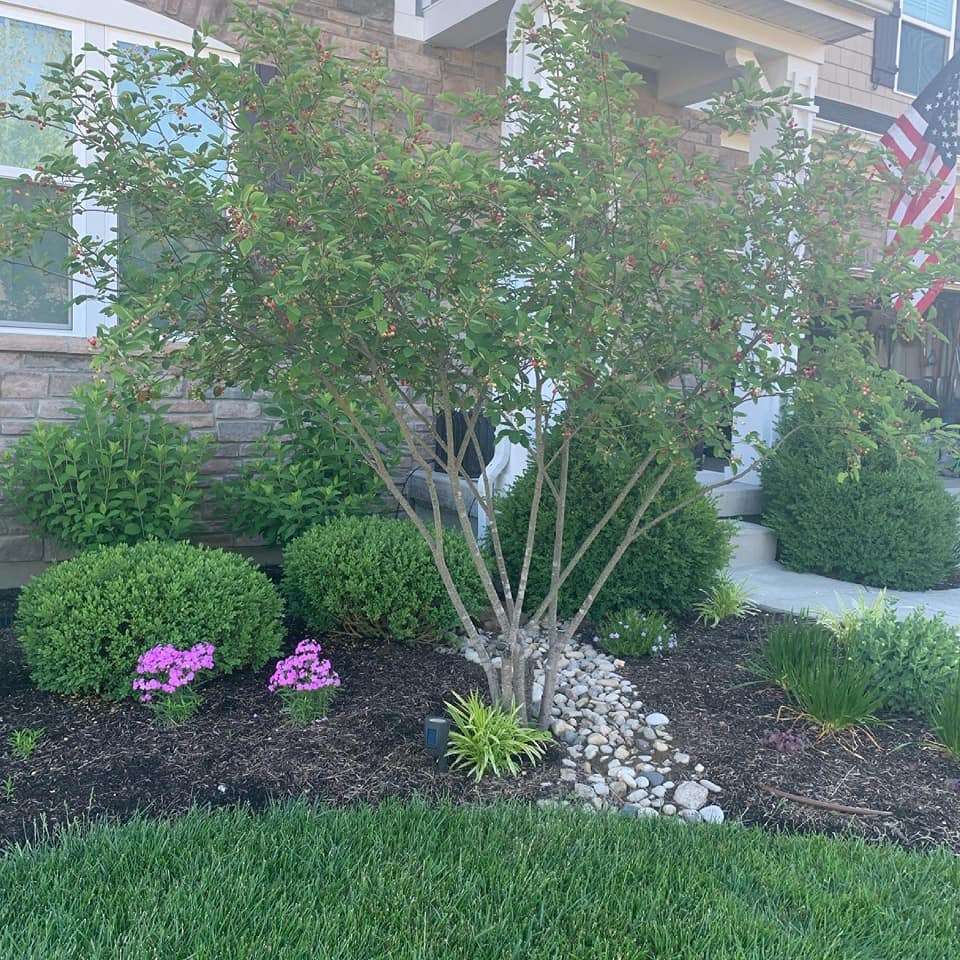
You should consider this popular landscaping plant for your front yard because it offers delicate blossoms, delicious fruit, vibrant fall foliage, and attractive bark. Before the Serviceberry’s leaves have fully emerged, it produces white or pale pink flowers in the spring.
The profusion of these flowers, appearing in clusters with a subtle, sweet fragrance, creates a charming display that attracts pollinators and adds elegance to your yard. The green leaves of spring and summer often turn to striking shades of purple, orange, or red in the fall.
In terms of size, some Serviceberries remain as shrubs between 3 and 15 feet, while others grow into trees reaching 15 to 25 feet.
Hardiness zone: 2-8.
9. Vitex (Vitex agnus-castus)
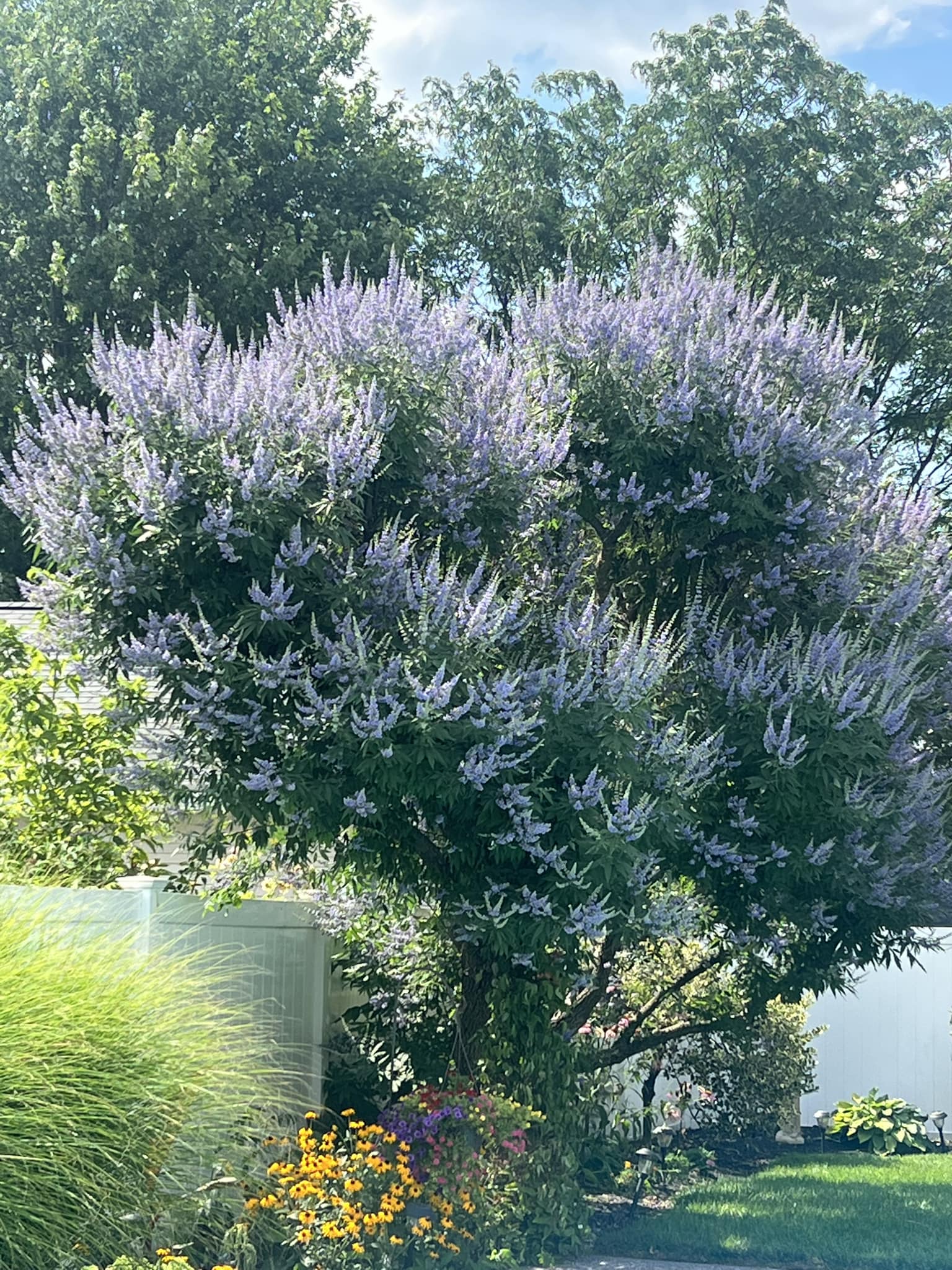
Add a delightful, lavender-like fragrance to your front yard with the Vitex, also known as the Chaste tree. This elegant small tree is native to the Mediterranean region. Its most captivating feature is its stunning, fragrant blossoms that typically appear in the summer.
The flowers are usually shades of blue, lavender, or lilac, though some cultivars produce pink or white blooms. This plant is suitable for different front yards because its height varies, ranging from 3 to 15 feet. The branching structure of the Vitex creates a natural and pleasing silhouette, and its gray-green leaves with a silvery underside add to the shrub’s overall appeal.
Hardiness zone: 6-9.
10. Japanese Stewartia (Stewartia pseudocamellia)
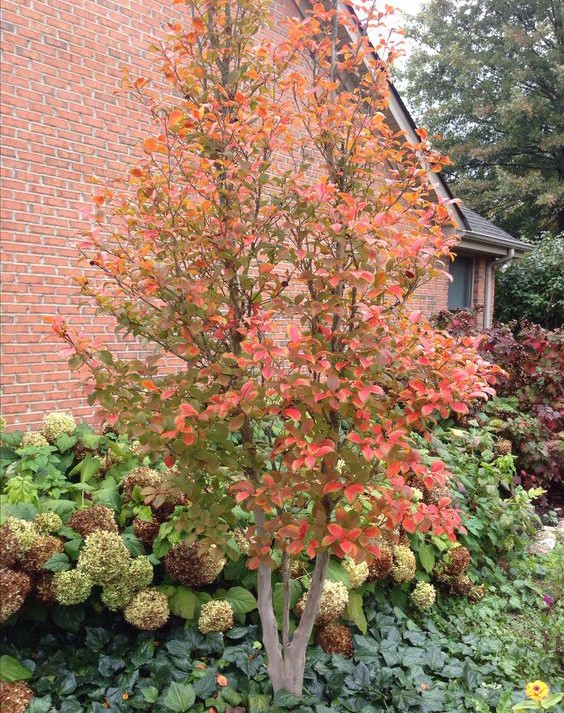
Much like the American Hornbeam, the Japanese Stewartia is often underappreciated, but it has the power to transform your front yard into a tranquil and captivating oasis. Its pristine white, camellia-like flowers have vibrant orange centers and a delicate, papery texture that adds an ethereal beauty to your space.
The plant’s dark green, glossy, and oval-shaped leaves provide an attractive backdrop for the blossoms. Later in the year, these leaves turn brilliant shades of orange, red, and purple, offering a spectacular display of autumn color. The overall look of the Japanese Stewartia is also enhanced by its peeling, mottled bark that reveals shades of gray, brown, and reddish-brown.
Hardiness zone: 5-8.
11. Star Magnolia (Magnolia stellata)
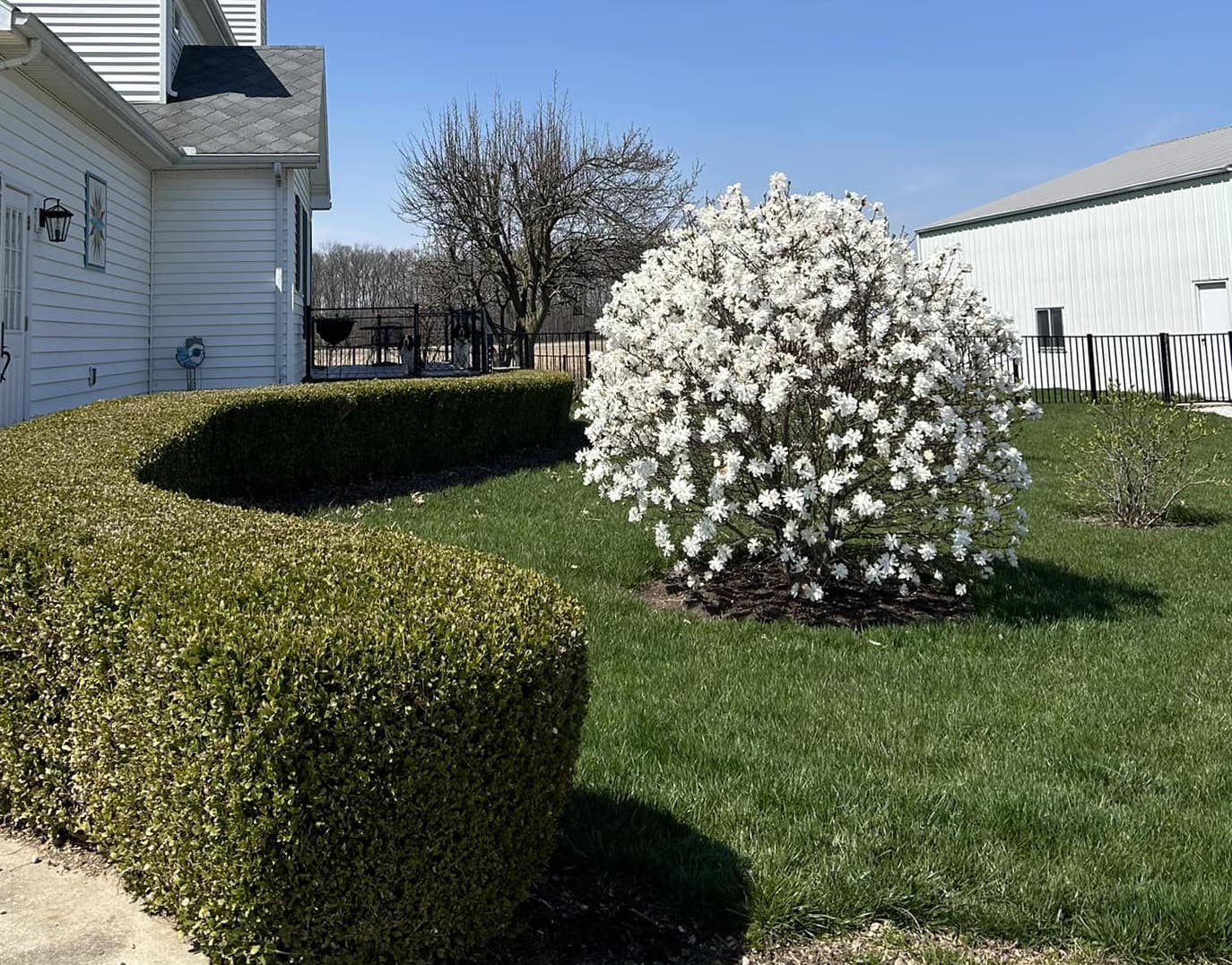
This small deciduous tree or large shrub makes an excellent addition to your front yard with its delicate, star-shaped blossoms, early spring flowering, and graceful form. A profusion of fragrant, star-shaped blooms appears in late winter to early spring, even before the leaves emerge.
The white or pale pink flowers create a stunning display of elegance and beauty. Star Magnolia’s branches spread gracefully, forming an appealing and symmetrical silhouette. These trees usually reach a height of 15 to 20 feet, with a spread that is just as wide.
Hardiness zone: 4-9.
12. Orchid tree (Bauhinia variegata)
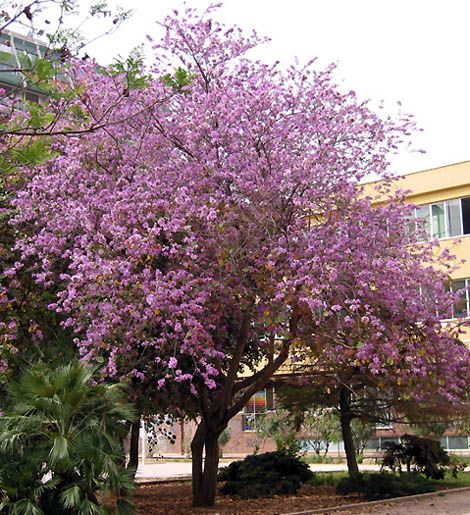
For an unmatched level of elegance and exotic beauty in your front yard, plant an Orchid tree. Its prolific display of large, showy, orchid-like flowers is undoubtedly captivating. These blossoms typically appear in spring and continue through the summer.
The pink, purple, or white flowers have a unique shape that resembles butterfly wings, giving this plant its exotic and elegant appearance. The glossy green, bi-lobed leaves provide an attractive backdrop for the vibrant blossoms. Orchid Trees grow up to 15 to 30 feet high, with an identical spread.
Hardiness zone: 9-11.
13. Dwarf Korean Lilac (Syringa meyeri ‘Palibin’)
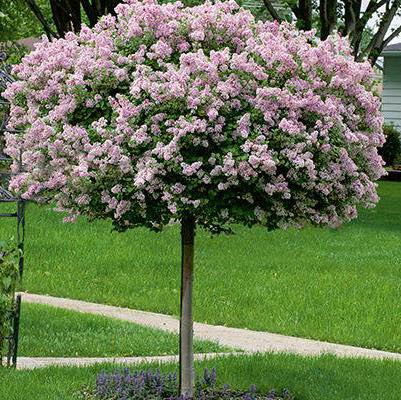
Elevate your front yard’s look with the Dwarf Korean Lilac’s fragrant blossoms and lovely form. This is a great choice if you are seeking a low-maintenance and space-saving ornamental plant.
You should also consider it if you have limited space, because, as its name suggests, the Dwarf Korean Lilac is compact and small in stature, reaching only 4 to 6 feet tall. Its fragrant flowers are typically lavender to light purple and appear in late spring to early summer. The small, dark green leaves may turn a subtle shade of yellow before dropping in the fall.
Your front yard will be graced with the timeless allure of this remarkable shrub, whether you use it as a foundation plant or in a mixed garden bed.
Hardiness zone: 3-7.
Small Trees For Flower Beds
Choosing small trees for flower beds can add dimension, shade, and interest to your garden without overshadowing the surrounding plants. Here are some small trees that work well in flower beds:
1. Dogwood
These trees are known for their attractive flowers and colorful bark. They come in various sizes, including smaller varieties suitable for flower beds.
2. Crabapple (Malus)
Crabapples offer beautiful spring blossoms and small fruits that attract birds. There are dwarf and weeping varieties that fit well in smaller spaces.
3. Serviceberry (Amelanchier)
Serviceberries are small, multi-stemmed trees with delicate white flowers in spring and colorful fall foliage. They’re well-suited for flower beds.
4. Japanese Maple (Acer palmatum)
Many Japanese maple varieties are compact and have stunning foliage, adding a touch of elegance to your flower beds.
5. Cherry (Prunus)
Some cherry trees, such as the dwarf or weeping varieties, can be suitable for smaller gardens. They provide lovely spring blooms.
6. Viburnum (Viburnum)
While not technically a tree, some viburnums can be pruned into a tree-like form. They offer attractive flowers and berries.
7. Crape Myrtle (Lagerstroemia)
These trees are known for their vibrant summer blooms and come in various sizes, including smaller cultivars that are suitable for flower beds.
8. Dwarf Conifers
Consider small conifers like dwarf Alberta spruce (Picea glauca ‘Conica’) or dwarf Hinoki cypress (Chamaecyparis obtusa) for evergreen interest.
9. Magnolia (Magnolia)
Some magnolia varieties, like the ‘Little Gem’ magnolia, are more compact and fit well in smaller spaces.
10. Weeping Cherry (Prunus pendula)
This tree adds a graceful, cascading element to your garden without taking up a lot of horizontal space.
When selecting small trees for your flower beds, remember to consider factors like the amount of sunlight the area receives, your soil conditions, and the overall design of your garden. You should also pay attention to maintenance requirements and the potential impact on surrounding plants.
Final Remarks
Small trees with non-invasive roots can make your front yard gorgeous and inviting while helping you avoid the problems associated with invasive root systems. You can easily enhance your home’s curb appeal with any of the wonderful plants on this list.
Whether you prefer the stunning blooms of the Japanese Maple or the exotic beauty of the Orchid tree, numerous options are available. The best choice is the one that suits your personal taste and your yard’s conditions.