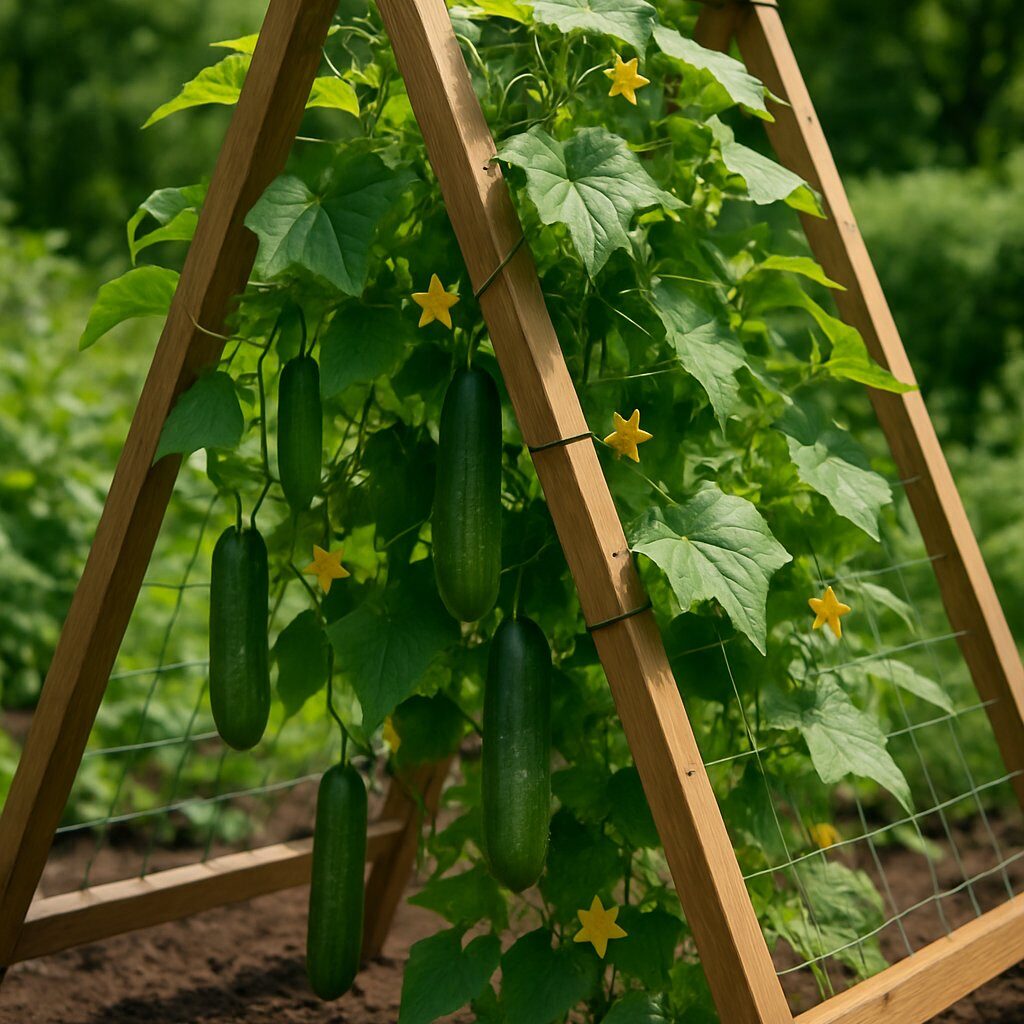
Here are 22 brilliant cucumber trellis ideas to help you maximize your harvest in a minimal amount of space. These concepts will make growing cucumbers much simpler and, quite frankly, a lot more enjoyable.
Growing cucumbers on a trellis is a smart way to save garden space and promote healthier plants. A trellis encourages your cucumbers to climb, improving air circulation and making the harvest feel like much less of a chore.
It doesn’t matter if your garden is a small patch or a sprawling backyard; you’ll find a trellis design here that is a perfect match for your needs.
1. A-frame cucumber trellis
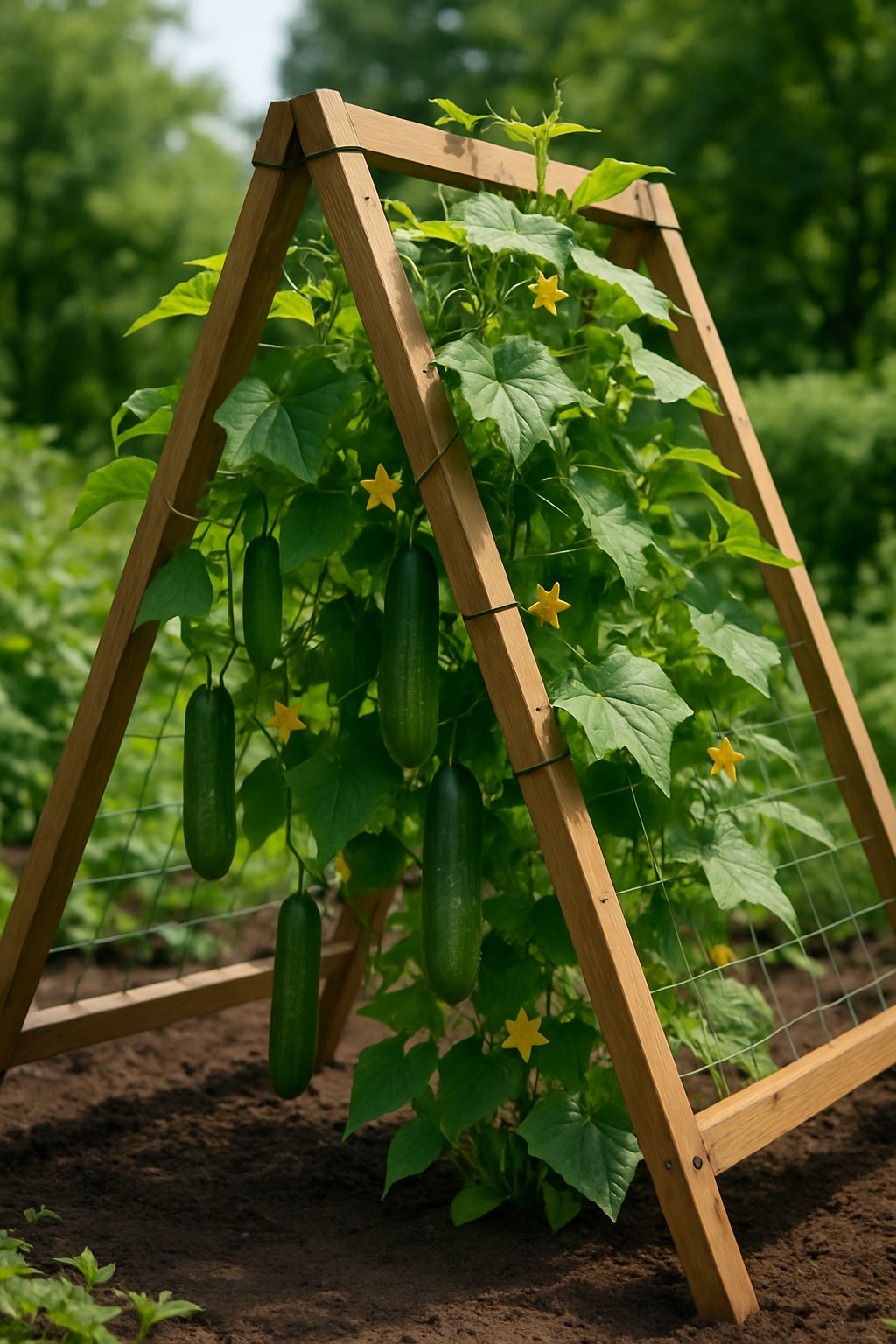
Constructing an A-frame trellis is a very direct process that delivers excellent results. Simply lean two wooden panels or sturdy sticks against each other to form a triangle. This structure provides ample space for your cucumber vines to ascend on both sides.
You can use materials like wood pallets, bamboo, or even a few solid branches. The key is to ensure the frame is robust enough to support the weight of the growing vines and their fruit. Connect the top with a hinge or tie it securely so the structure remains stable.
This design keeps cucumbers elevated from the soil, which is a great defense against rot and pests. It also simplifies harvesting, as the cucumbers hang down for easy picking.
2. PVC pipe trellis
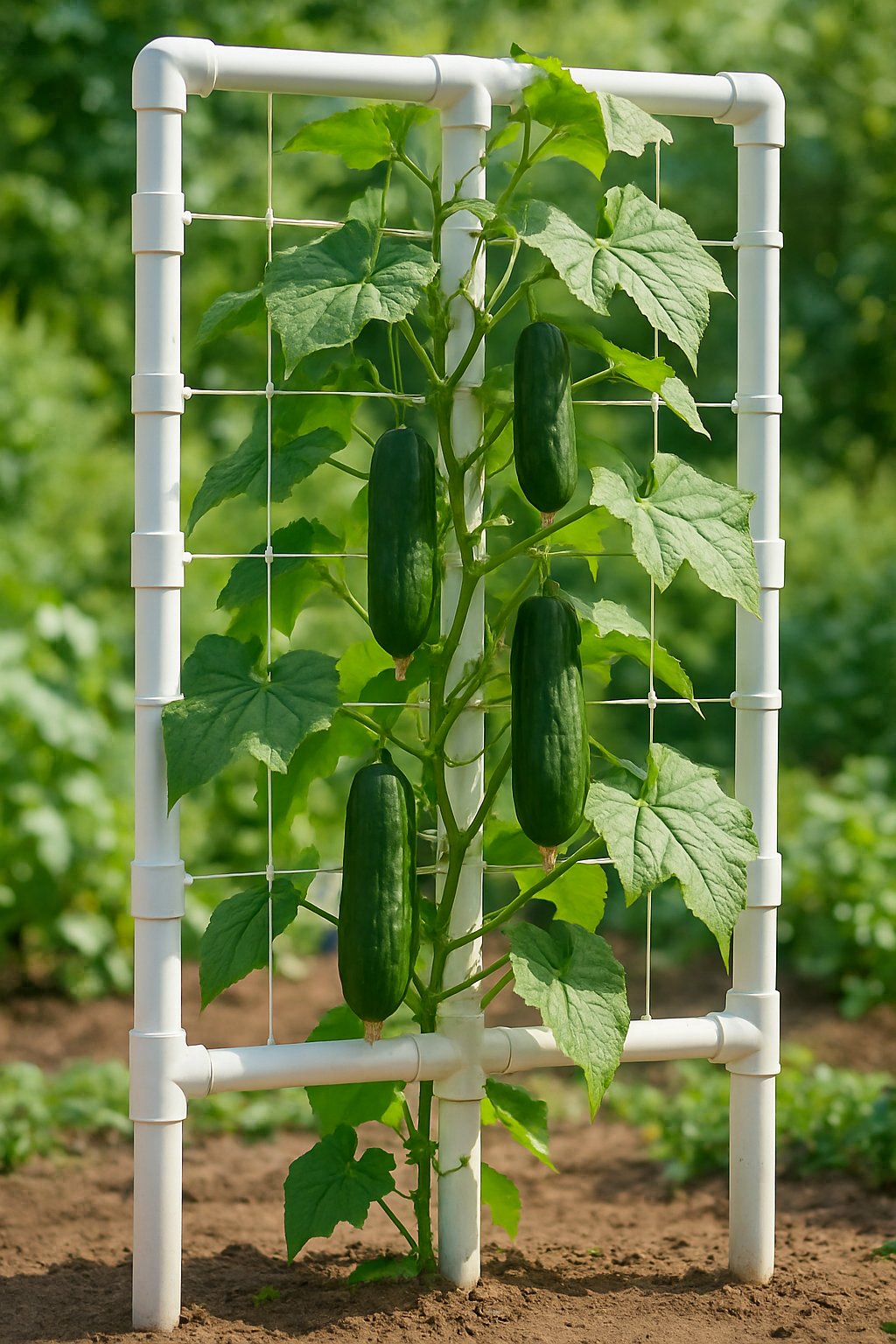
A trellis made from PVC pipe comes together in a flash and is strong enough to handle heavy cucumber vines. You will need some PVC pipes, elbow joints, pipe straps, and screws. Cut the pipes to a height of about 5 or 6 feet, depending on what suits your garden.
You can create a basic A-frame or assemble a rectangular structure. For the vines to grip, stretch garden twine or plant netting across the frame. Because PVC is both lightweight and durable, you can easily reposition or modify the trellis as needed.
For a longer lasting trellis that can withstand the sun, consider applying a coat of UV-resistant paint to the pipes. This will help prevent cracking and fading over time.
3. Wooden ladder trellis
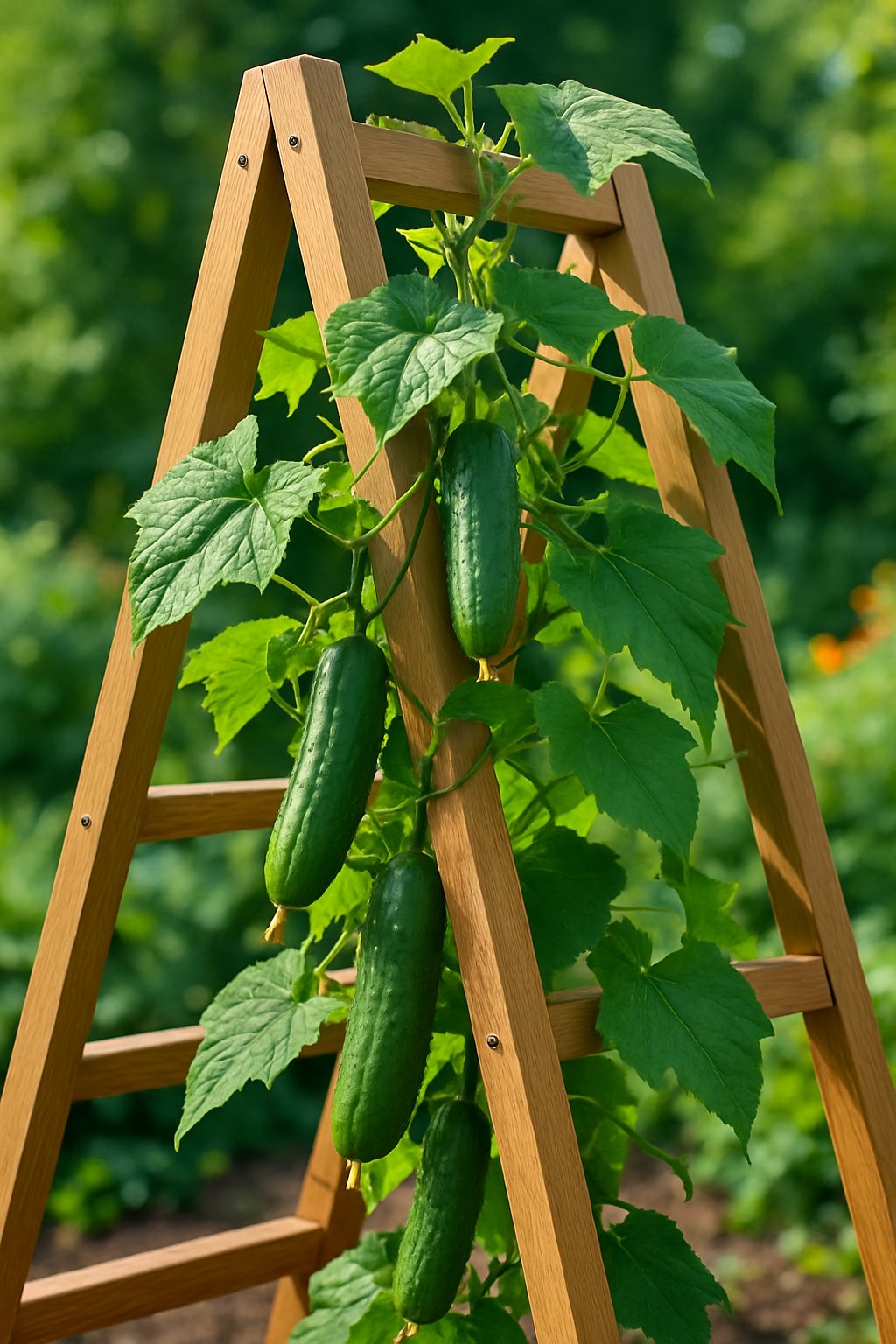
Transforming an old wooden ladder into a cucumber trellis is an effortlessly charming solution. Just position the ladder vertically in the spot where you plan to grow your cucumbers.
The ladder’s rungs offer the vines numerous places to climb and spread out. This design keeps the fruit clear of the ground and makes harvesting incredibly simple.
For a touch of personality in your garden, you can paint the ladder a vibrant color. Placing a barrier at the base can also help prevent the vines from creeping sideways.
Wood ladders are certainly tough enough to support a full harvest of cucumbers. If the ladder is rough or has splinters, be sure to sand it down before you use it.
4. Chicken wire trellis
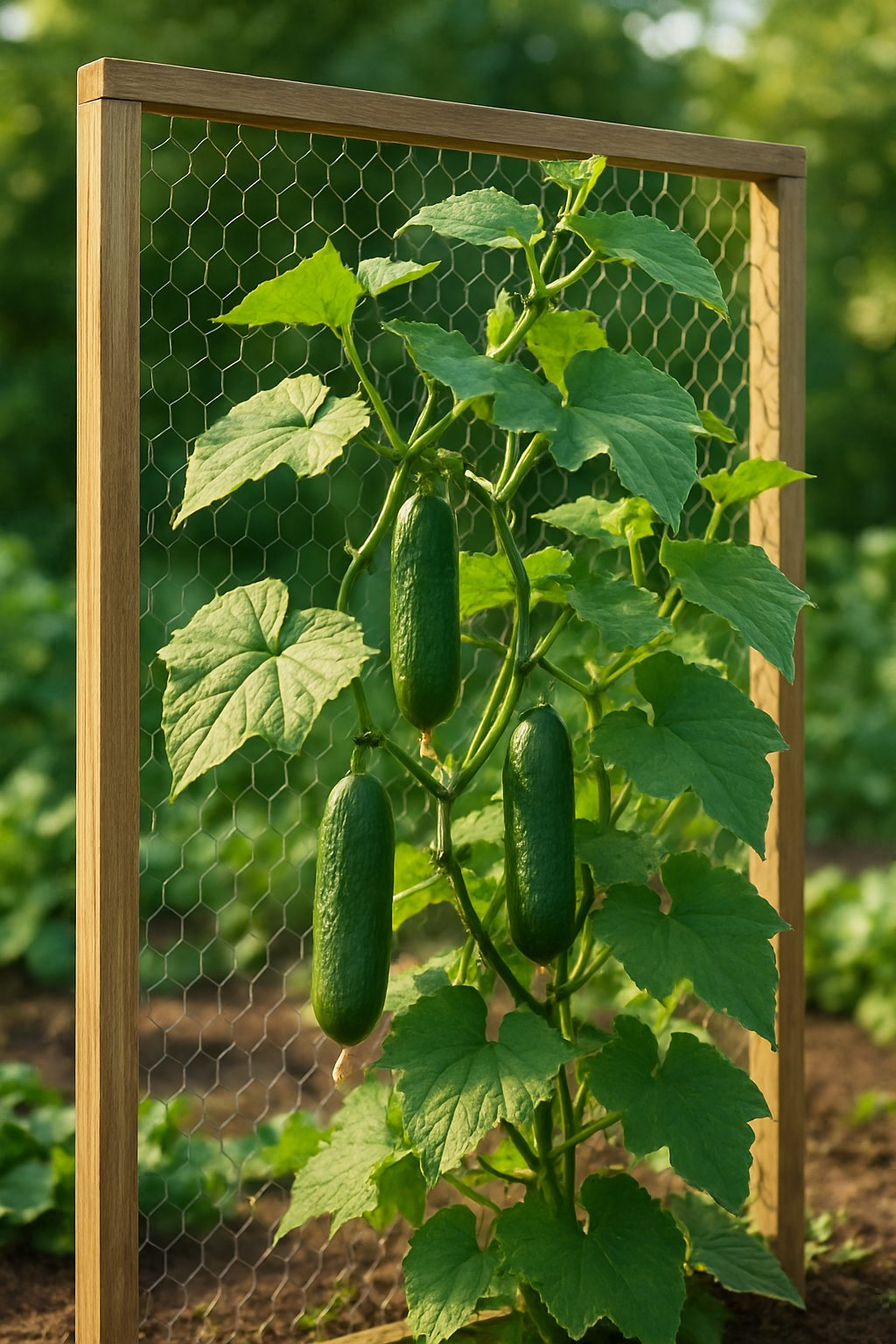
Chicken wire serves as an exceptionally affordable and simple material for a cucumber trellis. All you have to do is build a frame using sticks or poles and then stretch the wire tightly across it. This gives your cucumbers a sturdy surface for climbing.
You should aim for a frame that is about 6 feet tall to give the vines plenty of vertical space. Pull the wire taut so it does not sag from the weight of the plants. Secure it with screws or ties to keep it firmly in place.
The open design of chicken wire allows air to circulate freely, which helps to prevent mold and keeps the cucumbers healthy. You will also find harvesting is much easier because the fruit hangs from the wire and is simple to see.
You can construct a freestanding trellis or simply lean it against a nearby fence or wall. Both options work perfectly well for cucumbers.
5. Teepee cucumber trellis
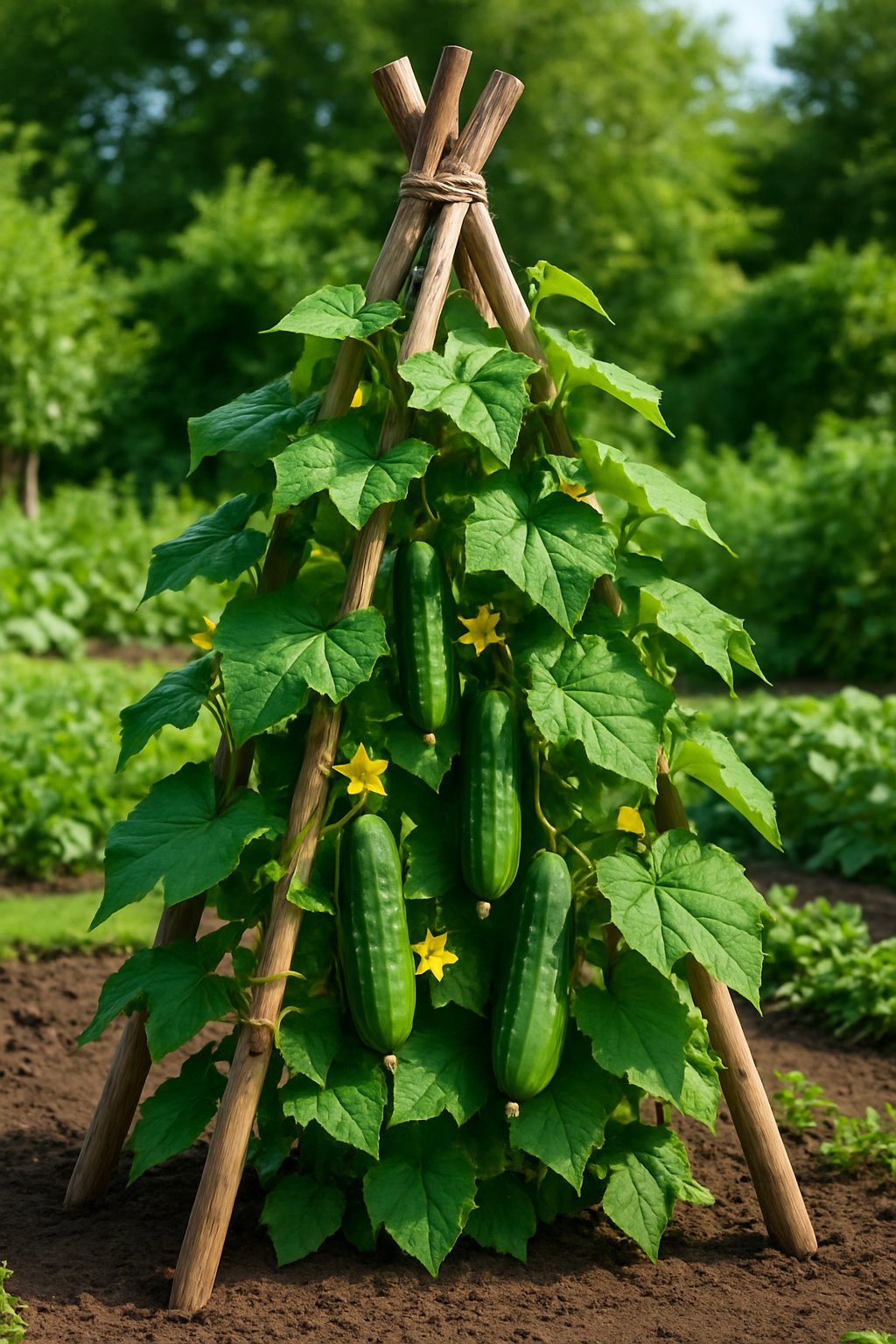
A teepee trellis is one of the easiest ways to encourage cucumbers to grow up instead of out. Just lean several long poles or branches together, connecting them at the top to create a cone shape.
This style is a great space saver in the garden and allows your cucumbers to climb vertically instead of sprawling across the ground. It also promotes better air circulation, which can help prevent plant diseases.
Use materials like bamboo poles or strong branches, as they are durable and hold up well. Secure the tops together with twine to ensure everything stays in place.
As your cucumbers grow, gently wrap their tendrils around the poles to give them support. This keeps the fruit off the soil, resulting in less rot and a much easier harvest.
You can set up a teepee trellis in a small garden, a raised bed, or a larger plot. It is an inexpensive, natural-looking, and quite stylish solution.
6. Clothesline trellis
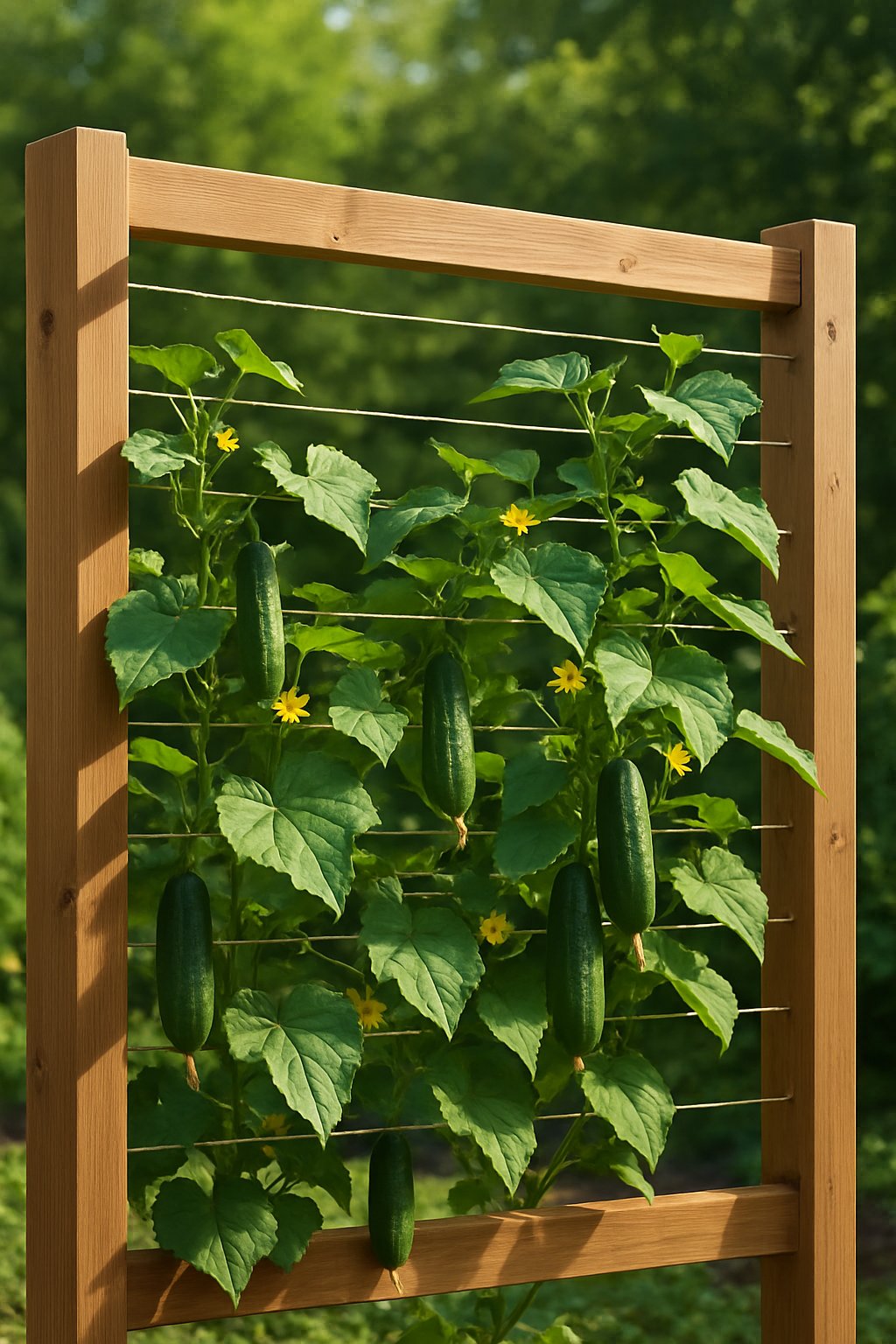
A clothesline trellis is a practical, budget-friendly way to support your cucumber plants. Simply stretch plastic clotheslines between two stable posts or frames.
The cucumber vines will climb the lines, which keeps the fruit from resting on the soil. This setup improves airflow and reduces the risk of disease. You also conserve space and can manage your garden with greater ease.
You do not need much for this project, just some nails or hooks to keep the lines taut. Ensure the posts are sturdy and well-anchored for reliable support.
Space the lines a few inches apart to give the vines something to grab onto. It is a simple, low-cost method for growing healthier cucumbers.
7. Pallet trellis without tools
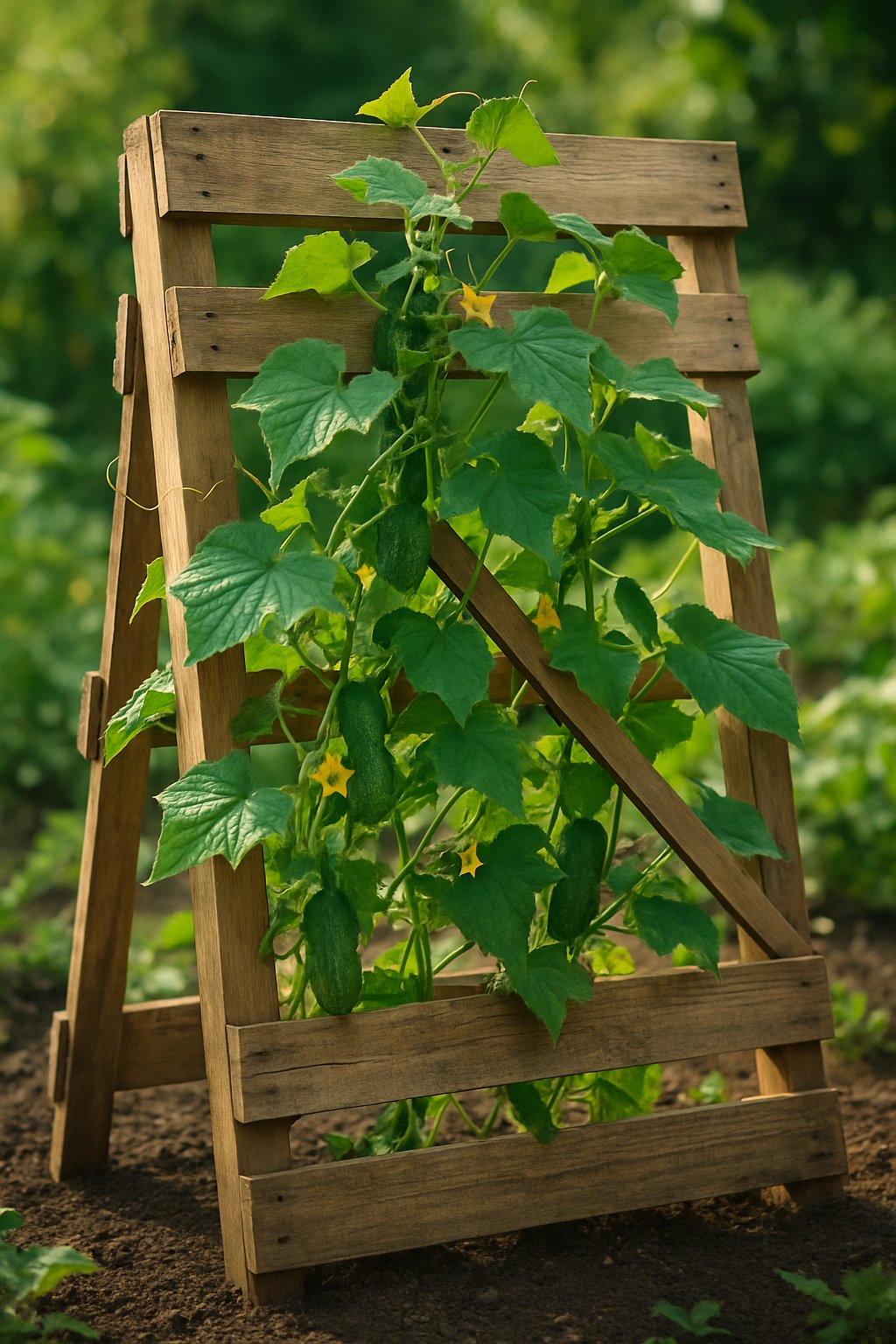
You can assemble a cucumber trellis using just an old wooden pallet, a pair of sturdy stakes, and some heavy twine. No tools are necessary for this project.
Place the pallet where you want to grow your cucumbers. Drive the stakes into the ground on either side to keep it propped upright. Then, tie the pallet to the stakes to provide extra support.
This method encourages cucumbers to grow vertically instead of spreading horizontally, which saves valuable space and makes harvesting simpler. It also keeps the fruit cleaner and reduces the likelihood of rot.
Try to select a pallet that has wide slats to give the vines something substantial to grip. You can lean the pallet at an angle or set it up straight, depending on your available space.
8. Bamboo stick trellis
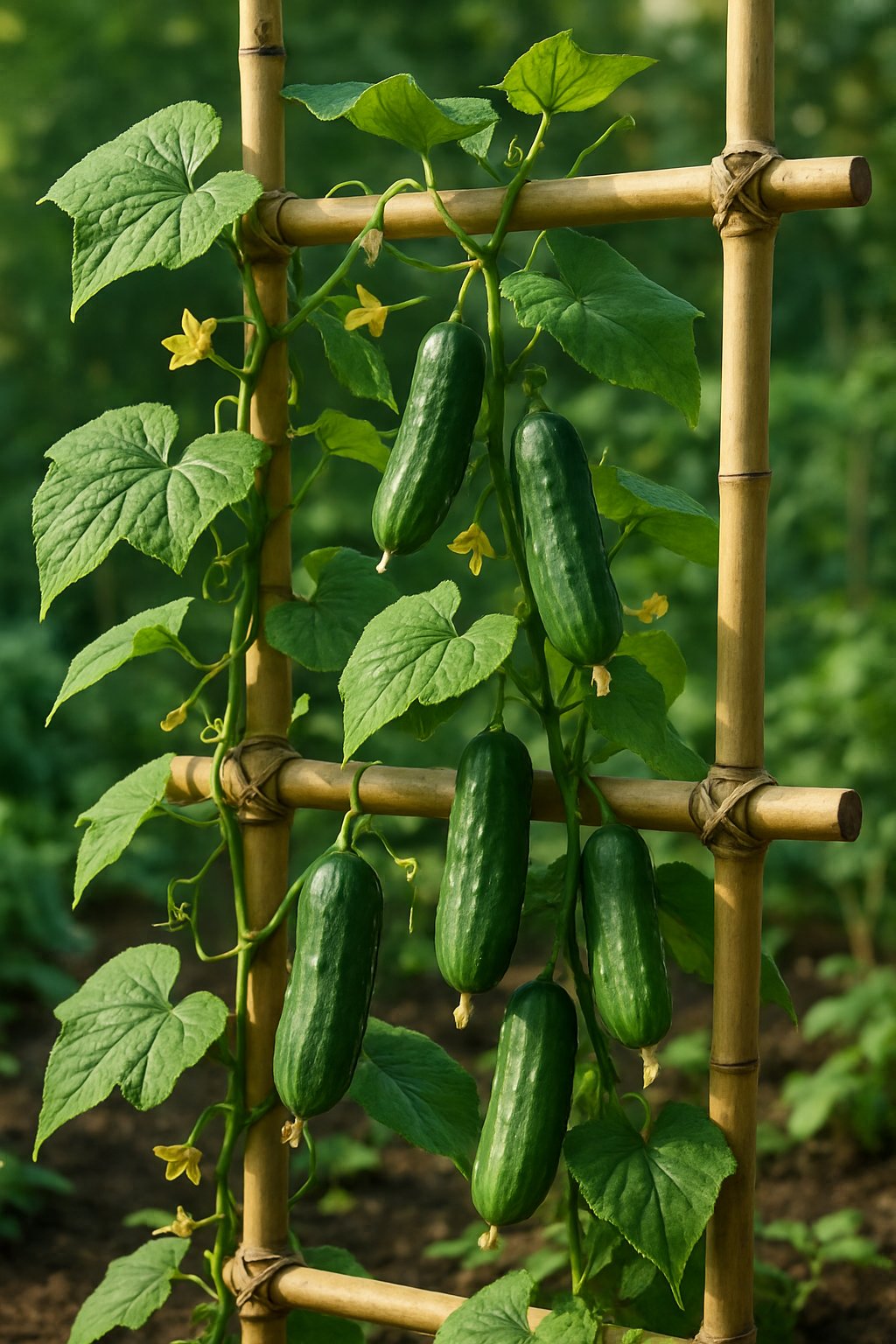
A trellis made from bamboo sticks is quick to assemble and works wonderfully for cucumbers. All you need are some sturdy bamboo poles and twine or jute to tie them together. Bamboo is lightweight yet very tough, so it supports the vines effectively.
Your trellis should be at least 5 or 6 feet tall to provide plenty of room for growth. You can arrange the sticks in an A-frame or teepee formation to make climbing easier for the vines. Place it in a sunny location, as cucumbers thrive in bright light.
Bamboo trellises have a nice aesthetic and blend in naturally with other plants. They are also inexpensive and environmentally friendly, since bamboo is a fast-growing resource. You can easily adjust or expand the trellis as your plants get bigger.
9. Metal frame trellis
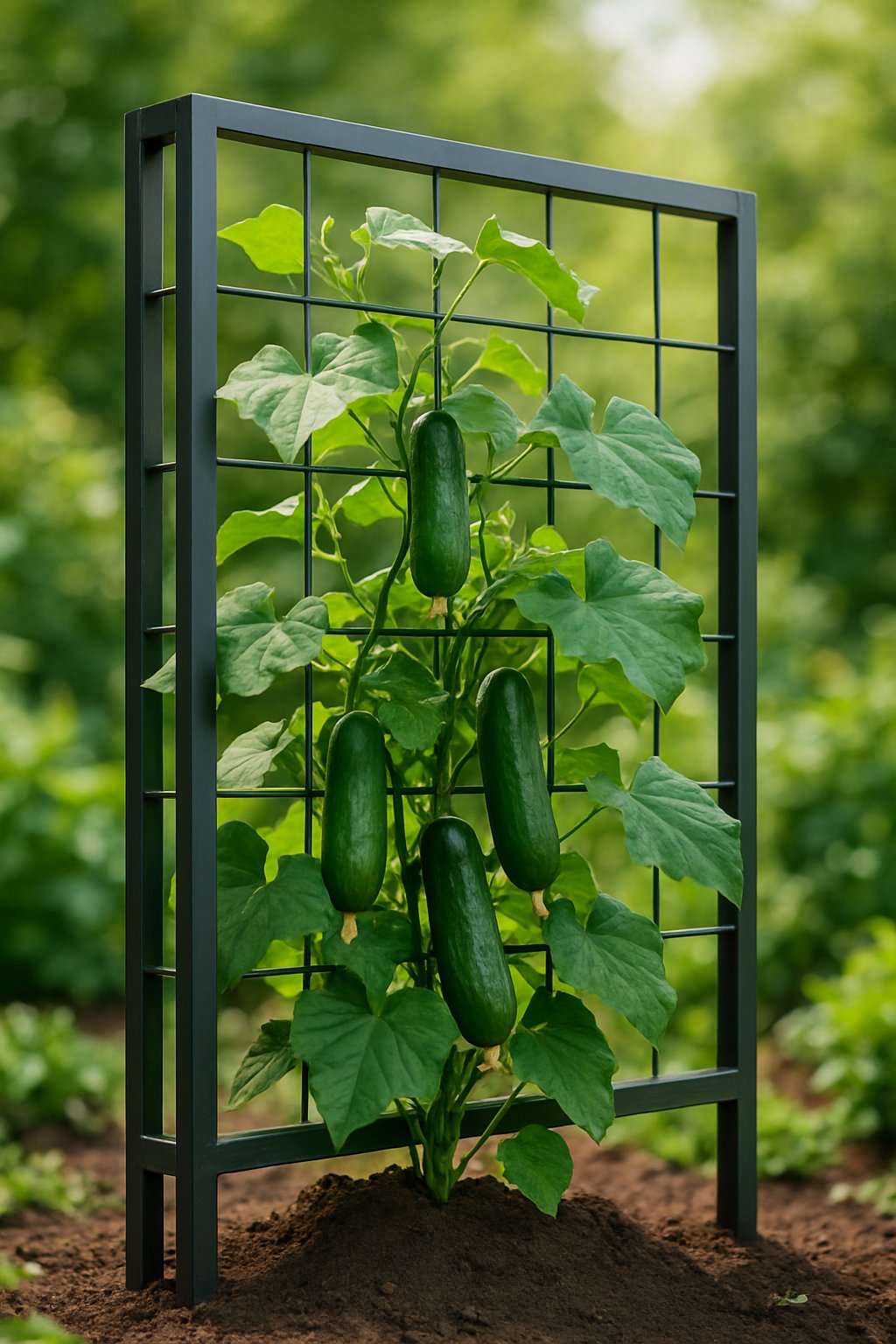
A trellis with a metal frame is a tough and long-lasting addition to any garden. You can use metal mesh or wire panels on a sturdy frame to help your cucumbers climb.
These trellises are well-suited for taller cucumber varieties and allow you to grow vertically, which saves a lot of space. They also promote good air circulation, which keeps your plants healthier.
Lean the metal frame against a wall or construct an A-frame with metal sides. For an incredibly easy option, you can just use a metal tomato cage. It will support the vines, and you can move it whenever you need to.
Secure the mesh to metal poles or wooden frames with zip ties to keep everything stable and secure.
10. Twine and post trellis
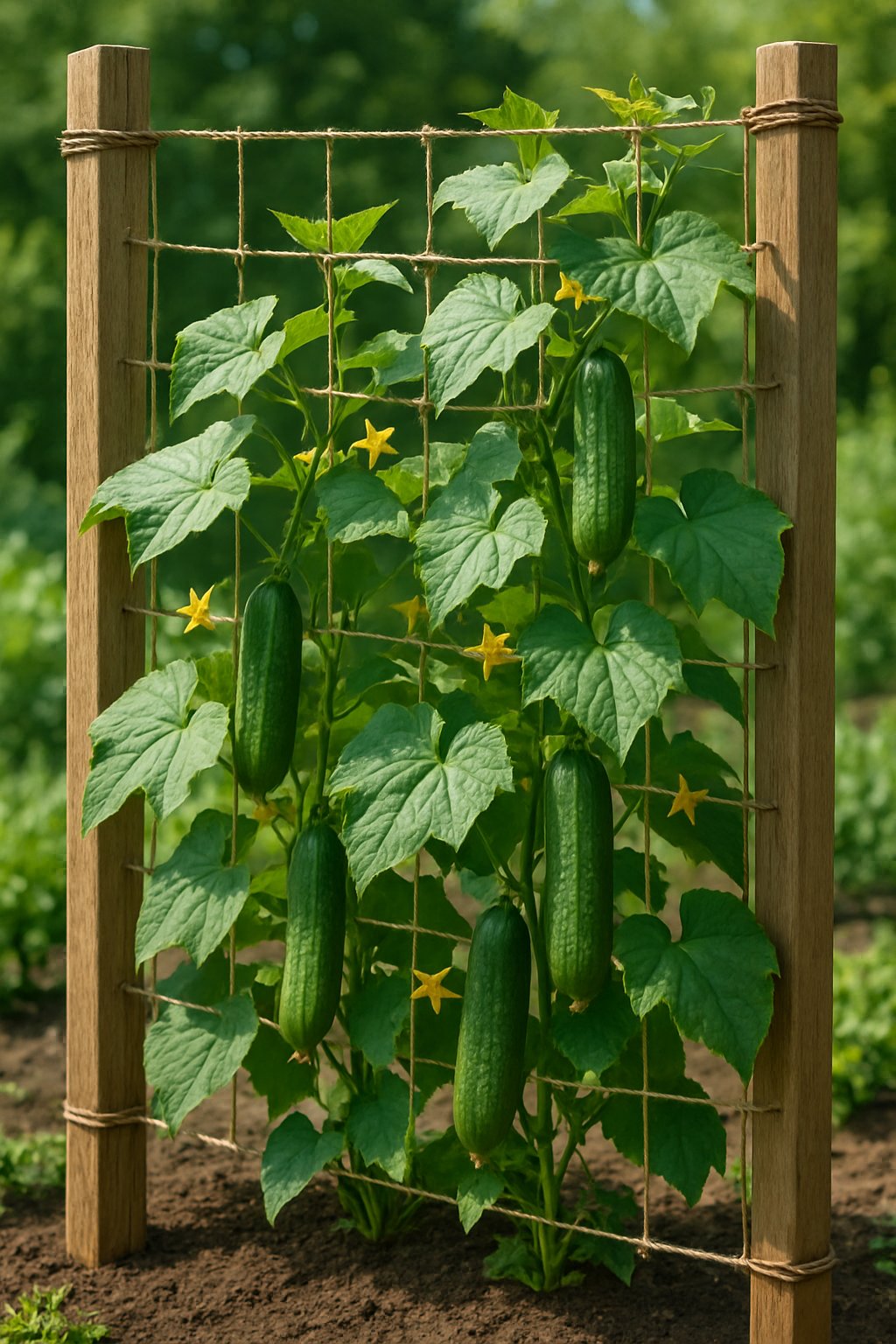
A trellis made of twine and posts is one of the simplest and most affordable ways to support your cucumbers. Just stick two wooden posts into the ground and stretch twine tightly between them.
The twine effectively serves as a ladder for the climbing vines. You can add more twine either vertically or horizontally to create a grid that the vines can easily grab onto.
This method keeps cucumbers up off the ground and allows air to flow through freely. Make sure the posts are sturdy and buried deep enough so they do not topple over as the plants grow and get heavier.
This design is suitable for raised beds or open garden plots. You can easily adjust or rebuild it every year to suit your needs.
11. Raised bed vertical trellis
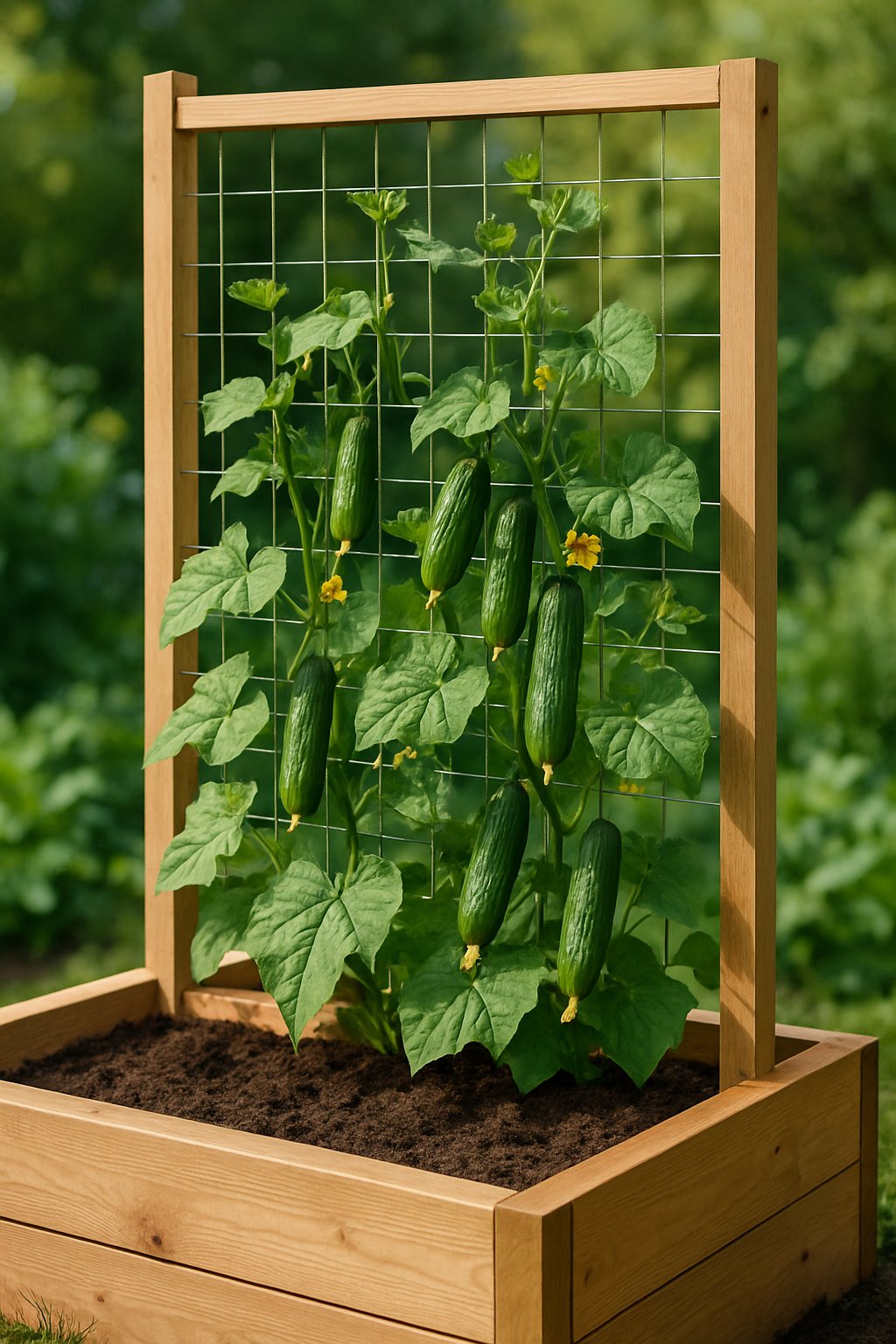
A vertical trellis for a raised bed is a great way to save space and keep your cucumbers off the ground. You can construct it using wood, metal, or cattle panels, depending on what you have available.
This setup improves air circulation and helps to reduce the incidence of rot. You can attach the trellis directly to the bed frame or simply place it inside the bed.
Your cucumbers will naturally climb upward on their own, and you will find that harvesting is much more convenient. The entire arrangement helps to keep your garden looking tidy and well-organized.
It also allows your cucumbers to get more sunlight. If you like, you can grow beans or peas on the same trellis alongside your cucumbers.
Make sure your trellis is sturdy enough to support mature cucumber vines. Secure it well so that it does not fall over during windy or rainy weather.
12. Arch trellis
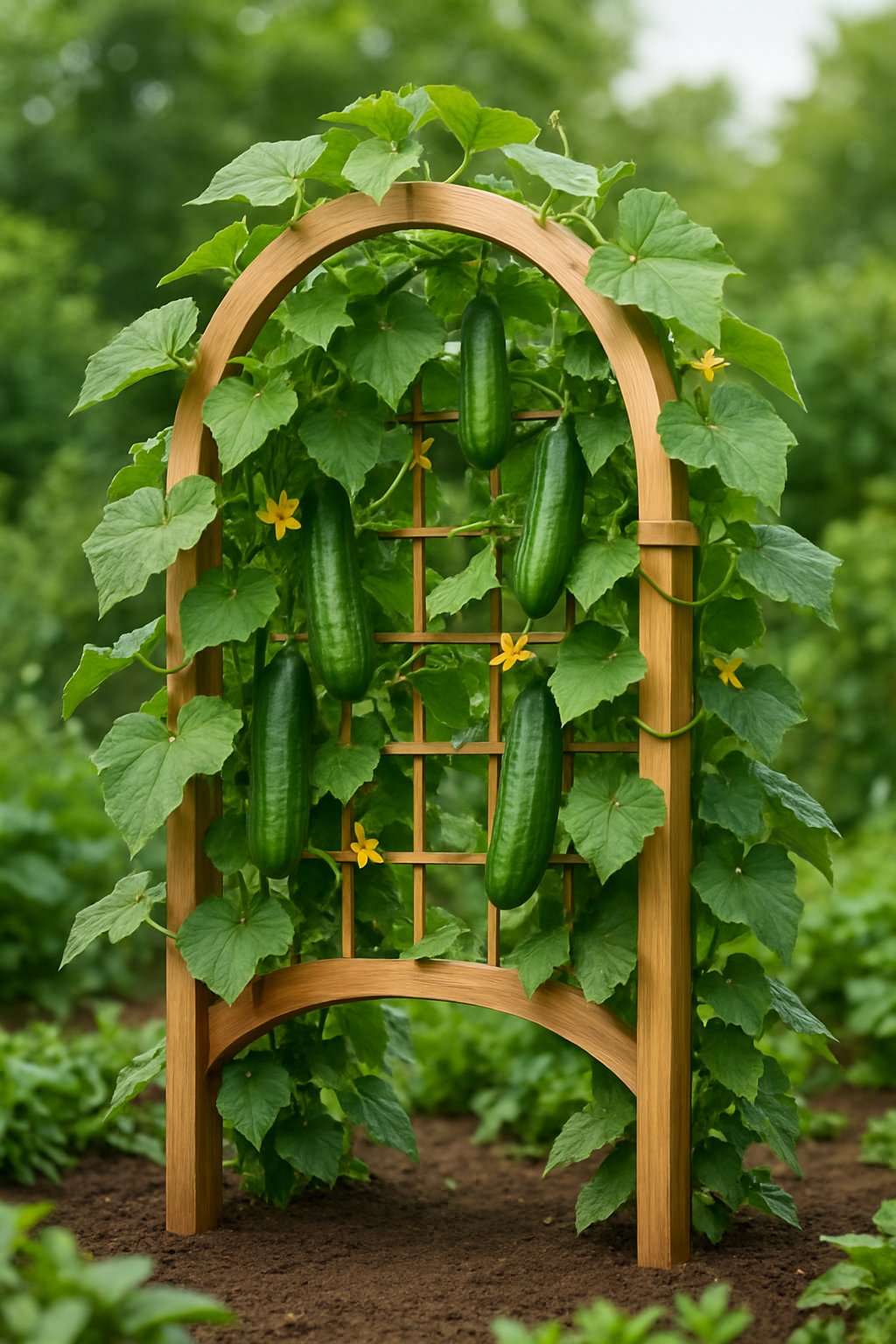
An arch trellis not only adds a touch of style to your garden but also allows you to grow cucumbers vertically. You can create one using materials like bamboo, rebar, or even PVC pipes bent into an arch shape.
Secure the ends deep into the ground to ensure it remains stable. The arch structure allows cucumber vines to climb up and over, which saves space and keeps the air circulating.
Good airflow helps to ward off diseases and makes harvesting cucumbers less of a challenge. Plus, it creates an attractive garden feature or a charming entryway.
Cover the arch with netting, wire mesh, or garden fencing to give the cucumbers plenty of surfaces to grip. Just be sure that the arch is tall and strong enough to handle the weight of heavy vines and fruits.
13. Lattice panel trellis
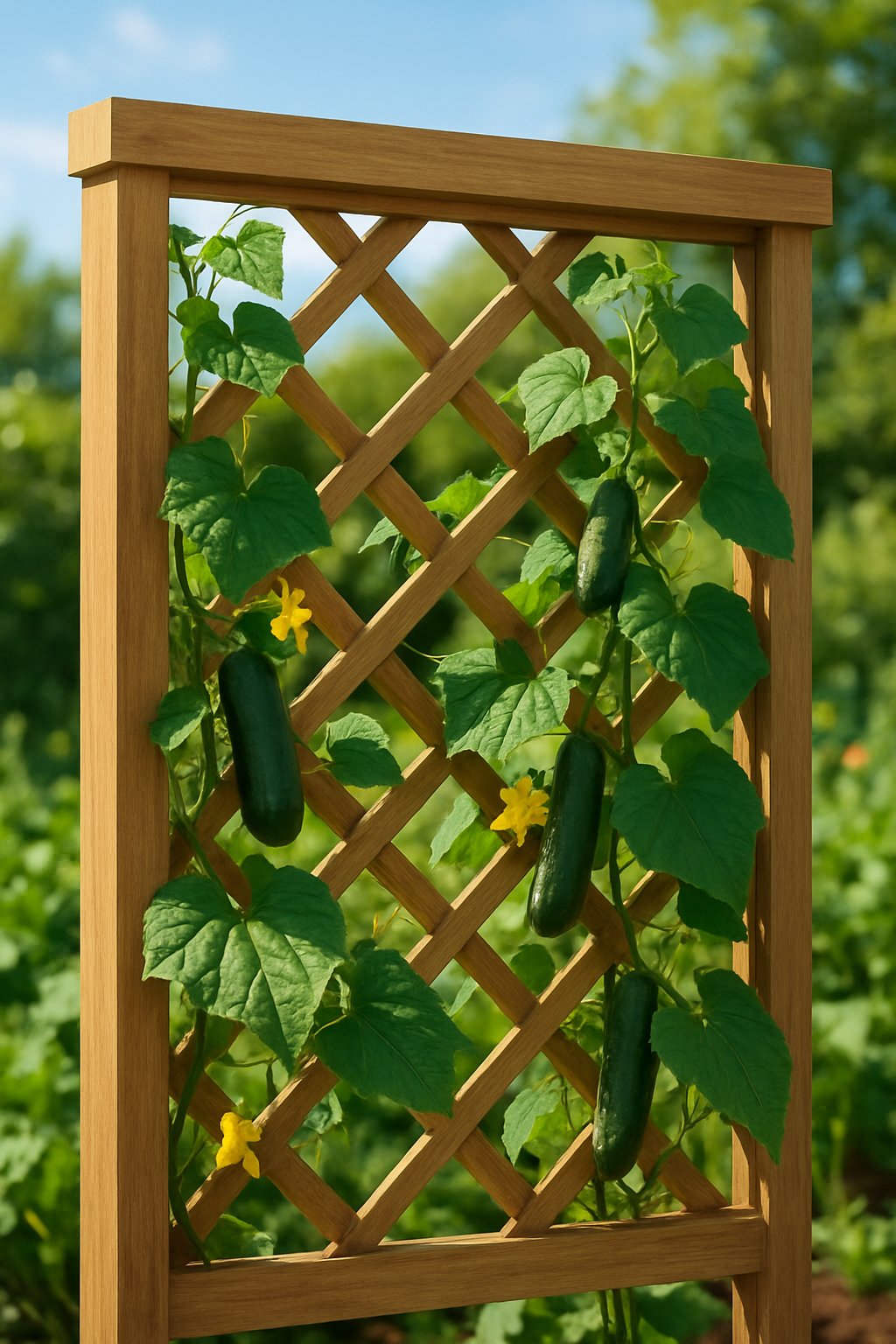
A lattice panel trellis offers cucumbers a straightforward way to grow upward instead of sprawling across the ground. You can purchase wooden or plastic lattice panels, or you can build one yourself with wood strips.
Set it firmly into the soil so that it stands strong as your plants mature. This type of trellis allows for plenty of air and sunlight to reach the plants.
It helps keep the cucumbers clean, and harvesting becomes easier since the fruit hangs clear of the ground. You will also save valuable space in your garden for planting other vegetables.
If you find that you need more support, you can simply attach the lattice to stakes. Make sure the openings are large enough for the cucumber vines to weave through, but also close enough to provide adequate support.
14. Recycled fence panel trellis
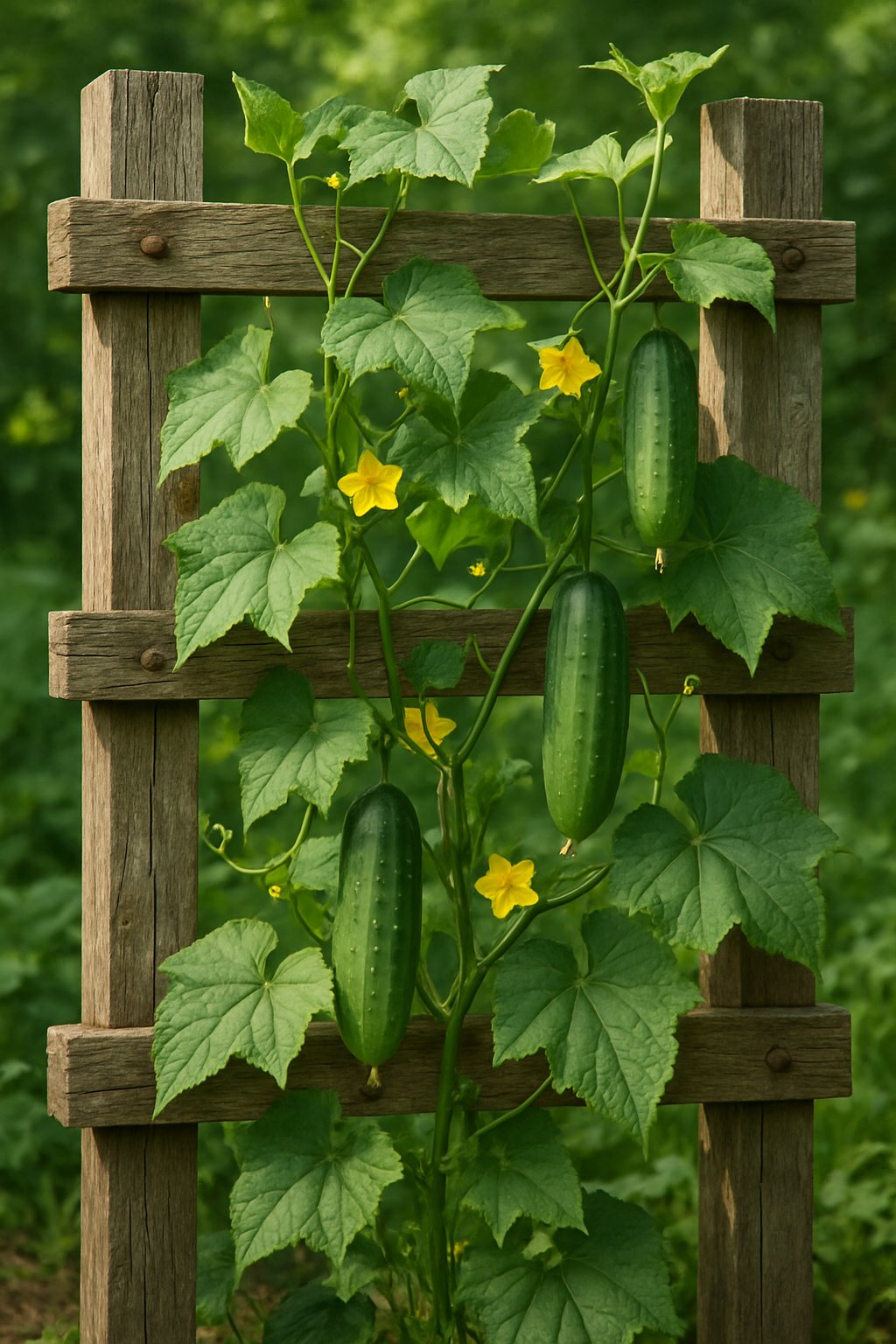
If you happen to have an old recycled fence panel available, you can easily repurpose it into a sturdy trellis for your cucumbers. Just lean the panel against a wall or secure it upright in the ground.
The slats or gaps in the panel provide cucumber vines with plenty of spots to climb. Fence panels are typically made from durable wood or metal, so they hold up well and can support heavy vines.
This is a thrifty approach to gardening that also helps keep materials out of the landfill. Anchor the trellis firmly in the soil to ensure it remains steady.
You can use garden staples, stakes, or even heavy stones at the base for support. Start guiding your vines toward the panel early, and they will climb upward instead of crawling all over the ground.
15. Garden fence cucumber trellis
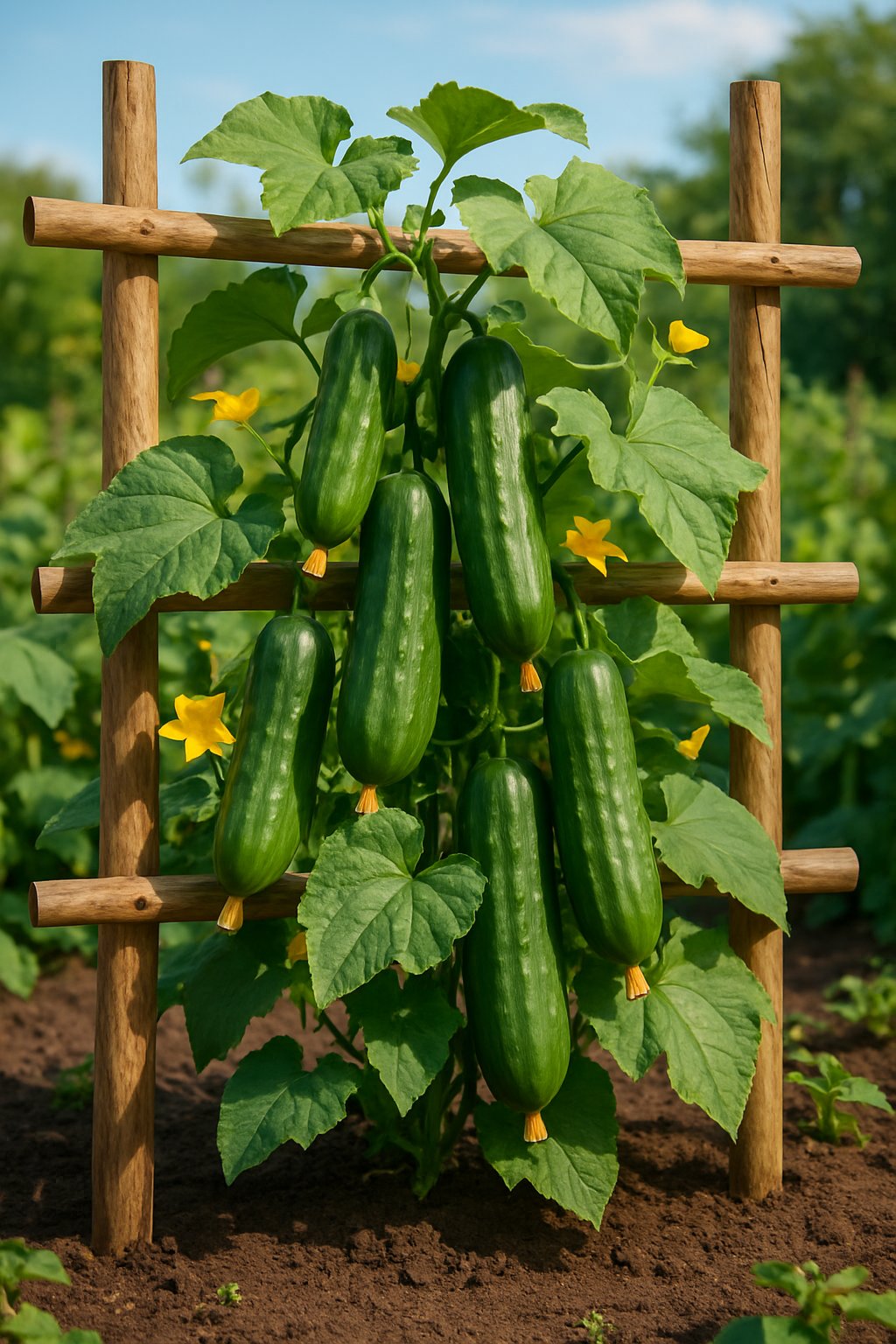
You can use your existing garden fence as a cucumber trellis, saving both space and effort. Simply attach wire mesh, garden netting, or lattice panels directly onto the fence.
These materials provide your cucumber vines with a sturdy surface to climb. This setup is particularly effective in small gardens or yards with limited space.
The cucumbers stay off the ground, which means you will deal with fewer pests and enjoy an easier harvest. Use zip ties or nails to keep the mesh stable and secure.
If your fence is tall, you will have a generous amount of vertical space for the cucumbers to climb. Just make sure the mesh or netting is pulled taut so the vines do not sag under their own weight.
16. String and stake trellis
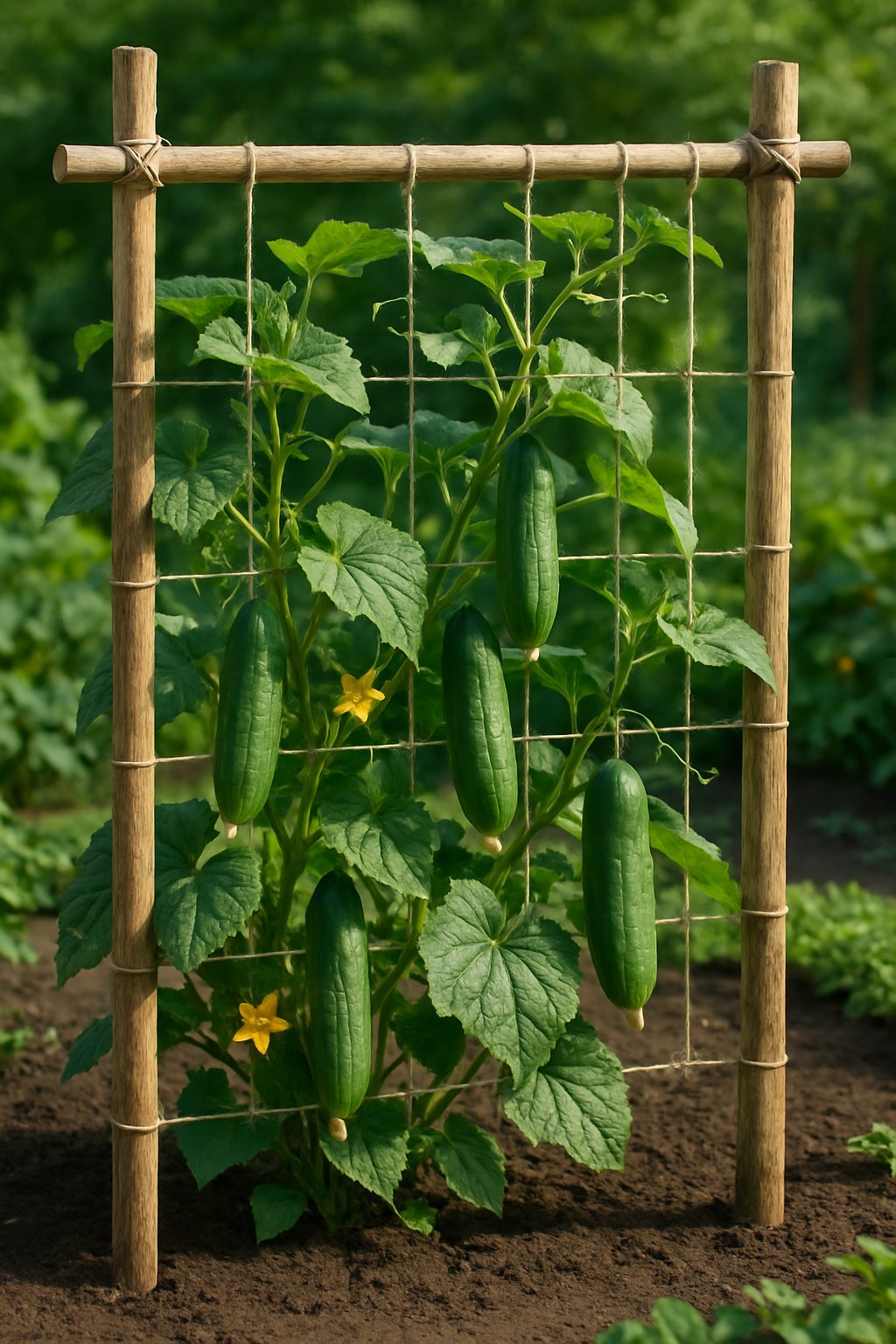
A string and stake trellis is one of the easiest and most straightforward options for supporting cucumbers. Place strong stakes, approximately 5 or 6 feet tall, into the ground.
Next, tie strings from the top of each stake down to the base. The cucumber vines will naturally grab onto these strings and climb upward, keeping the fruit well off the ground.
This method helps to reduce pest problems and makes picking the cucumbers much more convenient. It is an excellent space saving solution, especially if you have a small garden.
You can use sturdy twine, jute, or garden string for this project. Just ensure that the string is strong enough to support the weight of the vines and their fruit.
Check the tension periodically as the plants grow and make adjustments if necessary. This style is very affordable and requires minimal maintenance.
You will only need to prune the vines occasionally to encourage healthy growth.
17. DIY PVC teepee trellis
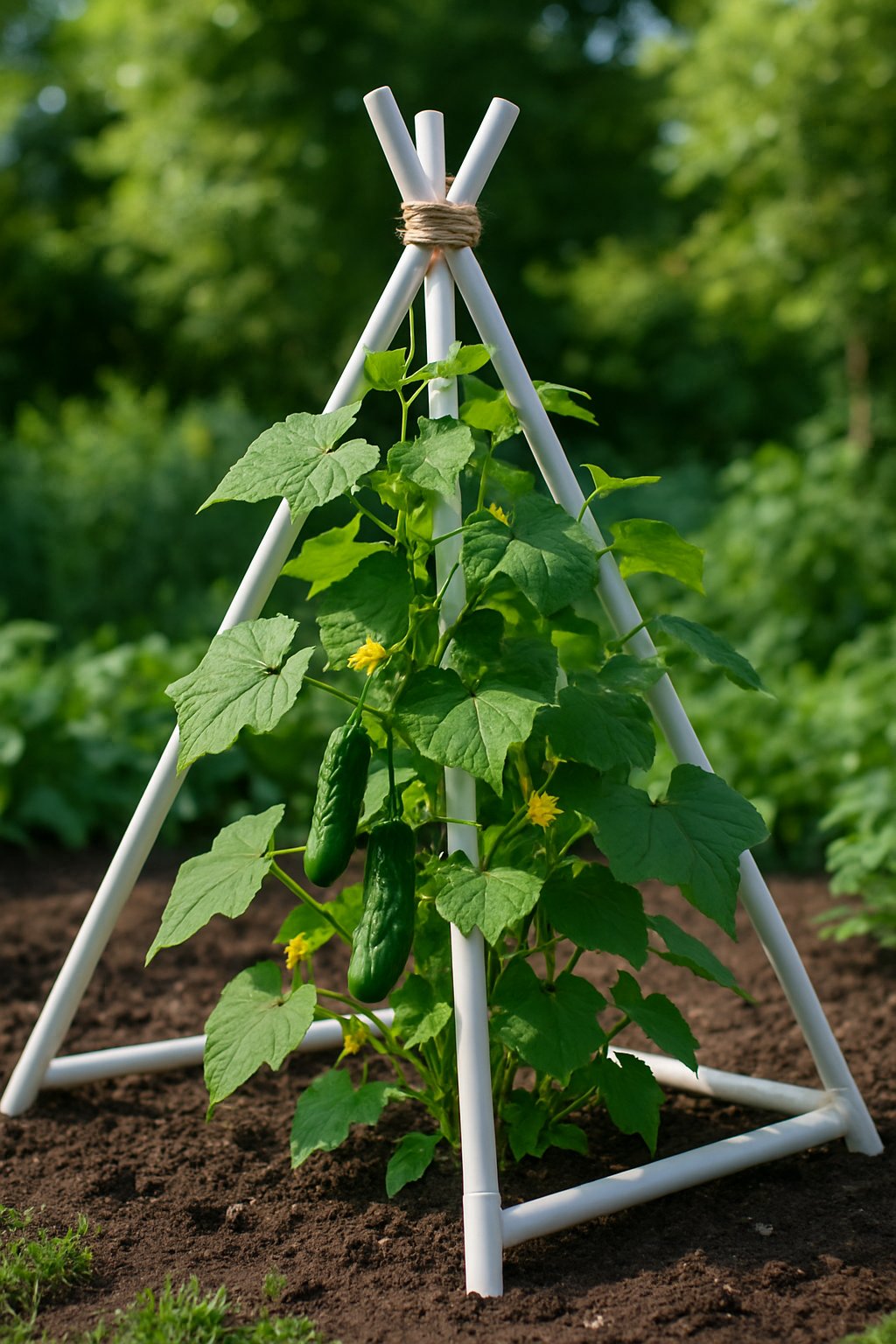
A PVC teepee trellis is a very simple way to encourage cucumbers to grow vertically instead of spreading out. Cut PVC pipes into equal lengths and then tie the tops together with strong twine or a zip tie to form a cone shape.
This structure is a great space saver and gives your cucumber vines plenty of room to climb. It also helps with air circulation, which can keep plant diseases from taking hold.
You can make the teepee as tall as 5 or 6 feet to support healthy, vigorous growth. PVC is lightweight and holds up well against various weather conditions.
It is easy to move or adjust if you need to. Use garden twine to secure the vines as they grow, so they do not become tangled or flop over.
18. Vertical tomato cage for cucumbers
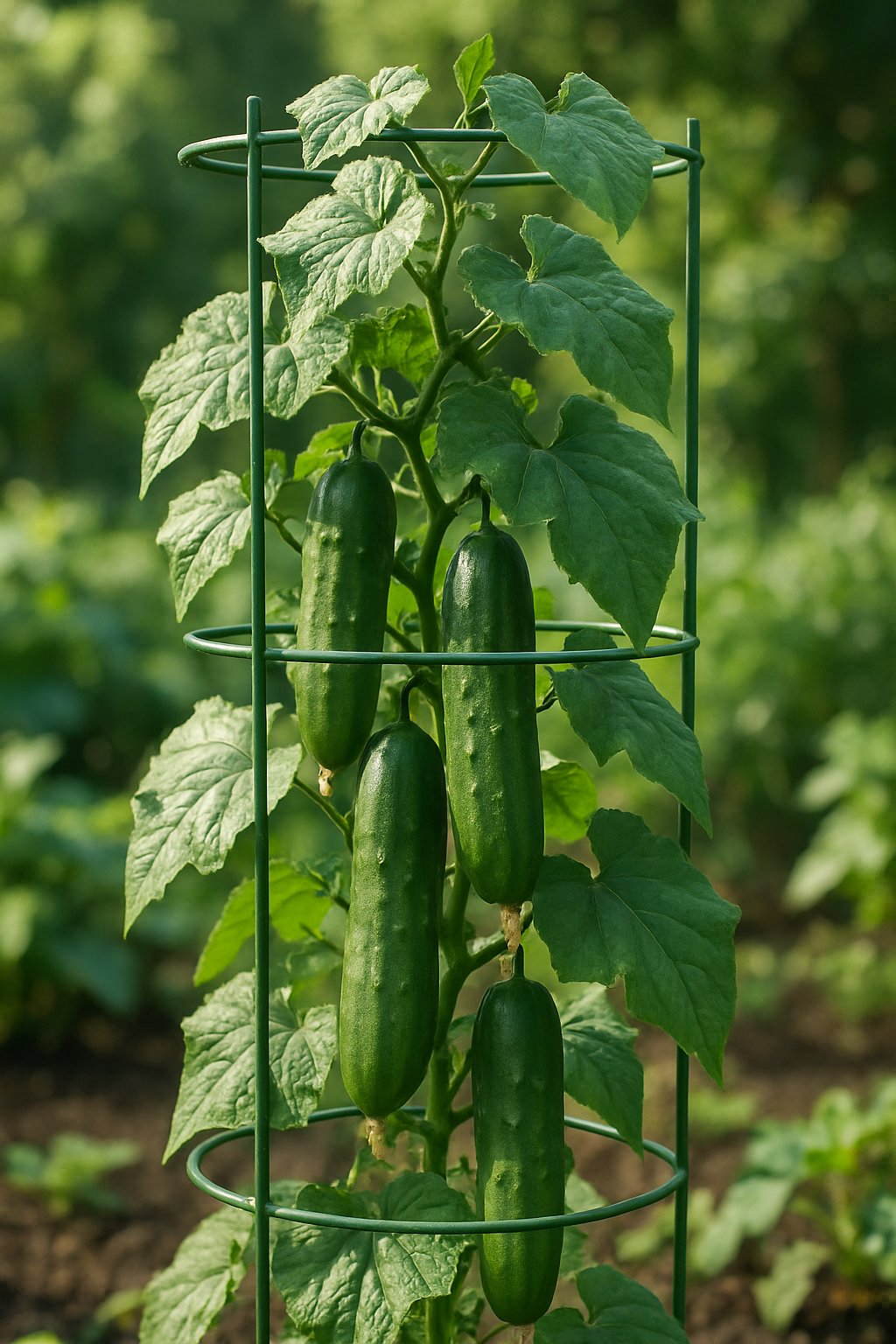
For an easy way to grow cucumbers vertically, try using a tomato cage. Simply place the cage over your cucumber plant and guide the vines to climb up its sides.
This method keeps the cucumbers off the ground and helps to reduce problems with rot and pests. Tomato cages are usually made of metal and can handle the weight of heavy cucumber fruits.
You can find them in various heights, but a height of 5 to 6 feet is ideal for cucumbers. If you wish, you can wrap twine around the cage to provide extra support and give the vines more to grab onto.
Be sure to position the cage so that your cucumber plant receives plenty of sunlight and air. Tomato cages are great space savers, leaving you room for other plants nearby.
They are also a low cost alternative to constructing a full-sized trellis.
19. Copper pipe trellis
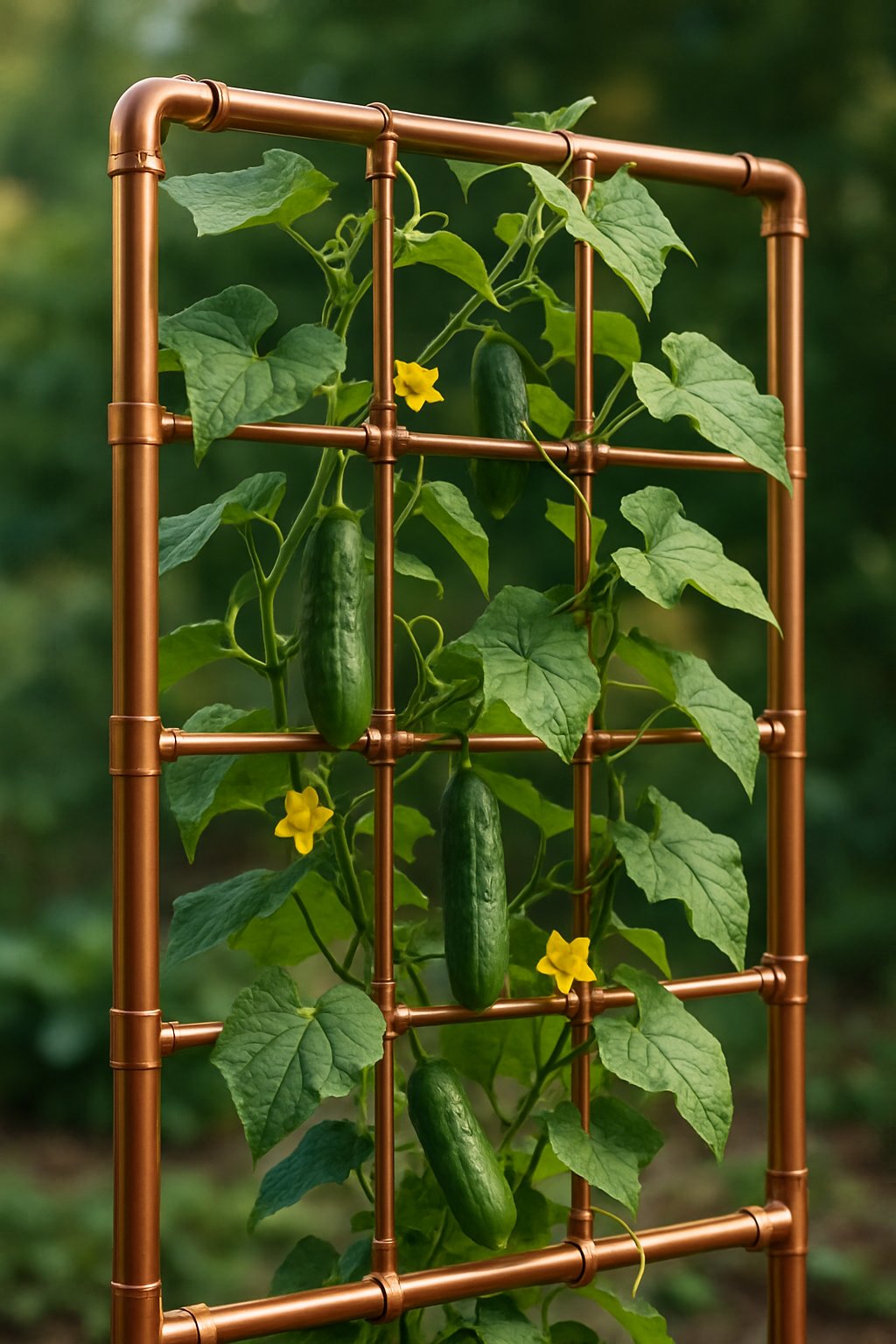
A trellis made from copper pipe gives your cucumber plants a strong and stylish structure to climb. You can build a simple frame using copper pipes and fittings.
This design allows your cucumbers to grow vertically, which saves a lot of space in your garden. Copper pipes are very durable and will not rust over time.
You can pair them with wood sides if you want to add extra support. A rectangular or A-frame shape works well, depending on the amount of room you have available.
This trellis is easy to clean and maintains a neat appearance in the garden. It also stands up well to wind and rain.
Use clips or twine to attach your plants to the pipes as they grow. As a nice bonus, copper naturally helps to fight some plant diseases.
Make sure your trellis is tall enough, around 5 or 6 feet, so your cucumbers have ample room to climb.
20. Rustic branch trellis
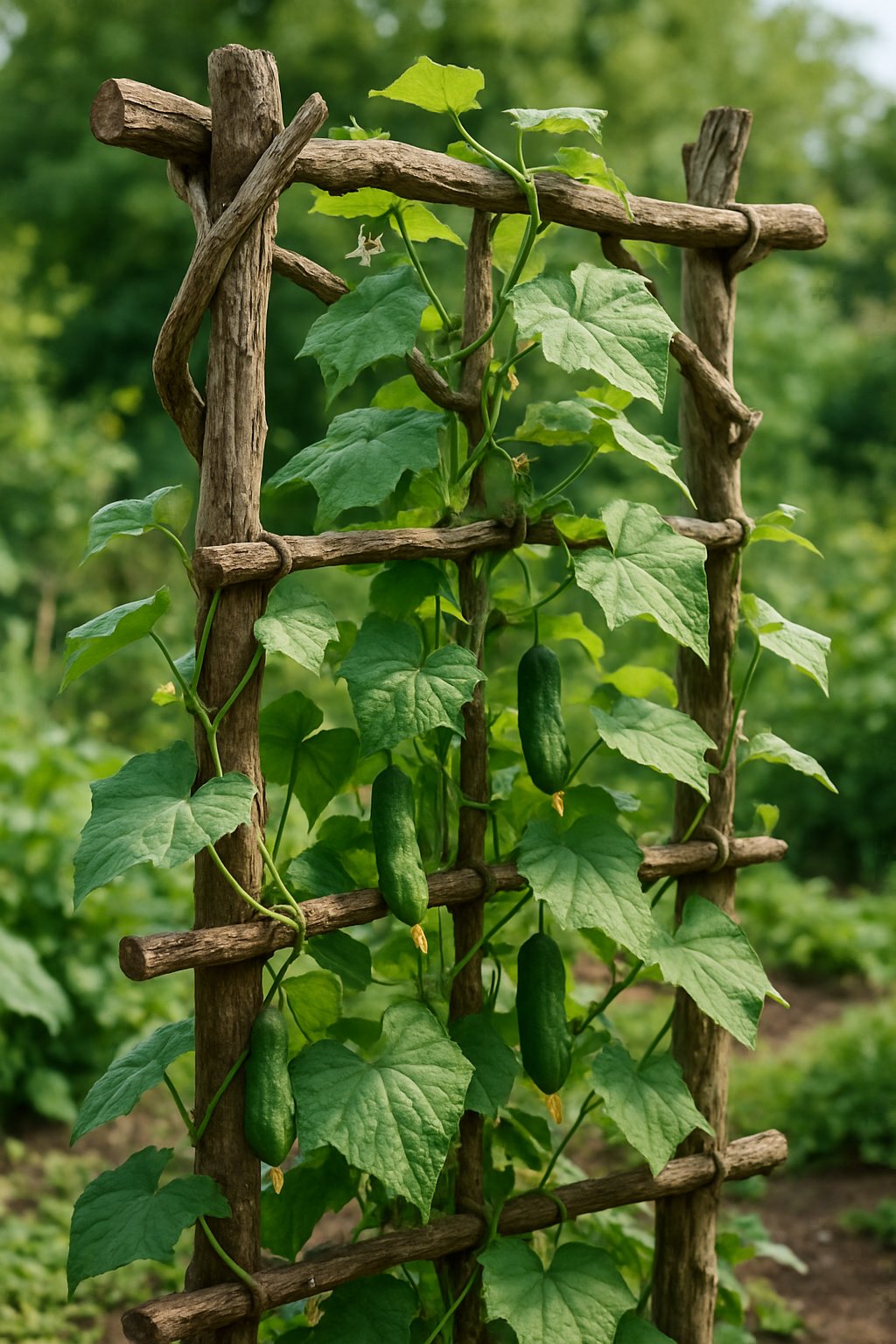
A rustic branch trellis is made from natural sticks or branches that you can collect from your yard or a nearby wooded area. It adds a charming, earthy aesthetic to your garden while supporting the cucumber vines as they climb.
You can tie the branches together with twine or wire to form a simple frame. Cucumbers thrive when growing vertically, and this method saves space while also improving air circulation.
Using branches means you do not have to purchase any materials, making it an eco-friendly choice. It blends in seamlessly with other plants and garden features.
Construct your trellis to be tall enough, about 5 or 6 feet, so the vines have plenty of room to grow without the risk of toppling over.
21. Foldable wooden trellis
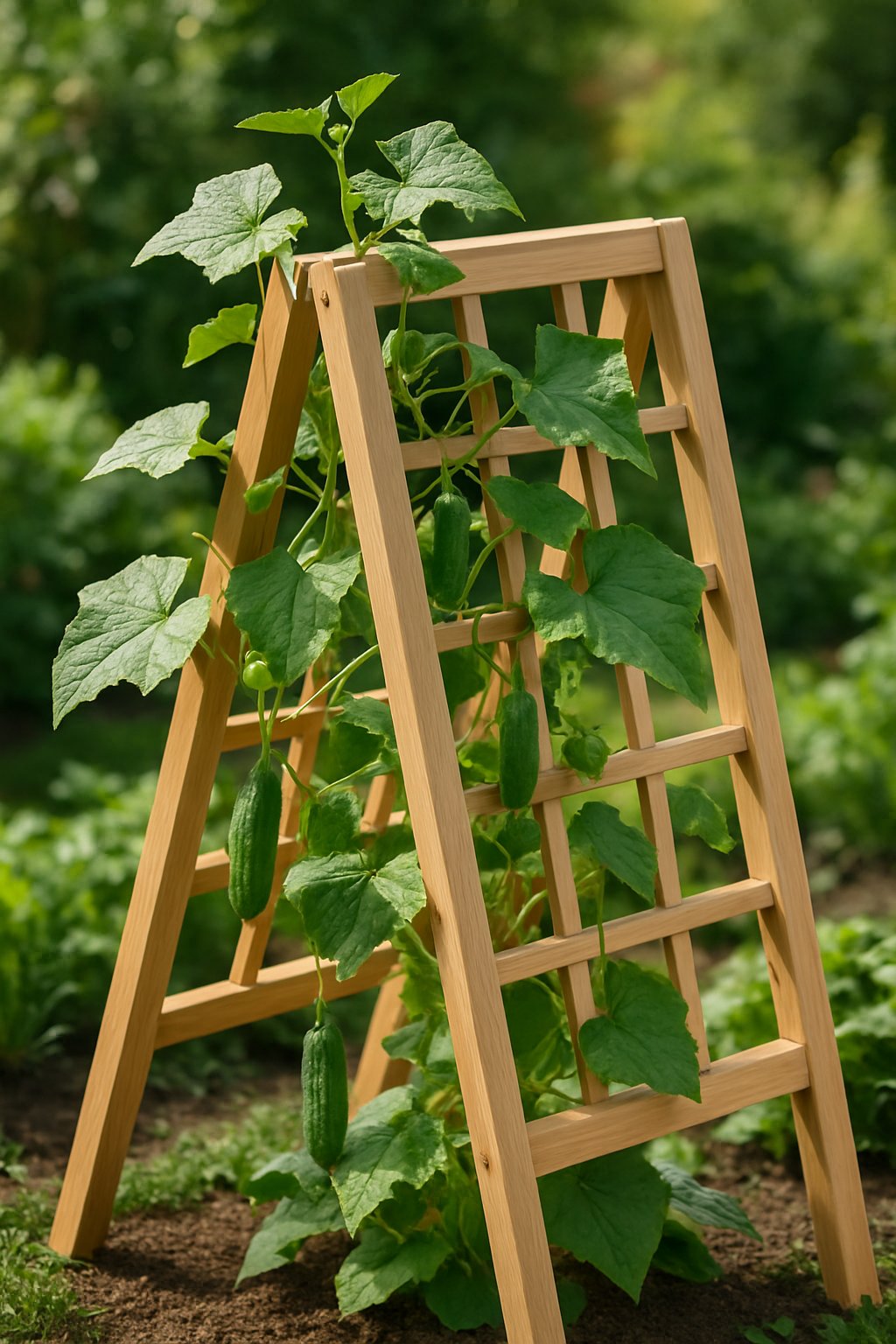
A foldable wooden trellis is a true lifesaver if you are looking for something you can easily move or store. It typically stands up in an A-frame shape and then folds flat when you no longer need it.
The design is quite simple and does not require a lot of tools or materials. You just need some wooden planks and hinges to connect them, nothing overly complicated.
By building it this way, you create a trellis that is sturdy enough for climbing cucumbers. The folding feature is incredibly convenient if you want to change your garden layout or quickly put it away during a storm.
This trellis fits well in small spaces or even on a balcony. When it is set up, cucumbers have room to climb on both sides.
This saves space and allows more air to circulate around your plants. It is a win-win solution for anyone dealing with limited room.
Treat the wood with a sealant or choose a rot-resistant type of wood. This will help your trellis withstand the rain and sun for longer.
22. Swing gate-style trellis
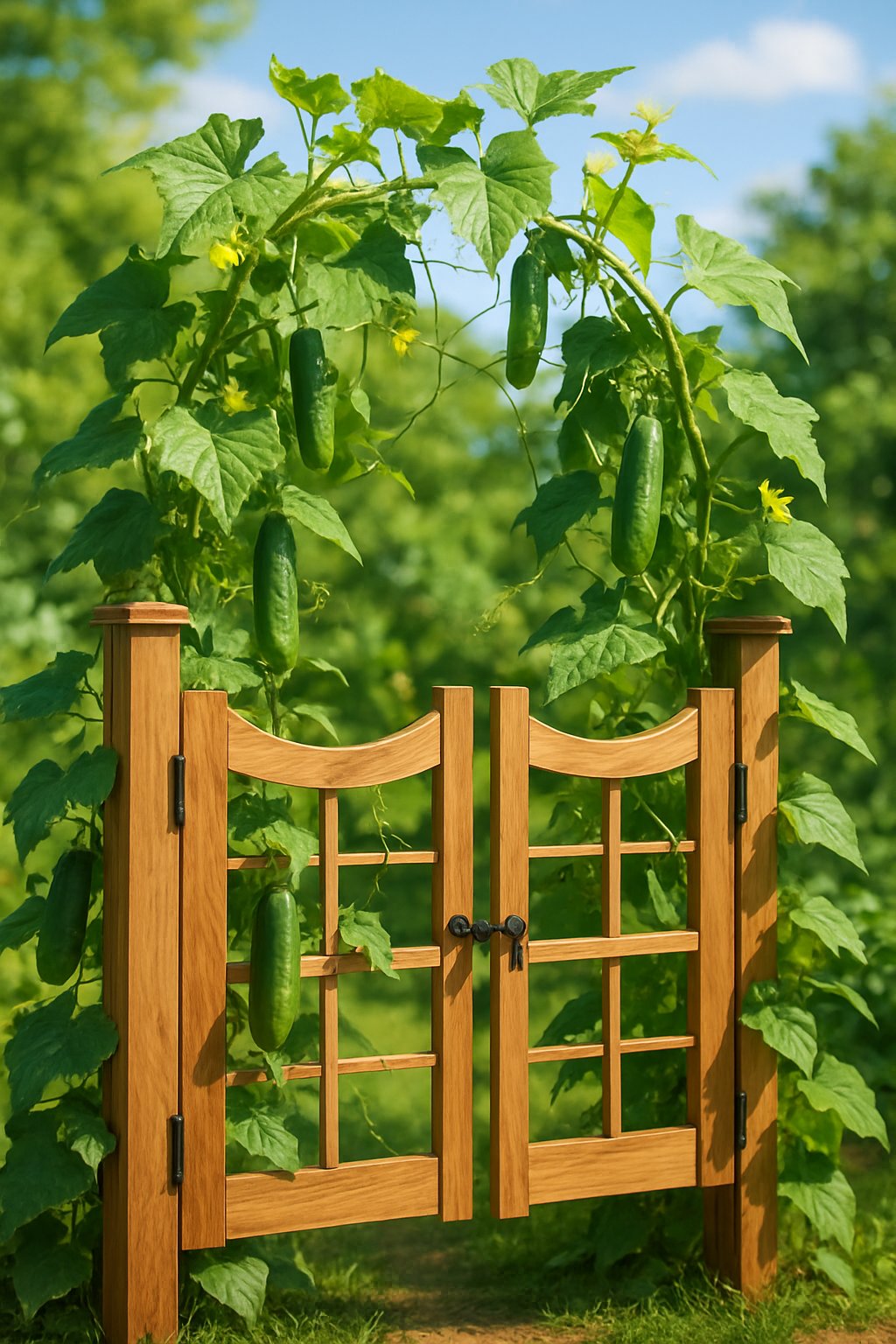
A trellis designed like a swing gate adds a unique look to your garden while providing solid support for your cucumbers. You just need to set up two tall posts and hang a hinged gate frame between them.
The gate is functional and swings open, allowing you to access your plants without any difficulty.
Cucumbers readily climb this type of structure, and you save space while giving them better air circulation. This means a lower chance of disease, which is always a plus.
You can construct the frame from either wood or metal and then stretch strong netting or wire mesh across it for the vines to grab onto. It is surprisingly sturdy and holds up well, even when supporting a heavy crop.
If your garden feels a bit crowded, this trellis stands tall and takes up very little ground space. The swinging gate makes it much easier to reach in for harvesting or a quick pruning session.