Hanging succulents are surging in popularity, and it’s easy to see why. These low maintenance plants are a dream for any home, adding a gorgeous new dimension to your living space. They’re also incredibly easy to care for, making them a fantastic starting point for new gardeners.
If you’re a succulent enthusiast who is just getting into hanging baskets, you might be wondering which varieties are the best fit. While many succulents have a trailing or cascading growth habit perfect for hanging planters, not all of them create that picture perfect look.
You can stop wondering now. Here is a curated list of the best trailing succulents ready to elevate your hanging garden, whether it’s in the kitchen, living room, or out on the balcony.
Here Are The 24 Best Hanging Succulents To Decorate Your Home
1. Burro’s Tail – Sedum Morganianum
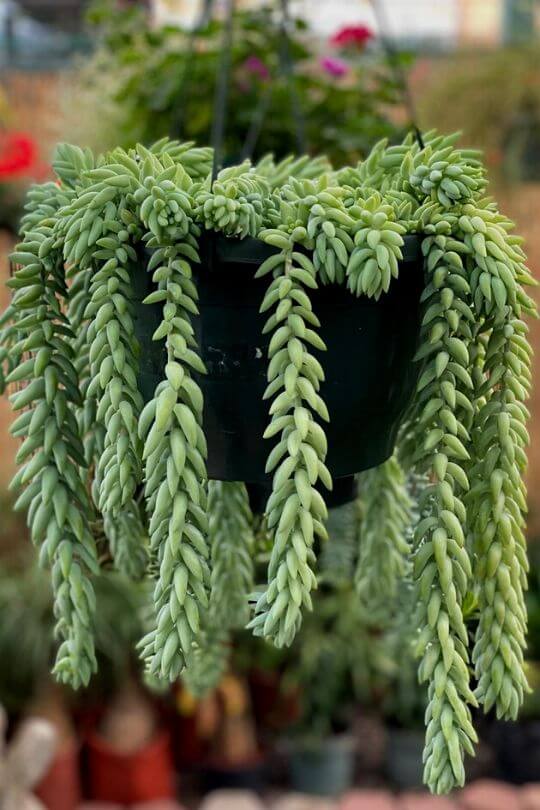
The burro’s tail, or Sedum morganianum, is a timeless favorite among houseplant lovers. It’s a true showstopper, with long, luxurious stems that drape elegantly over the sides of hanging baskets.
Its plump leaves overlap each other down the stem, creating the tail-like appearance that gives it its name. The leaves are a lovely green, coated in a waxy, pale blue powder.
Because of this delicate coating, it’s best to avoid touching the plant, as finger oils can rub the wax away. If you do happen to touch it, don’t fret; the protective layer will grow back soon enough.
This plant rarely flowers, but when it does, it produces small, unscented, star shaped blooms.
Overall, Sedum morganianum is a stunning indoor plant. Just be aware that as it matures, it can become quite heavy, so choosing a sturdy hanging basket is essential.
2. String Of Pearls – Senecio Rowleyanus
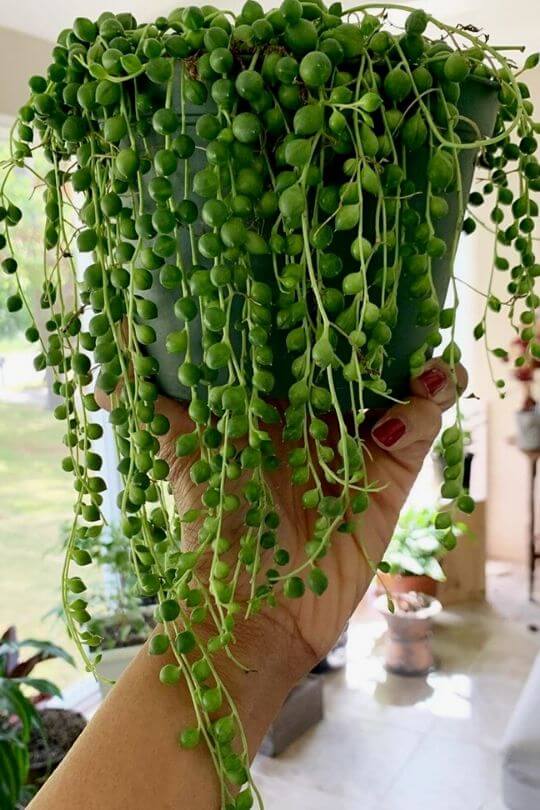
Senecio rowleyanus is a strikingly unique plant, featuring pea shaped leaves strung along long, slender stems. This distinctive look earned it the common names String of Pearls or String of Beads.
The leaves are designed to store water, which makes the plant succulent and drought tolerant. Each leaf also has a small slit down the middle that acts as a window, allowing light to penetrate for photosynthesis.
This plant grows from shallow surface roots and sends out thin stems that can reach up to three feet in length. It adapts well to various growing conditions and looks beautiful no matter where it’s placed.
For flower lovers, the String of Pearls can produce tiny, white, fuzzy blooms. They emit a fragrance reminiscent of spiced cinnamon and vanilla, which is sure to lift your spirits.
To encourage flowering, provide temperatures between 50 and 55°F, plenty of sunlight, and some extra nutrients.
This plant is ideal for hanging baskets, where its trailing foliage can cascade beautifully over the edges, allowing you to fully appreciate its one of a kind appearance.
3 . Kenya Hyacinth – Sansevieria Parva
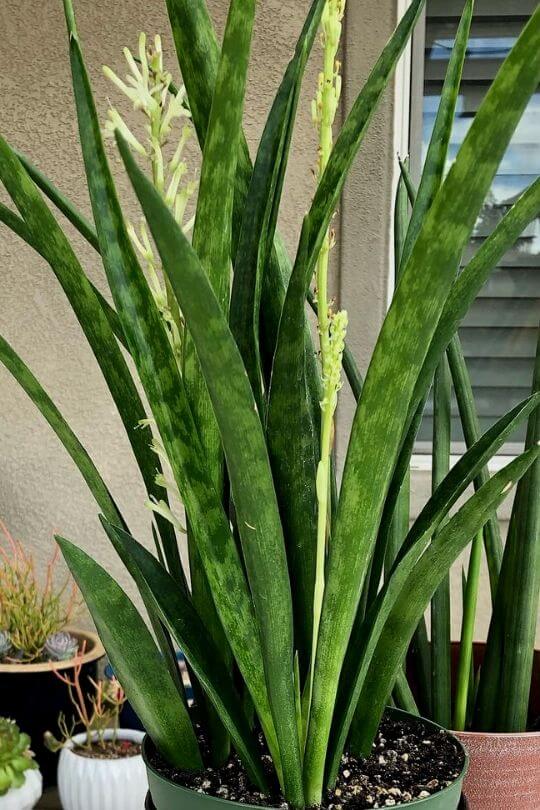
The Kenya Hyacinth, or Sansevieria parva, is a member of the rare snake plant family. It performs beautifully as both an indoor and outdoor plant, thriving in either setting.
This is a slow growing plant with narrow, arching leaves that can reach up to 16 inches long and one inch wide.
The leaves emerge from small, dense rosettes. The plant also produces long runners, called stolons, which end in small plantlets, making Sansevieria parva an excellent choice for a hanging basket.
It also features small, pinkish flowers that grow in spikes. The hyacinth fragrance is a delightful bonus that will brighten any room. This flowering spike and its lovely scent only add to the plant’s overall charm.
4. Ruby Necklace – Othonna Capensis
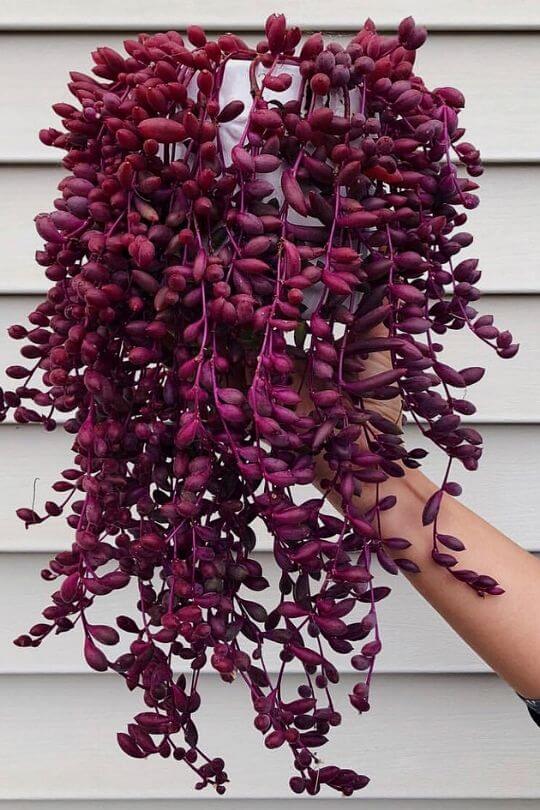
Next on the list is the Ruby Necklace, or Othonna capensis. This is a fast growing succulent with long, thin, bean shaped foliage.
Othonna capensis typically grows upward for about two inches before it begins to trail downward. Its bean like leaves can vary in color from green to a deep purple when the plant is happily stressed.
The long, vibrant stems are a striking ruby red, which inspired its common name. Adding to its beauty are the small, yellow, daisy like flowers it produces.
With its vibrant colors and cascading form, the Ruby Necklace plant truly resembles a brightly colored gem. Imagine the splash of color it will bring hanging in your home. It’s sure to brighten your day and the day of any visitors.
5.String Of Hearts – Ceropegia Woodii
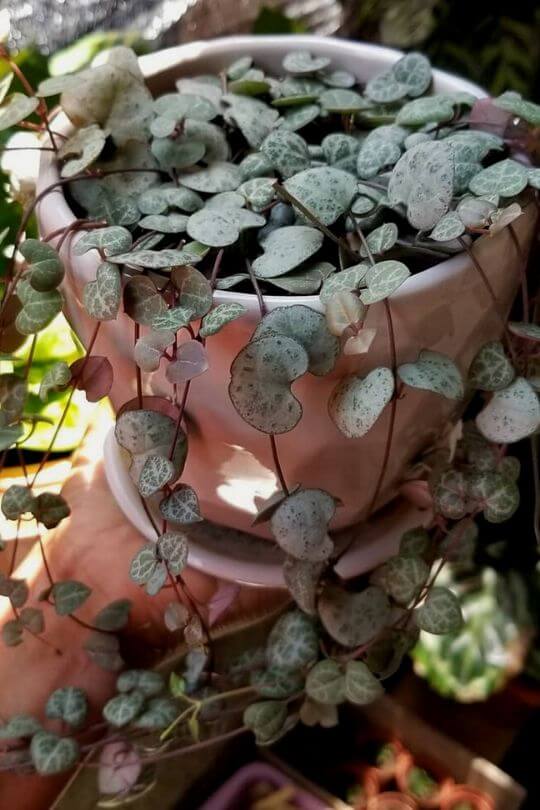
The String of Hearts, or Ceropegia woodii, is an unusually beautiful plant with distinctive heart shaped foliage. Its overall appearance is a cascade of dark green, silver, and purple heart shaped leaves on a single string.
One notable characteristic of this plant is that while it has abundant foliage on its many stems, it isn’t a bushy vine.
It maintains a more delicate, wispy look. During the summer, it blooms with flowers that look like tiny purple lanterns, which adds to the plant’s overall appeal.
What makes this plant even more impressive is its potential to grow up to three meters long. Hanging it high in your home will truly showcase its beauty and enhance your home’s aesthetic.
6. String Of Nickels – Dischidia Nummularia
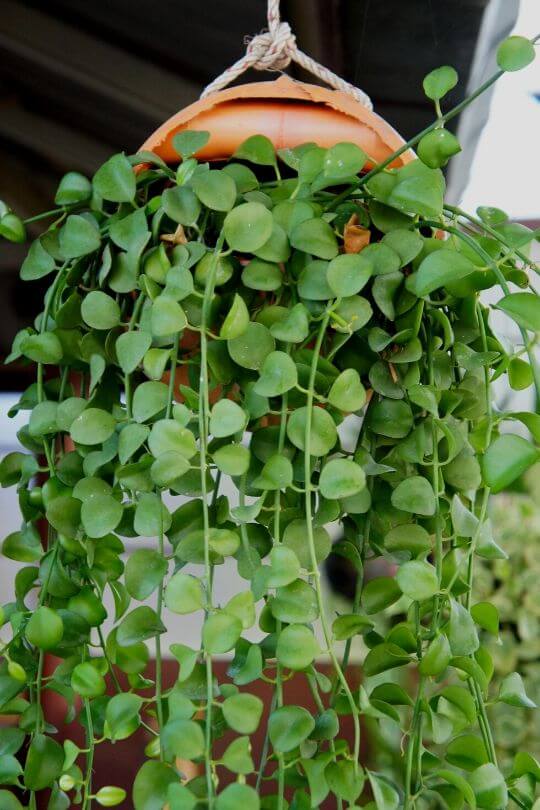
The String of Nickels, or Dischidia nummularia, is one of the more uncommon and exotic houseplants on this list. Despite its rarity, it is surprisingly easy to grow.
It earned its name from its firm, round leaves that resemble strands of coins. Some people think they look like tiny magnifying glasses.
The leaf color can range from a very light olive green to a bronze hue.
Dischidia nummularia is an epiphyte, meaning it can grow on other structures like trees instead of in the ground.
It can trail up to eight to ten feet long, a characteristic that makes it perfect for hanging baskets. The small white or pale yellow flowers also contribute to the plant’s beauty.
7. String Of Tears – Senecio Herreianus

The String of Tears, or Senecio herreianus, shares a similar structure with the String of Pearls.
The main difference is its more compact growth and its spherical, teardrop shaped foliage. It also features a vertical, semi translucent line running to the tip of each leaf, which aids in photosynthesis.
This is a slow growing trailing succulent with tendrils that can reach a length of 90 cm. It blooms in the summer, producing small white flowers that carry a scent of cinnamon.
It’s important to remember that Senecio herreianus needs space to trail, making it an ideal candidate for hanging baskets. As the tendrils spill over the basket, the plant looks like a beaded necklace, making it a beautiful accessory for your home.
8. String Of Bananas – Senecio Radicans

The next plant on our list is another member of the Senecio family, a relative of the String of Pearls and String of Tears called Senecio radicans.
Also known as String of Bananas, this plant grows similarly to its relatives, but its leaves are shaped like tiny bananas.
As the stems cascade, they resemble strings of bananas, hence the name. The chains can grow up to five feet long if left untrimmed, making it perfect for a hanging basket.
The beautiful strings tumbling down the sides of the basket are a wonderful addition to your home’s decor.
This succulent becomes even more charming in the winter or late spring when its small white flowers begin to bloom.
9. Crassula Pellucida Variegata
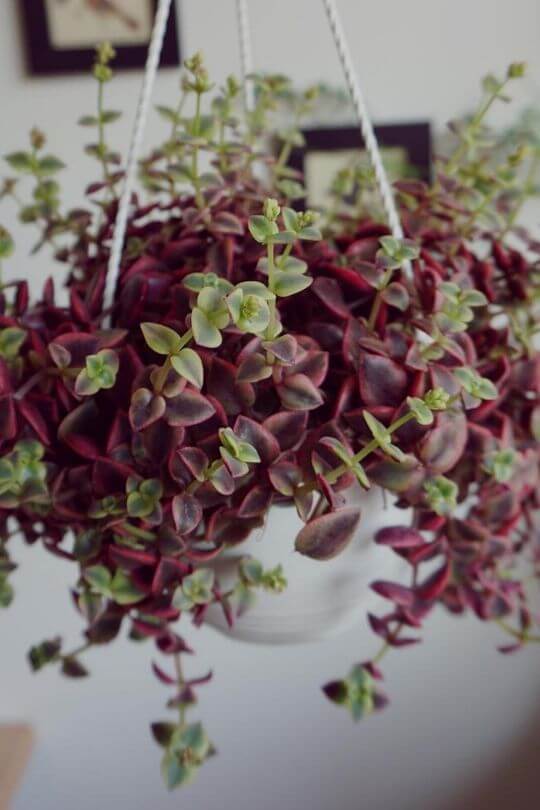
Another visually stunning succulent for your drought tolerant hanging garden is the Calico Kitten, or Crassula pellucida Variegata.
This long, trailing succulent has heart shaped leaves that display a beautiful combination of rose, pink, cream, and green.
When happily stressed, the leaves deepen to an even richer shade of pink. You can also look forward to delicate white flowers blooming in the late spring.
It’s perfect for hanging baskets, as it gracefully spills over retaining walls, borders, and planter bowls.
Keep in mind that the Calico Kitten can be a bit sensitive and requires some extra attention. It might not be the best choice for beginners, but it’s an excellent option for those looking to advance their gardening skills.
10. Hindu Rope – Hoya Carnosa Compacta
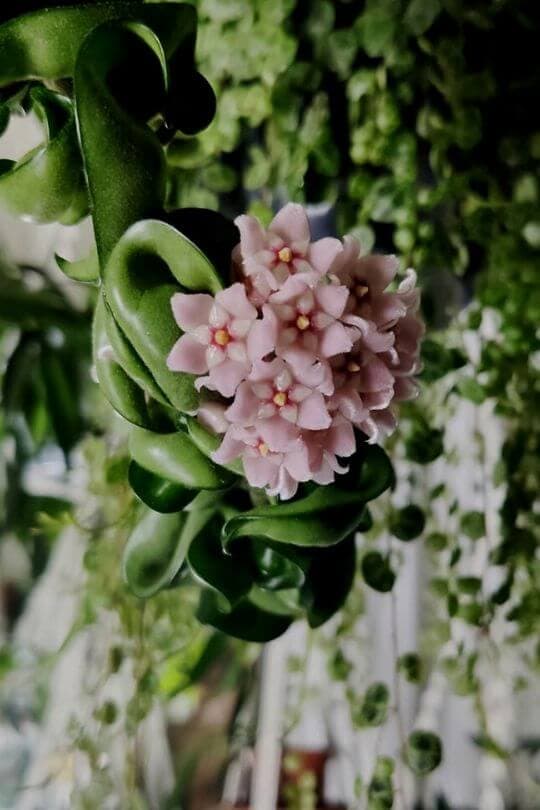
The Hindu Rope plant, or Hoya carnosa compacta, is a member of the wax plant family. It has an unusual structure with fleshy, curled leaves that are densely packed together, making the draping vines look like thick ropes.
The leaves are either a solid dark green or variegated with green and white, and they have a waxy, glossy appearance. When well cared for, the plant produces star shaped flowers that grow in clusters.
The most remarkable feature of these flowers is their glassy look, which makes them seem as if they are made of porcelain.
The plant’s unique character makes it a perfect addition to your home’s interior. While this plant doesn’t climb, its heavy stems will droop over the edge of a container, making it an ideal choice for your hanging succulent garden.
11. Rattail Cactus – Aporocactus Flagelliformis
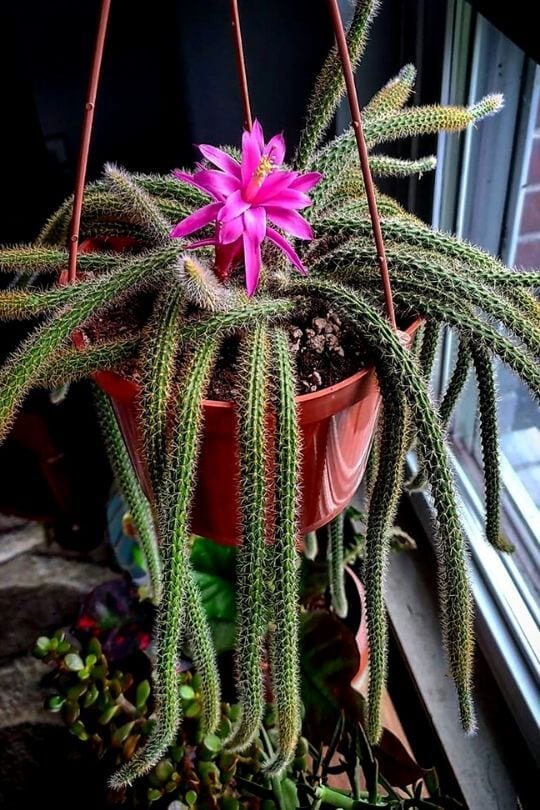
If you’re looking for a more versatile houseplant that can thrive in almost any condition, the Aporocactus flagelliformis is a fantastic option.
It’s commonly called the Rattail Cactus due to its long, trailing stems, which can grow up to four feet long and a half inch in diameter.
These long, slender stems are flexible, making them ideal for hanging baskets where they can gracefully hover over the sides.
The limp stems are covered in bristly brown hairs that can be sharp, so handle them with care.
This plant becomes even more beautiful in the spring when its flowers start to bloom. The crimson pink, tubular flowers enhance the plant’s aesthetic as the stems cascade out of the pot like a waterfall, a perfect reminder of nature’s beauty.
12. Peanut Cactus – Echinopsis Chamaecereus
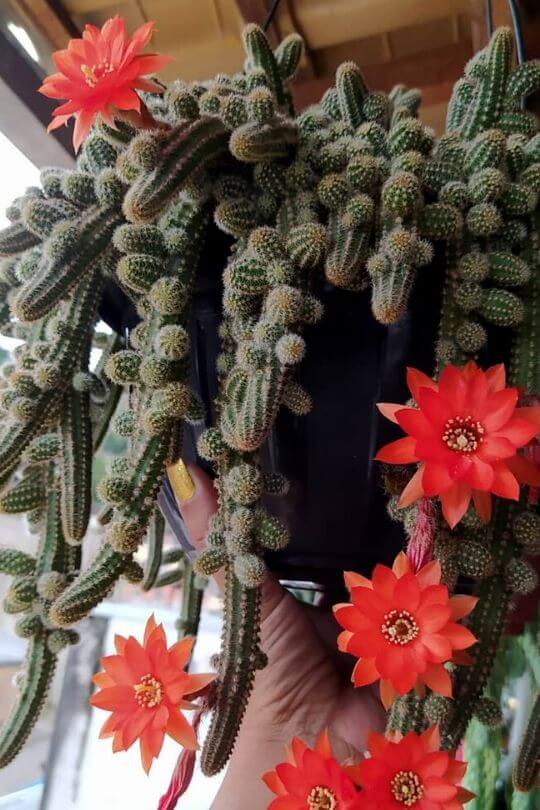
Another excellent cactus for our list is the Peanut Cactus, or Echinopsis chamaecereus, named for its half inch wide stem joints that are about the size of a peanut.
This plant is best suited for container growing due to its small, low growing nature. It features many crowded, finger like stems with short, white, bristly spines that surround the six to nine ridges along the stems.
These ridges even resemble the lines on the outside of a peanut shell. The spines are soft, making the plant safe for homes with children.
Mature plants can reach up to six inches, which may not be long enough to hang over a basket. However, the plant’s most stunning feature is its flowers, which are a bright orange red and measure five centimeters in diameter.
These flowers are produced in large quantities from a young age and appear larger than the stems themselves.
Having this plant in your home will surely add beauty to your garden, especially in late spring and early summer when its flowers are in full bloom.
13. Monkey’s Tail – Hildewintera Colademononis
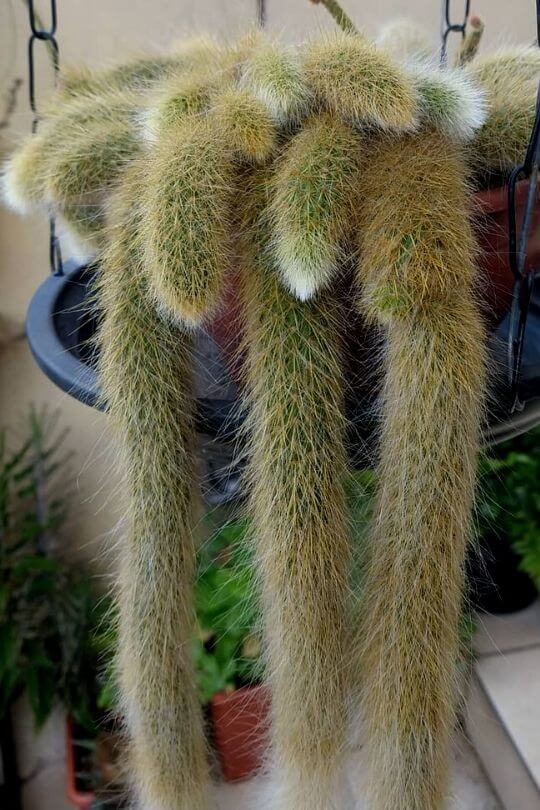
Also from the cactus family, the Monkey’s Tail, or Hildewintera colademononis, gets its name from its long, draping stems covered in bristly white spines.
The stems are greenish yellow and can grow up to eight feet long with proper care. It’s worth noting that they grow upright initially and then begin to trail as they become more established.
In the winter, they produce bright red flowers, which add to the plant’s overall beauty.
The Monkey’s Tail is highly recommended for beginners because its care requirements are very straightforward. The combination of its long, trailing, white bristled stems and its magenta flowers is a stunning sight that is sure to catch the eye of every visitor to your garden.
14. Elephant Bush – Portulacaria Afra
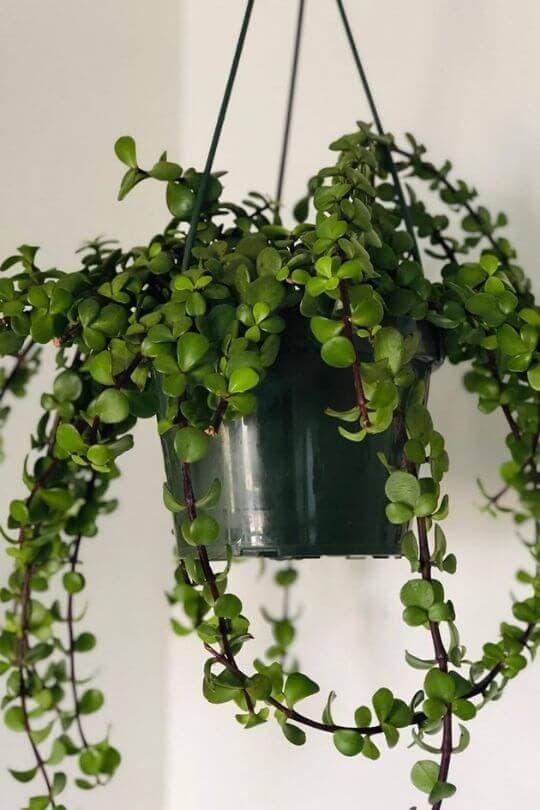
The Elephant Bush, or Portulacaria afra, is native to South Africa, where it serves as a food source for elephants and other wildlife.
This plant is characterized by its brown stems and small, green leaves. With the right care and nutrients, it can grow to incredible heights, up to several feet in its native environment.
There are two varieties of this plant, but both have a growth habit that can be either downward or outward, making them perfect for hanging displays.
You can even use them as “spillers” at the edge of your baskets to create beautiful arrangements.
If you live in a hot climate, this plant is an excellent choice as it can tolerate full sun. It’s a simple looking plant, but it will be a wonderful complement to your home, especially if you prefer a minimalistic style.
15. Trailing Jade – Senecio Jacobsenii
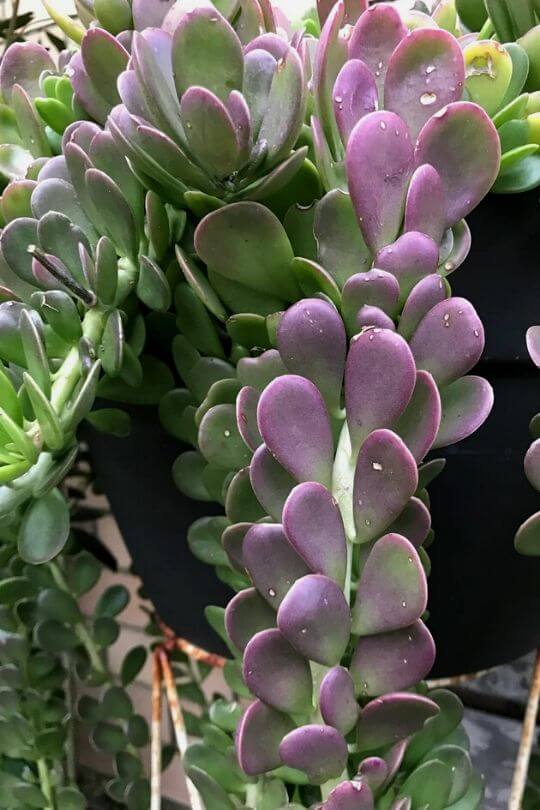
The Trailing Jade, or Senecio jacobseniiTrailing Jade – Senecio Jacobsenii features thick, succulent stems with fleshy, egg-shaped green leaves that are two to three inches long. The leaves overlap each other along the stems and develop a purple blush during the winter. In the fall, bright orange, rayless composite flowers typically appear with a rich, cheesy scent. Both the leaves and flowers stand upright from the stems, adding to the plant’s aesthetic appeal.The Trailing Jade can grow up to four feet long, so planting it in a hanging basket allows its stems to drape gracefully over the side, creating a beautiful display.
16. Christmas Cactus – Schlumbergera Bridgesii
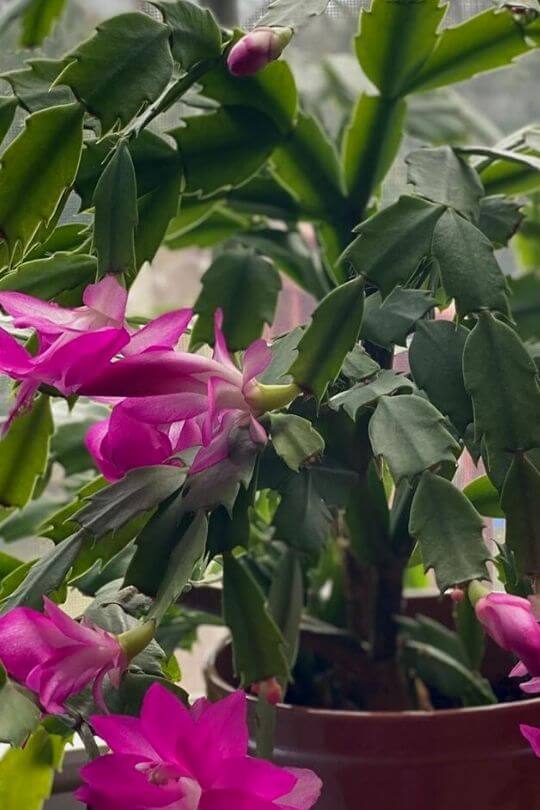
The Christmas Cactus, or Schlumbergera bridgesii, gets its name because it is known to bloom just in time for the holidays.
It is a very popular and unusual cactus with flattened plant bodies, where the “leaves” are actually stems. These small, flat stem segments are rounded and have minor serrations on their sides.
Flowers bloom in the late fall and early winter, forming at the ends of the stems.
The flower colors can range from red, yellow, purple, and pink to white, but they are most commonly a carmine red with a touch of purple in the center.
Placing this plant in a hanging basket will highlight its long, bright green stems as they drape over the side. When its pink flowers bloom in winter, it becomes the perfect finishing touch for your Christmas decorations.
17. Dancing Bones – Hatiora Salicornioides
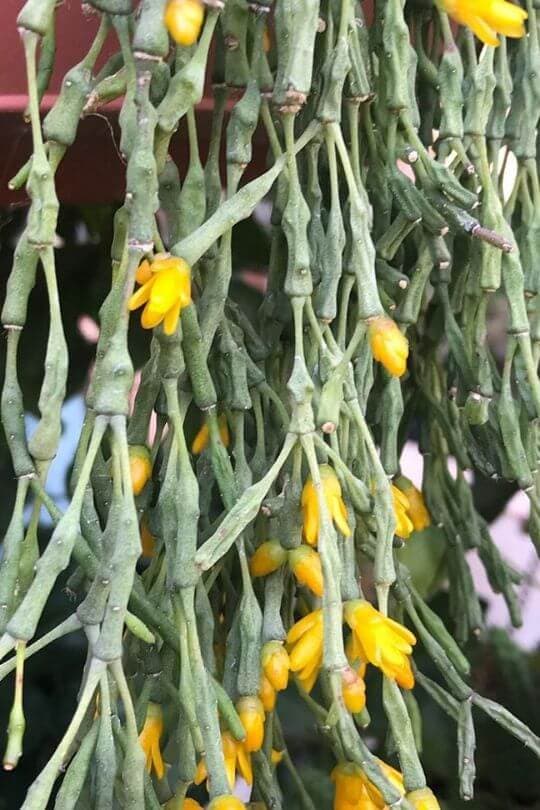
While the name might sound a bit spooky, the Dancing Bones Cactus, botanically known as Hatiora salicornioides, could be the next hanging succulent for your garden.
This unique looking plant creates an interesting display with its contorted stems. The distinct deep green foliage makes it a great addition if you want to add some intrigue to your garden.
In winter and spring, the Hatiora salicornioides blooms with small, yellow flowers at the ends of its shoots.
This plant can grow up to 20 inches long and may appear as a compact, bushy little plant. Placing it in a hanging basket, where its stems can hang and trail, will surely give your garden a fresh and unique look.
18. October Daphne – Sedum Sieboldii
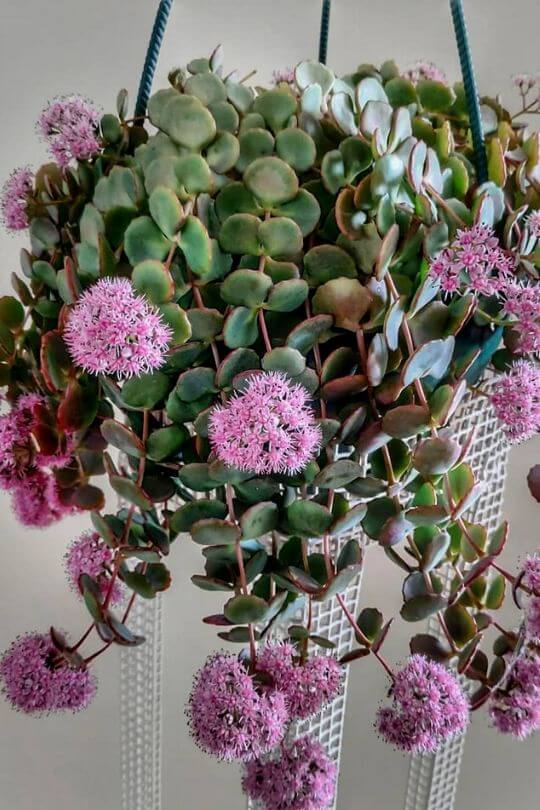
The October Daphne, or Sedum sieboldii, is often described as having the most beautiful foliage among all sedums.
It is a colorful sedum with light green leaves that have a hint of pink at the tips. These leaves grow in groups of three around the stems, and the pink color becomes more intense during the hot summer months.
This low spreading species forms a rounded mound, with horizontal branches extending from the center.
For this reason, it’s highly recommended to plant the October Daphne in the very center of the pot.
When fall arrives, bright pink, star shaped flowers bloom in clusters at the ends of the stems.
The plant’s natural growth habit makes it perfectly suited for a hanging basket. With stems reaching up to 12 inches in length, it will drape beautifully over the sides. The fall colors add to its beauty as the plant transforms into stunning shades of pink, red, yellow, and orange.
19. Variegated Trailing Jade – Crassula Sarmentosa
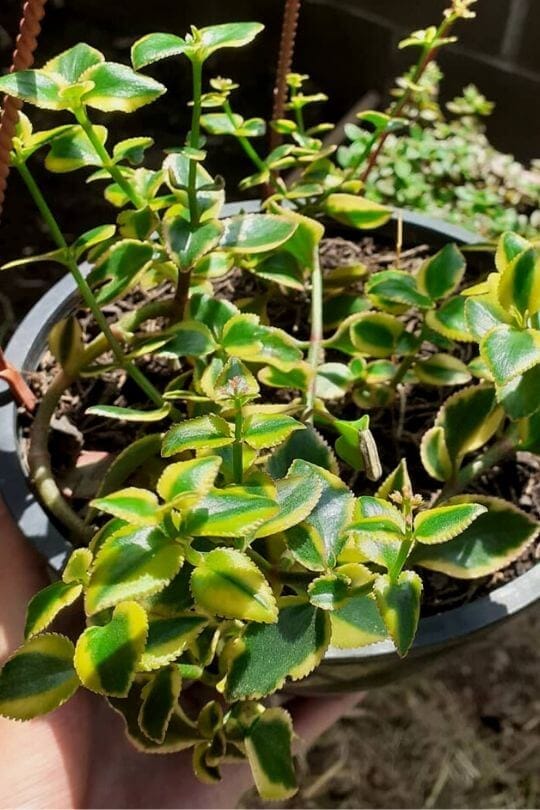
The Crassula sarmentosa cometVariegated Trailing Jade, Crassula sarmentosa variegata, is a scrambling succulent that can grow up to one foot tall and branches sparsely from its base. It has reddish stems that can reach up to three feet in length, arching outwards and trailing downwards, making it an ideal hanging plant. The leaves are oval with pointed tips and toothed margins. They are green in the center with creamy yellow edges. In late autumn, white, star-shaped flowers may appear.Under strong sunlight, the foliage develops a red tinge, making the entire plant even more attractive. Imagine its beauty as it hangs in your garden under perfect sunlight. It can certainly brighten your mood.
20. String Of Buttons – Crassula Perforata
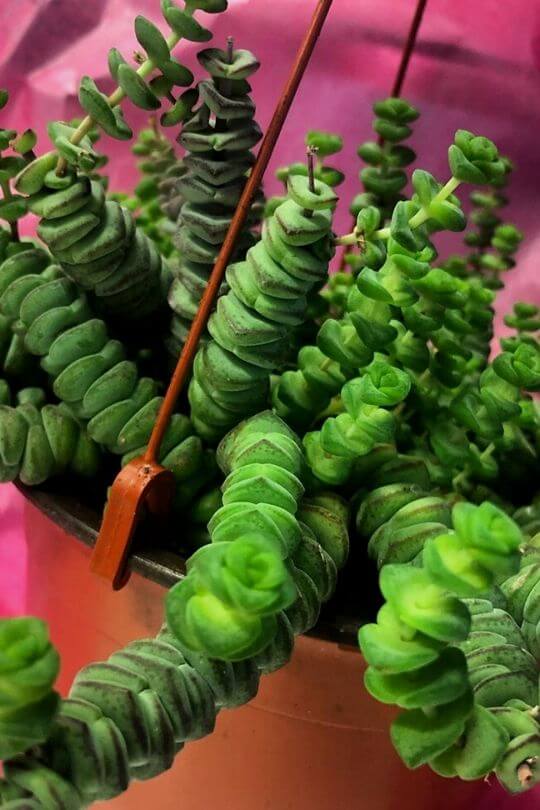
The String of Buttons, or Crassula perforata, is native to South Africa. It is a beautiful plant with triangle shaped leaves that are stacked on top of each other, spiraling around the stem.
The leaves are grayish green with a pinkish tint at the edges when exposed to enough light.
Growing up to two feet tall, the String of Buttons starts upright, but as it matures, its stems become pendant and begin to bend and spill out of the pot, making it perfect for hanging baskets.
In the spring, clusters of small, pale yellow, star shaped flowers are expected to appear.
Overall, the Crassula perforata is a very pretty plant to look at; even your visitors won’t be able to resist turning their heads for a second glance.
21. Porcelain Flower – Hoya Pachyclada
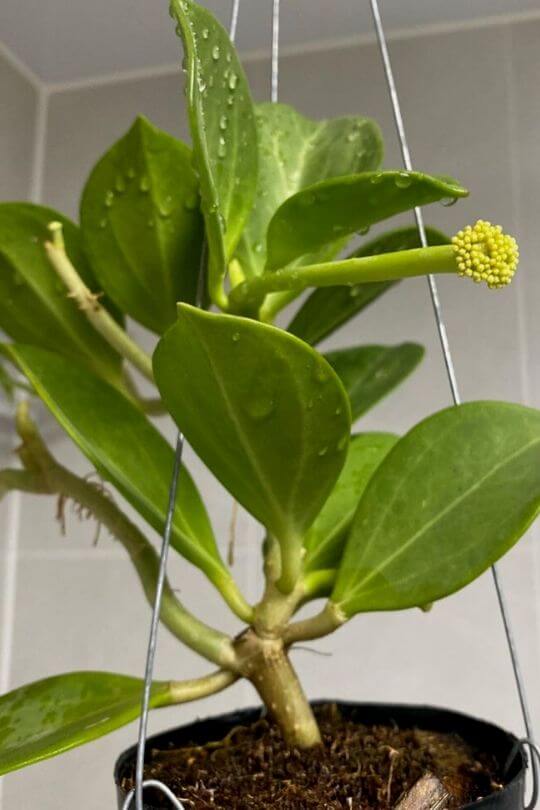
Another excellent suggestion from the Hoya genus is the Porcelain Flower, or Hoya pachyclada. It does not vine and tends to grow more slowly than other Hoyas.
The plant’s stems are short and feature very thick, green leaves with red edges, which can grow up to a quarter inch thick as they mature.
The name Porcelain Flower comes from the stunningly bright white flowers this plant produces.
These flowers form a perfect ball, with 20 to 25 of them gathered in a single cluster. They have a pleasant citrus scent that is truly refreshing, especially when you step outside to smell the morning breeze.
Placing it in a hanging basket will allow the stems to drape over the edges as its foliage grows and matures. The appearance of the flowers in the spring also adds to the plant’s aesthetic charm.
22. Lantern Flower – Ceropegia Haygarthii

The Lantern Flower, or Ceropegia haygarthii, is one of the more unusual looking plants on our list.
Its common name comes from the fact that the plant’s flower is shaped like a lantern.
The flowers have a cage like structure that can trap insects feeding on their nectar. They are four centimeters long, with a cream colored tube that is flecked with purple maroon at the base.
The inside of the flowers is covered with downward pointing hairs, which trap the flies.
The Lantern Flower is a semi evergreen, strong growing, twining stem succulent. It has small, ovate leaves and stalks that are three to six millimeters thick and can grow up to three meters long. This length makes it perfectly suited for a hanging basket.
23. Little Missy Sedum – Sedum Little Missy
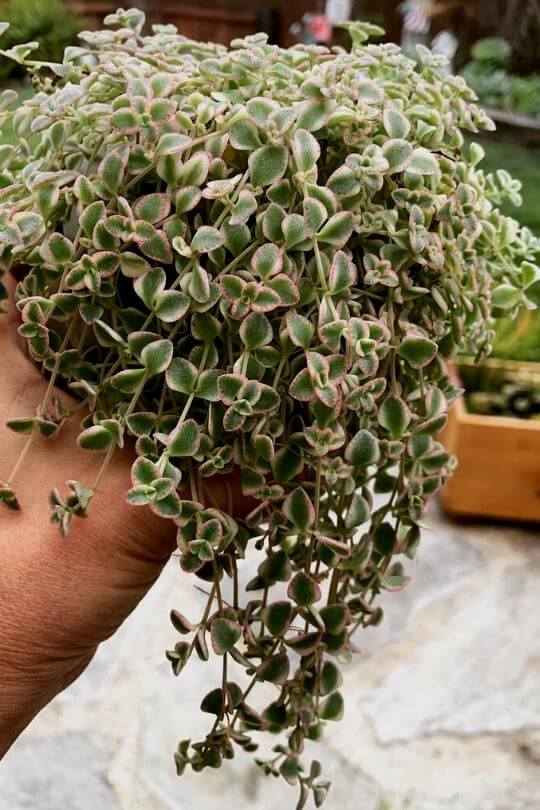
Sedum Little Missy is a cheerful, sun loving succulent that is easy to maintain. It features tiny, heart shaped variegated foliage with charming pink edges.
This plant is a fast grower and can reach up to four inches in height. Placing it in a hanging basket will allow it to spill over the edges, creating a wonderful decoration for your home garden.
The summer season makes this plant even more attractive as sweet little white flowers begin to bloom.
24. Ice Plant – Dorotheanthus Bellidiformis

The Ice Plant, or Dorotheanthus bellidiformis, is a great addition to any floral setting.
It is a low growing plant with reddish stems. Its leaves are rubbery and grayish green.
Both the stems and leaves are covered in transparent bobbles that make the plant look as if it’s covered in tiny beads of ice, which is how it got its name.
However, the main attraction of this plant is the masses of brilliant, shiny, daisy like flowers it produces.
The fact that this plant can grow up to eight inches tall and can spread up to 20 inches wide makes it a perfect hanging plant. Imagine how the bright blooms of this plant can provide a stunning accent to your home.
Wrapping It Up!
In general, any succulent with a cascading growth habit is perfect for a hanging basket. However, it’s also important to consider the style you want and how you plan to complement the decor inside your house or garden.