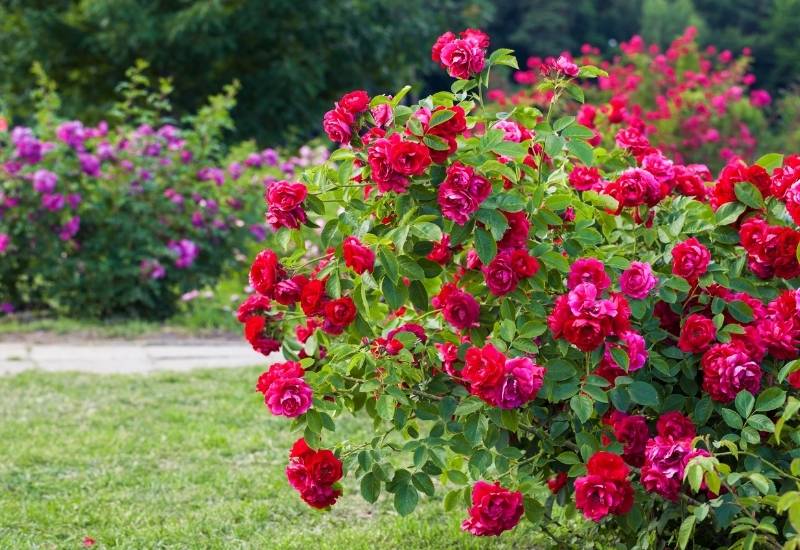
While many flowers offer a beautiful scent, very few can rival the captivating fragrance of a rose. Experts often declare the aroma of roses to be the sweetest of all. When you plant them in your garden, they create an “aroma-scented” atmosphere with their wonderfully perfumed blooms.
While wild roses and certain cultivars have powerful, almost intoxicating scents, it’s not just about the intensity. Every rose variety boasts its own unique fragrance. If you thought they all smelled the same, this list of the most fragrant roses will surely change your mind.
Roses can be categorized by their fragrance strength, from strong to nonexistent. But they also have different types of scents, including myrrh, fruity, musk, old rose, and tea rose. You can select the perfect smelling variety based on the quality of its perfume, but you’ll also want to consider its size, hardiness, color, and shape.
That’s why this list is a gift for your garden, your nose, and your guests, presenting a curated selection of the most intoxicating roses available. You can match the perfect rose to your garden’s light, space, and temperature to ensure it smells absolutely amazing. If you adore these flowers and want to add a sweet olfactory dimension to your garden, here is a list of the most fragrant rose varieties to delight your senses.
Types of Rose Smells
Is “nice” or “sweet” the only way to describe the intricate notes and nuances of a rose’s perfume? Absolutely not. It’s time to learn the proper language to describe them.
Describing smells, even those of roses, can be a challenge. We often fall back on vague words like “nice,” “bad,” or “whiffy.” Let’s dive into the technical side of rose fragrances.
Roses feature five primary scent profiles, which are often blended in varying proportions within each flower. Here they are:
Myrrh: This is a warm, sweet aroma, reminiscent of licorice mixed with aniseed.
Fruity: This fragrance category is full of freshness, with notes you’d find in fruits like pears, strawberries, apricots, and peaches.
Musk: A very strong and woody scent, musk tends to be a distinct component in fragrance compositions. Roses usually produce it from their stamens, and wild roses often have a more potent musk smell than other types.
Old Rose: This is the quintessential rose fragrance. It’s the pure, traditional scent most people associate with the flower. Interestingly, you’ll find this aroma almost exclusively in red and pink roses.
Tea Rose: A fresh and pungent smell, the tea rose scent can easily overpower other notes. It gets its name from the fragrance that wafts up when you open a package of China tea. This aroma is quite uplifting and stimulating.
Now that you can analyze a rose’s fragrance like a pro, let’s explore some fun facts about these love-enhancing flowers.
Roses and Fragrance: Fun Facts
You probably have some questions about roses and their scents, and the answers are right here.
When do roses smell best?
Roses emit their strongest fragrance during their first blooms in the spring. Their scent is also most potent at a specific temperature, precisely 77°F (25°C). High humidity can intensify the aroma as well. So, don’t be surprised if the fragrance of your roses varies throughout the year or even during the day. In fact, their perfume is typically strongest in the morning.
Are there roses that do not smell?
That’s a great question. To the human nose, yes. Natural roses always have at least a light scent, but some hybrids and cultivars have completely lost their aroma. At least, that’s how it seems to us. To get the full story, you might need to ask a dog or a bee.
Is the scent of a rose always the same?
Not at all. A rose bud has a different quality of perfume than an open flower. Even the same rose can alter its combination of scent notes throughout its life. This is a detail for the true fragrance experts.
How common is rose fragrance in perfumes?
Rose oils are a staple in modern perfumery. They are reportedly found in 10% of all men’s fragrances and an incredible 75% of women’s fragrances.
Are roses used in aromatherapy?
Absolutely. Rose oils are used to help alleviate depression, promote relaxation, and increase libido. Overall, roses are associated with self-love, making them beneficial for issues related to confidence and anxiety.
How long have roses been used in perfumes?
While the exact timeline is unknown, we’re certainly talking about millennia. The ancient Egyptians used this fragrant flower to create intoxicating potions, and even back then, they were used to enhance love. If a love for roses and their scent brought you here, the moment has arrived. Open your eyes and your nose, because you’re about to meet the most fragrant roses in the world.
The 18 Most Fragrant Roses in the World That Smell Heavenly
Here are 18 of the most fragrant rose varieties that will fill your garden with a divine aroma all year long:
1: Rose ‘Desdemona’ (Rosa ‘Desdemona’)
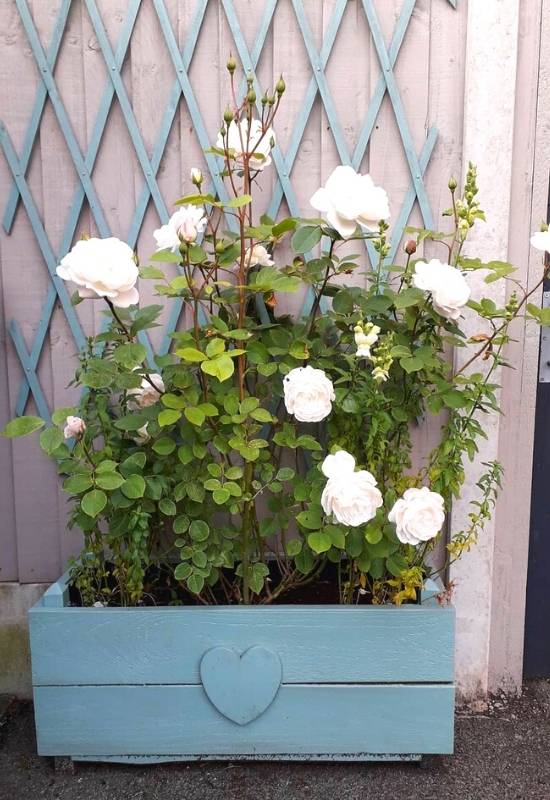
Meet ‘Desdemona,’ a classically inspired shrub rose with a traditional appearance and a strong old rose scent. Its flowers are a candid white with a subtle pink hue.
The buds begin as a soft pink but open into pure white blooms. The flowers are large and cupped, measuring about 4 to 5 inches across, and are fully double, boasting 26 to 60 petals per head.
This is a compact plant, making it perfect for containers and pots. You can enjoy a powerfully scented rose, with a fragrance rare for a white variety, even in a small space.
Hardiness: USDA zones 5 to 9.
Light exposure: Full sun.
Blooming season: Late spring to fall, repeat bloomer.
Size: 4 feet tall and wide (120 cm).
Soil requirements: Well-drained, fertile loam, clay, chalk, or sand-based soil with a pH from mildly acidic to mildly alkaline.
2: Rose ‘Francis E. Leicester’ (Rosa ‘Francis E. Leicester’)
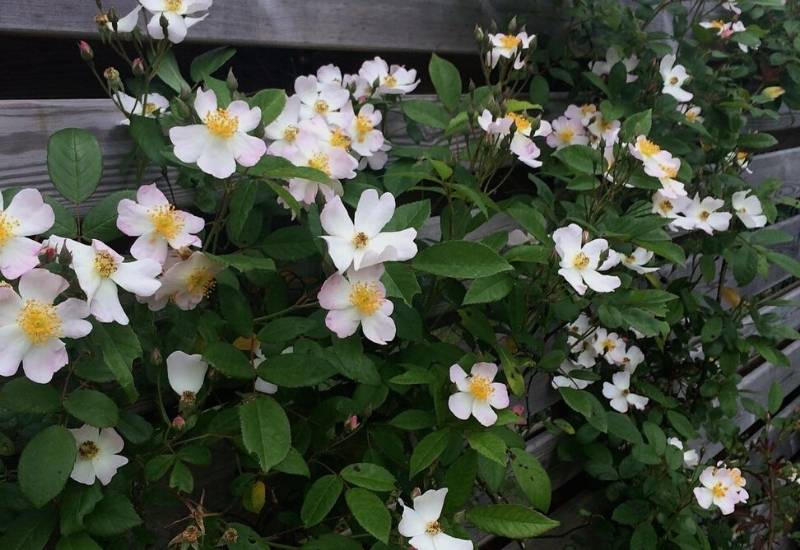
‘Francis E. Leicester’ is a natural-looking rambling rose that delivers a strong, musky aroma. It might bring to mind a prairie rose, but with a more “manicured” touch.
Its single flowers are white with lavender-pink edges and bright yellow centers, though they fade to pure white as they mature.
This is a large plant, ideal for covering pergolas or gazebos with stunning fragrance and blooms. Alternatively, you can shape it into a hedge or even a small tree.
Hardiness: USDA zones 5 to 9.
Light exposure: Full sun or partial shade.
Blooming season: Once in summer.
Size: Up to 26 feet tall (7.8 meters) and 13 feet wide (3.9 meters).
Soil requirements: Well-drained, fertile loam, clay, chalk, or sand-based soil with a pH from mildly acidic to mildly alkaline.
3: Rose ‘Ambridge Rose’ (Rosa ‘Ambridge Rose’)
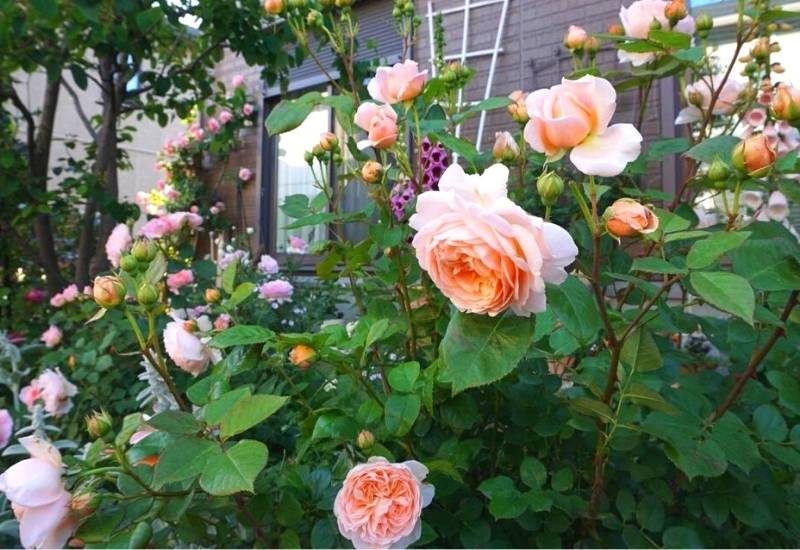
‘Ambridge Rose’ is a charming, traditional English rose with a powerful myrrh scent, giving its fragrance a sweet and exotic quality.
The flowers are a lovely apricot color, fully double, and perfectly balanced. When they open, the petals form a beautiful rosette. This variety is a marathon bloomer and a very robust plant, featuring unusually healthy emerald green foliage.
Perfect for a romantic spot, ‘Ambridge Rose’ provides amazing blossoms and scent from spring through fall. Its compact size makes it suitable for smaller spaces.
Hardiness: USDA zones 5 to 10.
Light exposure: Full sun or partial shade.
Blooming season: Continuously from late spring to late fall.
Size: Up to 3 feet tall (90 cm) and 2 feet wide (60 cm).
Soil requirements: Well-drained, fertile loam, clay, chalk, or sand-based soil with a pH from mildly acidic to mildly alkaline.
4: Rose ‘Golden Celebration’ (Rosa ‘Golden Celebration’)
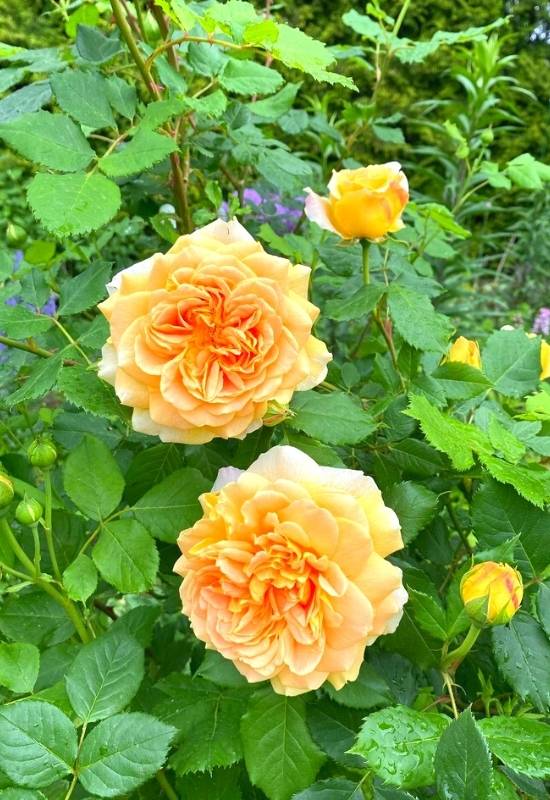
‘Golden Celebration’ is a medium-sized English rose offering a strong fragrance that combines myrrh and fruity notes, creating a fresh and sweet aroma all at once.
Its scent is reminiscent of citrus, lychee, and strawberry. The fully double, cupped flowers are a stunning golden yellow and can have 55 to 75 petals each. You can also train this versatile rose as a short climber.
A David Austin creation, ‘Golden Celebration’ was honored with the Award of Garden Merit by the Royal Horticultural Society in 2002.
Hardiness: USDA zones 4 to 9.
Light exposure: Full sun to partial shade.
Blooming season: From late spring to fall.
Size: 4 to 8 feet tall (1.2 to 2.4 meters) and up to 5 feet wide (1.5 meters).
Soil requirements: Well-drained, fertile loam, clay, chalk, or sand-based soil with a pH from mildly acidic to mildly alkaline.
5: Rose ‘Bobbie James’ (Rosa ‘Bobby James’)
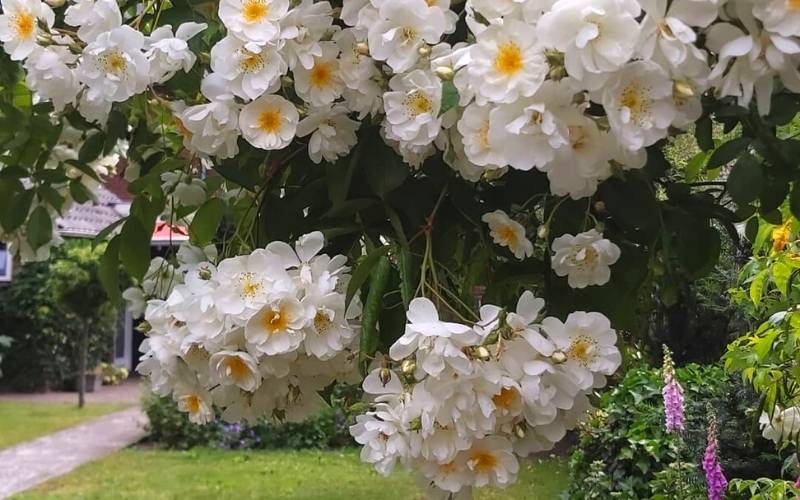
‘Bobby James’ is a rambling rose with a candid, natural look and a powerful musky fragrance. Its small, single flowers are pure white with a bright yellow center.
The leaves have a particularly light green color, while the canes (branches) are a striking purple-red. The overall effect is delicate, light, and traditionally beautiful.
This large plant is a perfect fit for a traditional English garden or an informal landscape design. It has a distinctive, bright, “countryside” appearance.
Hardiness: USDA zones 3 to 8.
Light exposure: Full sun or partial shade.
Blooming season: June and July.
Size: Up to 30 feet tall (10 meters) and 20 feet wide (6 meters).
Soil requirements: Well-drained, fertile loam, clay, chalk, or sand-based soil with a pH from mildly acidic to mildly alkaline.
6: Rose ‘The Poet’s Wife’ (Rosa ‘The Poet’s Wife’)
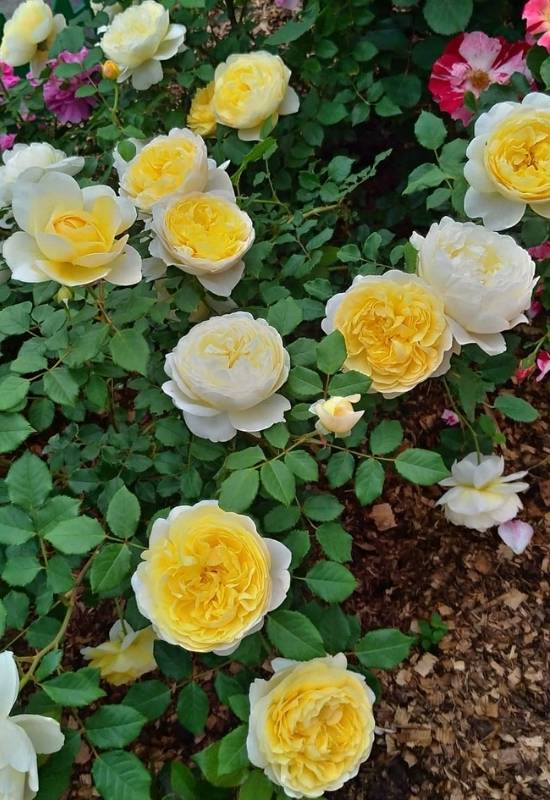
‘The Poet’s Wife’ is a vibrant English shrub rose that delivers a strong, fruity aroma. It features a hint of lemon in its fragrance, which grows sweeter and more potent as the plant matures.
This scent perfectly complements the bright yellow color of its large, fully double flowers, which can reach up to 5 inches across. The bushes have a rounded growth habit and very glossy foliage.
Plant ‘The Poet’s Wife’ in an informal garden where you want an uplifting and energetic rose to brighten your days.
Hardiness: USDA zones 5 to 9.
Light exposure: Full sun.
Blooming season: June to September.
Size: Up to 4 feet tall and wide (1.2 meters).
Soil requirements: Well-drained, fertile loam, clay, chalk, or sand-based soil with a pH from mildly acidic to mildly alkaline.
7: Rose ‘Kew Rambler’ (Rosa ‘Kew Rambler’)
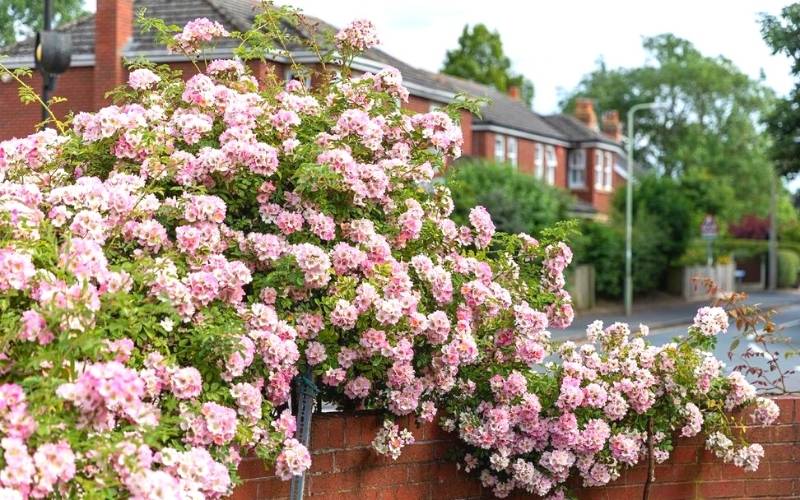
‘Kew Rambler’ is a rambling rose with a traditional look and a strong, musky fragrance. This large shrub produces small, cupped, single flowers with petals that are half white on the inside and half bright pink on the outside.
The saffron-colored center and massive clusters of blooms create a stunning display. The foliage is a bright green, giving the entire plant a light and airy feel.
‘Kew Rambler’ is perfectly suited for a large, natural-looking space, such as an English country garden or a cottage garden.
Hardiness: USDA zones 5 to 9.
Light exposure: Full sun or partial shade.
Blooming season: Once in July and August.
Size: Up to 20 feet tall and wide (6 meters).
Soil requirements: Well-drained, fertile loam, clay, chalk, or sand-based soil with a pH from mildly acidic to mildly alkaline.
8: Rose ‘Lady Emma Hamilton’ (Rosa ‘Lady Emma Hamilton’)
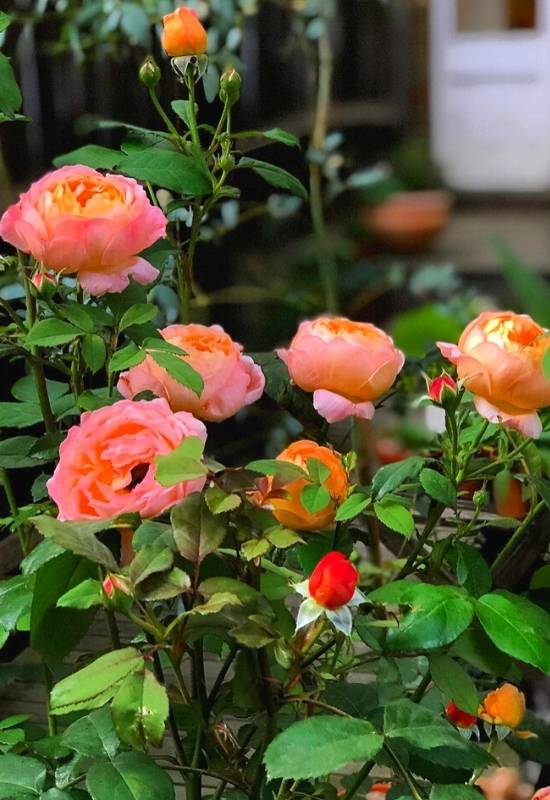
‘Lady Emma Hamilton’ is a spectacular English rose with a fragrance as stunning as its iridescent colors. The aroma is intensely fruity, a delightful mix of pear, grape, and citrus.
The large, fully double, cupped flowers can have up to 45 petals, showcasing a blend of pink, tangerine, orange, and hints of magenta. It blooms for months, starting with red buds. The leaves begin as deep emerald in spring, then transition to purple and finally a blue-green.
A true star, ‘Lady Emma Hamilton’ is a winner of the Award of Garden Merit from the Royal Horticultural Society. You’ll want to feature it in a highly visible, focal position in your garden.
Hardiness: USDA zones 5 to 9.
Light exposure: Full sun.
Blooming season: Repeat bloomer from late spring to the end of fall.
Size: 4 feet tall (1.2 meters) and 3 feet wide (90 cm).
Soil requirements: Well-drained, fertile loam, clay, chalk, or sand-based soil with a pH from mildly acidic to mildly alkaline.
9: Rose ‘Munstead Wood’ (Rosa ‘Munstead Wood’)
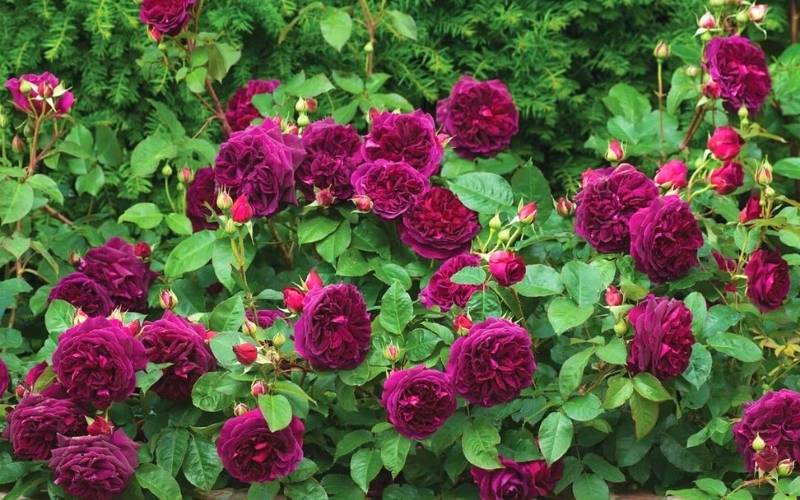
‘Munstead Wood’ is a luxurious-looking English rose that offers a strong and traditional old rose fragrance with fruity undertones.
Its large, fully double blooms can feature up to 74 petals and are a deep, velvety crimson that borders on purple. The leaves emerge as bronze before maturing to a mid-green.
Introduced by David Austin in 2007, ‘Munstead Wood’ is a small, newer variety. It’s an ideal choice for its iconic old rose aroma and sumptuous appearance. Its compact size makes it suitable for more modest spaces.
Hardiness: USDA zones 5 to 9.
Light exposure: Full sun.
Blooming season: Repeat bloomer from late spring to late fall.
Size: 3 feet tall and wide (90 cm).
Soil requirements: Well-drained, fertile loam, clay, chalk, or sand-based soil with a pH from mildly acidic to mildly alkaline.
10: Rose ‘Paul Noël’ (Rosa ‘Paul Noël’)
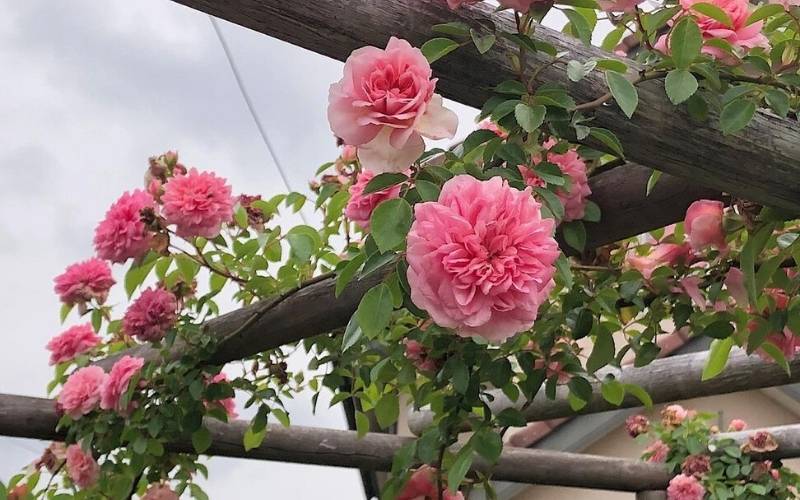
‘Paul Noël’ is a rambling rose with a truly individual fragrance. It smells fruity, like apples, with an added note of chrysanthemum.
The medium-sized, fully double flowers are a delicate light salmon-pink. The plant produces massive, repeated blooms and features bright green foliage.
This is a large, old variety, introduced in 1873. It’s perfect for pergolas, gazebos, and gates due to its flexible canes, which make it very easy to train. It is also a winner of the Award of Garden Merit by the Royal Horticultural Society.
Hardiness: USDA zones 5 to 9.
Light exposure: Full sun or partial shade.
Blooming season: Summer.
Size: Up to 20 feet tall and wide (6 meters).
Soil requirements: Well-drained, fertile loam, clay, chalk, or sand-based soil with a pH from mildly acidic to mildly alkaline.
11: Rose ‘Strawberry Hill’ (Rosa ‘Strawberry Hill’)
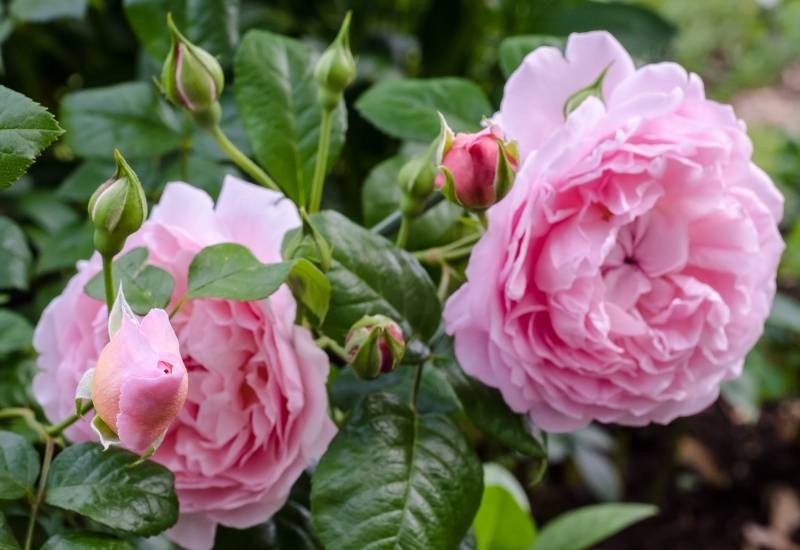
‘Strawberry Hill’ is an English climbing rose bred by David Austin, known for its strong and sweet fragrance of myrrh and honey heather.
The blooms appear in clusters of medium-sized, cupped, and fully double flowers with lovely pink petals. The leaves are a dark green, and the branches have a natural tendency to arch.
As a small to medium-sized climber, ‘Strawberry Hill’ is ideal for suburban front gardens and most informal settings. This fragrant variety has also earned the Award of Garden Merit from the Royal Horticultural Society.
Hardiness: USDA zones 5 to 9.
Light exposure: Full sun or partial shade.
Blooming season: Late spring to late fall.
Size: 10 feet tall (3 meters) and up to 5 feet wide (1.5 meters).
Soil requirements: Well-drained, fertile loam, clay, chalk, or sand-based soil with a pH from mildly acidic to mildly alkaline.
12: Rose ‘The Country Parson’ (Rosa ‘The Country Parson’)
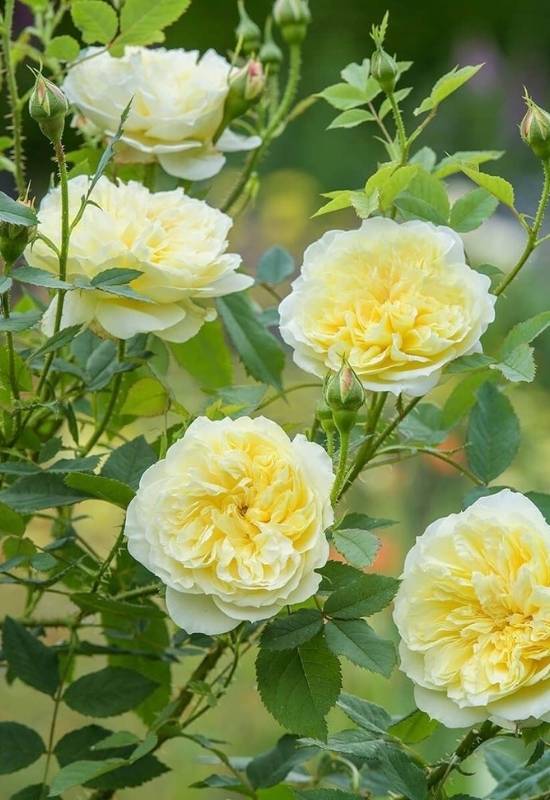
‘The Country Parson’ is an English shrub rose from Scotland with a fruity fragrance that includes notes of sweet apricot, crisp green apple, and warm honey.
While its scent is slightly milder than other varieties on this list, it is highly original. The medium-sized, fully double blooms are flat rather than cupped.
The color is a bright, almost lime yellow, with lighter, nearly translucent edges, all perfectly framed by emerald leaves.
‘The Country Parson’ will grace your garden with an interesting, complex, and unusual smell, complementing the brightness of its amazing flowers.
Hardiness: USDA zones 5 to 9.
Light exposure: Full sun or partial shade.
Blooming season: Early summer into autumn.
Size: 4 feet tall and wide (1.2 meters).
Soil requirements: Well-drained, fertile loam, clay, chalk, or sand-based soil with a pH from mildly acidic to mildly alkaline.
13: Rose ‘Wallerton Old Hall’ (Rosa ‘Wallerton Old Hall’)
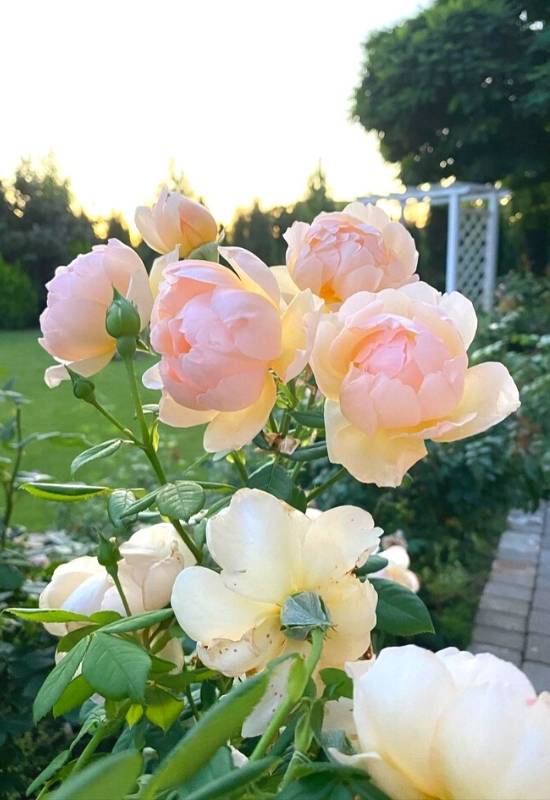
‘Wallerton Old Hall’ is an English climbing rose from David Austin that features a strong myrrh fragrance enhanced by a citrus note.
It produces medium-sized, full double flowers with a very deep cup shape and pale apricot petals. The flower heads tend to hang like bells on slender stems, framed by bright green foliage.
‘Wallerton Old Hall’ is a rose that thrives in an informal garden, where it can bring its light and scent. Keep in mind that it is a medium to large climber, so be sure to give it plenty of space.
Hardiness: USDA zones 5 to 9.
Light exposure: Full sun.
Blooming season: Repeatedly from late spring to late fall.
Size: Up to 9 feet tall (2.7 meters) and 3 feet wide (90 cm).
Soil requirements: Well-drained, fertile loam, clay, chalk, or sand-based soil with a pH from mildly acidic to mildly alkaline.
14: Rose ‘Honey Perfume’ (Rosa ‘Honey Perfume’)
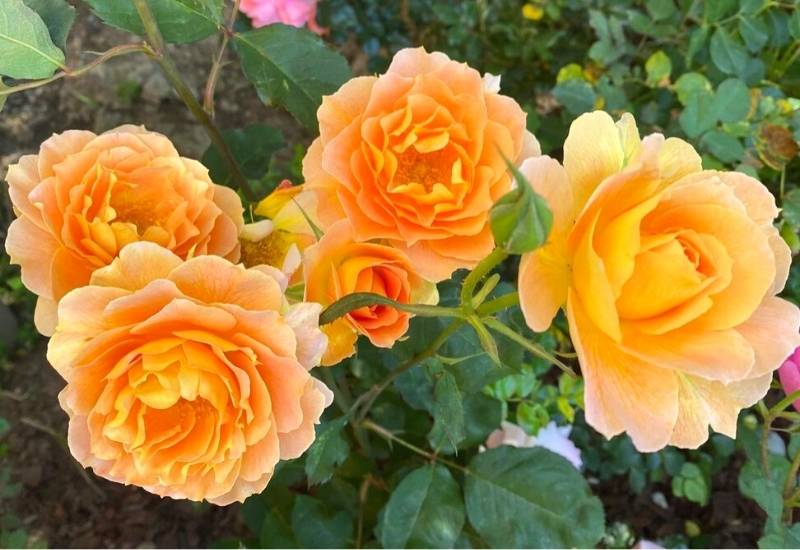
‘Honey Perfume’ is a floribunda rose with a highly original aroma. It has a spicy, musky fragrance, a blend of nutmeg, cloves, allspice, and cinnamon.
The large, fully double flowers grow up to 4 inches across and open wide to an almost flat shape. The petals are a rare and beautiful apricot-yellow, which stands out against the deep green foliage.
Bred by Dr. Keith Zary in 1993, ‘Honey Perfume’ offers a special combination of qualities: a very unusual scent and a highly refined color.
Hardiness: USDA zones 5 to 9.
Light exposure: Full sun.
Blooming season: From May to frost, with a peak in summer.
Size: 4 feet tall (1.2 meters) and 3 feet wide (90 cm).
Soil requirements: Well-drained, fertile loam, clay, chalk, or sand-based soil with a pH from mildly acidic to mildly alkaline.
15: Rose ‘Fragrant Plum’ (Rosa ‘Fragrant Plum’)
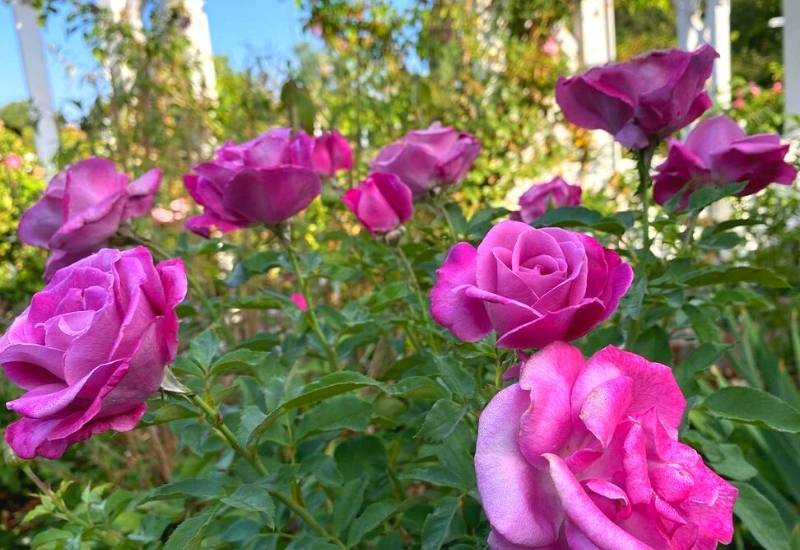
‘Fragrant Plum’ is a grandiflora rose with a fruity fragrance that, as the name implies, smells like plums.
The large, fully double, and elegant roses feature wide, unfurling petals in a light lavender color, with a darker magenta shade toward the edges. Purple-red stems and dark green foliage complete the picture.
With a welcoming, old-world look, ‘Fragrant Plum’ is both elegant and original. It is small enough for fairly modest spaces but can also create a grand display in larger settings.
Hardiness: USDA zones 5 to 9.
Light exposure: Full sun.
Blooming season: Spring to fall, though weaker in summer.
Size: Up to 6 feet tall (1.8 meters) and 4 feet wide (1.2 meters).
Soil requirements: Well-drained, fertile loam, clay, chalk, or sand-based soil with a pH from mildly acidic to mildly alkaline.
16: Rose ‘Harlow Carr’ (Rosa ‘Harlow Carr’)
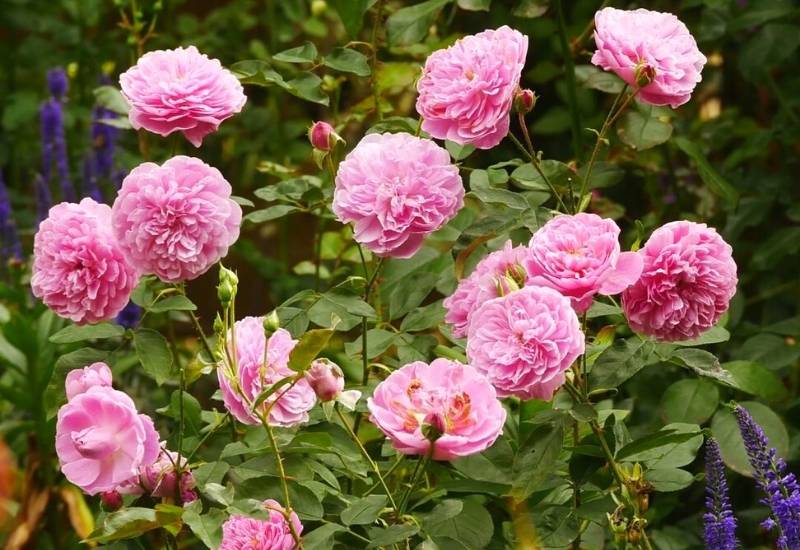
‘Harlow Carr’ is the perfect English shrub rose for achieving a classically beautiful and traditionally scented effect. Its fragrance is strong and pure, with an old rose tone. The large, fully double, and perfectly cupped blooms are pink with magenta touches on the inside.
This repeat bloomer offers different visual effects against its foliage, which starts as copper in the spring before turning to emerald green.
‘Harlow Carr’ has a classic look and smell, combining these qualities with a romantic appearance and color. It is therefore perfect for traditional gardens looking to evoke old times, memories, and smells.
Hardiness: USDA zones 4 to 9.
Light exposure: Full sun.
Blooming season: From late spring to late fall.
Size: 4 feet tall and wide (1.2 meters).
Soil requirements: Well-drained, fertile loam, clay, chalk, or sand-based soil with a pH from mildly acidic to mildly alkaline.
17: Rose ‘Gabriel Oak’ (Rosa ‘Gabriel Oak’)
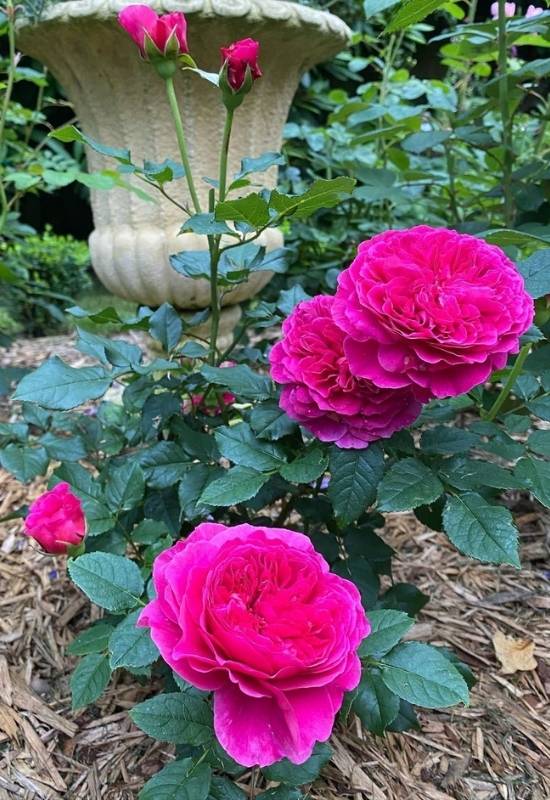
‘Gabriel Oak’ is an English shrub rose with a strong, fruity, and soothing fragrance. Its large, fully double flowers open into flat rosettes.
The petals are the brightest, deepest carmine pink you can imagine, though they lighten slightly over time. The foliage begins as purple before turning dark green, creating a very “full” and “intense” overall look.
‘Gabriel Oak’ is an emotionally powerful rose. Though medium-small in size, it has a very strong presence, making it an ideal variety for creating a bold effect in a prominent position.
Hardiness: USDA zones 5 to 11.
Light exposure: Full sun.
Blooming season: From early summer to mid-fall.
Size: 4 feet tall and wide (1.2 meters).
Soil requirements: Well-drained, fertile loam, clay, chalk, or sand-based soil with a pH from mildly acidic to mildly alkaline.
18: Rose ‘Gertrude Jeckyll’ (Rosa ‘Gertrude Jeckyll’)
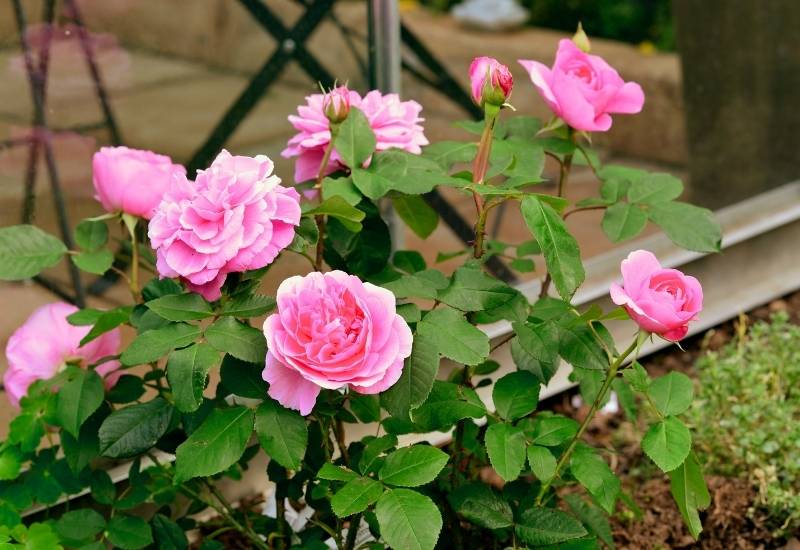
‘Gertrude Jeckyll’ is a fragrant rose named after one of history’s most renowned gardeners and a pioneer for women in the field. She is credited as the “inventor” of the cottage garden.
Fittingly, this variety boasts a perfect and strong old rose fragrance and a traditional appearance. With large, flat, fully double heads featuring scrolling petals, its bright pink, almost magenta shade adds the final touch to a rose that proclaims, “I am the perfect choice for a traditional garden!” This repeat bloomer has light emerald green leaves and a balanced shrub shape.
‘Gertrude Jeckyll’ is not just the sweet-smelling rose you want for a tribute to a gardening icon. It is also the variety for you if you embrace her aesthetic: a natural-looking, relaxing, and gentle garden where plants are the stars with their colors and smells.
Hardiness: USDA zones 4 to 8.
Light exposure: Full sun or partial shade.
Blooming season: From late spring to late fall.
Size: 4 feet tall (1.2 meters) and 3 feet wide (90 cm).
Soil requirements: Well-drained, fertile loam, clay, chalk, or sand-based soil with a pH from mildly acidic to mildly alkaline.
Roses for all Types of Noses!
You have just embarked on a journey of scents and colors. It’s noteworthy that this exploration began with a famous literary woman, Desdemona, and concluded with a true pioneer of gardening.
And on that sweet note, this visit to the world of the most fragrant roses ever comes to an end.